20 Medium Hairstyles with Curtain Bangs for Every Face Shape
Curtain bangs get recommended to almost everyone, and that is fair, because there is a version that works for most faces. What varies is the specification. Where the shortest point sits, how much hair goes into the fringe, and where the part falls all change the result completely. The single most common regret is going too short, since a fringe cut above the brow takes several months to reach a wearable length again. Start longer than feels right, because trimming later takes five minutes. Here is how each version behaves.
Jump to:
- Cheekbone-Length Curtain Bangs
- Chin-Length Curtain Bangs
- Brow-Skimming Curtain Bangs
- Extra-Long Curtain Bangs
- Wispy Curtain Bangs
- Full Curtain Bangs
- Layered Curtain Bangs
- Choppy Textured Curtain Bangs
- Feathered Flicked-Out Curtain Bangs
- Bottleneck Bangs
- Short Centre With Longer Sides
- Side-Swept Curtain Bangs
- Off-Centre Part
- Deep Middle Part
- Curtain Bangs on Curly Hair
- Curtain Bangs on Wavy Hair
- Curtain Bangs on Straight Hair
- Curtain Bangs With Face-Framing Highlights
- Curtain Bangs Worn in an Updo
- Grown-Out Curtain Bangs Pinned Back
Cheekbone-Length Curtain Bangs
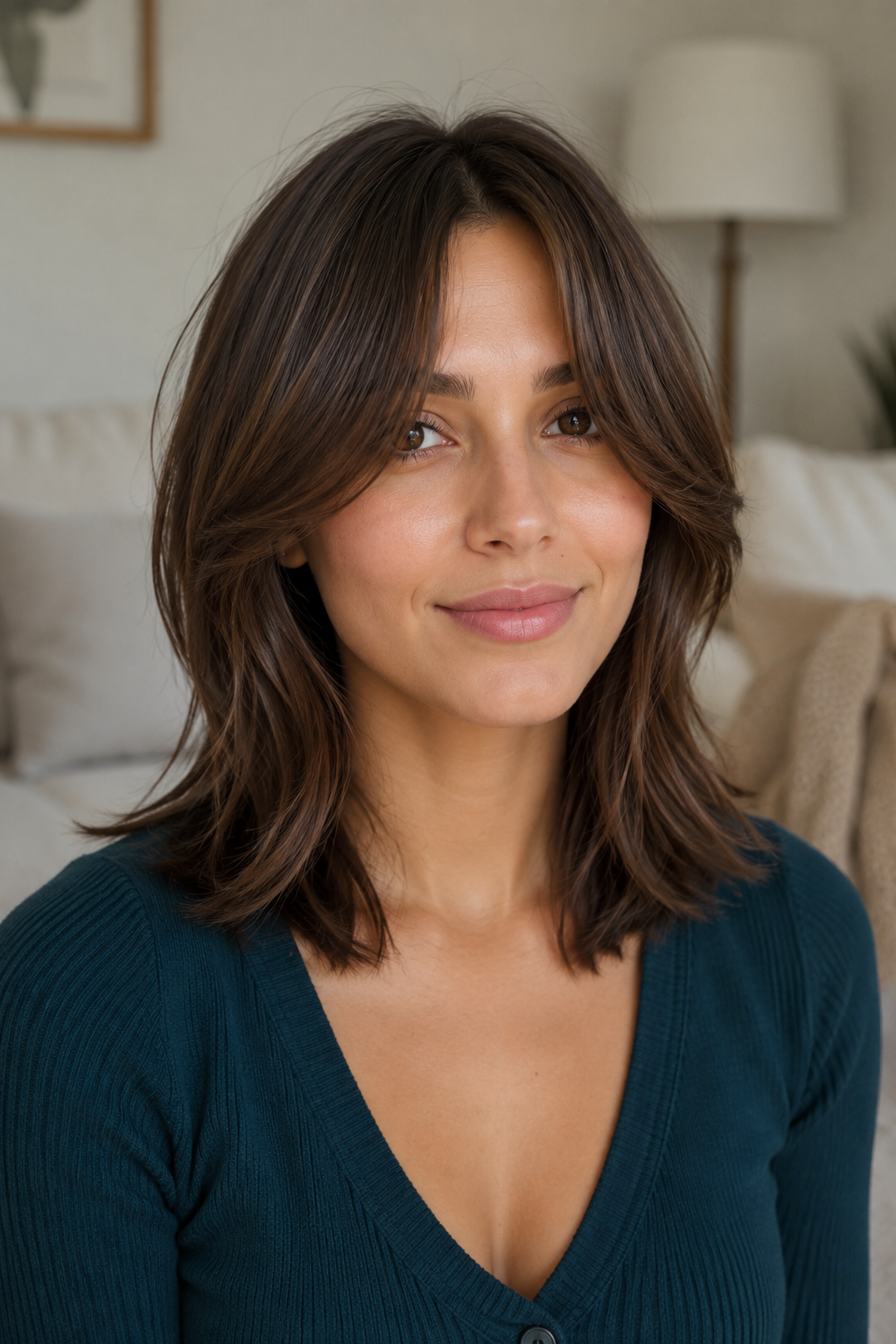
The shortest point lands at the cheekbone, with the sides sweeping longer from there.
This is the standard version most people picture, and it sits high enough to open up the eyes without covering much forehead.
Great for oval and heart-shaped faces. It is also the length that blends most naturally into face-framing layers, so ask for the two to be cut as one piece.
Chin-Length Curtain Bangs
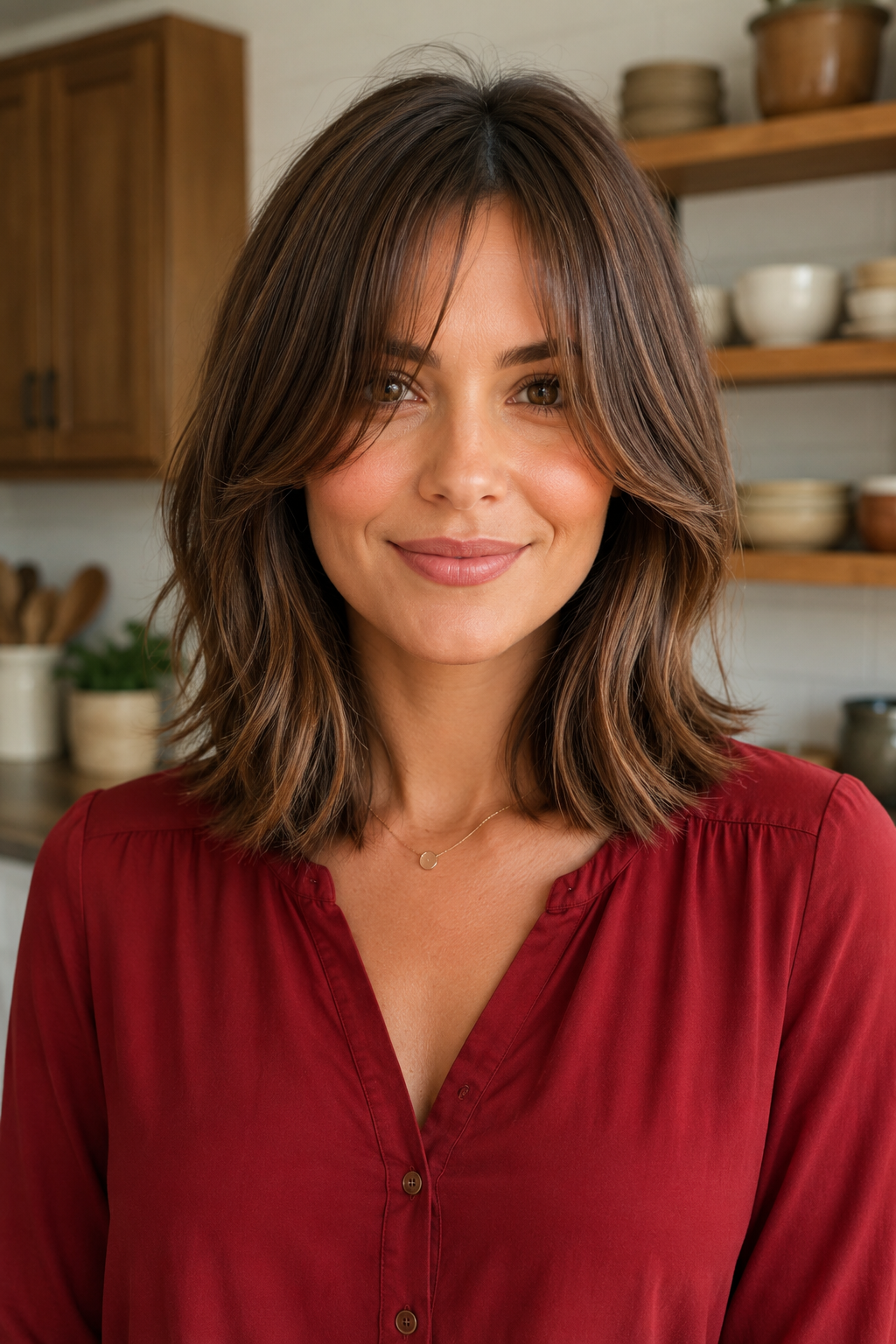
A longer version where even the shortest section reaches the chin.
Because there is no short piece anywhere, there is never a stage where it looks awkward, which makes it the lowest-risk fringe available.
Perfect for anyone unsure about bangs at all. If you like it you can go shorter at the next appointment. If you do not, it blends back into your layers within weeks.
Brow-Skimming Curtain Bangs
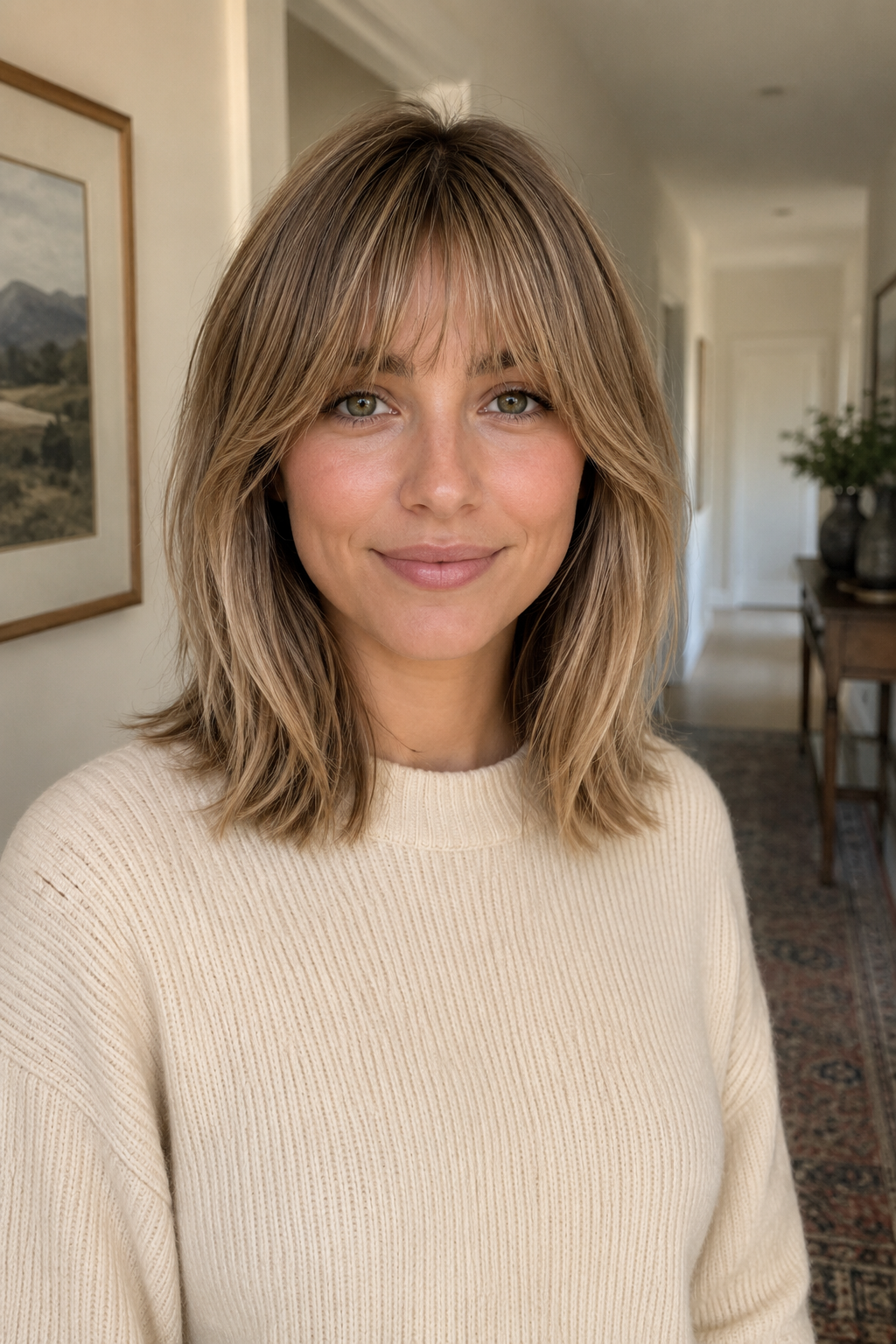
The shortest point sitting right at the eyebrow, which is about as short as this fringe goes.
It gives real coverage across the forehead and reads as a proper fringe rather than long face-framing pieces.
Suits longer faces, where shortening the space above the eyes helps. Be certain before you commit, since this length needs trimming every three or four weeks to stay put.
Extra-Long Curtain Bangs
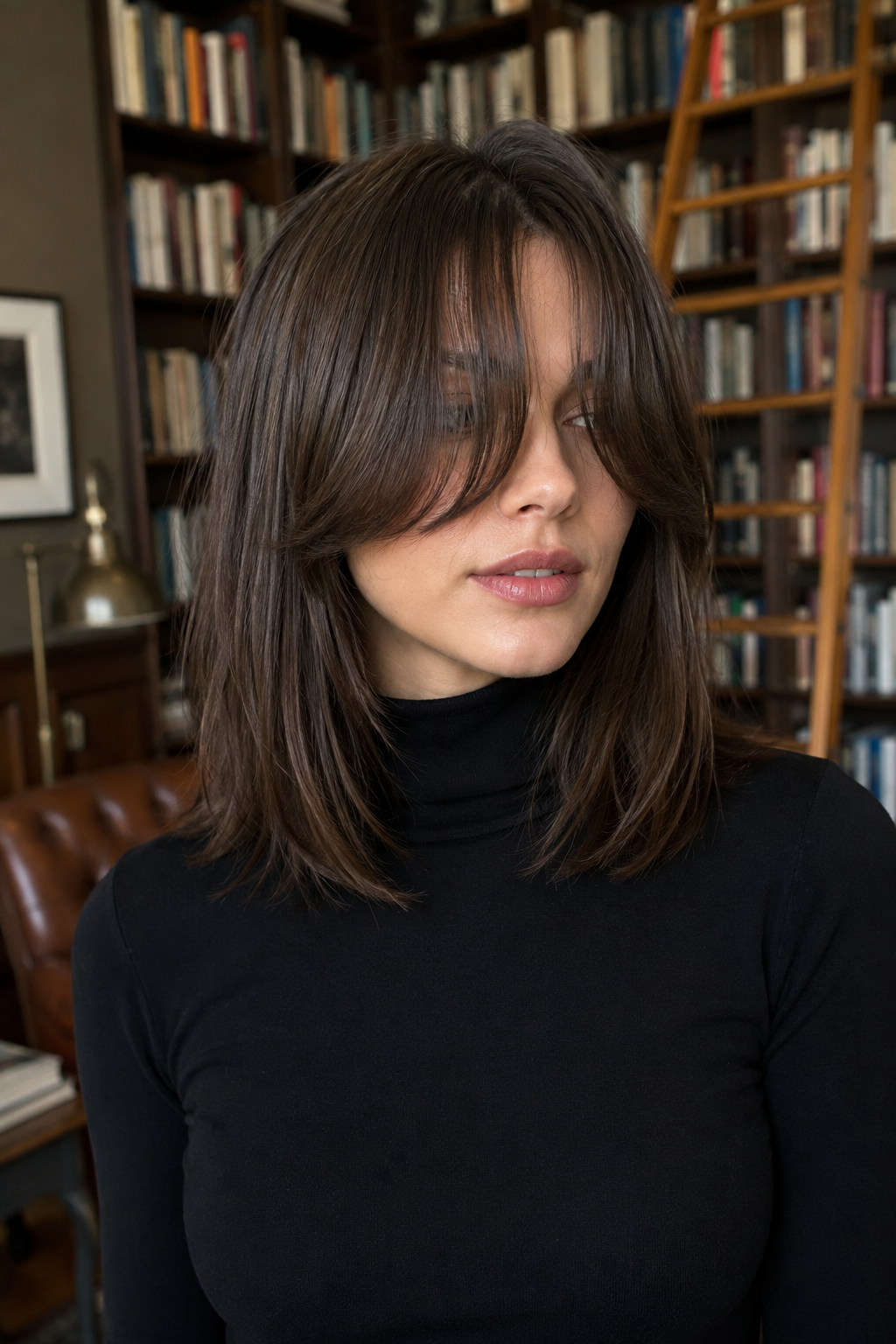
A fringe falling past the eyes, sometimes reaching the bridge of the nose at its shortest point.
Worn parted, the two halves fall either side of the face and function more like heavy face-framing than a fringe.
Works especially well on straight hair, where the pieces hang cleanly. On any texture it needs to be pushed to the sides, or it sits over your eyes.
Wispy Curtain Bangs
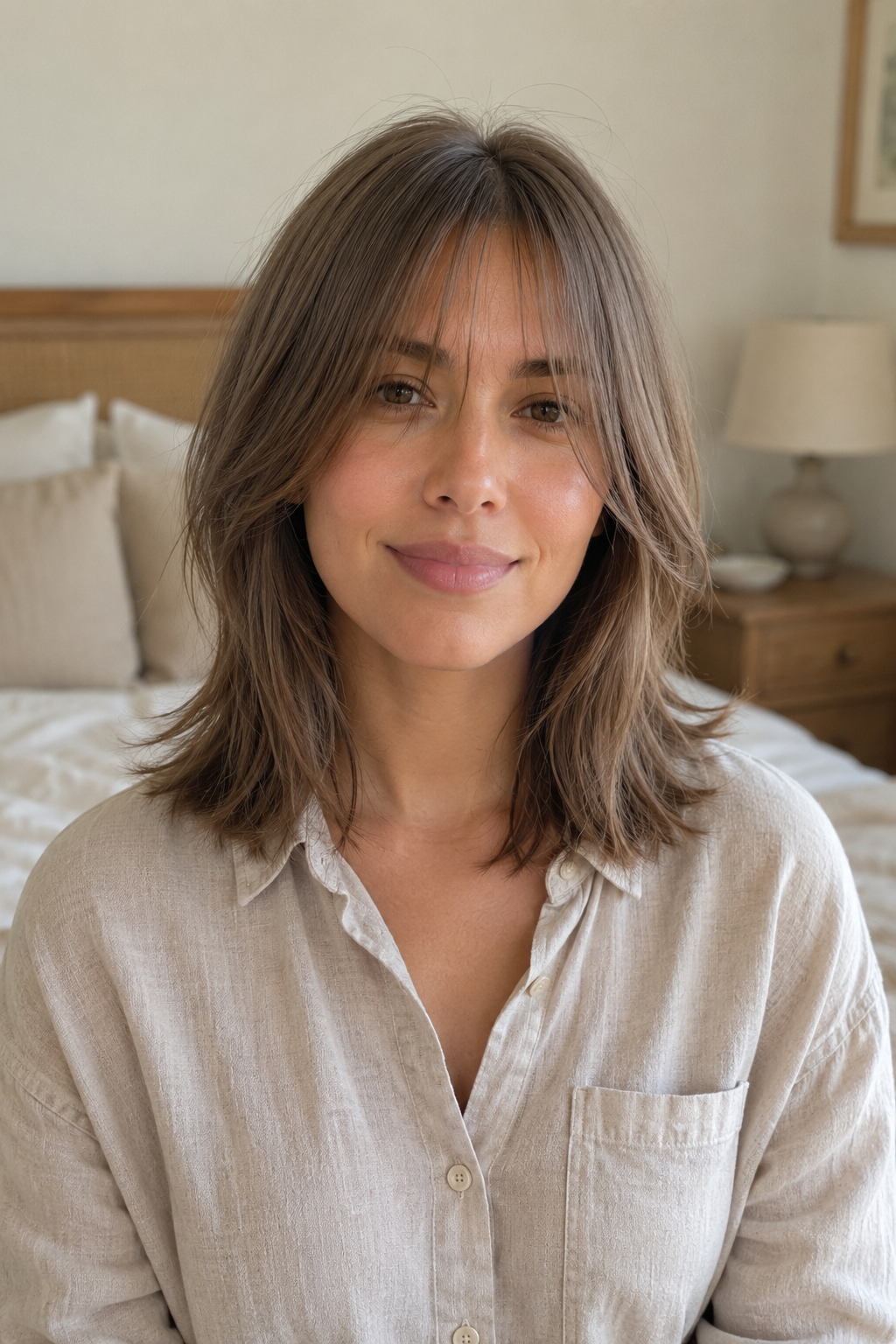
A thin fringe cut light enough that the forehead shows through it.
Very little hair goes into it, which is what keeps it from taking density away from the rest of the cut.
Great for fine hair. Our medium hairstyles for thin hair post covers why removing weight from the front matters more when your density is low.
Full Curtain Bangs
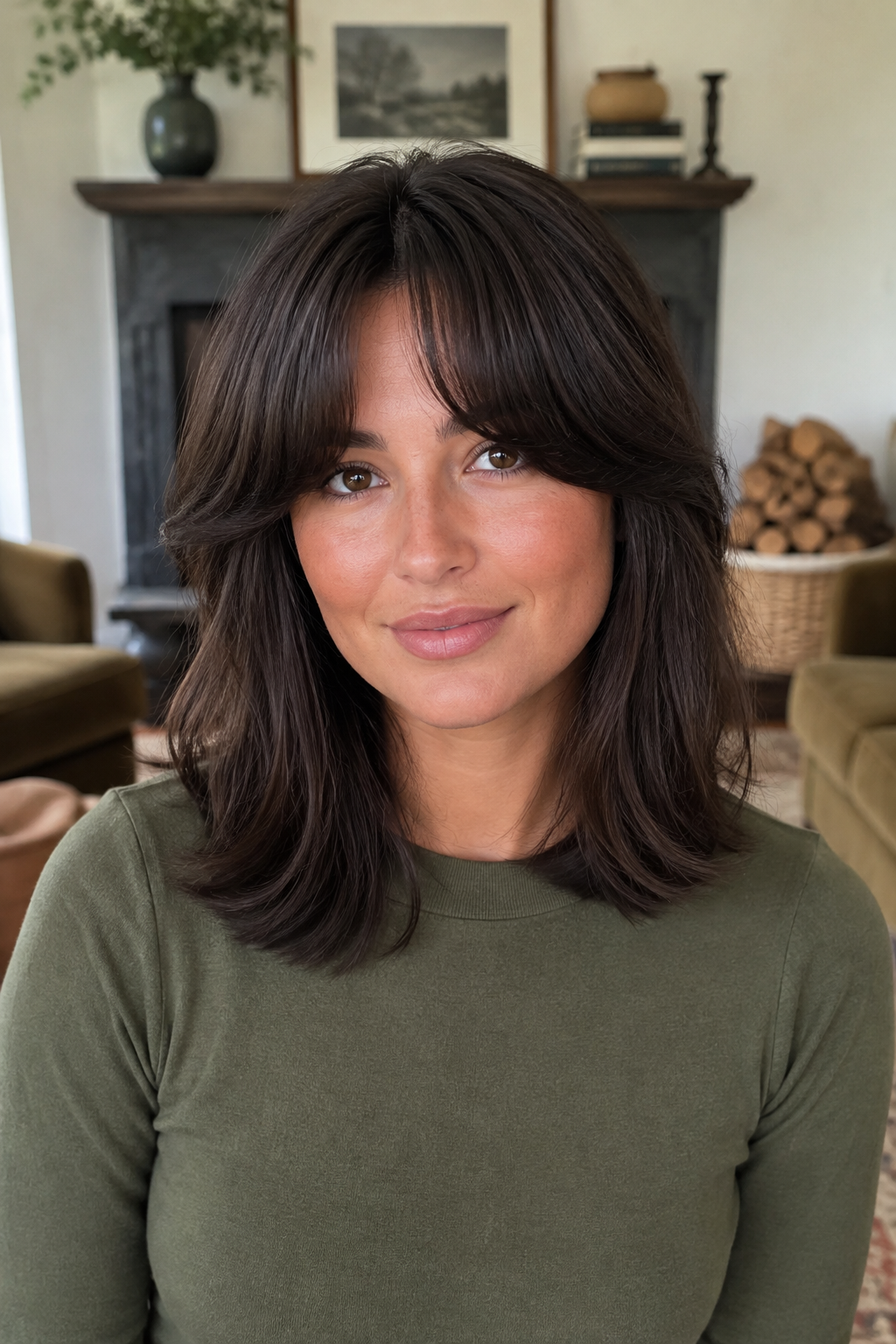
A thicker section taken back from the hairline, giving the fringe real body and coverage.
Thick hair can carry this without the rest of the cut looking depleted, and a thin fringe on thick hair tends to look sparse by comparison.
Perfect for dense hair that needs weight taken out around the face anyway. Ask for layering inside the fringe so it does not sit as one solid block.
Layered Curtain Bangs
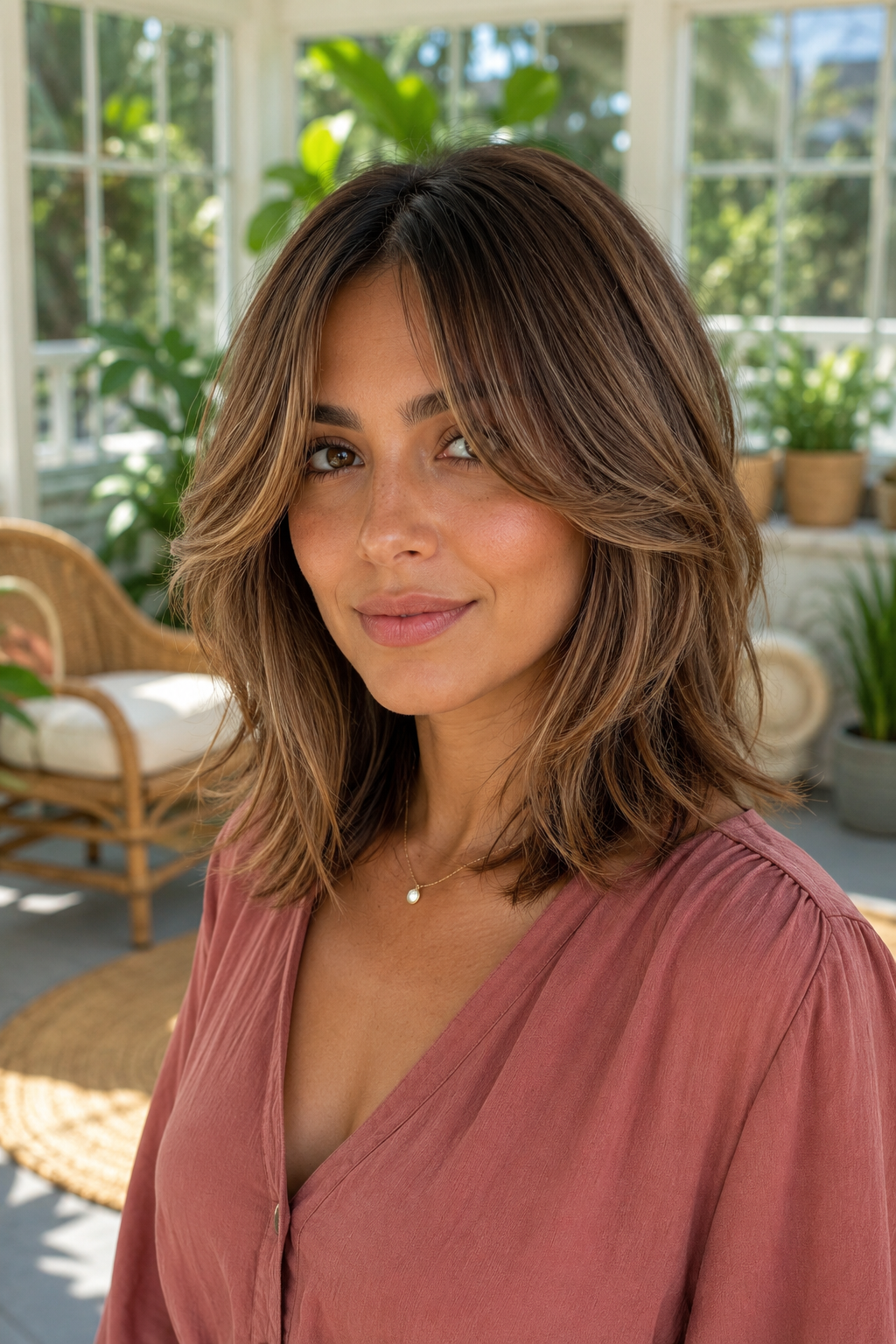
The fringe cut with layers inside it and blended directly into the face-framing pieces below.
Cutting the fringe separately from the layers leaves a visible step where one ends and the other begins. Blending removes it.
Suits medium to thick hair. See our layered medium hairstyles post for how the layering should continue down through the length.
Choppy Textured Curtain Bangs
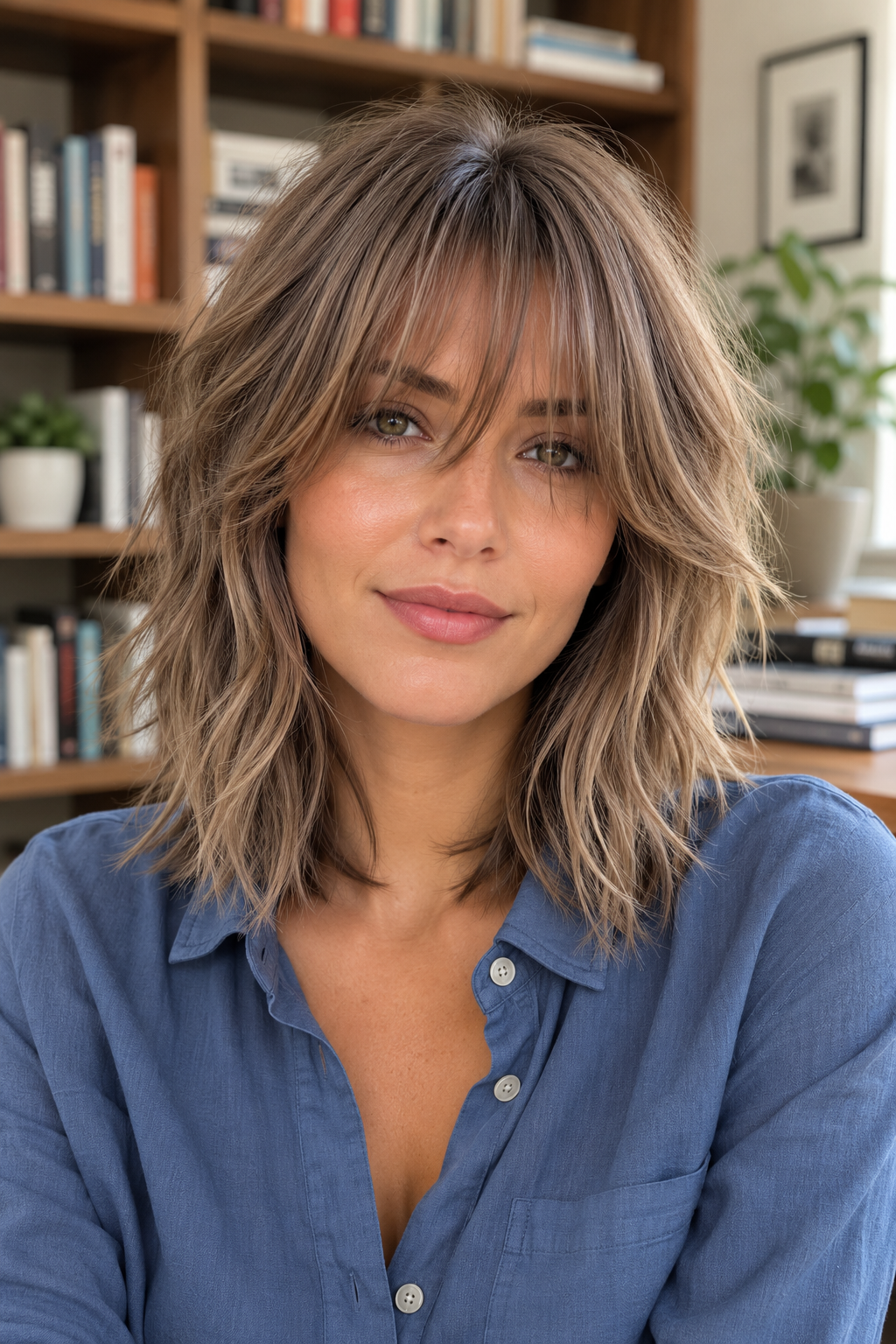
A fringe cut with uneven ends so it separates into visible pieces rather than sitting smooth.
The roughness stops it looking set, and it works with natural movement instead of fighting it.
Great for anyone who wants something less neat. Our messy medium hairstyles post covers styling that suits this finish.
Feathered Flicked-Out Curtain Bangs
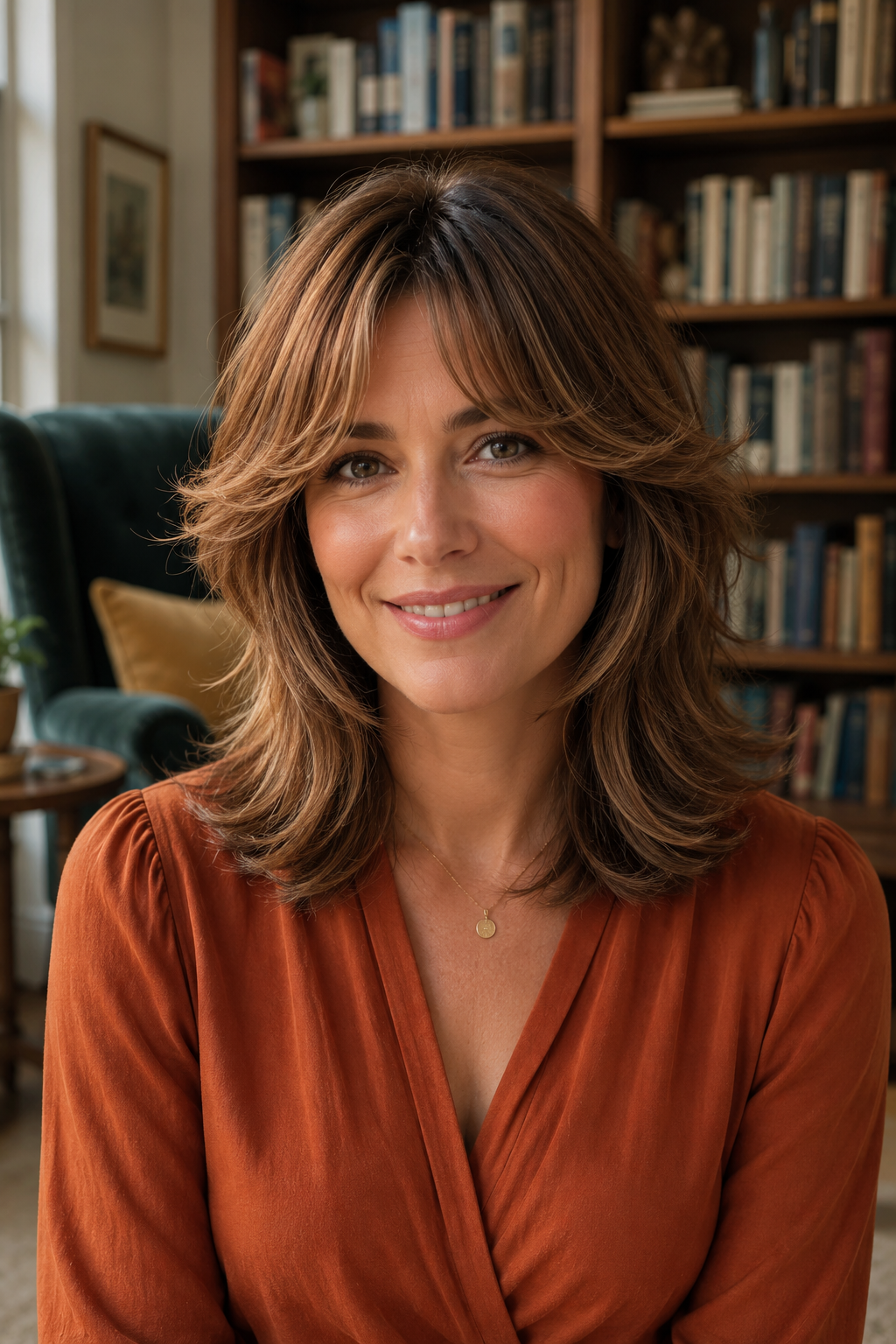
Cut so the ends taper and flick outward, away from the face, in the seventies style.
The outward flick is what separates this from a standard curtain, which falls inward toward the cheeks.
Works especially well with a shag or layered cut. A flat iron turned outward on the ends sets it in under a minute, though it does need doing daily.
Bottleneck Bangs
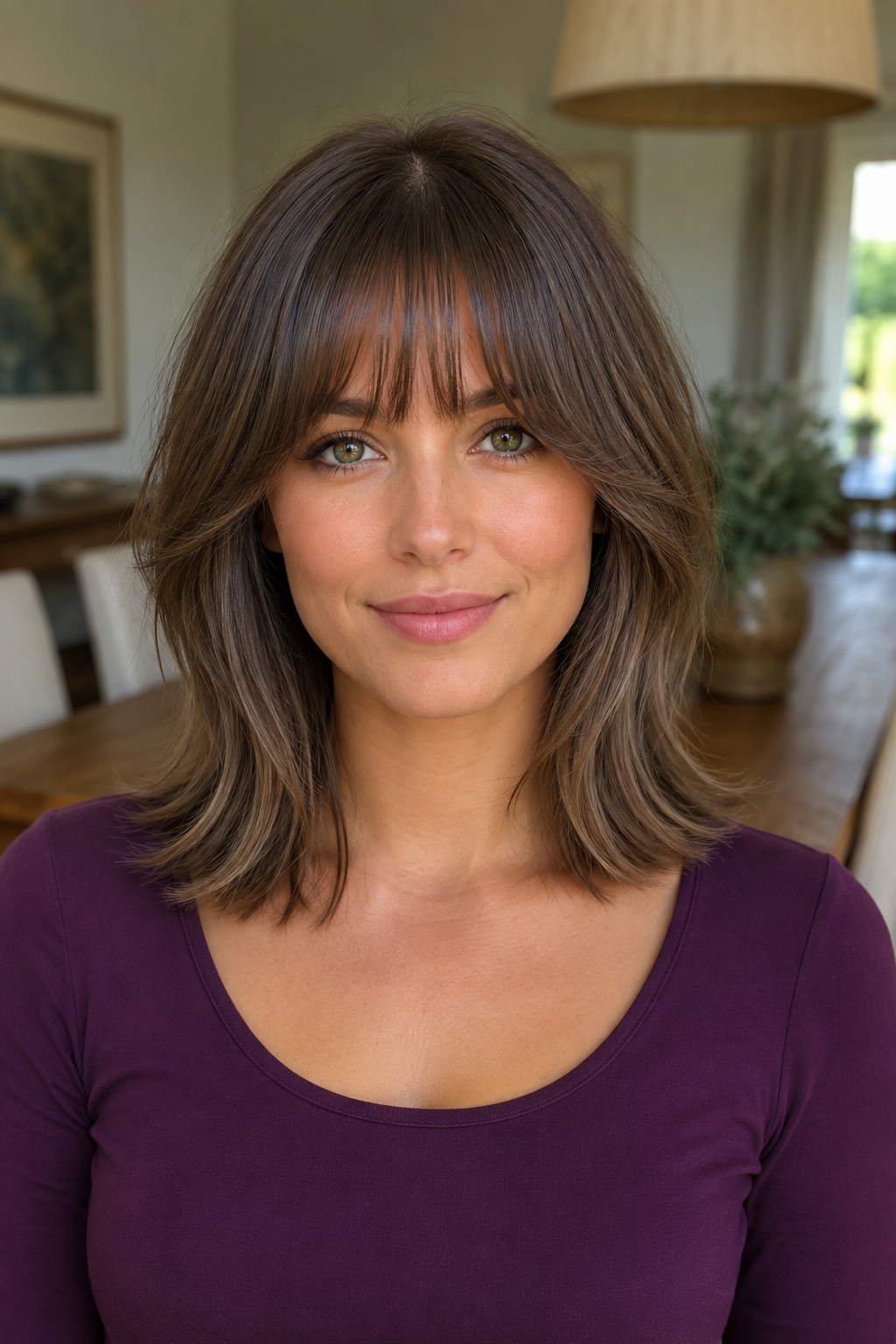
Narrower and straighter across the middle with the sides curving outward, forming a shape like a bottle neck.
They sit between curtain bangs and a blunt fringe, giving more coverage than a curtain but staying softer than a straight-across cut.
Suits anyone who wants a fringe with more presence. The straighter centre section makes them slightly higher maintenance than a true curtain.
Short Centre With Longer Sides
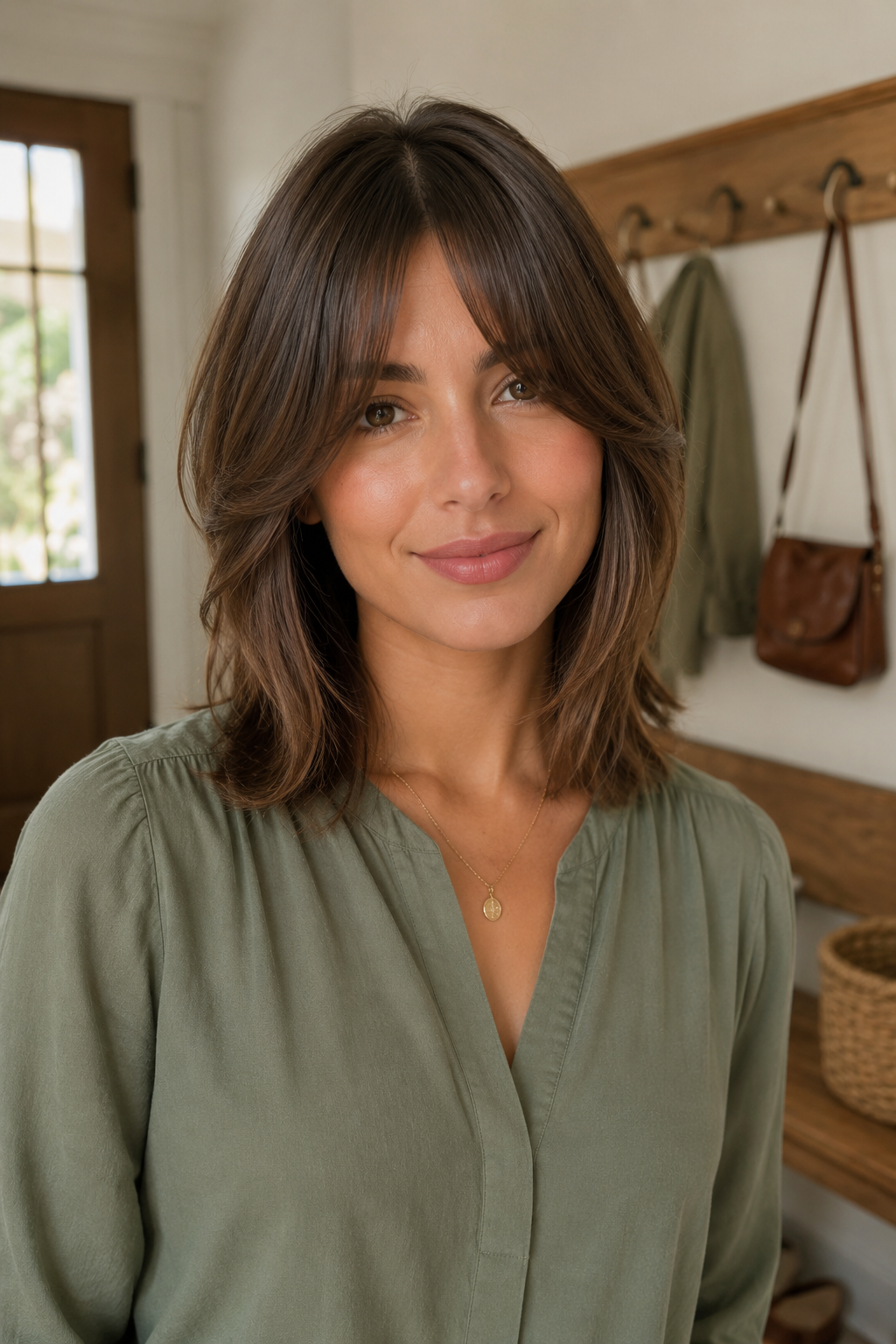
Cut so the middle section is noticeably shorter and the two sides drop away quickly toward the jaw.
That steep angle draws the eye vertically, which makes a rounder face look longer.
Perfect if you have been told bangs would widen your face. Our medium hairstyles for round faces post has more on shapes that work the same way.
Side-Swept Curtain Bangs
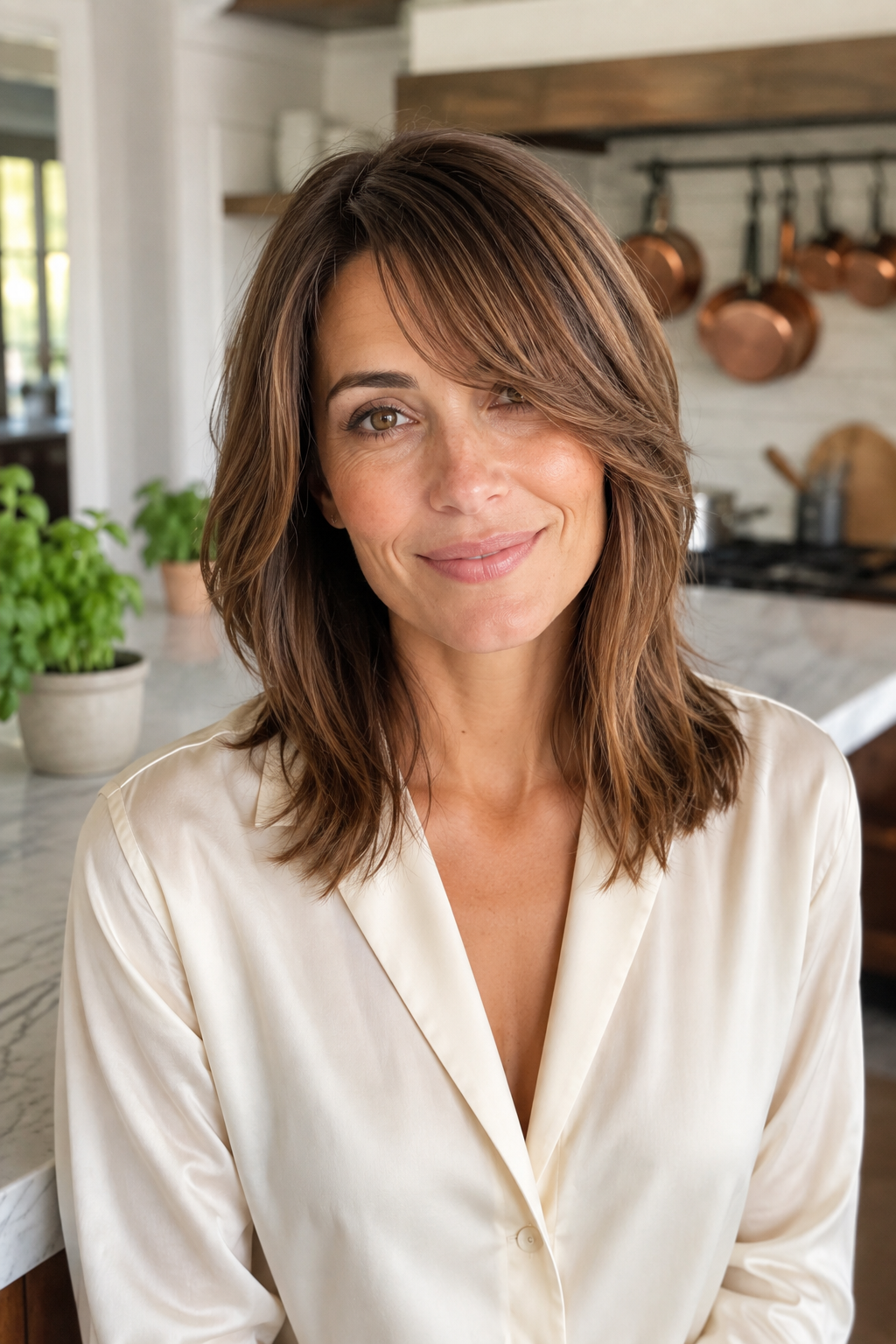
The part shifted off-centre so most of the fringe sweeps to one side, with a shorter section on the other.
The diagonal line across the forehead softens angular features better than a symmetrical fringe does.
Great for square faces and strong jawlines. Avoid a blunt or heavy fringe here, since a straight horizontal line tends to emphasise the angles rather than balancing them.
Off-Centre Part
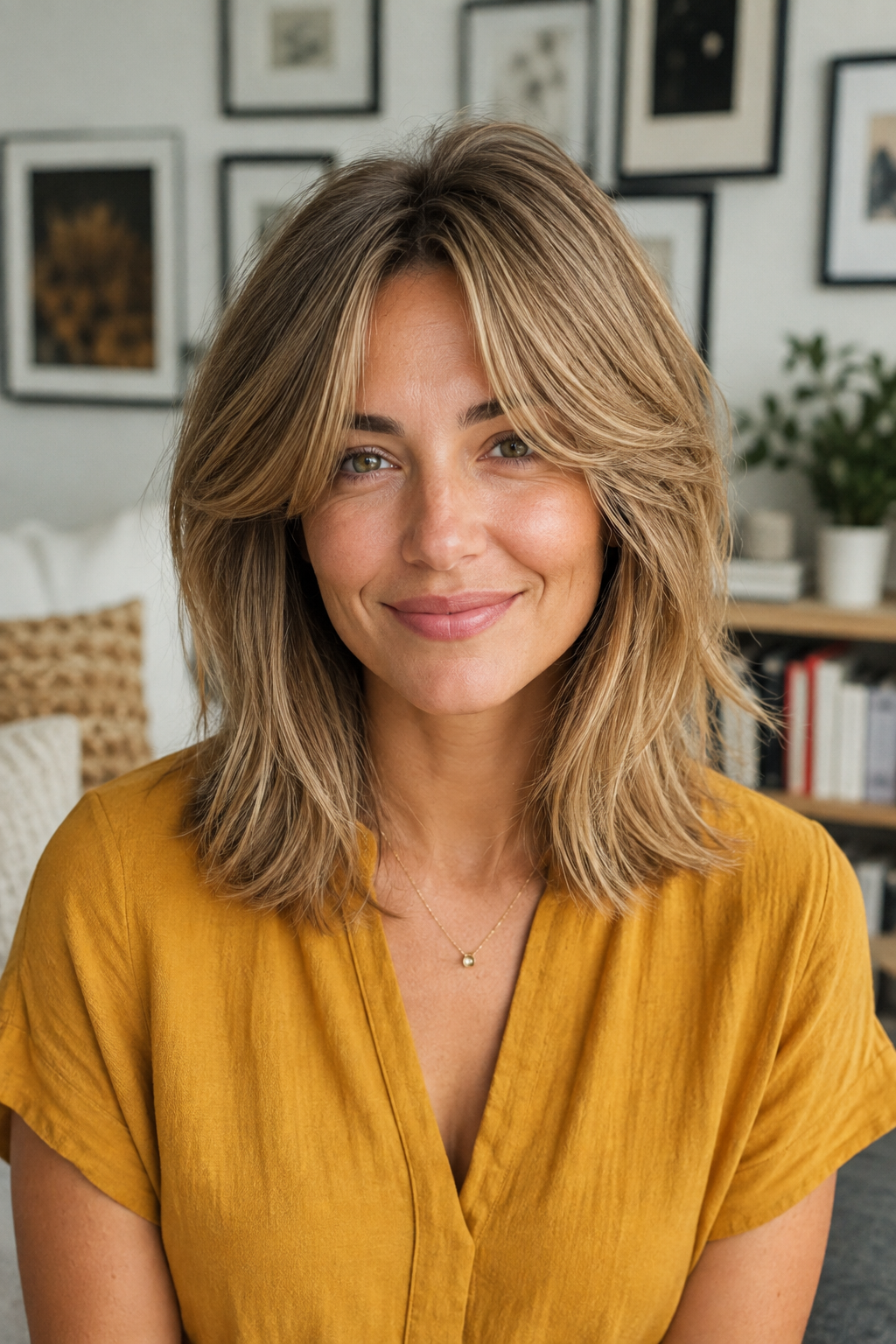
The part sitting slightly to one side of the middle, close enough to read as centred but not quite symmetrical.
The small imbalance stops the fringe looking rigidly styled, and it gives one side a little more volume at the root.
Suits almost everyone. It is also more forgiving than a true centre part, which needs the fringe cut evenly on both sides to look right.
Deep Middle Part
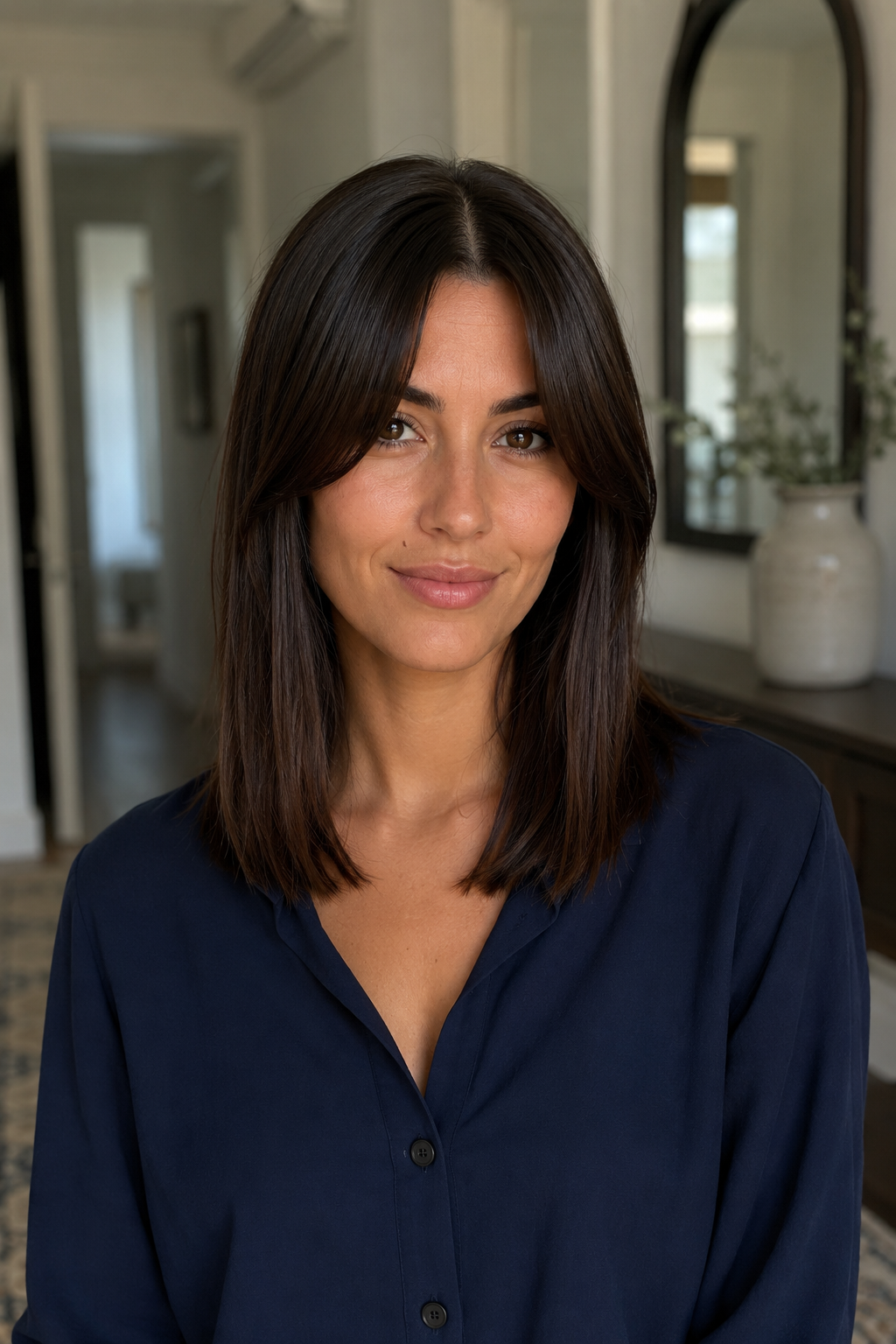
A sharp centre part with the fringe falling in two even halves either side of the face.
Symmetry is the whole effect. It looks deliberate rather than relaxed, which some people want and some do not.
Works especially well on straight hair. See our straight medium hairstyles post for the smooth finish this depends on.
Curtain Bangs on Curly Hair
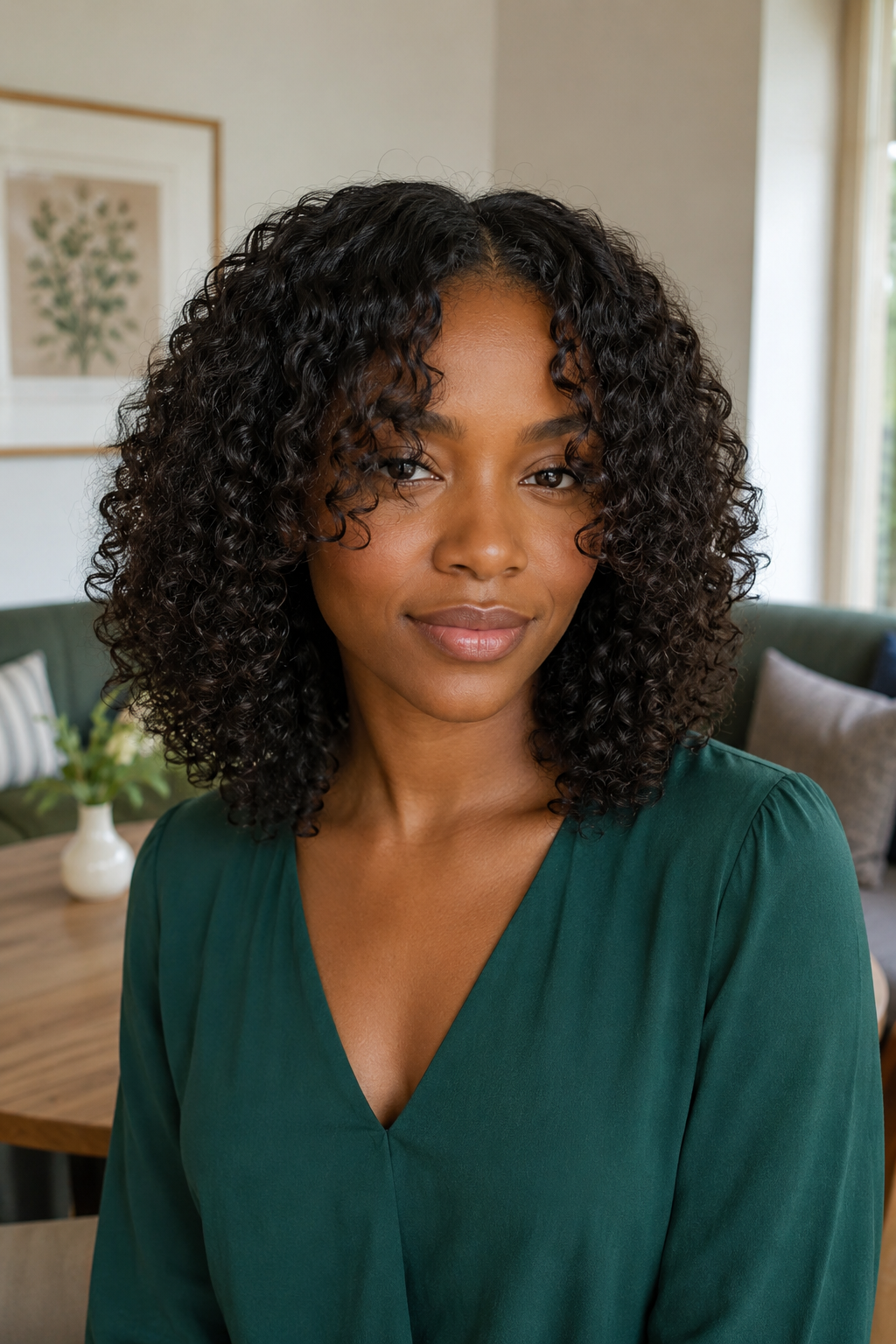
Cut noticeably longer than you want them to sit, since curls spring up considerably once dry.
Curly fringes cut at the intended length end up bunching at the forehead, which is the most common curly bang complaint.
Great on 3A to 3C texture. Have them cut dry so the stylist can see where each curl lands. Our curly medium hairstyles post covers dry cutting in more detail.
Curtain Bangs on Wavy Hair
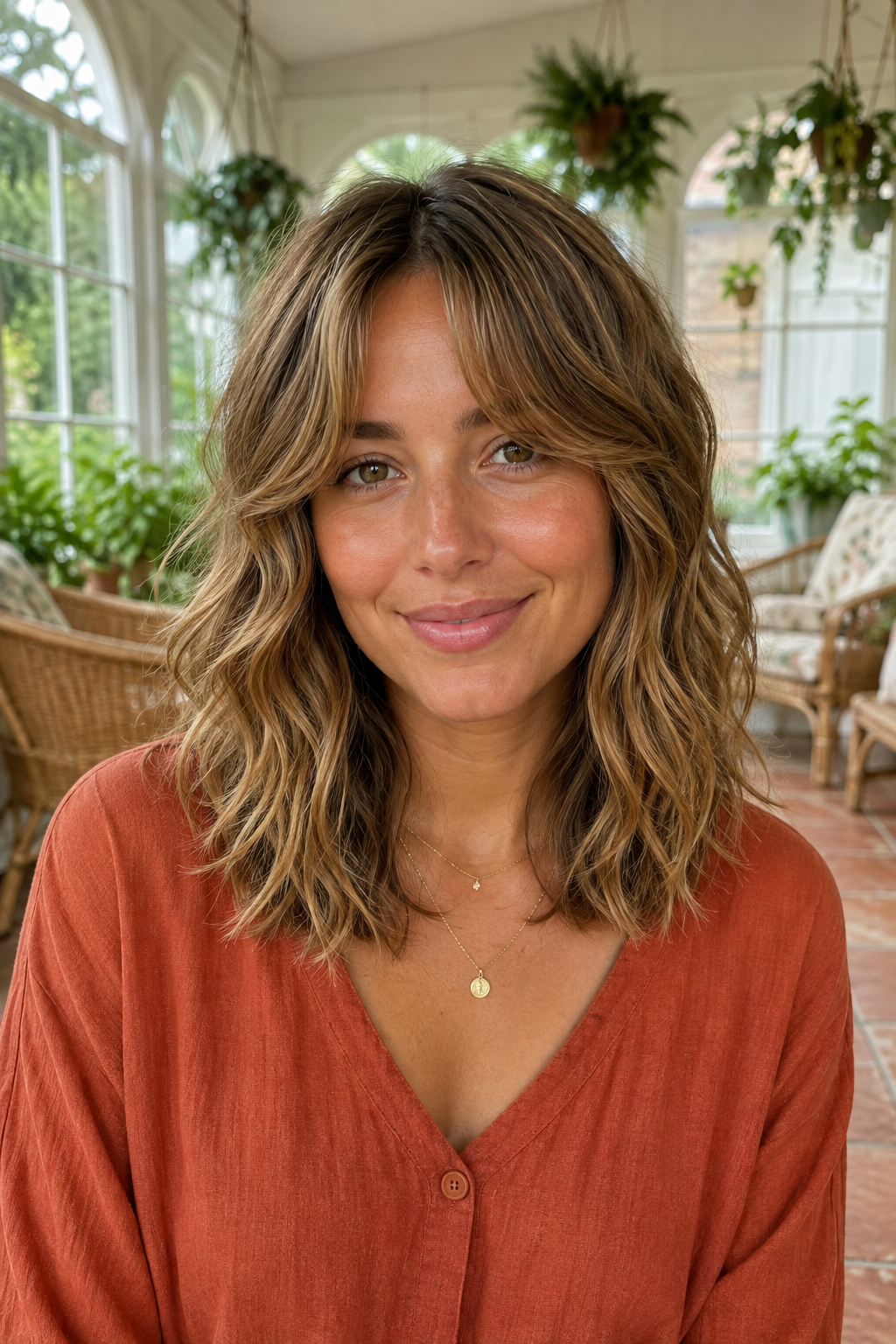
The wave does the sweeping for you, so the fringe falls sideways naturally with very little styling.
This is the texture curtain bangs suit most easily, since the natural bend produces exactly the shape the cut is designed for.
Perfect for 2B and 2C hair. Our wavy medium hairstyles post has more on working with that pattern rather than against it.
Curtain Bangs on Straight Hair
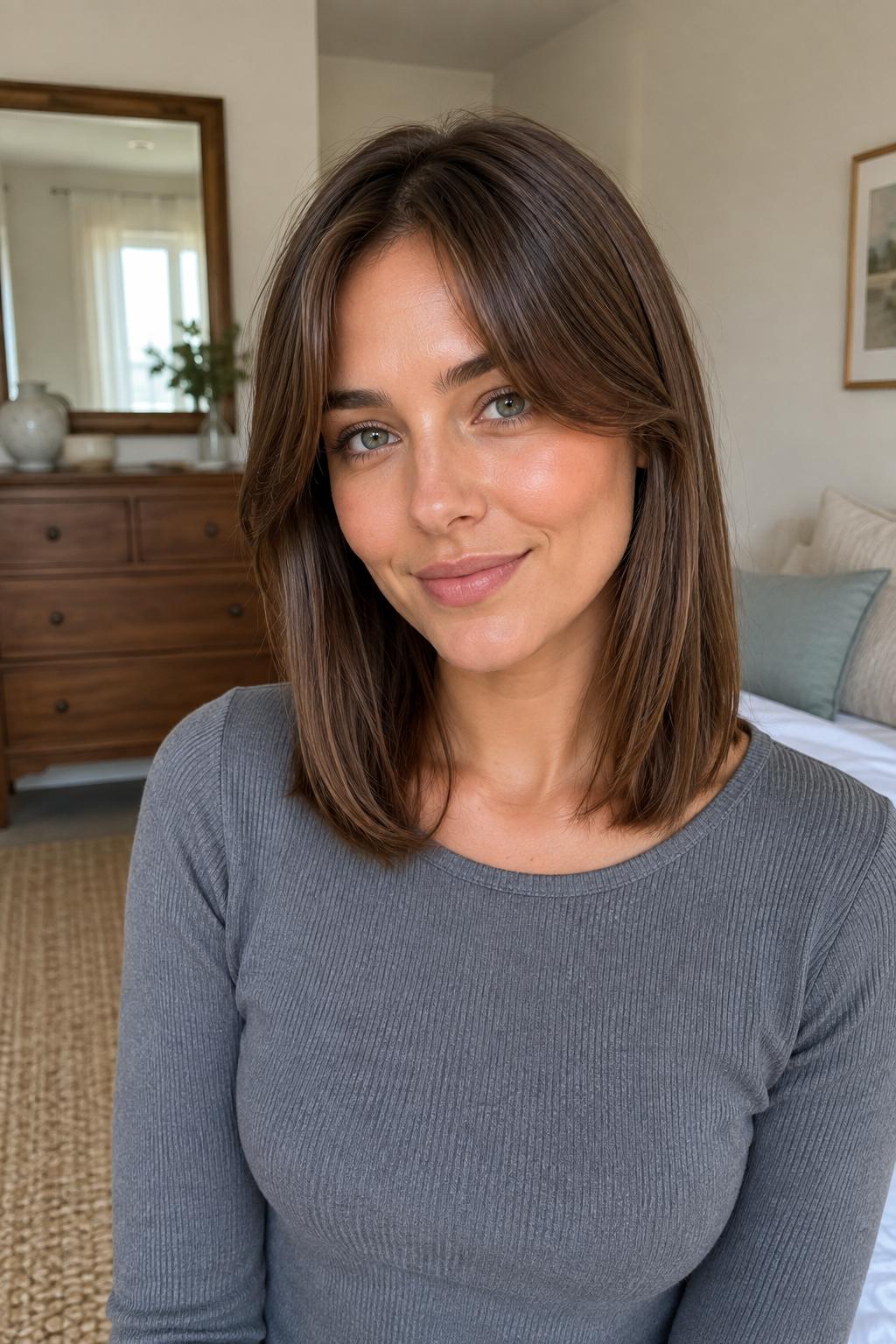
Straight hair has no natural bend, so the sweep has to be created with a brush each morning.
Without it the fringe hangs straight down and separates in the middle, which is not the intended look.
Suits anyone happy to spend two minutes on it. Dry the fringe first while it is still damp, brushing it back and to the sides, and it holds all day.
Curtain Bangs With Face-Framing Highlights
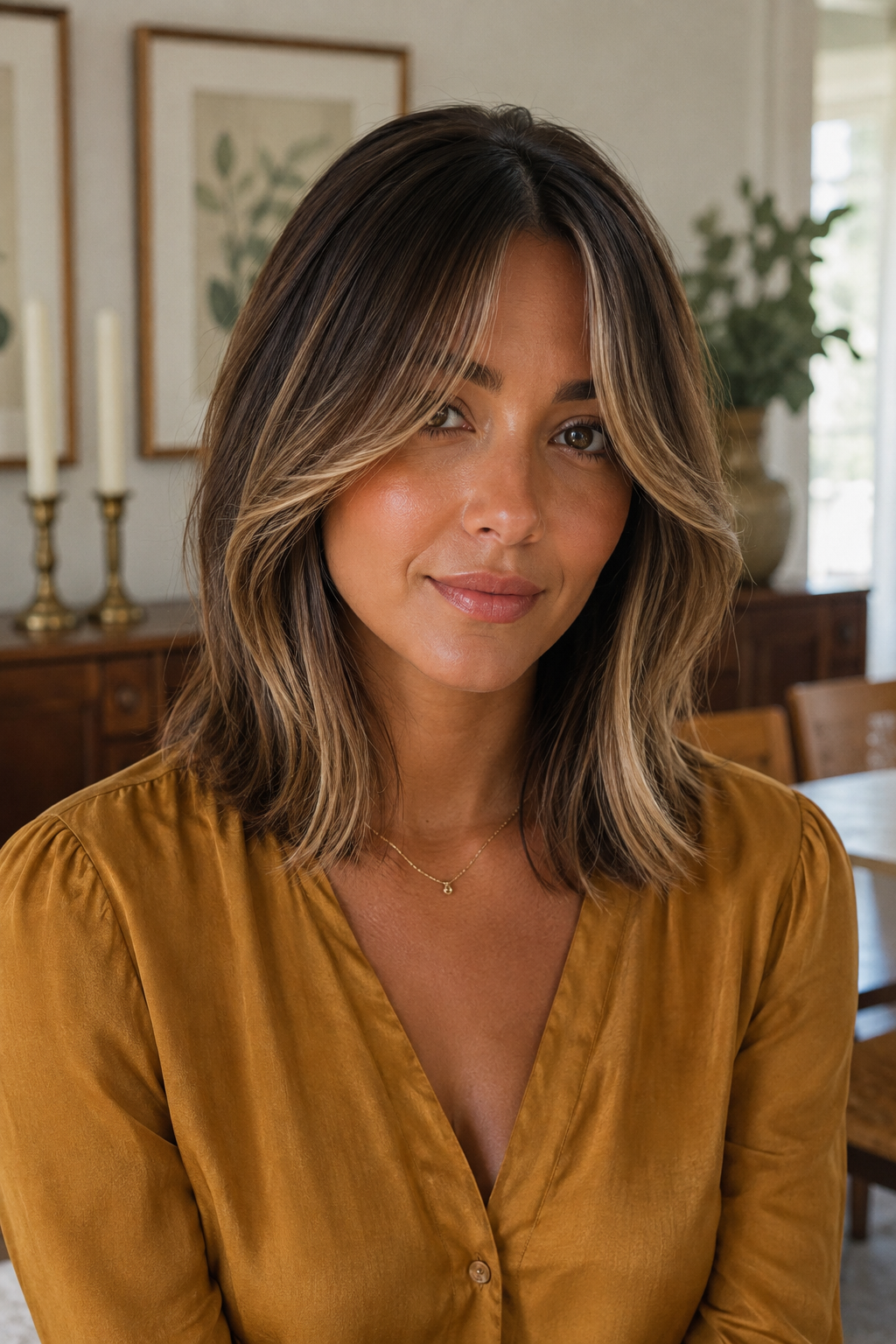
Lighter pieces placed through the fringe and the sections immediately beside it.
Brightness right at the face lifts the complexion, and the highlights make the sweep of the fringe more visible.
Great for anyone wanting color without processing much hair. Only a small section is treated. Our hair color ideas section covers tones that suit different bases.
Curtain Bangs Worn in an Updo
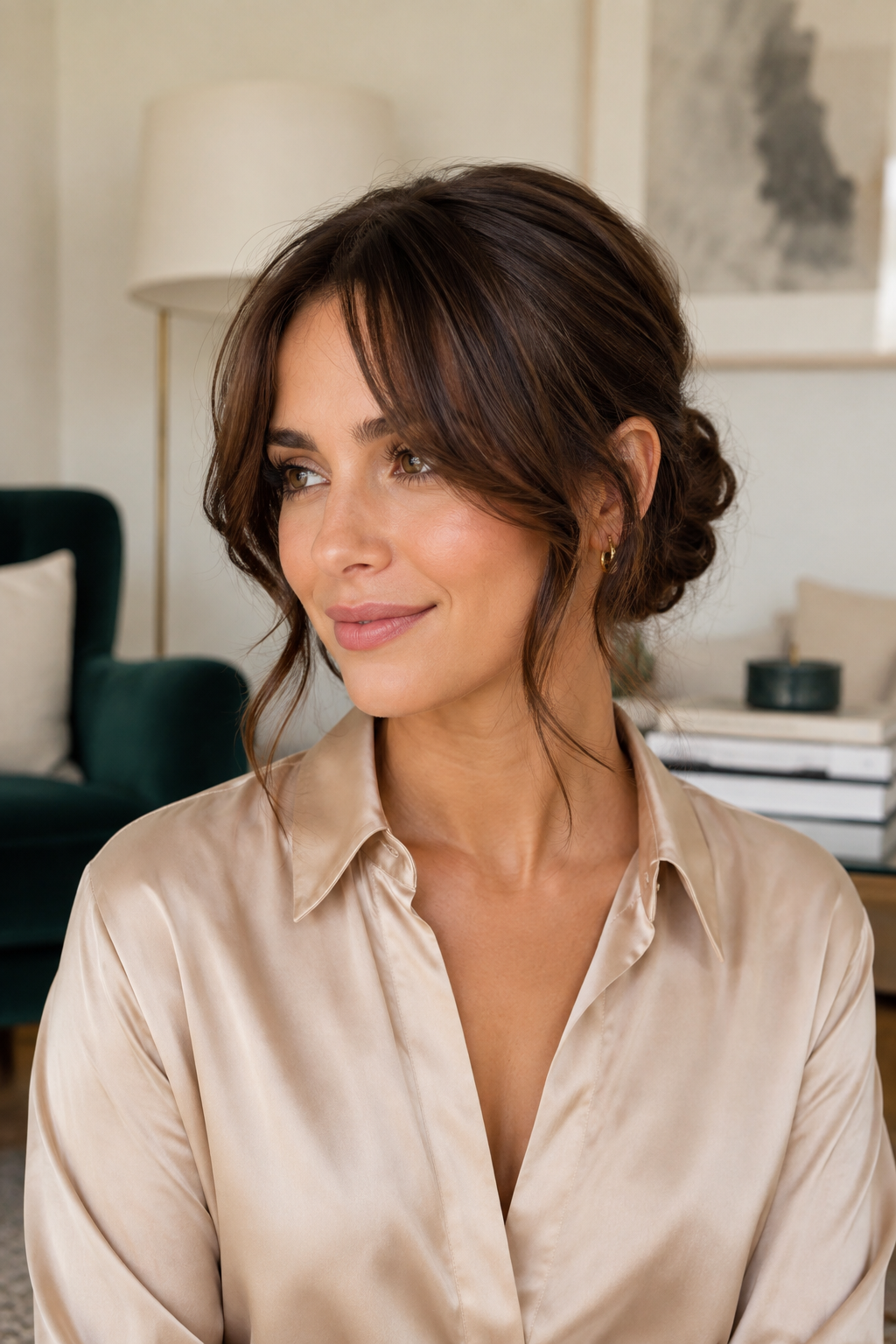
Everything gathered up while the fringe stays out, framing the face against the pulled-back shape.
The contrast is the point. A fringe softens an updo that would otherwise look severe.
Perfect for weddings and formal evenings. Our medium hairstyles for weddings post covers updos that pair well with a fringe left down.
Grown-Out Curtain Bangs Pinned Back
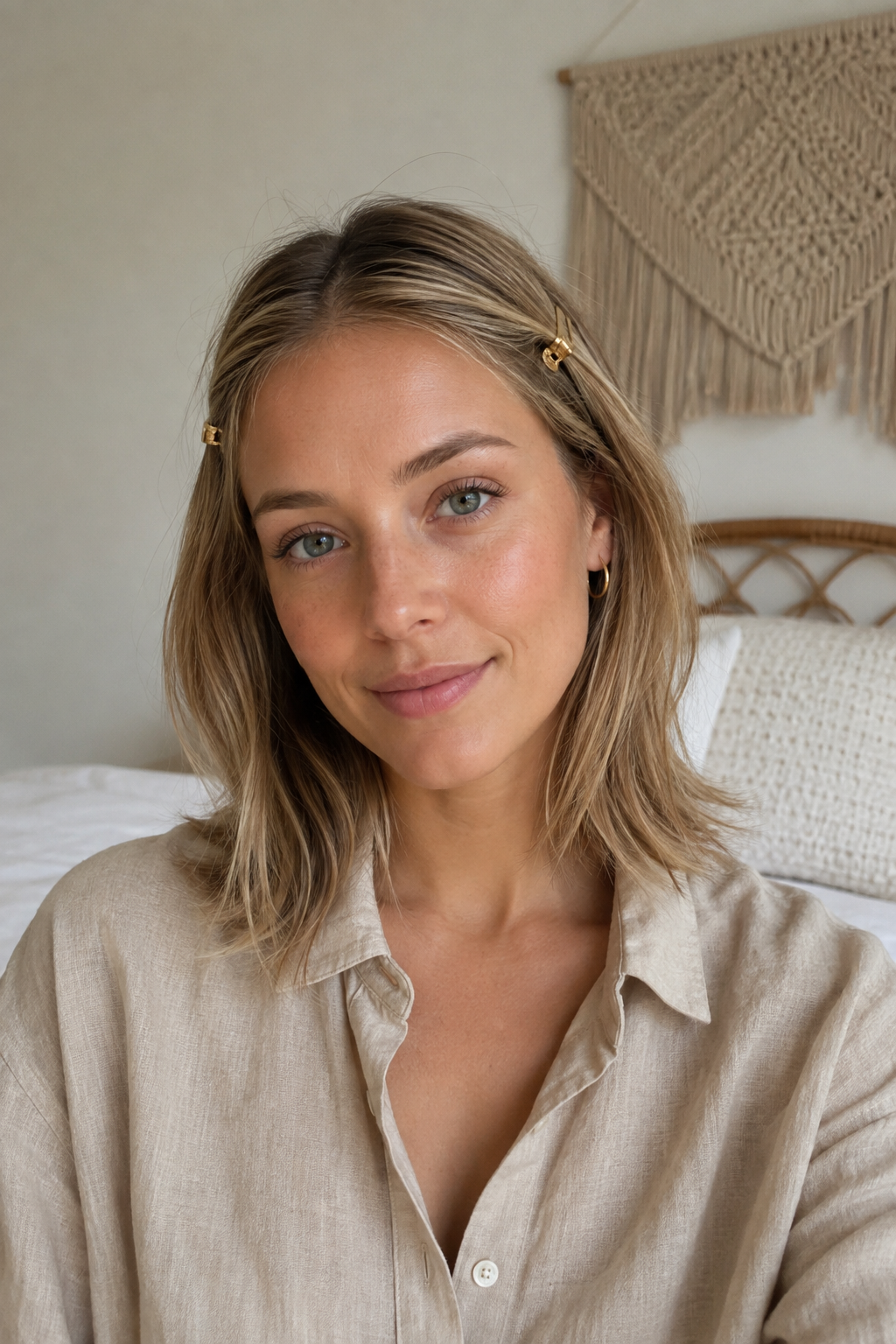
Bangs at that in-between length, pinned or clipped back at the sides rather than fought with.
Because curtain bangs grow out into face-framing pieces, there is a long stretch where they work perfectly well pinned.
Great for anyone in the growing-out phase. Two small clips at the temples handle it, and within a couple more months the pieces blend into your layers entirely.