22 Shaggy Layered Hairstyles and How to Wear Them Air-Dried
The shag is the one haircut that looks better the less you do to it, which is why it comes back every time blow-drying falls out of fashion.
Choppy layers from the crown to the ends give the hair somewhere to go, and most versions add a fringe so the face gets framed by the mess rather than lost in it.
The length and the bang change the look more than the cut itself does, and texture decides how much work it takes.
The classic shoulder-length shag with curtain bangs is the one every other version grew out of.
Jump to:
- Classic Shag With Curtain Bangs
- Wolf Cut
- Short Shag Bob
- Long Shag With Wispy Bangs
- Curly Shag
- Wavy Shag Lob
- Shag Mullet
- Pixie Shag
- Seventies Feathered Shag
- Shag With Full Choppy Bangs
- Soft Shag for Fine Hair
- Heavy Shag for Thick Hair
- Copper Shag
- Rooted Blonde Shag
- Gray Shag
- Shag on Blown-Out Natural Hair
- Shag With Micro Bangs
- Side-Parted Shag Without Bangs
- Sleek Straight Shag
- Butterfly Shag
- Half-Up Shag With a Claw Clip
- Shag With an Undercut Nape
Classic Shag With Curtain Bangs
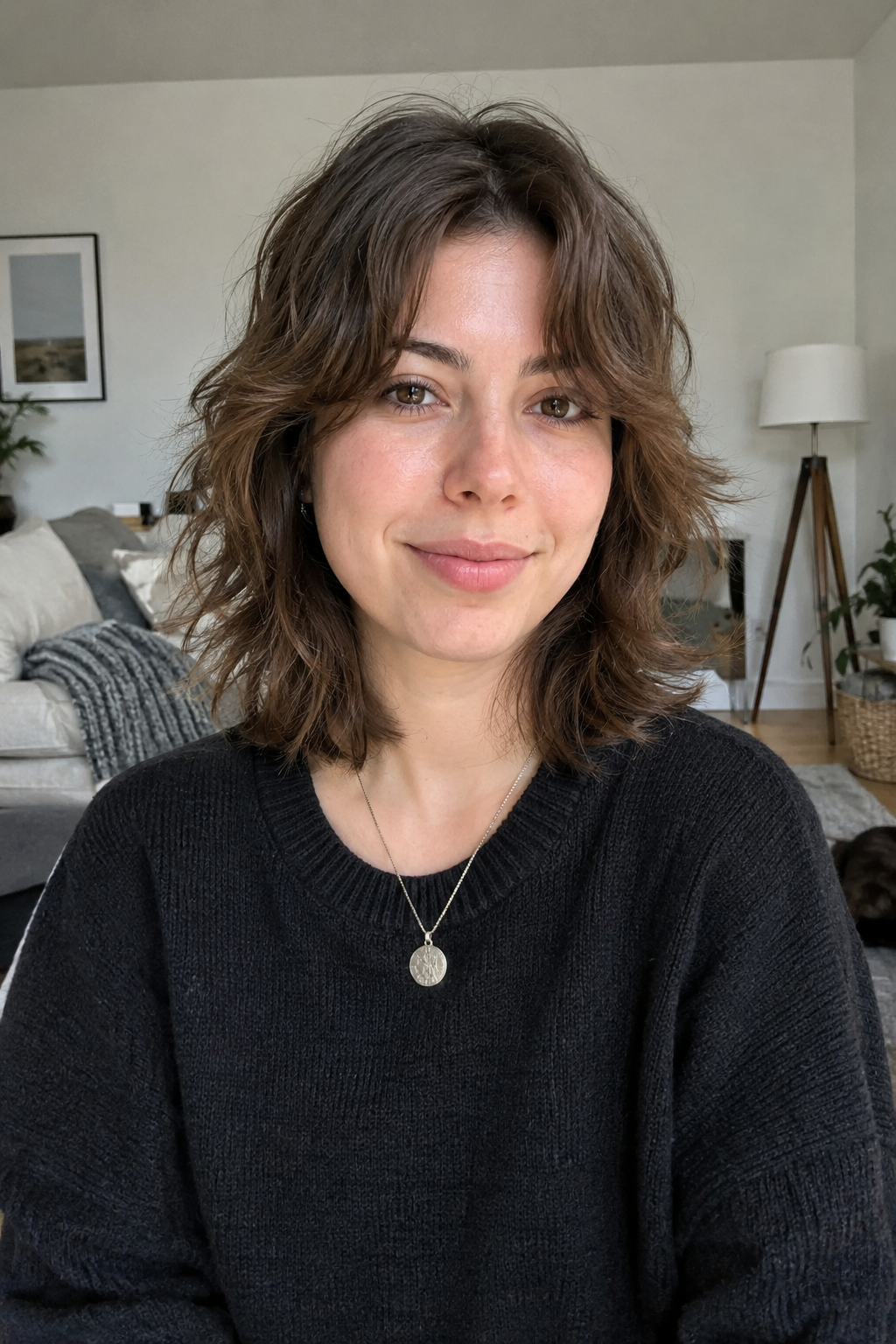
Choppy layers from the crown to the shoulder with curtain bangs parted in the center and curving into the shortest layer.
This is the shag every other version grew out of, and the layers do the styling. The crown lifts on its own and the ends flick where they land, while the curtain bangs keep the front soft.
Ask for the shortest layers at the crown and the bangs cut to blend into them. Air-dry with mousse and shake it out at the roots.
Wolf Cut
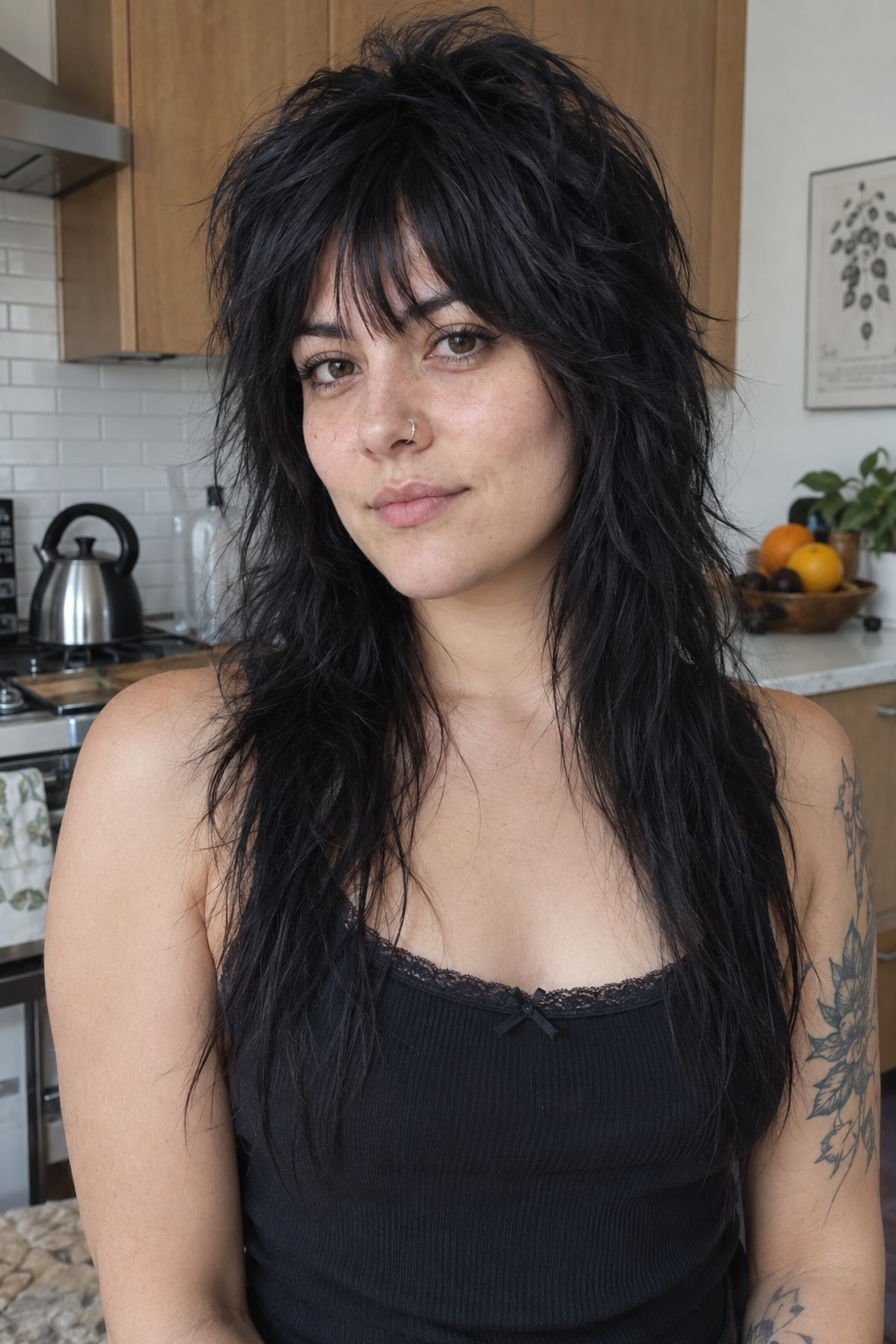
Heavy choppy layers at the crown over thinner, longer ends past the shoulders, with a ragged fringe that looks cut in the same sitting.
The wolf cut is the shag with the volume turned up, built on a short full top and long wispy ends, and it has been the most requested shaggy cut for years.
It suits hair with density on top. Ask for the crown short and the ends left long with the bangs point cut, then air-dry with a texture spray.
Short Shag Bob
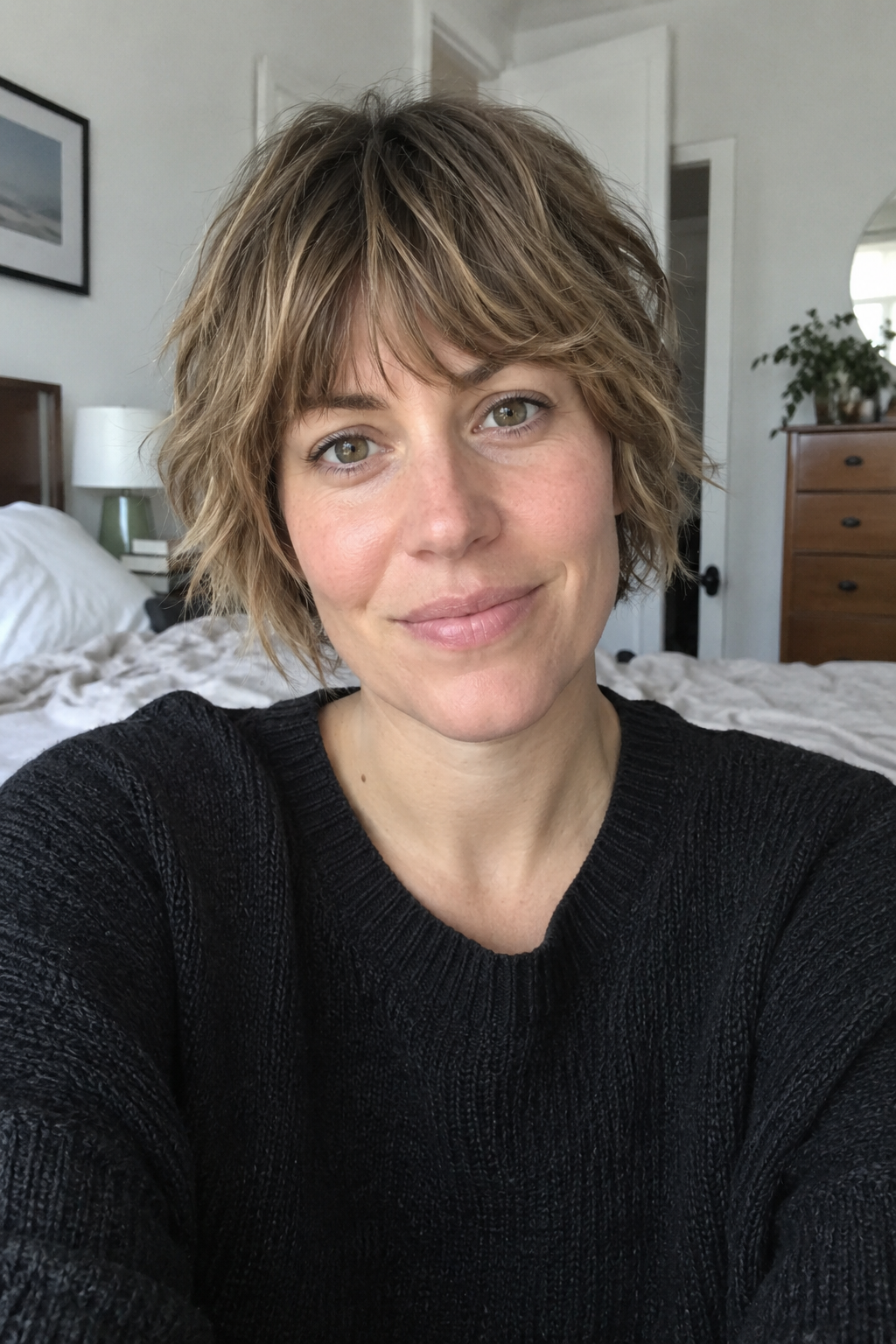
A jaw-length bob cut in choppy layers with the ends left piecey and a soft fringe at the brow.
The short shag gives a bob movement without a blow-dry, and the layers at the crown stop it from sitting flat the way a one-length bob can.
Ask for the layers to start at the crown and the ends point cut. A little texture paste pinched through the tips keeps the pieces separate, and it air-dries in minutes with a shake at the roots.
Long Shag With Wispy Bangs
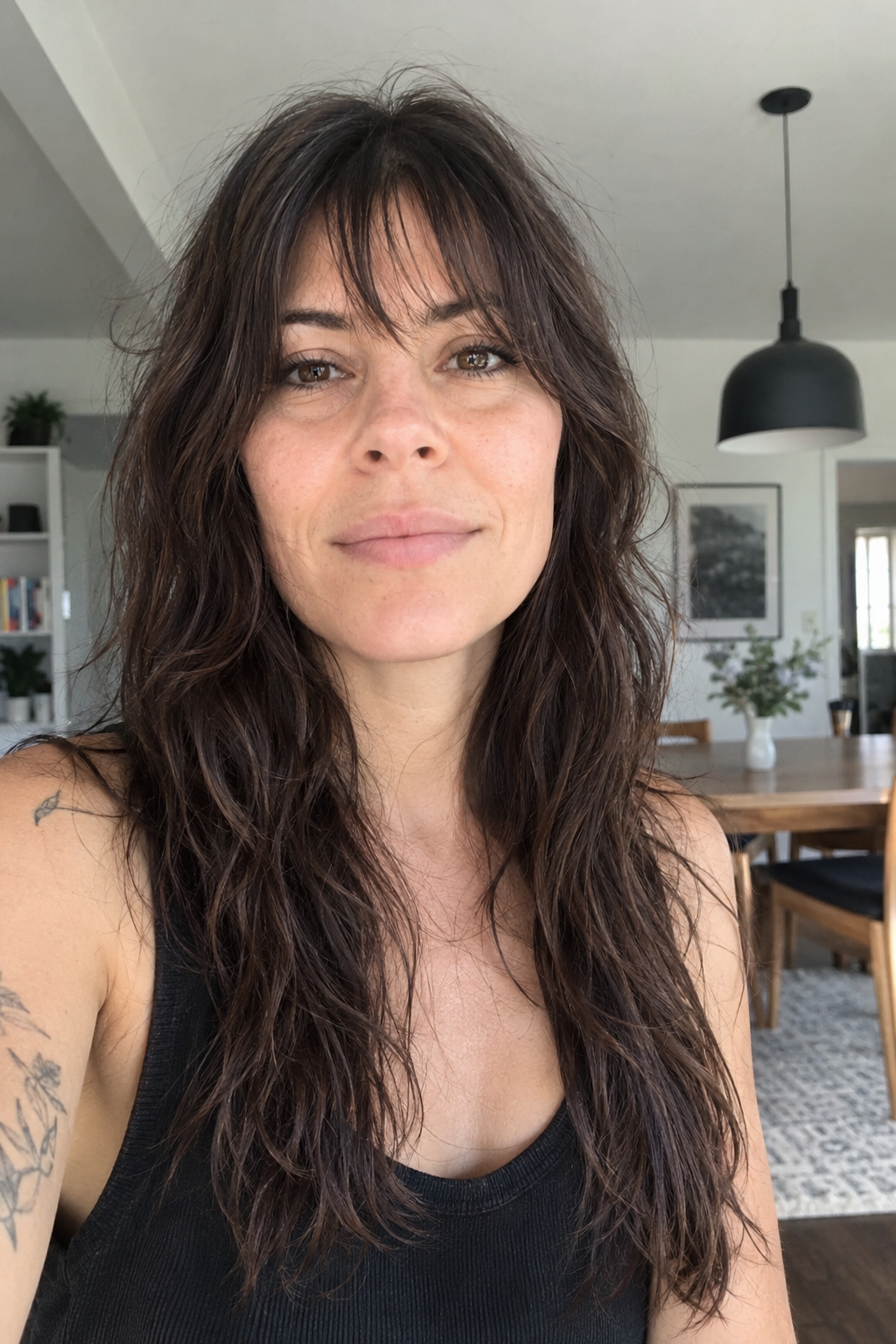
Hair past the shoulders with shaggy layers starting at the cheekbone and a thin wispy fringe the forehead shows through.
The long shag keeps the length and adds the texture, so the hair moves instead of hanging, and the wispy bang keeps the front light where a heavy fringe would drag the whole cut down.
Ask for the layers to start high and the bangs cut from a shallow section. Air-dry with a sea salt spray and scrunch.
Curly Shag
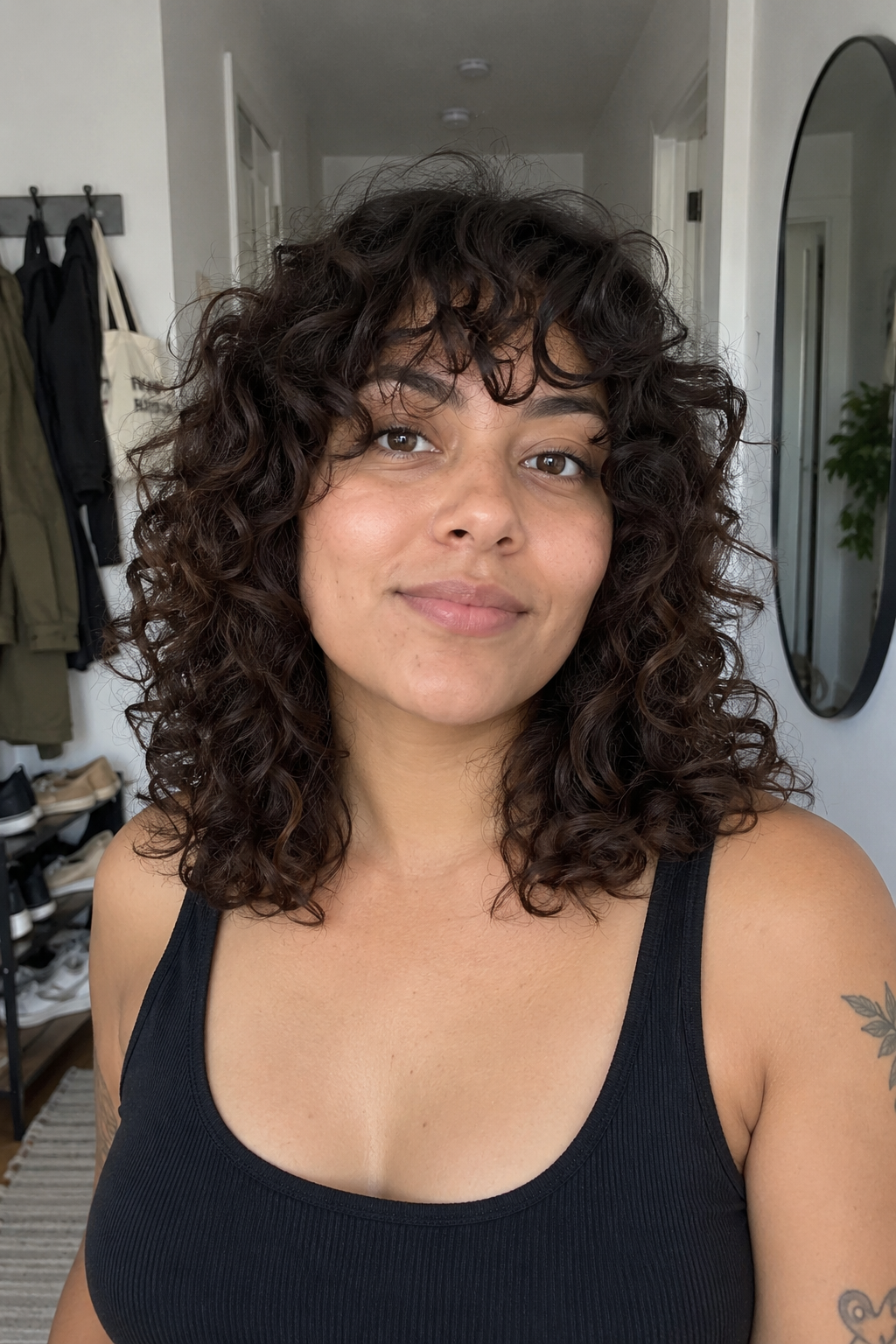
Curls cut in shaggy layers so each one sits in its own space, with a curly fringe at the brow.
The shag was made for curls, since the layers let the curl pattern show from the crown down instead of stacking into a triangle.
It gets cut dry, curl by curl, with the shortest layers at the crown and the bangs left long enough to shrink into place.
Scrunch a curl cream through damp hair and diffuse upside down, and skip the brush.
Wavy Shag Lob
A collarbone lob with shaggy layers and loose waves through the length, the ends left straight and the fringe pushed to one side.
The waves and the layers do the same job, which is break up the hair so it moves, and together they give a lob the texture a plain cut needs a wand to fake. It suits hair that holds a wave.
Wave the lengths away from the face with the last inch left straight, then finish with a texture spray.
Shag Mullet
Short choppy layers on top and at the sides, with the length left long at the back.
The shullet is the shag with its nerve up.
It keeps the shaggy crown and the fringe but drops the length to the back, so the cut looks short from the front and long from behind.
It suits women who want to be noticed. Ask for the top and sides short and choppy with the back past the nape, then style with paste on top only.
Pixie Shag
A pixie cut in choppy layers with the top left long enough to fall into a wispy fringe, the sides short and the whole thing a little messy.
The shixie takes the texture of a shag down to pixie length, and it suits women who want short hair without the neat shape a classic pixie has.
Ask for the top layered long and the sides tapered. A little paste through the top and a shake finish it, and trims every five weeks keep the shape.
Seventies Feathered Shag
Shaggy layers blown back from the face in soft wings, with a curtain fringe flicked the same way.
This is the shag at its most seventies, with the layers feathered outward so the crown lifts and the sides flick away from the face.
It needs a round brush and some density. Ask for the layers from the cheekbone down and the bangs long enough to blow back.
Roll each layer back over a round brush and set the front in rollers.
Shag With Full Choppy Bangs
Shoulder-length shaggy layers with a heavy choppy fringe covering the forehead, the ends of the bangs ragged rather than straight.
The full choppy bang gives the shag a stronger front than curtain or wispy bangs, and the ragged edge keeps it from looking like a blunt fringe on a textured cut.
Ask for the bangs cut full and point cut at the ends, and the layers from the crown. Air-dry with mousse and push the bangs down with your fingers.
Soft Shag for Fine Hair
Shaggy layers kept soft and few, with the length at the collarbone and a light fringe at the brow.
Fine hair cannot take the full shag, because every layer removes weight the ends need, so the soft version keeps the layers to the top and the fringe thin.
The result still moves like a shag but the ends stay full. Ask for scissor-cut layers at the crown only and no thinning anywhere.
Air-dry with a root-lifting mousse and finish with a dry texture spray.
Heavy Shag for Thick Hair
Thick hair cut in heavy shaggy layers from the crown to the shoulder, with the bulk removed from the inside and a full fringe.
Thick hair is where the shag does its best work, since the layers take out the weight that makes a blunt cut sit like a block, and what is left looks like movement.
Ask for internal thinning through the back and heavy layers on top, with the bangs full. Air-dry with a light cream and shake it out.
Copper Shag
A shoulder-length shag in warm copper with curtain bangs, the color brightest at the ends where the layers flick.
Copper and the shag arrived back together, and the layers show the color at every height so it looks alive rather than flat. It suits warm and olive skin best.
Ask for a copper matched to your skin, deeper auburn for cooler tones and brighter for warmer ones. Air-dry with mousse and use a color-depositing conditioner once a week.
Rooted Blonde Shag
A shag in bright blonde with the roots left dark, the contrast showing at the crown where the layers are shortest.
The rooted blonde looks grown-in on purpose, which suits the shag because neither is meant to look fresh from the salon. It suits women who do not want to be at the salon every six weeks.
Ask for the roots left a shade or two deeper and the ends lifted. A purple shampoo once a week keeps the blonde clean.
Gray Shag
Silver hair at the collarbone in shaggy layers with a soft fringe at the brow.
The shag suits gray hair better than a smooth cut does, because the texture hides the wiry strands that come with silver and the layers lift a crown that has gone finer.
The fringe softens the forehead. It suits women who want a cut that air-dries. Ask for soft layers at the crown and the bangs cut light.
A purple shampoo once a week keeps the silver from yellowing.
Shag on Blown-Out Natural Hair
Natural hair blown out stretched and fluffy, cut in shaggy layers from the crown down with a full fringe at the brow.
Black women get the shag cut on a blowout so the layers show, and the stretched texture gives the cut a softness that straight hair cannot match. It suits 3C to 4B hair worn stretched.
Ask for the layers cut on stretched hair with the shortest at the crown. Pick the roots for height and pineapple it at night.
Shag With Micro Bangs
A collarbone shag with the fringe cut well above the brows and the forehead showing.
Micro bangs give the shag an edge the longer fringes do not, since the short bang shows the whole face while the layers stay messy around it.
The contrast between the cropped bang and the undone length is the point. Ask for the bangs cut with texture rather than a straight line, and the layers from the crown down.
Trims every three weeks keep the bangs short.
Side-Parted Shag Without Bangs
Shaggy layers from the cheekbone to the shoulder with a deep side part and no fringe, the shortest pieces sweeping across the forehead instead.
Not every shag needs bangs. The side part lets the shortest layers do the framing, and it suits women growing a fringe out or avoiding one.
Ask for the layers to start at the cheekbone and the part set deep. Blow-dry the front over to the heavy side and leave the rest to air-dry.
Sleek Straight Shag
A shag flat ironed smooth, so the choppy layers show as clean steps instead of texture.
The straight version turns the shag inside out. With the texture ironed away, the layers sit as sharp lines from the crown to the ends, and the cut looks sharp rather than undone.
It suits straight, medium to thick hair and a center part. Ask for the layers cut with clean ends rather than point cut.
Flat iron in sections with a heat protectant and a drop of serum.
Butterfly Shag
Two levels of shaggy layers, short ones ending at the chin and long ones past the shoulders, with a curtain fringe blending into the top level.
The butterfly shag is the shag with the most volume, since the short top layers lift away from the face while the long layers keep the length, and both get choppy ends.
It suits thick hair. Ask for the top layers at the chin and the ends point cut, then blow-dry away from the face and shake it out.
Half-Up Shag With a Claw Clip
The top section of a shag twisted back into a claw clip, with the shaggy layers below left down and the fringe out.
It is the quickest fix for a shag on a hot day.
Pulling the top back shows the layers at the sides and lifts the crown, and the pieces that fall out look like they were meant to, because on a shag they were.
Gather the top from the temples back and twist it into the clip, then shake out the ends.
Shag With an Undercut Nape
A shoulder-length shag with the nape shaved short underneath, so the hair looks full when it is down and sharp when it is pulled up.
The undercut takes the bulk out of a thick shag and keeps the neck cool, and from the front nobody knows it is there. Pull the hair up to show it.
Ask for the undercut to sit below the occipital bone so the layers cover it. It needs a trim every three weeks.