
21 Wavy Medium Hairstyles That Keep Your Waves From Falling Flat
Wavy hair has a particular kind of unreliability to it. You wash it, the waves look good, and by two in the afternoon the top half has gone straight while the bottom half is still doing something. Length is usually the culprit. Too short and the waves frizz before they can form, too long and the weight pulls the pattern out entirely. Shoulder length is the sweet spot where an S-bend has room to develop without being dragged flat. Getting the layers right and keeping product light does most of the rest. The ideas below cover cuts, ways to wear them, and a couple of color options worth considering.
Jump to:
- Wavy Lob With Internal Layers
- Blunt Wavy Lob
- Angled Wavy Bob
- Italian Bob
- French Girl Midi
- Wavy Shag
- Wavy Butterfly Cut
- Wavy Wolf Cut
- Rounded Layers
- Crown Layers
- Feathered Ends
- Curtain Bangs on Waves
- Wispy Bangs on Waves
- Tousled Choppy Lob
- Beach Waves
- Half-Up Half-Down
- Side Braid With Waves Down
- Overnight Braid Waves
- Air-Dried Waves With Mousse
- Caramel Ribbons on Brunette Waves
- Golden Balayage
Wavy Lob With Internal Layers
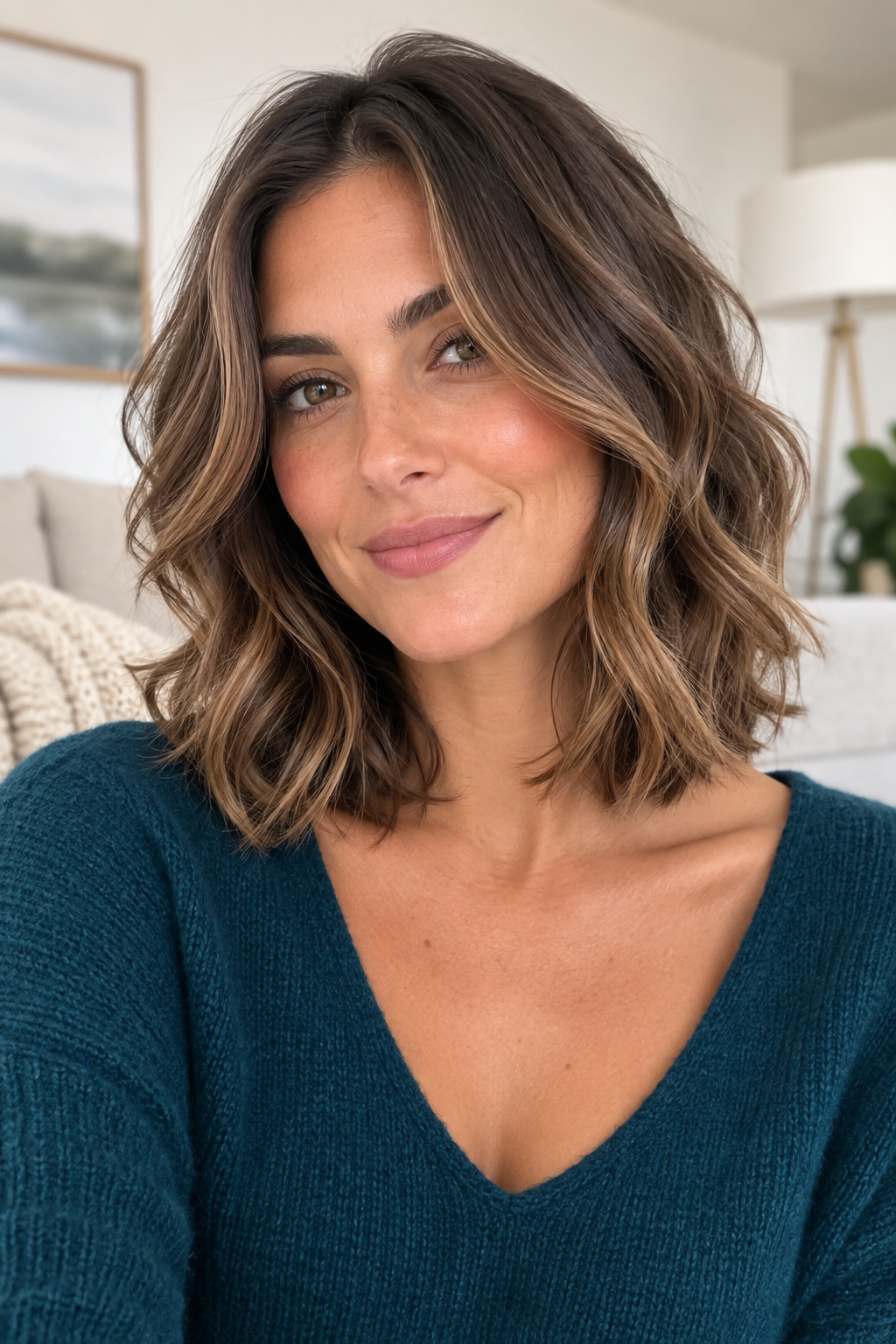
A long bob at the collarbone with layers cut inside the length rather than on the surface. The outline stays clean while weight comes out from underneath.
That hidden layering is what lets the waves bounce instead of hanging.
Great for anyone who wants movement without the choppy look that surface layers create. Ask specifically for internal layering, since a stylist working with straight-hair habits will often cut visible layers by default.
Blunt Wavy Lob
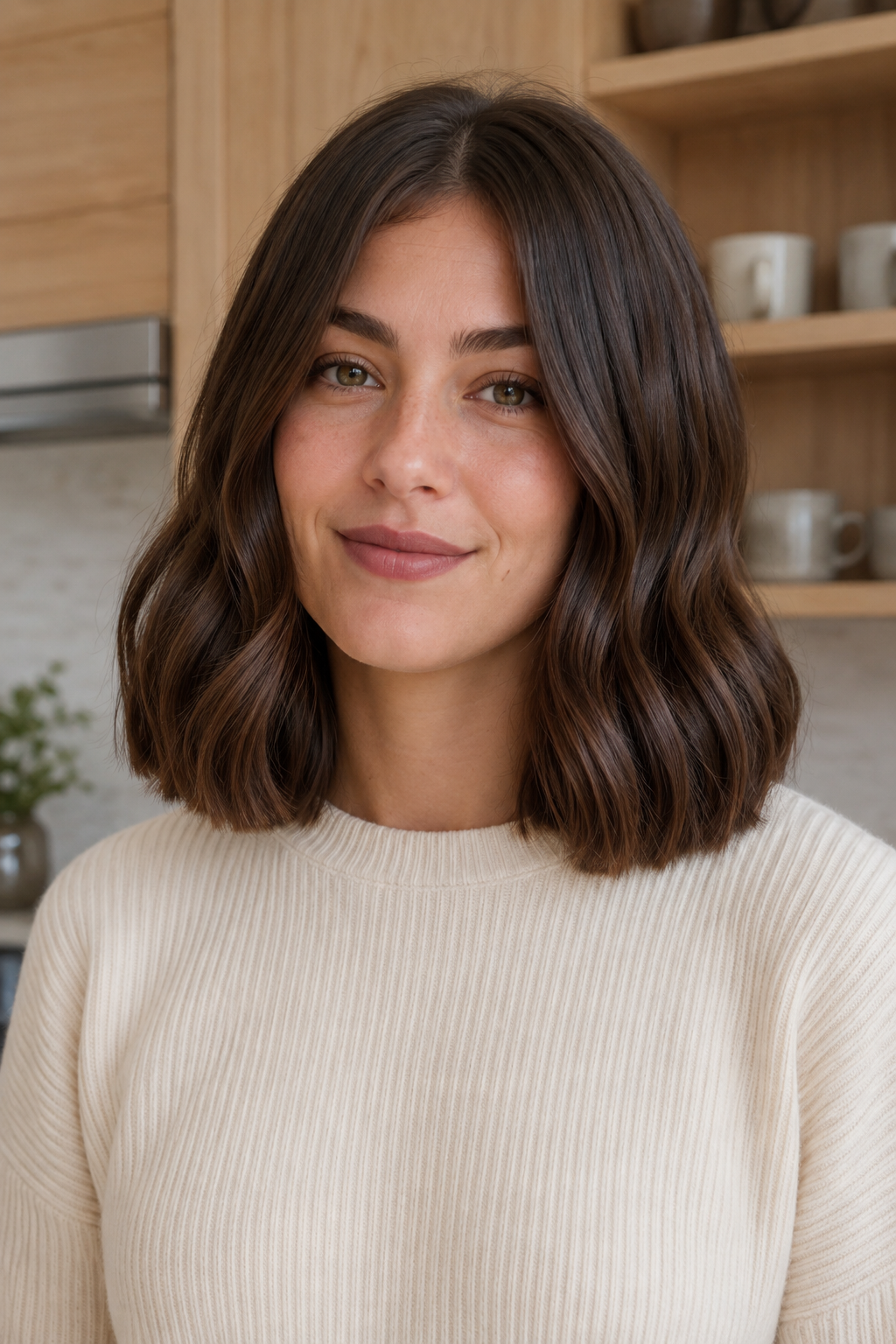
No layers at all, ends cut to one sharp line at the collarbone. Counterintuitive advice for texture, and it solves a real problem.
Fine 2A waves thin out fast when layered, so keeping the weight in makes the ends look fuller.
Perfect for anyone who has come out of a salon with wispy, stringy ends. Our post on lob hairstyles for fine hair covers more about keeping density at the bottom.
Angled Wavy Bob
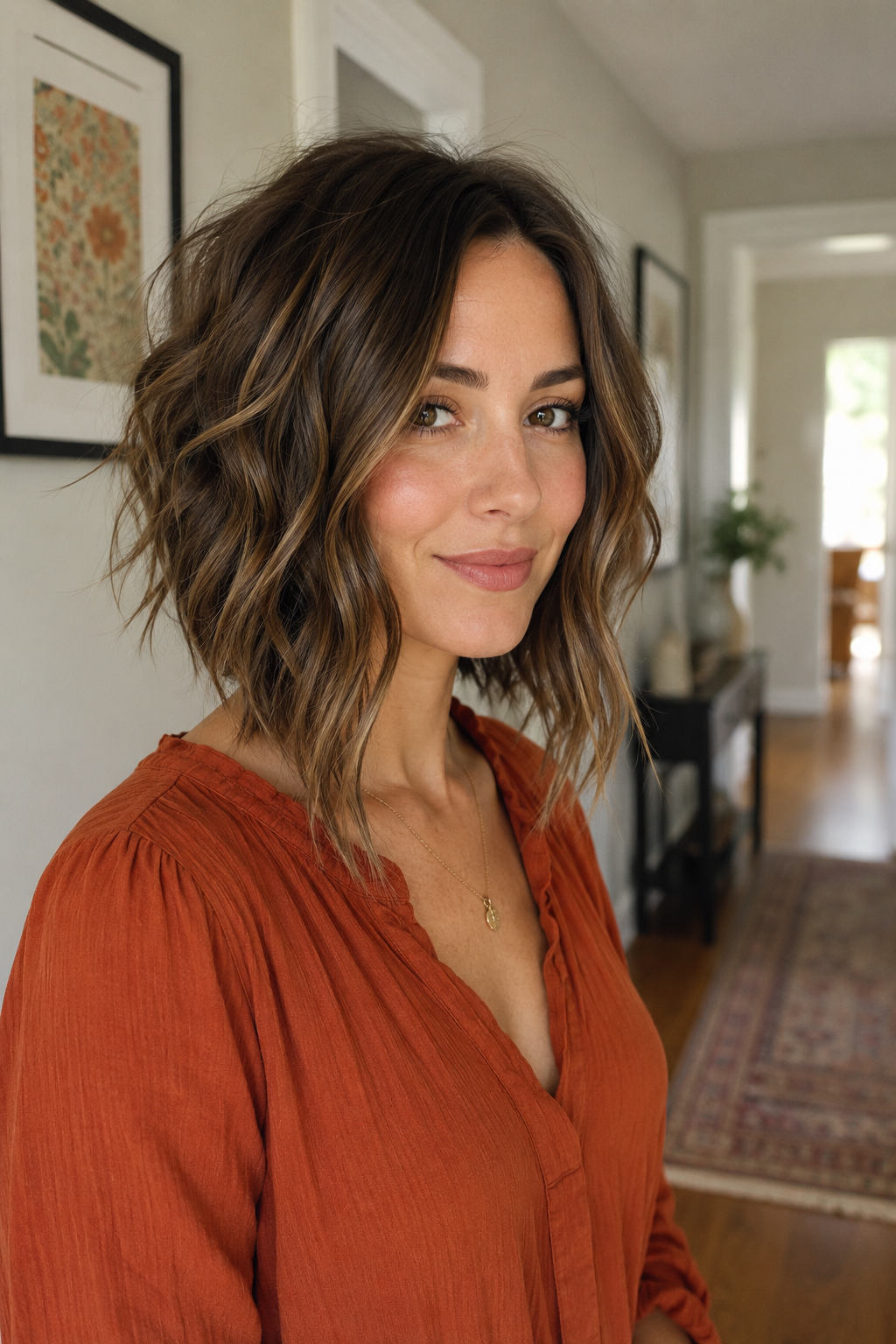
Shorter through the back, longer toward the front. The angle gives the cut a direction that waves alone do not provide.
Wave texture softens the line, so the change between lengths looks gradual rather than sharp.
Suits anyone who wants their hair off their neck but not off their face. The longer front pieces also hold a wave better than the back, since there is more length for the bend to form in.
Italian Bob
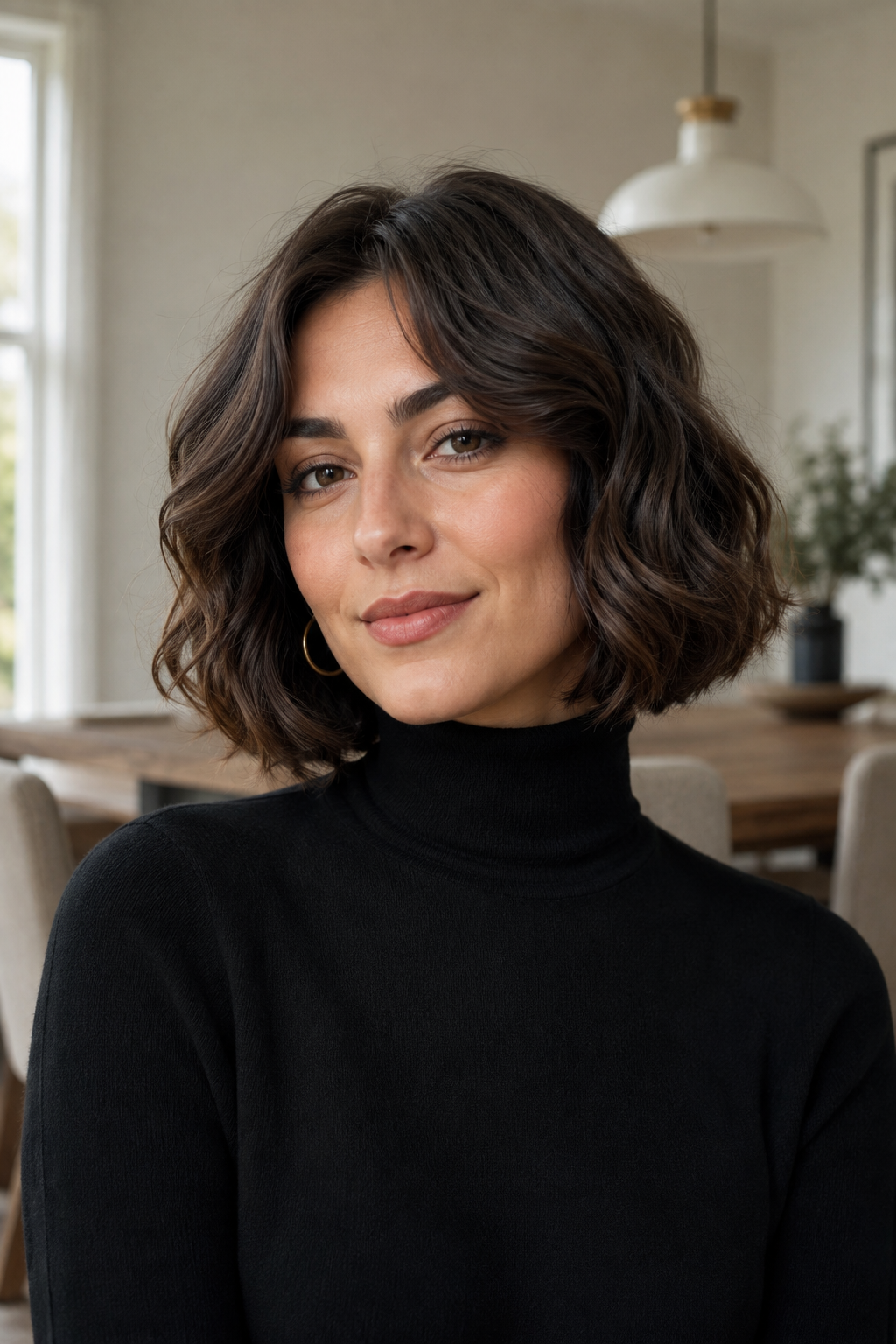
A chin-to-shoulder cut with a gently curved shape and volume built through the sides. Subtle layering gives lift without breaking up the outline.
The cut uses the hair's own weight to control where the waves sit, which stops the wide triangle shape from developing.
Works especially well on 2A to 2B waves with medium or thicker density. Ask for the curve to sit around the jaw, since that is what keeps the shape rounded rather than square.
French Girl Midi
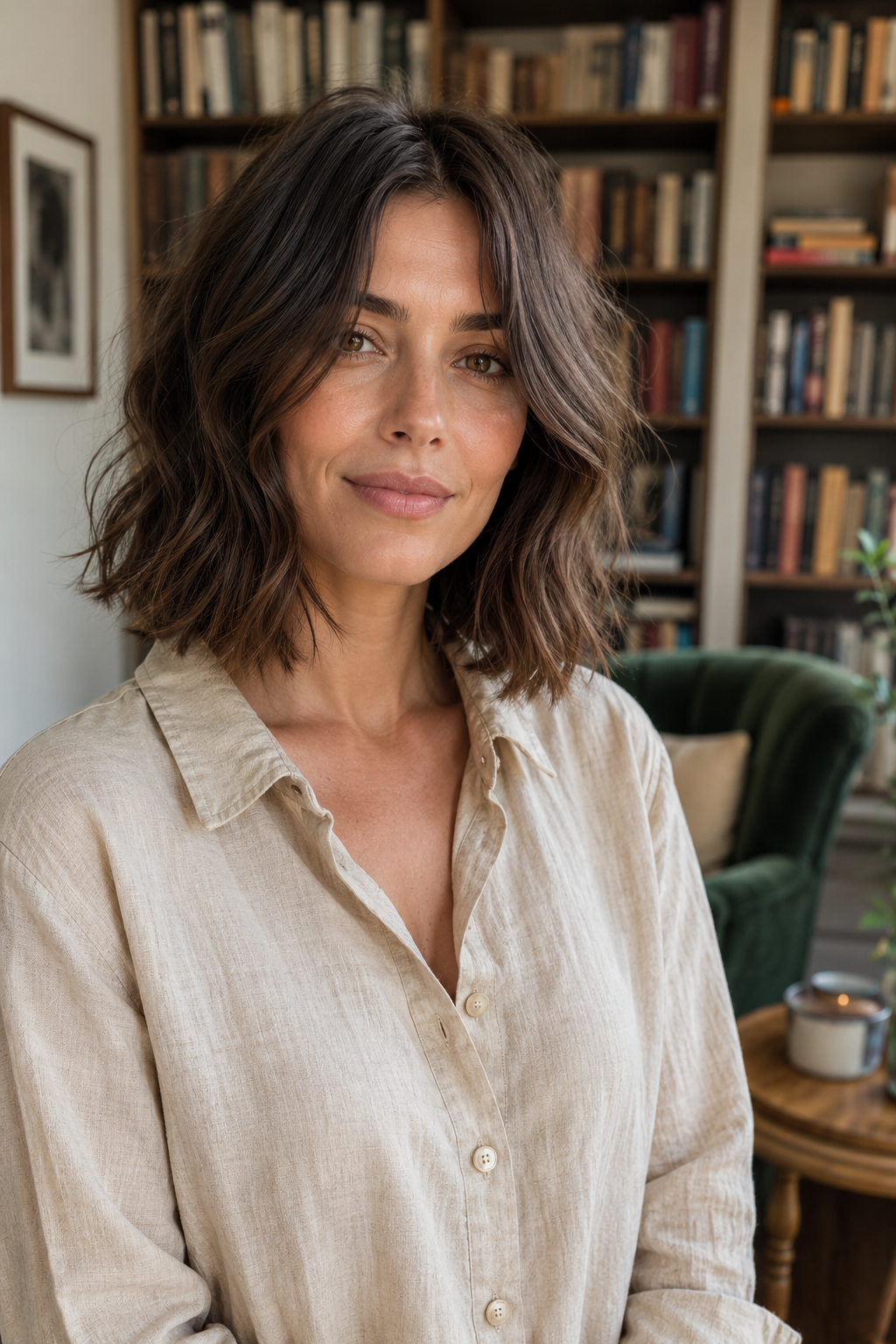
A medium-length version of the Parisian bob, sitting a little longer with a soft, undone finish and minimal structure.
Very little layering goes into it. The look comes from how it is worn rather than how it is cut.
Great for anyone who wants low upkeep and does not enjoy styling. Our old money bob post covers the shorter version if you are weighing the two lengths against each other.
Wavy Shag
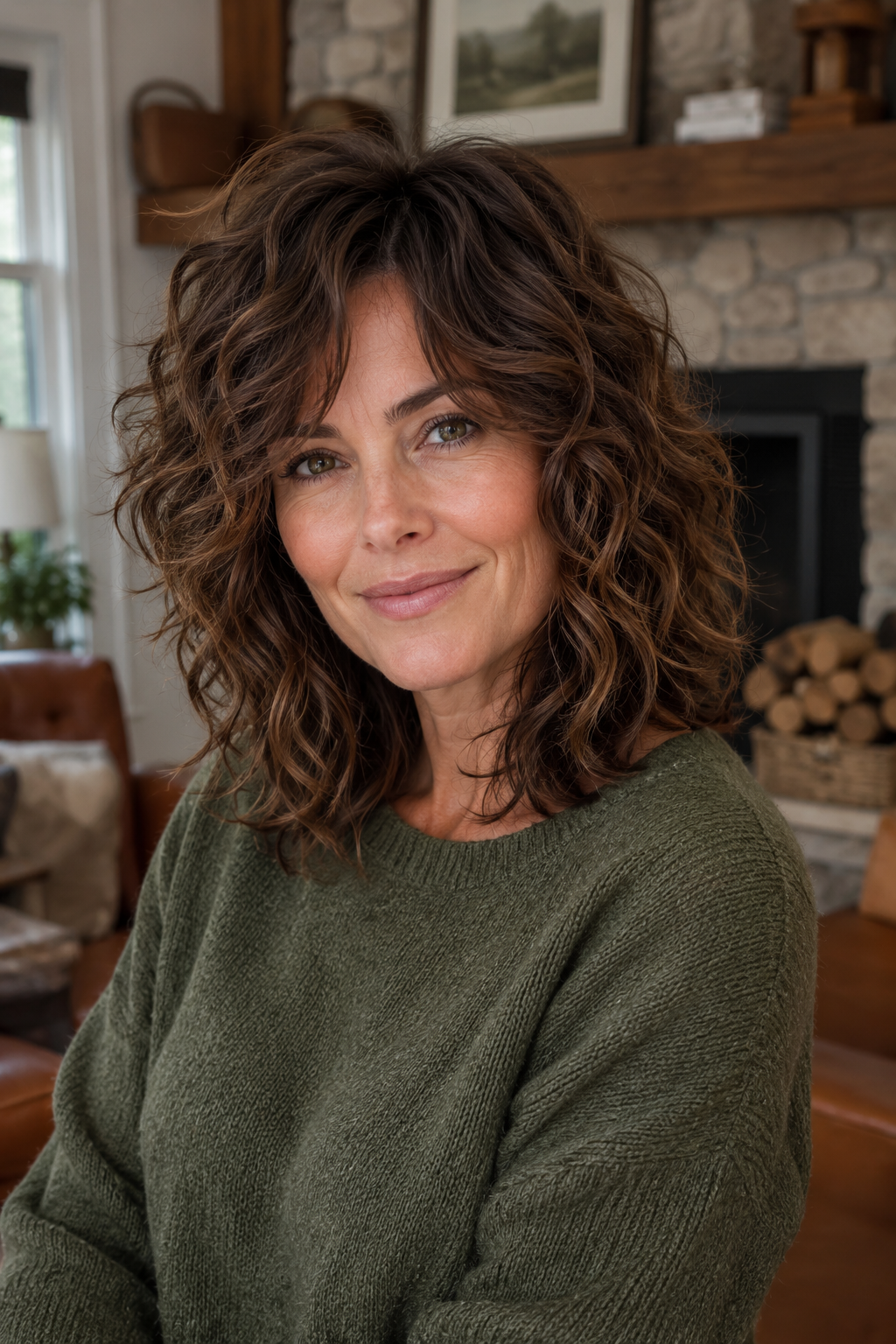
Layers built throughout, shortest at the crown and progressively longer down the length. Waves respond well because the removed weight lets the pattern show.
Root lift is the main benefit here, and flat roots are the most common wavy complaint.
Suits thick 2B and 2C hair that sits heavy. See our collection of shaggy lob variations for how the shape reads at different lengths.
Wavy Butterfly Cut
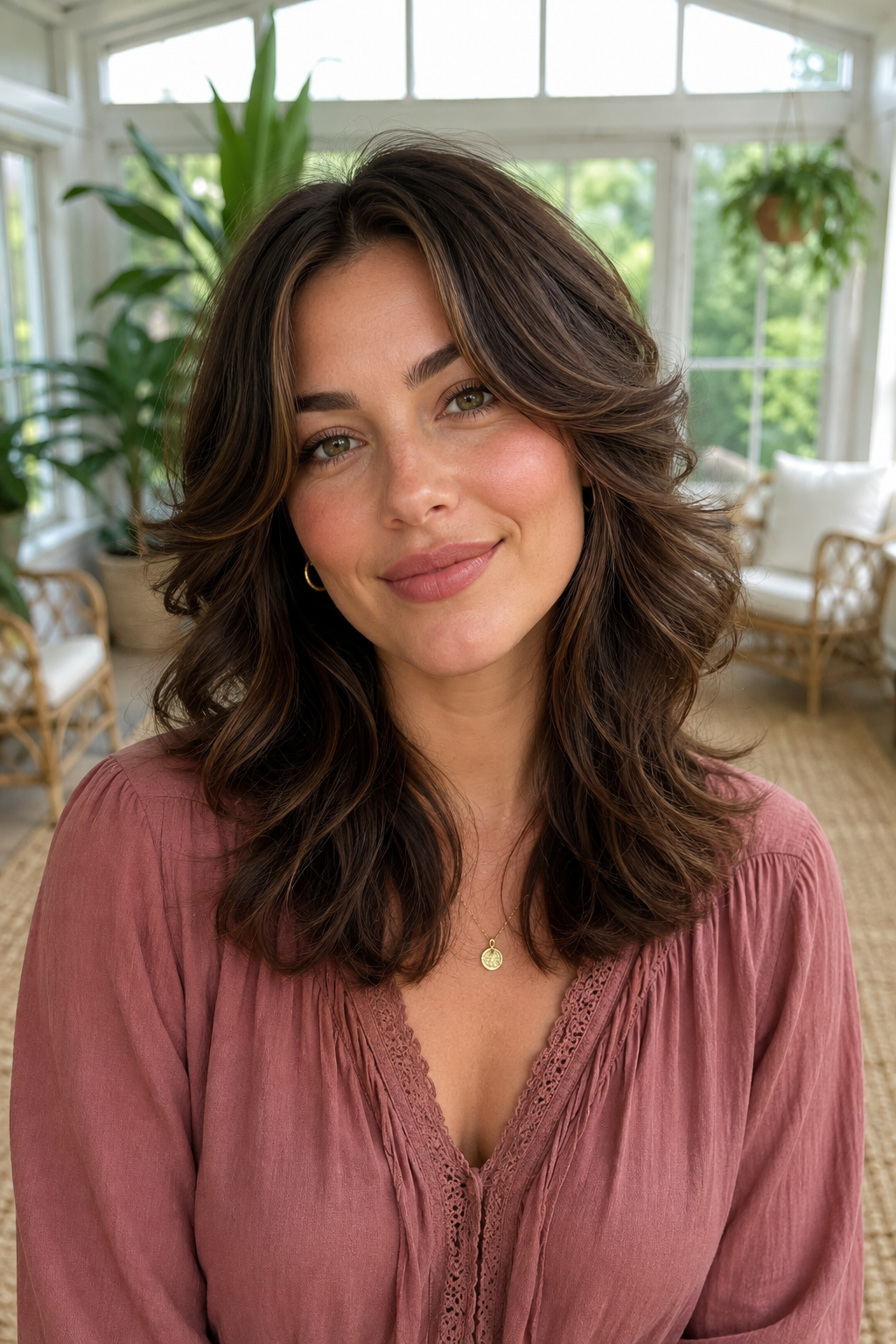
Shorter face-framing pieces layered over longer lengths underneath, cut so the top section flips outward around the face.
On waves the shorter section holds its bend far better than the length does, giving you definition where people actually see it.
Perfect for anyone who wants the look of a shorter cut without losing length. The long layer underneath stays completely intact, so growing it out later takes no awkward stage.
Wavy Wolf Cut

Choppy short layers stacked at the crown against much longer ends, with an obvious break between the two halves.
Waves suit it because the texture disguises any harshness in the layering.
Great for thick hair that needs serious weight removal through the middle. Our guide to wavy wolf cut styles goes deeper into how the shape sits across different densities.
Rounded Layers
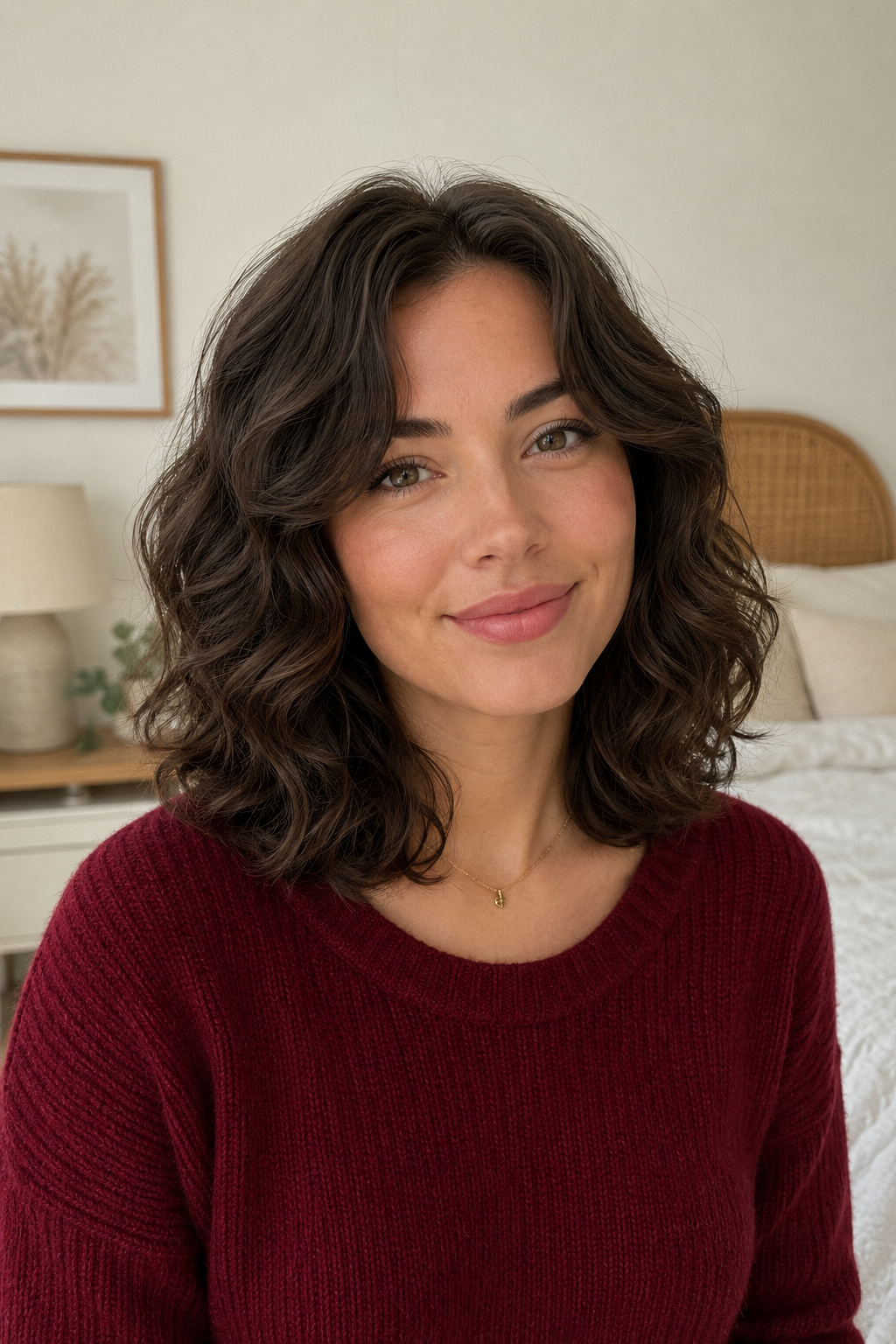
Layers cut in a soft curve that follows the head shape rather than falling in straight tiers. The result is a rounded outline with no hard edges.
Stylists reach for this on 2C hair specifically, where the wave is strong enough to need shaping but not tight enough for curly cutting methods.
Suits anyone caught between wavy and curly. More options sit in our roundup of layered medium hairstyles.
Crown Layers
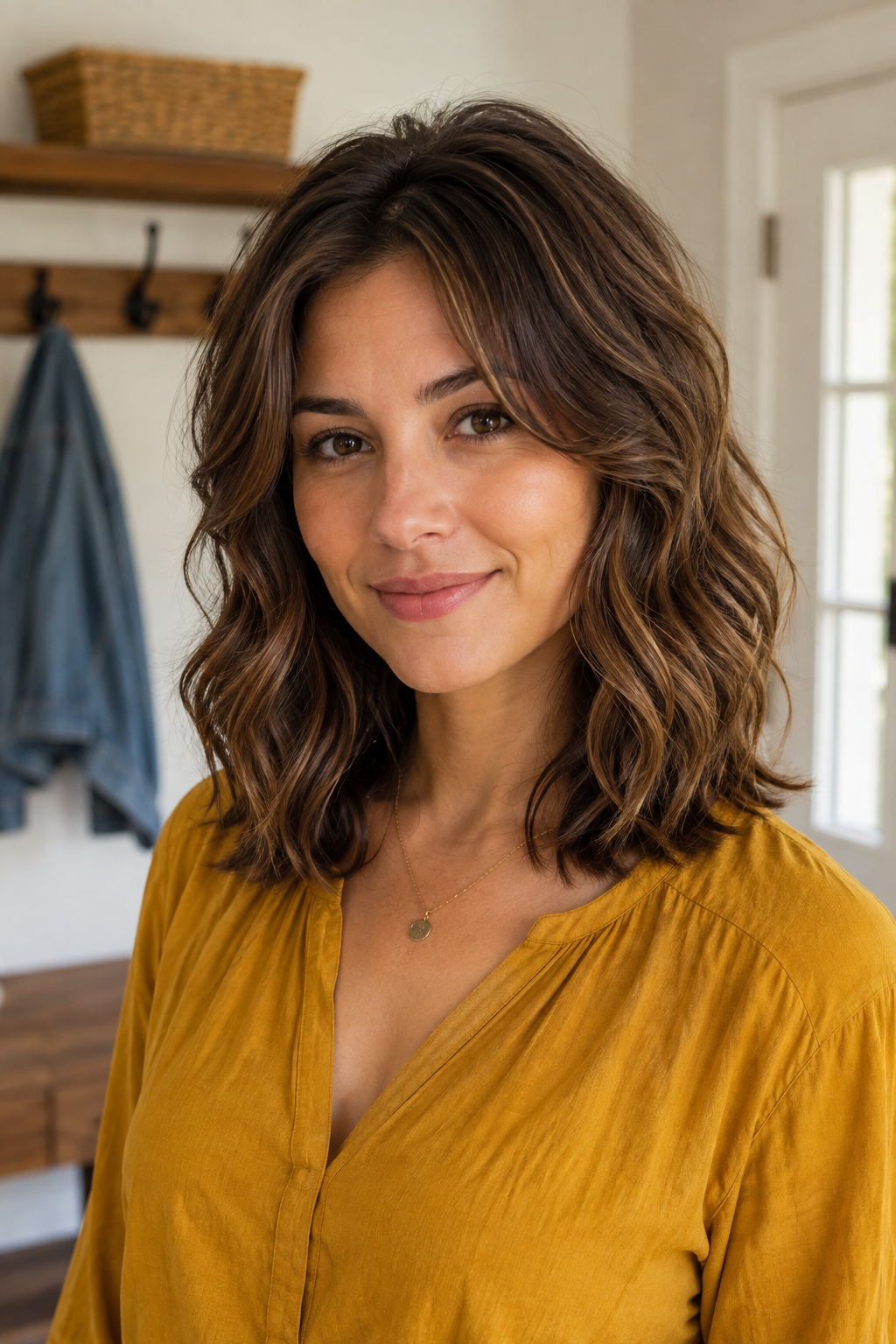
Short layers concentrated only at the crown, leaving the rest of the length untouched.
Waves lose their pattern at the top first because that is where the weight of everything below pulls hardest. Taking length out at the crown releases it.
Works especially well if you want to keep your length but have flat roots. It is a small adjustment and often the only one needed, so it is worth asking about before committing to a full restructure.
Feathered Ends
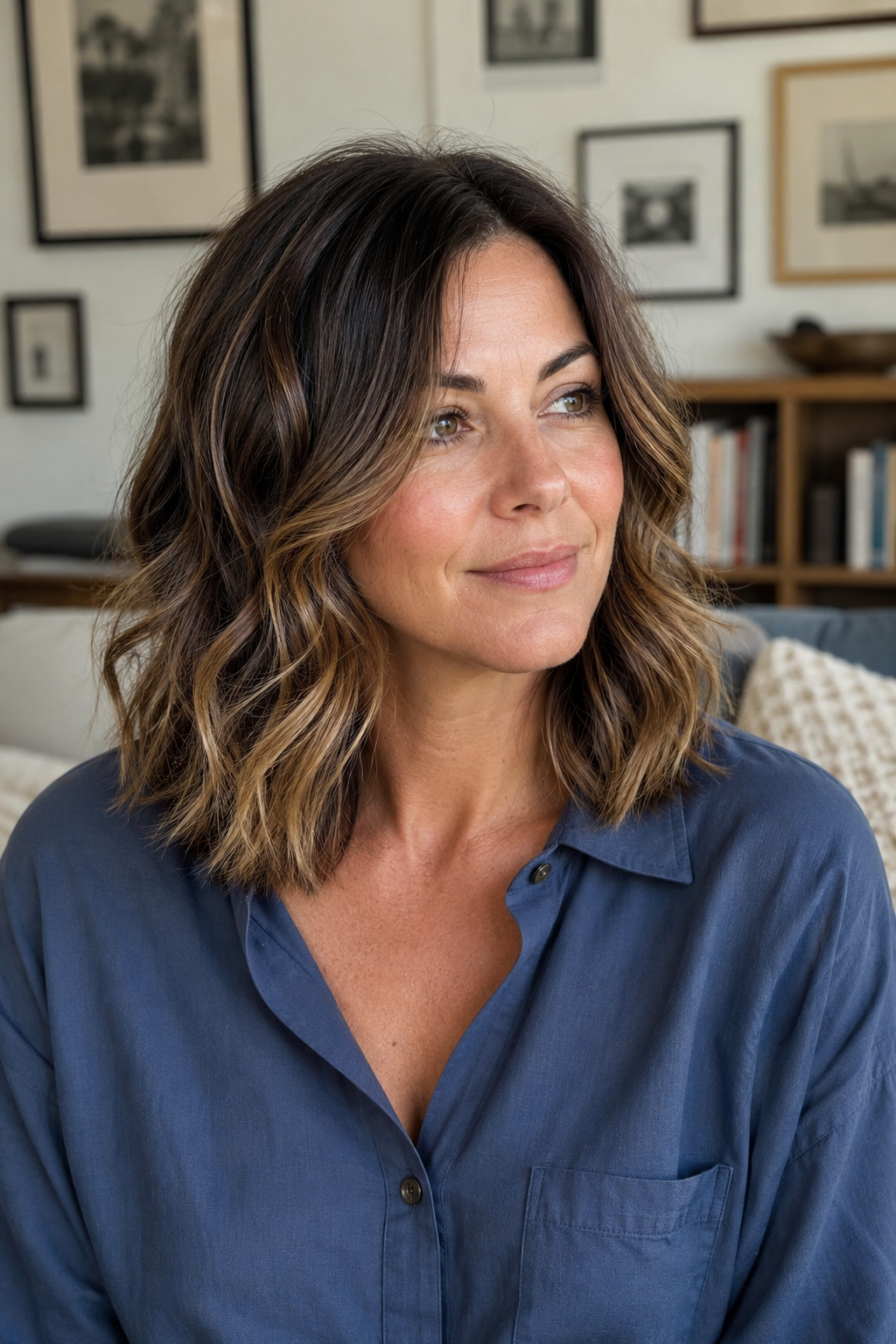
The ends cut light and soft rather than blunt, so they taper instead of stopping abruptly.
Lighter ends move more, which makes the waves through the bottom half read as fluid rather than solid.
Great for medium to thick hair that feels bottom-heavy. Fine hair should skip this one, since removing weight from ends that are already sparse makes them look thinner rather than softer.
Curtain Bangs on Waves
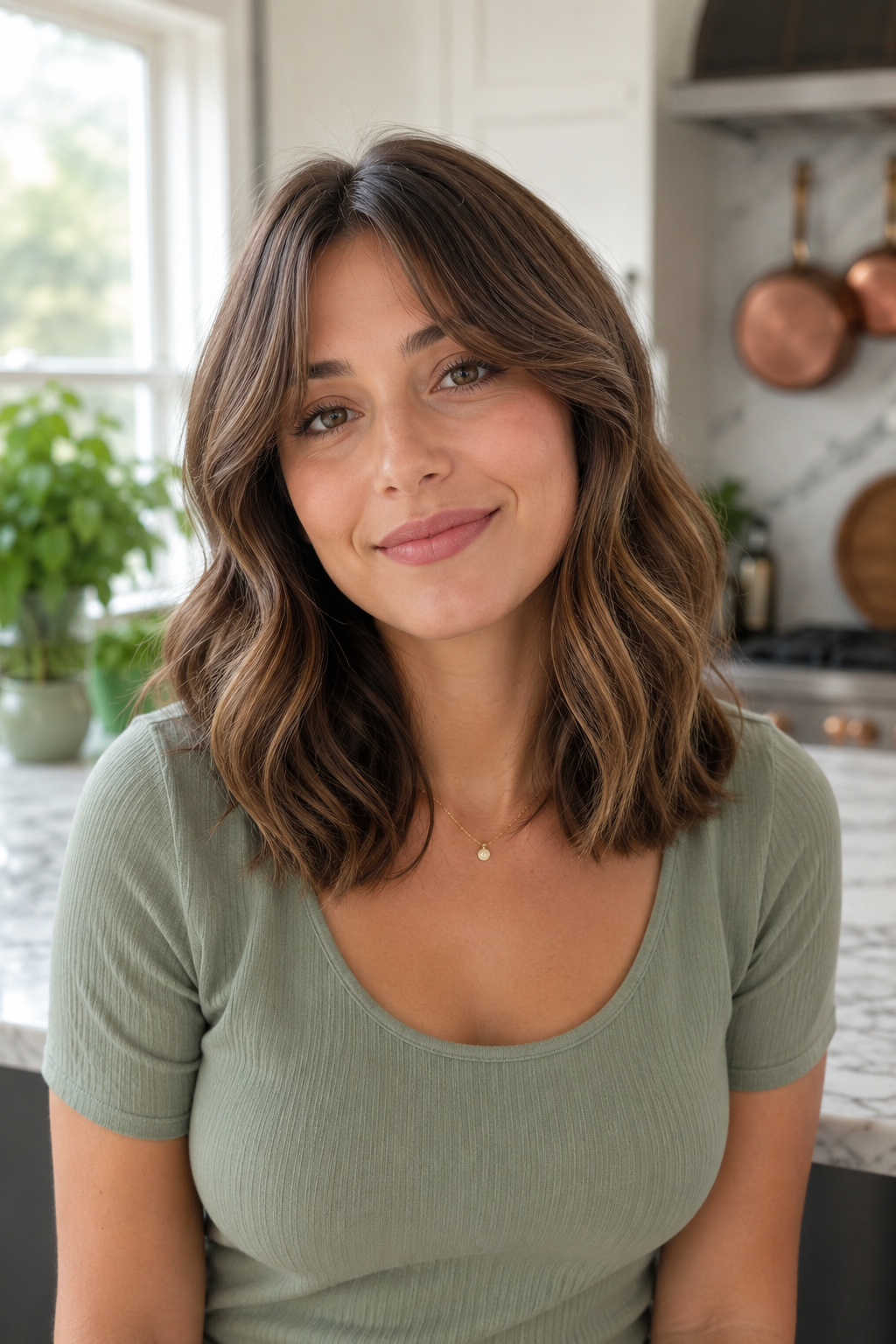
Bangs parted at the center and sweeping toward the temples, blending into the length on both sides.
They work with waves specifically because the natural bend does the sweeping for you, with no round brush needed.
Suits most face shapes, particularly longer ones. Our full guide to medium hairstyles with curtain bangs covers how the length should sit against different features.
Wispy Bangs on Waves
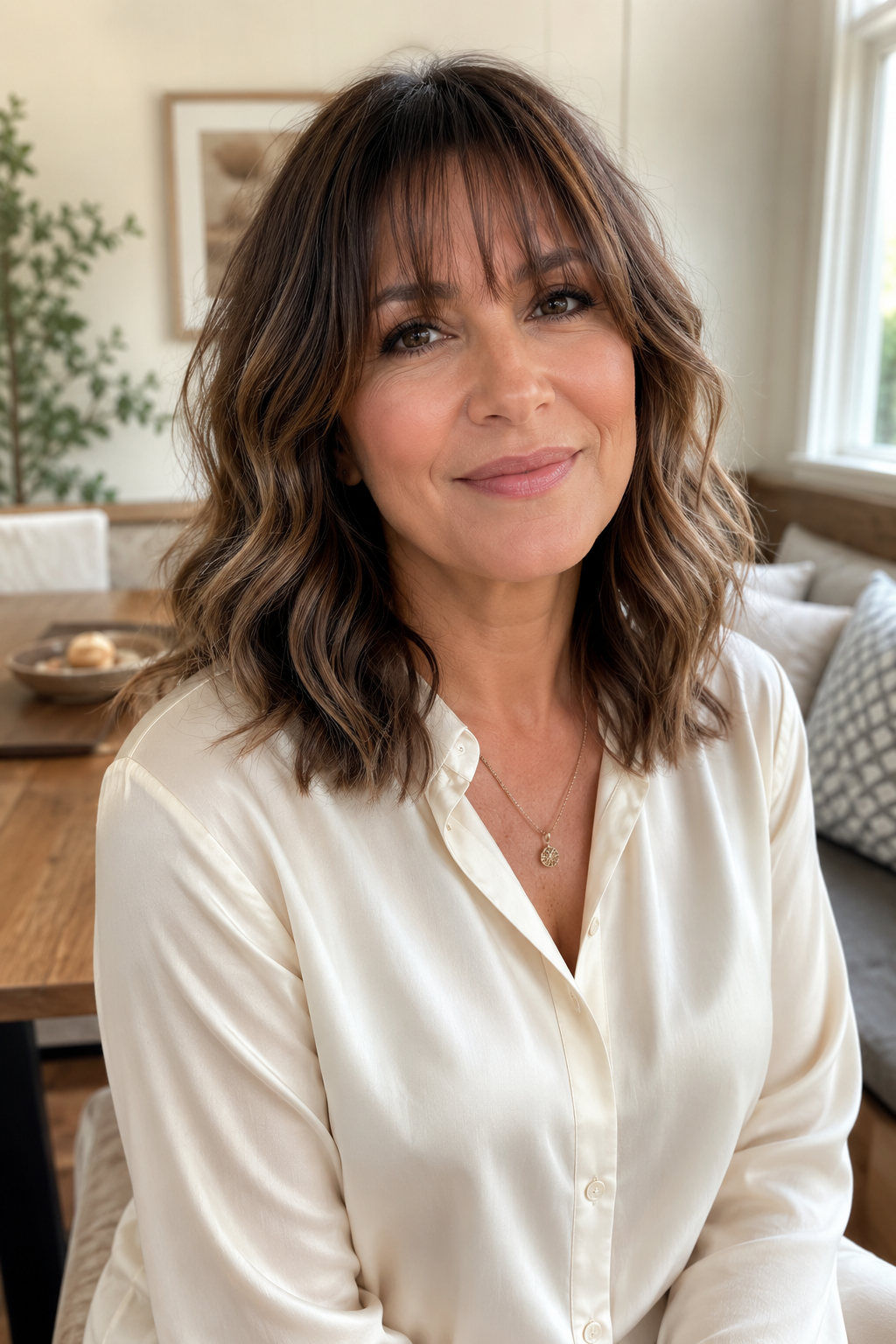
Thin, piecey bangs cut light enough to see through, sitting somewhere around the brows.
Because there is so little hair in them, they add nothing heavy to the face and do not flatten the wave behind them.
Perfect for anyone nervous about bangs. The commitment is small and they grow into face-framing pieces within weeks. Most people flat iron just the bangs on low heat and leave everything else alone.
Tousled Choppy Lob

A lob length with choppy cutting done inside the hair, so the waves mix into each other rather than forming neat separate sections.
The messiness is engineered. Waves that fall in tidy rows tend to look like a set rather than natural texture.
Works especially well for anyone who wants their hair to look undone without being unkempt. Our messy medium hairstyles post covers more shapes built along these lines.
Beach Waves
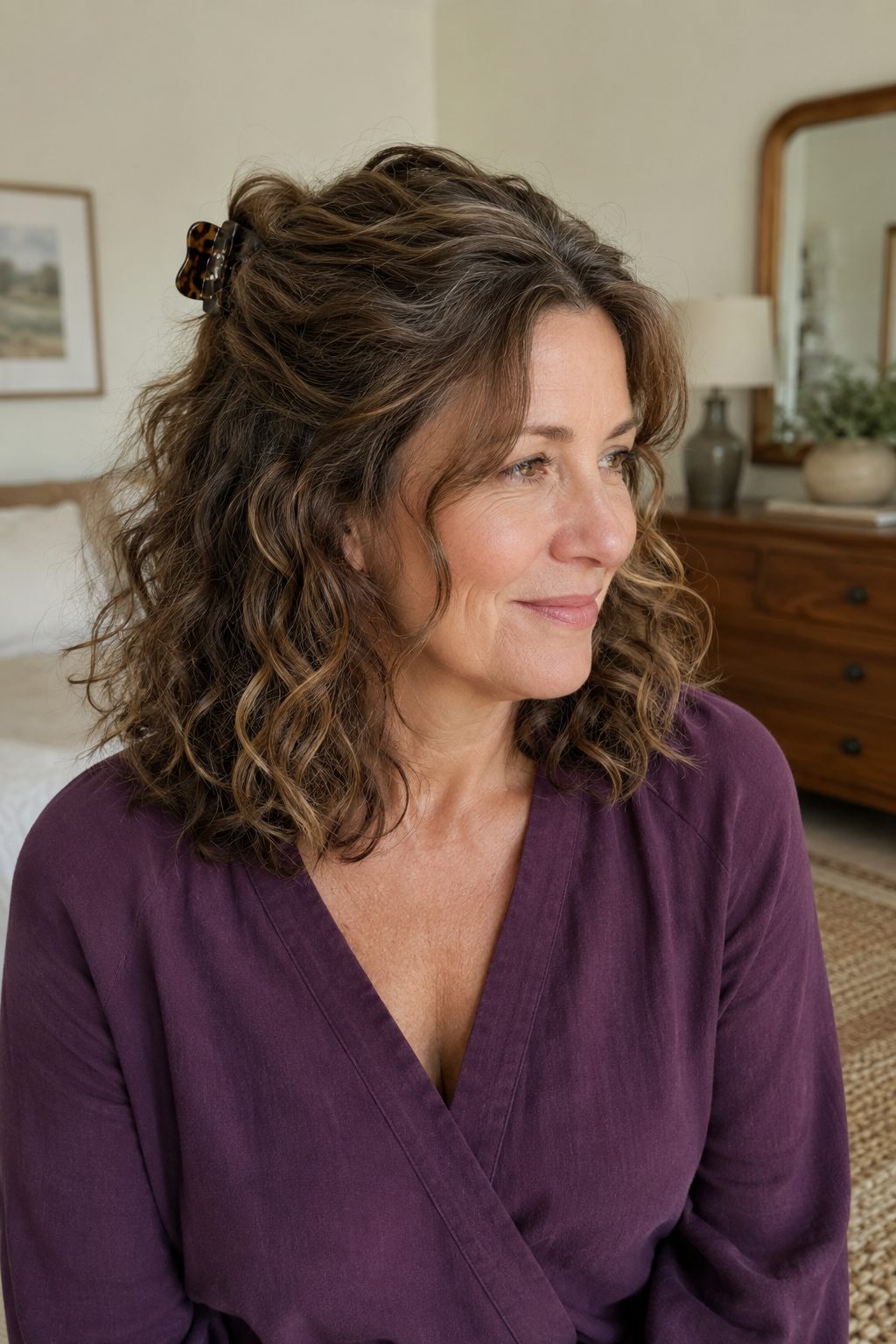
Sea salt spray on damp hair, scrunched and left to dry. The salt roughs up the surface slightly, which is what gives waves grip.
Wavy hair already wants to sit this way, so you are amplifying rather than creating.
Great for summer and anyone who wants a five-minute routine. Salt is drying over time, so alternate it with a texture foam rather than reaching for the same bottle every single wash day.
Half-Up Half-Down
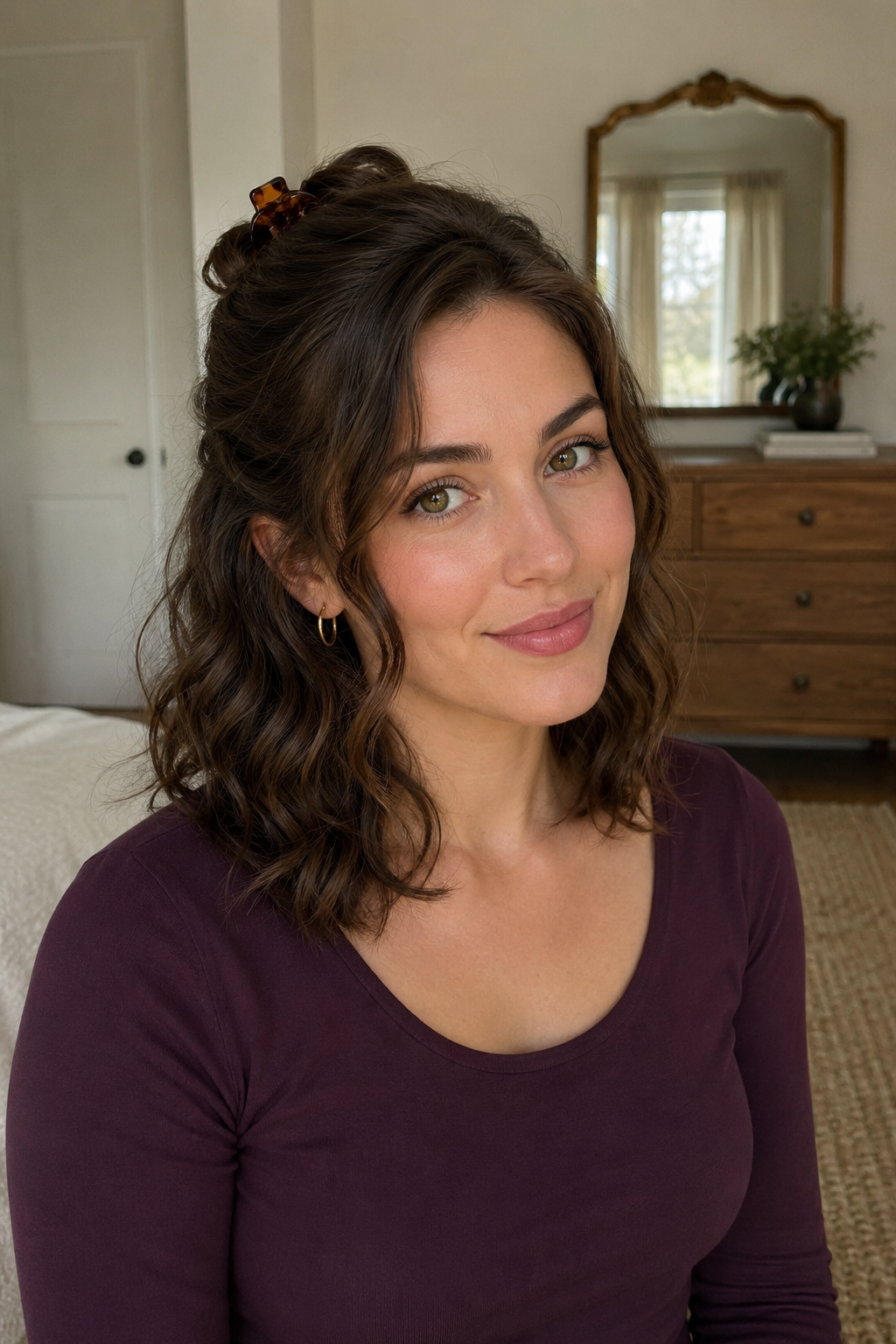
The top section gathered back while the length stays loose. On thick wavy hair it removes bulk from the sides of the face.
A claw clip holds better than an elastic, since it grips without crushing the wave where it sits.
Suits anyone whose hair feels overwhelming by mid-afternoon. For dressier versions, browse our medium hairstyles for weddings.
Side Braid With Waves Down
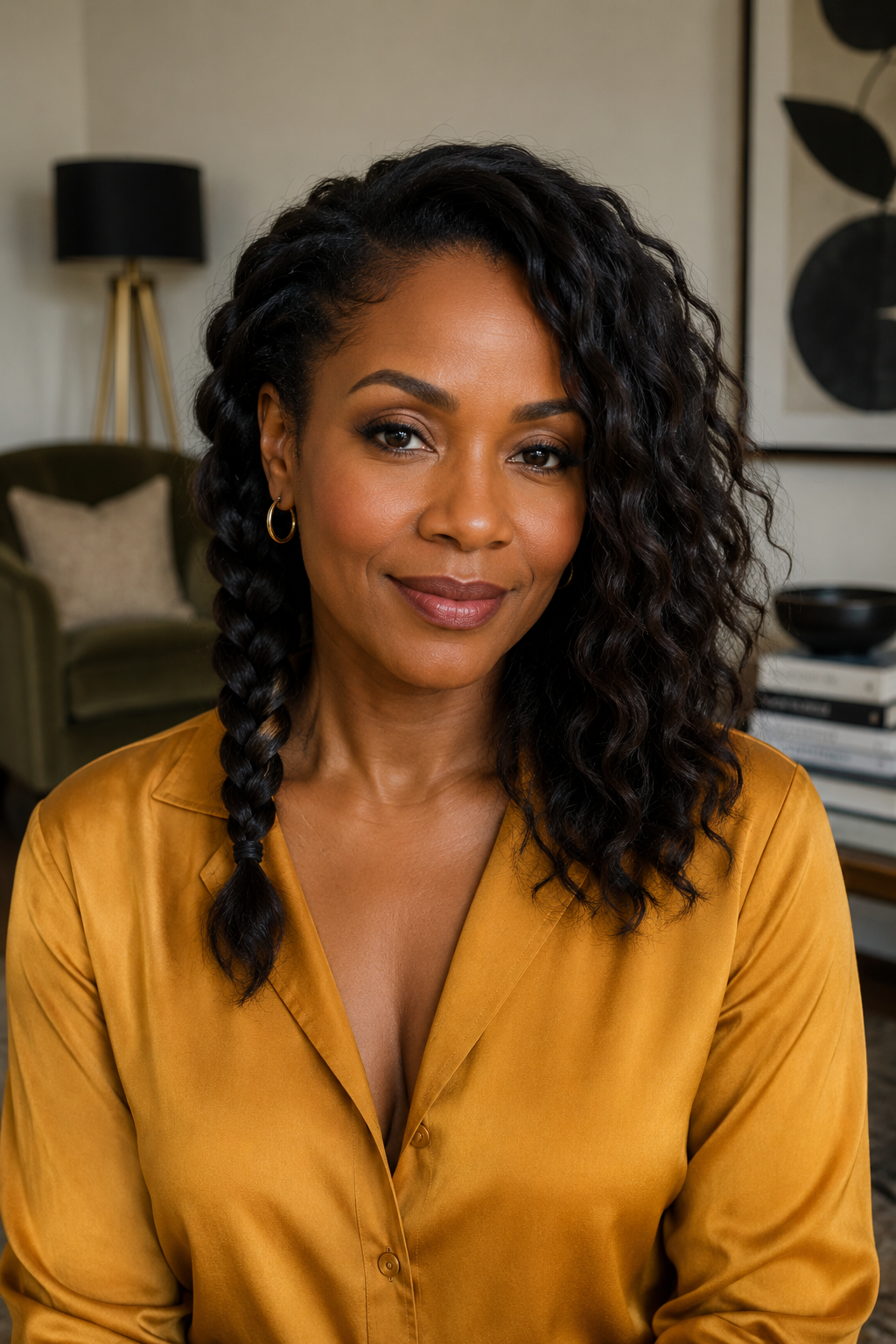
One loose braid running down one side while the rest of the hair hangs free.
The braid gives you a bit of structure against all that soft movement, and it keeps one side of your face clear.
Perfect for days when your waves are cooperating on one side and not the other, which happens constantly with wavy hair. Braid the weaker side and let the good side do the work.
Overnight Braid Waves
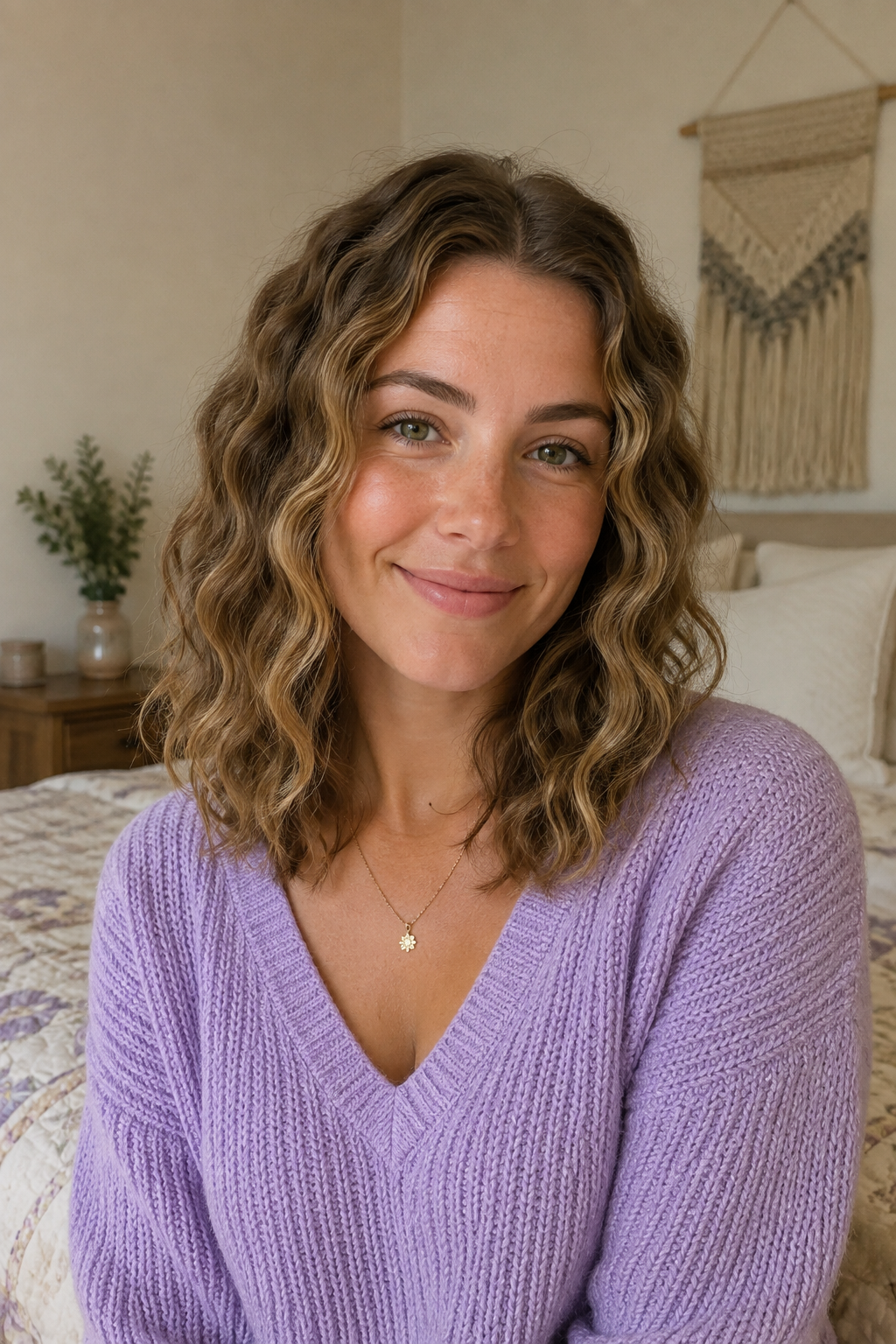
Two or three loose braids put in on damp hair before bed, shaken out in the morning.
The braid holds the bend in place while the hair dries slowly, so the pattern sets deeper than air drying alone achieves.
Works especially well on 2A hair that struggles to hold a wave past lunchtime. Looser braids give a soft S-bend and tighter braids give a crimp, so adjust based on what you want.
Air-Dried Waves With Mousse
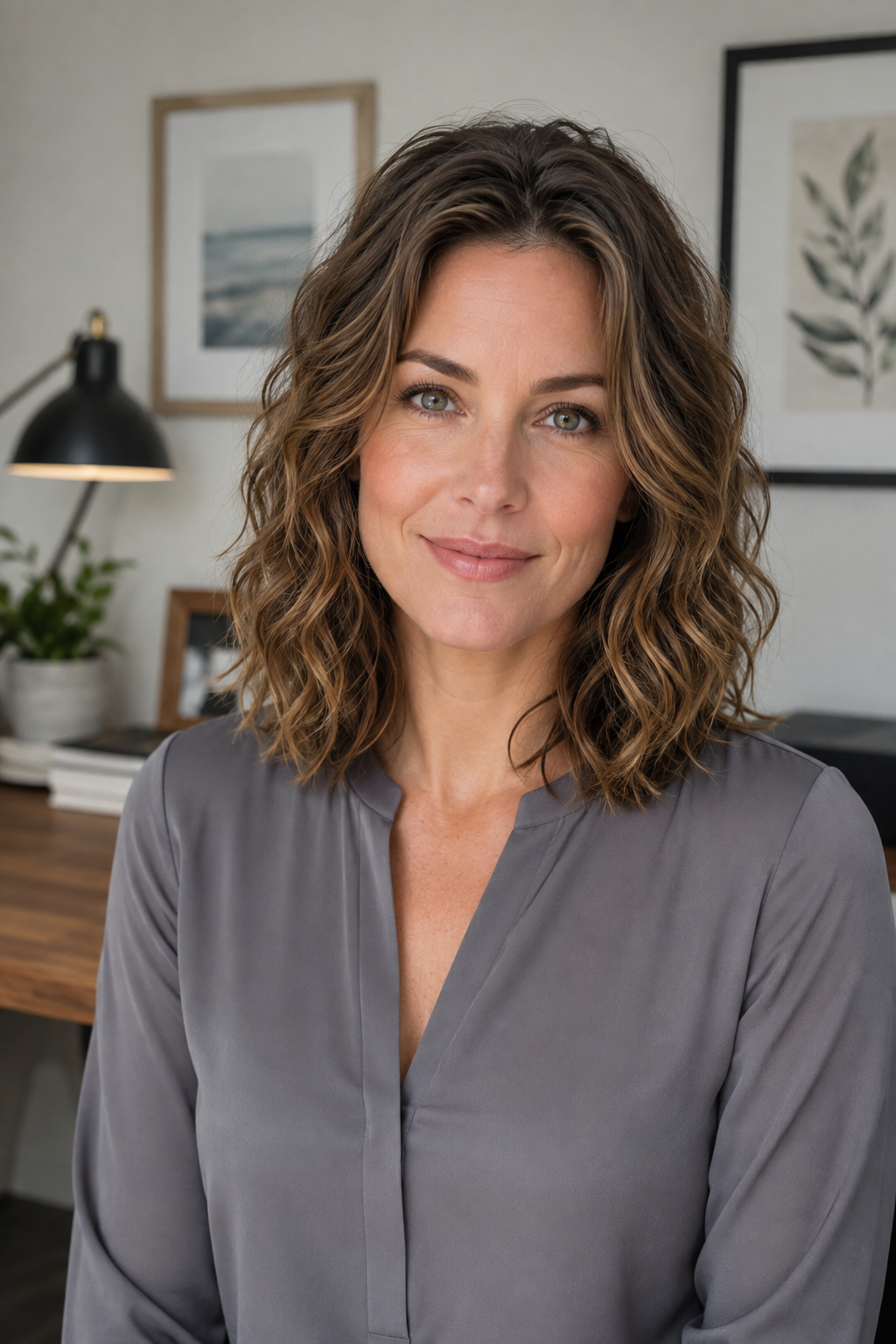
Mousse worked through soaking wet hair, then left completely alone until dry.
Mousse suits waves better than cream or gel because it adds hold without weight, and weight is what flattens a wave pattern.
Great for fine 2A texture that gets dragged down by anything richer. Scrunch upward toward the scalp while applying, then stop touching it. Handling the hair mid-dry is what breaks the pattern apart.
Caramel Ribbons on Brunette Waves
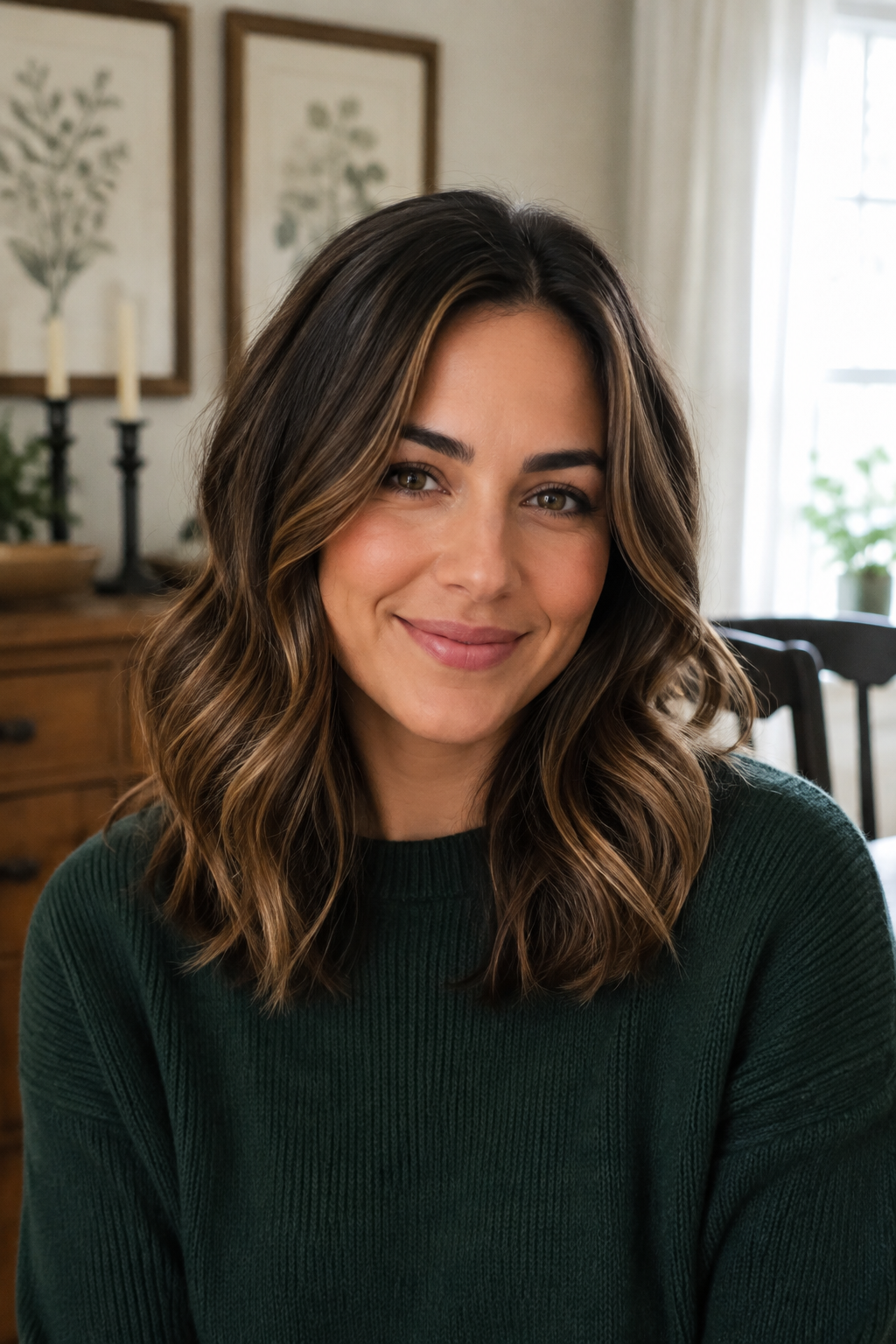
Warm caramel worked through dark brown in soft ribbons rather than defined streaks, following the length of the hair.
The lighter pieces catch on the outside of each bend, so the wave pattern becomes far easier to see.
Suits medium to deep brunettes wanting warmth without a dramatic change. Ribboned placement grows out softly, which means longer between salon visits than traditional foil highlights need.
Golden Balayage
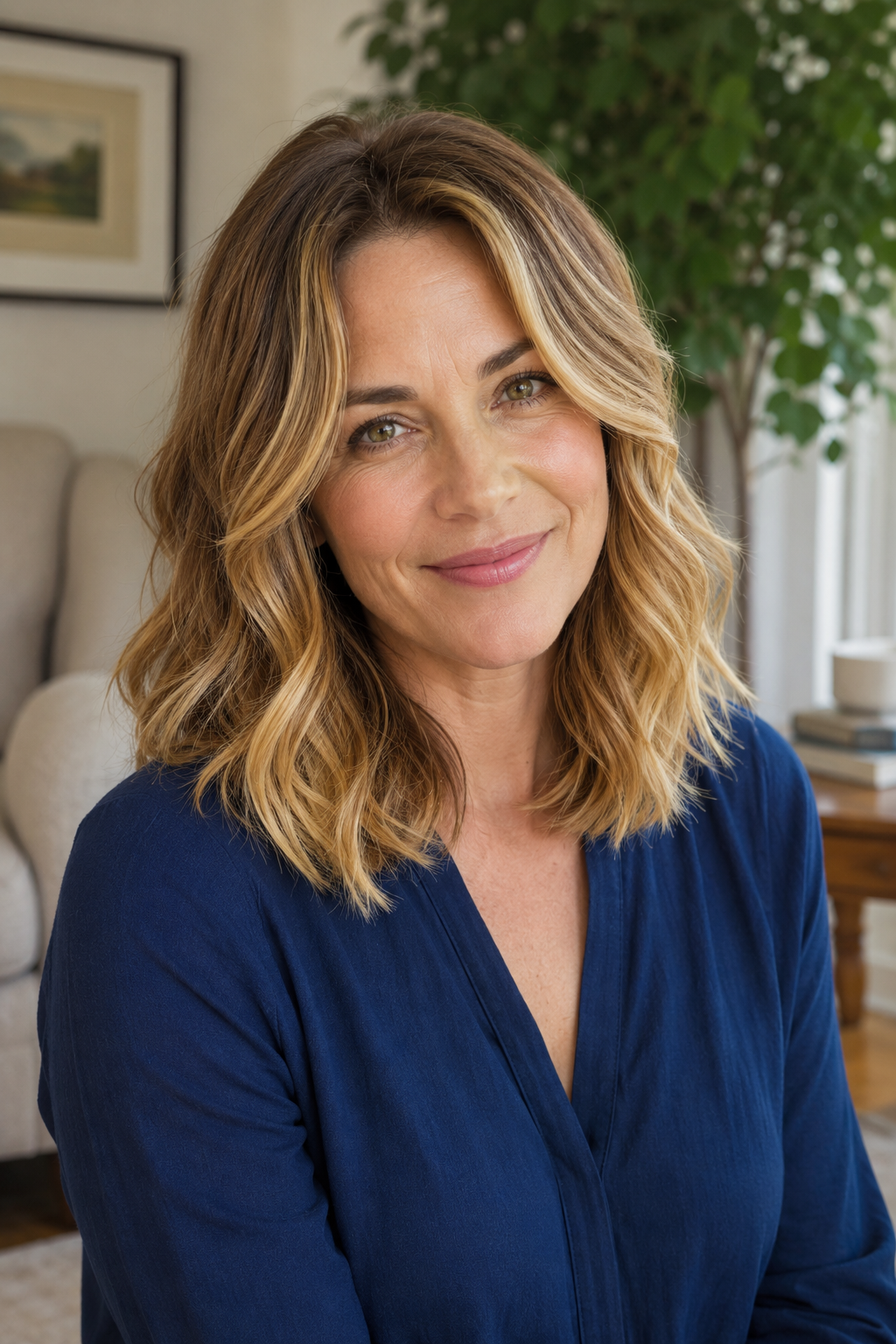
Color hand-painted toward the ends and left soft at the roots, in a warm golden blonde.
Painting by hand suits waves because the stylist can follow the natural fall of the hair rather than working in straight sections.
Perfect for anyone who wants lighter ends with no hard regrowth line. Four to five months between appointments is realistic, and our hair color ideas section has more on picking a tone that suits your skin.
Comments
No Comments