
24 Curly Medium Hairstyles That Work With Your Curl Pattern
Shoulder length is where curly hair tends to behave best. There is enough weight to keep the curls from expanding sideways, but not so much that the pattern stretches out and goes limp at the bottom. The catch is that the wrong cut at this length gives you a triangle, wide at the ends and flat on top, which is the exact shape most curly women spend years trying to avoid. What separates a good medium curly cut from a bad one usually comes down to where the layers start and whether the hair was cut dry. The ideas below cover shapes, ways to wear them, and color worth considering.
Jump to:
- Curly Shag
- Curly Shag With Curtain Bangs
- Fringelle Cut
- Curly Lob
- Blunt Curly Lob
- Angled Curly Lob
- Curly Wolf Cut
- Curly Butterfly Cut
- Layered Shoulder-Length Curls
- Face-Framing Layers
- Rounded Curl Shape
- Crown Lift Layers
- Nape Undercut for Thick Curls
- Curly Bangs
- Deep Side Part Curls
- Half-Up Curls
- Air-Dried Wash and Go
- Diffused Volume
- Caramel Highlights
- Copper Curls
- Babylights on Curls
- Money Piece
- Espresso Single Process
- Balayage on Medium Curls
Curly Shag
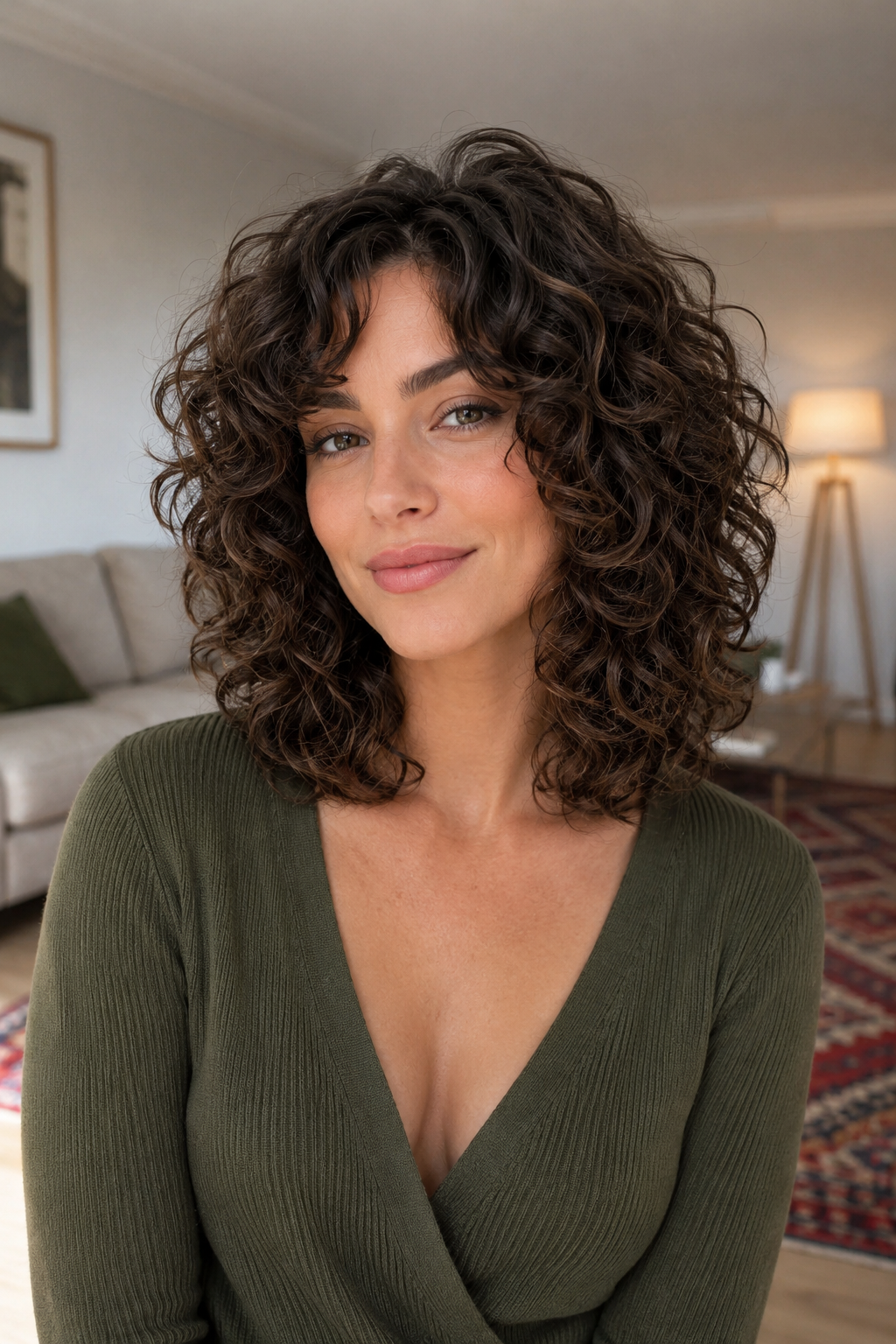
The shag builds layers throughout, starting high and getting progressively longer toward the ends. That removes bulk from the middle where curls tend to bunch.
Curls need a shag more than straight hair does, because the weight has somewhere to go.
Great for anyone whose hair sits heavy at the bottom and flat at the roots. Ask for the layers to start around chin level. Any lower and you lose the lift that makes the whole shape work.
Curly Shag With Curtain Bangs
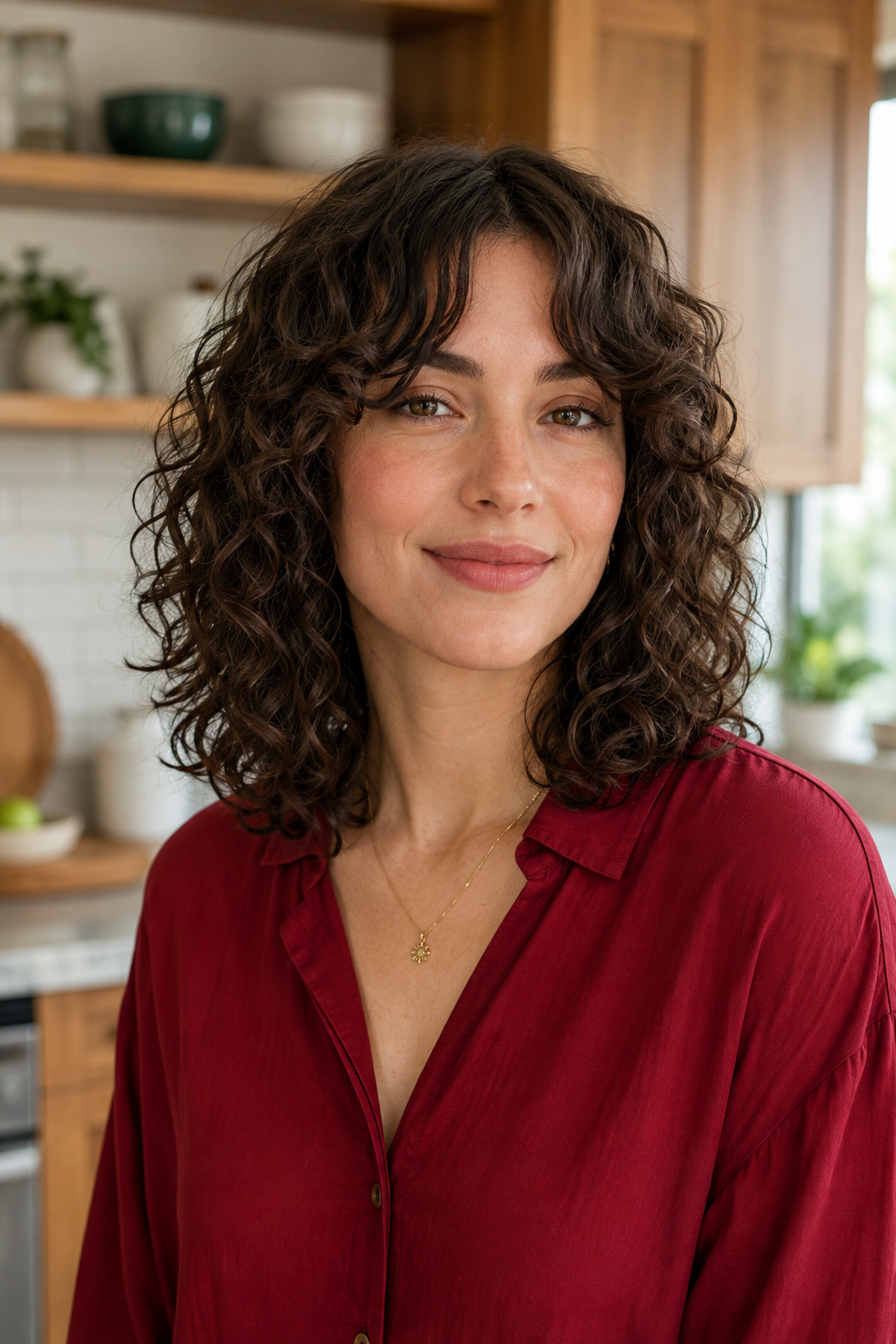
Adding curtain bangs to a shag gives you a soft opening at the center that drapes toward the temples. On curly hair the bangs spring up, so they get cut longer than they will sit.
The bangs and the layers blend into each other rather than reading as two separate features.
Suits oval and heart-shaped faces particularly well. Our full guide to medium hairstyles with curtain bangs covers how the shape changes across different textures.
Fringelle Cut
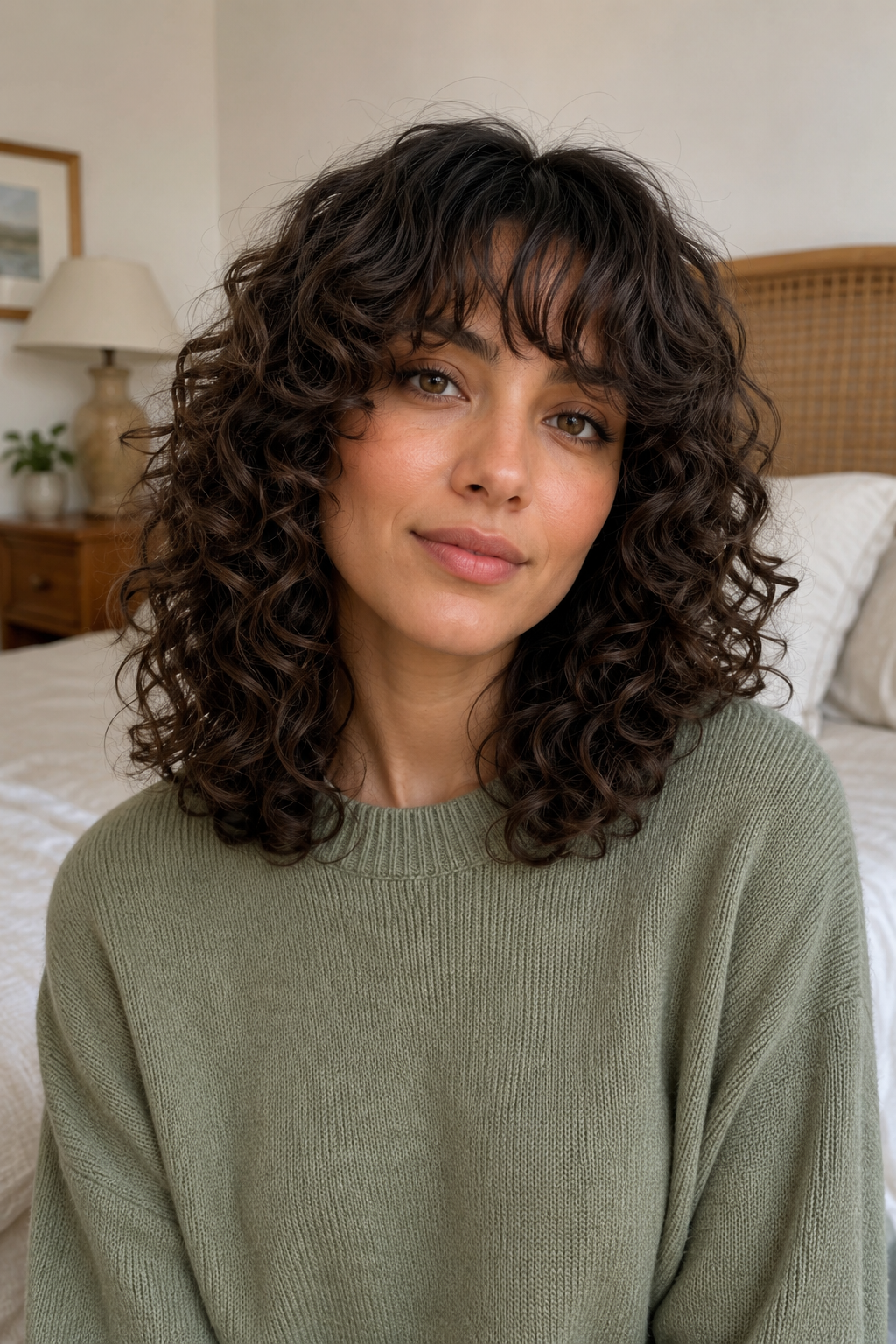
A hybrid of a fringe and a shag, the fringelle uses rounded layering with softly separated curtain bangs sitting over the brow. Stylists reach for it when a client wants volume that still holds a shape.
It suits 3A to 3B curls with medium density best.
The rounded layering is what keeps it from getting bulky at the sides. Have the bangs shaped on dry hair, since wet cutting almost always leaves them shorter than intended once they spring.
Curly Lob
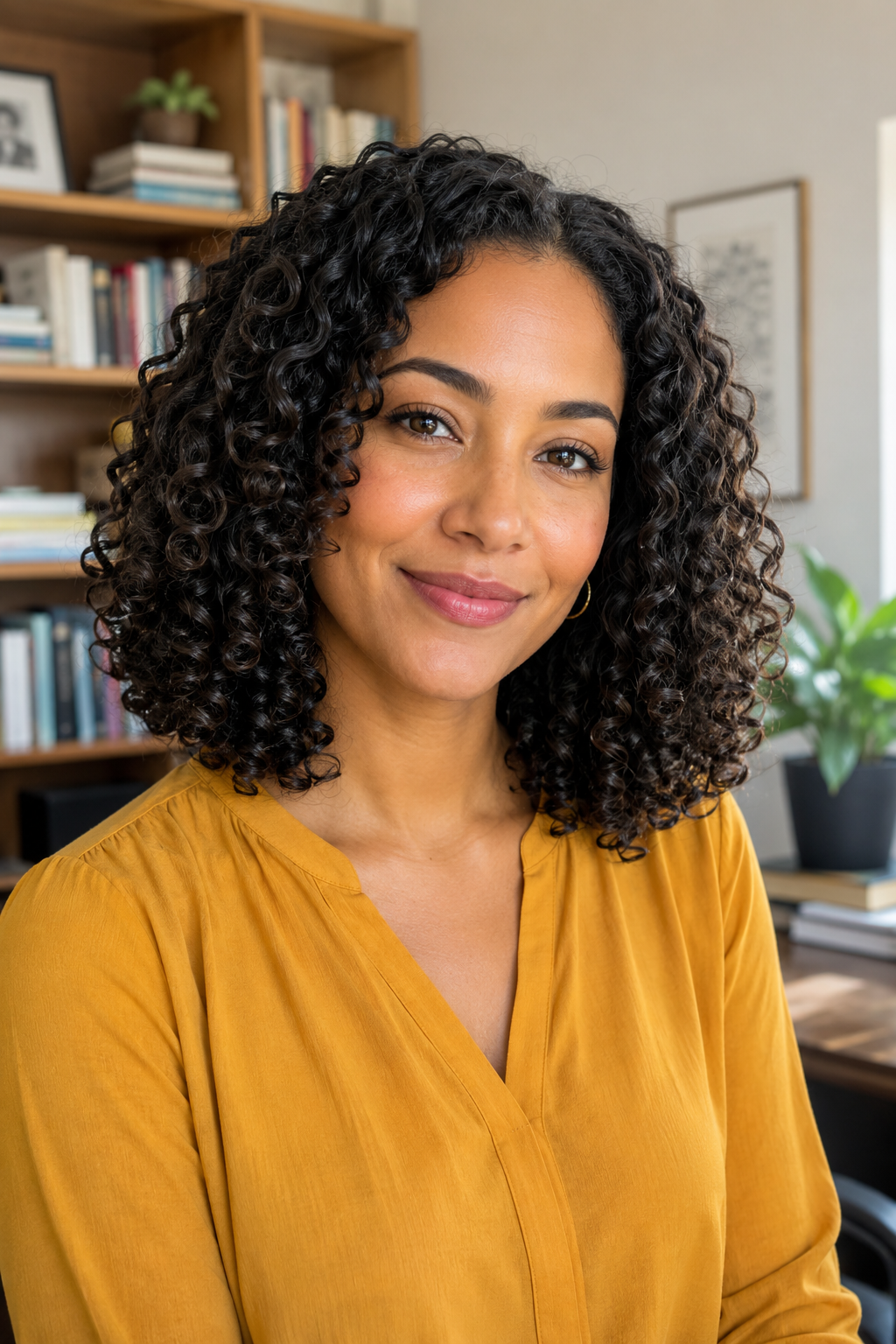
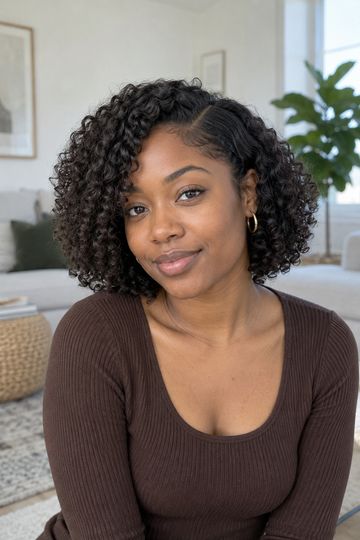
A curly long bob sitting right at the collarbone, cut to let the curls do the shaping rather than imposing a shape on them.
At this length curls hold their spring without the bottom pulling flat.
Works especially well on medium to thick hair, where the curls frame the face all the way around. Definition is the whole game here. A gel or cream on soaking wet hair, then diffuse or air dry without touching it while it sets.
Blunt Curly Lob
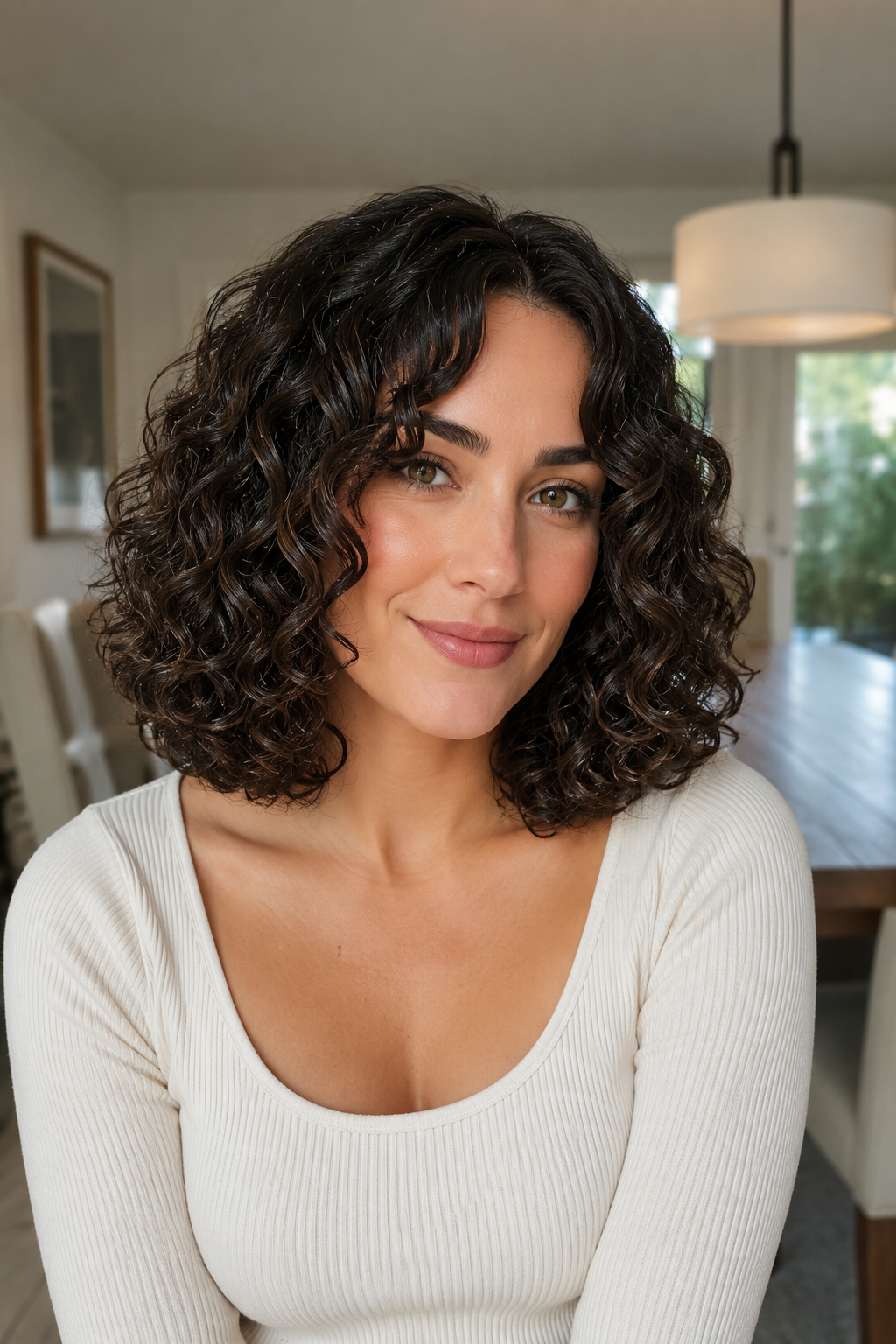
Minimal layering, ends cut close to one length. Counterintuitive for curls, but it solves a real problem.
Fine curls lose density fast when layered, so leaving the weight in keeps the ends looking full instead of stringy.
Perfect for anyone with looser 2C to 3A texture who has been over-layered before. Our post on lob hairstyles for fine hair goes further into keeping fullness at the ends.
Angled Curly Lob
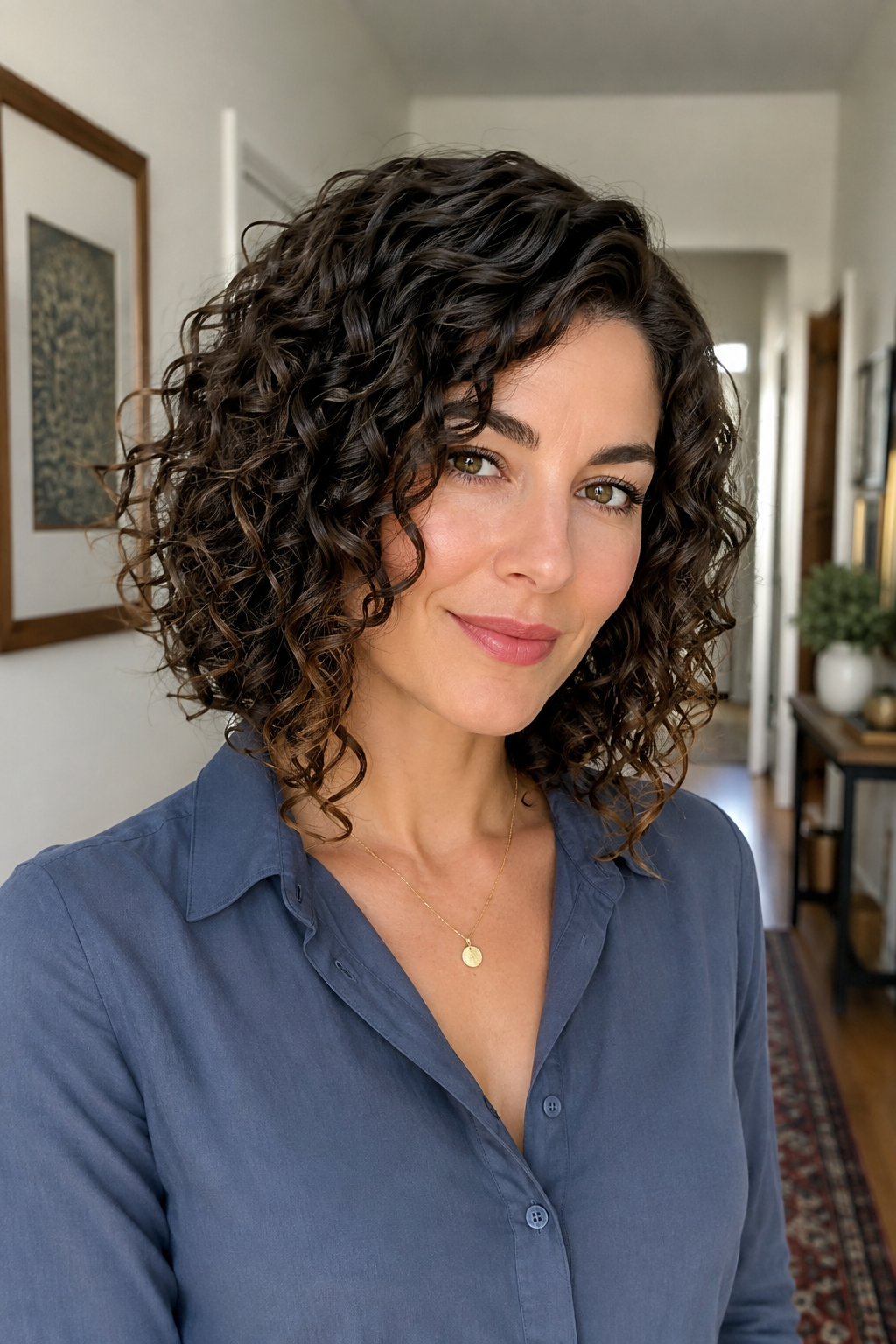
Shorter through the back with the front pieces left noticeably longer. The angle gives the cut direction.
On curly hair the effect is softer than it would be on straight hair, since the curls blur the line between lengths.
Great for anyone who wants their hair off their neck without losing length around the face. The longer front pieces also give you something to tuck or push back on days when the curls are not cooperating.
Curly Wolf Cut
The wolf cut stacks short choppy layers at the crown against much longer ends, creating an obvious split between the top and bottom halves.
Curls take to it naturally because the pattern hides any harshness in the layering.
Suits thick hair that needs bulk taken out through the middle. Our roundup of wavy wolf cut styles shows how the same shape reads on looser texture if you are between patterns.
Curly Butterfly Cut
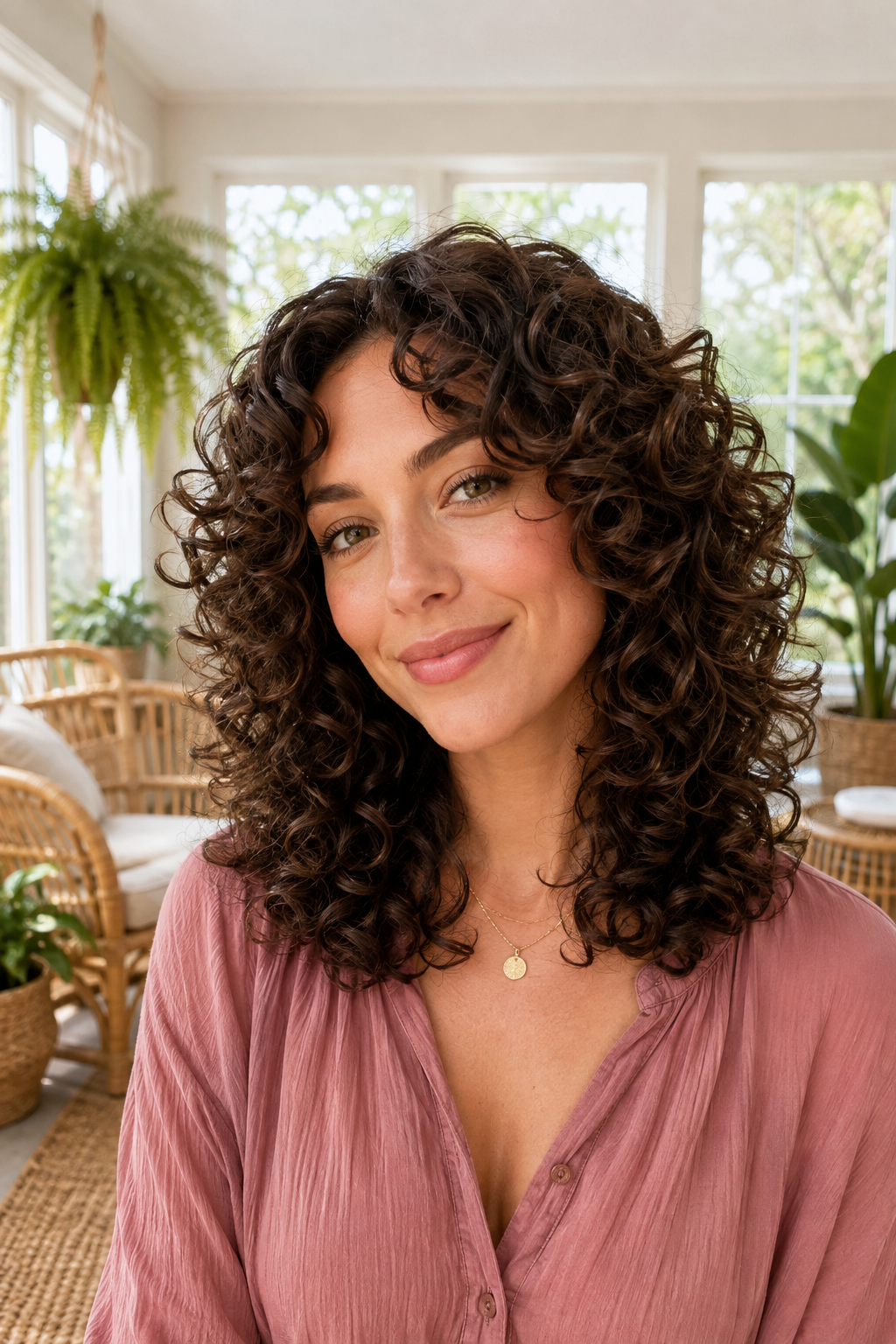
Two lengths cut into one head of hair, with shorter face-framing pieces layered over longer lengths underneath. The top layers lift and flip outward.
On curls the shorter top section springs up and creates height at the crown where curly hair usually falls flat.
Works especially well if you like the idea of shorter hair but are not ready to commit. The long layer underneath stays intact, so nothing is actually lost.
Layered Shoulder-Length Curls
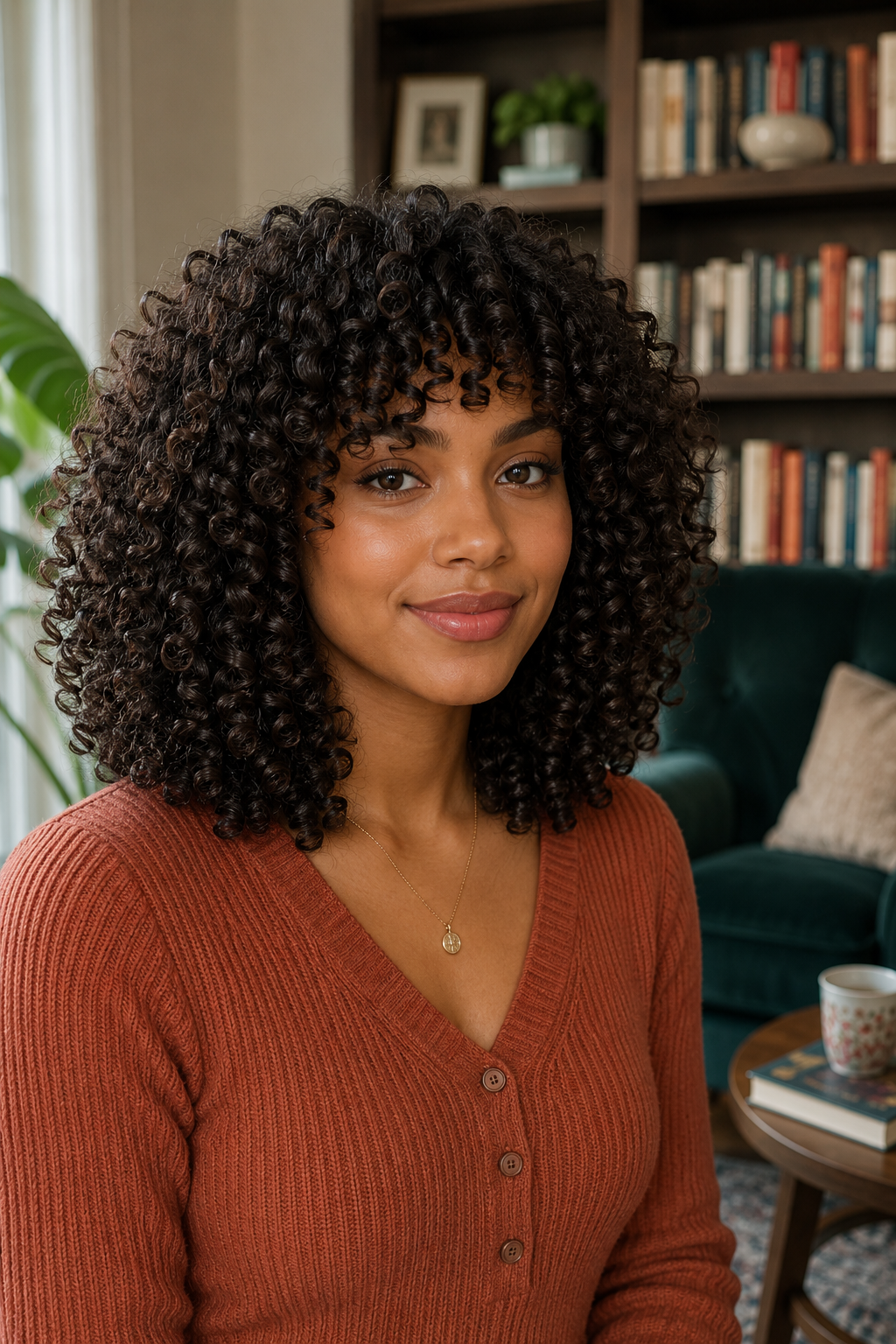
Standard layering through a shoulder-length cut, no dramatic shape, just enough removal to keep the curls from stacking up.
The point is reducing weight so each curl has room to form properly instead of being pressed down by the one above it.
Great for thick hair that turns pyramid-shaped when it grows out. See our collection of layered medium hairstyles for how the layering shifts across hair types.
Face-Framing Layers
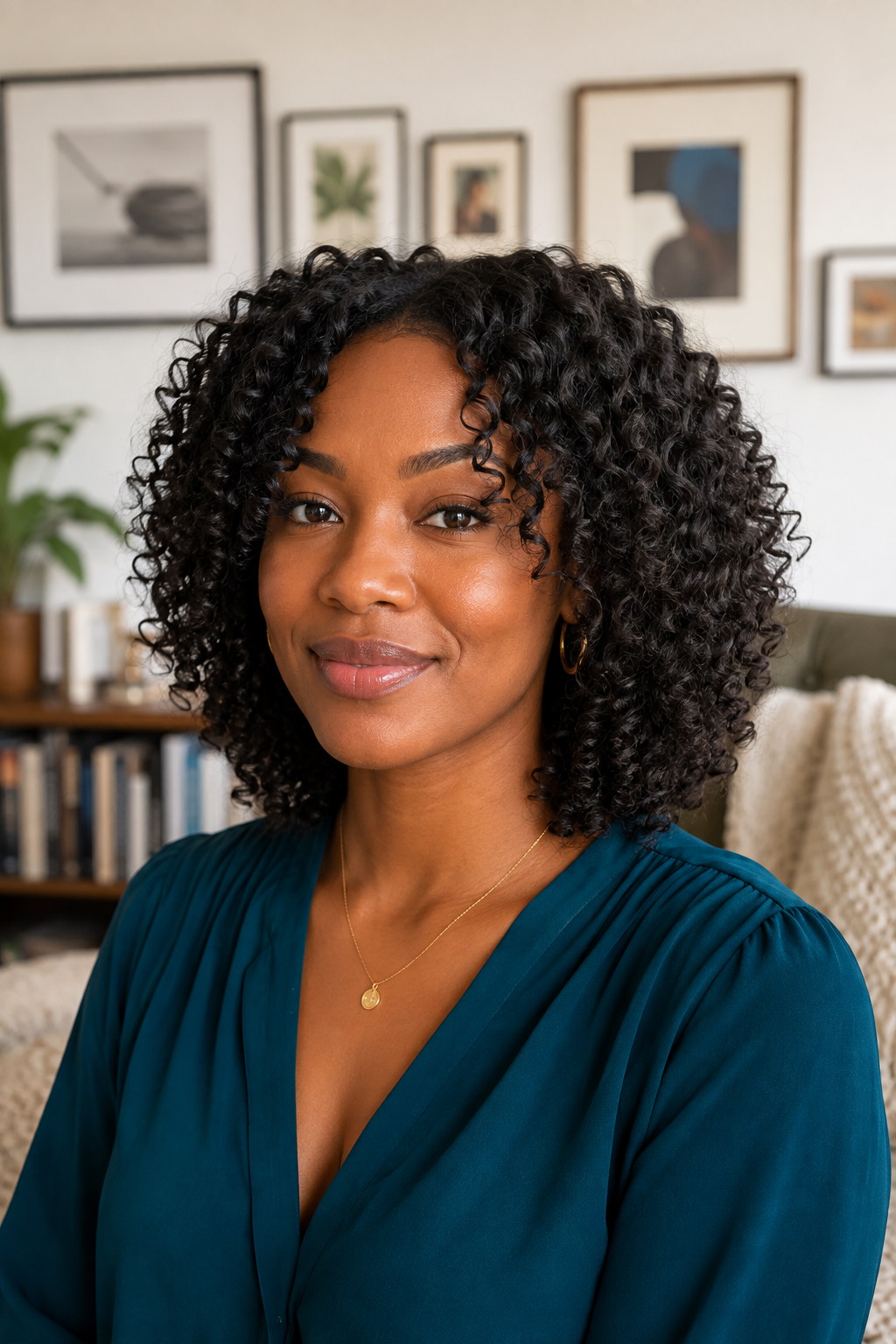
Shorter pieces cut only around the face while the rest stays one length. A small change with a noticeable result.
The front curls sit against your cheekbones and jawline, which softens the outline of the whole cut.
Suits anyone nervous about committing to full layers. If it works you can go further next time. If it does not, the pieces grow back into the length within a couple of months with no awkward stage.
Rounded Curl Shape
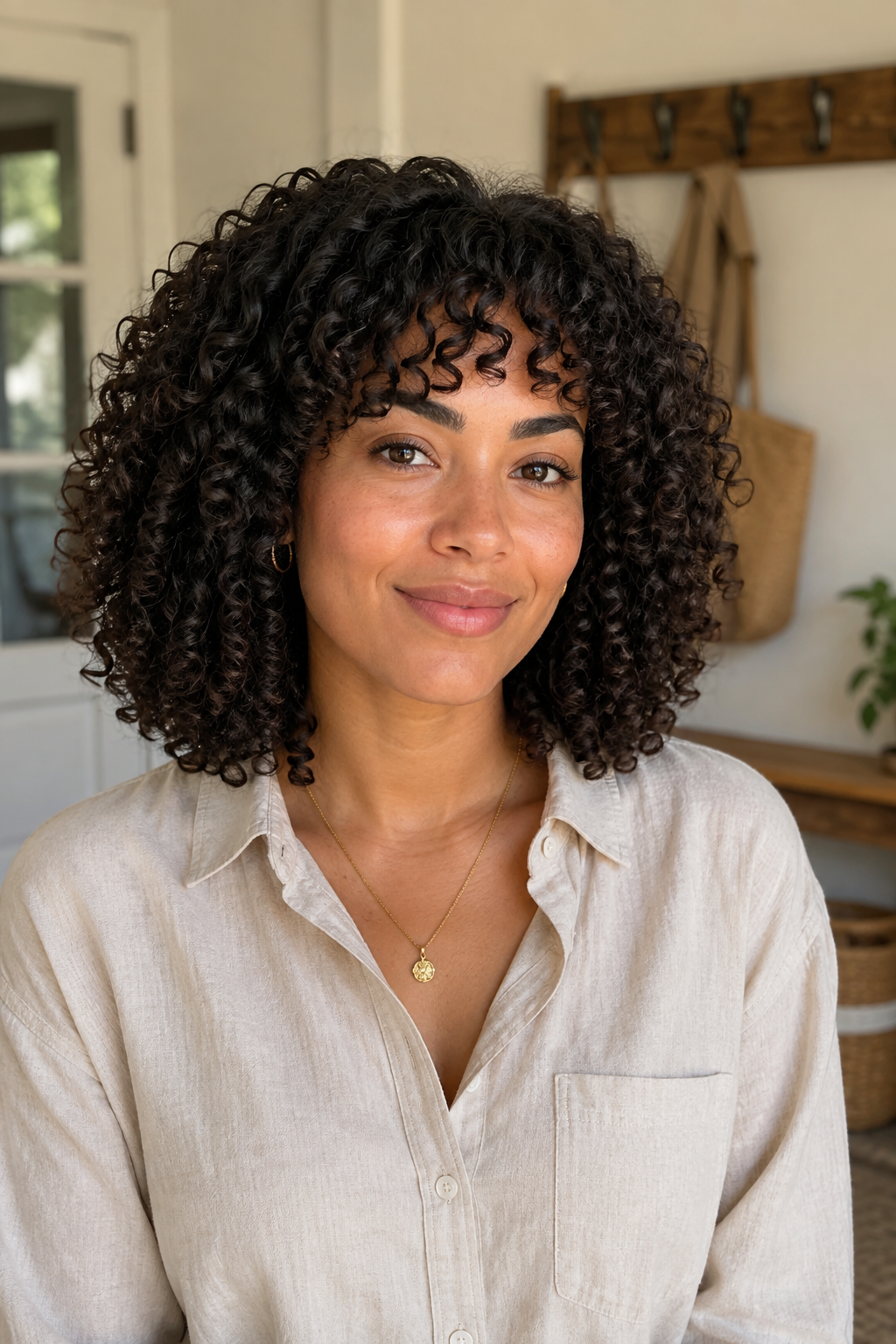
Cut curl by curl on dry hair, following the pattern rather than sectioning wet hair into straight lines. The result is a balanced rounded shape.
Because each curl is trimmed where it naturally sits, there are no surprises when it dries.
Perfect for anyone who has walked out of a salon with hair much shorter than expected. Book with a stylist who specialises in curls. This method takes longer and costs more, and it is generally worth both.
Crown Lift Layers
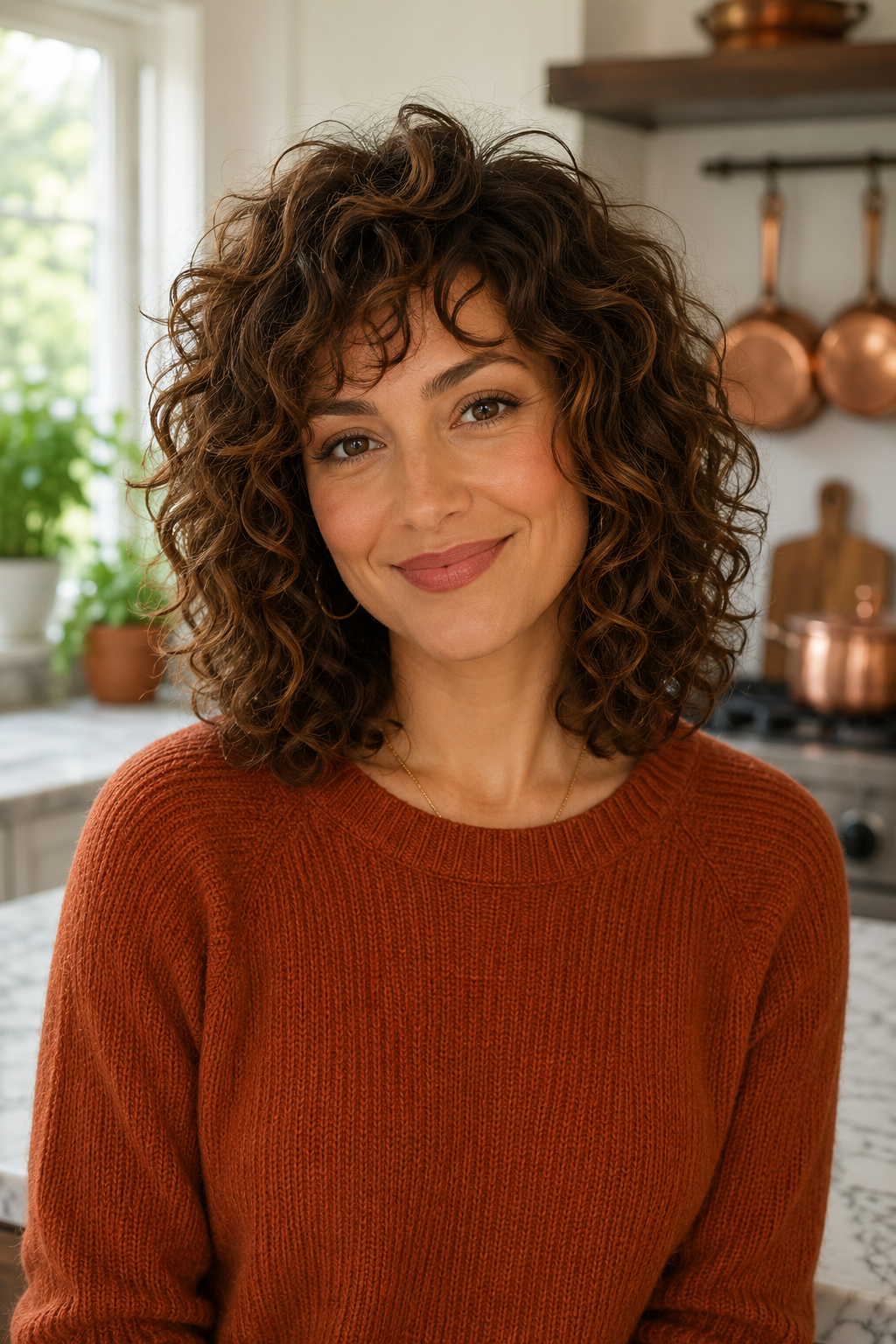
Layers concentrated at the crown specifically to build height on top. The rest of the cut stays fairly plain.
Curly hair often carries all its volume at the sides and none up top, which widens the face.
Works especially well on round faces, where height changes the whole outline. More options along those lines sit in our guide to medium hairstyles for round faces. Lift the roots with your fingers while drying to help it along.
Nape Undercut for Thick Curls
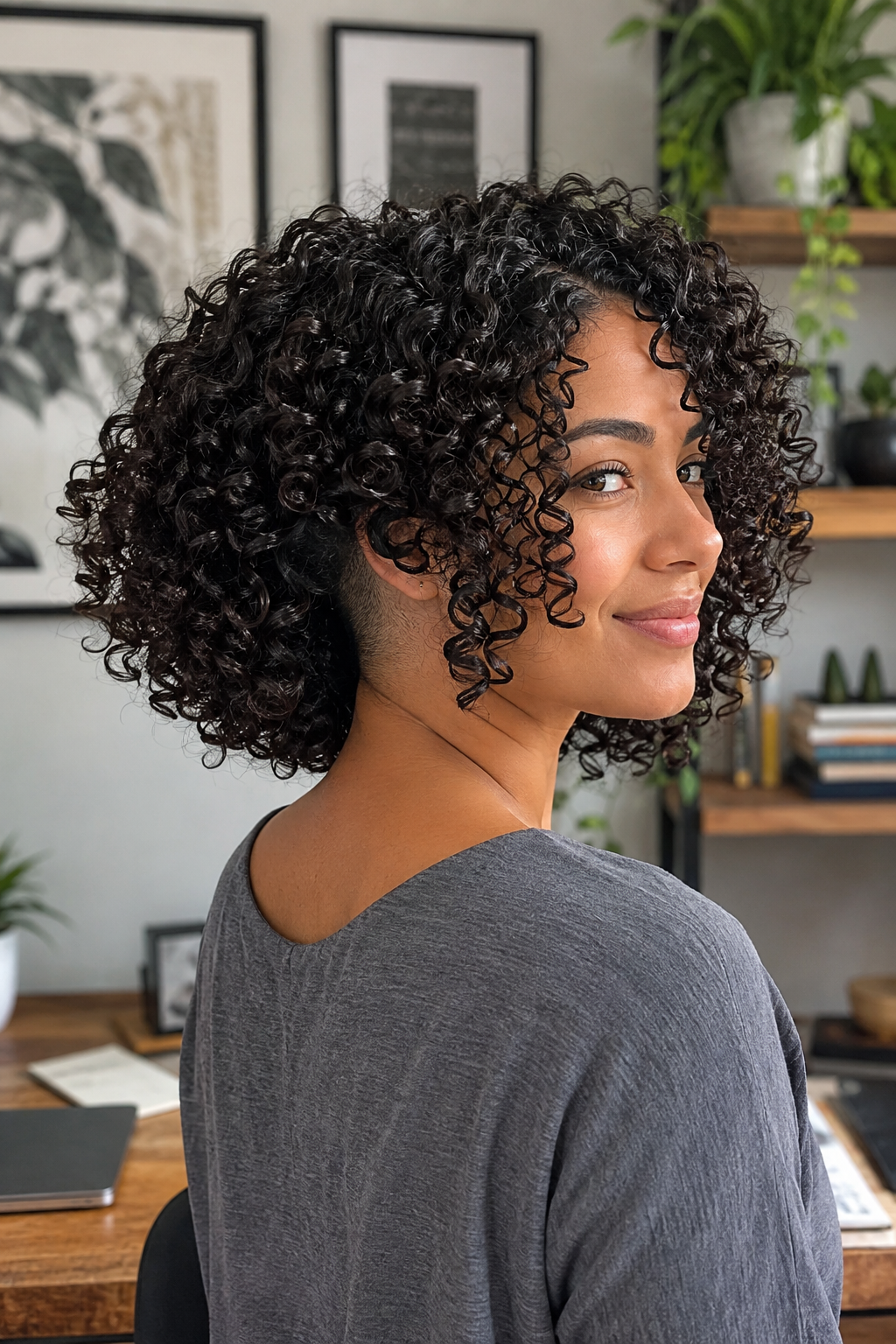
A small section shaved or clipped short underneath at the nape, hidden completely by the hair on top.
Very thick curly hair traps heat and bulk at the neck. Removing that section takes weight out without changing the shape.
Great for anyone whose hair feels heavy at the back by mid-afternoon. Nobody sees it unless you wear your hair up, and drying time drops noticeably once that section is gone.
Curly Bangs
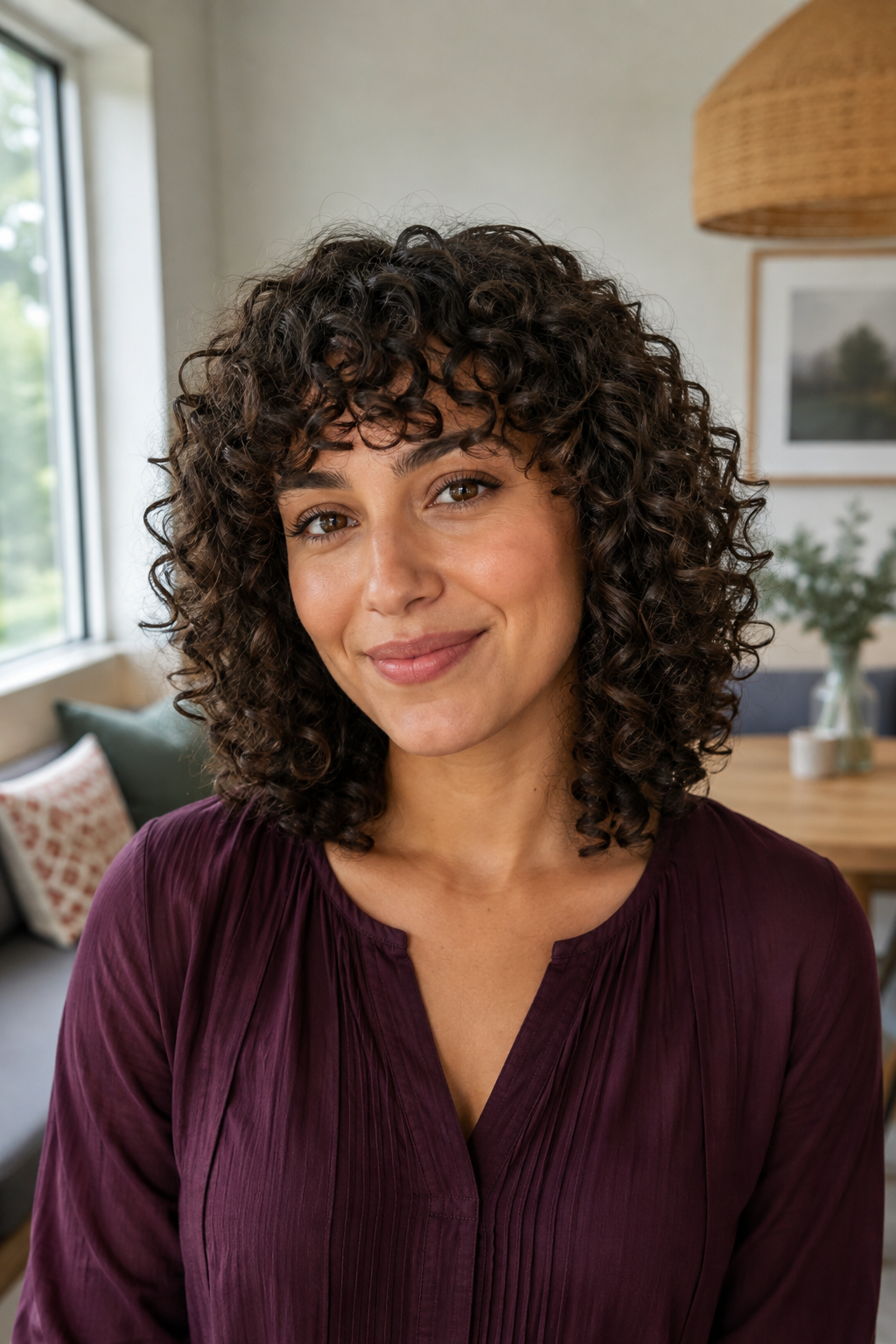
A full curly fringe cut across the forehead, springing up into its own shape rather than lying flat.
They need to be cut long, since shrinkage pulls them up more than most people expect.
Suits longer face shapes, where the bangs shorten the space above your eyes. Refresh them separately from the rest of your hair. A quick spray of water and a little cream usually resets the shape without a full wash.
Deep Side Part Curls
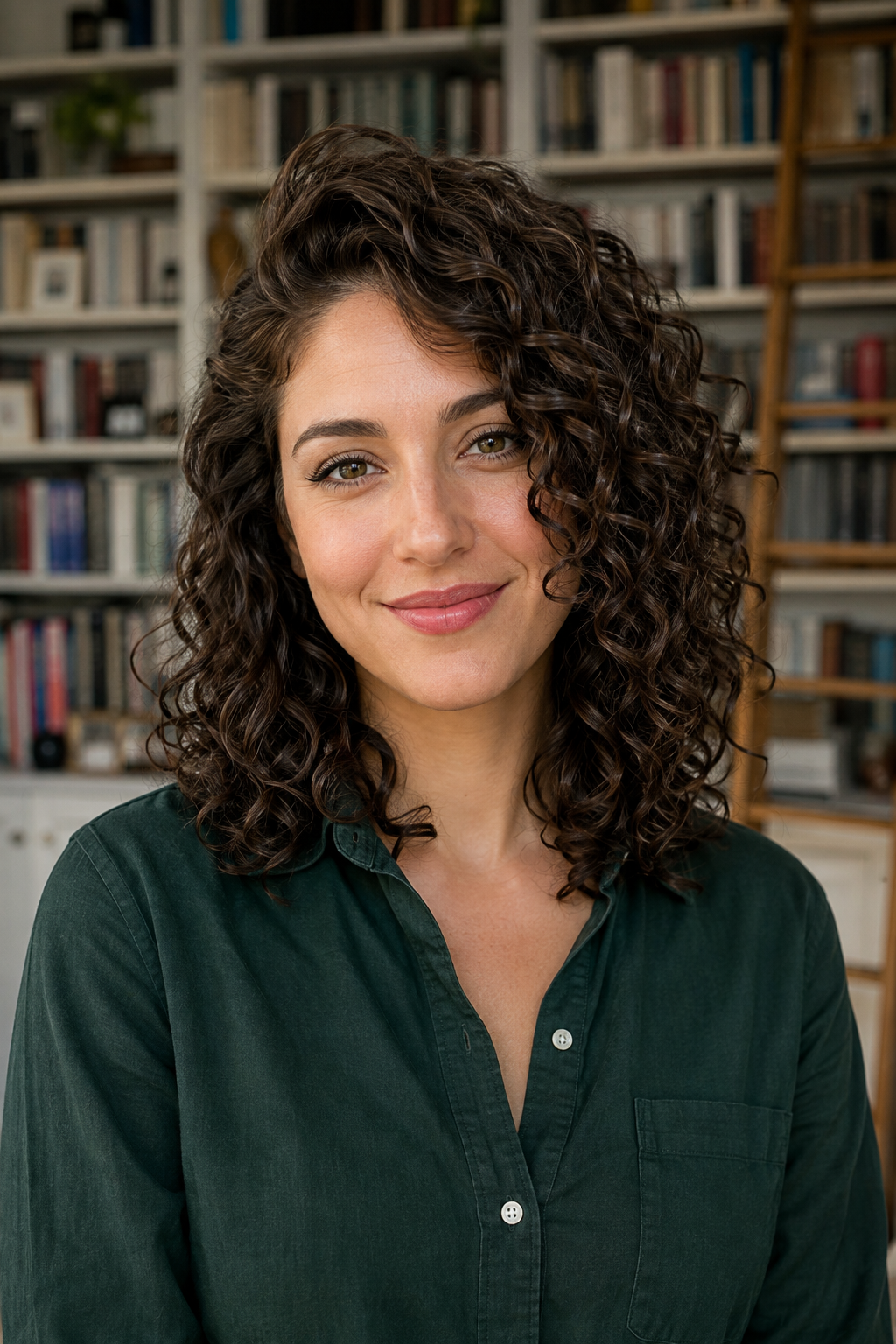
Shifting your part well over to one side and letting the curls fall unevenly. Costs nothing and changes everything.
The extra hair on one side piles up and creates volume near the roots where curly hair usually goes flat.
Great for softening a round or heart-shaped face. Make the part while your hair is wet and set it with a little gel, otherwise the curls migrate back toward the center as they dry.
Half-Up Curls
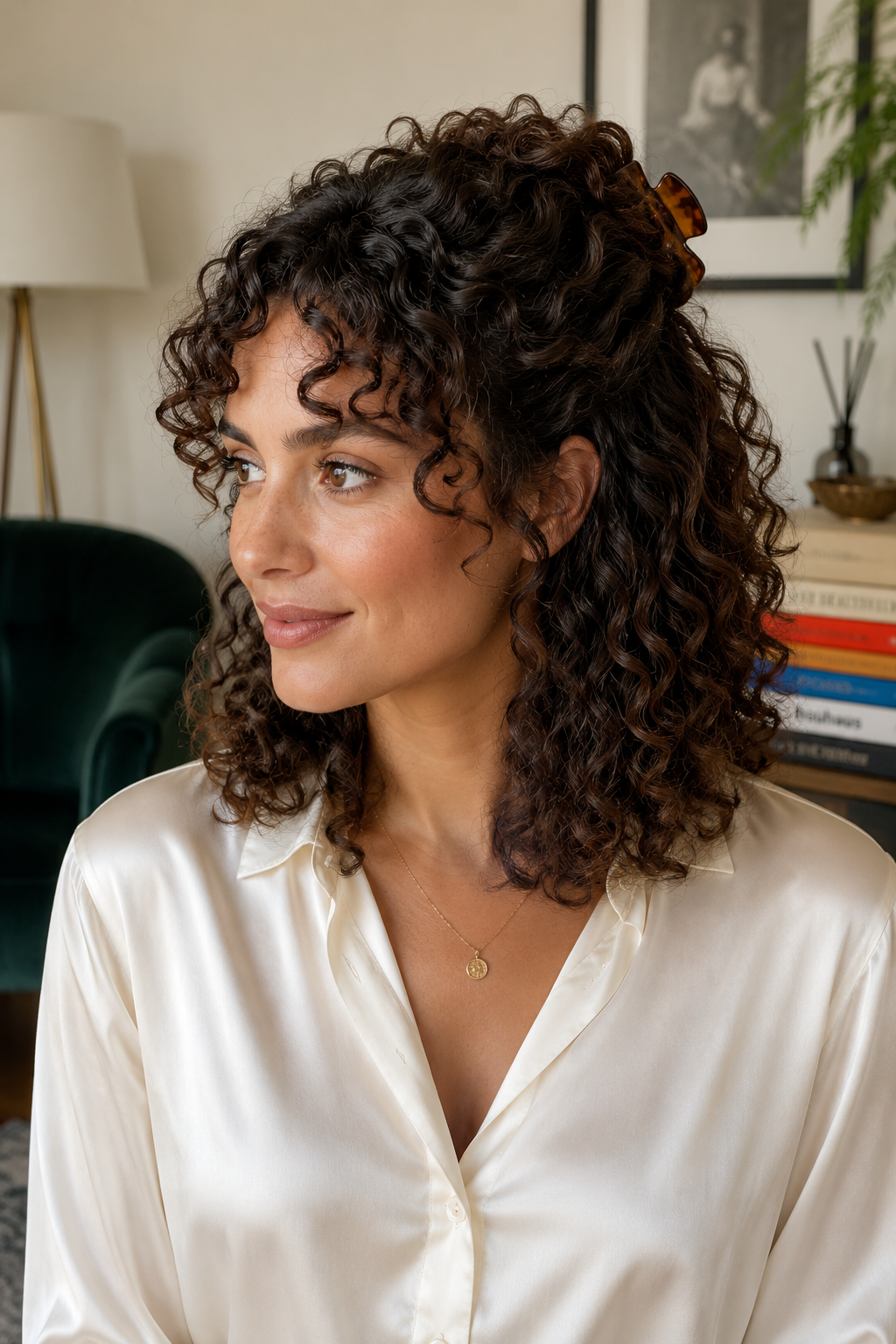
The top section pulled back and secured, the rest left down. The curls stay visible while the front is handled.
A claw clip works better than an elastic here, since it does not compress the curl pattern where it grips.
Suits any day you need your hair out of your face without hiding it. For dressier versions and other ways to secure it, browse our medium hairstyles for weddings.
Air-Dried Wash and Go
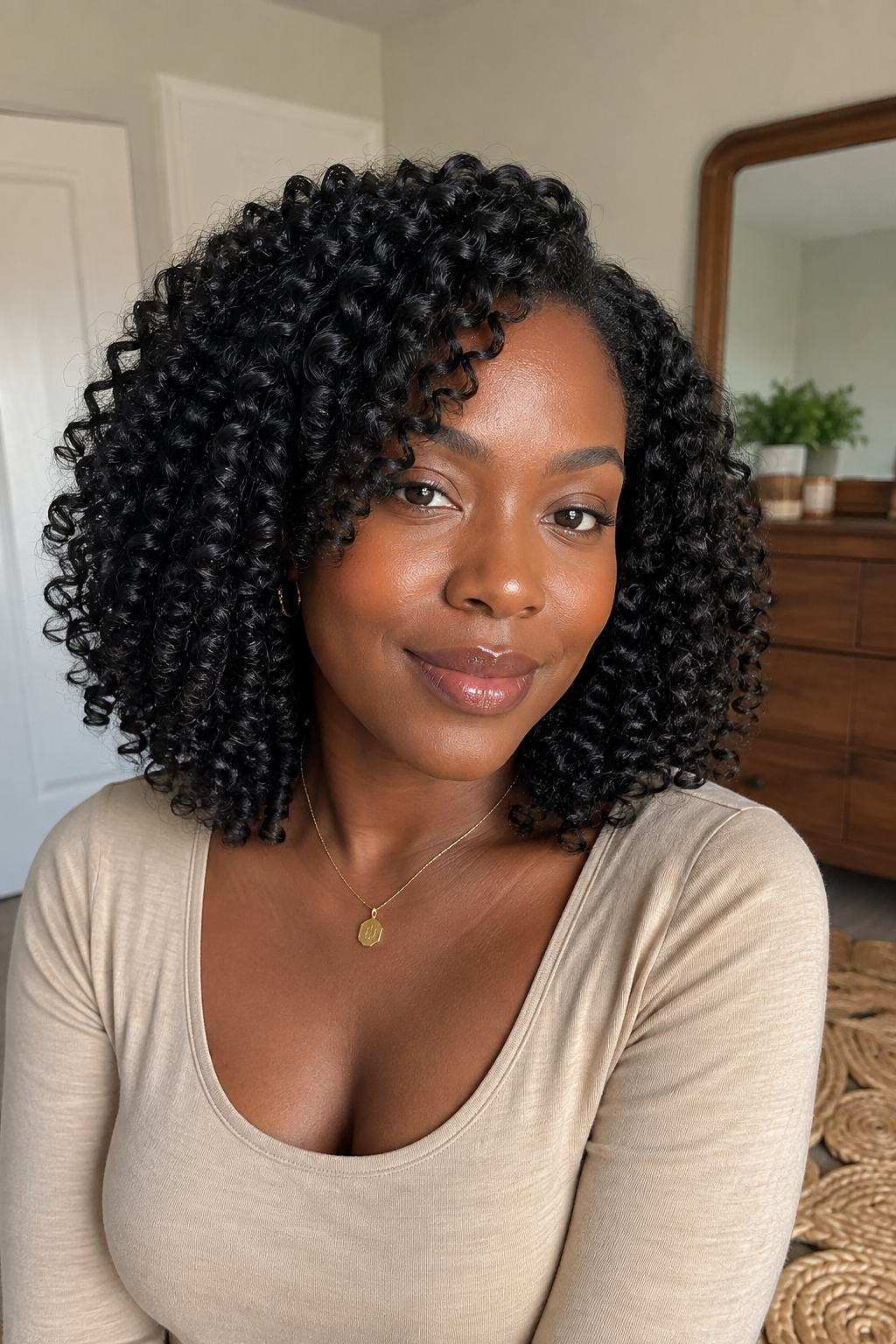
No diffuser, no heat, no touching. Product goes on soaking wet hair, then the hair is left alone until it dries completely.
Handling curls while they dry is what causes frizz, so the discipline of not touching is the whole technique.
Works especially well on 3A to 3C patterns with enough length to weigh the curls down. Give yourself a few hours. Anyone who needs to leave the house quickly should wash the night before.
Diffused Volume
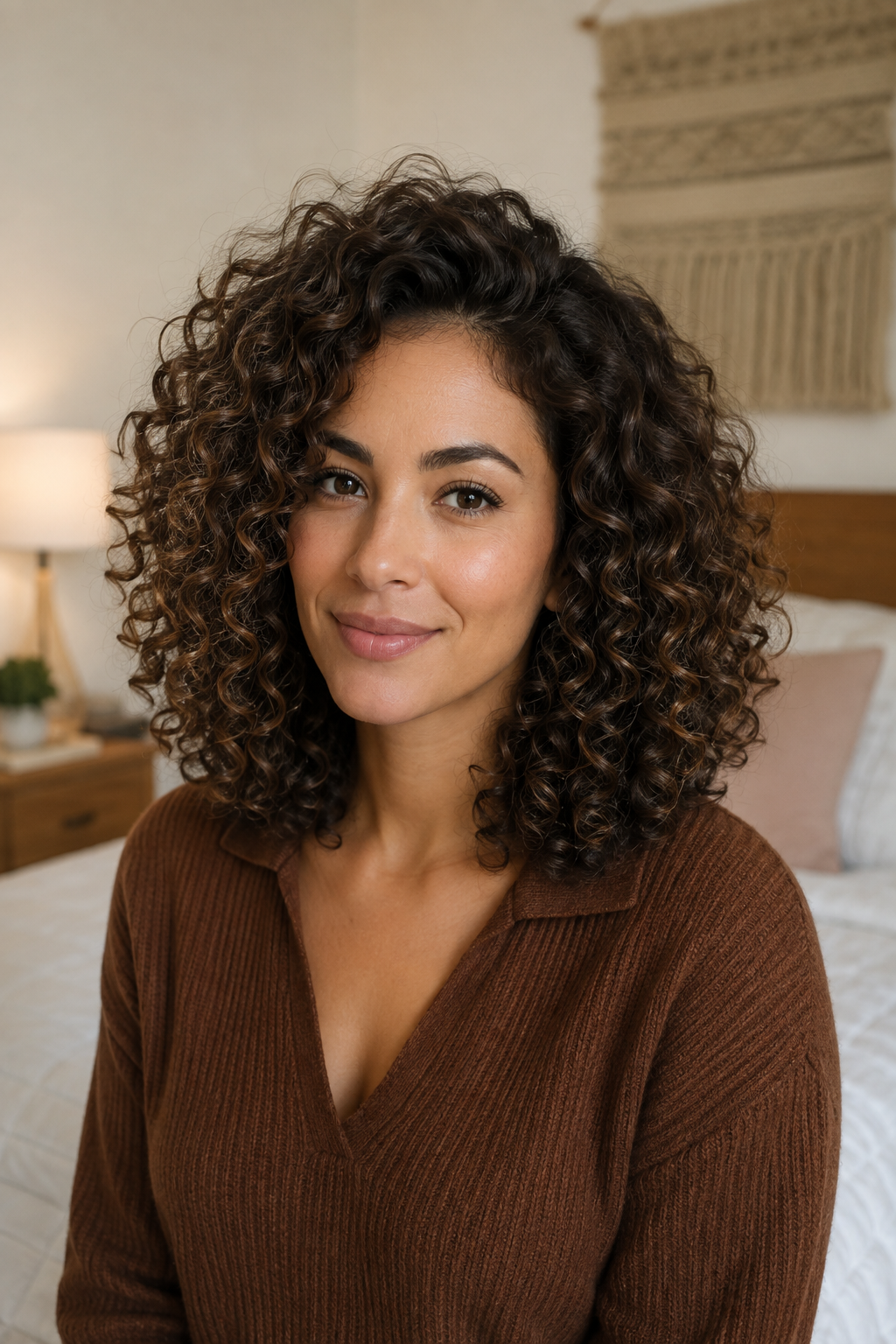
A diffuser on low heat and low speed, cupping sections up toward the scalp and holding them there until dry.
Drying the roots in a lifted position is what creates the volume. The ends take care of themselves.
Perfect for fine curls that fall flat on top. Flip your head upside down for the first few minutes. It feels awkward and it makes a bigger difference than any product you can put on top.
Caramel Highlights
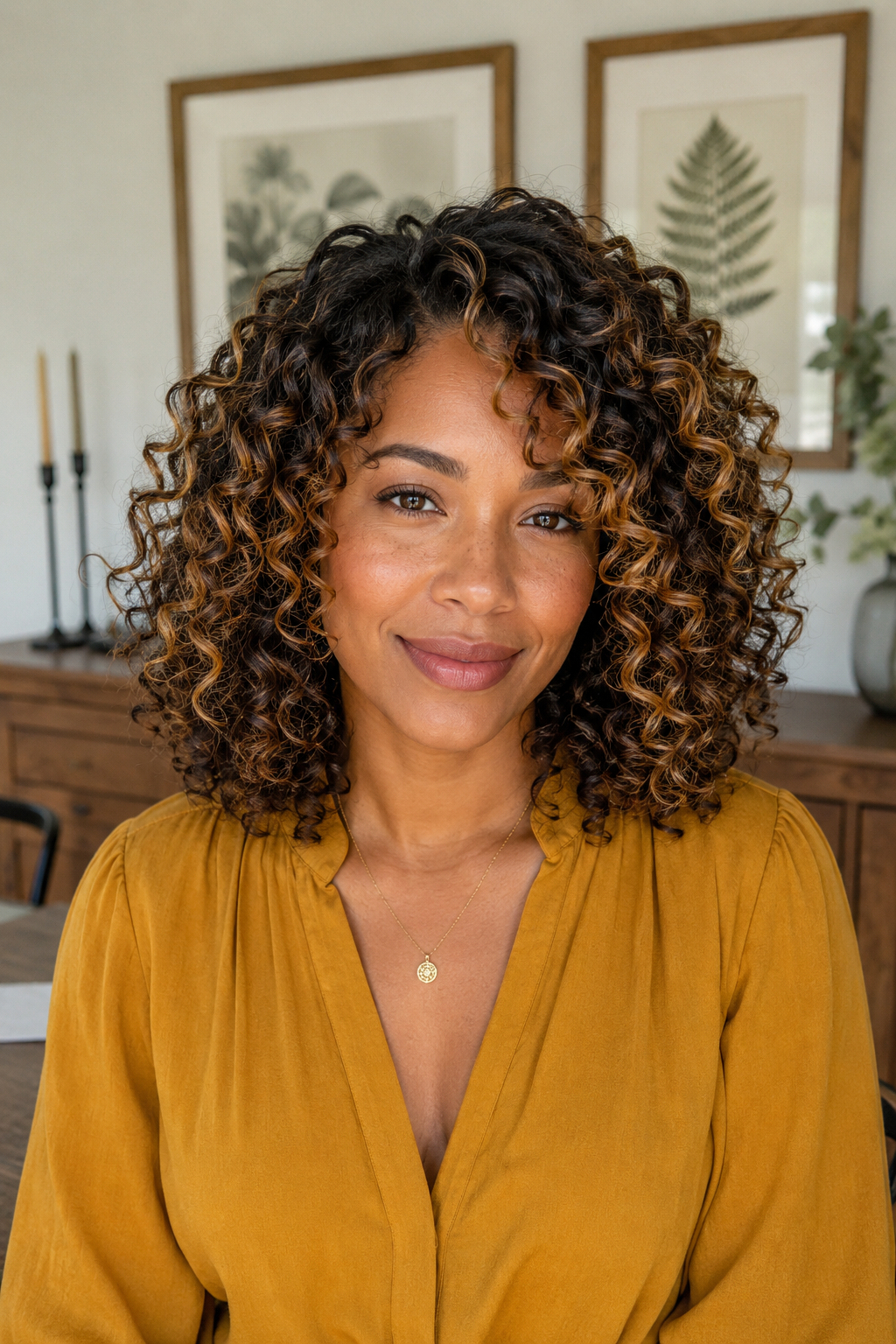
Warm caramel worked through medium curls, brightest around the face and softer through the back.
Lighter pieces catch on the outside of each curl bend, so the color makes the pattern easier to see.
Suits medium to deep brunettes who want warmth without a dramatic change. Curly hair is more porous than straight hair and grabs color unevenly, so a gentler lift usually gives a better result than going lighter in one session.
Copper Curls
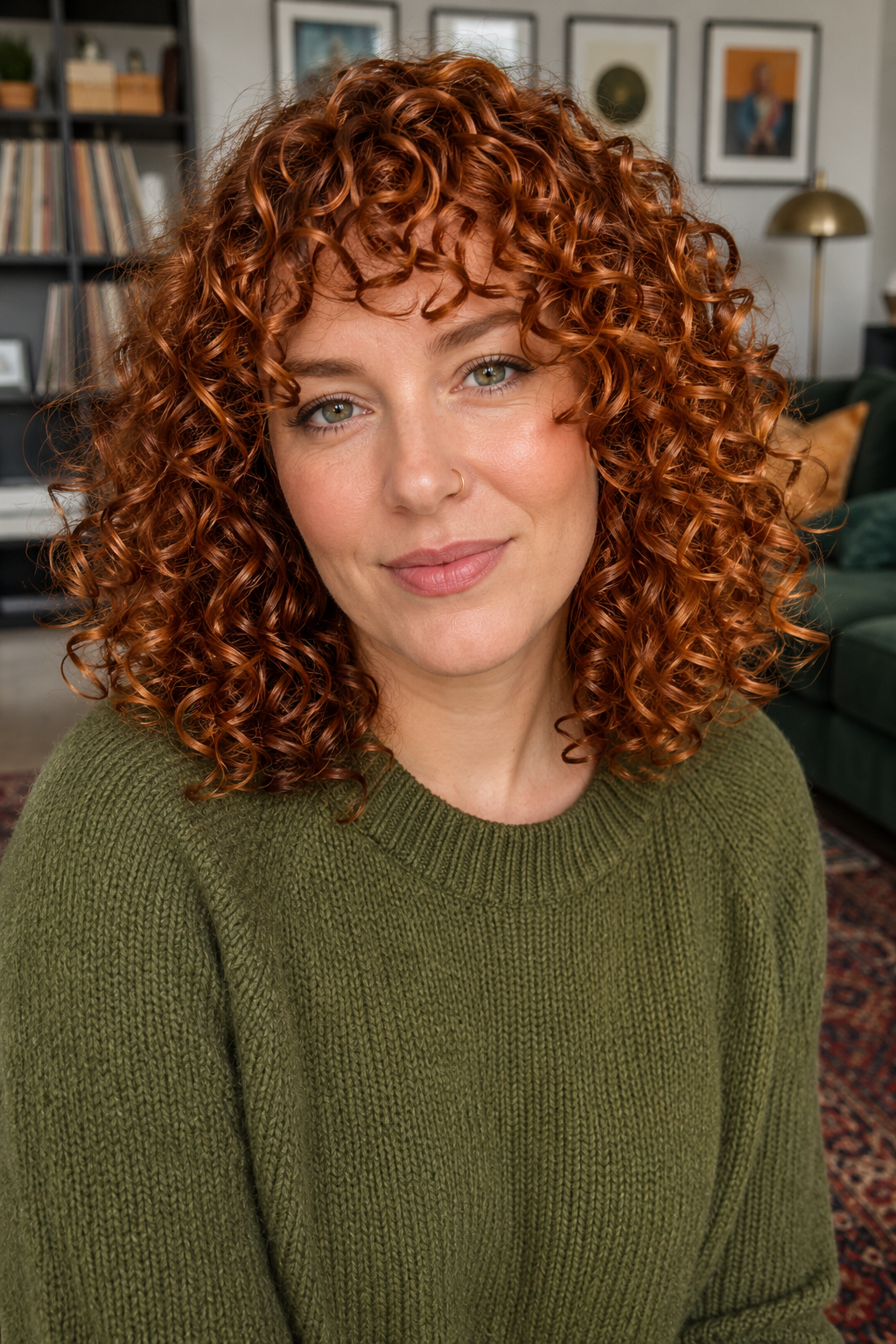
Copper is one of the strongest colors on curly hair, mainly because the shine sits differently across a curved surface than it does on flat hair.
The tone runs from soft ginger to deep spiced red depending on how much you want to commit.
Great for anyone with warm or olive undertones. Copper fades faster than most shades, so plan on a gloss every few weeks and a color-safe wash routine to hold it.
Babylights on Curls
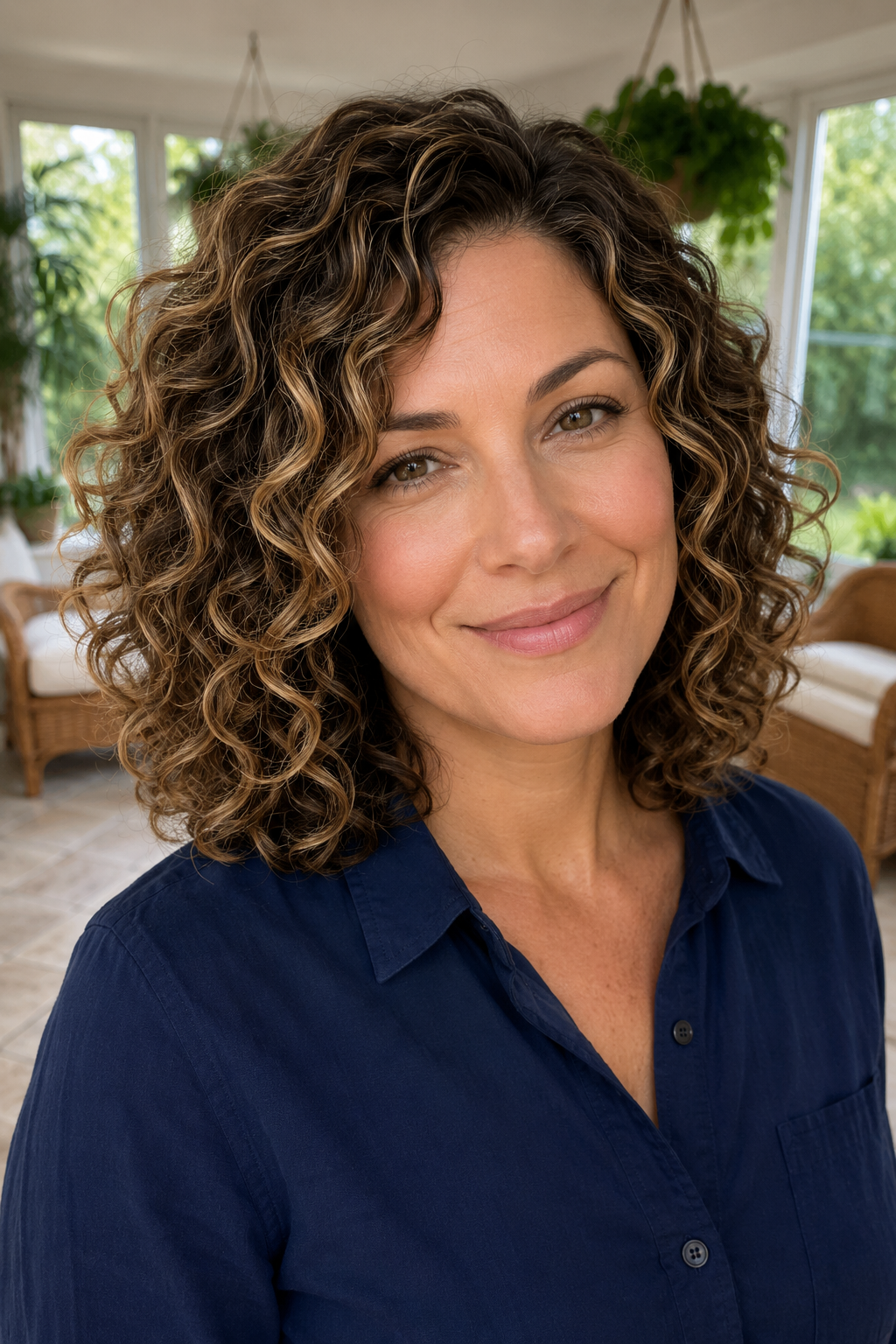
Very fine strands lightened throughout, so subtle that no single piece stands out. The effect is dimension rather than obvious streaks.
Fine pieces show up beautifully on curls, appearing and disappearing as the hair moves.
Works especially well if you want brightness without a visible regrowth line. Because the pieces are so fine, the color grows out softly and needs far less upkeep than heavier highlights.
Money Piece
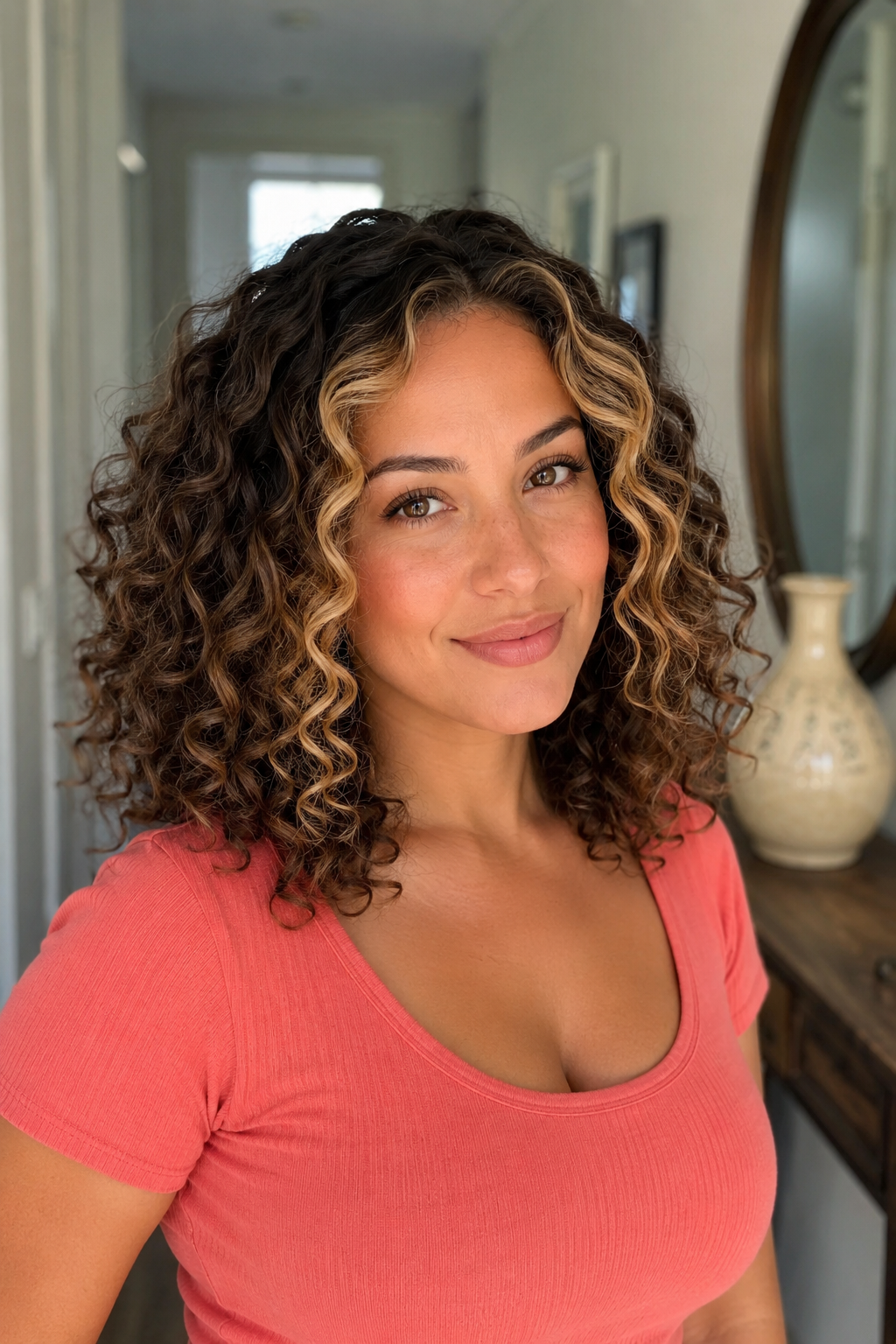
Two brightened sections at the temples framing the face, with the rest of the hair left alone.
On curly hair the lightened pieces spring forward and land right against your cheekbones.
Perfect for anyone testing whether they suit lighter hair before doing anything drastic. Only a small amount of hair gets processed, so the damage risk stays low, and it can be toned darker again easily if you change your mind.
Espresso Single Process
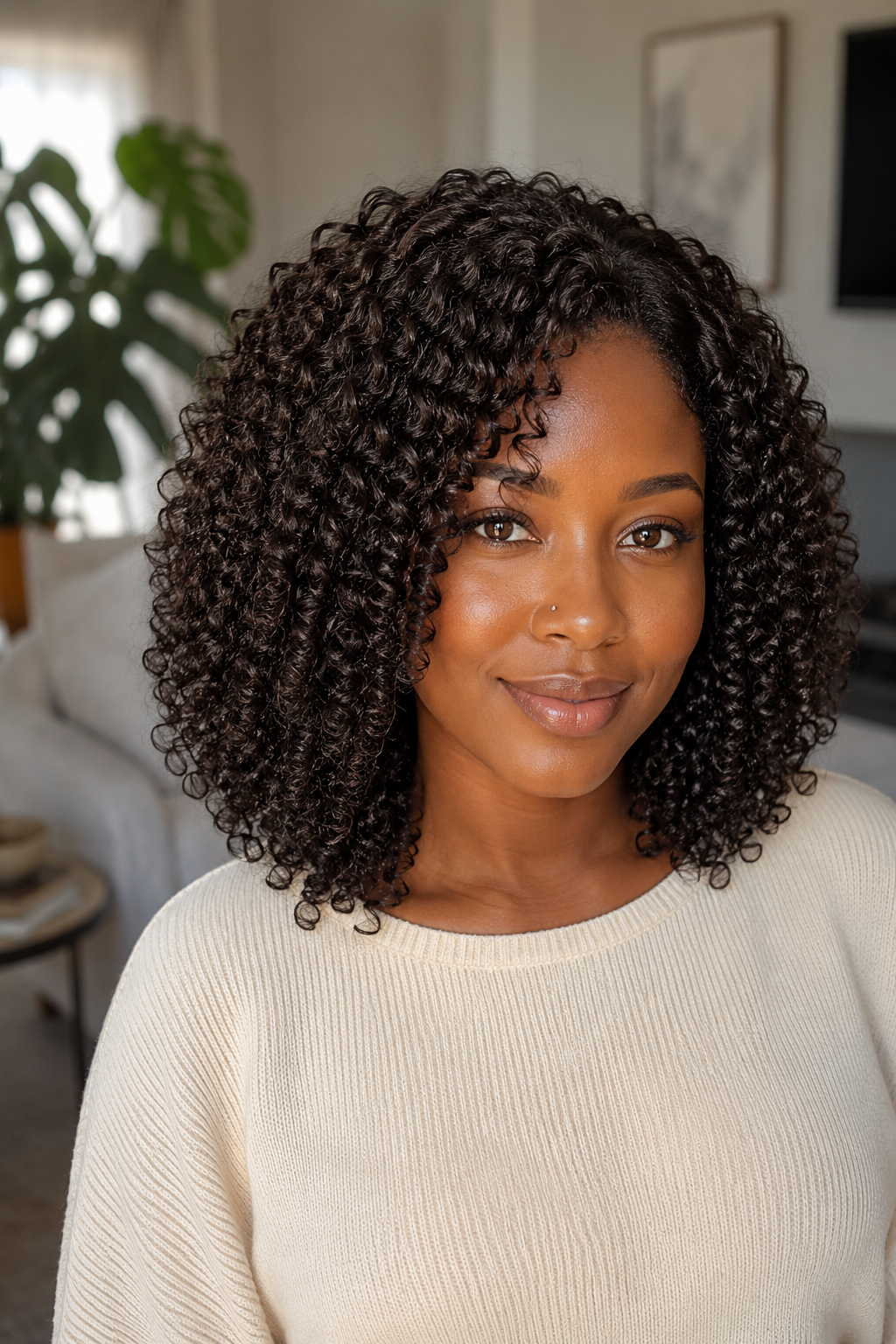
One rich dark brown applied all over, no highlights, no dimension added. The depth is the point.
Dark color makes curl definition read more clearly, because the shadows between curls get deeper.
Suits anyone with naturally dark hair who wants it richer and glossier rather than lighter. Single process is also the gentlest color option, which matters when your curl pattern is the thing you are trying to protect.
Balayage on Medium Curls
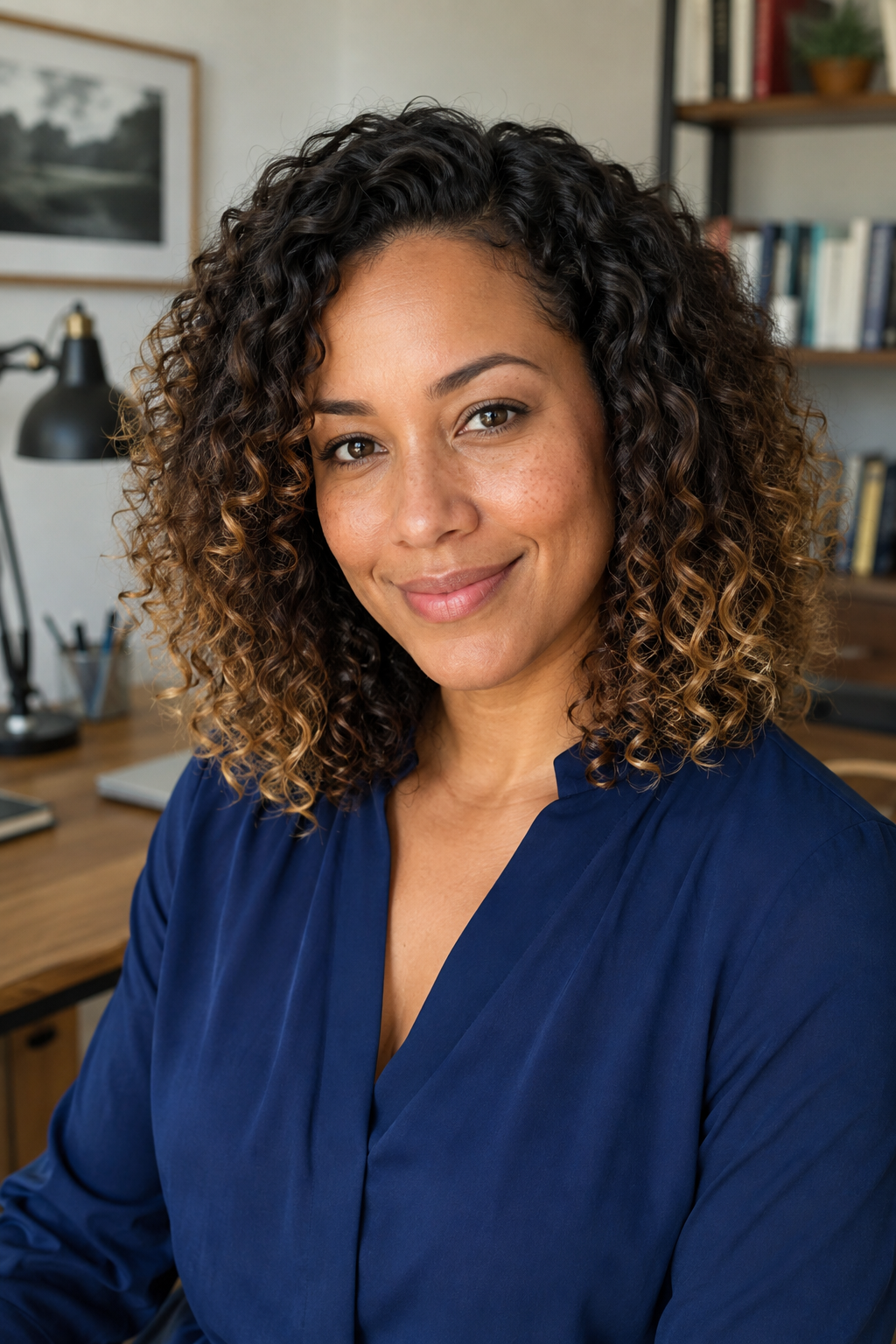
Color painted on by hand, concentrated toward the ends and left soft at the roots.
The hand-painted approach suits curls specifically, since the stylist can follow the curl pattern instead of working in straight foiled sections.
Great for anyone who wants lighter ends without a hard line where the color starts. Growth is forgiving, so four or five months between appointments is realistic, and our hair color ideas section has more on choosing a tone.
Comments
No Comments