
24 Straight Medium Hairstyles With Clean Lines and Shine
Straight hair has nowhere to hide. There is no curl pattern to disguise an uneven line, no texture to soften a layer that sits wrong. Every cut shows exactly what it is. That sounds like a disadvantage and it is really the opposite, because a well-cut straight lob looks expensive in a way that texture never quite manages. The other thing straight hair does better than any other type is reflect light, running in one unbroken sheet from root to end. Shape and shine carry the whole look. Here is what to consider at shoulder length.
Jump to:
- Blunt Lob
- A-Line Lob
- Asymmetrical Bob
- Collarbone Cut
- Middle Part Lob
- Deep Side Part Lob
- Piecey Lob
- Choppy Lob
- Layered Lob
- Butterfly Cut
- V-Cut Back
- U-Shaped Back
- Feathered Layers
- Face-Framing Layers
- Textured Shag
- Rachel Cut
- Hidden Undercut for Thick Straight Hair
- Blunt Fringe
- Curtain Bangs
- Wispy Bangs
- Y2K Flipped Ends
- Glass Hair Finish
- Sleek Low Ponytail
- Gloss Treatment for Shine
Blunt Lob
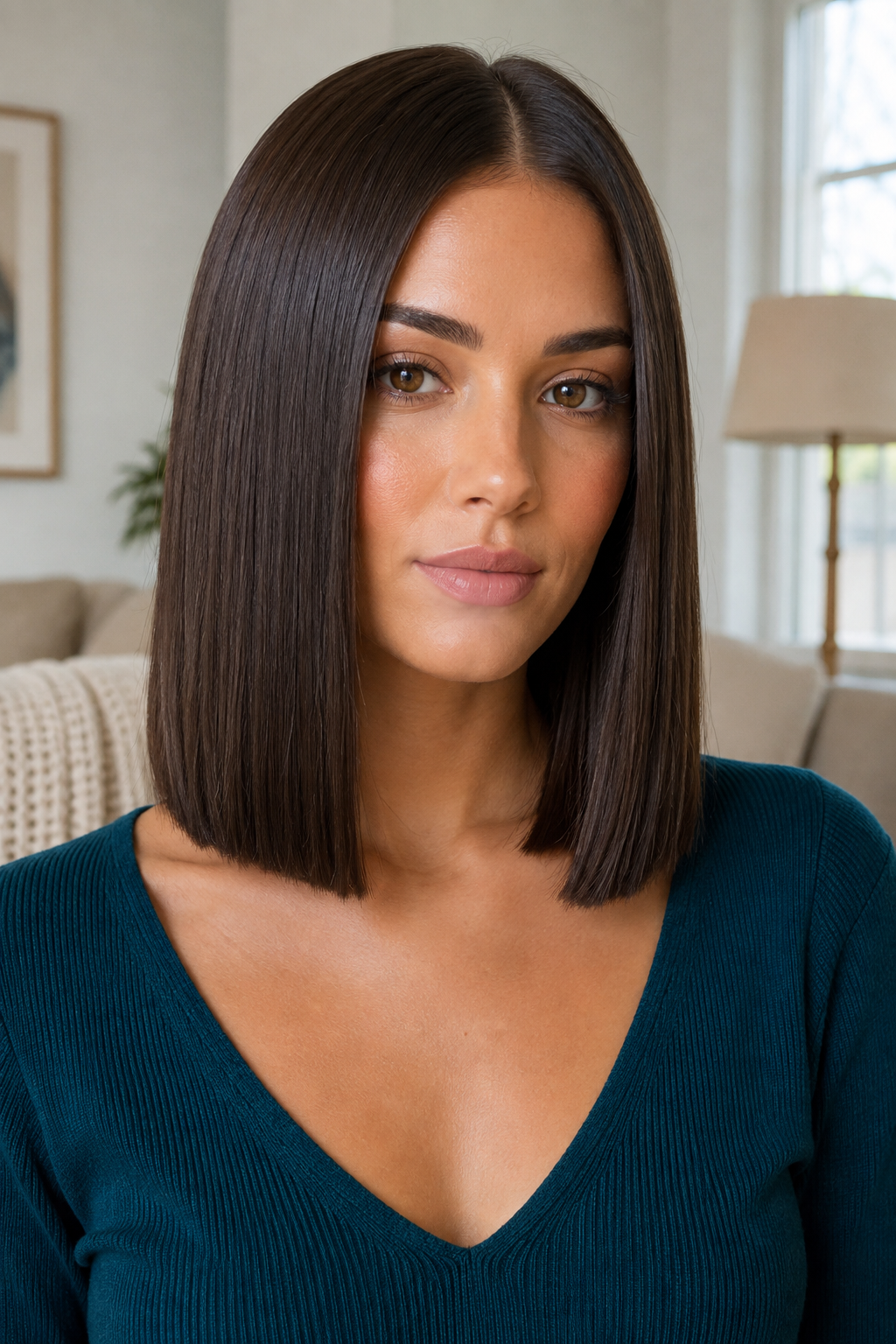
One length at the collarbone, cut to a strong clean line with no layers and no fringe.
The line is the entire design. Nothing distracts from it, which is why it reads as deliberate rather than plain.
Great for oval and longer faces. It shows growth clearly, so plan a trim every six to eight weeks. Our lob hairstyles for fine hair post covers the version built for lower density.
A-Line Lob
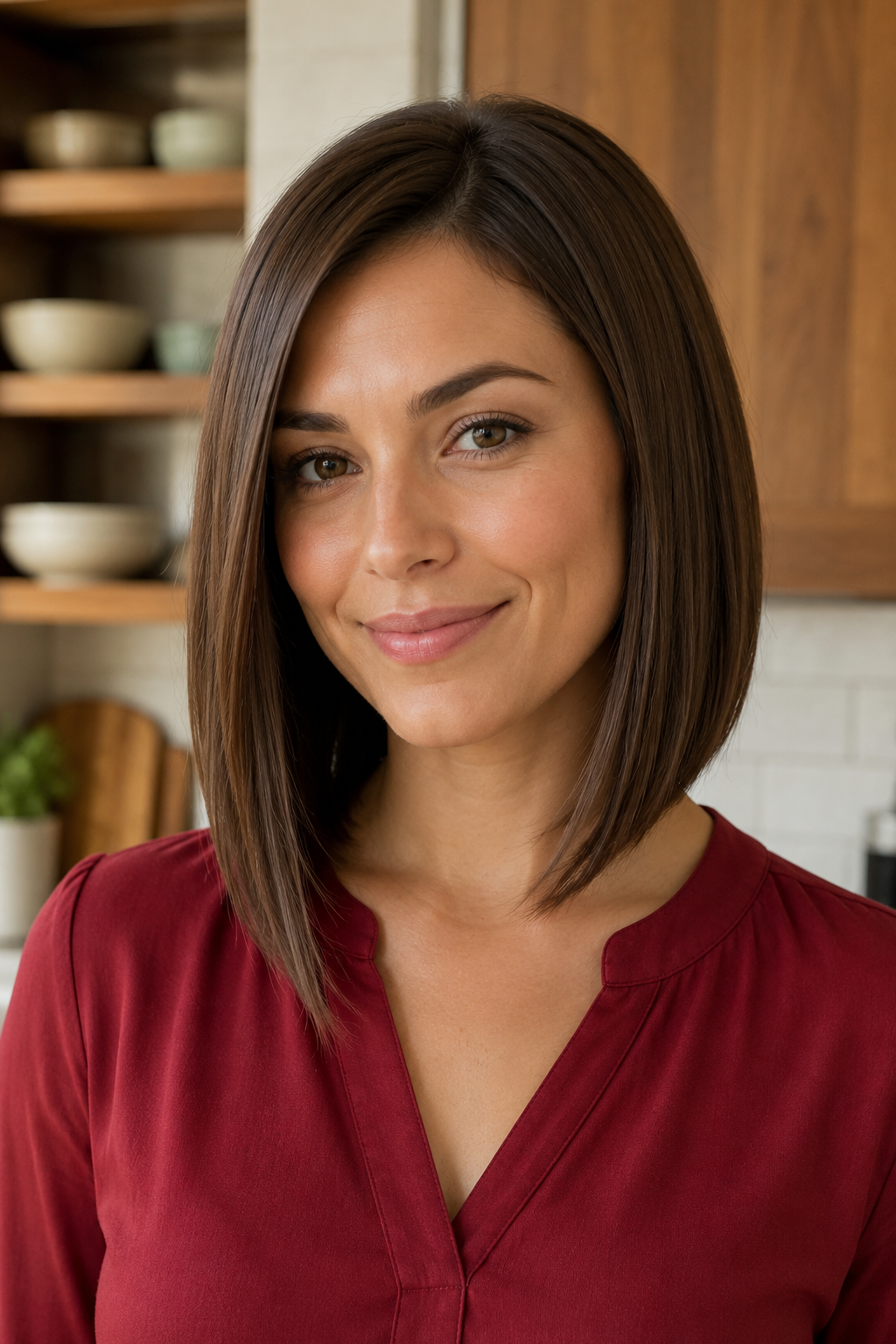
Shorter at the back with the length increasing steadily toward the front, so the two sides sit noticeably longer than the nape.
Straight hair shows that slope cleanly, which is the whole appeal. On any other texture the line would blur.
Suits anyone who wants shape without layers. Keep the angle moderate, since a steep A-line at this length starts to look dated rather than sharp.
Asymmetrical Bob
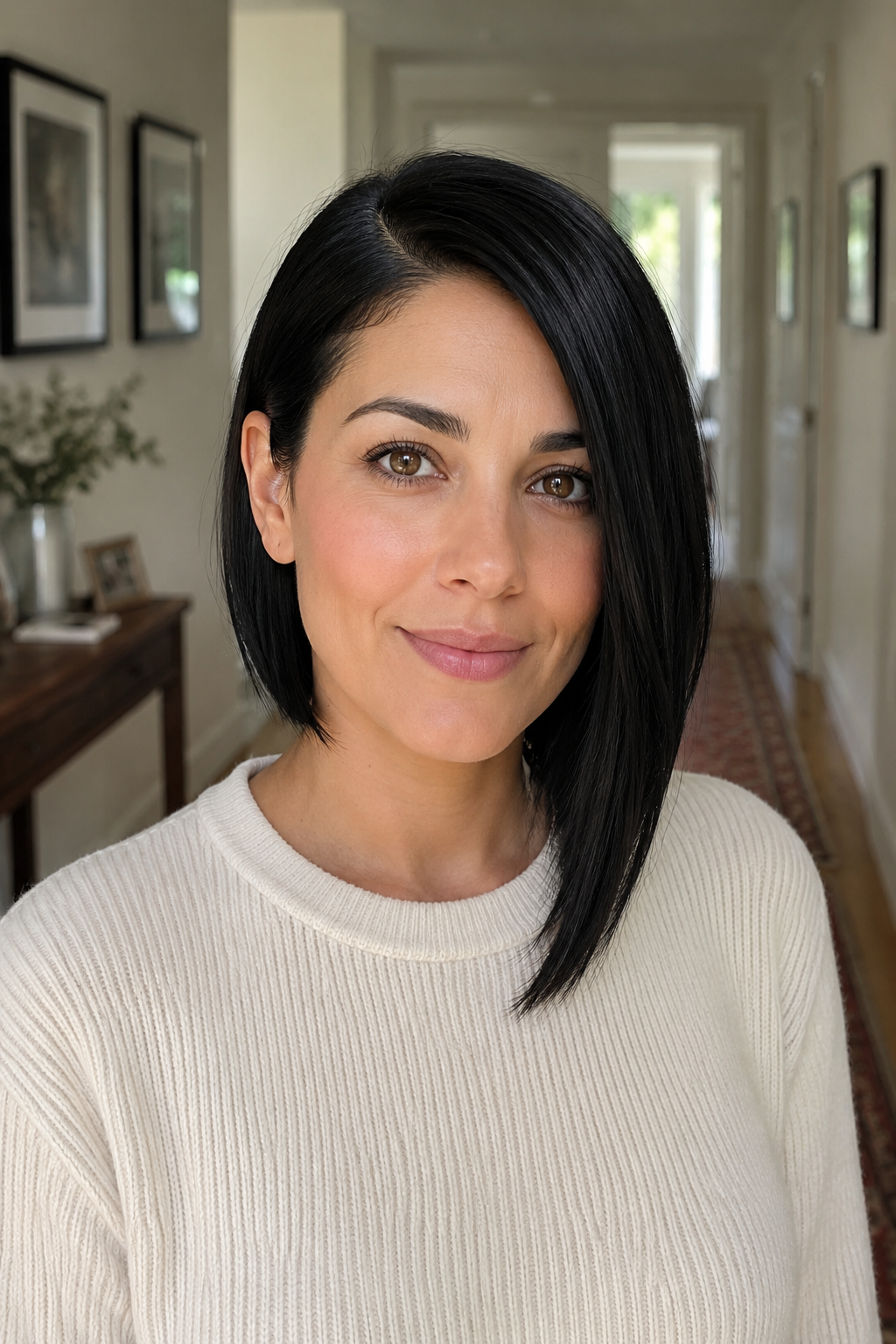
One side cut noticeably longer than the other, with the difference obvious rather than subtle.
The imbalance is the point. It gives a simple cut something to say without adding layers or texture.
Perfect for anyone bored of symmetrical shapes. Wear it with the part shifted toward the shorter side, which exaggerates the difference and stops the longer side reading as a mistake.
Collarbone Cut
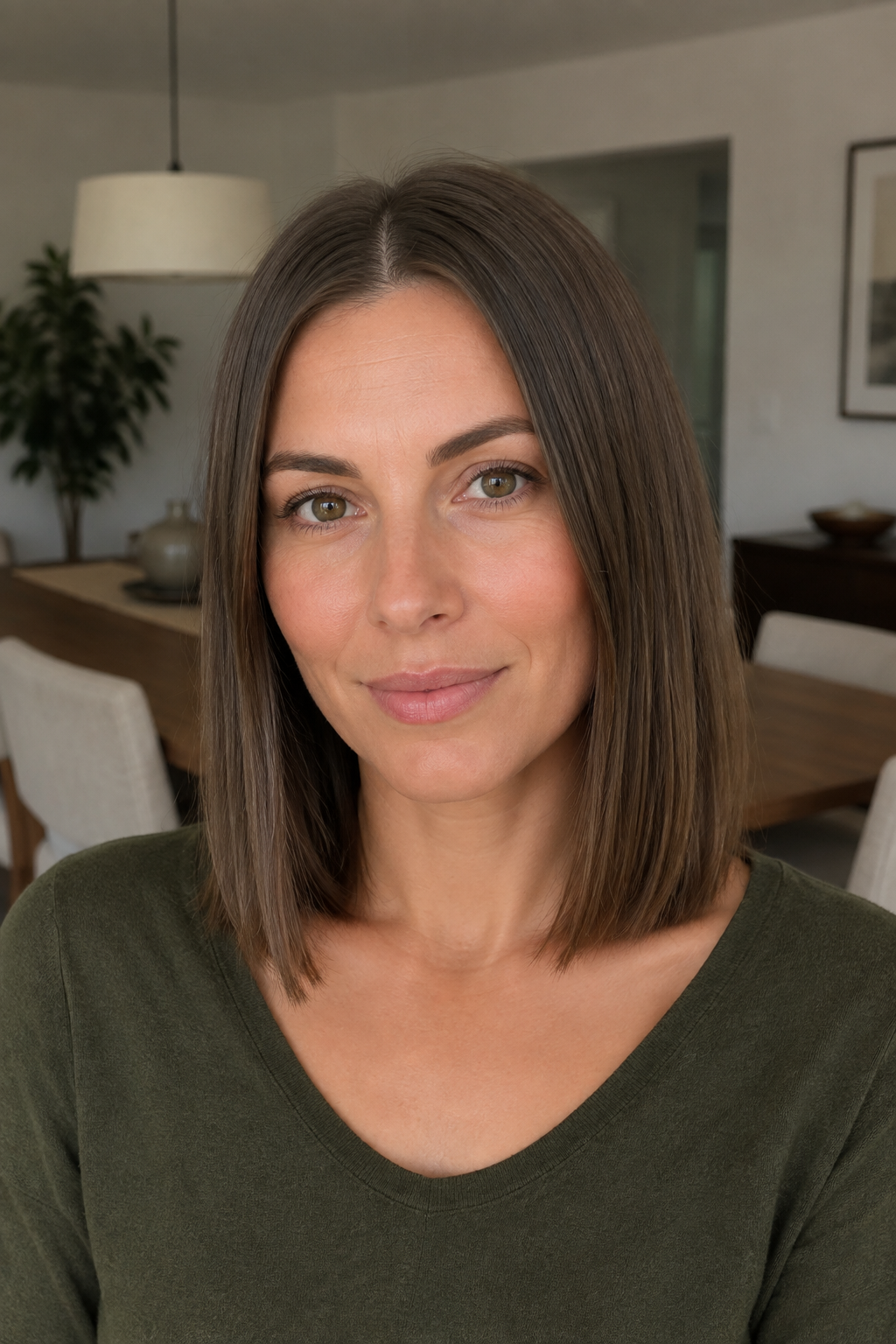
Length landing exactly at the collarbone, cut close to one length with very light shaping.
Once treated as the haircut people got when they could not decide, it has become a deliberate choice.
Works especially well if you want something that suits most settings. It sits long enough to tie back and short enough to blow dry quickly, which is a rare combination.
Middle Part Lob
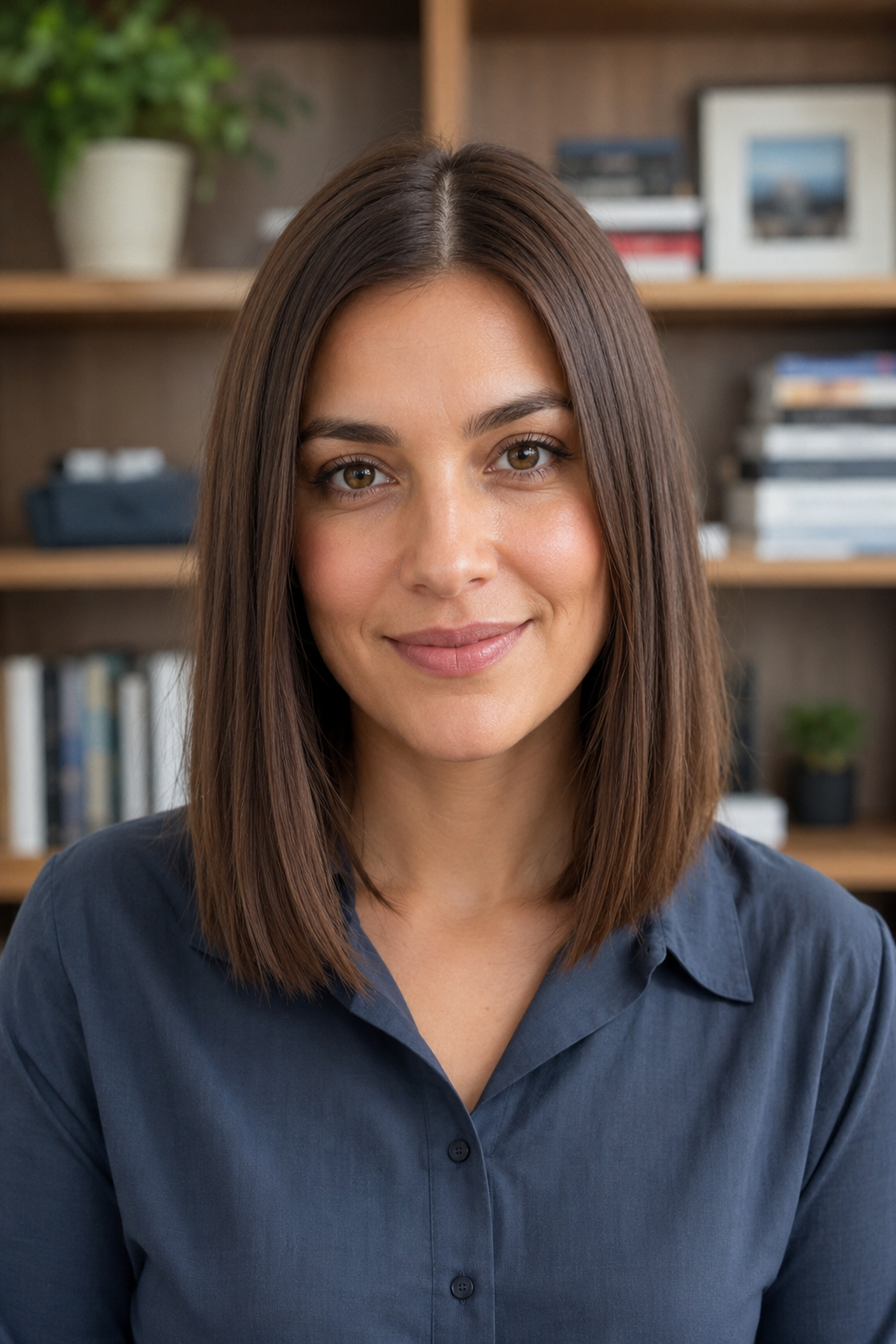
A lob worn with a centre part, the two sides falling evenly to frame the face.
Symmetry does the work here, and straight hair holds a centre part far more reliably than wavy hair does.
Suits oval, heart, and square faces. See our roundup of medium hairstyles for round faces if a centre part has not worked for you before.
Deep Side Part Lob
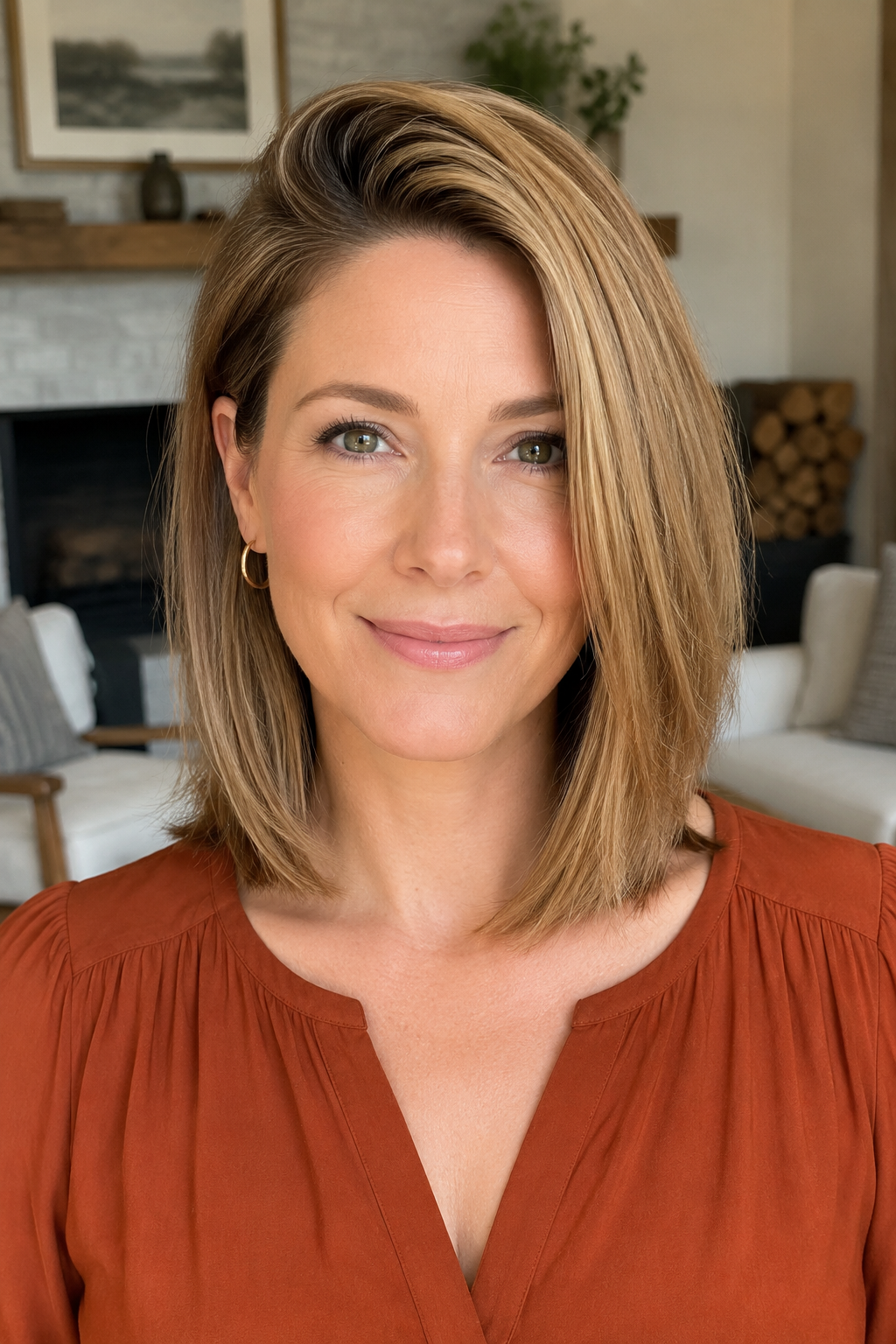
The same cut with the part moved well over to one side, creating an obvious lean.
More hair on one side means more weight, which builds a soft wave of volume near the root even on straight hair.
Great for adding height without layering. It also creates a diagonal line across the forehead, which softens a strong jaw or square hairline.
Piecey Lob
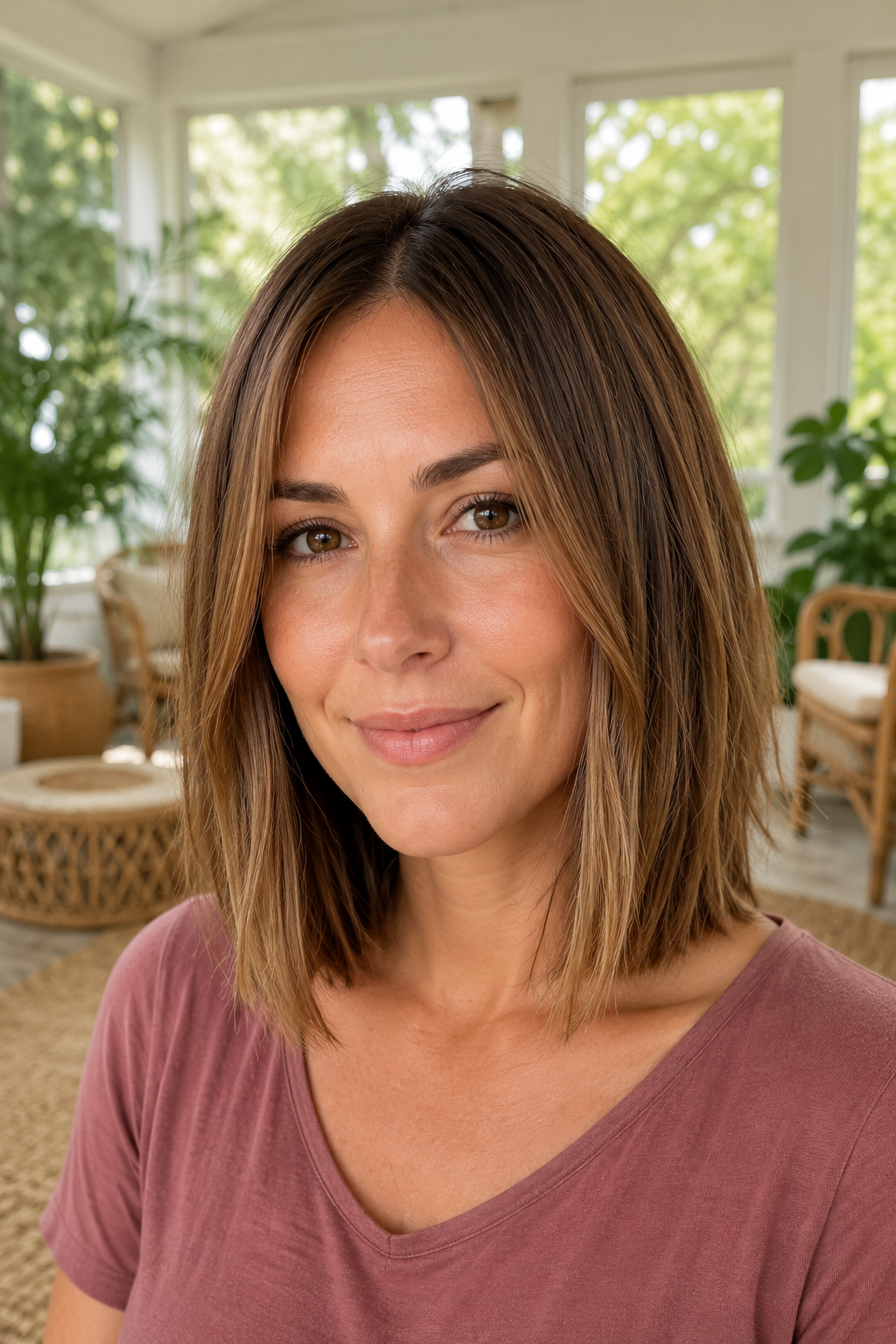
Ends cut so they separate into visible sections rather than sitting as one solid block.
The separation gives straight hair something to do at the bottom, where it otherwise just stops.
Perfect for anyone who finds a blunt line too severe. A small amount of pomade worked through the ends with your fingers keeps the pieces defined through the day.
Choppy Lob
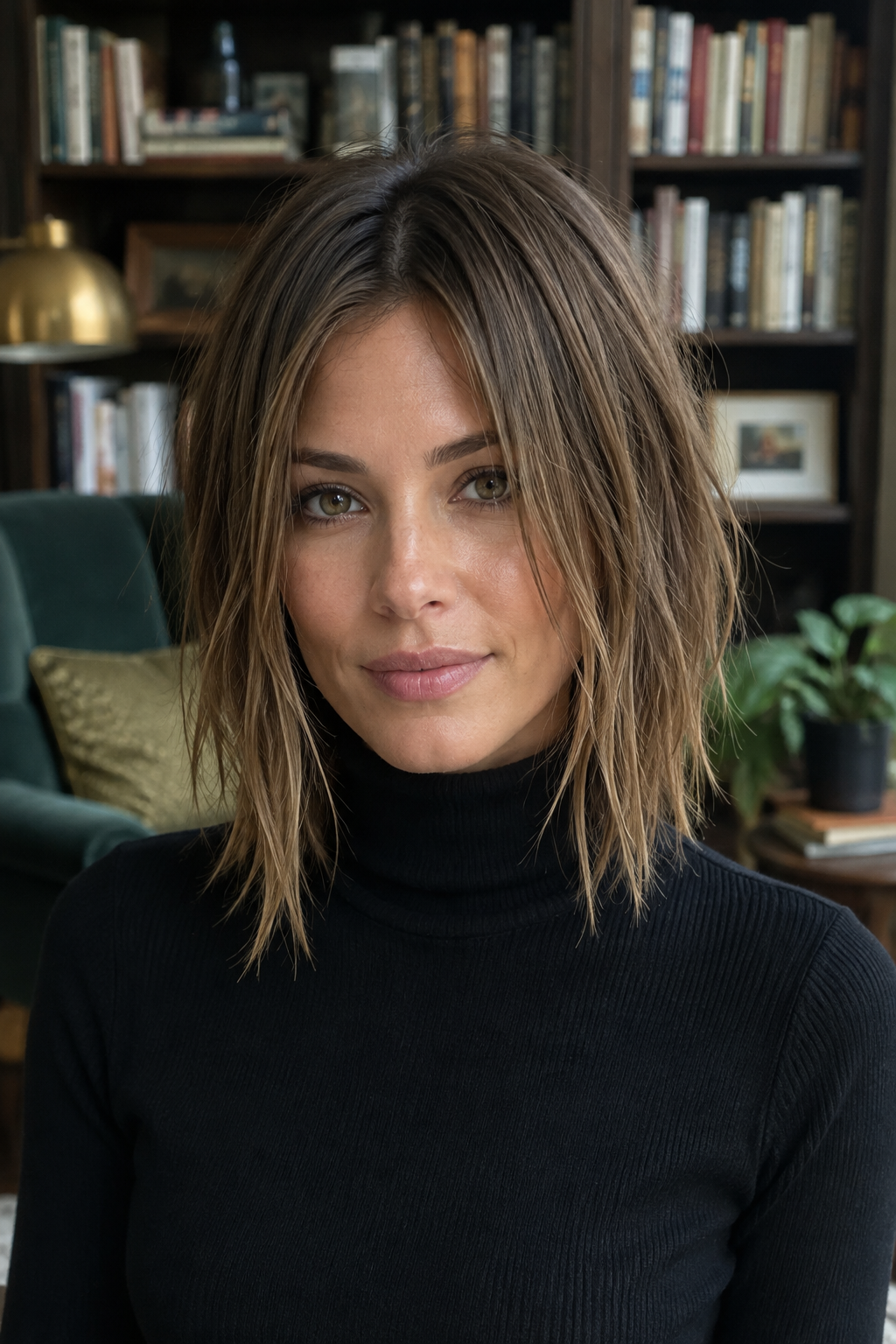
Layers cut with obvious breaks between them, creating uneven ends and visible movement.
Straight hair benefits from the roughness, since there is no natural texture to break up the shape.
Suits a casual, undone look. Our messy medium hairstyles post has more shapes built on the same idea if this appeals.
Layered Lob
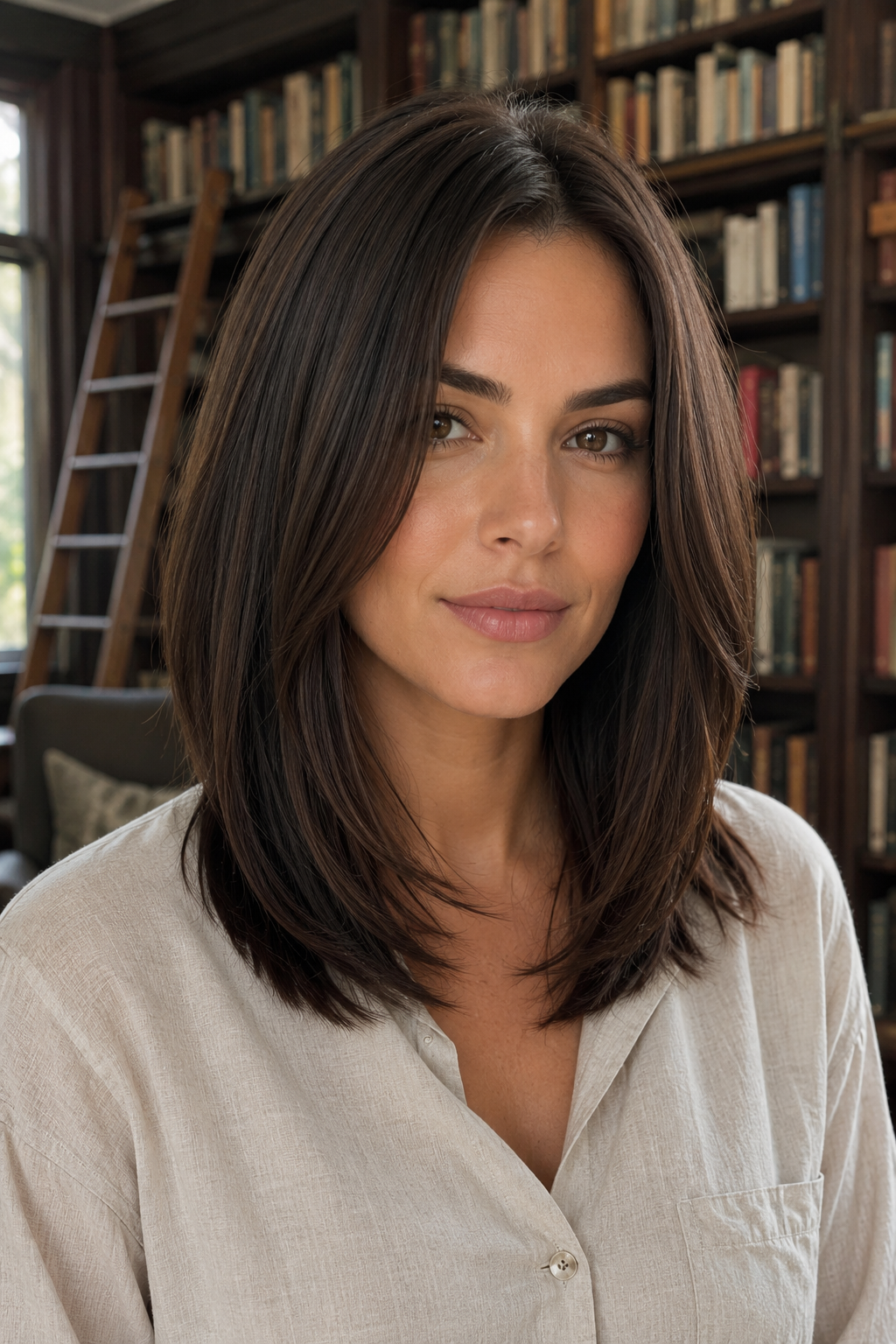
Soft long layers cut through the length, blended so no step is visible.
Layering straight hair takes more skill than layering texture, because every line shows. Blending is everything.
Great for thick straight hair that hangs heavy. Our collection of layered medium hairstyles covers how the layering changes with density.
Butterfly Cut
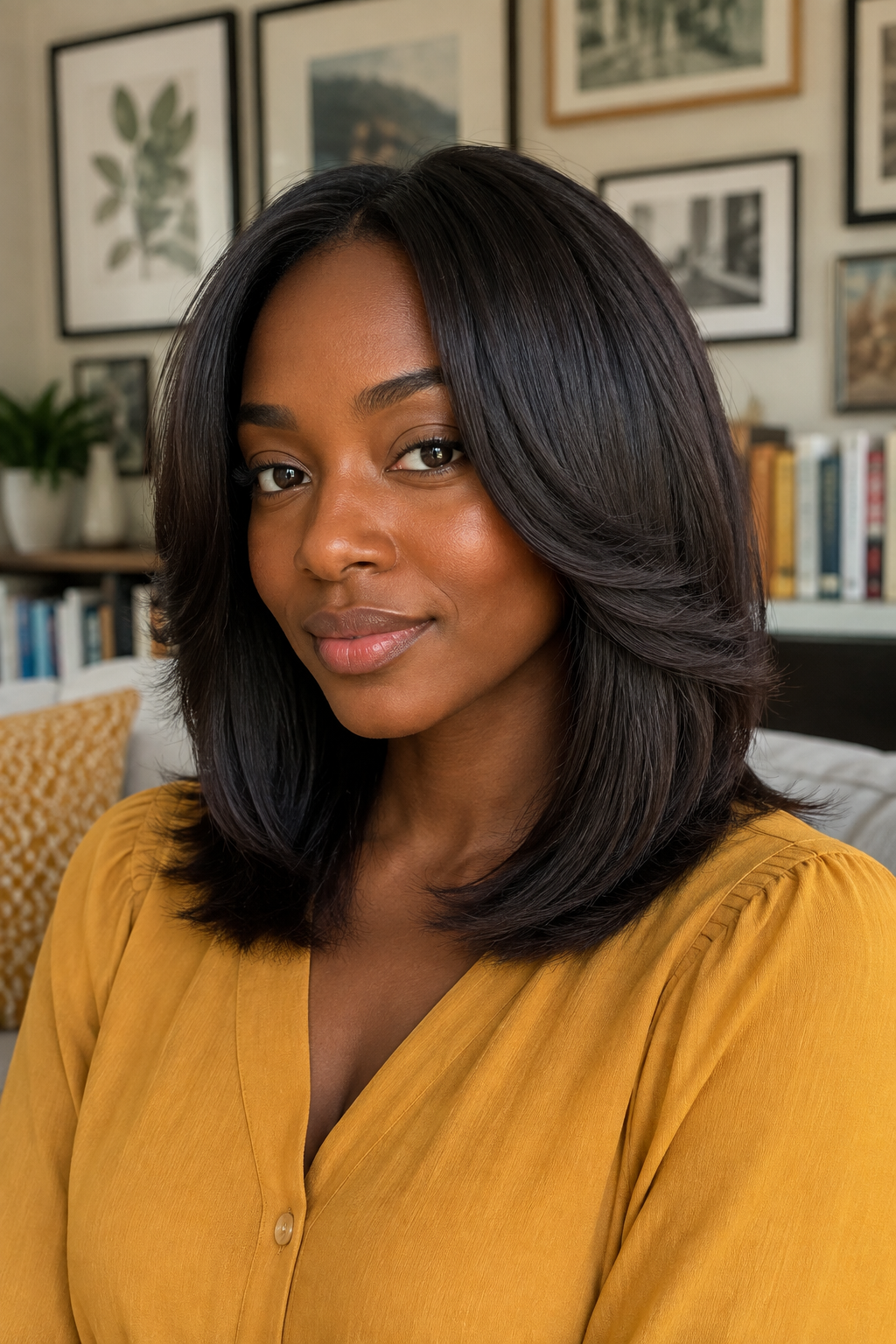
Shorter face-framing layers sitting over much longer lengths underneath, cut so the top section flicks outward.
It has been the breakout shape of the year, and straight hair shows the two-tier structure more clearly than any other texture.
Works especially well if you want the look of shorter hair while keeping your length. The long layer underneath stays untouched.
V-Cut Back
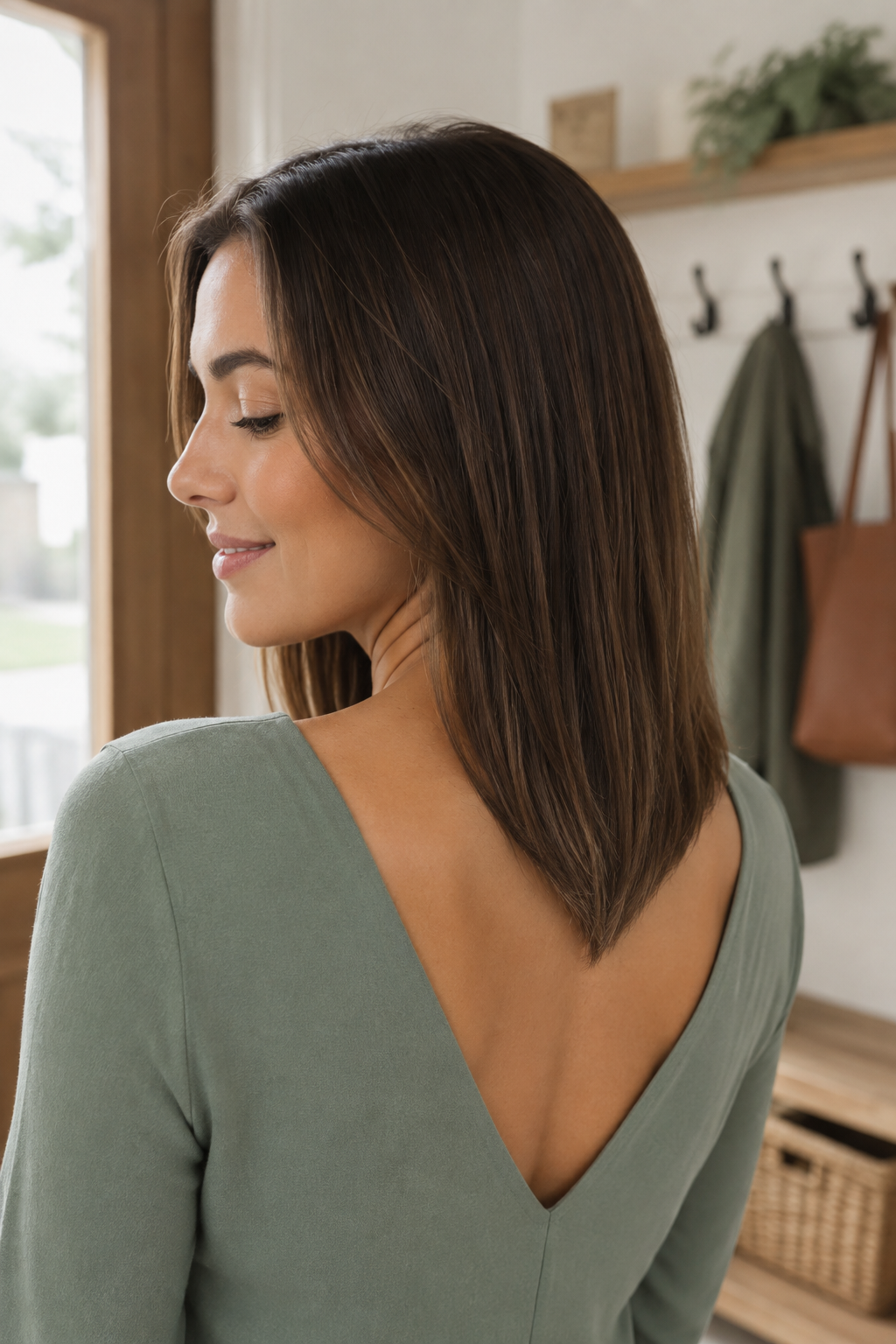
The back cut to a point rather than a straight line, so the centre hangs longer than the sides.
The V gives a sense of length through the back that a straight line flattens.
Suits anyone growing their hair out, since it keeps its shape as it gets longer instead of turning into a shapeless block. Only visible from behind, which some people like and some do not.
U-Shaped Back
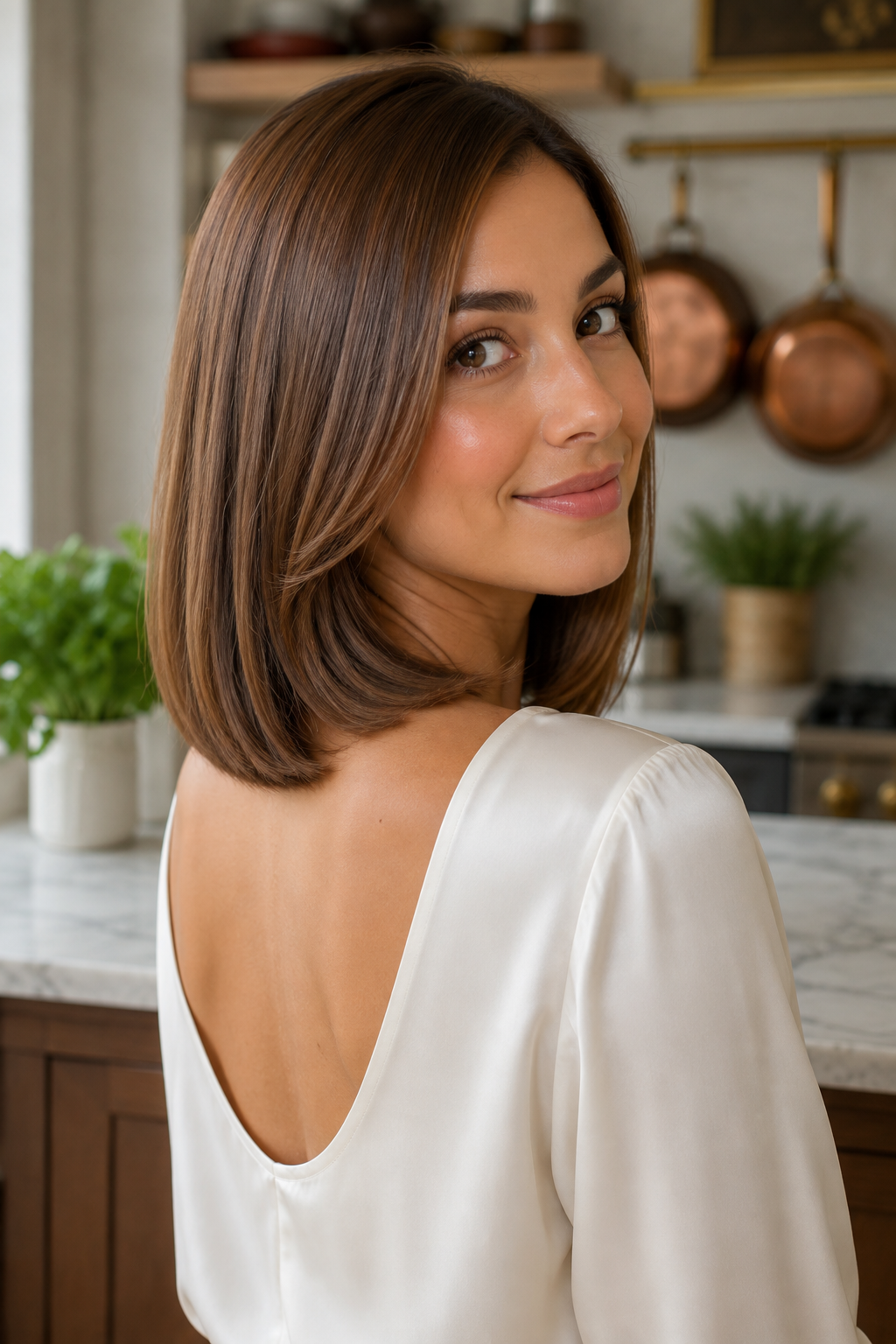
Similar idea with a softer curve, the back rounding gently rather than coming to a point.
Because the curve is gradual, it grows out without ever passing through an awkward stage.
Perfect for low-maintenance wearers. You can go ten weeks between appointments and the shape still holds, which is not true of most cuts with any structure to them.
Feathered Layers
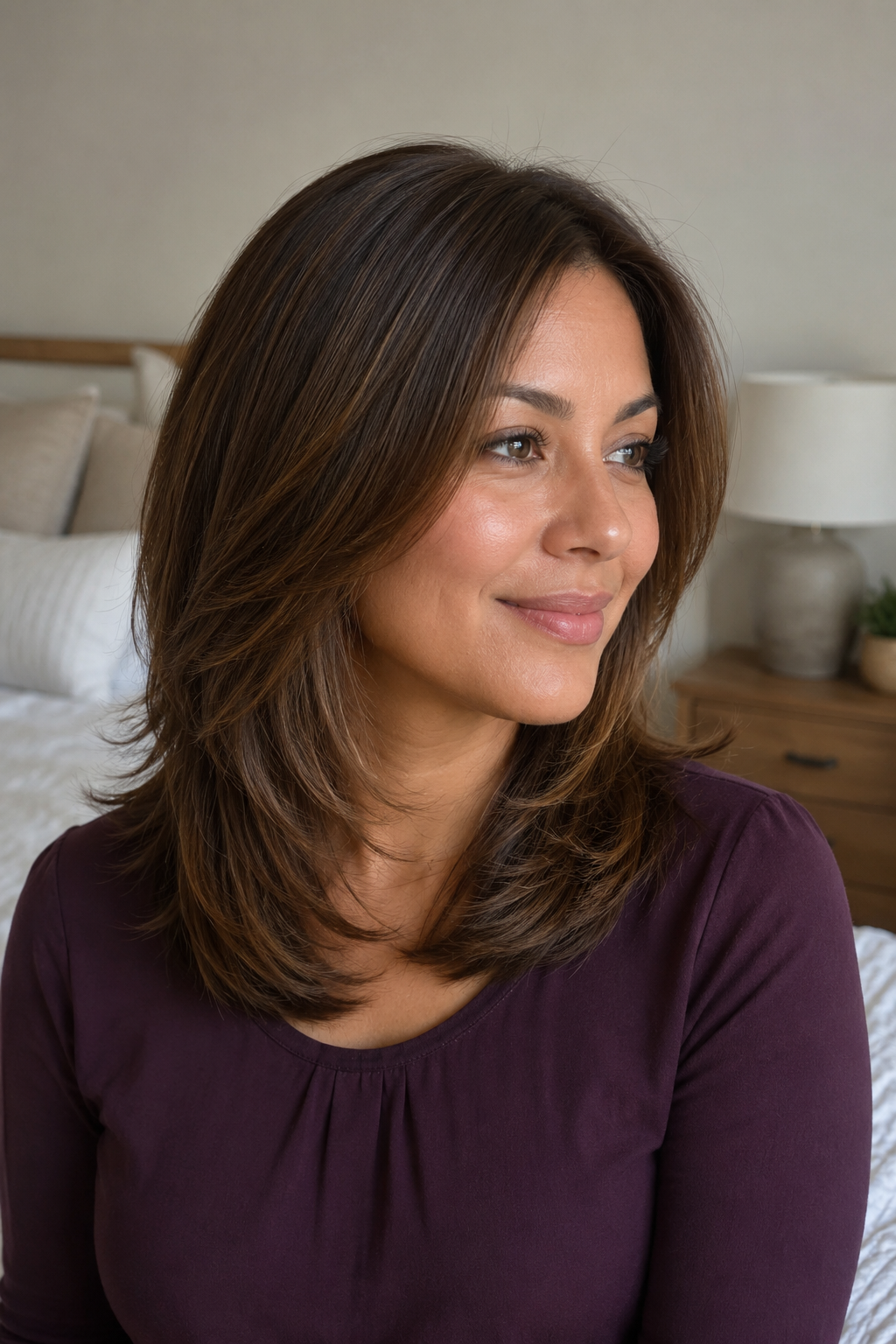
Light layers cut at an angle so the ends taper and flip slightly away from the face.
Feathering keeps straight hair from hanging in a solid curtain, and it opens up the sides of the face.
Great for medium to thick density. Fine straight hair should skip it, since removing weight from ends that are already light makes them look wispy rather than soft.
Face-Framing Layers
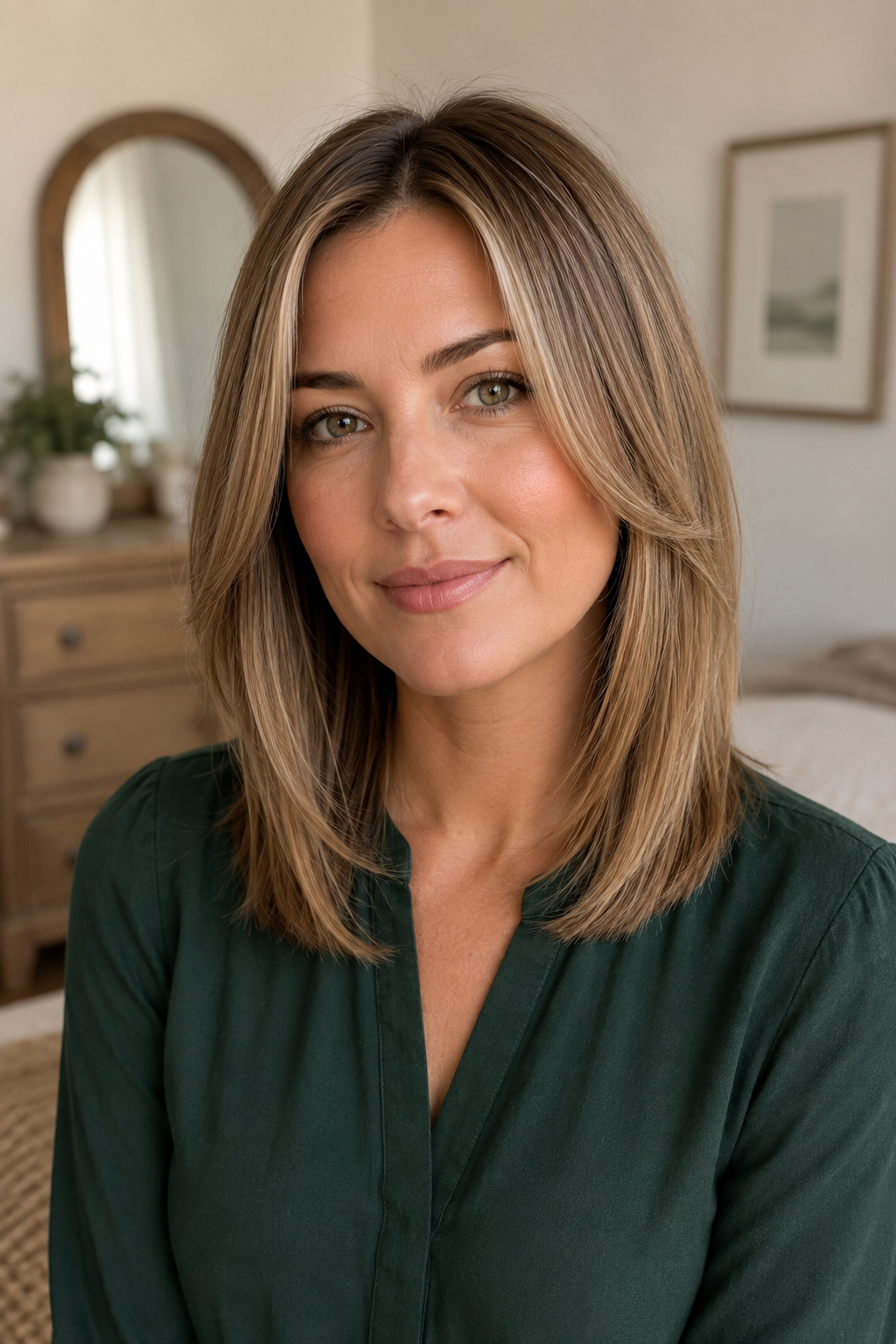
Shorter pieces cut only around the face, with the rest of the length left alone.
On straight hair these are the layers that show most, since they sit right where people look.
Suits anyone wanting shape without restructuring the whole cut. Ask for them to start around the cheekbone, since layers beginning lower tend to pull the face downward rather than lifting it.
Textured Shag
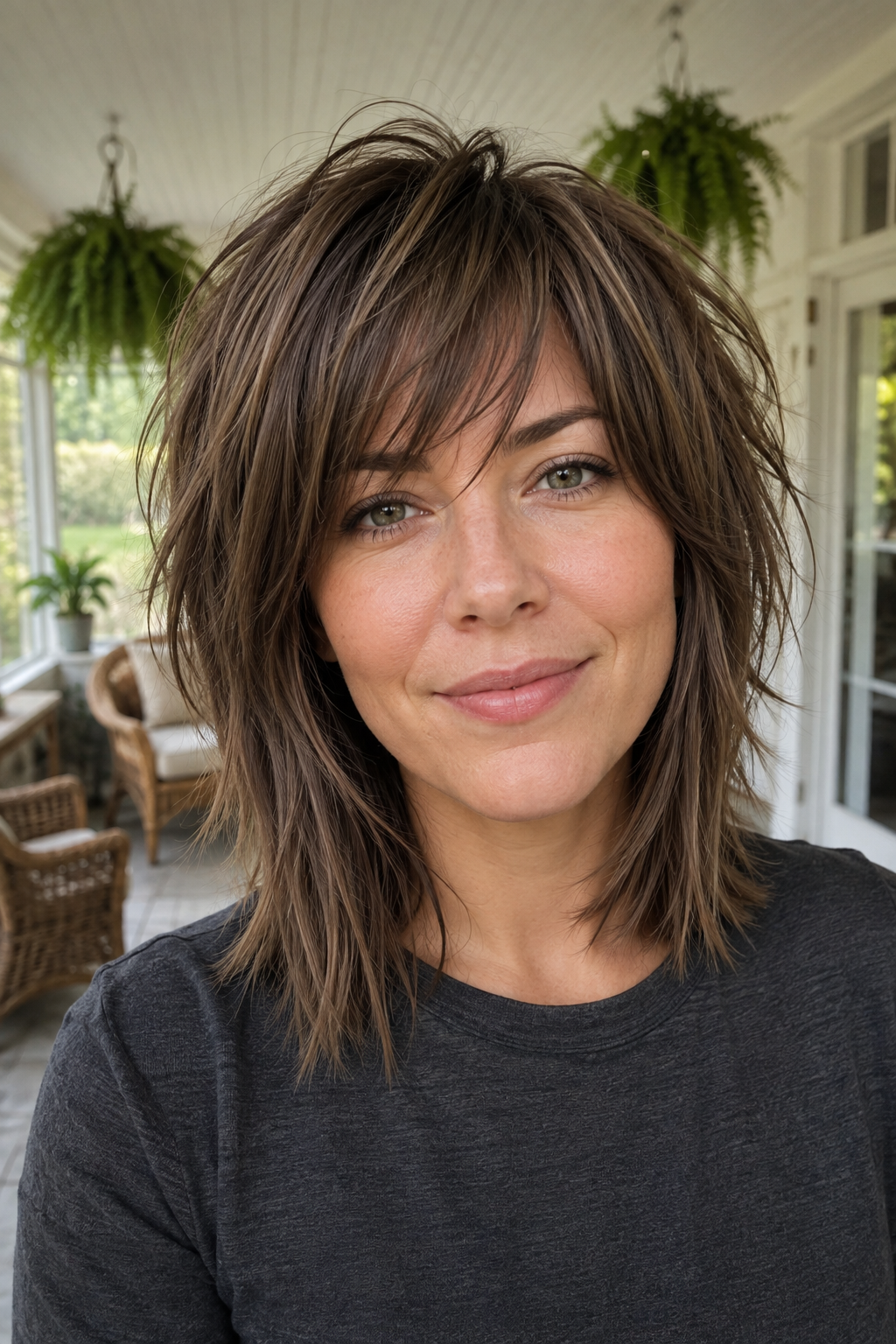
Choppy layers throughout with lift at the crown and jagged ends, worn deliberately rough.
Straight hair takes to a shag well because the cut supplies all the texture the hair does not have naturally.
Works especially well on thick straight hair. See our shaggy lob variations for the more grown-out version of the same shape.
Rachel Cut
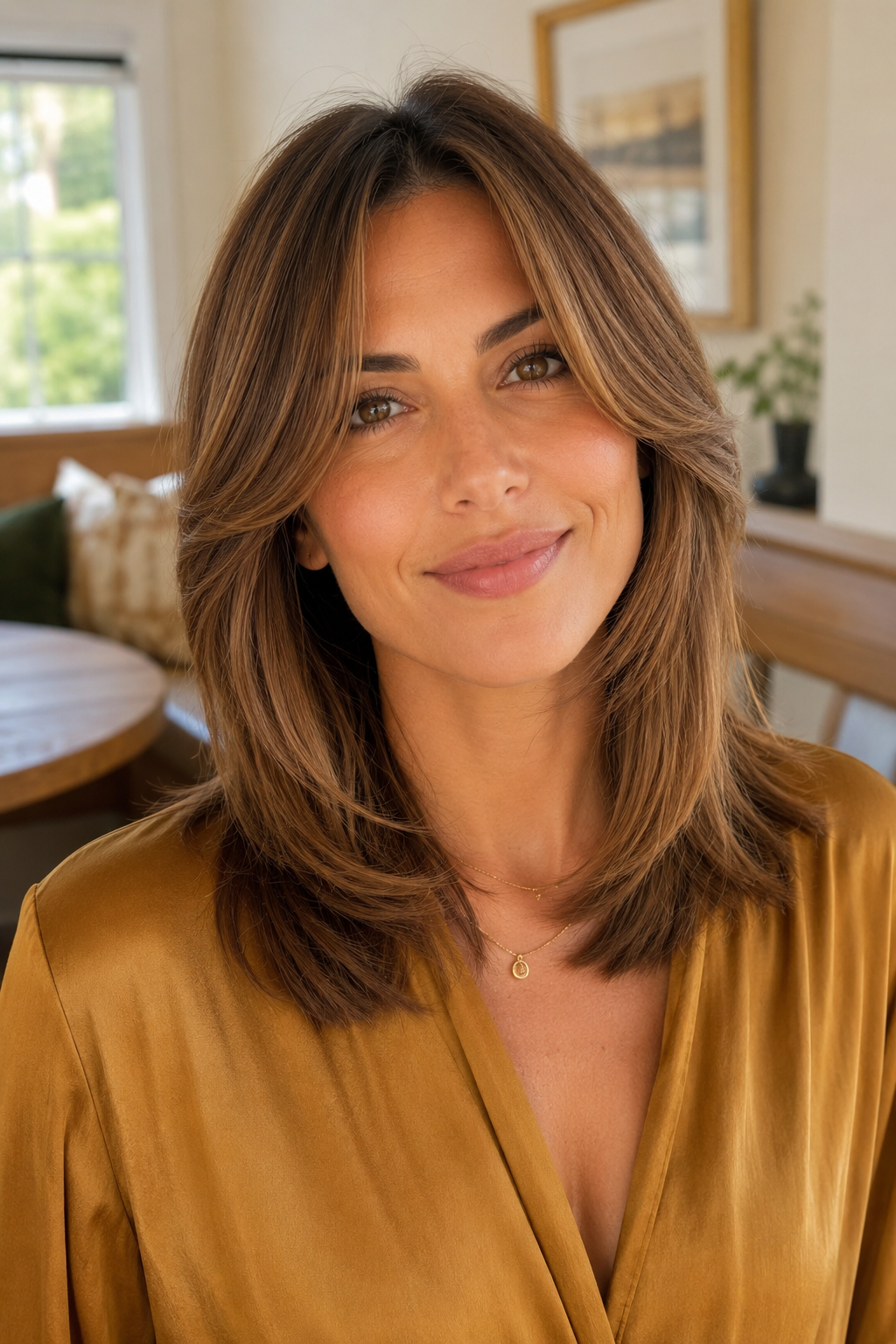
The nineties layered cut has come back around, with shorter flicked layers through the front and length kept at the back.
The current version is softer than the original, with less obvious stepping between the layers.
Perfect for anyone who wants something with real movement. It needs a round brush to flick the front pieces outward, so it is not a wash-and-go option.
Hidden Undercut for Thick Straight Hair
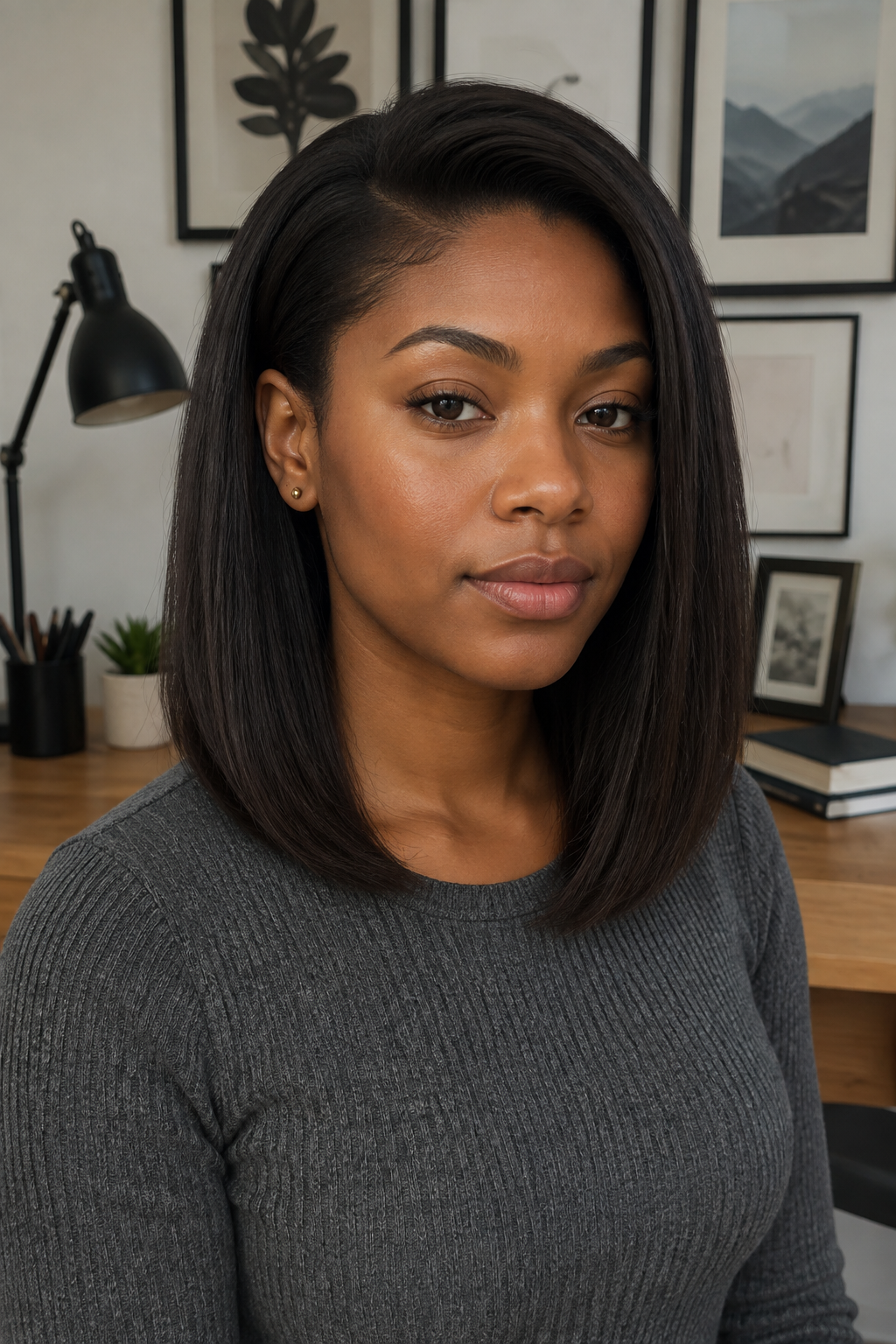
A section clipped short underneath at the nape, completely covered by the length on top.
Thick straight hair often sits in a wide triangle because there is too much bulk at the bottom. Removing that section fixes the shape without changing the cut.
Great for anyone whose hair feels heavy. Nobody sees it, and drying time drops noticeably.
Blunt Fringe
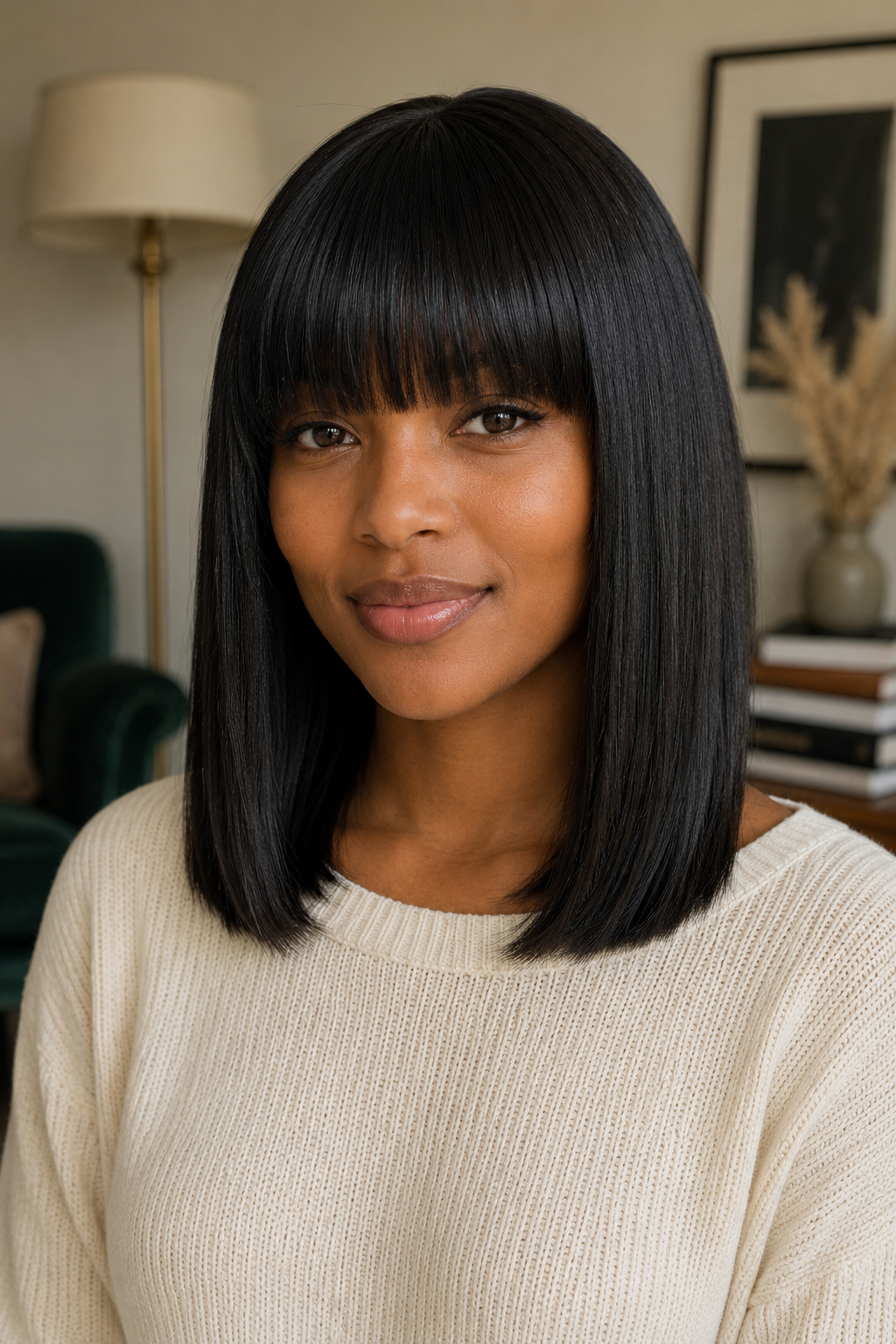
A full fringe cut straight across the forehead, all one length with no thinning.
Straight hair is the only texture that sits blunt bangs perfectly without daily intervention, which is why the look belongs here.
Suits longer faces particularly well. They need trimming every three or four weeks, which is worth knowing before you commit.
Curtain Bangs
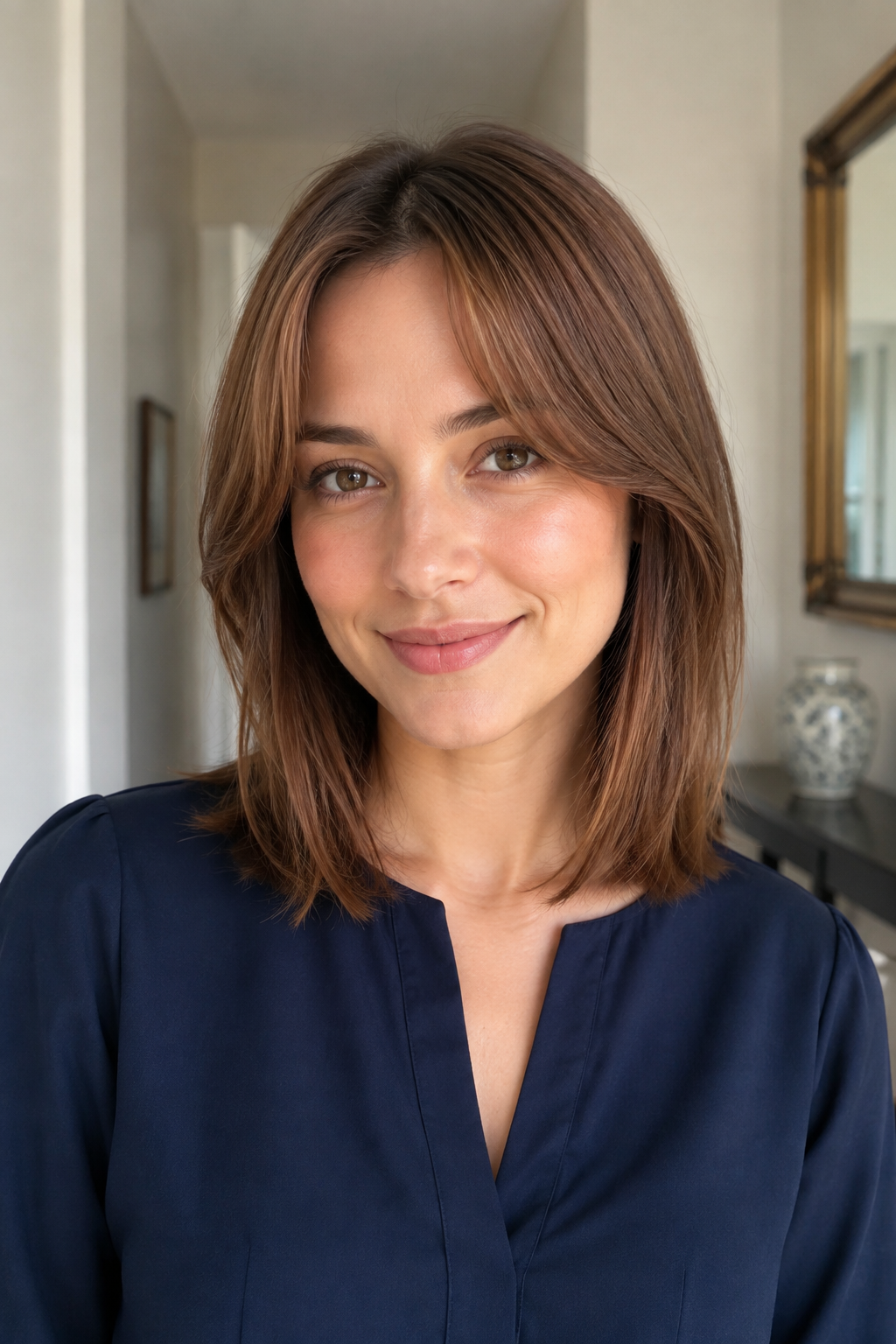
Bangs parted at the centre and sweeping outward toward the temples, blending into the length.
On straight hair they need a round brush to hold the sweep, since there is no natural bend pushing them sideways.
Great for softening angular features. Our full guide to medium hairstyles with curtain bangs covers where the length should land on different face shapes.
Wispy Bangs
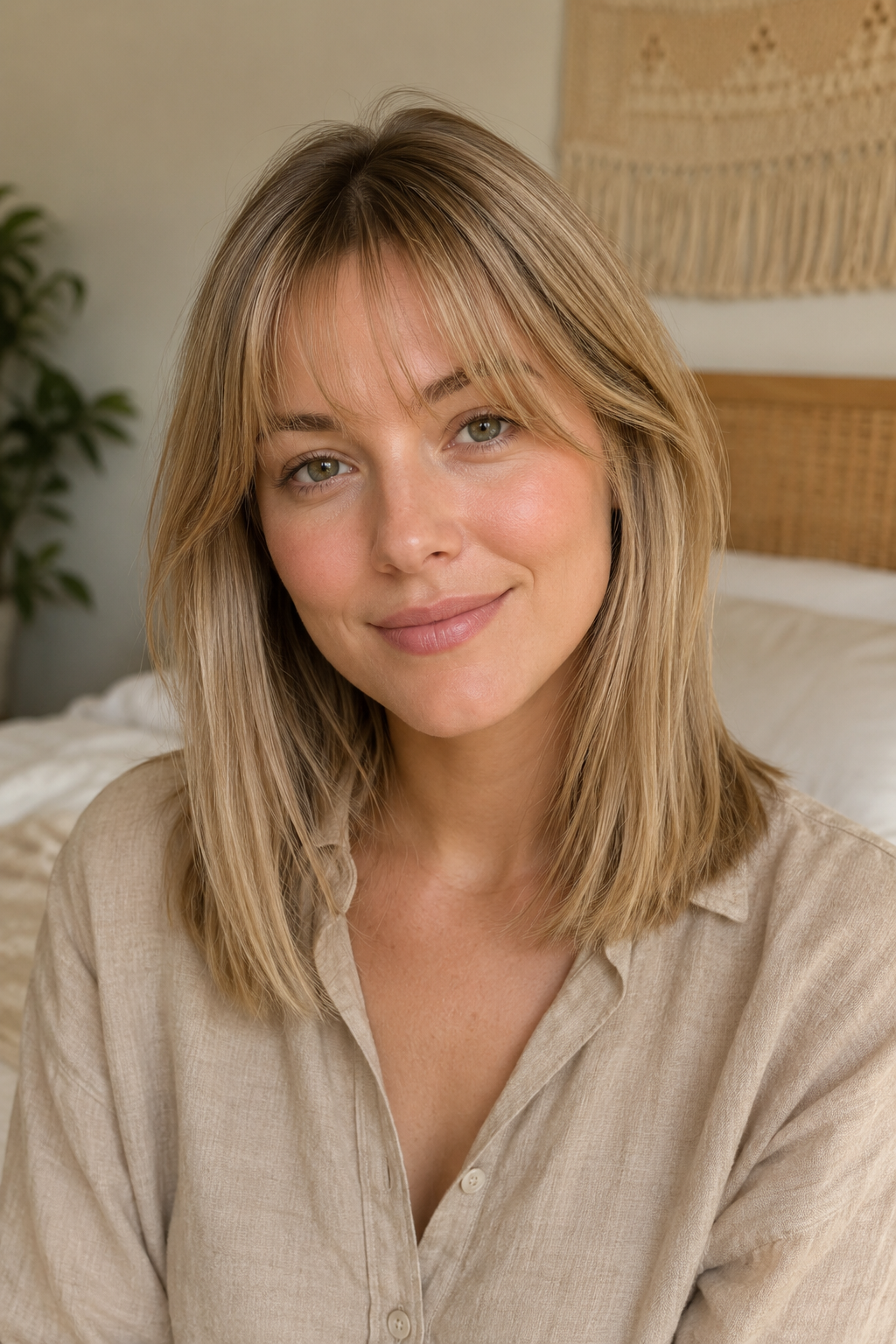
Thin, see-through bangs cut light enough that the forehead shows through them.
They add something at the front without the upkeep or the commitment a blunt fringe demands.
Perfect for testing whether bangs suit you. They grow into face-framing pieces naturally, so there is no stage where you are pinning them back and waiting.
Y2K Flipped Ends
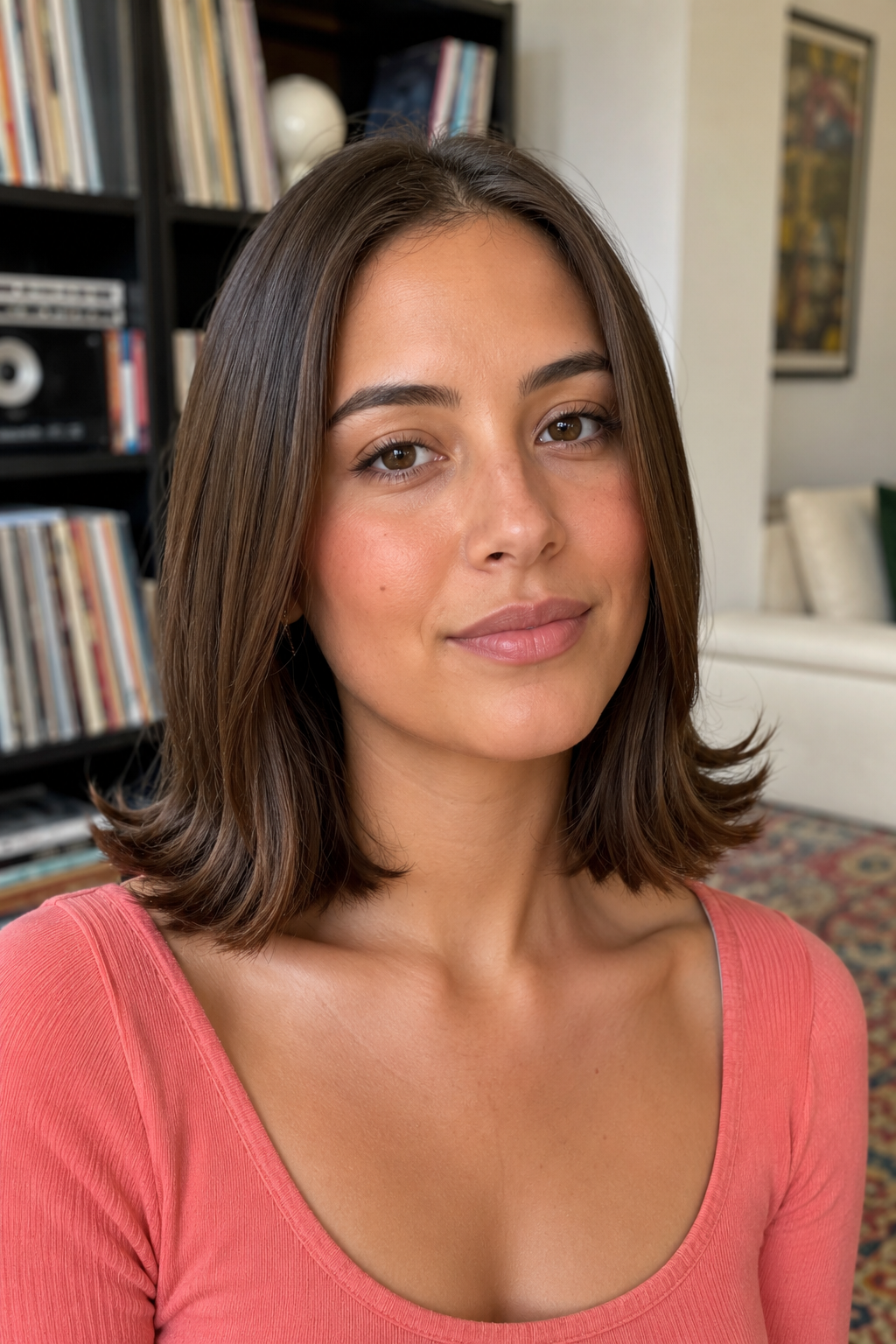
Ends turned outward rather than under, flicking away from the neck.
The look has come back around properly, and straight hair holds the flip far better than texture does.
Works especially well on blunt or A-line cuts, where the sharp line makes the flick look deliberate. A flat iron turned outward on the last two inches sets it in a few minutes.
Glass Hair Finish
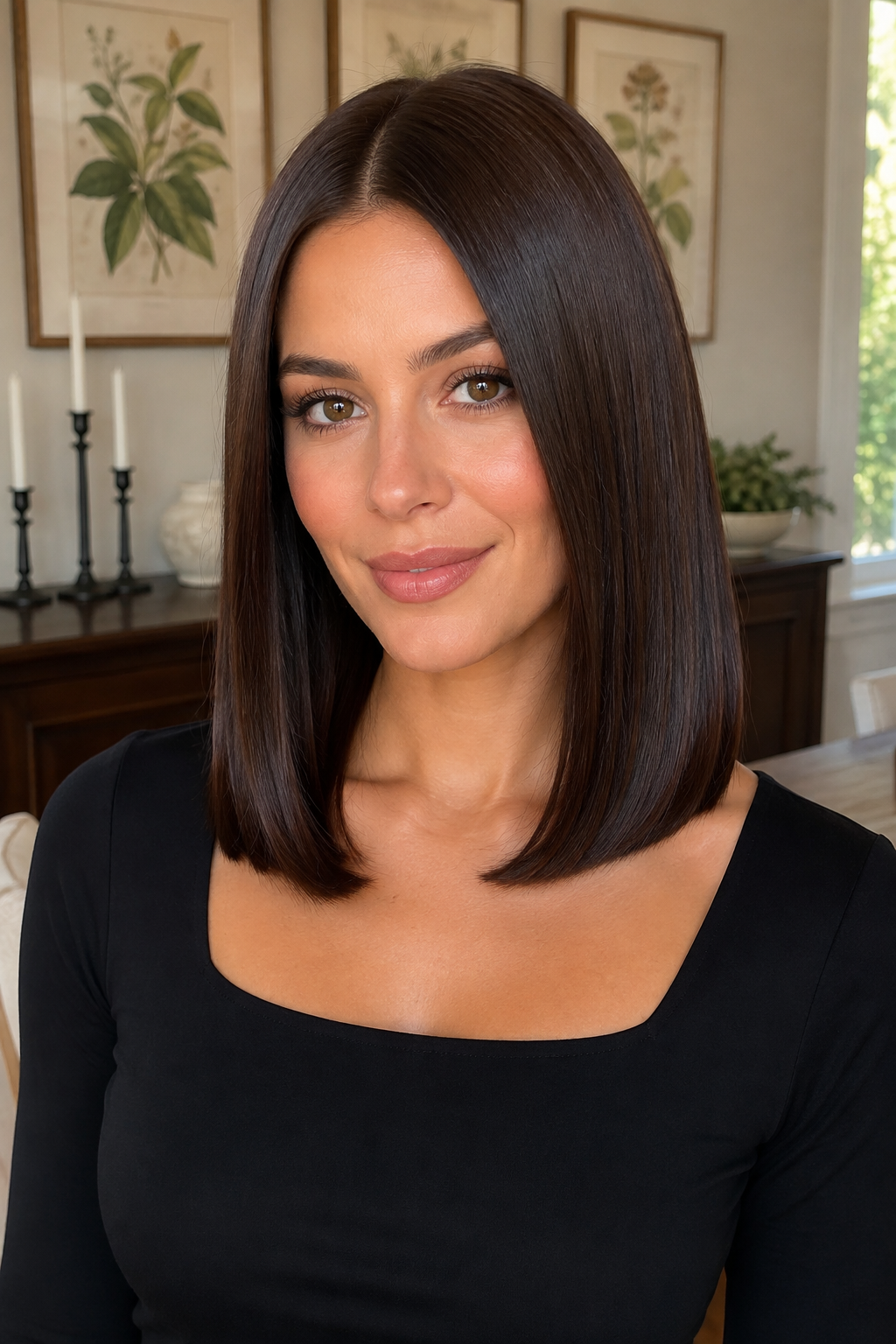
Hair straightened to a completely smooth, high-shine surface with no flyaways and no visible texture.
Shine on straight hair comes from the cuticle lying flat, so the finish depends on technique more than product.
Great for anyone who wants a striking look with a simple cut. Dry fully before you iron, use low heat in slow passes, and finish with a few drops of serum on the ends only.
Sleek Low Ponytail
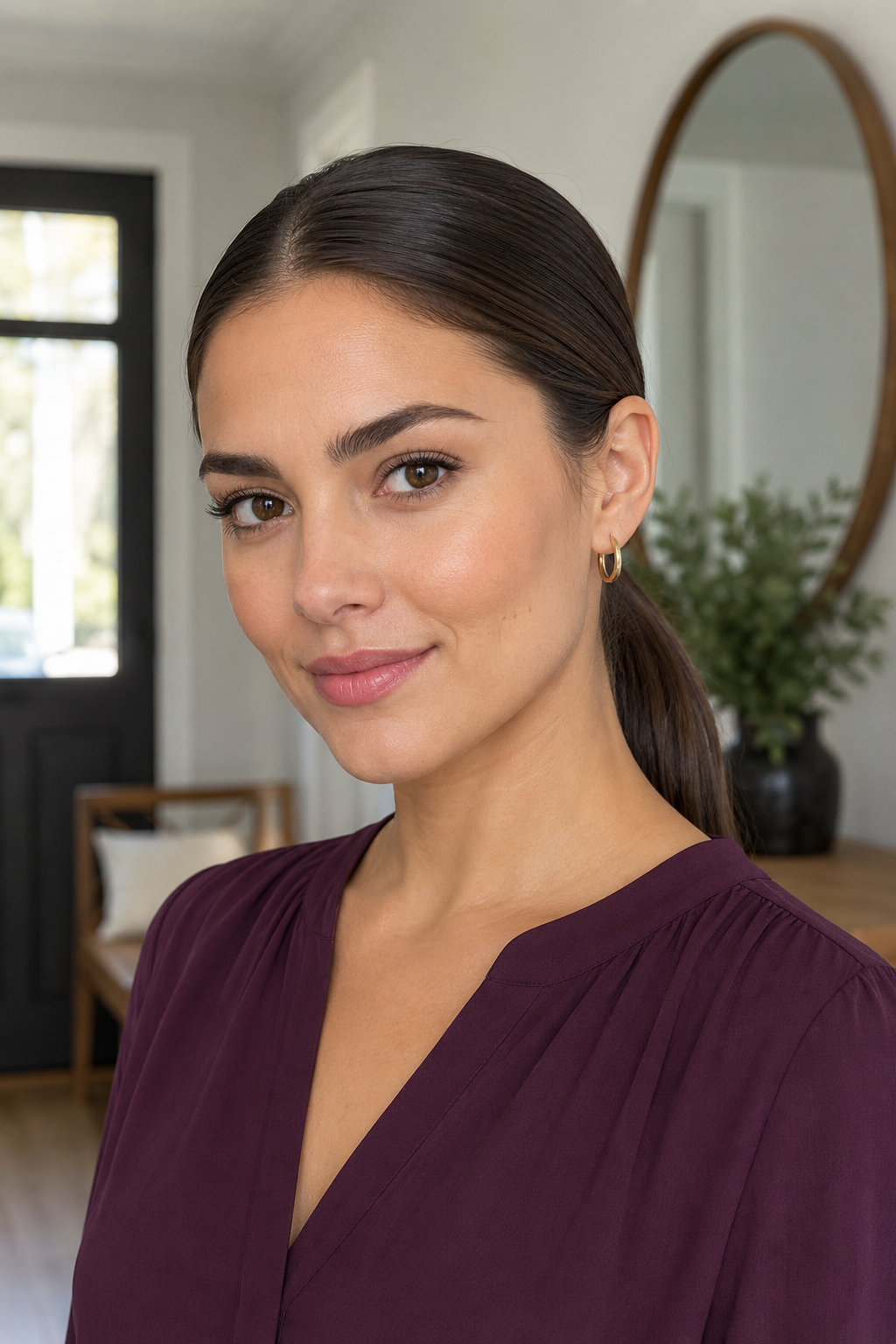
Everything brushed back smooth and tied low at the nape, with no volume anywhere.
Straight hair is the only texture that gets truly flat here without gel, which is what makes the look sharp rather than pulled-back.
Suits work and evenings equally. Our easy medium hairstyles post has more options for days when you want something quick.
Gloss Treatment for Shine
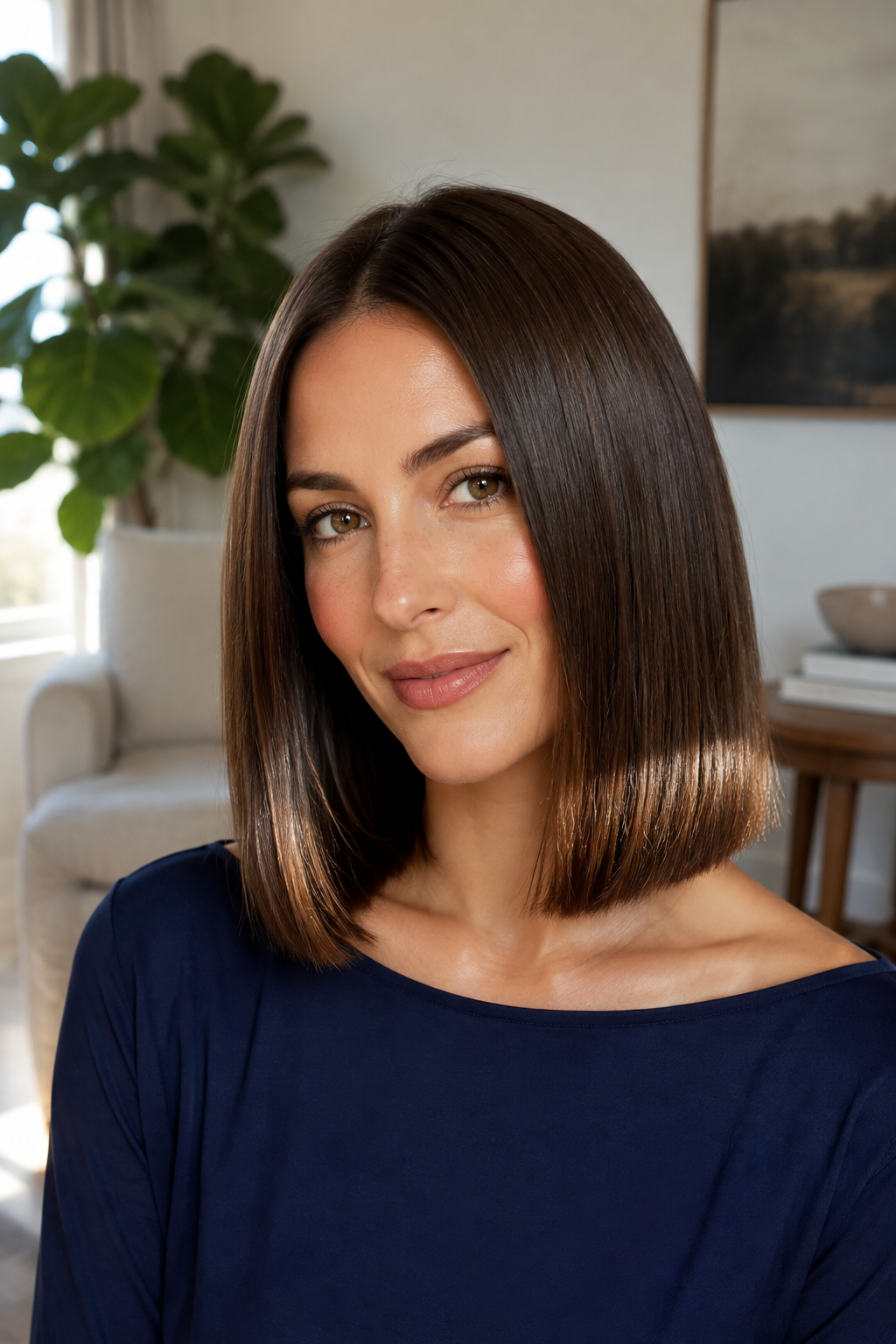
A clear or tinted gloss applied at the salon, coating the hair to boost shine without changing the cut.
Since straight hair reflects light in one continuous sheet, anything that improves surface smoothness has an outsized effect.
Perfect for anyone whose hair looks dull rather than damaged. Results last around four to six weeks, and our hair color ideas section covers tinted versions if you want a subtle shift alongside the shine.
Comments
No Comments