
23 Medium Hairstyles for Women Over 50 With Lift and Movement
Hair in your fifties has a habit of changing without asking. It may feel finer at the crown than it used to, or hold a wave it never held before, or refuse to sit the way it always did. Shoulder length handles that better than most, since there is enough weight for a proper shape but not so much that the top half gets pulled down. The cuts that work best all do the same two jobs. They build height where the hair falls flat, and they keep enough length at the ends to look full rather than wispy. Here is what to consider.
Jump to:
- Collarbone Layered Lob
- Shoulder-Length Shag With Curtain Bangs
- Shaggy Lob
- Blunt Lob
- Angled Shoulder-Length Bob
- U-Shaped Layered Cut
- Feathered Layers
- Face-Framing Layers at the Cheekbones
- Crown Layers
- Inward-Curving Ends
- Feathered Wolf Cut
- Curly Lob
- Long Curtain Fringe
- Side-Swept Bangs
- Round Brush Blowout With an Inward Flip
- Soft Waves With a Side Part
- Air-Dried Texture With Cream
- Smoky Silver Melt
- Ash Blonde Grey Blend
- Honey Bronde Ribbons
- Face-Framing Silver Streaks
- Warm Chestnut Single Process
- Soft Copper Glow
Collarbone Layered Lob
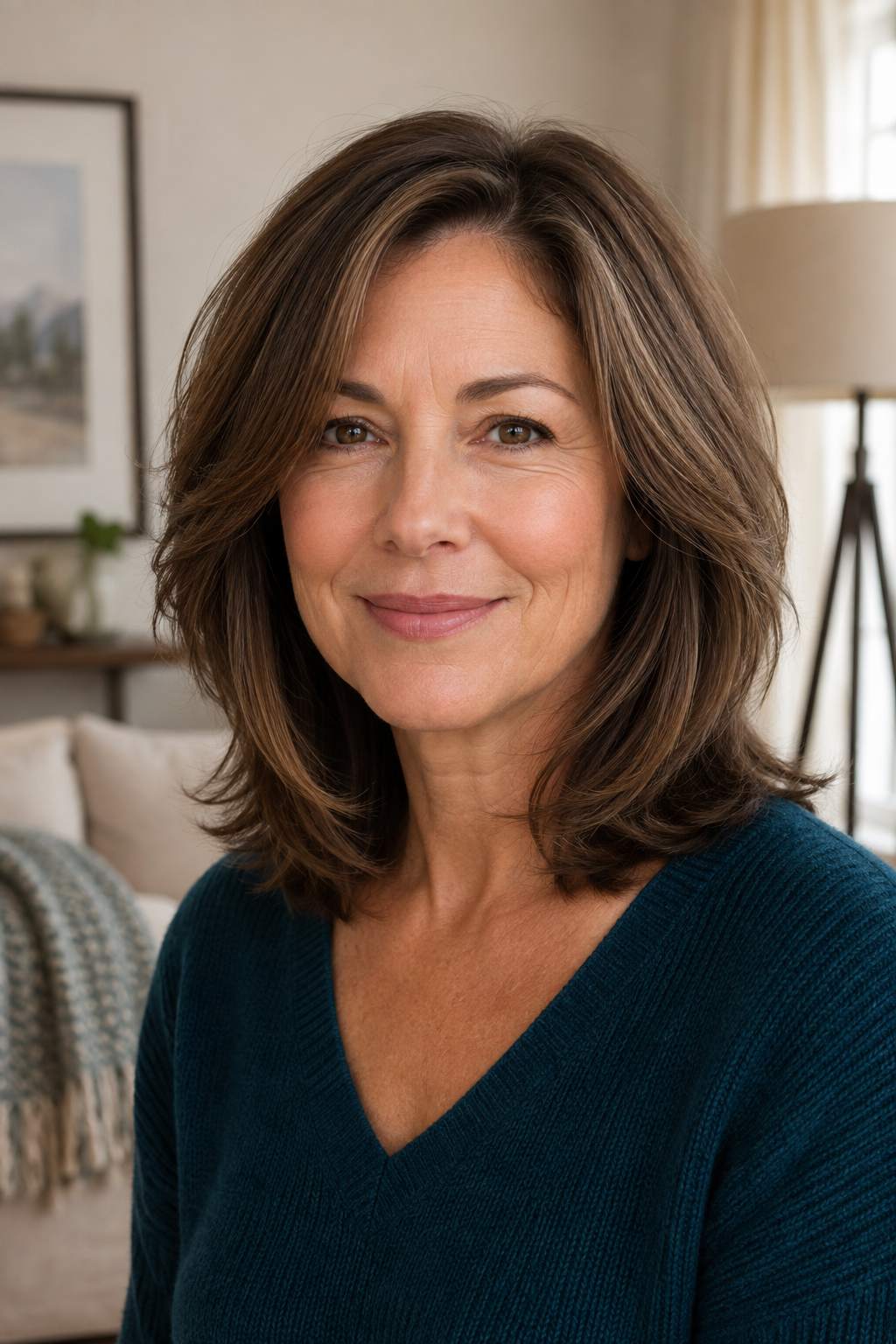
A long bob at the collarbone with blended layers running through the length. The layers are soft rather than stepped, so nothing looks cut in.
Movement through the ends is the point. Hair that hangs in one solid block tends to look heavier than it is.
Great for anyone who wants a change without losing much length. See our full collection of layered medium hairstyles for how the layering shifts across textures.
Shoulder-Length Shag With Curtain Bangs
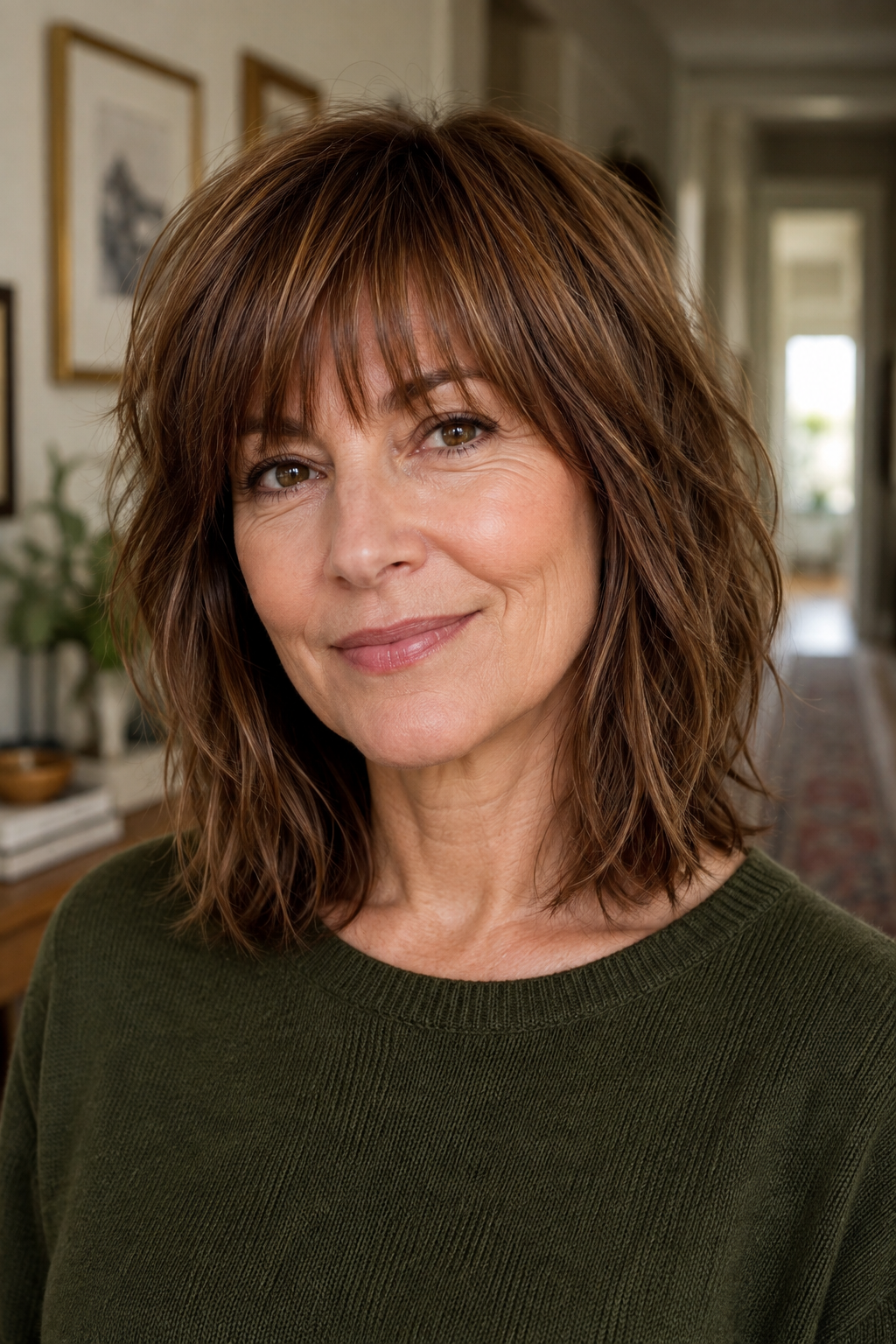
Choppy layers built through the inside of the cut, paired with a soft fringe parted at the centre and falling toward the cheeks.
The shag creates lift at the crown, which is where most women notice fullness dropping off first.
Suits fine to medium density particularly well. Our guide to medium hairstyles with curtain bangs covers where the fringe should sit against different features.
Shaggy Lob
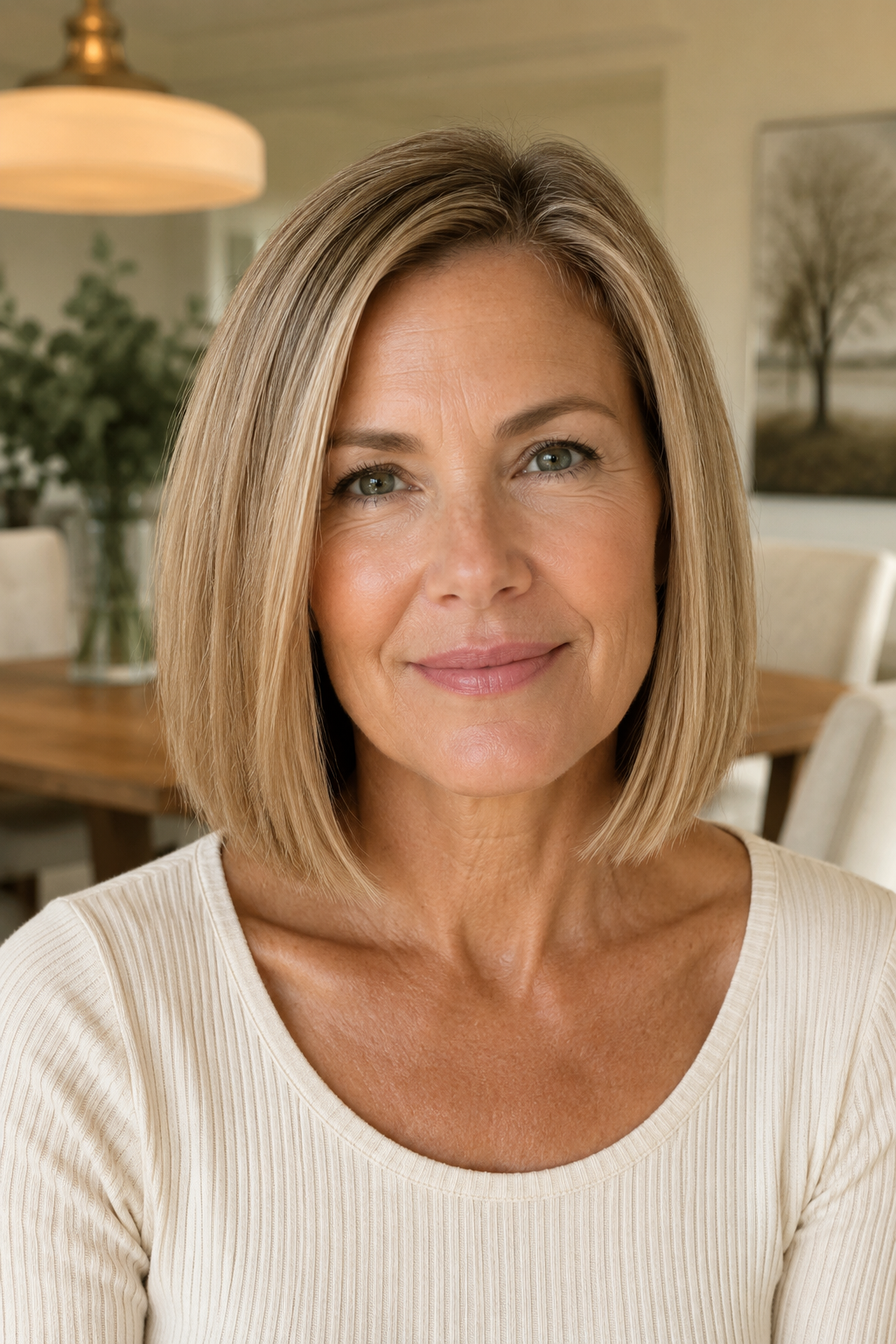
Length lands right at the collarbone while the layering keeps everything light. You get the length of a lob with the lift of a shag.
Bangs on this version stay full but slightly longer, so they blend into the sides rather than sitting separately.
Works especially well if your hair tends to fall flat by afternoon. More variations sit in our shaggy lob roundup.
Blunt Lob
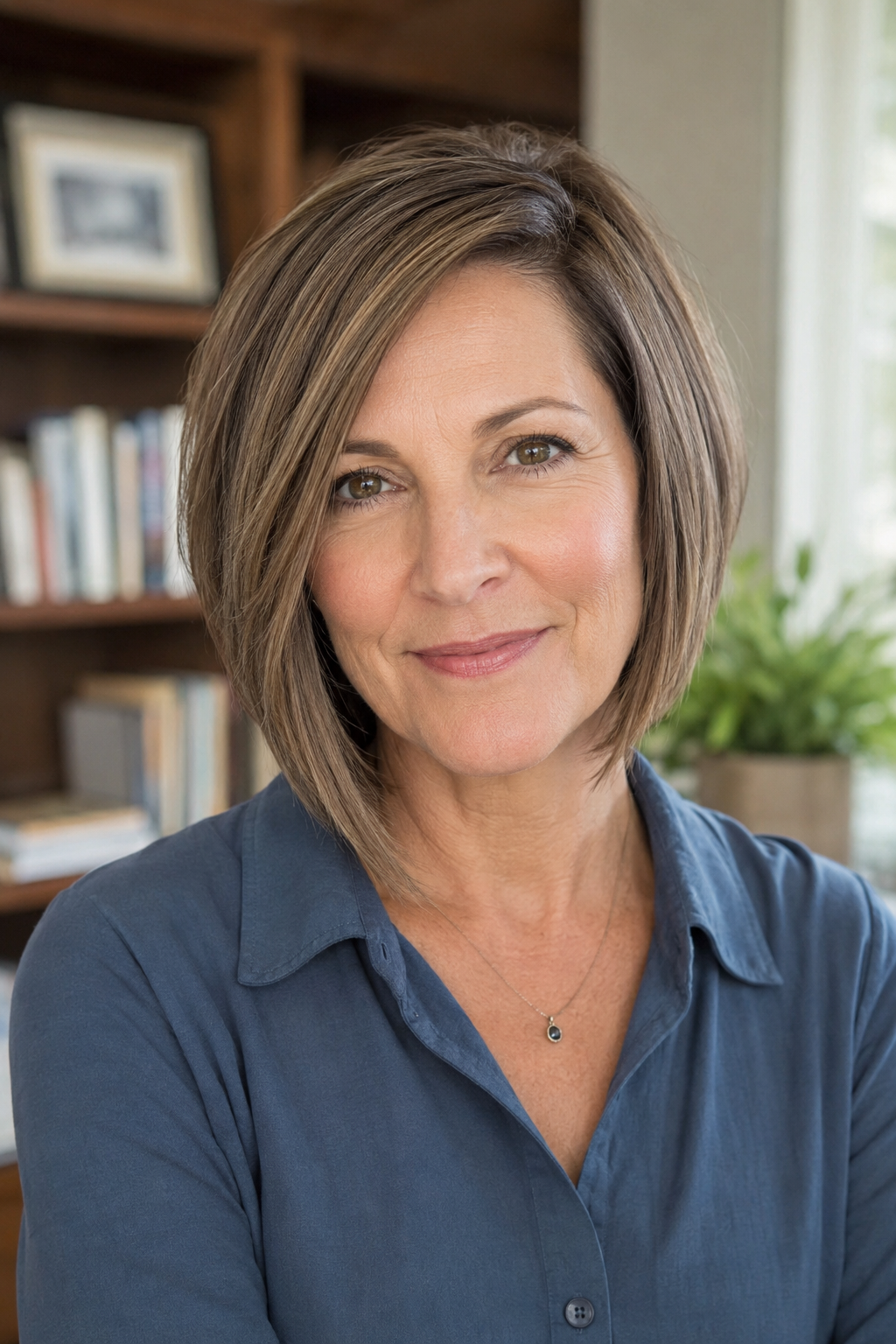
Ends cut to one sharp line at the collarbone, no layering at all. The instinct is usually to layer, and sometimes the opposite serves better.
Keeping the weight at the bottom makes the ends look denser, which matters if your hair has gone finer over the years.
Perfect for straight or slightly wavy hair. Our post on shoulder-length hairstyles for fine hair goes further into holding fullness at the ends.
Angled Shoulder-Length Bob
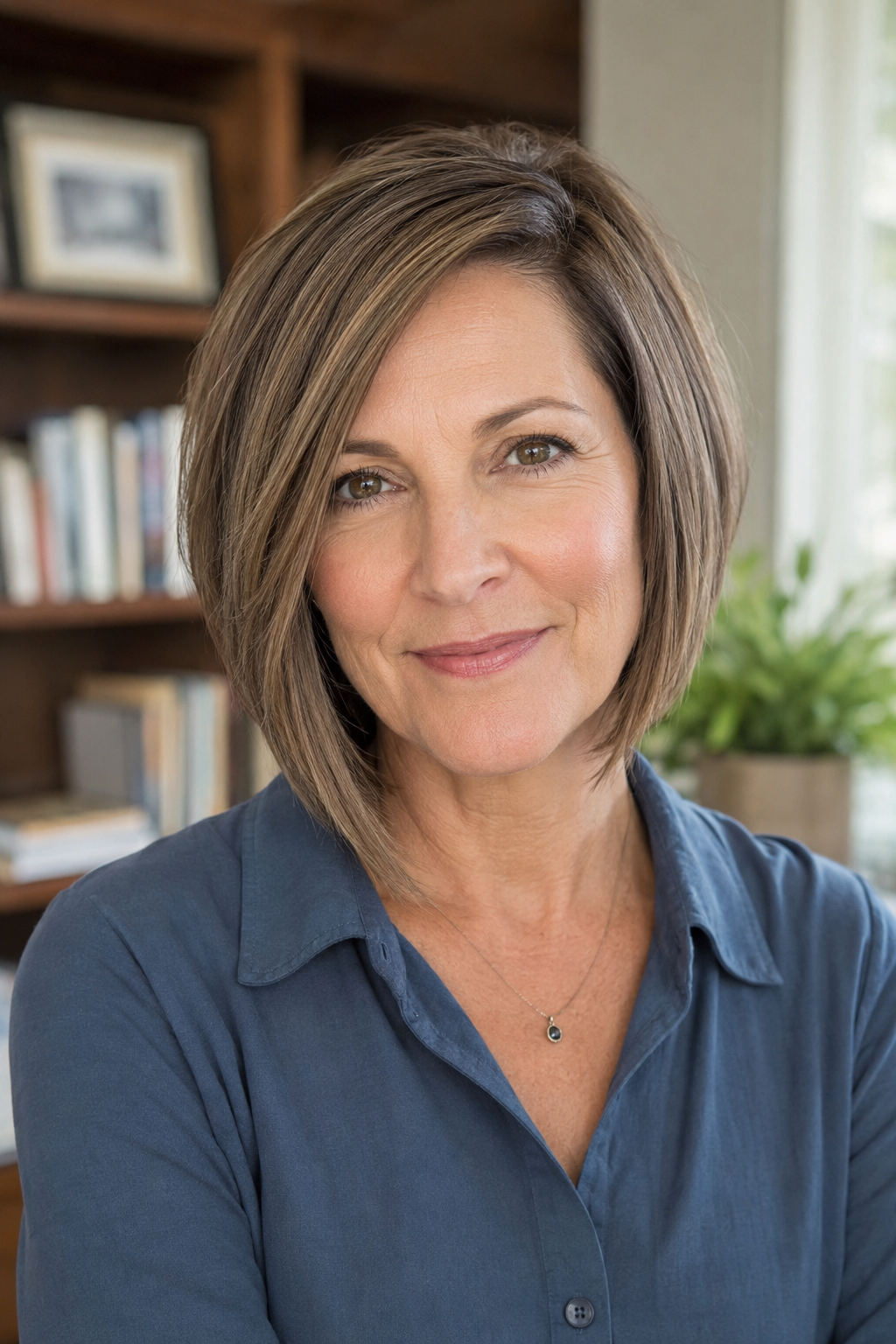
Shorter through the back with the front pieces left longer, creating a gentle slope toward the face.
The angle gives structure to a cut that could otherwise look flat, and the longer front sits nicely along the jaw.
Great for anyone who wants their hair off their neck. The back stays easy to blow dry since there is less of it, and the front does the work of framing your face.
U-Shaped Layered Cut
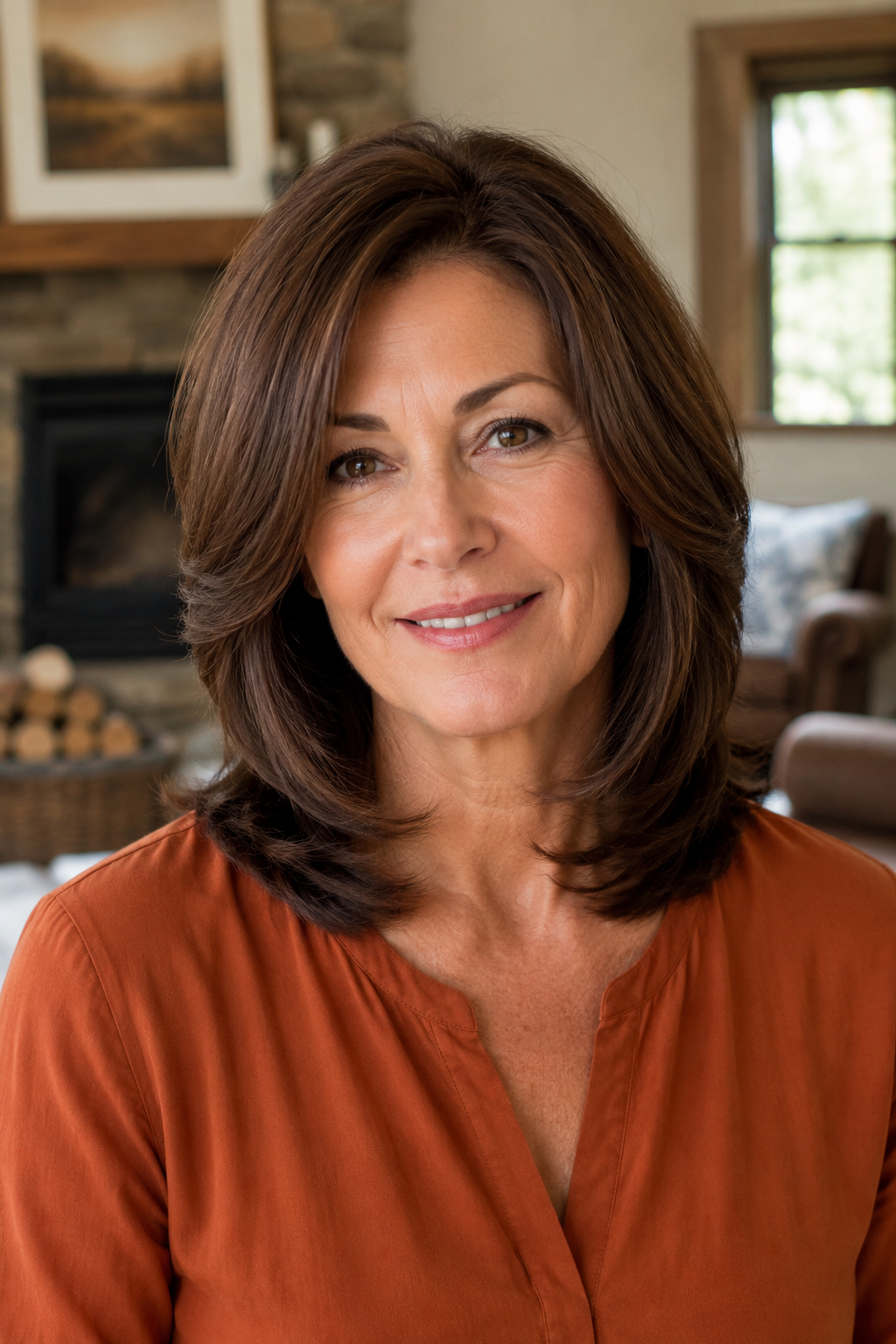
Layers cut in a soft U curve so the shortest pieces sit at the front and the length sweeps around to a longer point at the back.
Bulk comes out of the middle while the outline stays full, which is a hard balance to strike with straight layering.
Suits thicker hair that feels heavy. The curve also emphasises movement through the mid-lengths, so the cut looks alive rather than set.
Feathered Layers
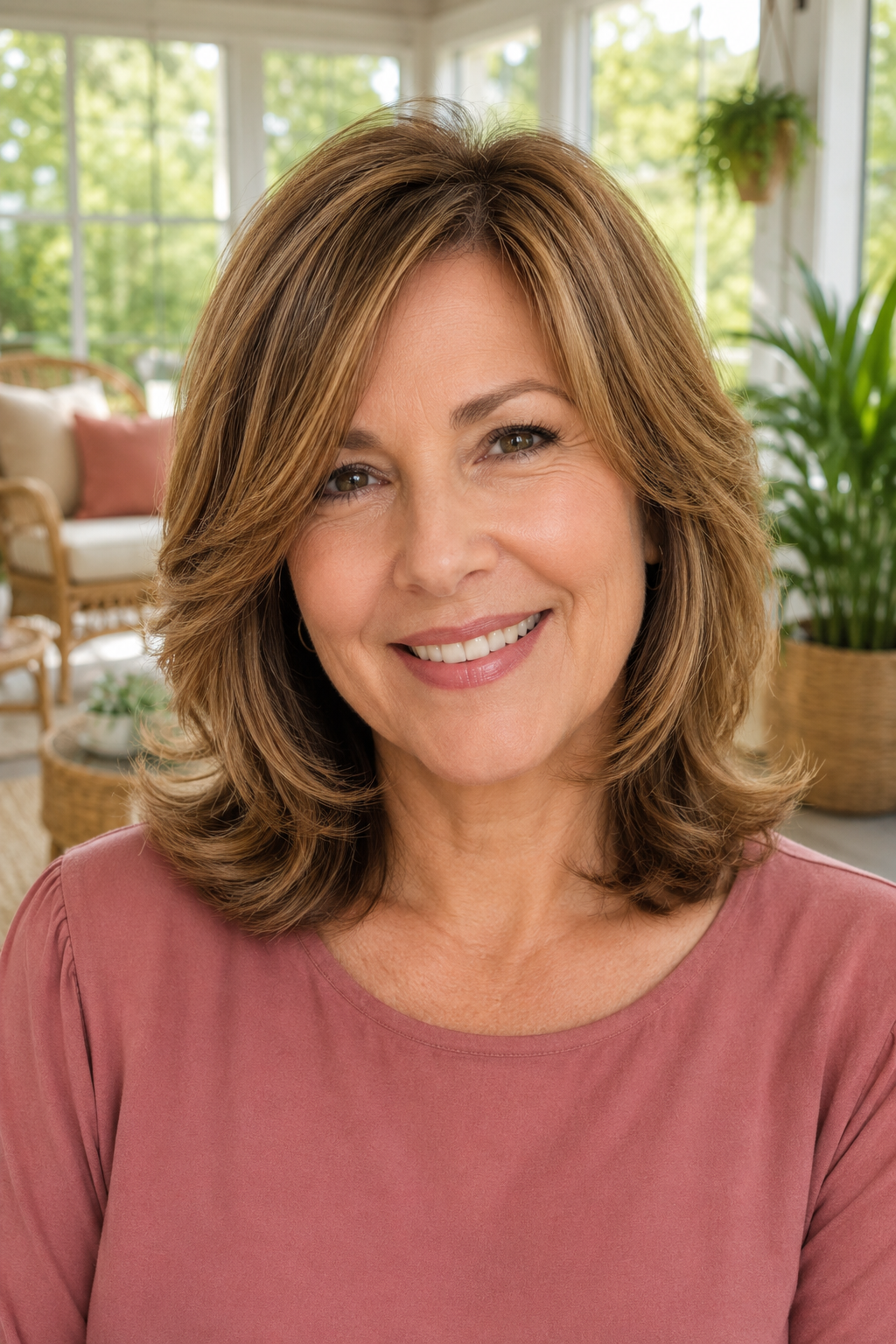
Layers cut light and angled so they flip gently away from the face rather than lying flat against it.
Opening up the sides of the face is the main effect here, and it draws attention toward your eyes and cheekbones.
Works especially well on straight to slightly wavy hair with medium density. A round brush helps set the flip, though the cut itself does most of the work once it is shaped properly.
Face-Framing Layers at the Cheekbones
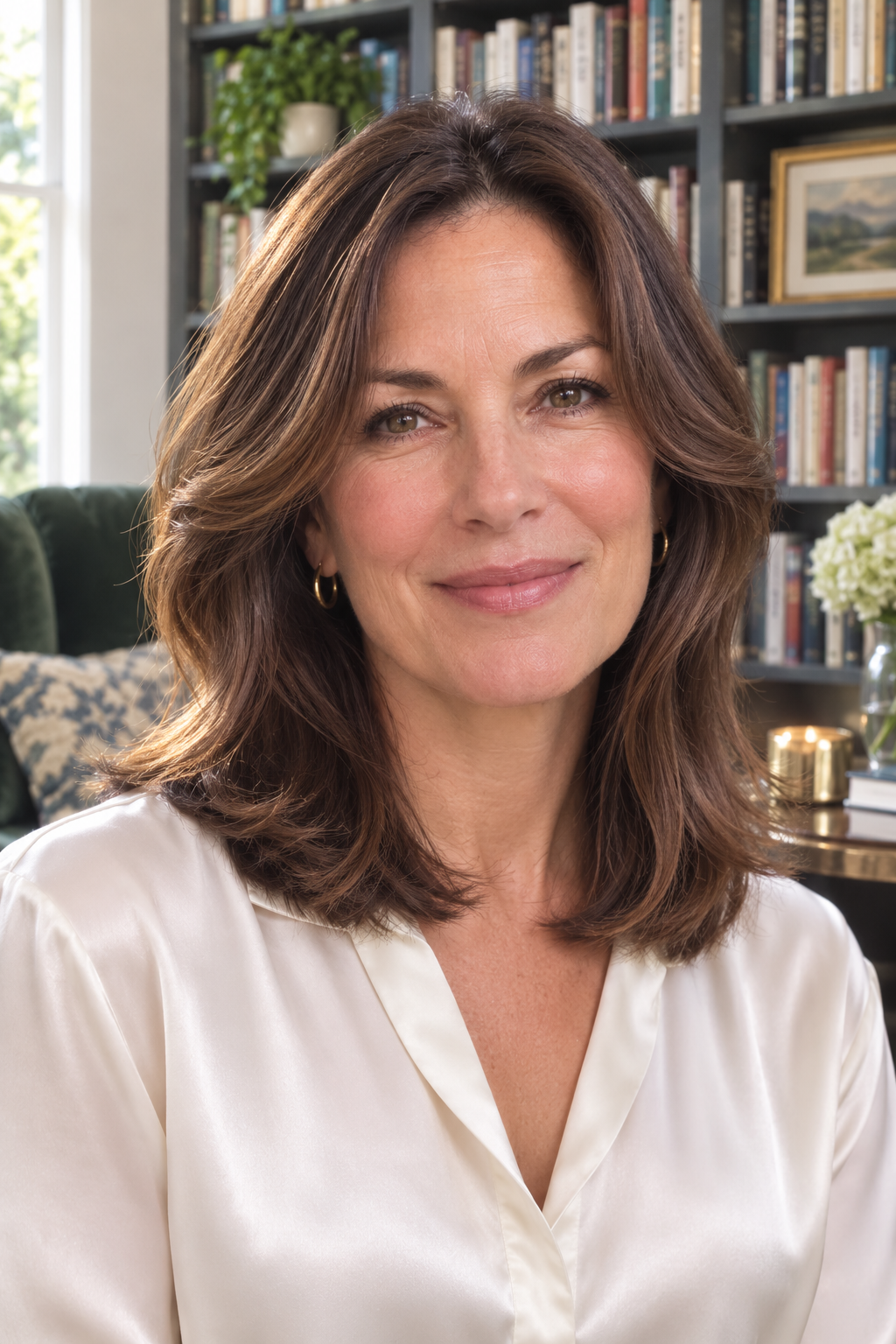
Shorter pieces cut only around the face, beginning around cheekbone height, with the rest left at one length.
Starting the layers high is what lifts the shape. Layers beginning at the jaw tend to drag downward instead.
Perfect for anyone testing whether layers suit them. If they do not work, they grow back into the length in a couple of months with no awkward middle stage.
Crown Layers
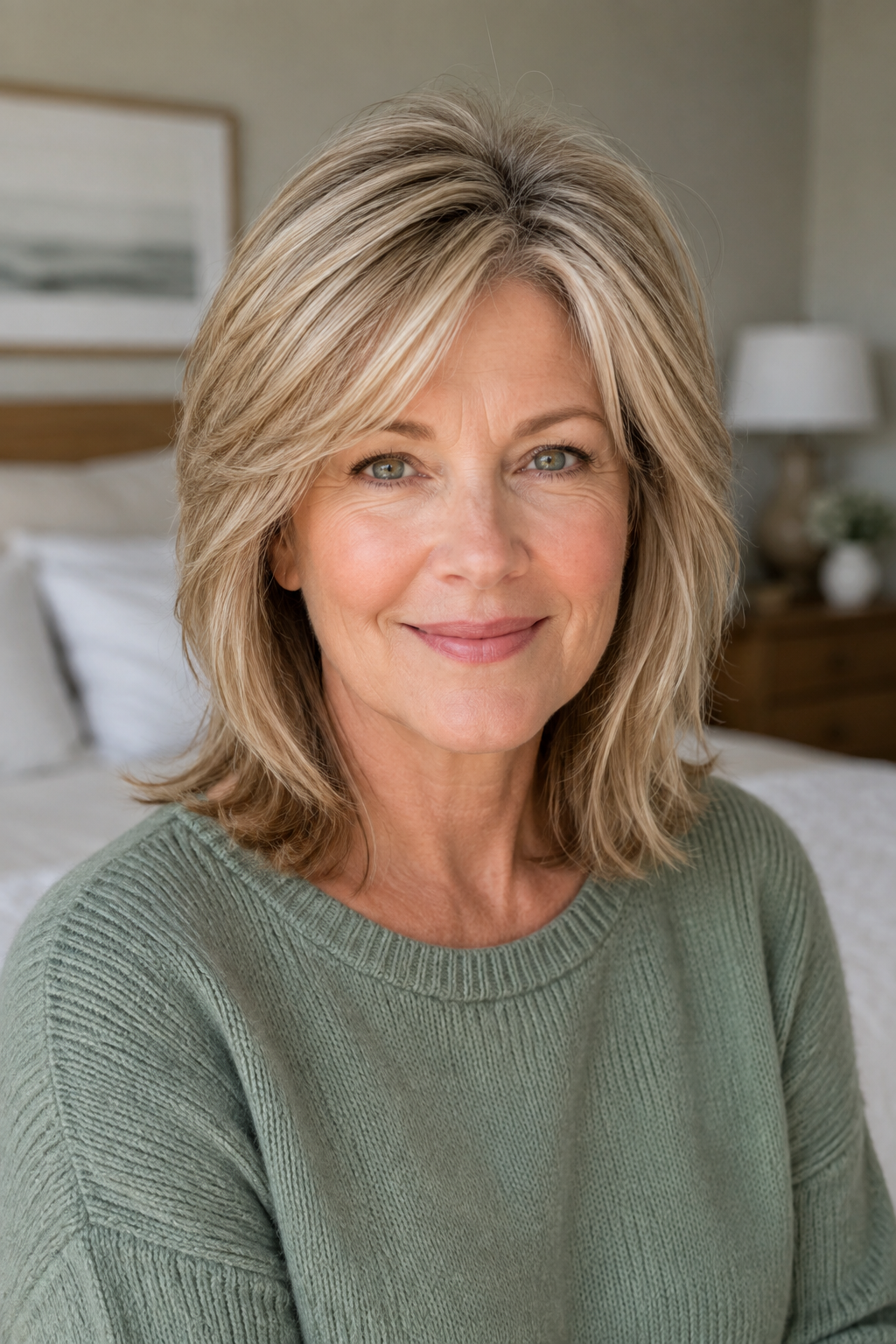
Short layers cut only at the crown, leaving the rest of the length untouched. A small structural change with a noticeable result.
The weight of the hair below is what flattens the top. Taking a little out at the crown releases it.
Great for anyone who likes their length but wants more height. See our shoulder-length haircuts for thin hair over 50 for more built around the same principle.
Inward-Curving Ends
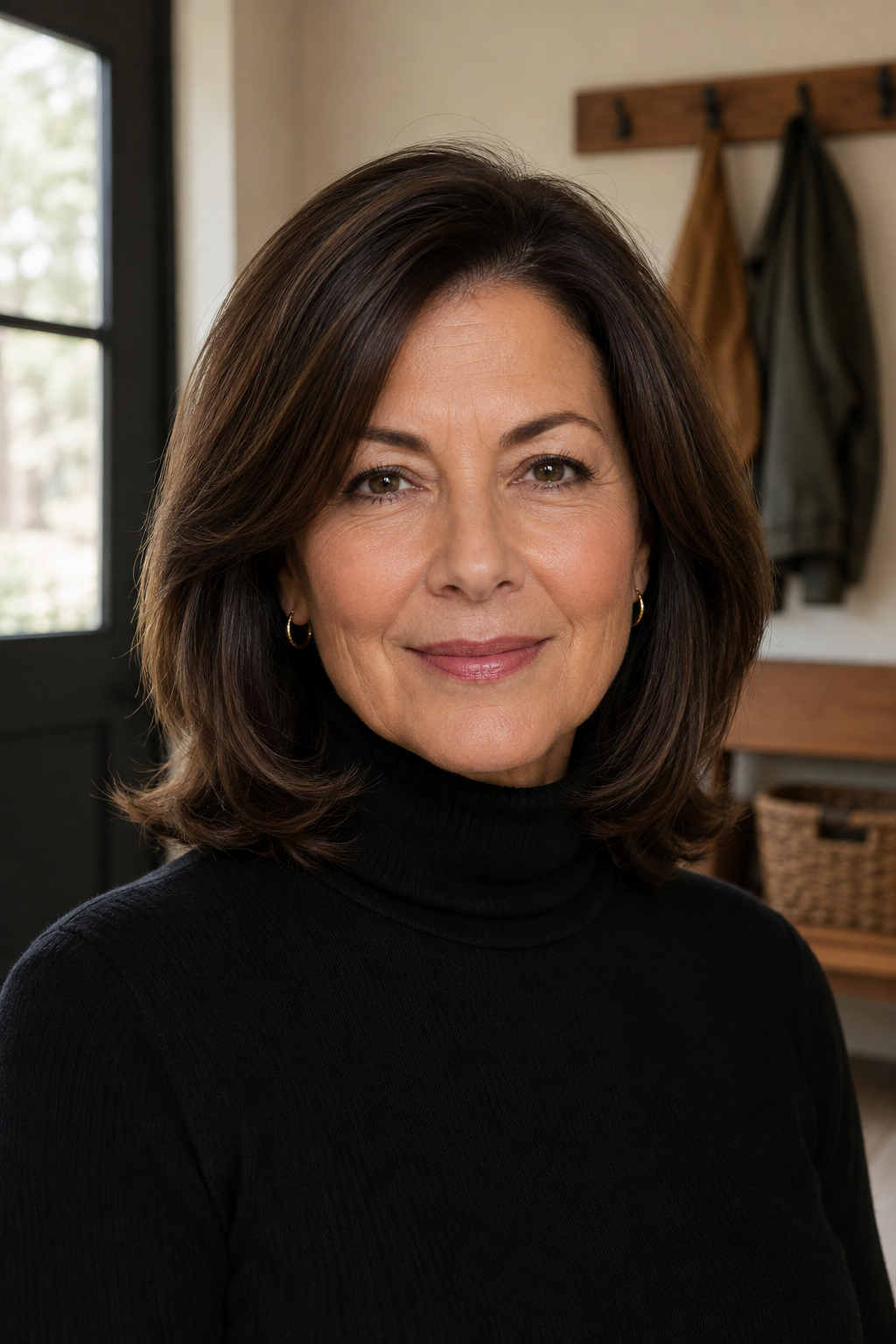
Layers shaped to turn under at the bottom, so the ends curve toward the neck rather than flicking out.
The inward curve softens the outline of the whole cut and sits neatly against the jaw.
Suits anyone who wants something tidy without it looking stiff. A round brush on the last few inches sets it, and once the cut is shaped for it, the hair tends to fall that way on its own.
Feathered Wolf Cut
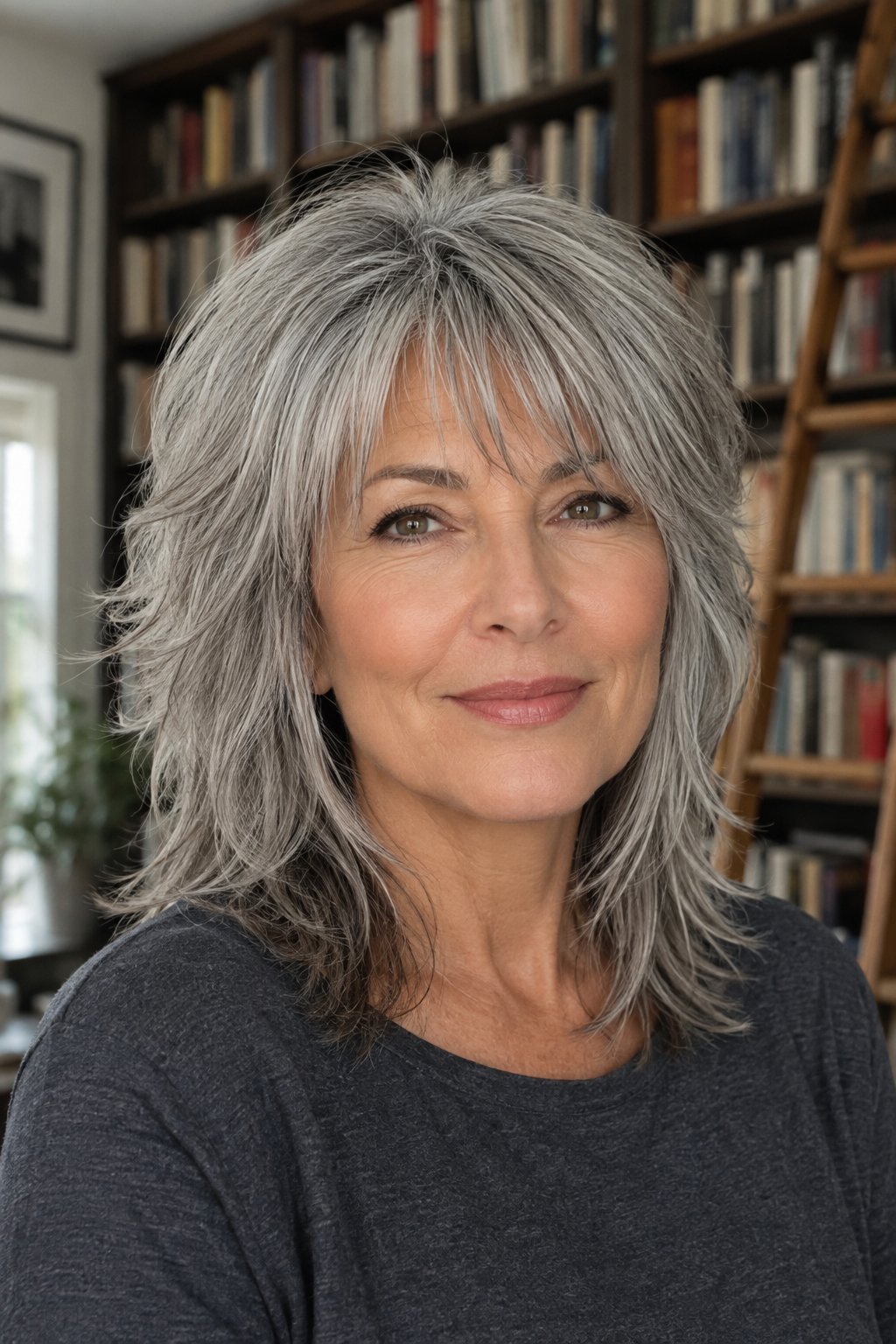
Short choppy layers at the crown against longer shoulder-length ends, with piecey bangs and light, feathered edges throughout.
Stylists are recommending this one for grey shoulder-length hair specifically, since the texture keeps silver from looking flat.
Great for medium to thick density. It needs a texturising cream to hold its shape, so it is not the pick if you want something you can wash and forget.
Curly Lob
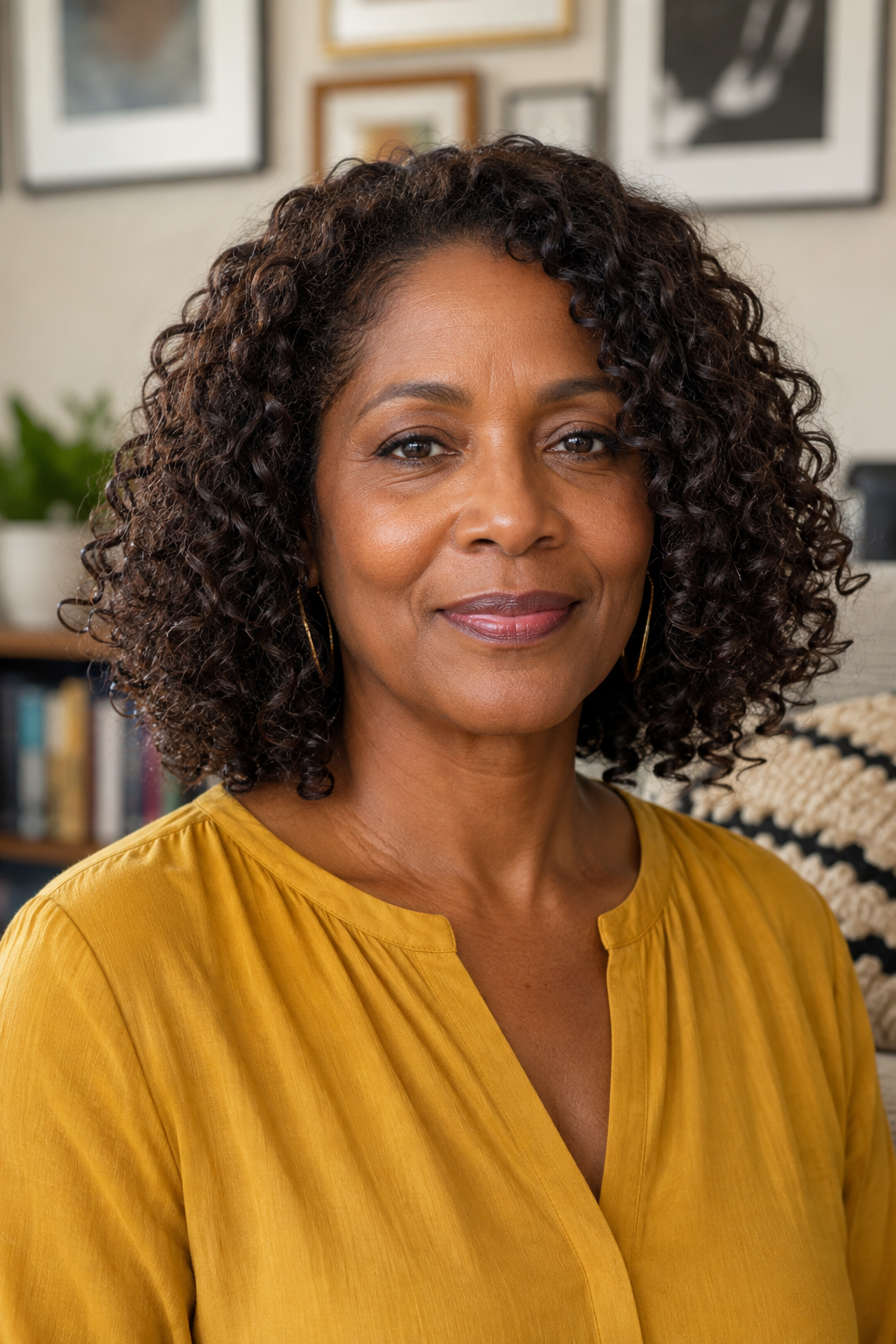
For natural curl or strong wave, a lob with the mid-lengths layered so the pattern can form without the weight dragging it out.
Curls need room to spring. Cut too long and they stretch, cut too short and they widen at the sides.
Works especially well on hair that has grown coarser or waver with age. Our curly medium hairstyles post covers the shaping in more detail.
Long Curtain Fringe
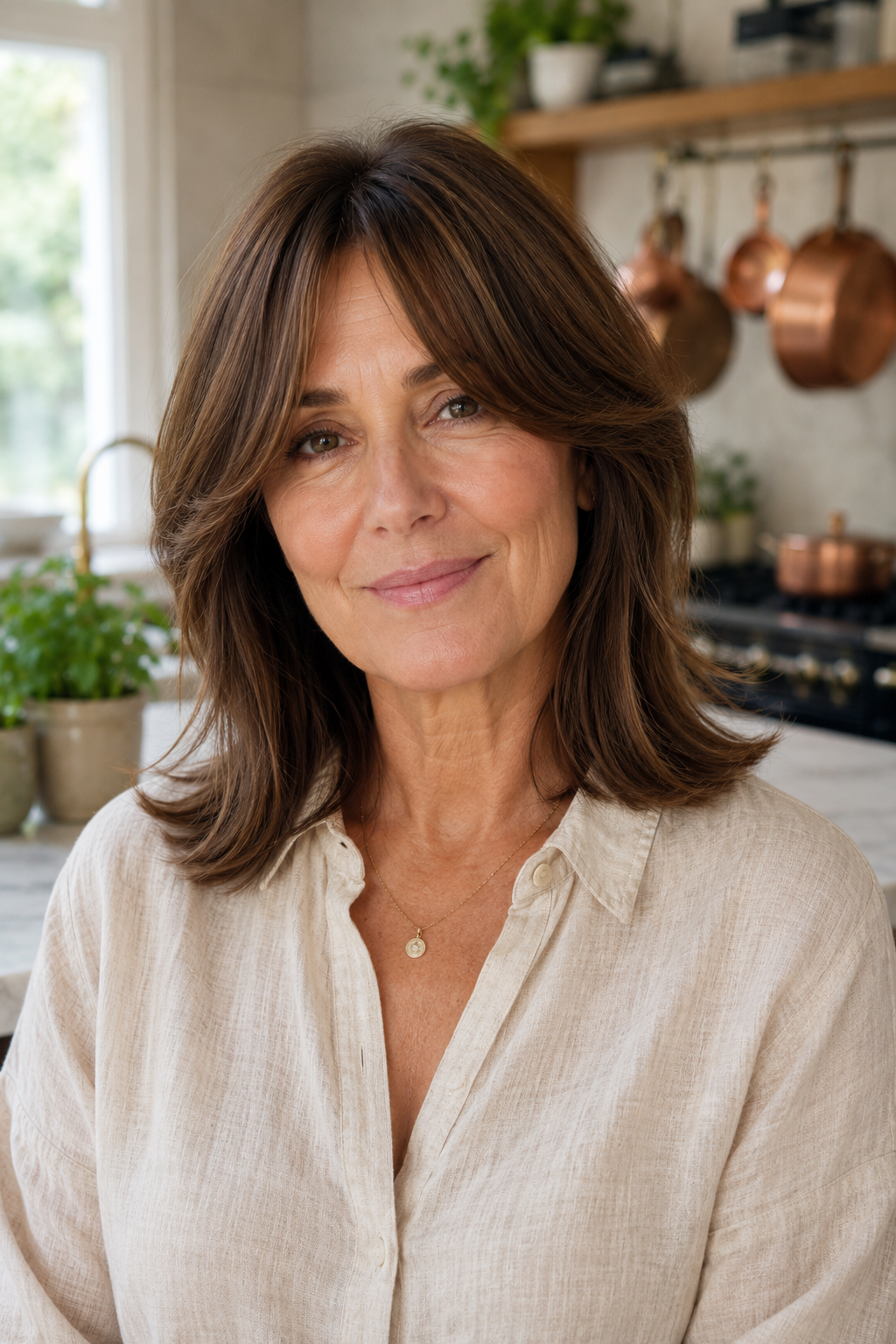
Bangs cut long, parting at the centre and sweeping outward toward the temples, blending into the face-framing pieces.
Because they are long, they never sit awkwardly while growing out, which makes them the lowest-risk fringe available.
Suits round and longer faces alike. Have them cut to land somewhere around the cheekbone. Shorter than that and they need daily attention to sit properly.
Side-Swept Bangs
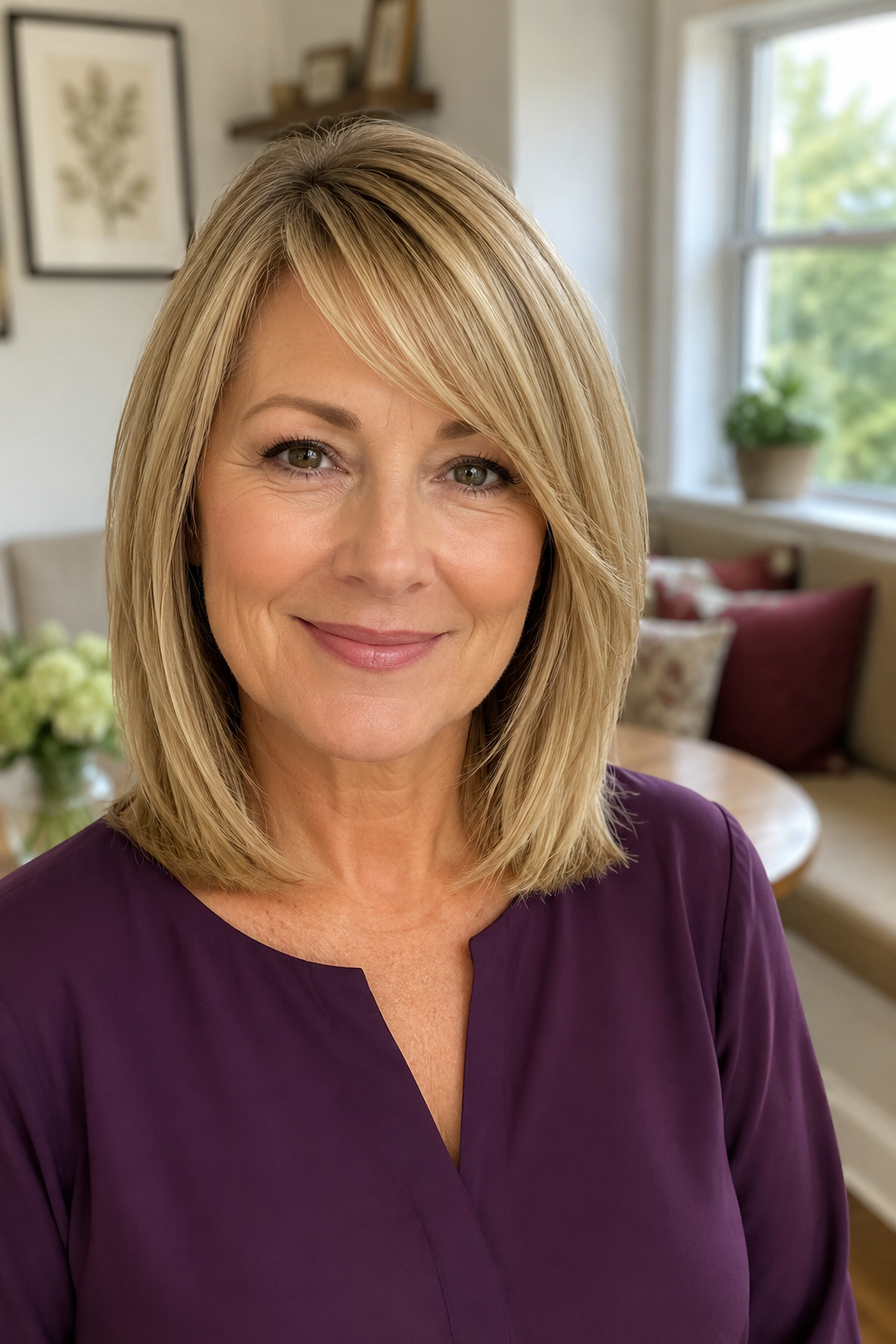
Bangs cut on an angle and worn swept to one side, longest at the outer edge.
The diagonal line across the forehead softens a square or strong jaw, and it covers more forehead than a curtain fringe does.
Perfect for anyone who wants a fringe with some coverage. Blow them across with a round brush while damp, since letting them dry in place usually leaves them separating down the middle.
Round Brush Blowout With an Inward Flip
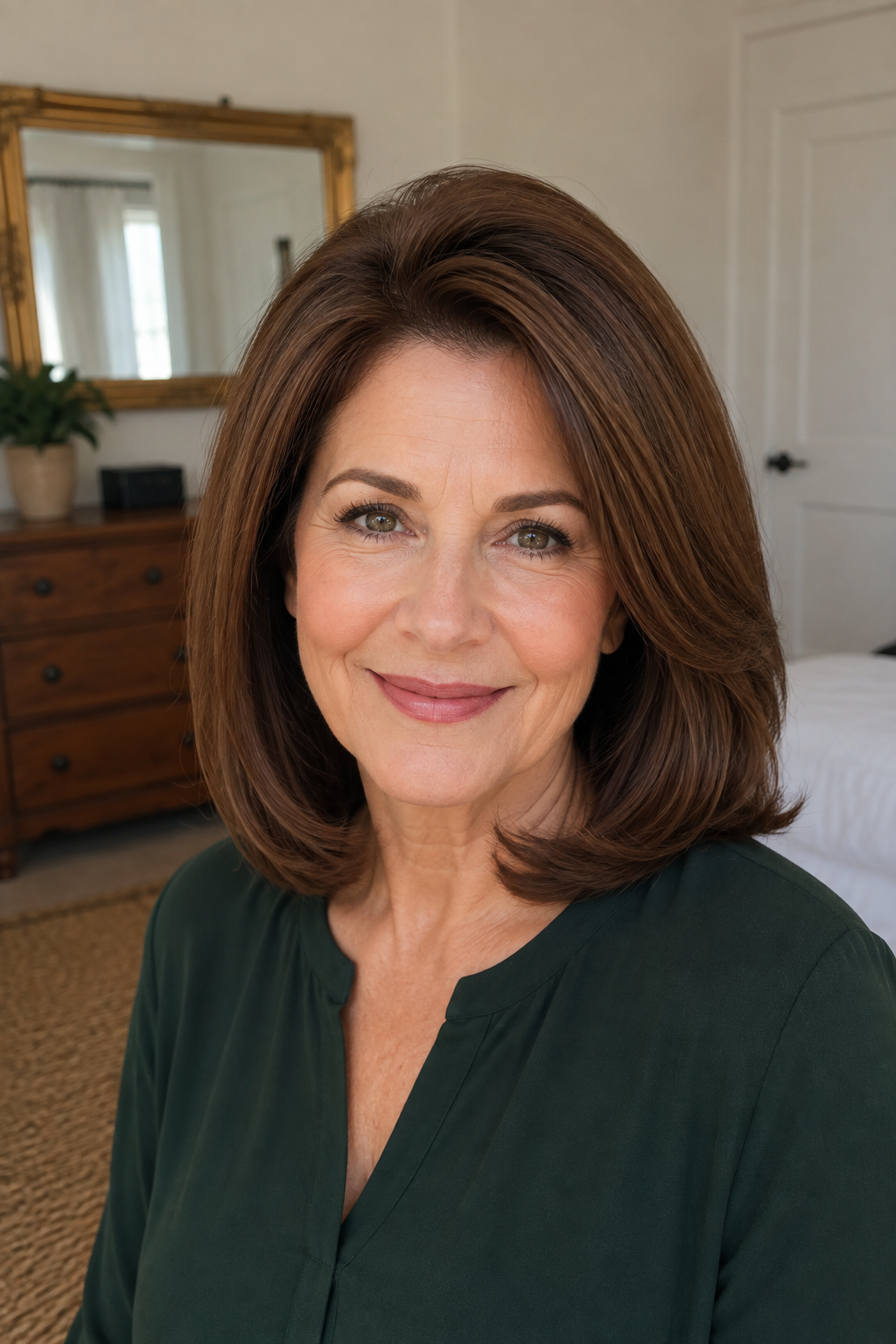
A medium round brush used through the ends, turning them under while the roots get lifted at the crown.
This is the styling method behind most of the shapes above, and it is worth learning properly.
Great for anyone whose cut looks better leaving the salon than it does at home. Dry the roots first with your head tipped forward, then bring the brush through the ends section by section.
Soft Waves With a Side Part
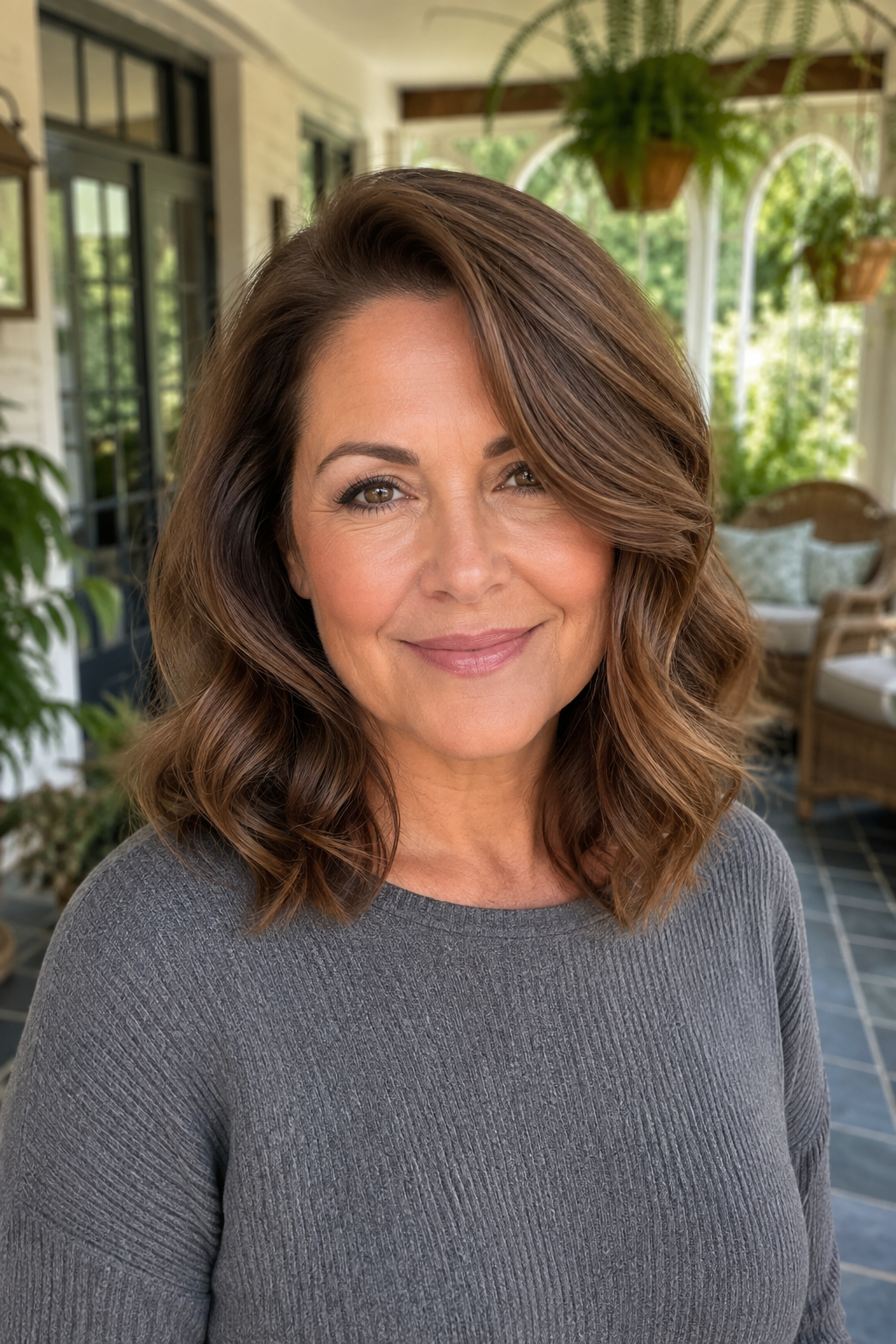
Loose S-bend waves through the length, with the part shifted off centre.
A side part piles extra hair on one side of the crown, which creates volume at the root with no product involved.
Suits fine to medium hair that goes flat on top. Our wavy medium hairstyles post has more on setting waves that hold past lunchtime.
Air-Dried Texture With Cream
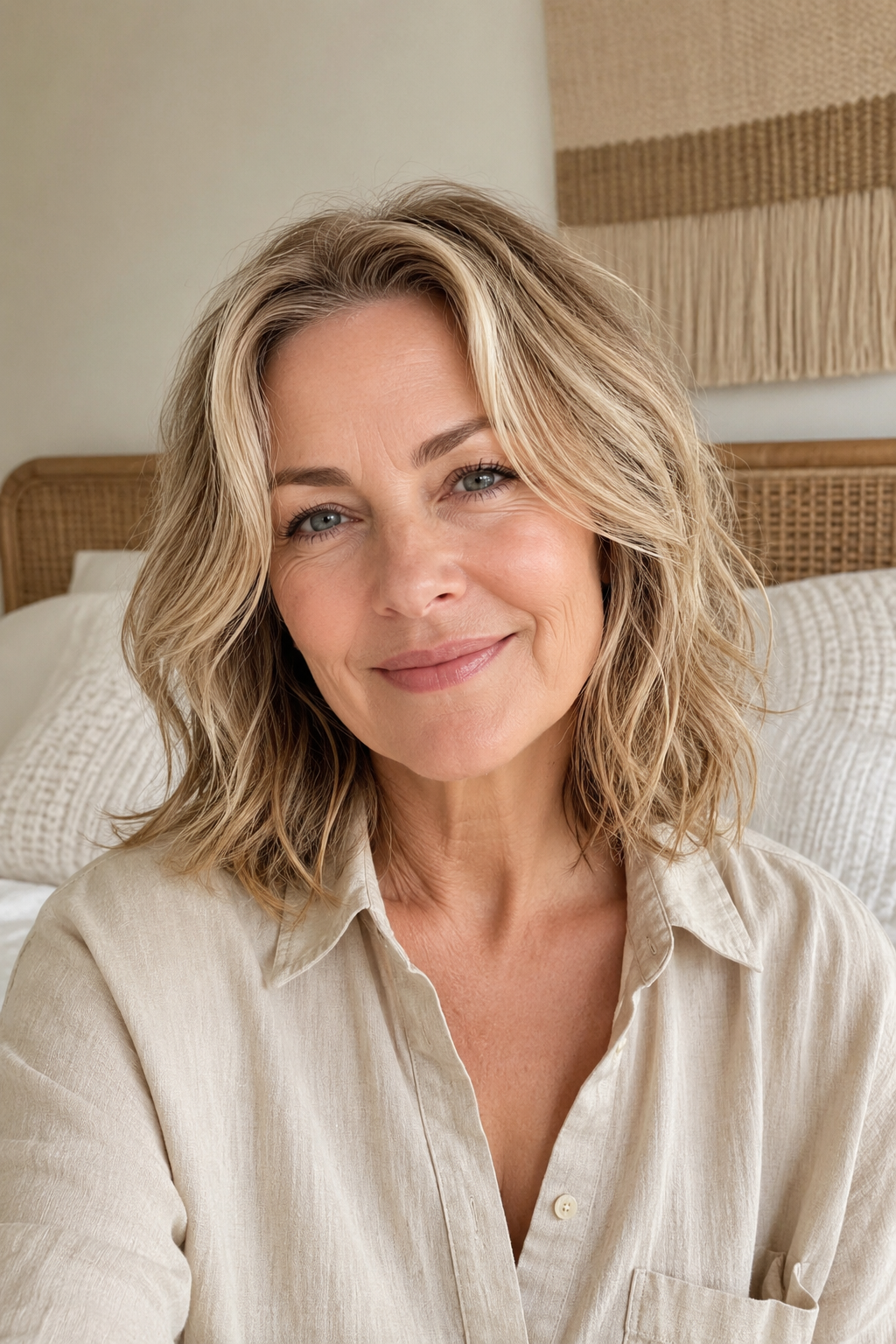
A light styling cream through damp hair, then left to dry with no heat and no brushing.
Skipping the dryer keeps the hair softer, and the natural bend that develops adds a bit of body that a blowout smooths away.
Works especially well if you have some natural wave. Apply the cream from mid-length down and keep the roots clear, since product at the scalp is what causes the flatness you are trying to avoid.
Smoky Silver Melt
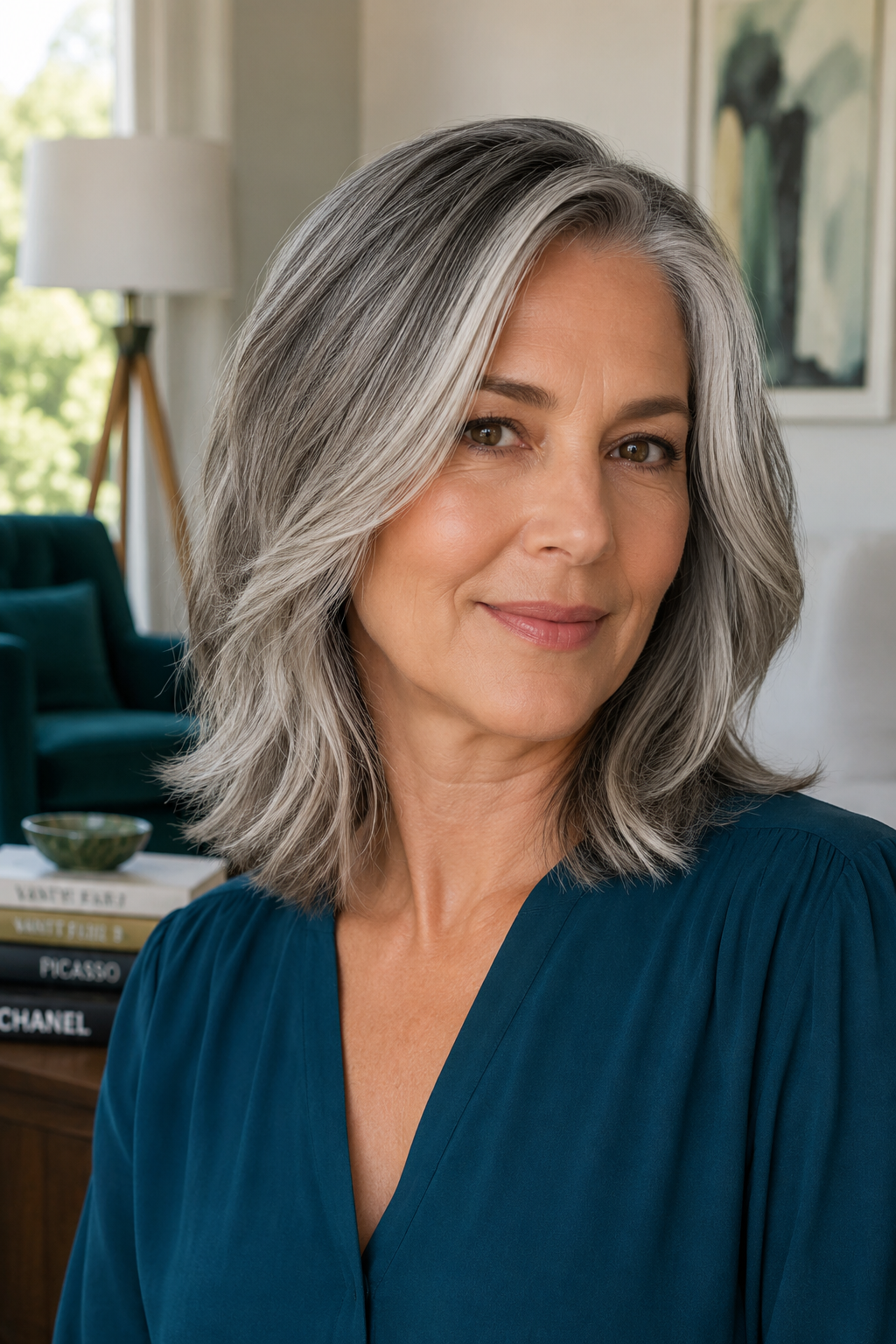
Deeper roots blending gradually into brighter silver through the ends, with no visible line between them.
The gradient means regrowth simply extends the darker section rather than creating a stripe.
Perfect for anyone growing out color and wanting the transition to look deliberate. Silver needs a gloss every few weeks to stay clear, since it picks up yellow tones from water and product.
Ash Blonde Grey Blend
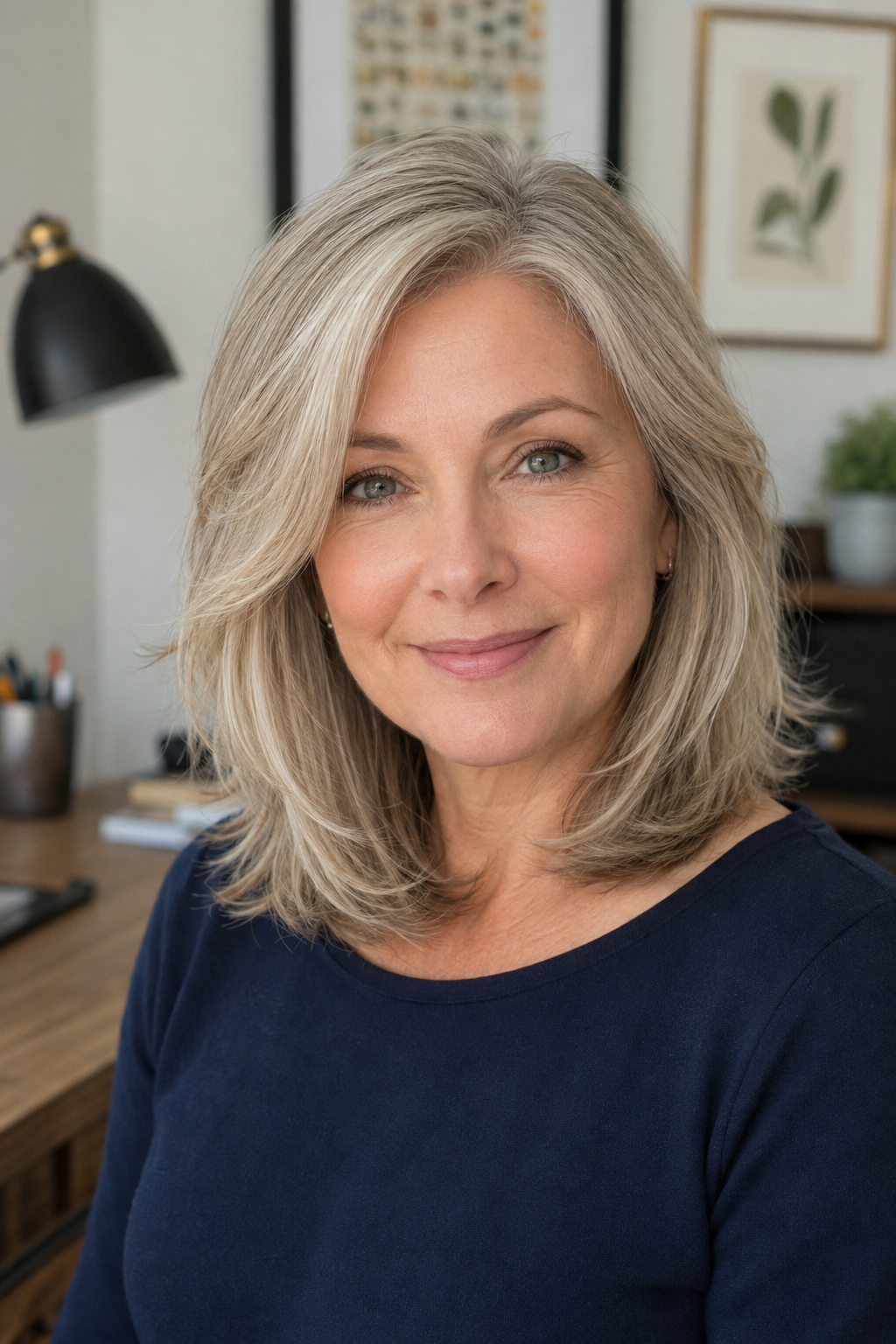
Cool ash blonde worked through so natural grey reads as part of the color rather than as regrowth.
Ash sits close enough to silver that the two blend without obvious contrast, which is what makes the upkeep manageable.
Great for anyone not ready to go fully grey. Our grey blending highlights post covers the technique in more detail for brunette bases.
Honey Bronde Ribbons
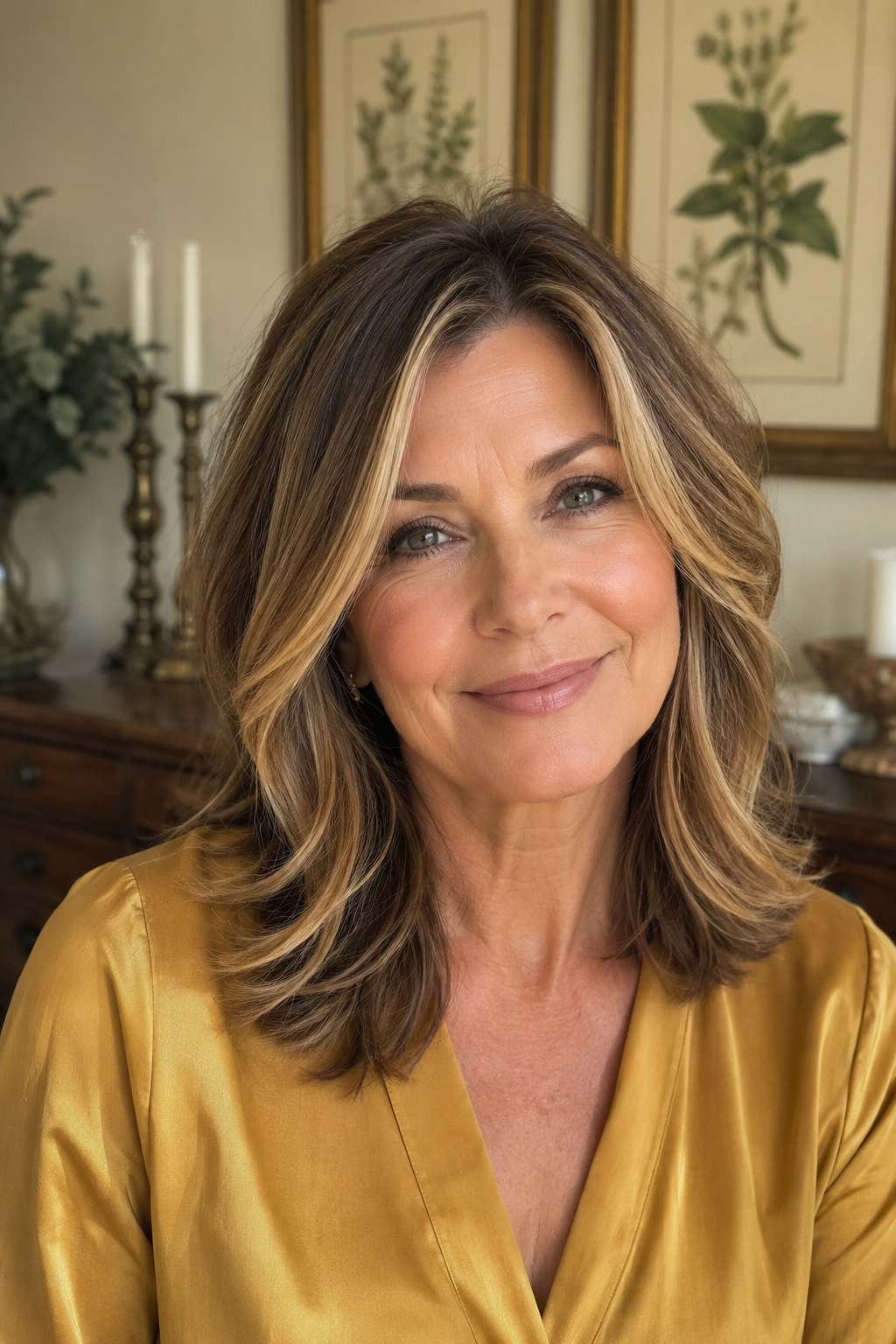
Soft honey tones ribboned through a medium brown base, brightest around the face.
Warmth near the face lifts the complexion, and the ribboned placement avoids the striped look that heavier highlights create.
Suits medium brunettes wanting brightness without going blonde. Because the pieces blend rather than sit separately, the grow-out is soft and appointments stretch further apart.
Face-Framing Silver Streaks
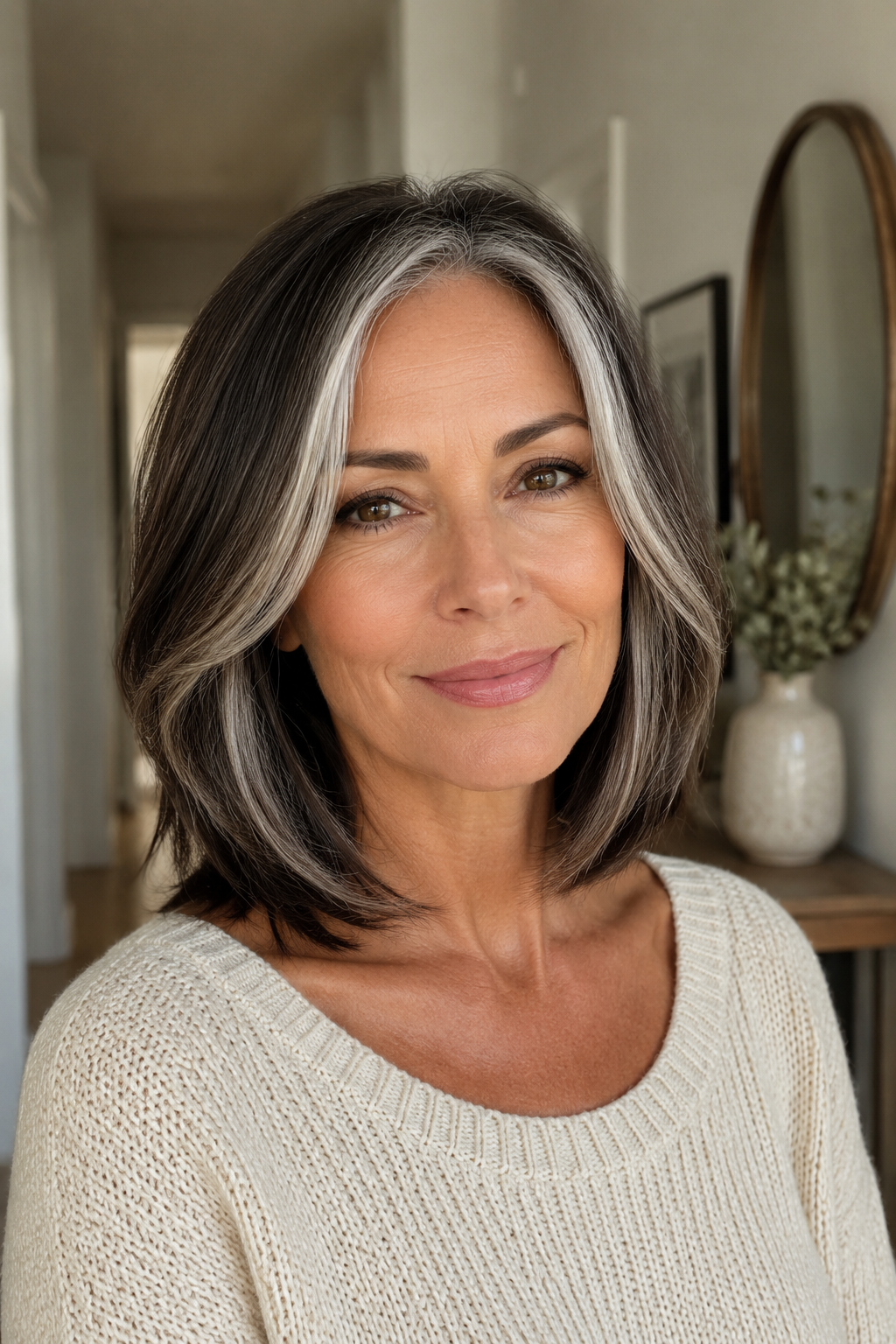
Rather than blending grey, this brings it forward, with brighter silver pieces placed deliberately at the temples and front sections.
Natural grey often comes in at the temples first, so the color works with what is already happening rather than covering it.
Works especially well on darker hair, where the contrast is clearest. The rest of the hair can stay untouched, which keeps processing to a minimum.
Warm Chestnut Single Process
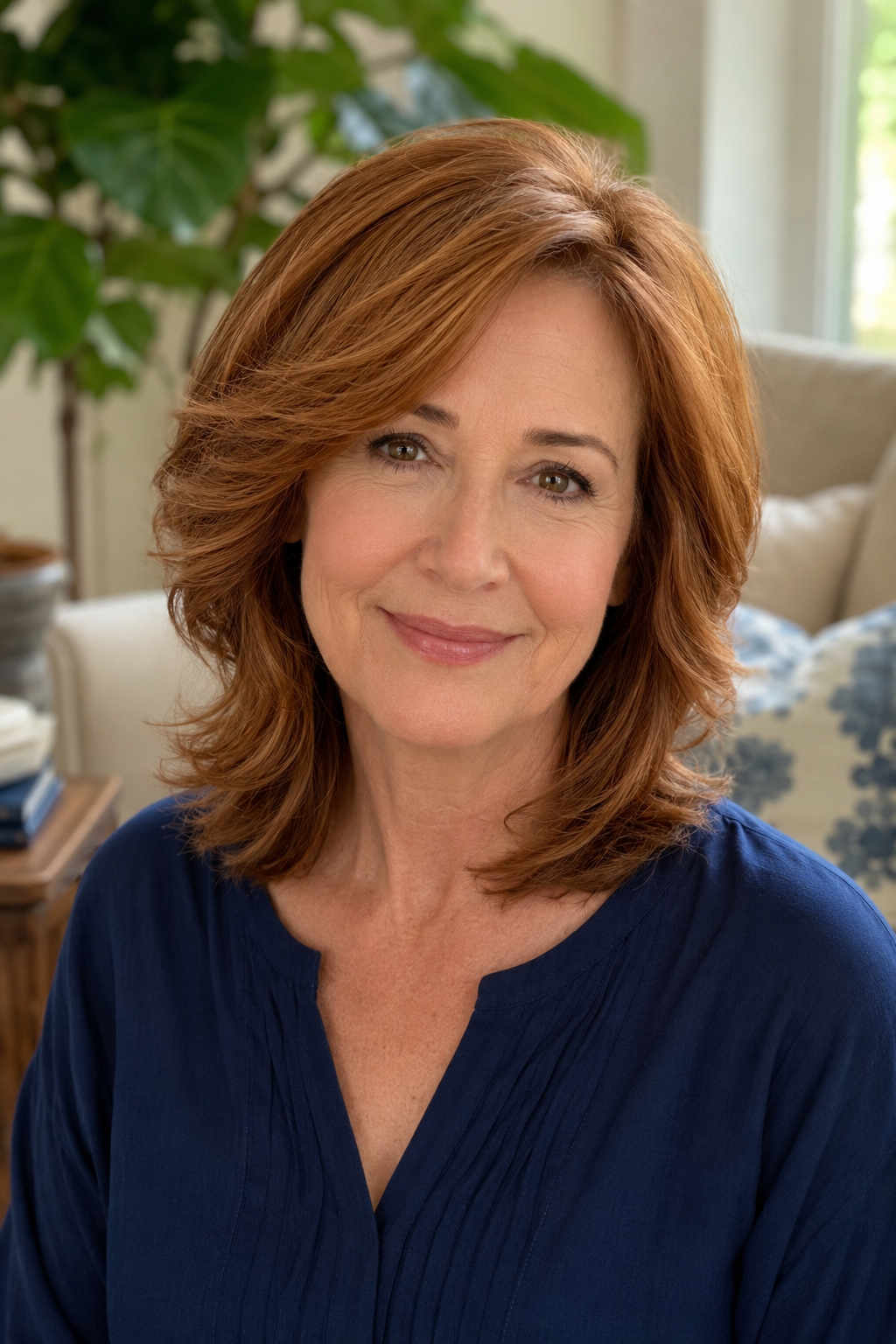
One rich chestnut applied all over, no highlights and no dimension added.
Single process is the gentlest color option available, and warm brown tones tend to flatter more complexions than cooler browns do at this stage.
Perfect for anyone who wants full grey coverage with the least fuss. Regrowth shows more clearly than with highlights, so plan on a touch-up every four to six weeks.
Soft Copper Glow
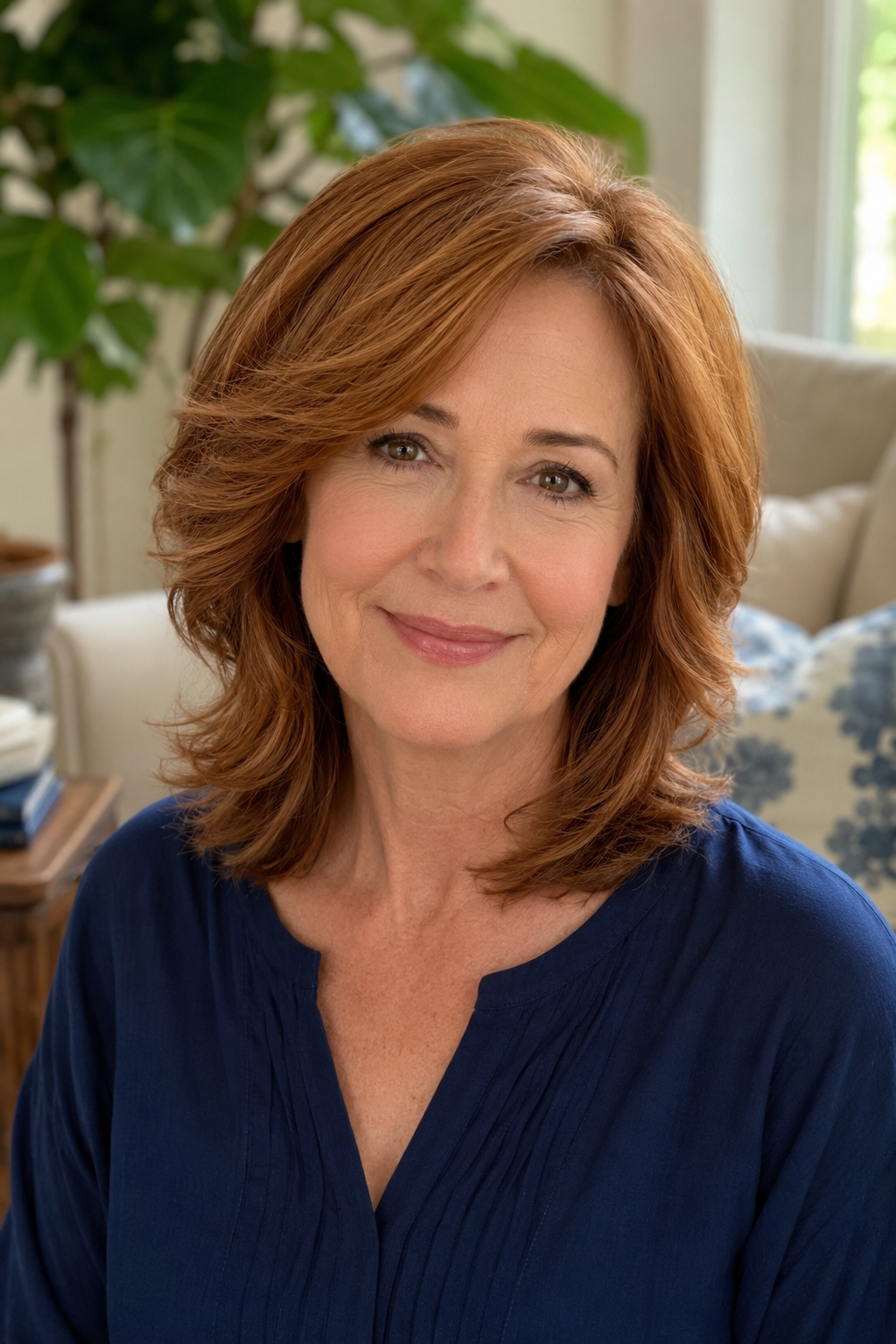
A gentle copper tone that adds warmth without shifting into obvious red.
Copper catches light in a way that makes hair look denser than it is, which is a useful effect at any age.
Great for warm and neutral skin tones. Copper fades faster than most shades, so a gloss between color appointments keeps it from going dull, and our hair color ideas section covers choosing a tone.
Comments
No Comments