
23 Haircuts for Women Over 50 at Every Length and Texture
Hair usually changes before you decide to change your hair. It gets finer at the crown, or coarser than it was, or holds a wave it never used to. The cut that suited you at forty stops sitting the same way and nobody tells you why. What stylists agree on is that there is no single best haircut at this stage. What works is a shape that matches your current density and texture rather than the hair you used to have, with layers or bangs doing the softening. Here is the full range, short through long.
Jump to:
- Layered Pixie
- Textured Crop
- Bixie
- Chin-Length Bob With Softened Edges
- Layered Bob
- Angled Bob
- Short Shag
- Tapered Natural Cut
- Layered Lob
- Collarbone Lob With Face-Framing Pieces
- Shoulder-Length Shag
- Curly Lob
- Long Layers
- Long Hair With Crown Layers
- Long Soft Waves
- Long Locs
- Side-Swept Bangs
- Wispy Bangs
- A Cut Shaped for Thick Hair
- A Cut Shaped for Fine Hair
- A Cut Shaped for Curly Hair
- A Cut Shaped for Silver Hair
- A Cut That Grows Out Well
Layered Pixie
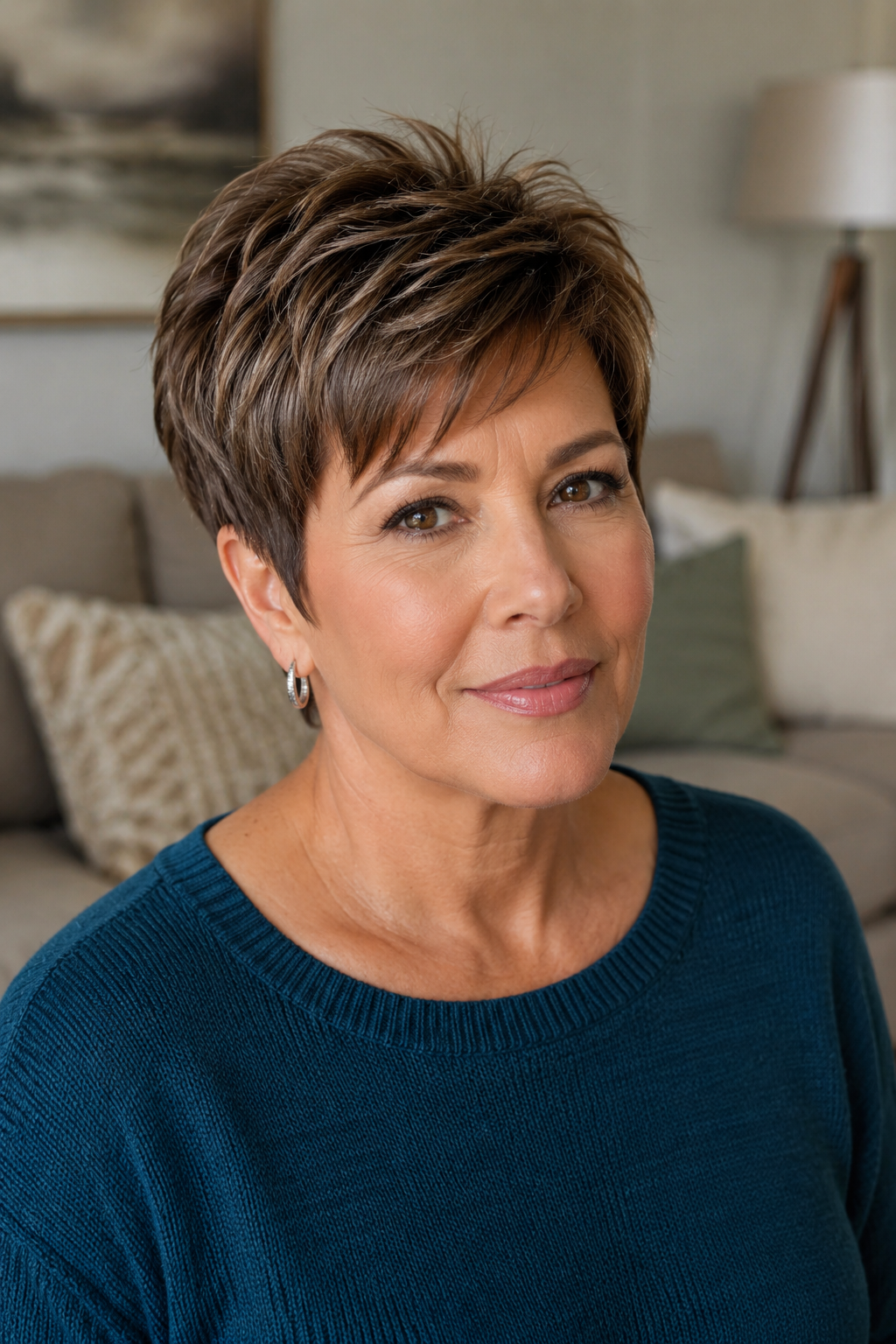
Cropped short with layers cut through the top to build height and movement.
Layers are what keep a pixie from sitting flat against the head, which is the difference between one that suits you and one that does not.
Great for fine hair, where short length removes the weight dragging the roots down. Our volumizing pixie cuts for thin hair over 50 post covers the shaping in detail.
Textured Crop
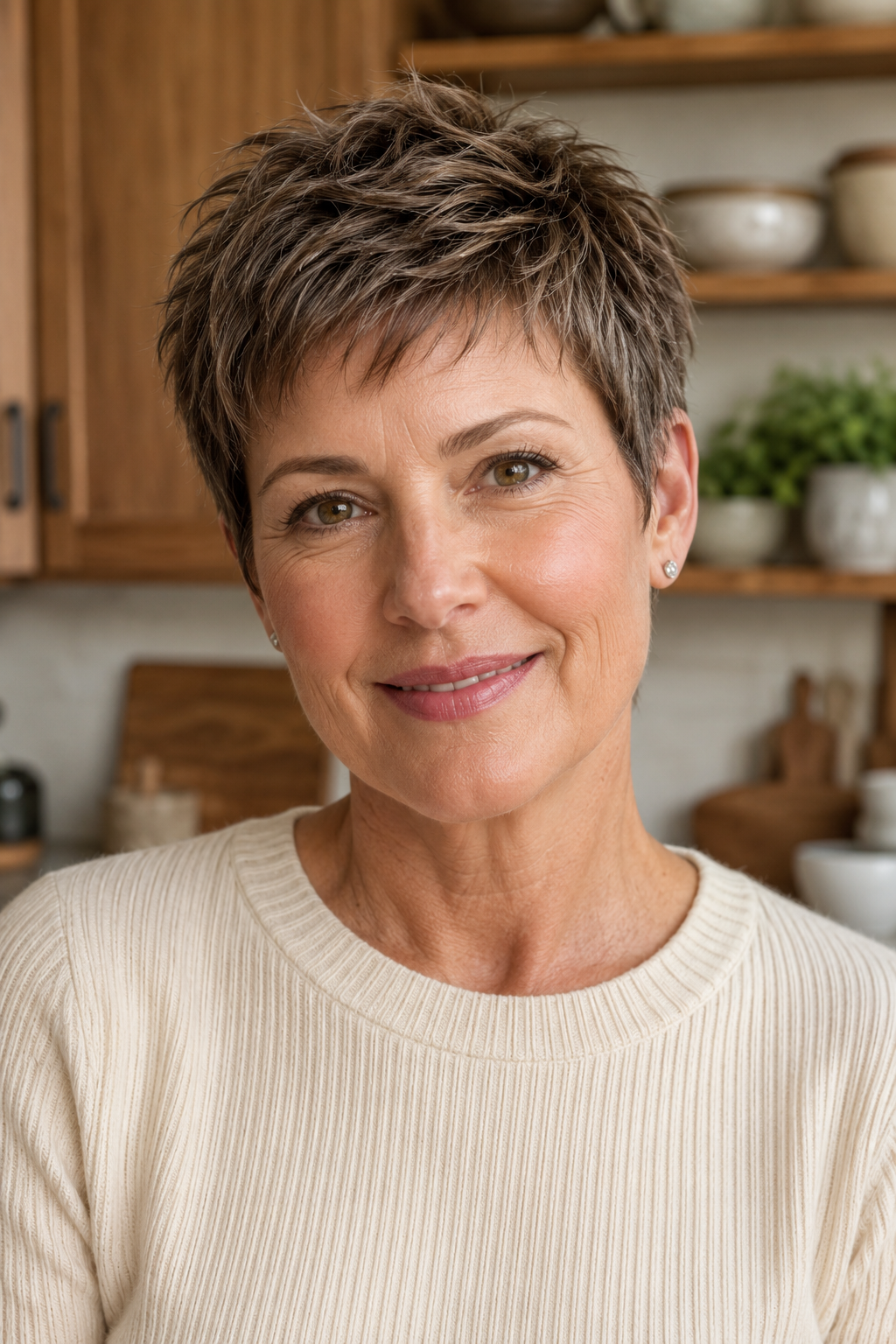
Very short all over with the texture cut in rather than styled in.
Because the shape comes from the cut itself, styling is a minute with a little cream and no tools.
Perfect for anyone who wants to stop thinking about their hair. It does need trimming every four to six weeks, which is the trade for how simple the mornings become.
Bixie
Sitting between a bob and a pixie, longer than a crop but shorter than the chin.
It gives you face-framing softness at the front with the lightness of a pixie through the back.
Suits anyone caught between the two and unwilling to commit. See our bixie haircut ideas post for the full range of variations.
Chin-Length Bob With Softened Edges
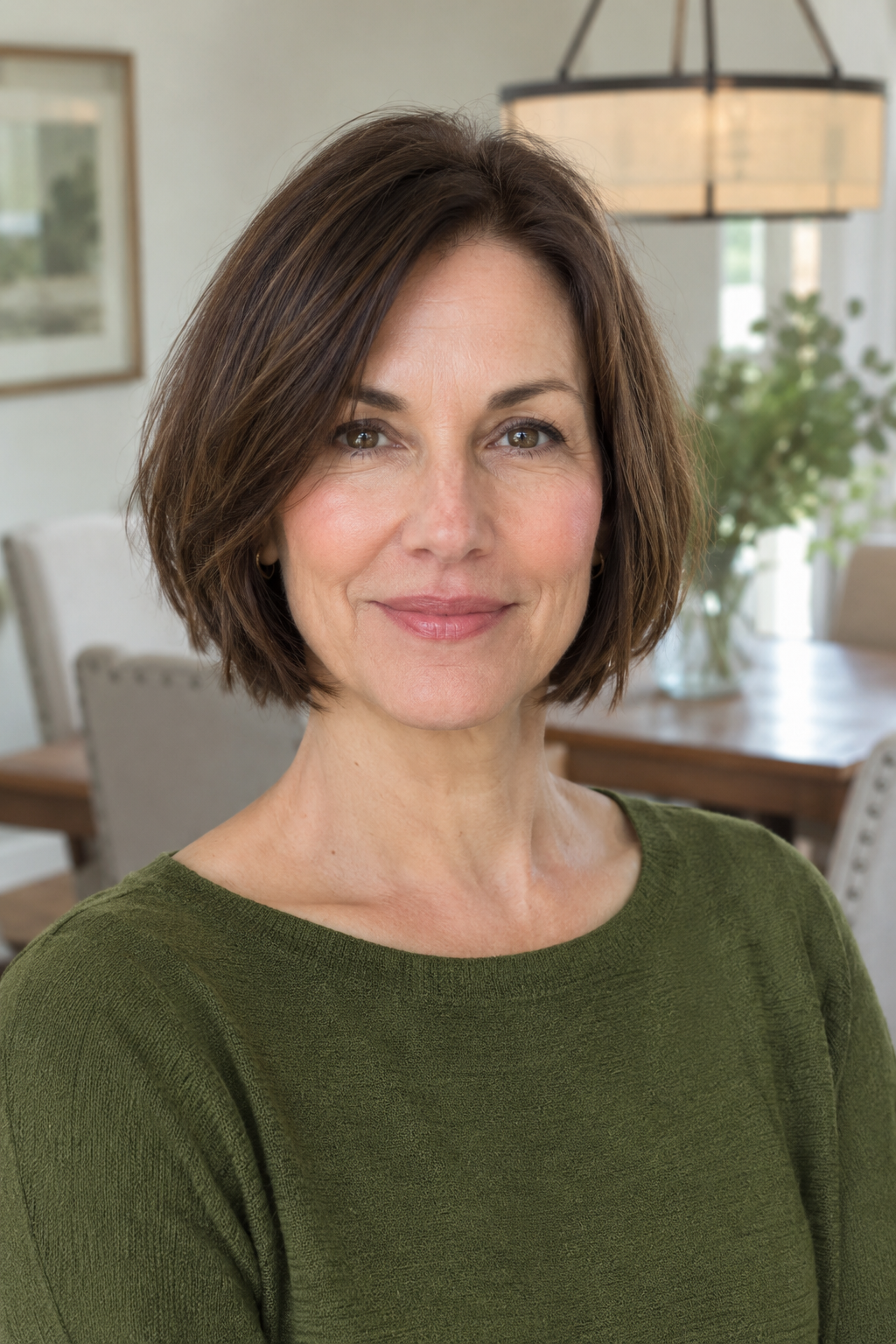
A bob landing at the chin, cut clean but with the ends broken up slightly so the line is not severe.
A fully blunt bob can look hard against softer features. Taking the edge off keeps the shape without the sharpness.
Works especially well on straight and lightly wavy hair. It also sits at a length that flatters most jawlines.
Layered Bob
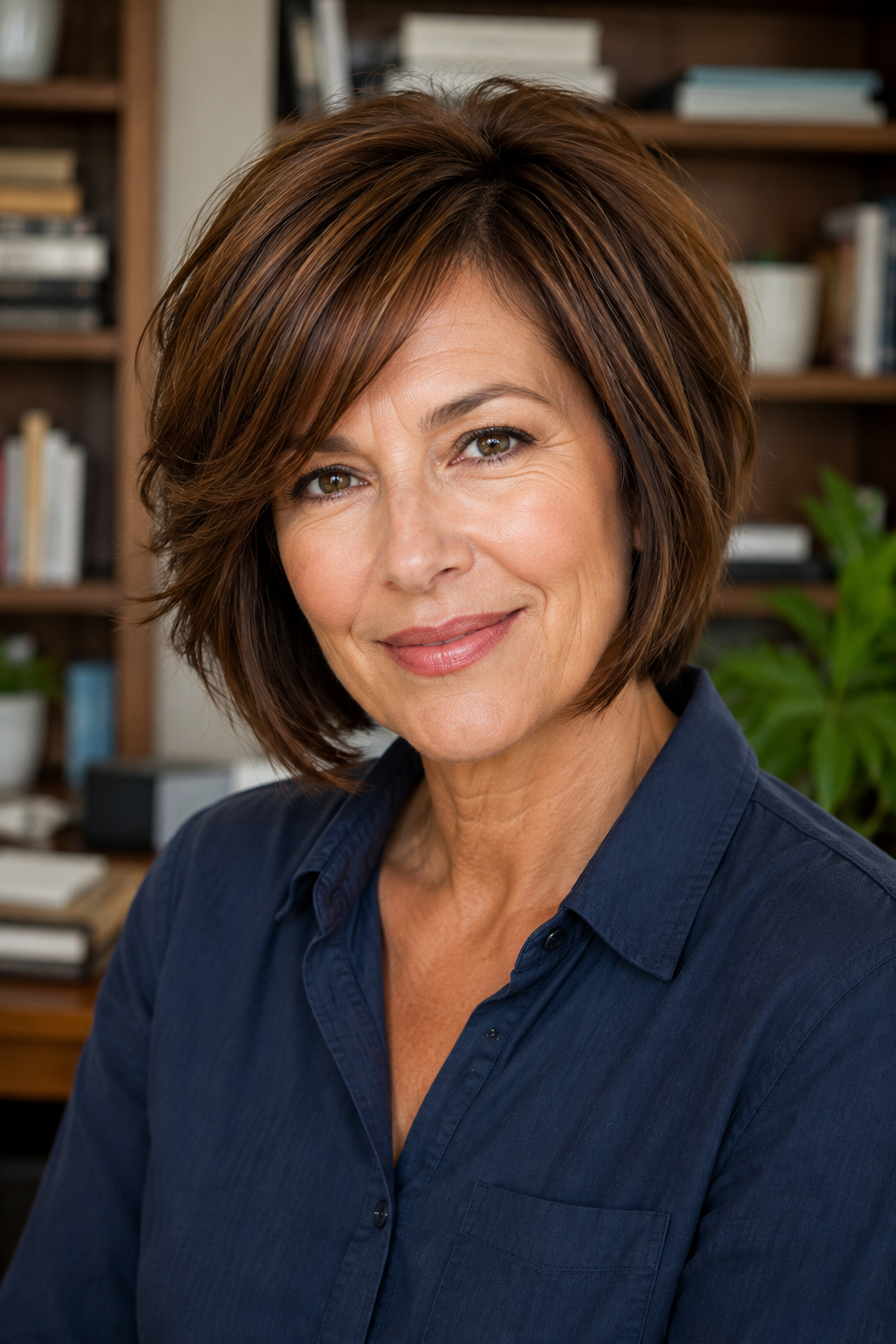
A bob with layers cut through it to add lift and stop the shape sitting heavy.
Layering a bob is what gives it movement, particularly at the back where hair tends to collapse against the head.
Great for medium density. Our short hairstyles for women over 50 post covers more shapes at this length.
Angled Bob
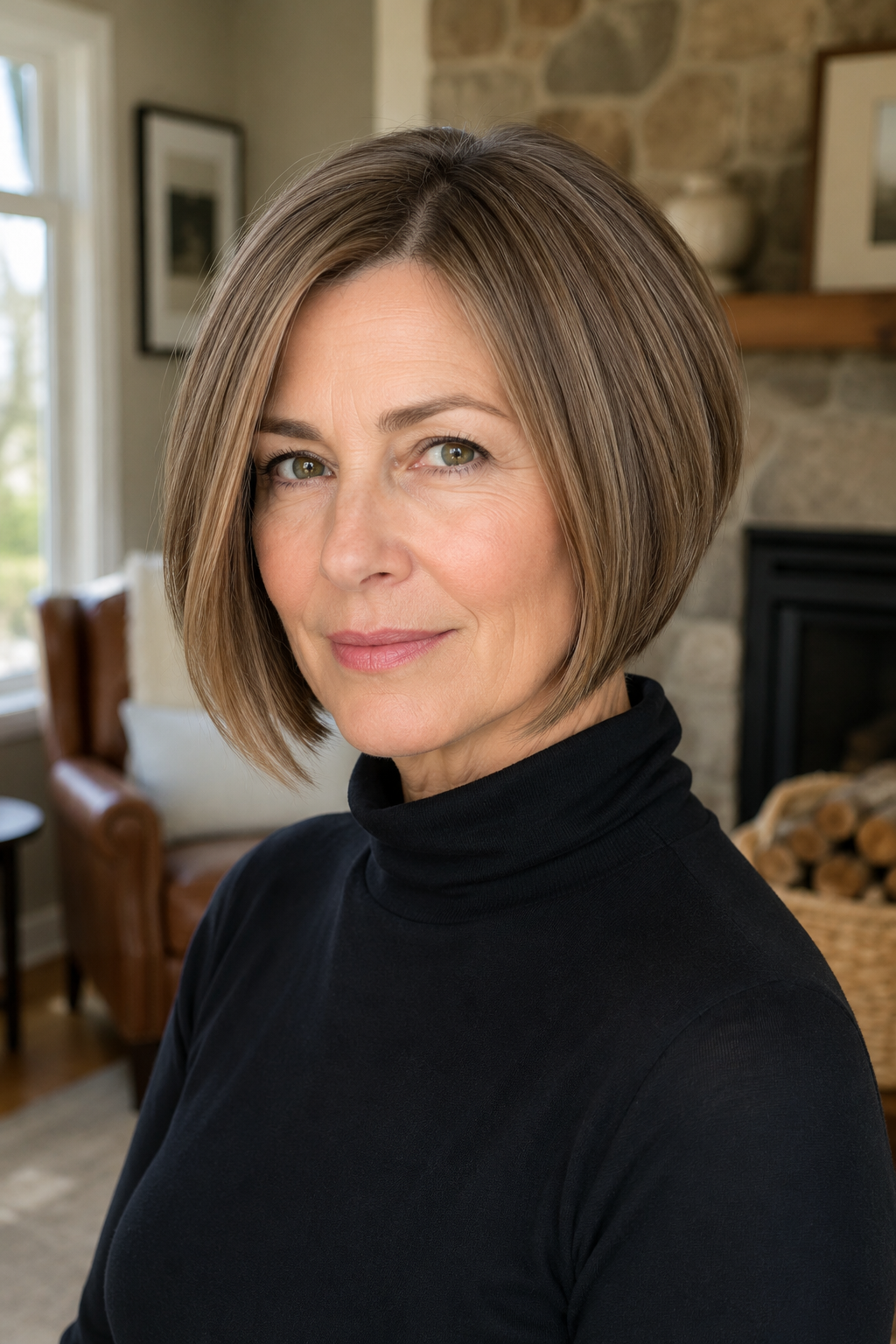
Shorter through the back with the front pieces cut longer, sloping toward the face.
The angle lifts the eye upward and gives the cut structure, which is useful when the hair itself has less body than it once had.
Suits anyone wanting shape without layers. Keep the slope gentle, since a steep angle at this length reads dated rather than sharp.
Short Shag
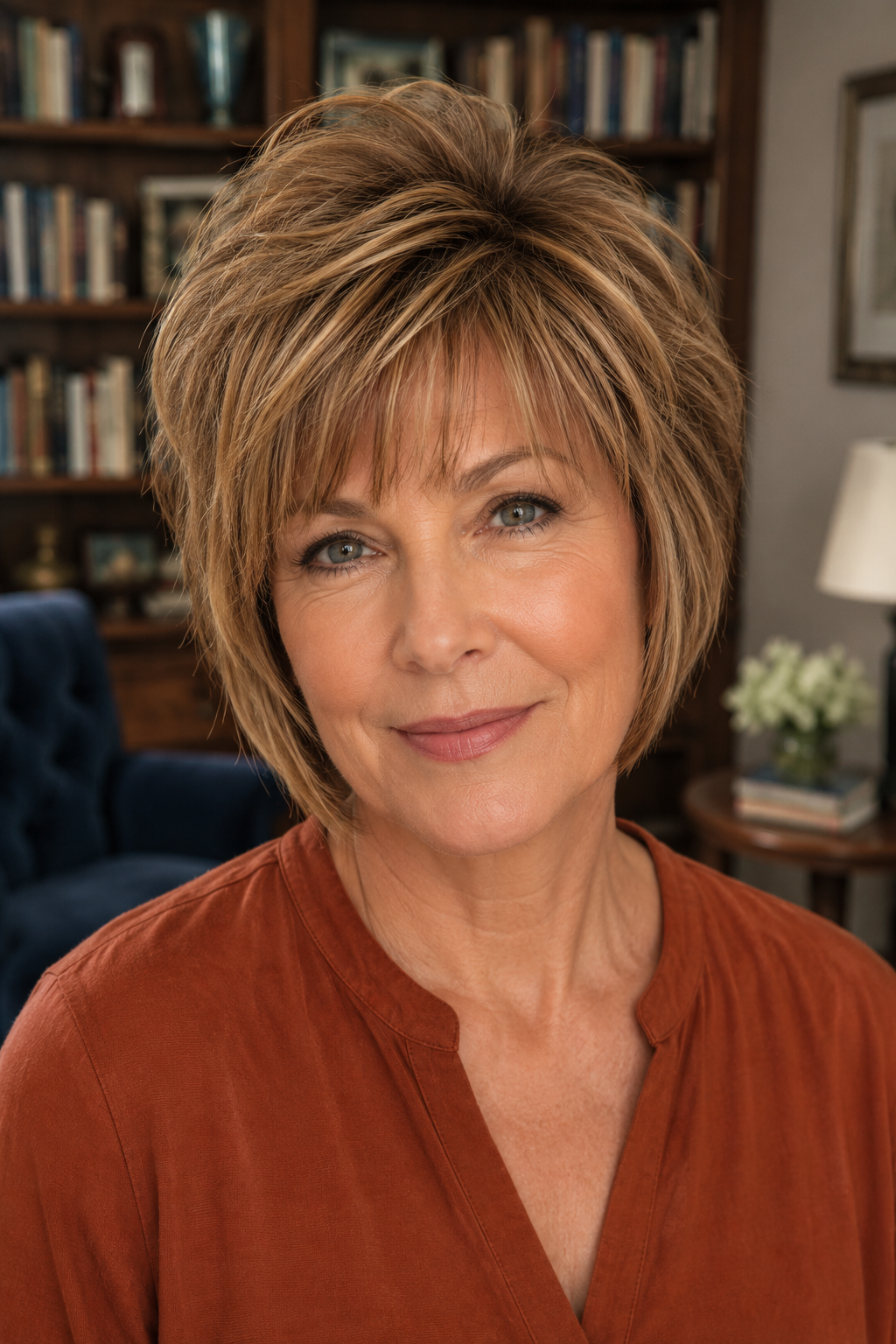
Heavy layers through a chin-length cut, shortest at the crown and longer toward the ends.
Crown volume is the main thing this delivers, and the crown is where fullness usually drops off first.
Perfect for anyone whose hair sits flat on top. Our short shaggy haircuts post covers the variations.
Tapered Natural Cut
Natural texture kept full on top with the sides and nape cut gradually shorter.
The taper gives structure to a short natural cut and keeps the shape defined as it grows.
Great for anyone wearing their natural texture. Our natural short hairstyles post has the full range of cuts and styling methods.
Layered Lob
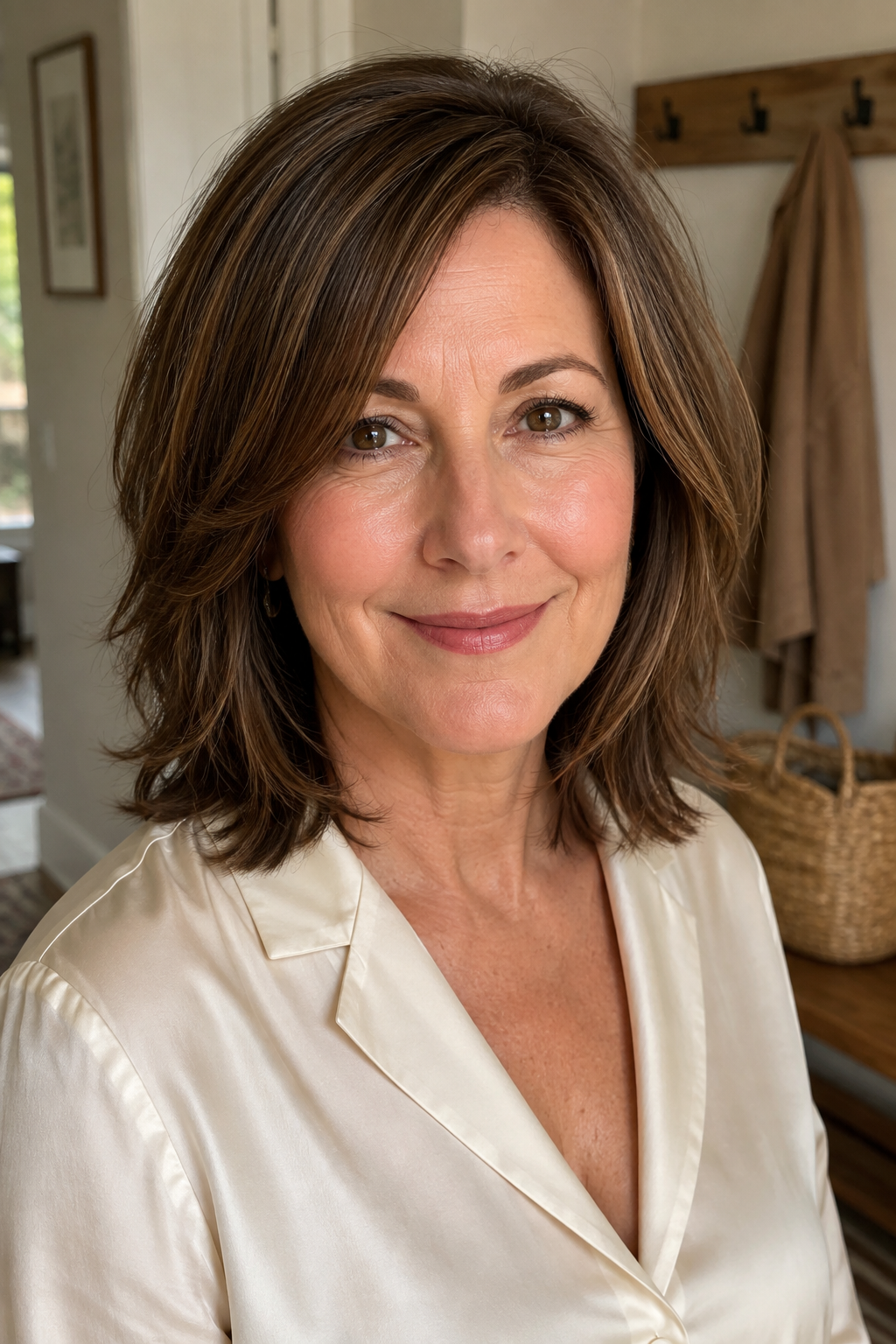
A long bob at the collarbone with soft blended layers through the length.
Stylists are calling this the cut of the year, and the reason it suits this age group is that it brings lightness around the face without demanding daily styling.
Suits almost every texture from fine to coily. Our medium hairstyles for women over 50 post covers the shoulder-length range properly.
Collarbone Lob With Face-Framing Pieces
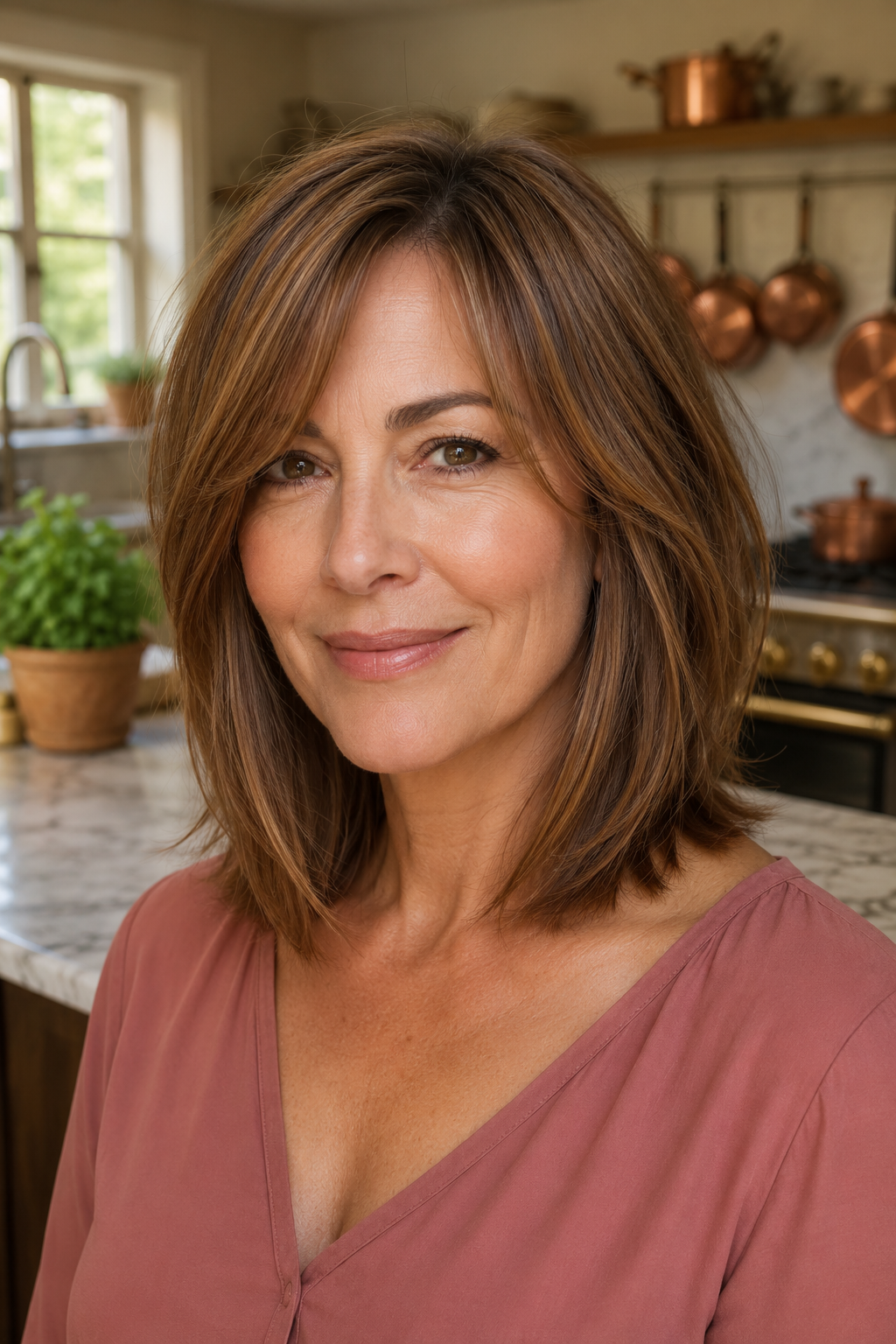
The same length with shorter pieces cut only around the face and the rest left one length.
Framing the face is doing most of the work here, and it leaves the density in the body of the hair intact.
Works especially well if you have been over-layered before and want shape without losing fullness.
Shoulder-Length Shag
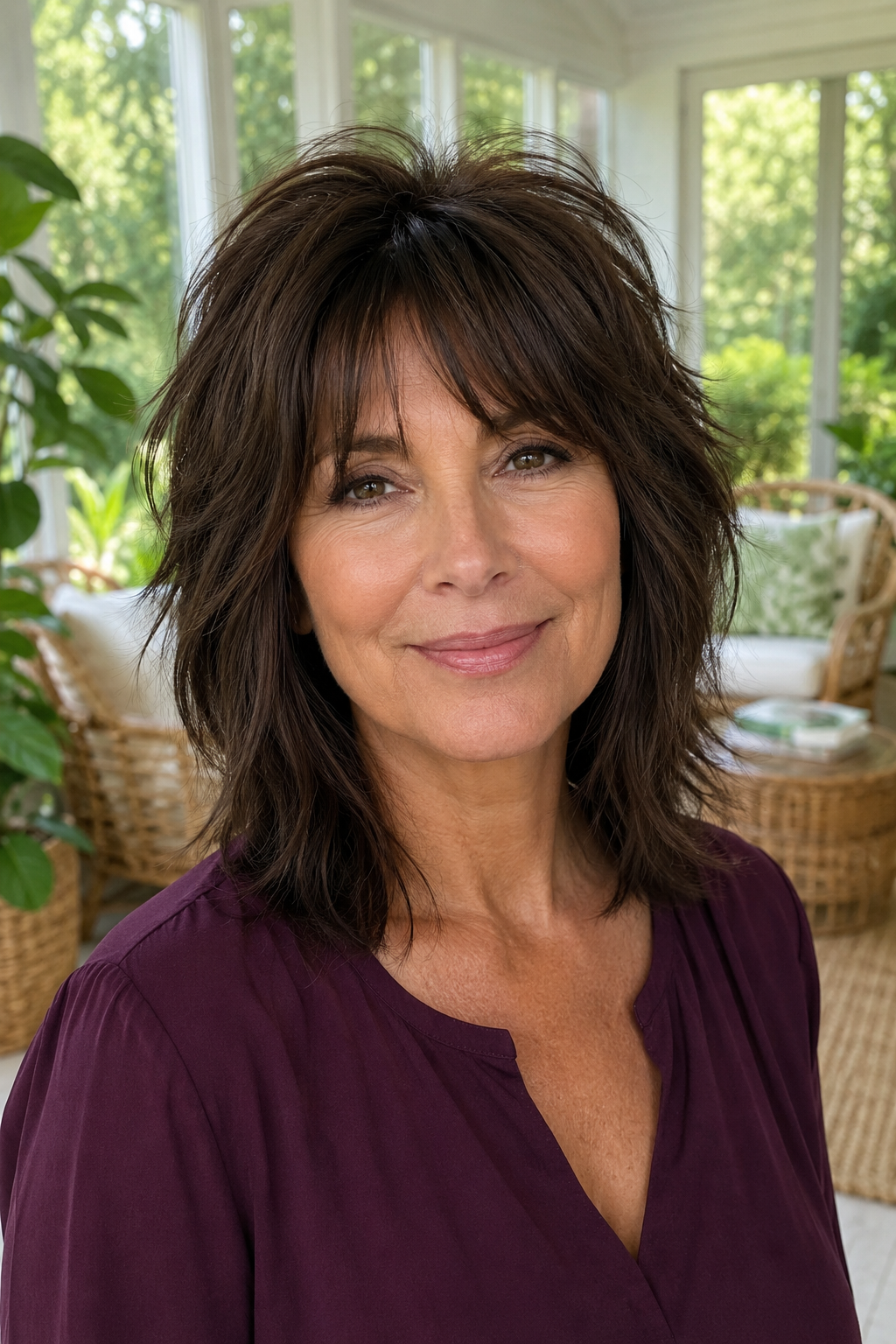
Choppy internal layers through a shoulder-length cut with lift built at the crown.
It gives real movement while keeping length, which matters if you are not ready to go short.
Great for medium to thick hair. Our layered medium hairstyles post explains where the layers should start.
Curly Lob
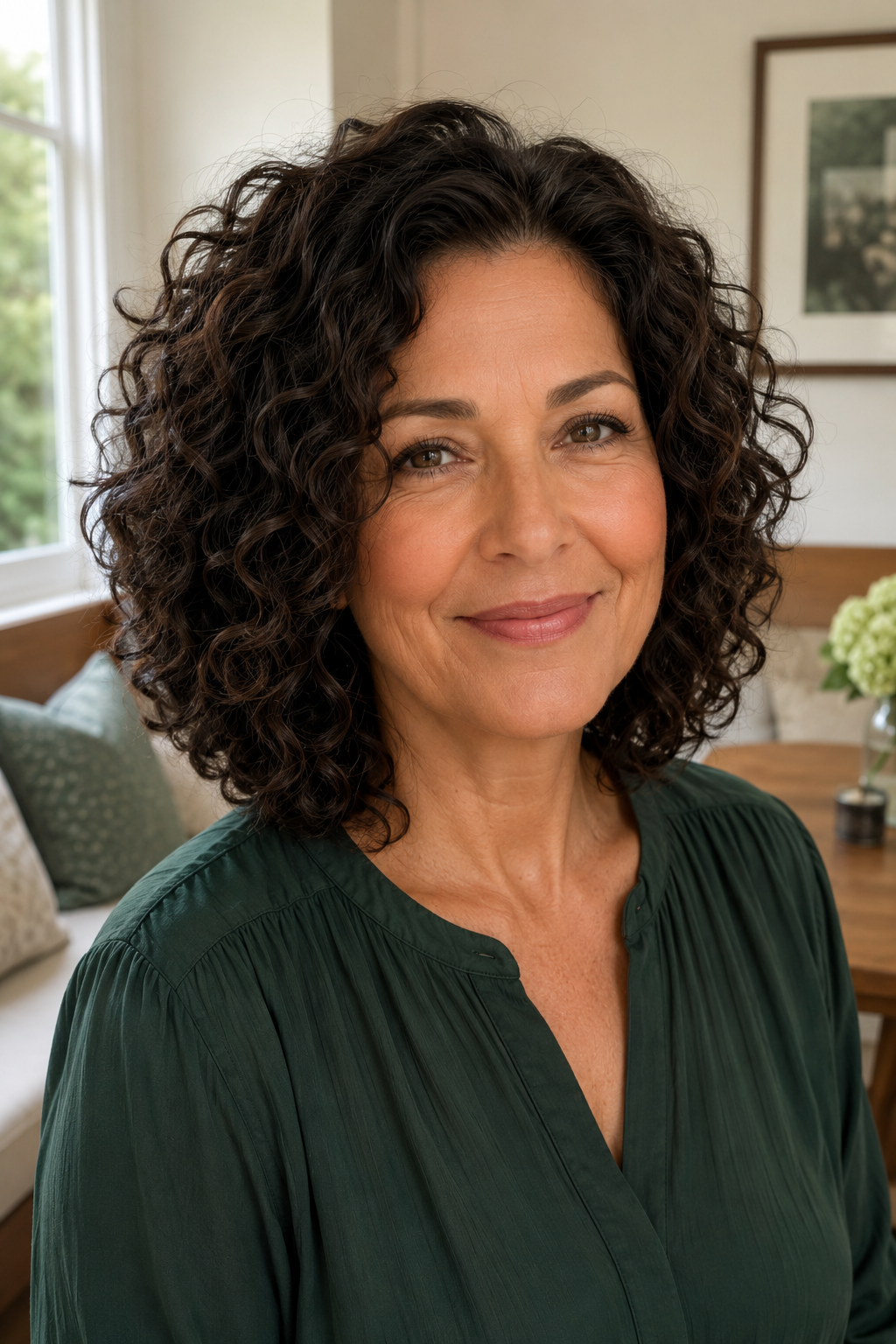
A collarbone cut with the mid-lengths layered so curls can form without the weight stretching them out.
Curly hair often coarsens with age, which actually makes this easier to wear than it was before.
Perfect for natural curl. Our curly medium hairstyles post covers the cutting method that keeps the pattern intact.
Long Layers
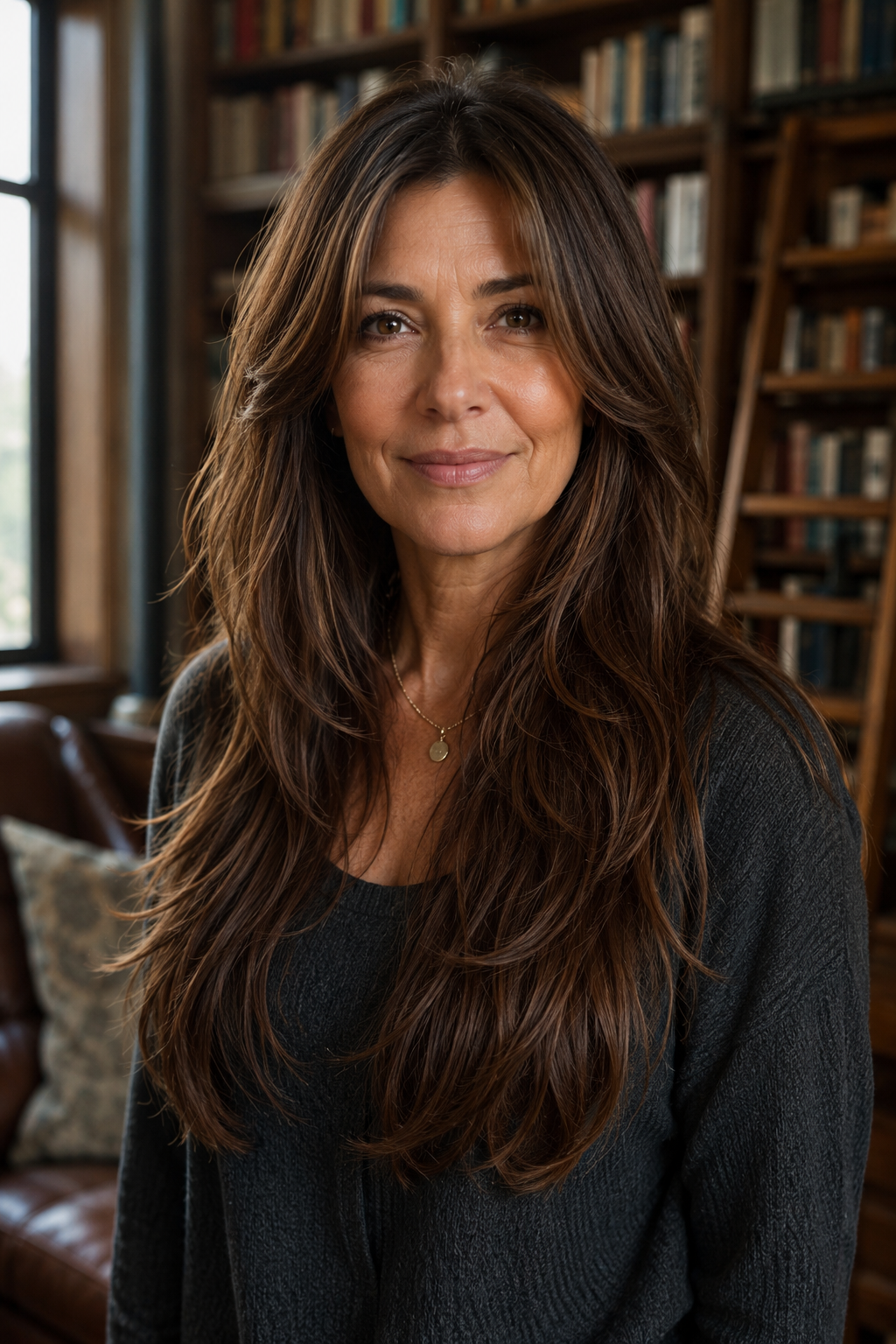
Length kept below the shoulders with layers cut through so the hair does not hang in one heavy sheet.
Long hair without layers pulls the face downward. Layers put the movement back and keep it looking full rather than flat.
Suits anyone happy with their length who wants a change short of cutting it. Regular trims matter more here than at any other length.
Long Hair With Crown Layers
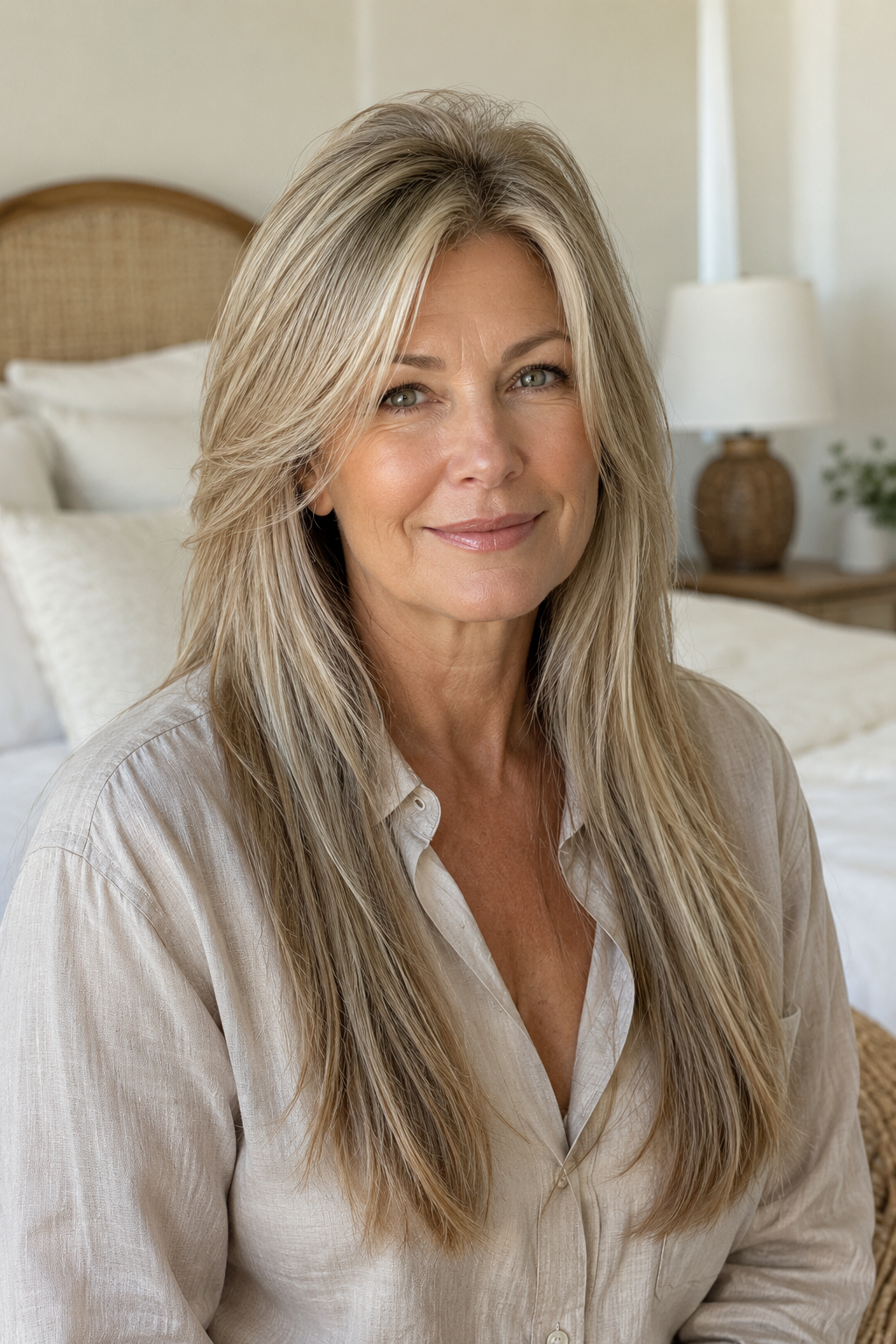
Short layers cut only at the crown while the length stays untouched.
The weight of long hair is exactly what flattens the top. Removing a little at the crown releases it without losing an inch anywhere else.
Great if you want to keep your length and have simply lost volume up top. It is the smallest change on this list with the biggest visible effect.
Long Soft Waves
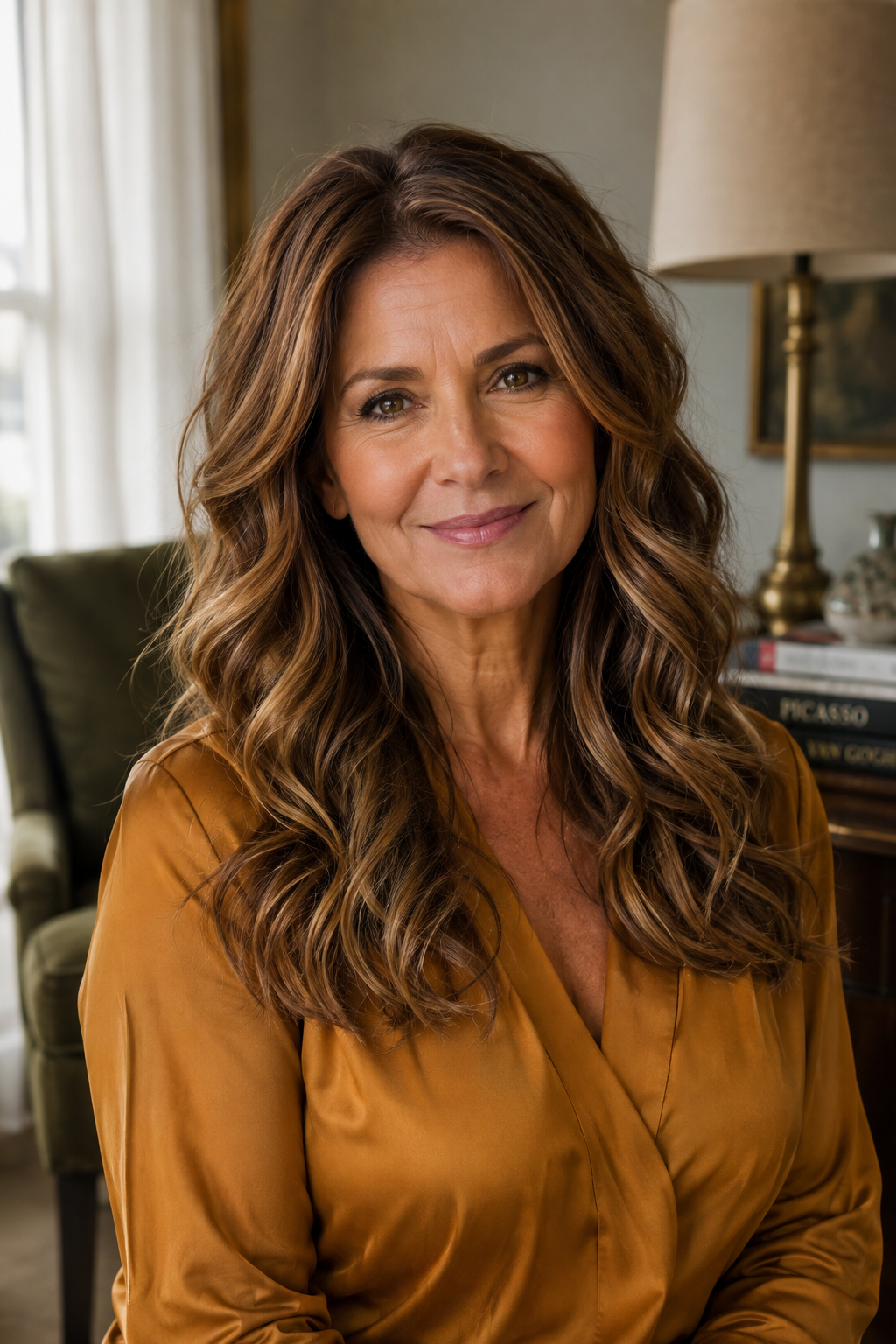
Length worn with a loose wave through it, set with a large barrel or rollers.
Movement through long hair keeps it from reading heavy, and waves add width at the sides where the face benefits.
Perfect for anyone who wants their length to look deliberate rather than simply uncut. Rollers hold better than a wand and take less effort than most people expect.
Long Locs
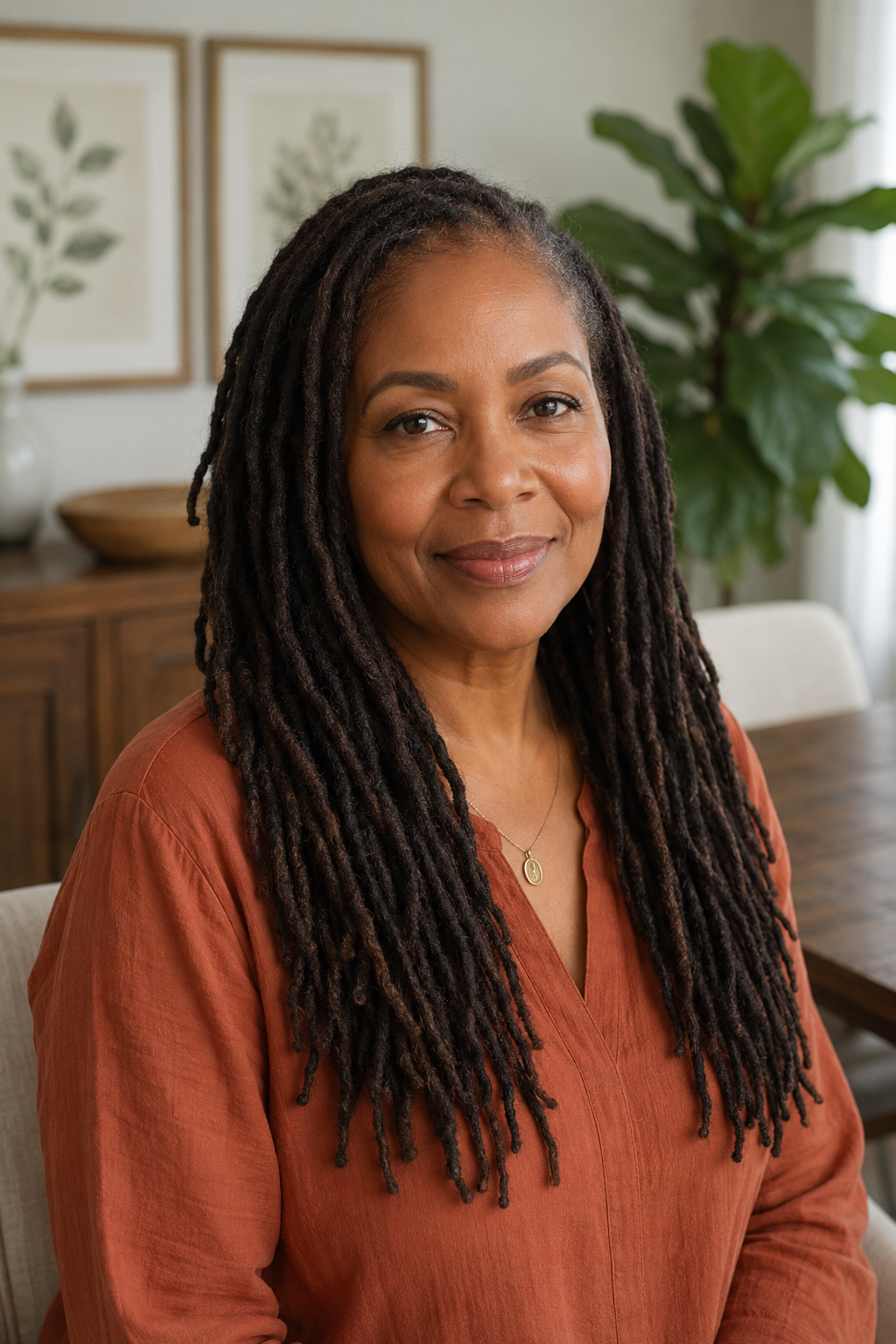
Locs worn at length, which continue to suit at any age and demand almost no daily styling.
They also handle changing texture better than most options, since the locs themselves hold the shape regardless of what the hair does.
Great for anyone already loc'd or considering it. Our short locs styles post covers the shorter end if you are weighing lengths.
Side-Swept Bangs
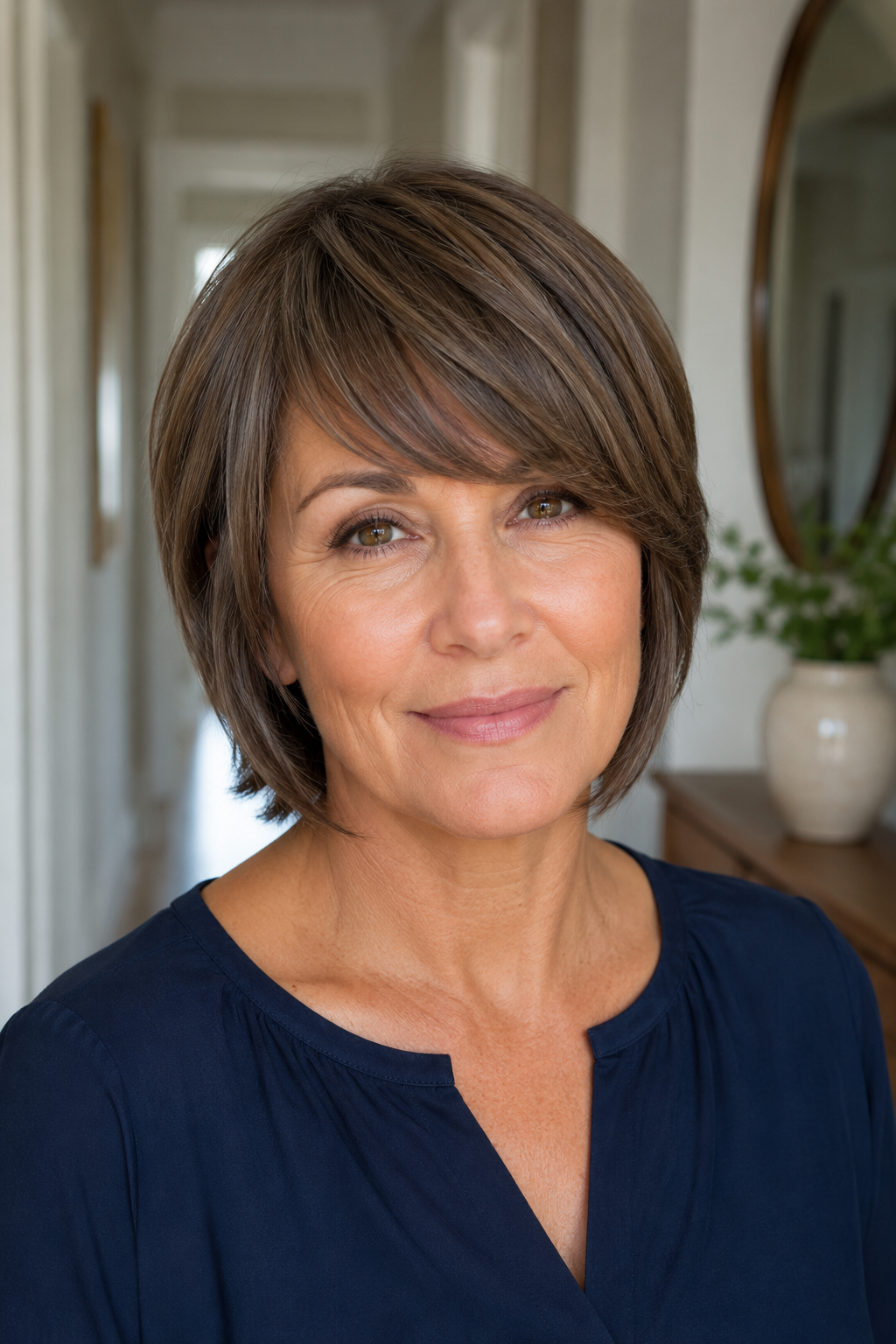
Bangs cut on an angle and worn across the forehead to one side.
Stylists recommend side bangs over blunt ones at this stage because the diagonal line looks lighter and softer against the face.
Suits square and strong jawlines. They also cover more forehead than a curtain fringe, which some people want and some do not.
Wispy Bangs
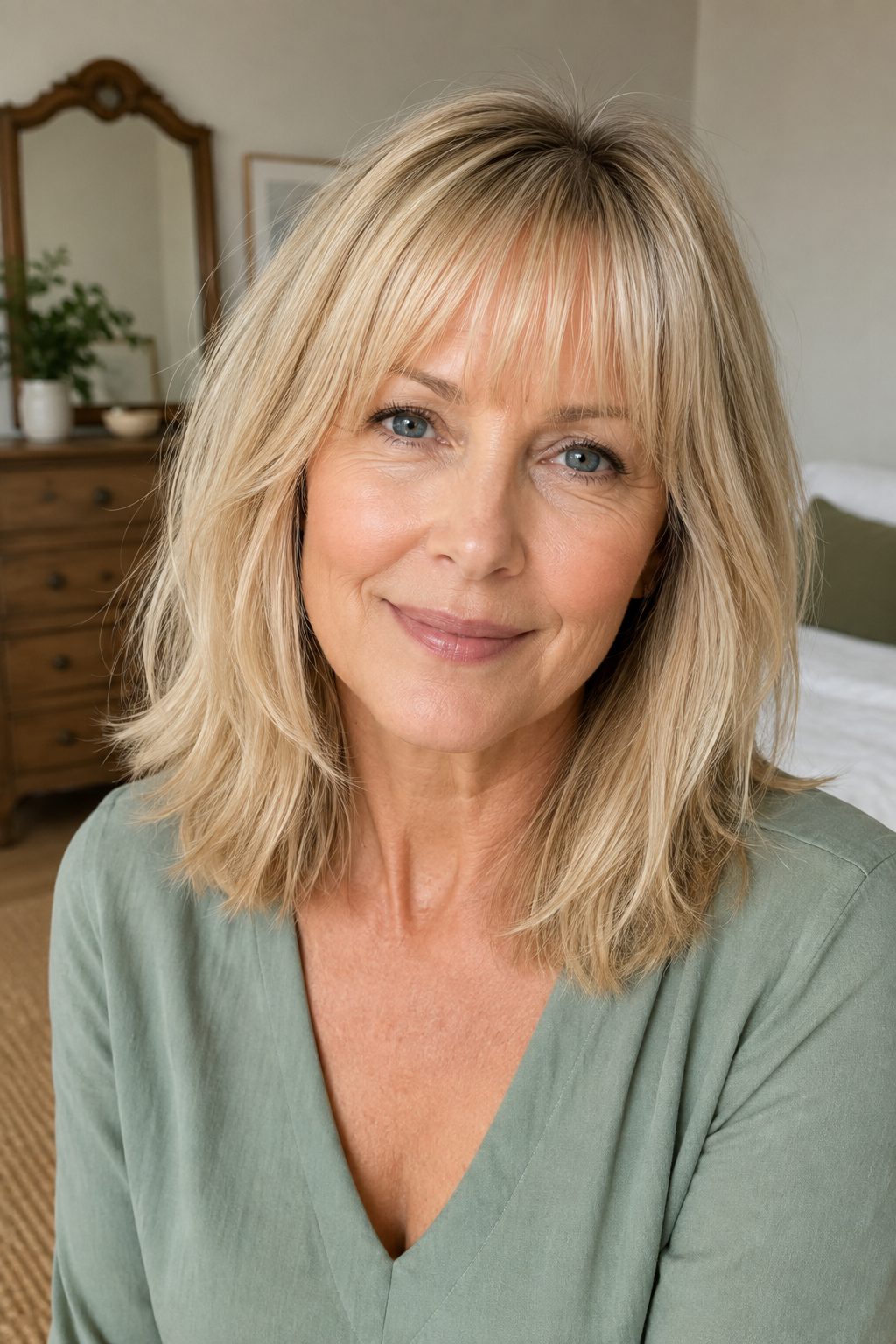
Thin, see-through bangs cut light enough that the forehead shows through.
They are the lowest commitment fringe available and they take almost no hair from the rest of the cut.
Works especially well on fine hair. They grow into face-framing pieces naturally, so there is no stage where you are stuck pinning them back.
A Cut Shaped for Thick Hair
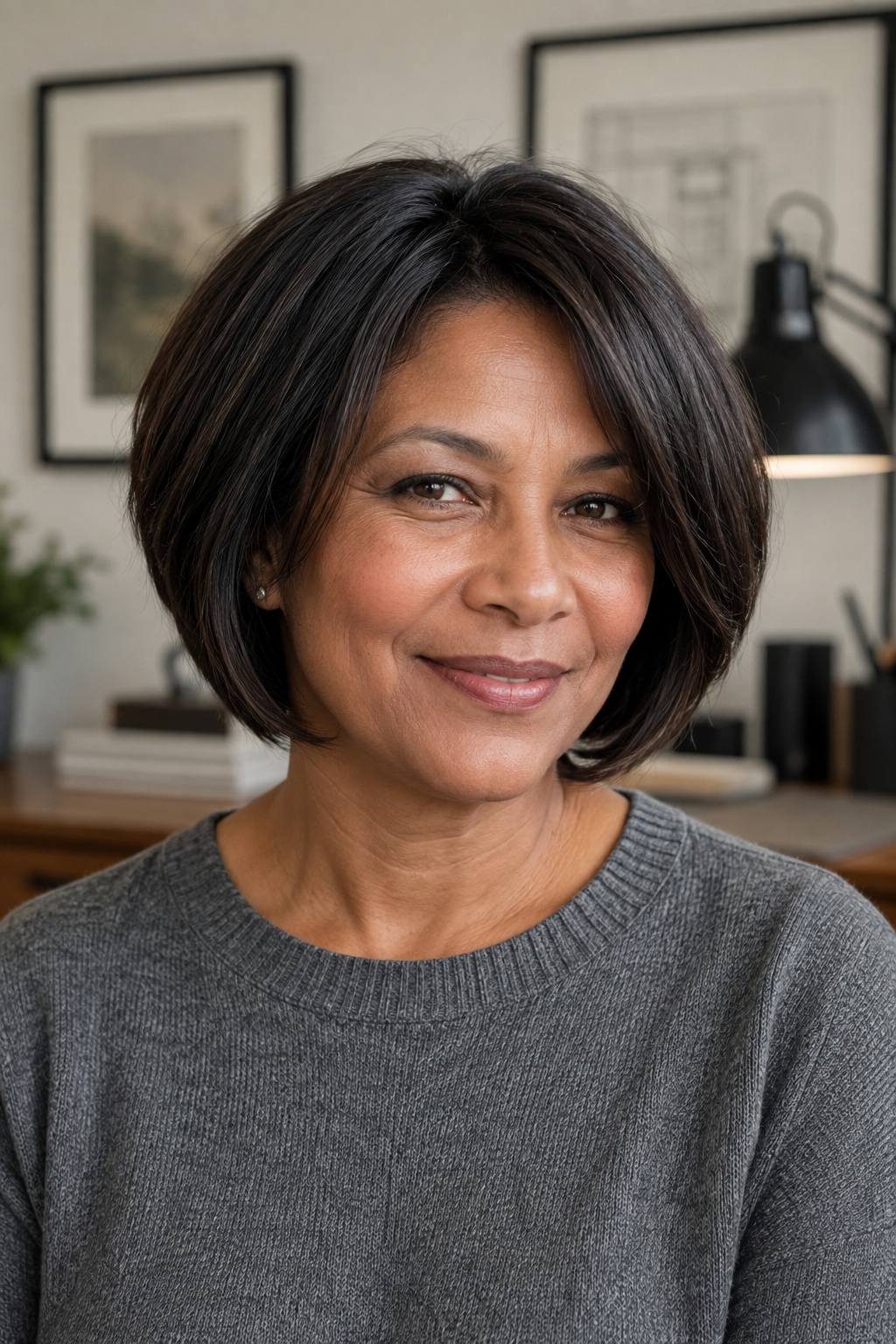
Layering aimed at removing bulk rather than adding volume, particularly through the sides and back.
Thick hair often becomes coarser rather than thinner with age, and the risk is width rather than flatness.
Great if your hair puffs out at the sides. Ask specifically for weight removal, since asking for layers alone can add volume you did not want.
A Cut Shaped for Fine Hair
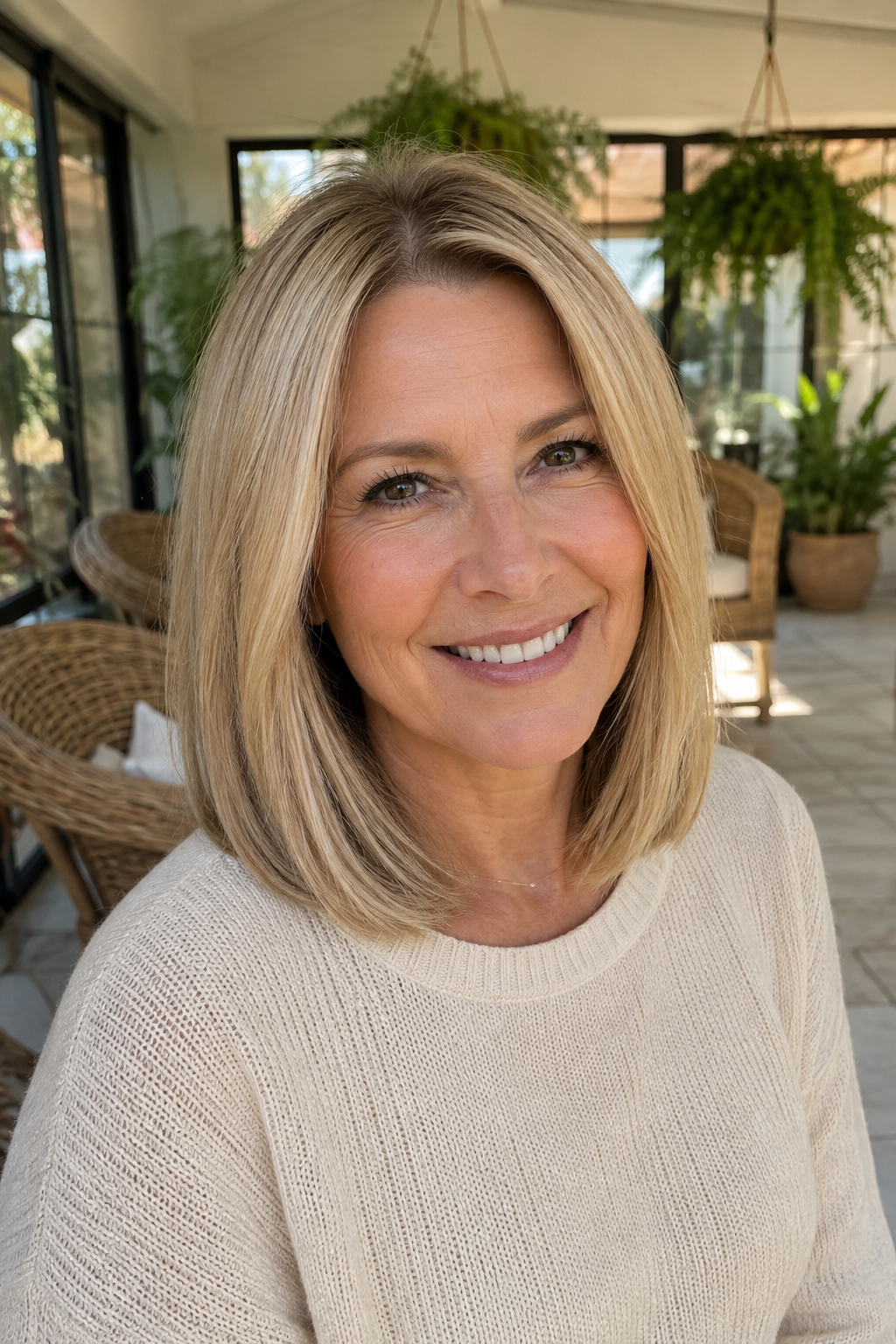
A solid line at the bottom with layers kept minimal and long.
Over-layering is the most common mistake on fine hair and it leaves the ends looking wispy rather than soft.
Perfect if your last cut made your hair look thinner. Our shoulder-length haircuts for thin hair over 50 post covers this in full.
A Cut Shaped for Curly Hair
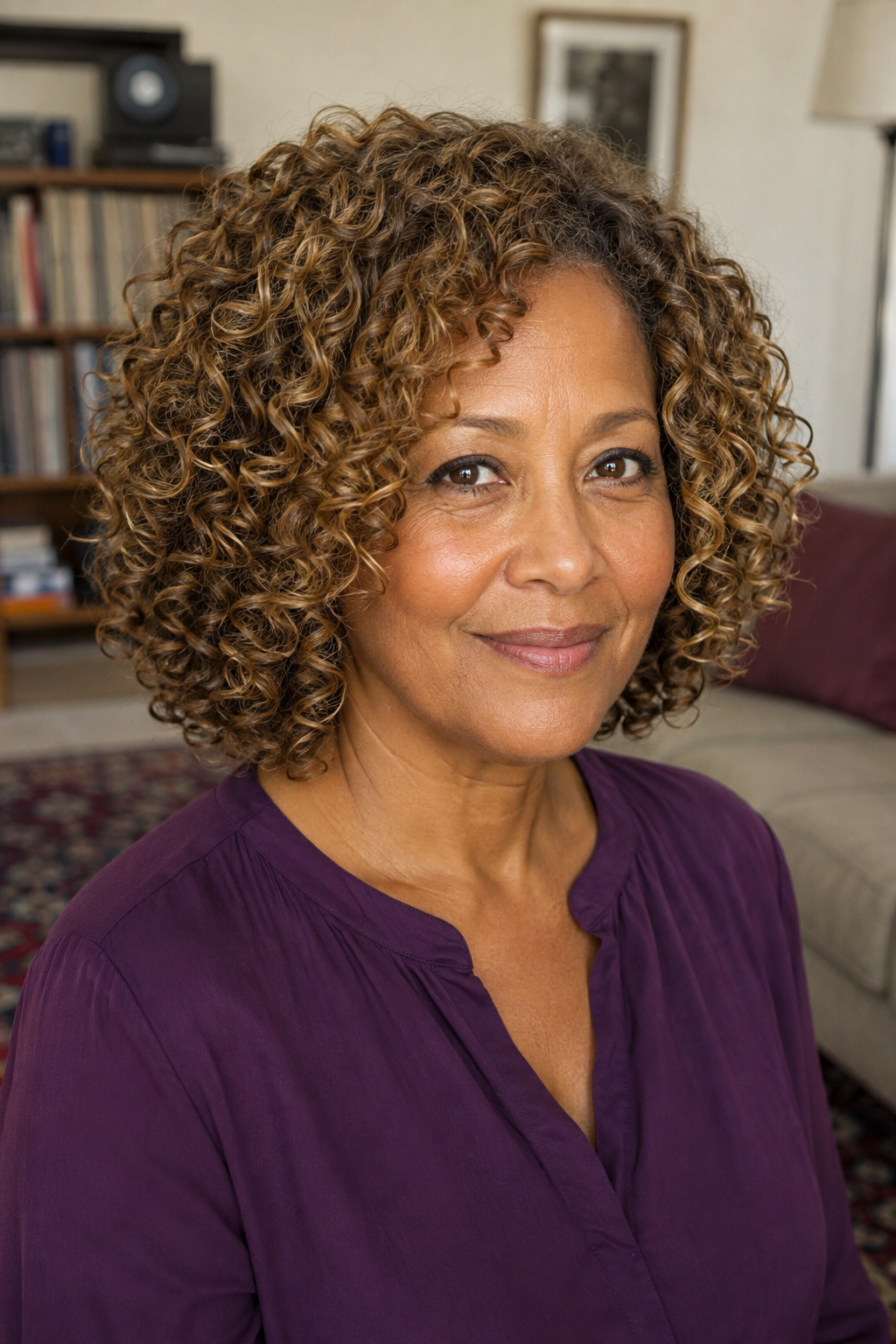
Layers cut on dry hair, curl by curl, so nothing shrinks up shorter than intended.
Wet cutting on curls produces surprises, and the surprises get worse the more texture you have.
Suits anyone with natural curl. Book with someone who specialises in it. The appointment costs more and takes longer, and it is the difference between a cut that works and one that does not.
A Cut Shaped for Silver Hair
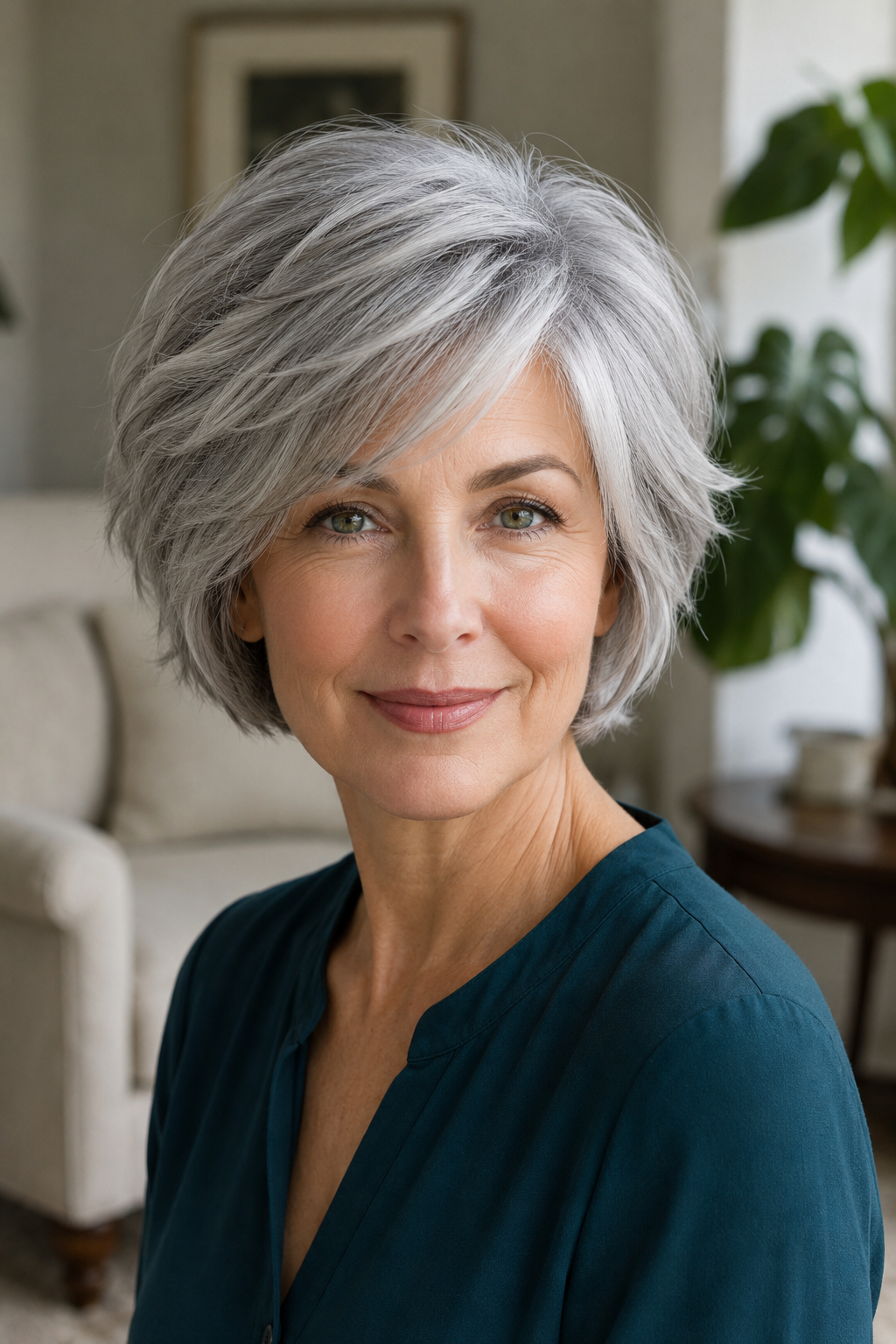
Texture and layering built in deliberately, since grey hair reflects light differently and can look flat when cut in one solid shape.
Silver needs movement to show depth, which is why shags and layered bobs suit it better than blunt cuts.
Great for anyone fully grey or growing it out. Our grey blending highlights post covers the transition if you are partway through.
A Cut That Grows Out Well
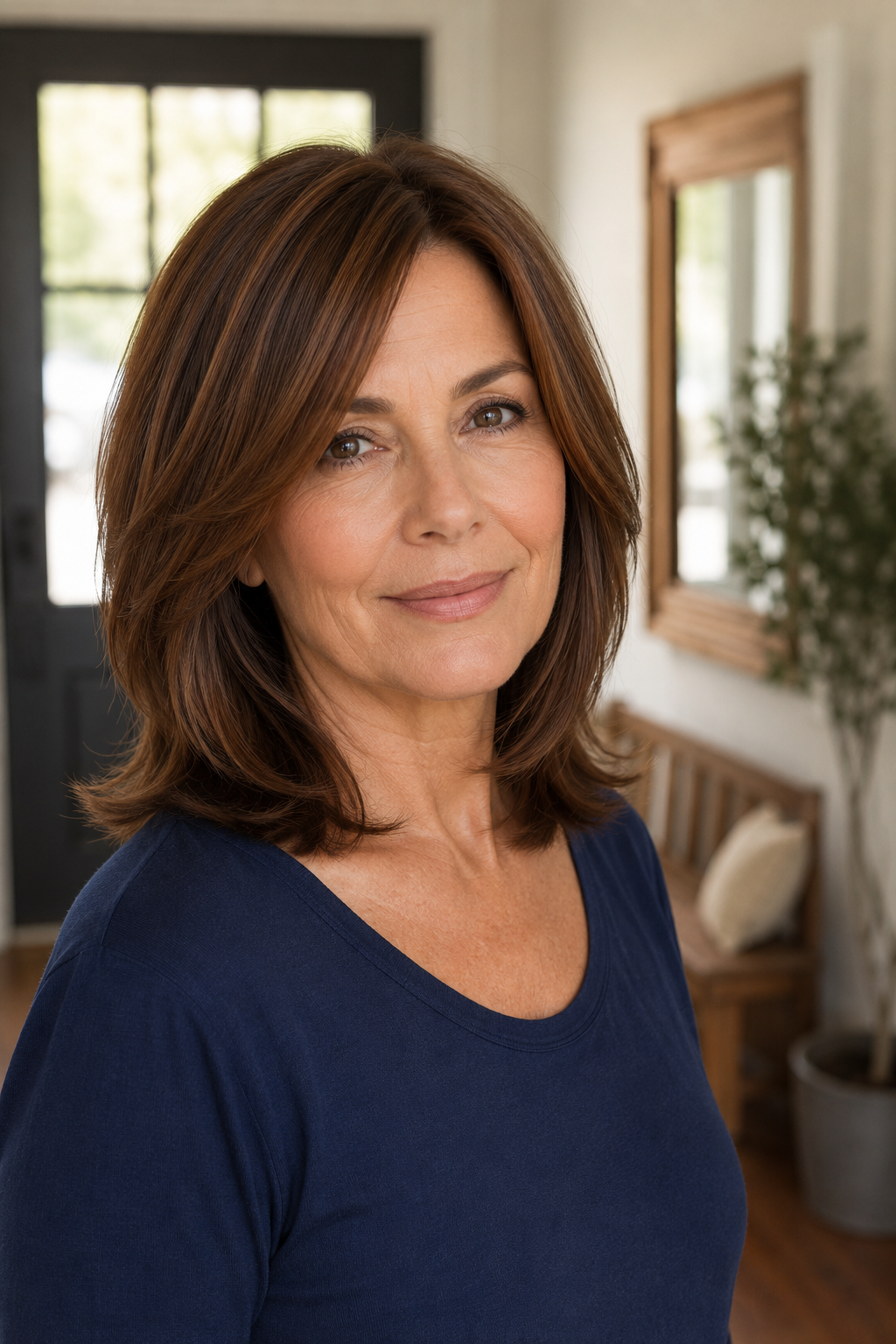
Shapes with soft edges and long layers, which lose their structure gradually rather than all at once.
Blunt cuts and short crops show growth within weeks. Softer shapes hold up for two or three months.
Perfect if you would rather not be in a salon every month. Ask your stylist directly how the cut will look at eight weeks. A good one will tell you honestly.


Comments
No Comments