
22 Lob Hairstyles for Fine Hair That Fake Real Fullness
Fine hair and the lob get recommended together for one reason: the length sits at the point where fine strands still hold a shape without going stringy at the ends. Get it wrong and you end up with see-through tips and a cut that hangs flat. The fix is counterintuitive, because it means keeping weight at the bottom rather than layering it away. Everything below is built around that, from the cuts that fake density to the color that deepens it and the finishing that lifts the roots.
Jump to:
- Blunt Lob
- Blunt Lob With Internal Thinning
- Center-Part Lob
- Side-Part Lob
- Inward-Beveled Lob
- Textured Lob With Interior Layers
- Asymmetrical Lob
- A-Line Lob
- Choppy Perimeter Lob
- Shoulder-Grazing Lob
- Lob With Wispy Bangs
- Lob With Side-Swept Bangs
- Lob With Curtain Bangs
- Sleek Straight Lob
- Soft Wavy Lob
- Tousled Air-Dried Lob
- Blunt Lob With a Deep Side Part
- Money Piece Lob
- Balayage Lob
- Dark Roots With Lighter Ends
- Auburn Gloss Lob
- Lob for Fine Hair Over 50
Blunt Lob
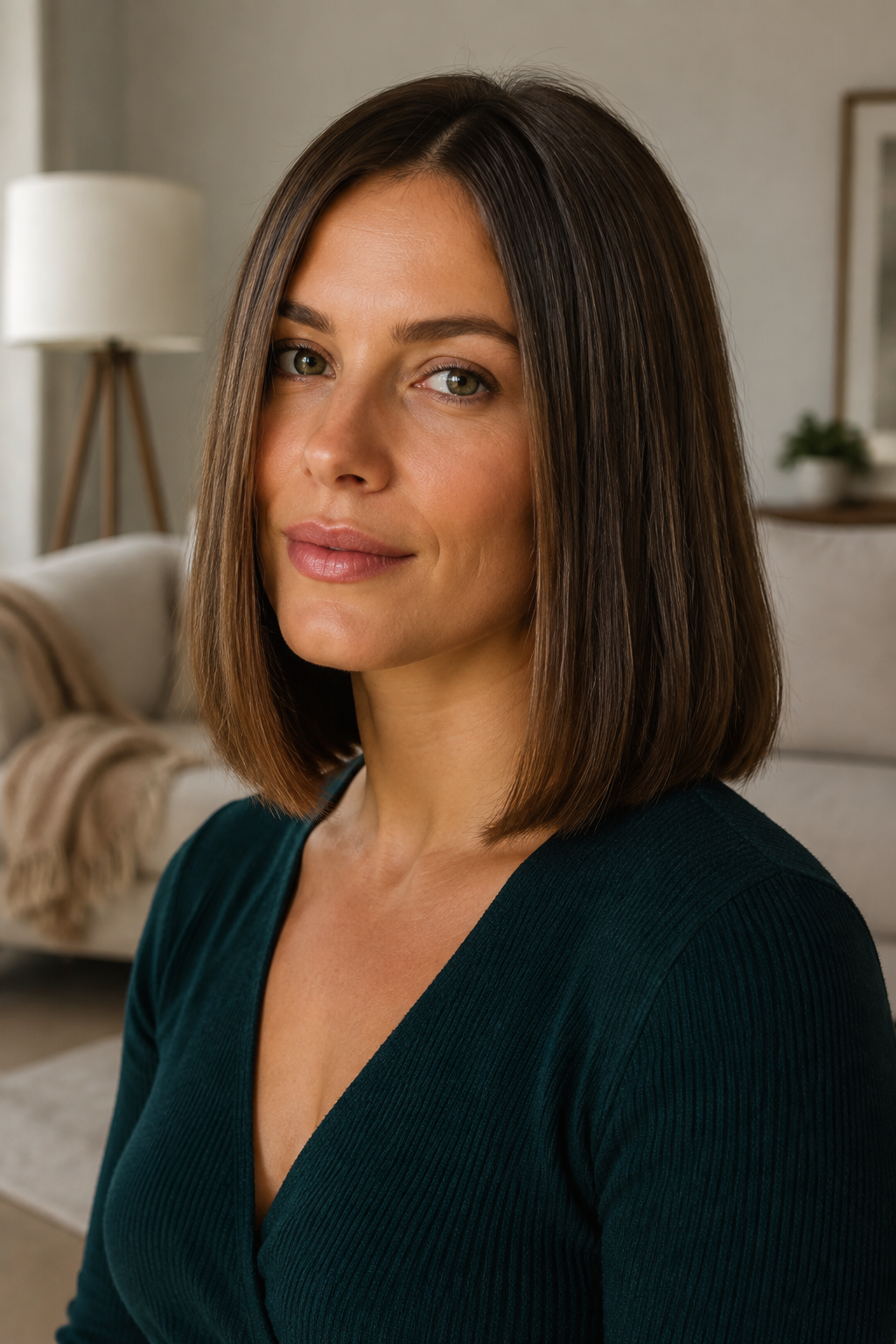
Every strand cut to the same length at the collarbone, forming one clean edge with no taper anywhere.
Fine hair reads its thickness at the perimeter, so a solid bottom line is the single most effective way to look denser. Celebrity stylists keep naming it the go-to for exactly this, since the sharp even edge fakes fullness that layering strips away.
Blunt Lob With Internal Thinning
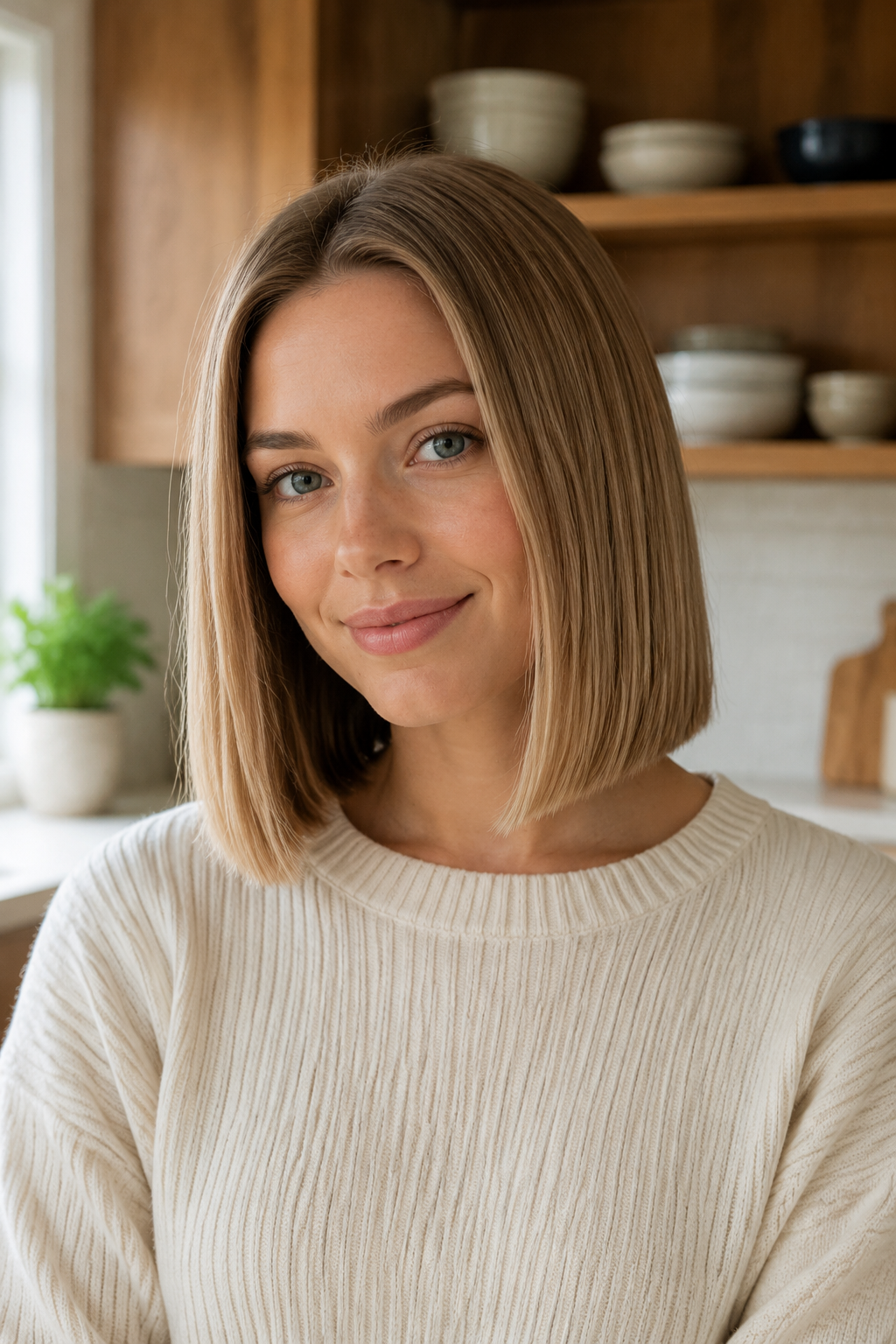
Here is the detail most people miss. You can keep a blunt edge and still remove bulk, as long as the thinning happens underneath rather than on the surface.
Your stylist takes weight from below, which preserves the solid outline while stopping the cut sitting heavy. Ask for it by name, because a stylist working on autopilot will reach for surface layers instead and undo the whole point.
Center-Part Lob
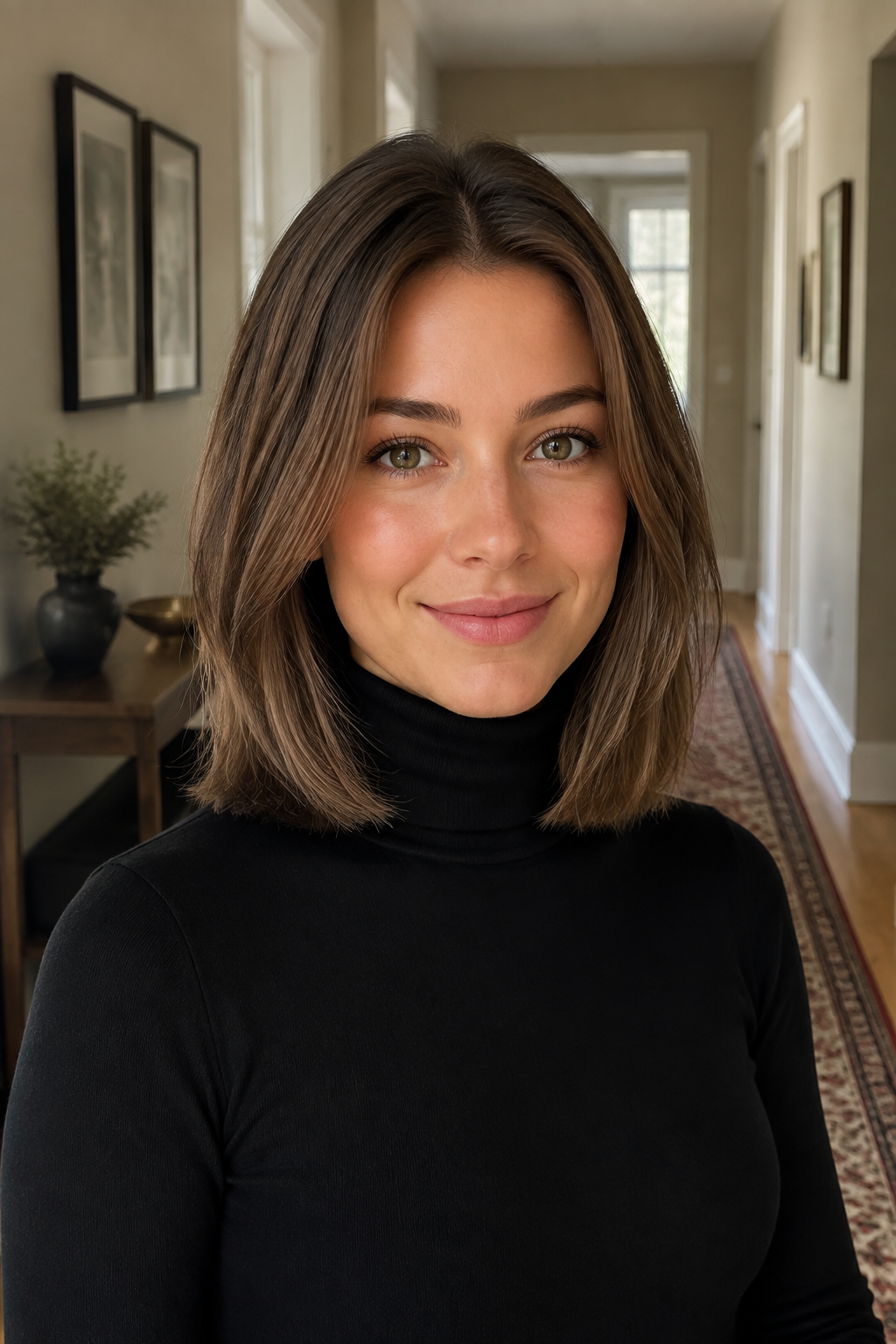
Splitting the hair evenly down the middle does something specific for fine texture: it distributes the weight equally on both sides, so there is maximum coverage everywhere and no thin patch showing through.
A center part demands a precise, even cut and a fair amount of confidence, since it exposes both sides of the face at once. Oval faces carry it most easily. Round faces sometimes find it widening, so a soft off-center version is the safer bet there.
Side-Part Lob
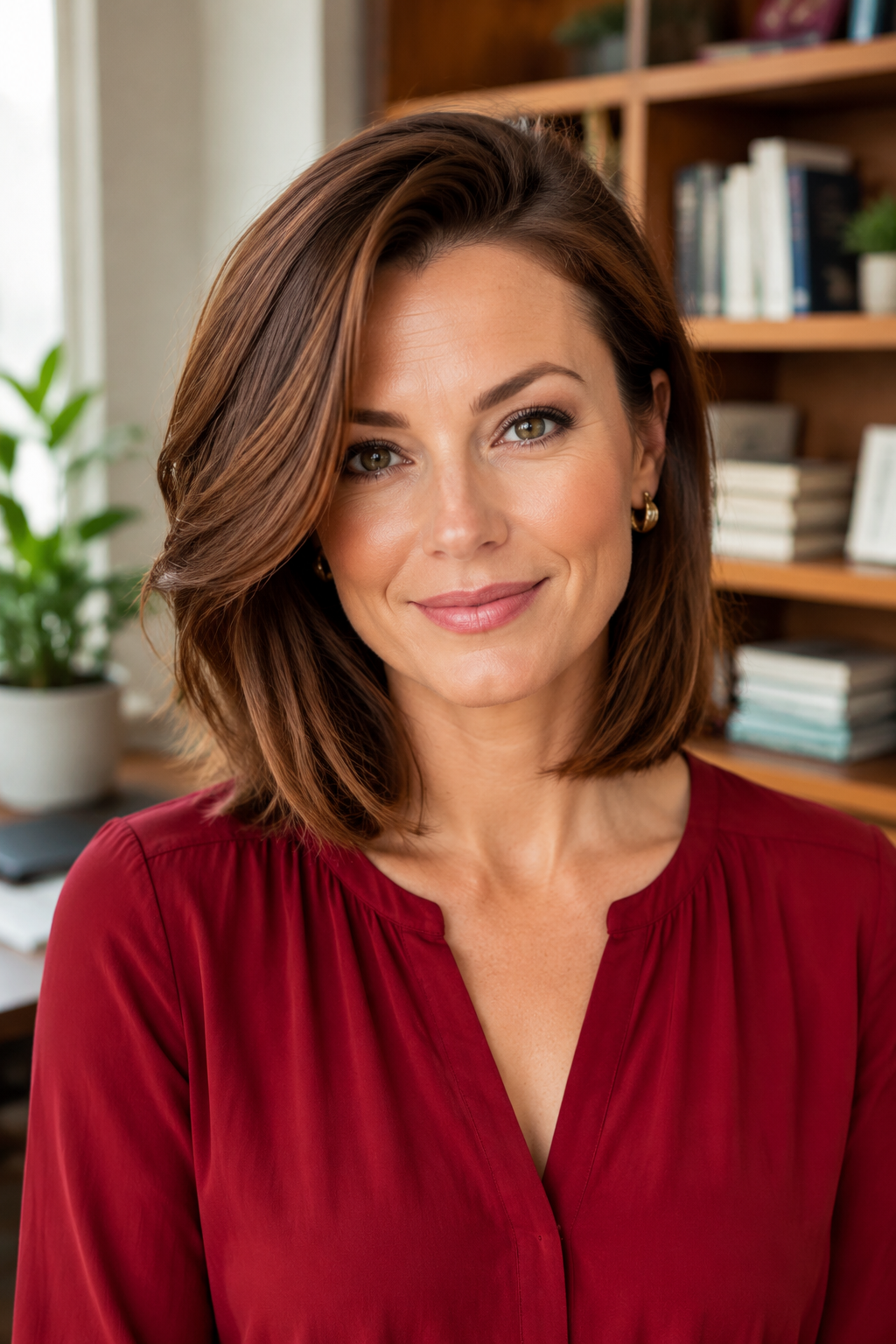
Shifting the part well to one side piles extra hair onto the heavier side and lifts it right at the root.
That lift is free volume, no product needed. It also creates a diagonal sweep across the crown that softens the face. Ask for gentle internal layering so the hair falls into the part instead of collapsing flat against your head by mid-morning.
Inward-Beveled Lob
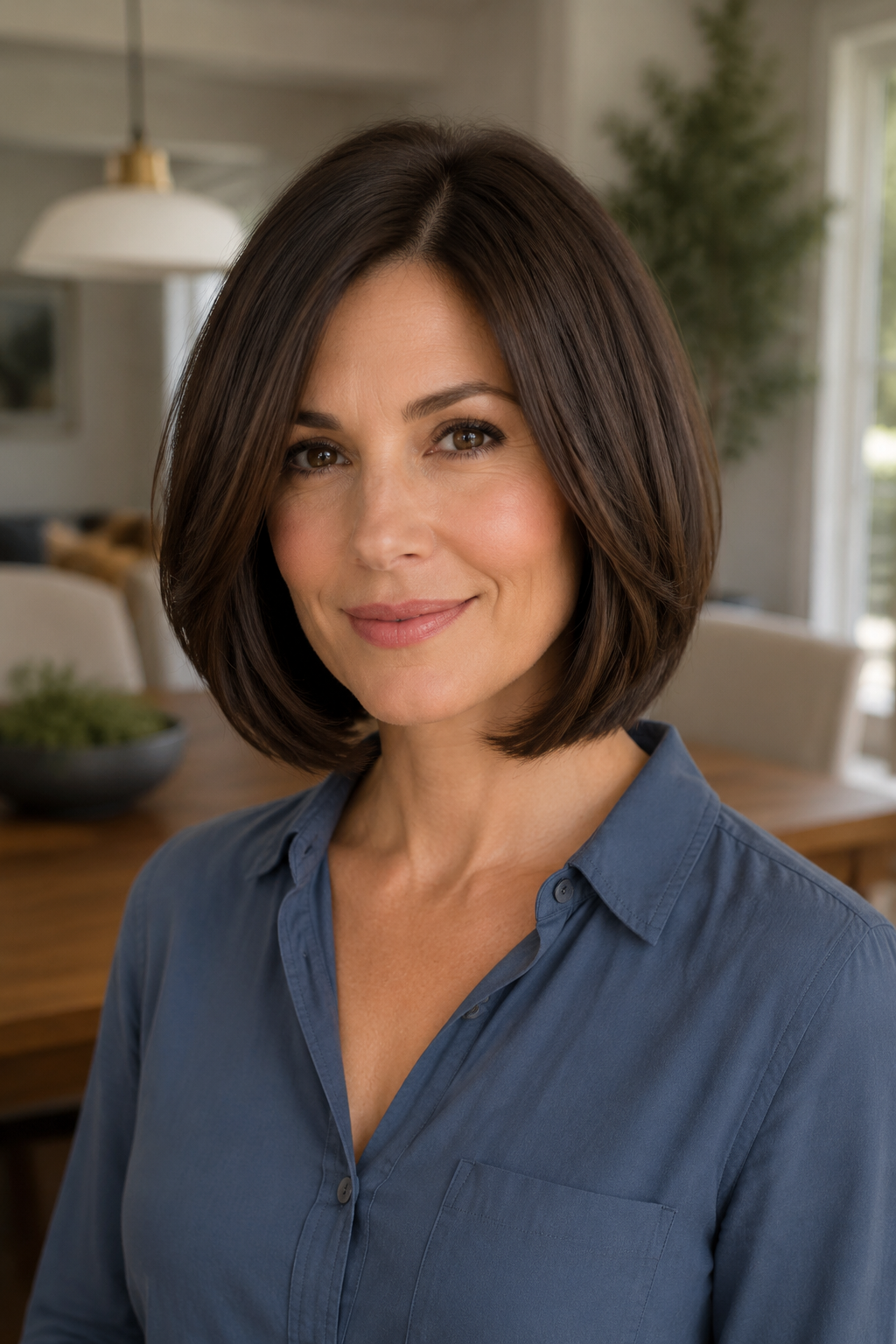
A round brush turns just the last inch or two under during the blowout, so the ends curve toward the jaw rather than hanging straight past it.
The inward curl gives the perimeter a rounded, structured finish that frames the face. It suits straight to wavy hair and works especially well for professional settings where you want something polished without committing to daily curling. Expect ten to fifteen minutes with the brush to get it sitting right.
Textured Lob With Interior Layers
Layers cut only inside the hair, never on the surface, so the outline stays clean while a little movement gets built in.
This is the version for anyone who finds a fully blunt lob too solid. The interior layers add swing without the stringy ends that surface layering causes on fine hair. Keep them long and subtle, since too many will thin the ends out and defeat the purpose entirely.
Asymmetrical Lob
One side cut longer than the other, with the difference obvious rather than subtle.
Pinterest searches for asymmetrical cuts have climbed sharply over the past year, and the reason they suit fine hair is that the uneven line adds dimension a symmetrical cut cannot. It draws the eye across the face and disguises flatness. Wear the part toward the shorter side to push the effect further.
A-Line Lob
Shorter at the back with the length increasing steadily toward the front, so the two sides sit noticeably longer than the nape.
The stacked shorter back builds body where fine hair collapses against the head, while the longer front frames the jaw. It is a good compromise for anyone who wants shape but finds a fully blunt cut too flat. Keep the angle gentle, since a steep slope removes too much from the back.
Choppy Perimeter Lob
The bottom edge broken up into slightly uneven, textured pieces rather than cut to a razor-straight line.
The result reads relaxed instead of severe, which some people prefer over a sharp blunt edge. On fine hair the roughness has to stay minimal, though. Too much and you lose the density the perimeter is meant to provide, so this is a light touch rather than a heavy chop.
Shoulder-Grazing Lob
Length landing just above the shoulders, which is where fine hair holds shape best before it starts to look thin.
Any longer and gravity drags the strands flat. This length keeps enough weight to sit properly while staying short enough to look full. It also grows out gracefully, so you can stretch the time between salon visits without the shape falling apart.
Lob With Wispy Bangs
A thin, see-through fringe paired with the collarbone length, adding interest at the front without taking a heavy section from hair that cannot spare it.
Because so little goes into the fringe, it frames the face and draws the eye to your features without flattening anything. It is a low-commitment addition too, growing into face-framing pieces within weeks if you decide against it.
Lob With Side-Swept Bangs
Bangs cut on an angle and worn across the forehead to one side, longest at the outer edge.
The sweep lifts the roots at the front and adds asymmetry, which helps disguise any thinning near the hairline. It suits a side part naturally and grows out more easily than a straight-across fringe. A quick pass with a round brush keeps it curved and smooth.
Lob With Curtain Bangs
A center-parted fringe sweeping toward the temples, sitting somewhere between the cheekbones and jaw.
The soft frame it creates suits most face shapes and pairs well with the length. On fine hair the bangs should be point-cut lightly so they do not sit as a flat block. Our medium hairstyles with curtain bangs post covers where the length should land.
Sleek Straight Lob
The whole cut ironed smooth to a glossy, swingy finish with a crisp center or side part.
Straight fine hair reflects light along its length, and that shine reads as health and density even when the hair is thin. The look is very nineties in the best way, clean and confident. Finish with a lightweight shine mist rather than a heavy serum, which would drag the ends down.
Soft Wavy Lob
Loose waves worked through the length to keep fine hair from falling flat.
Waves add width and body that a straight cut cannot, and stylists suggest waving only a few pieces rather than the whole head, which looks more natural and takes less time. A subdued side part adds height at the same time. Sea salt spray or a light mousse on damp hair sets it without weight.
Tousled Air-Dried Lob
An undone, lived-in finish with a slightly choppy perimeter and internal layers that give the hair natural swing.
This is the good-hair-day texture you see on street-style editors during fashion month, effortless but engineered. Work a volumizing foam into the roots, rough-dry upside down, then break the pieces apart with your fingers. Skip the brush entirely, since smoothing it out flattens the volume you just built.
Blunt Lob With a Deep Side Part
The solid blunt cut worn with the part pushed dramatically to one side.
You get the density of the blunt edge and the root lift of the deep part in one, which is a lot of fullness from a very simple combination. It flatters a softer jawline and adds instant brightness around the eyes. Set the part while damp so it holds through the day.
Money Piece Lob
Two brightened sections at the temples framing the face, with the rest of the hair left darker.
The lighter pieces spring forward and land against your cheekbones, drawing the eye to the front of the cut. Only a small amount of hair gets processed, so damage stays low. It reads fresh without the upkeep of all-over color and toning it back is easy if you change your mind.
Balayage Lob
Color hand-painted through the length to add depth, which does more for fine hair than any single flat shade.
The variation in tone creates shadow, and shadow reads as texture and density. Painting it by hand also means a soft grow-out with no hard regrowth line, so four or five months between appointments is realistic. Our hair color ideas section covers choosing a tone.
Dark Roots With Lighter Ends
Depth kept at the scalp with brightness through the bottom half, blended so no line shows.
Darker roots make the hair look denser exactly where fine hair gives itself away, which is right at the crown. The lighter ends keep it from feeling heavy. It is one of the more effective color tricks for faking fullness, and it grows out softly since the roots are meant to be dark.
Auburn Gloss Lob
A warm auburn or copper gloss over a blunt collarbone cut, adding shine and masking regrowth.
Gloss coats the strand and boosts reflectivity, and on fine hair anything that improves surface shine has an outsized effect on how thick it looks. Red tones fade faster than most shades, so plan on a refresh every few weeks and a color-safe wash routine to hold it.
Lob for Fine Hair Over 50
The same principles applied with softer edges and a fringe to frame the face, which suits changing texture well.
Stylists are calling the lob the cut of 2026 partly because it plays so well with grey and brings lightness around the face without veering messy. It enhances whatever natural texture your hair has developed. Our medium hairstyles for women over 50 post covers the shoulder-length range in more detail.
Comments
No Comments