
22 Stacked Bob Hairstyles for Fine Hair That Build Real Volume
Fine hair collapses first at the back of the head, right where the crown meets the nape, and that is exactly where a stacked bob does its work. Graduated layers pile up at the back to build a rounded, lifted shape, so the fullness lands where you actually lack it. The one thing to know before your appointment: on fine hair the back should be point cut, not razored, since a razor thins delicate ends while point cutting keeps them dense. Everything below is built around getting real lift without sacrificing the density fine hair cannot spare.
Jump to:
- Classic Short Stacked Bob
- Softly Stacked Bob With a Blunt Front
- Stacked A-Line Bob
- Inverted Stacked Bob
- Wedge Bob
- Rounded Stacked Bob
- Chin-Length Stacked Bob
- Cheek-Length Stacked Bob
- Stacked Bob With Side-Swept Fringe
- Stacked Bob With Blunt Bangs
- Asymmetrical Stacked Bob
- Piecey Stacked Bob
- Sliced Stacked Bob
- Textured Stacked Bob With Waves
- Stacked Bob With Over-Directed Temples
- Point-Cut Stacked Bob
- Blonde Balayage Stacked Bob
- Babylights at the Hairline
- Dimensional Highlights on a Stacked Bob
- Warm Brown Stacked Bob With Soft Highlights
- Stacked Bob for Fine Hair Over 50
- Sleek Straight Stacked Bob
Classic Short Stacked Bob
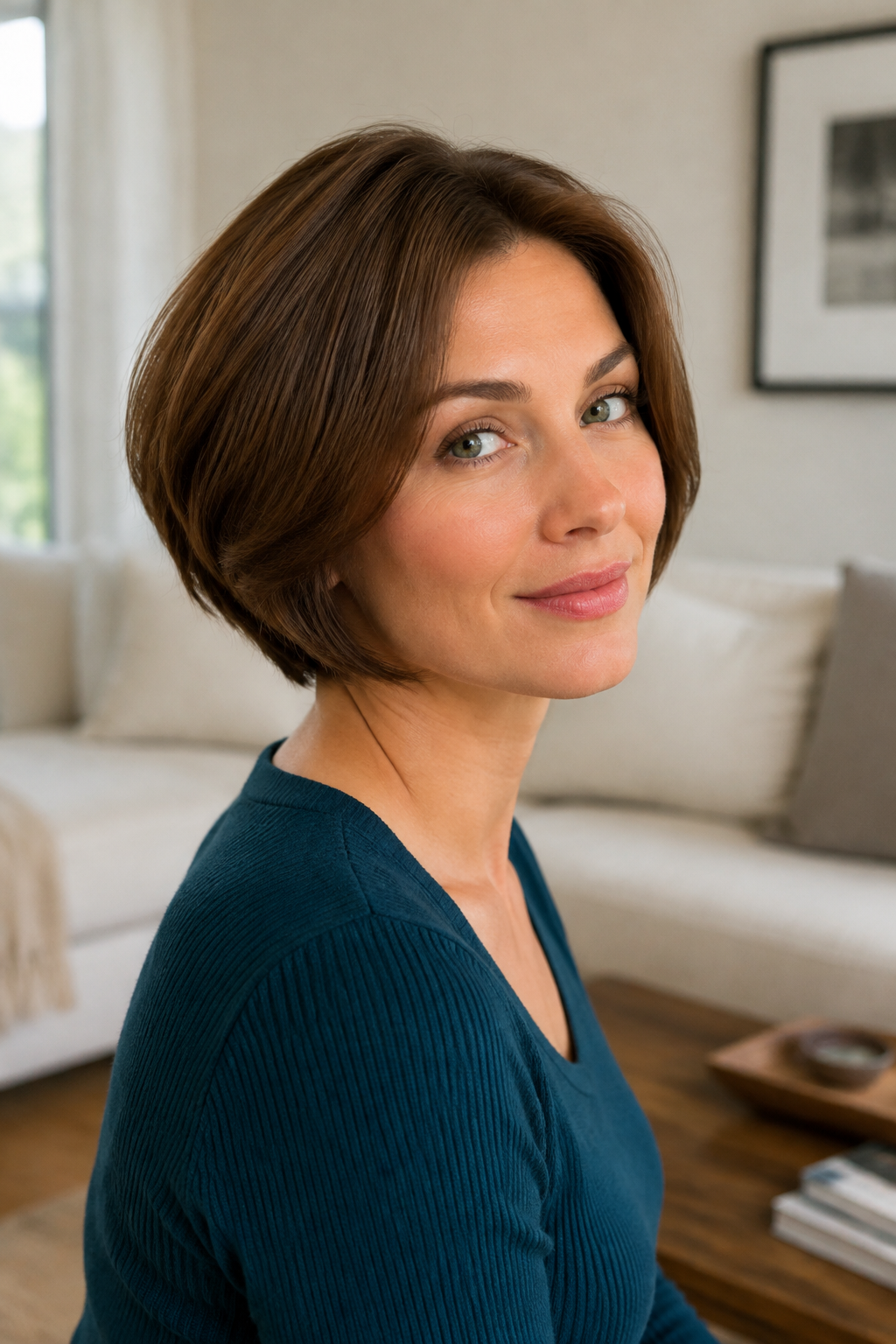
This is the original, and it remains the best answer to a flat crown. Graduated layers at the nape stack on top of each other to build a rounded, full shape at the back of the head.
The lift comes from within the cut rather than from teasing or product, which is why it holds all day.
Ask for soft, blended graduation rather than harsh steps. A walnut-sized amount of volumizing mousse at towel-dried roots makes a noticeable difference before you blow-dry.
Softly Stacked Bob With a Blunt Front

The version celebrity stylists keep naming for fine hair pairs a lifted, graduated back with clean blunt ends at the front.
That combination does two jobs at once. The back builds fullness where hair thins first, while the blunt front perimeter keeps the weight fine hair needs to avoid looking wispy.
Blow-dry with a round brush lifting at the crown, then smooth the front ends with a flat iron for a glossy, controlled finish.
Stacked A-Line Bob
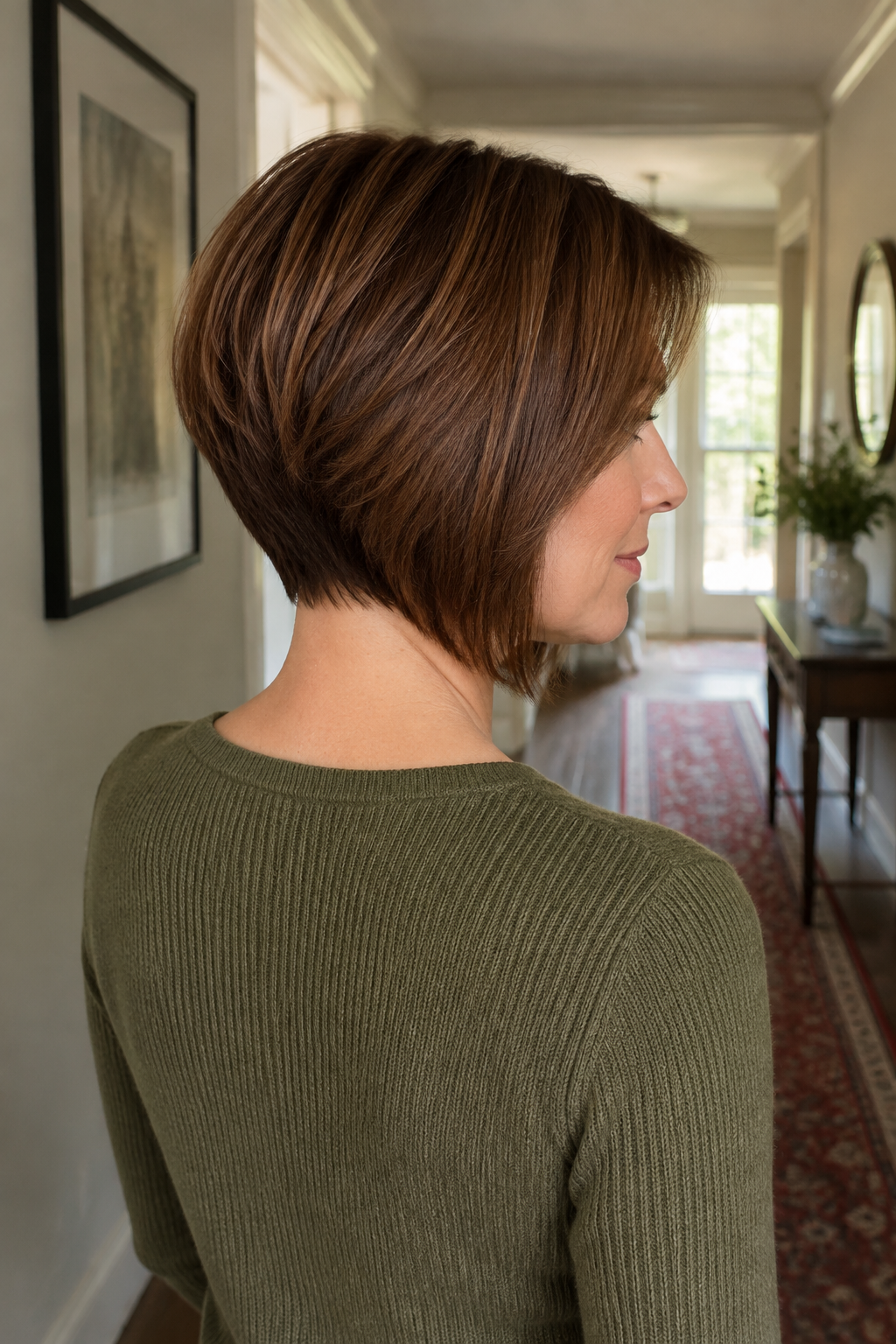
Sharp front corners cut to sit longer than the back give this its distinctive slant, elongating the face while the stacked back rounds out fullness.
It flatters round faces especially, drawing the eye into a longer, more oval line.
The steeper the angle and the shorter the length, the more dramatic the crown height. Keep the front corners clean and get them reshaped every four to five weeks so the line stays crisp.
Inverted Stacked Bob
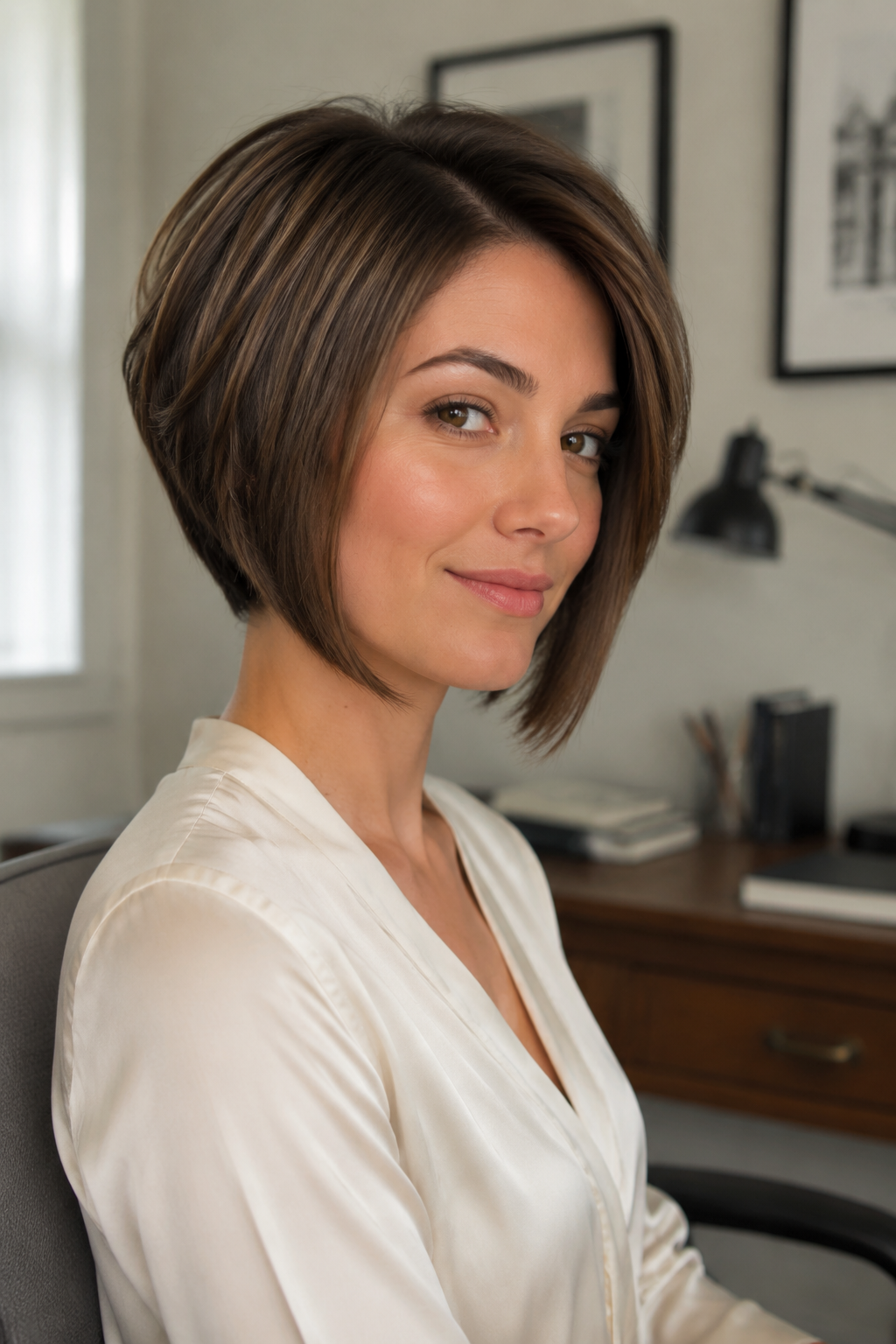
Longer at the front, shorter and stacked at the back, the inverted shape is a fine-hair favorite for a reason. It creates volume that makes thin strands look genuinely thicker.
The graduation at the back does all the heavy lifting, building body where hair collapses, while the longer front frames the face.
This works best on straight to slightly wavy hair where every line shows. On finer hair, ask for a very textured version to give the illusion of more density.
Wedge Bob
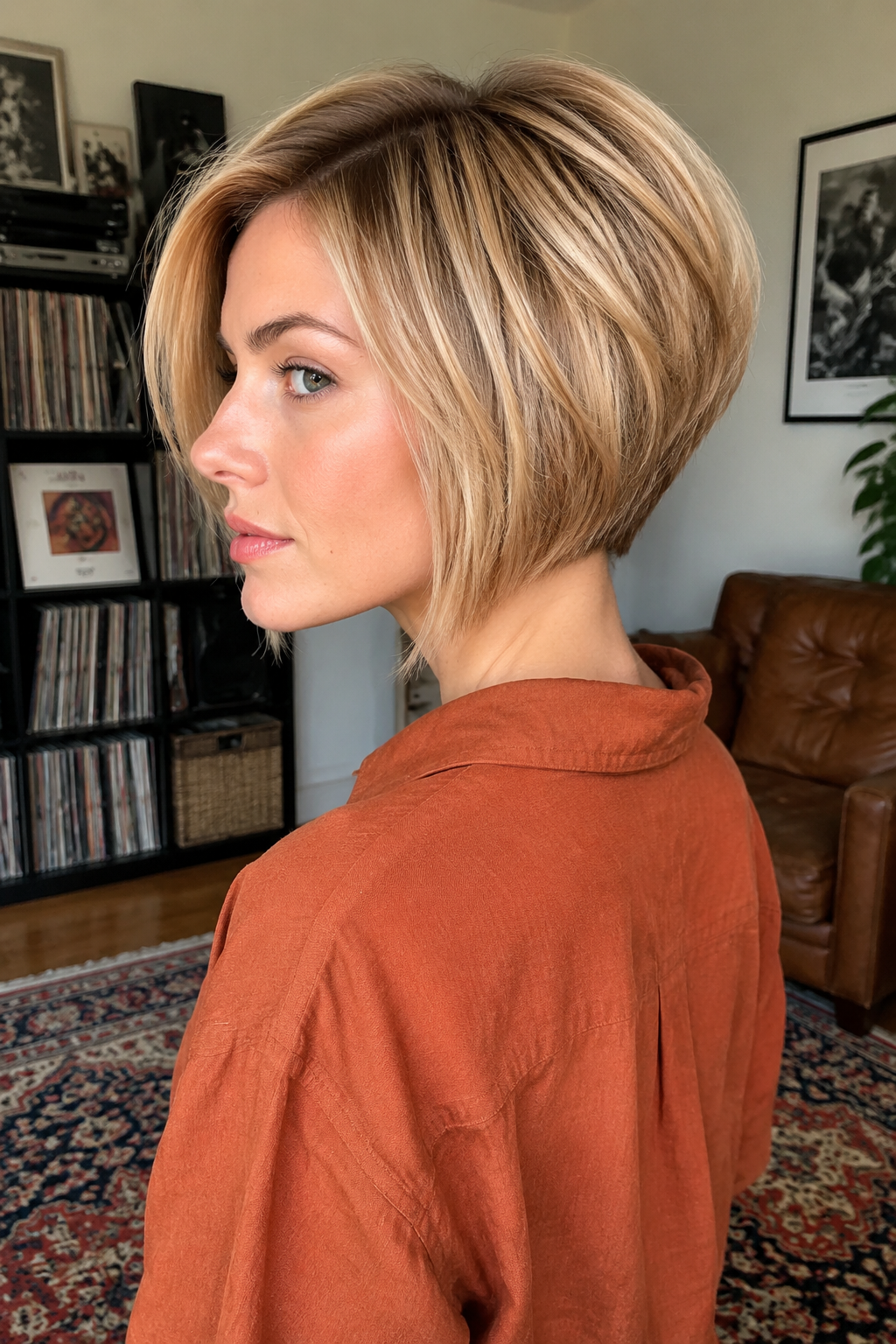
Graduation taken to its boldest, the wedge builds a dramatic triangular profile with layers cut at steep angles that push volume upward.
It is the most volumizing shape here, which makes it a strong pick if your hair is truly flat rather than just fine.
Be aware it is high commitment, needing trims every four to five weeks to hold the sharp geometry. On fine hair the steep angles create serious lift, but the shape softens fast as it grows.
Rounded Stacked Bob

Curved shaping and carefully stacked interior sections give this a soft silhouette that hugs the head, delivering volume without sharp edges or boxy outlines.
Fine hair benefits from the built-in fullness, and the rounded shape reads polished rather than severe.
A quick blow-dry naturally enhances the contour, so styling stays straightforward. It is a good middle ground for anyone who wants volume but finds the wedge too dramatic.
Chin-Length Stacked Bob
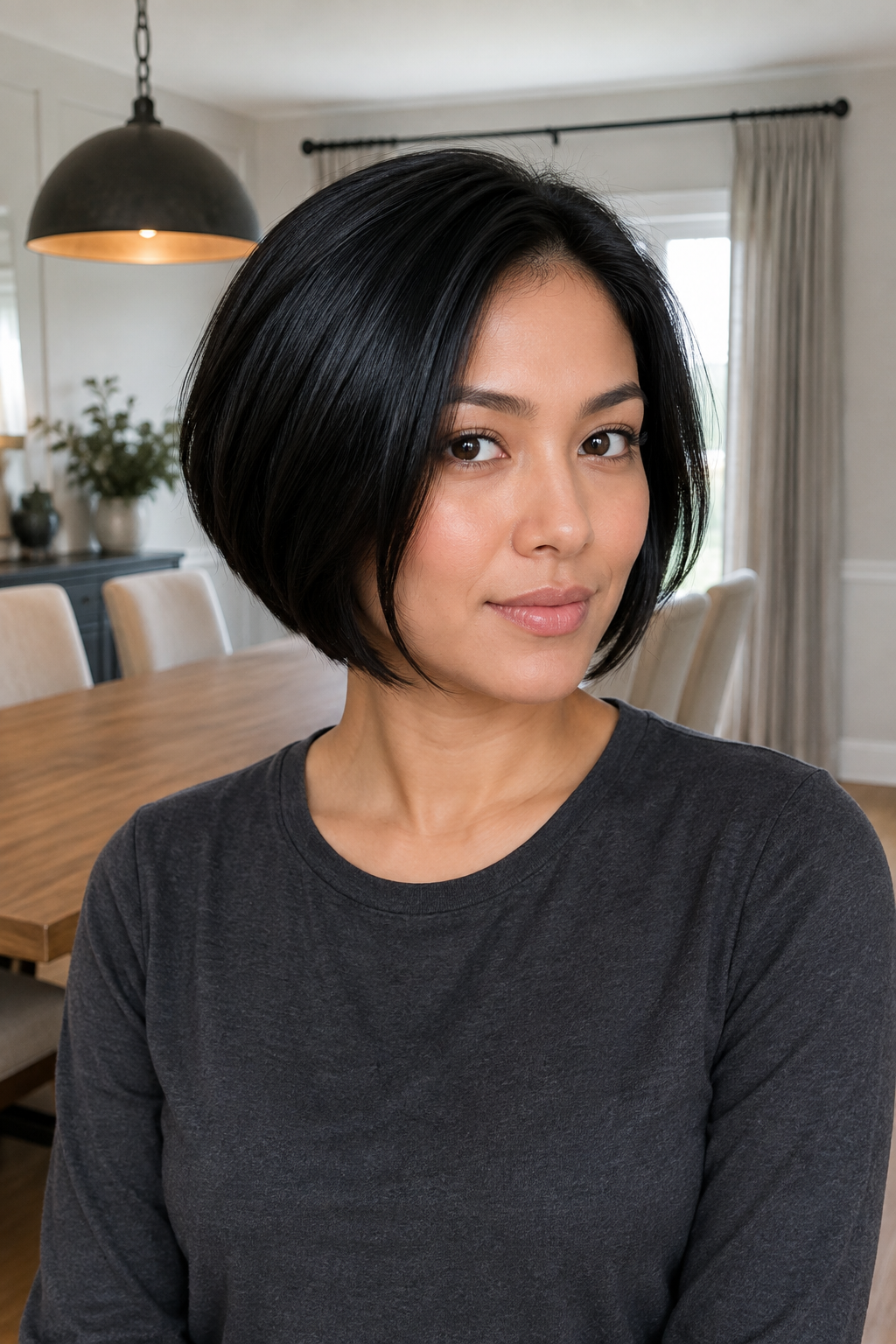
Short layers at the back and longer layers toward the front, cut to graze the jawline, this frames most face shapes beautifully.
The stacking adds volume at the back while the front stays smooth, and the jaw-length cut keeps the whole thing light and easy to wear.
It is surprisingly low maintenance for the shape it delivers. A round brush and blow-dryer are all it takes for a polished finish, with a trim every ten weeks.
Cheek-Length Stacked Bob
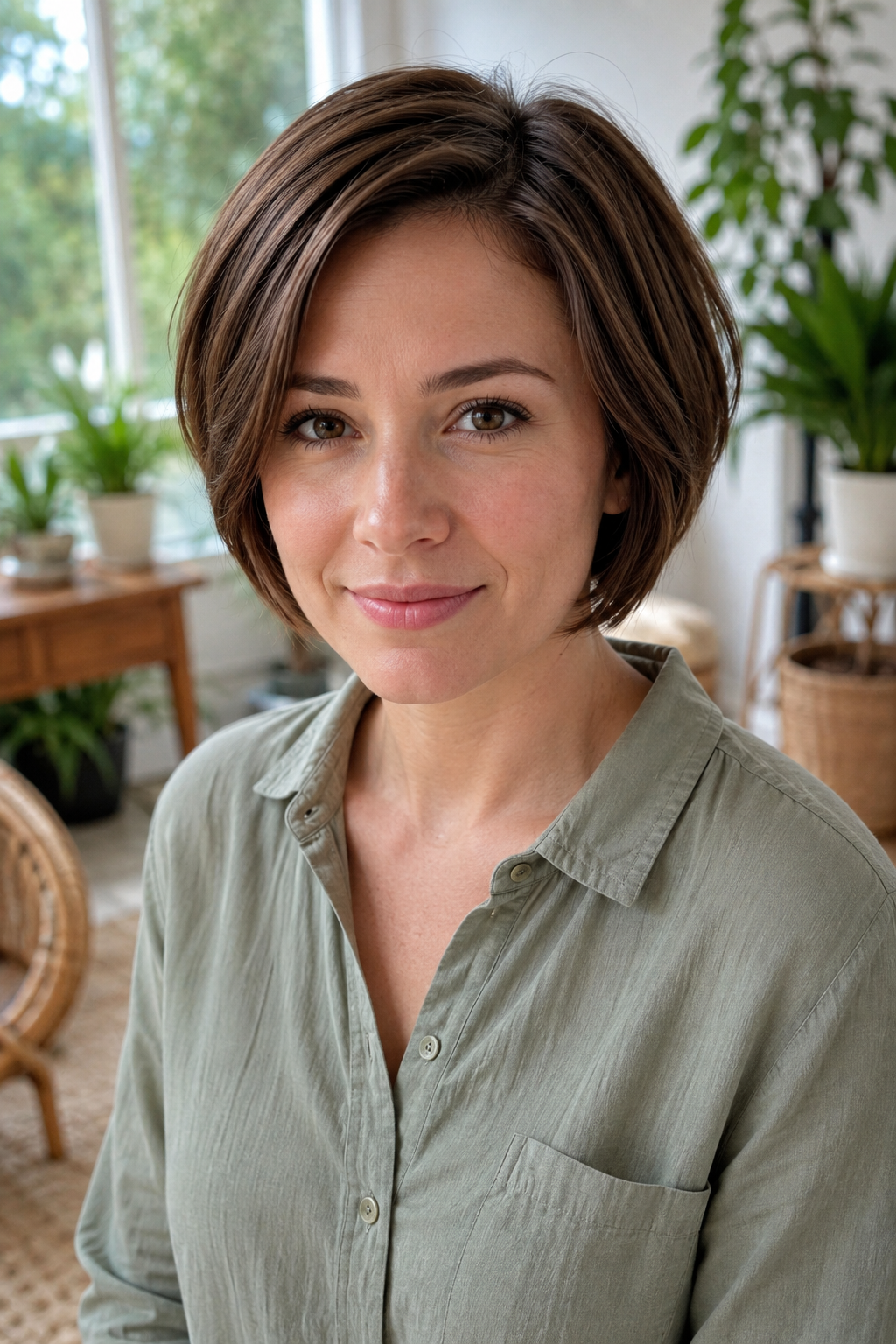
Layers rising as high as the cheekbones at the front give this real drama, with short stacked layers at the back and longer pieces framing the face.
The higher the front layers reach, the more movement and lift the whole cut carries.
It suits fine hair that needs maximum body and reads youthful and fresh. Keep the graduation soft so the shorter front pieces blend rather than look choppy.
Stacked Bob With Side-Swept Fringe
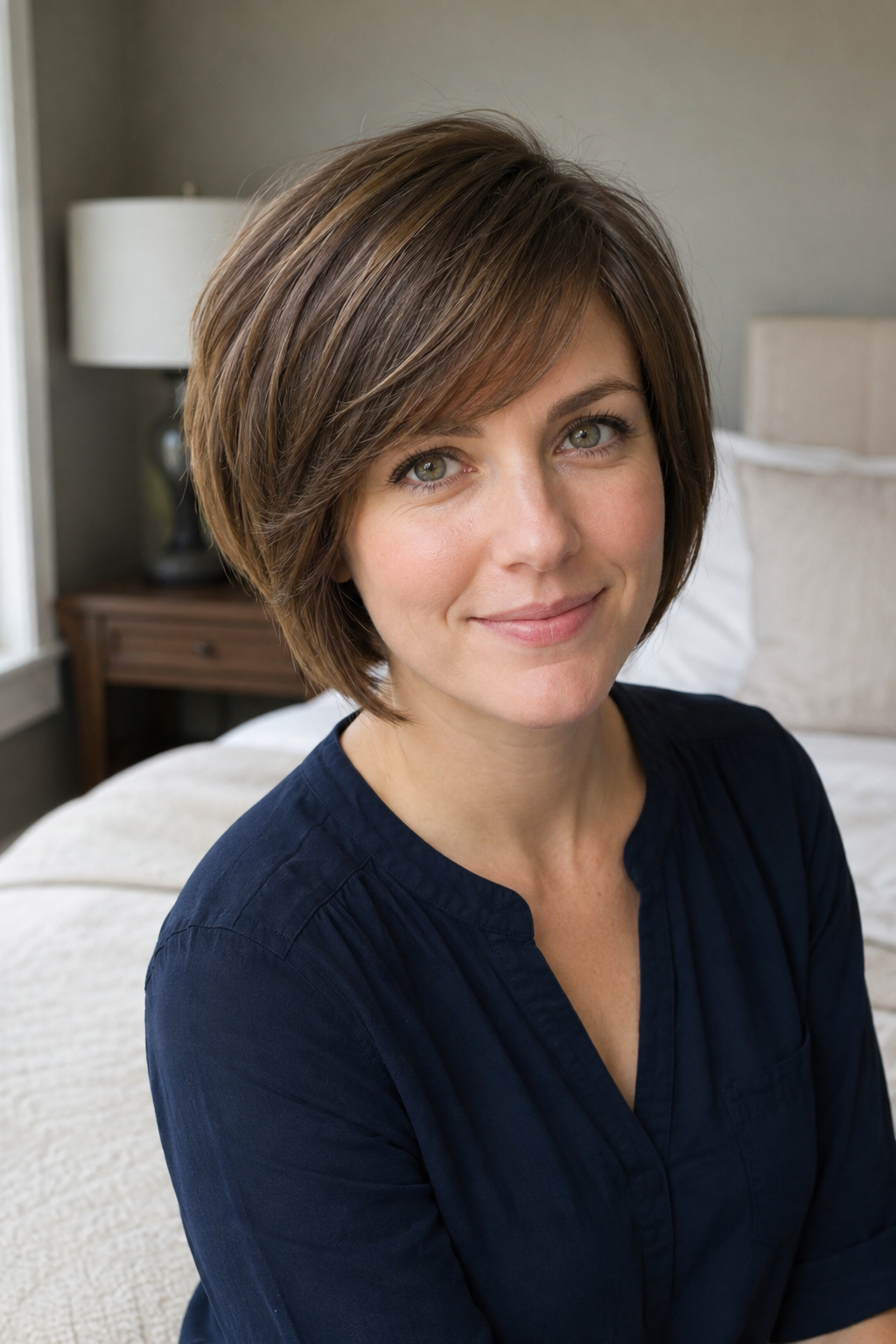
A soft side-swept fringe added to a stacked bob narrows the forehead without hiding it, while the graduated back builds crown volume.
The fringe frames the face and the stacking lifts the crown, so the two work together to flatter fine features.
Round and oval faces wear this length well. Blow the fringe across with a round brush while damp so it sits smooth against the graduated shape.
Stacked Bob With Blunt Bangs

Pairing a full blunt fringe with a stacked back concentrates weight at the front where fine hair is most visible, and lift at the back where it falls flat.
The blunt bangs read as density, working the same way a blunt perimeter does, while the graduation handles the crown.
Keep the bangs one clean length and get them trimmed every three or four weeks so they stay sharp against the softer stacked shape.
Asymmetrical Stacked Bob
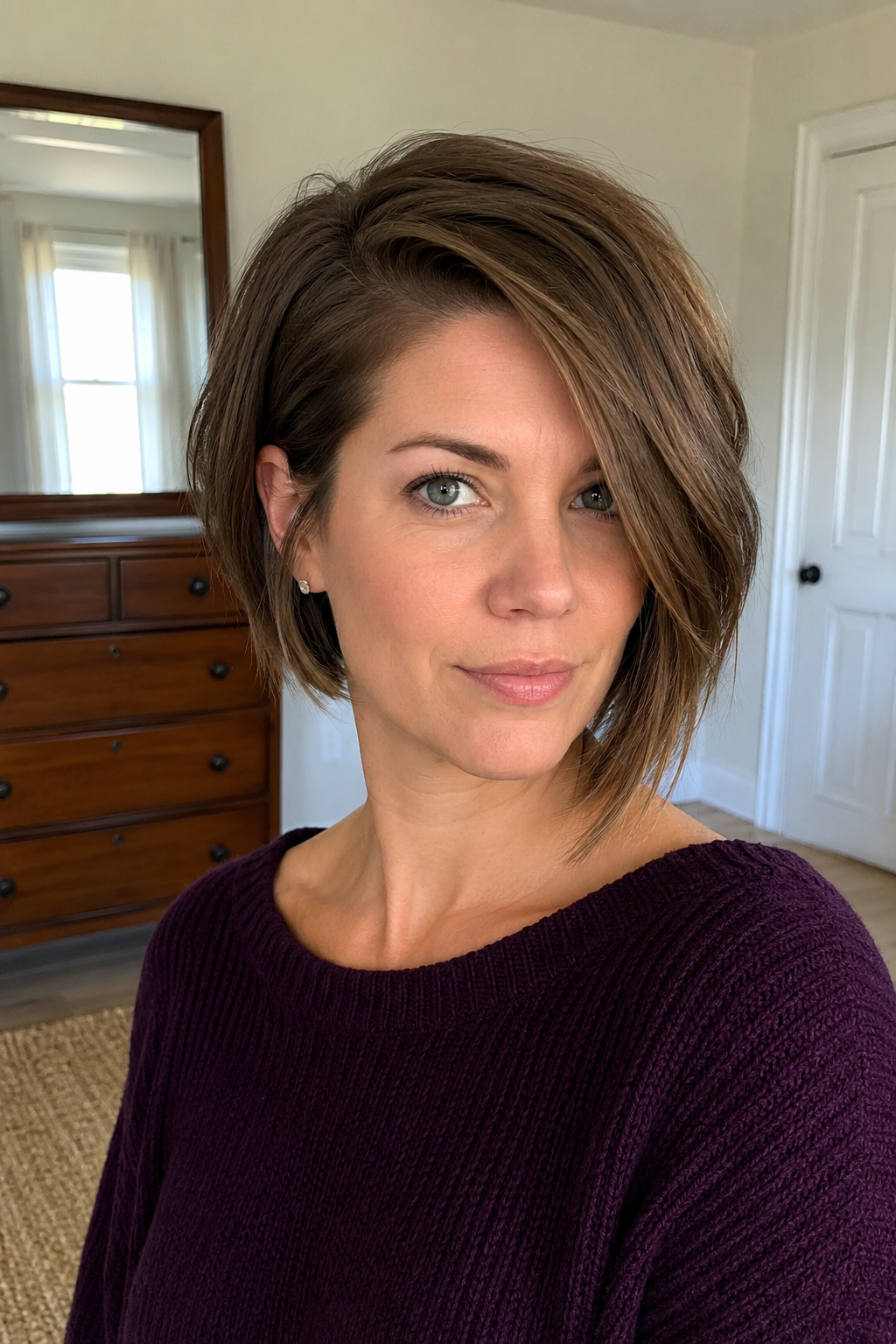
One side falling an inch or two longer than the other, with the back keeping its stacked graduation, gives fine hair dimension a symmetrical cut cannot.
The imbalance adds interest and disguises flatness, drawing the eye across the cut.
Ask for the deeper side part on the shorter side to emphasize the difference. It works especially well on straight, sleek hair where every line is distinct.
Piecey Stacked Bob
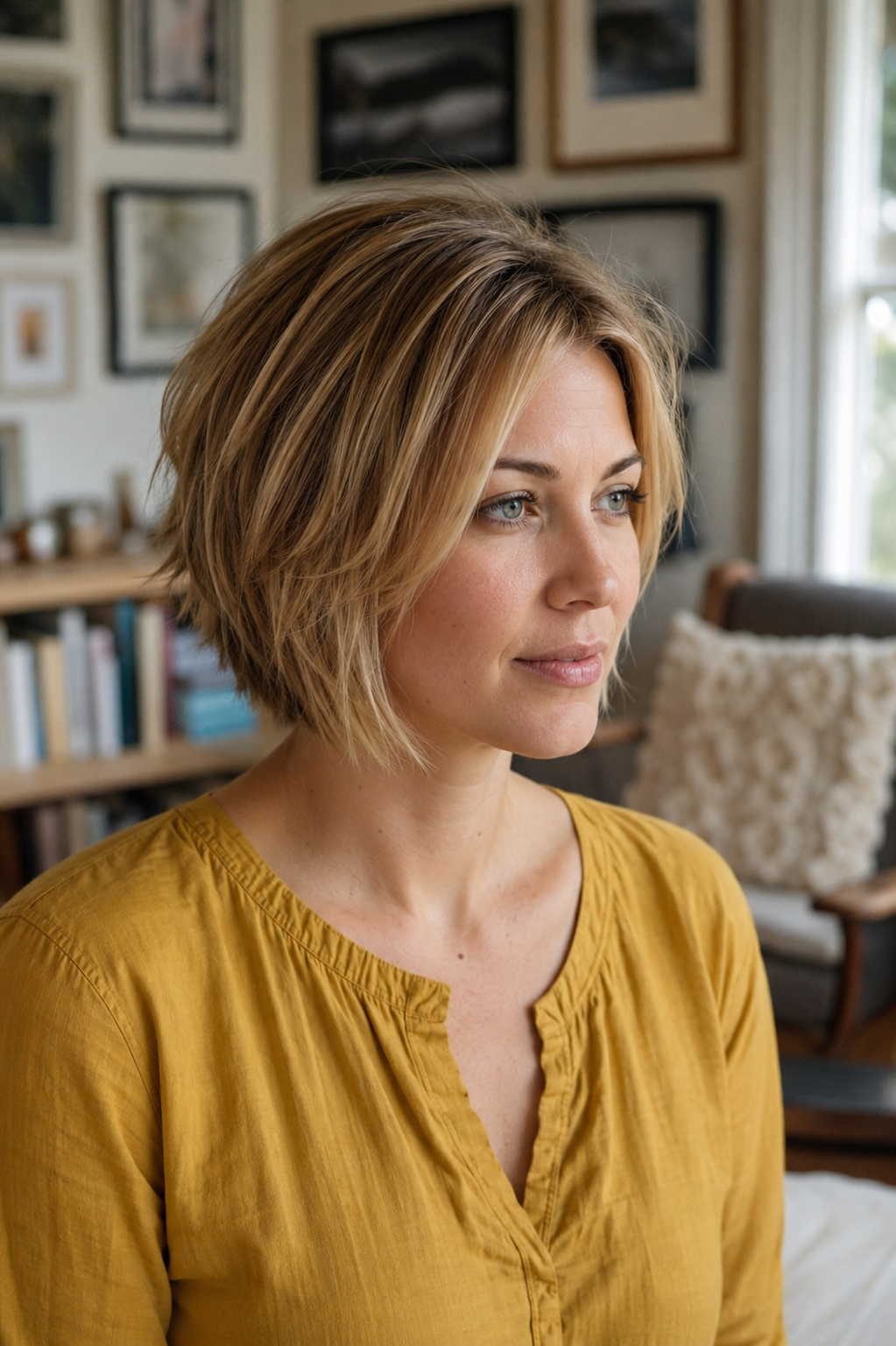
Texturizing shears run over the last inch of each stacked layer create separated, piecey ends that look relaxed without losing volume.
The separation catches light and reads as texture, which makes fine hair look like it has more going on.
A little matte paste worked through the ends keeps the pieces defined. This is a good option if a smooth stacked bob feels too polished for you.
Sliced Stacked Bob
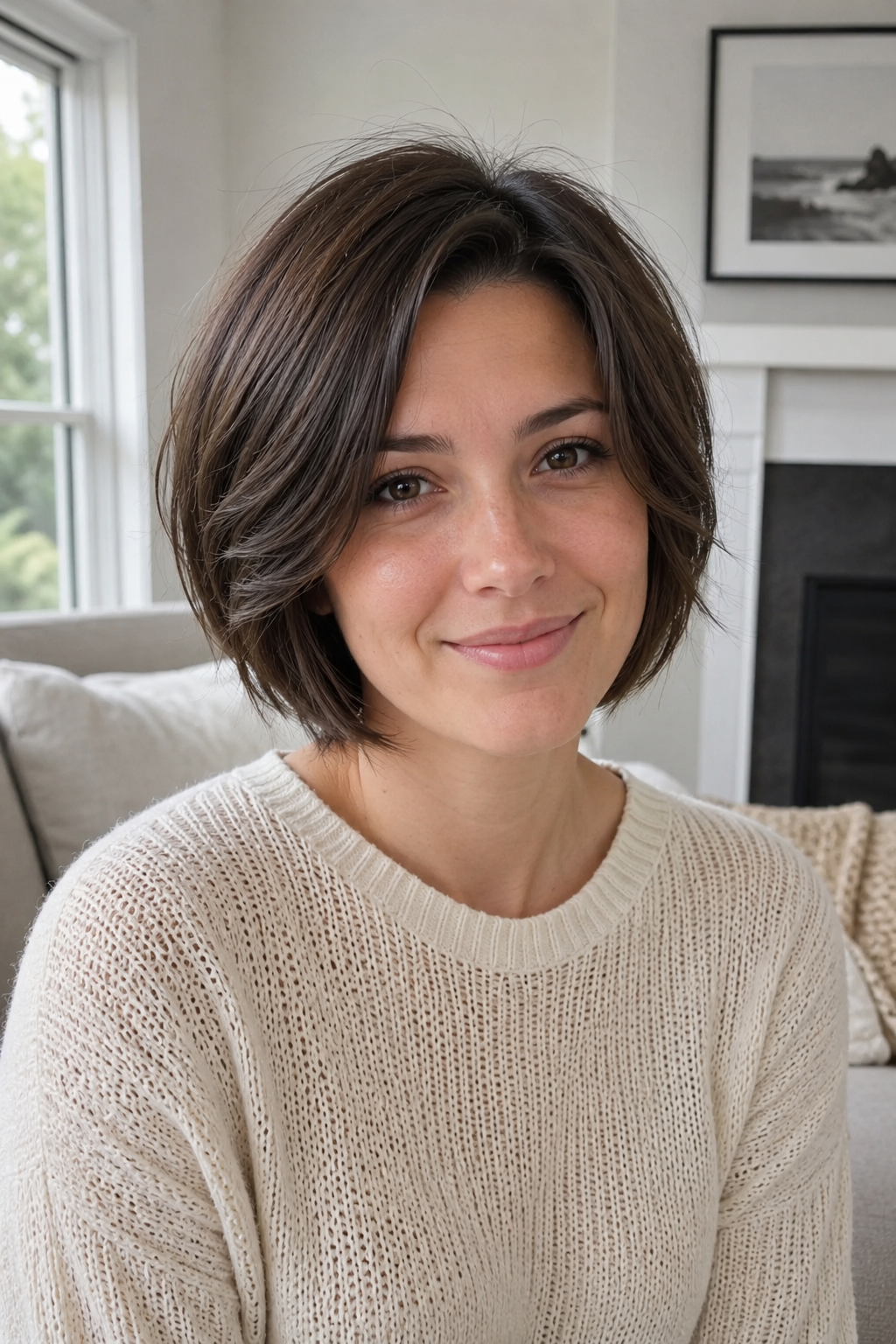
Slide cutting, where the shears slide down the hair shaft, thins the last few inches into feathered, tapered points that soften the transition between the short back and longer sides.
The feathering makes the graduation feel seamless rather than stepped, which suits fine hair well.
It is a softer take on the stacked shape, easy to wear and forgiving as it grows. Air dry with a little cream for a relaxed finish.
Textured Stacked Bob With Waves
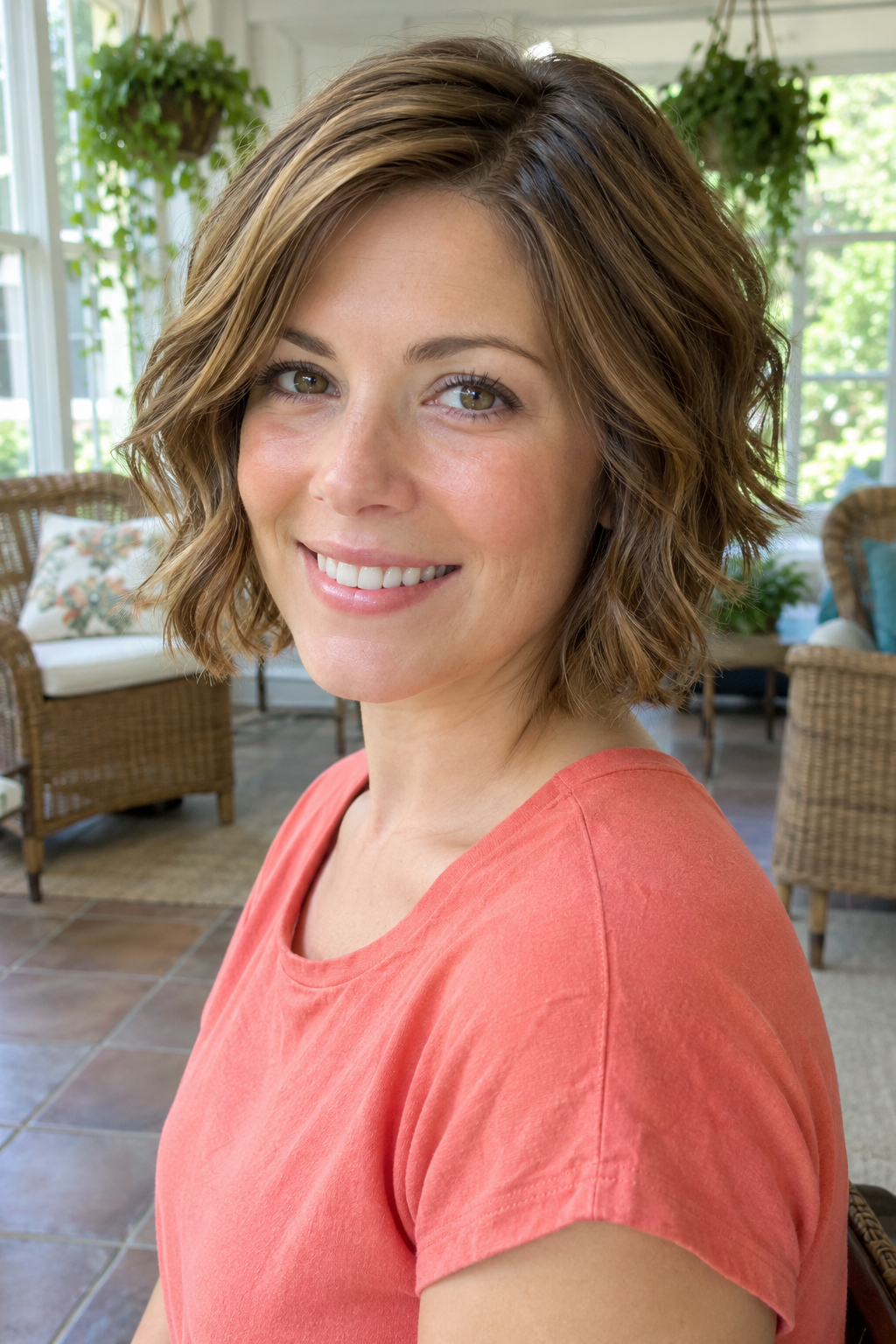
Soft waves worked through a stacked bob boost the fullness even further, since bends and curves make fine hair read thicker instantly.
The stacked shape provides the structure while the waves add the movement, a combination that works hard for limp strands.
Add loose waves with a flat iron or a wand, then break them up with your fingers. A texture spray holds the shape without stiffness.
Stacked Bob With Over-Directed Temples
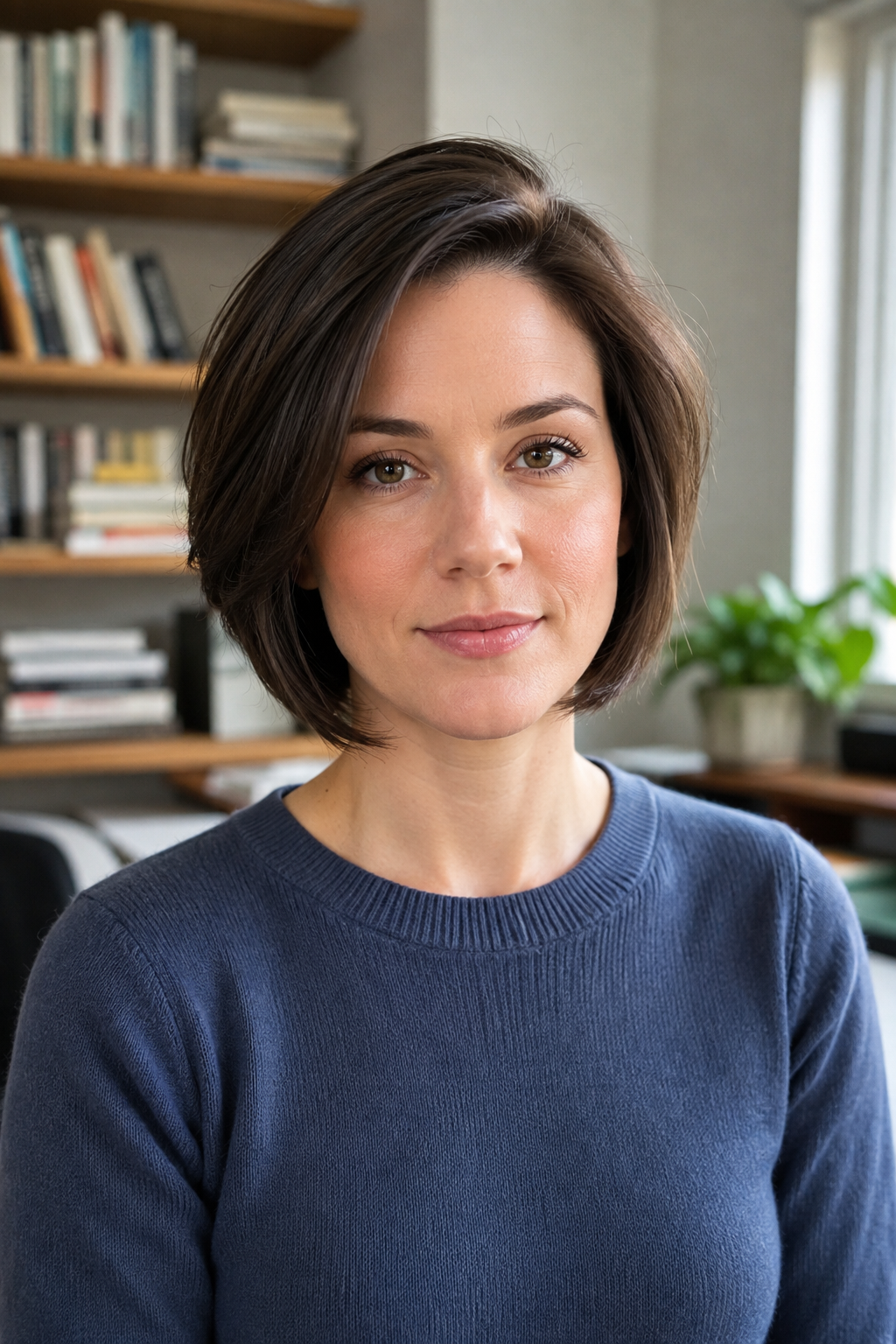
Here is a detail most people never hear about. At the temples, where fine hair thins fastest, the stylist uses over direction so those fragile spots keep their length and density.
Protecting the temples means the cut adds volume everywhere else without exposing the areas that are already sparse.
Mention any thinning at your temples before the cut starts. A good stylist adjusts the technique to work around them rather than through them.
Point-Cut Stacked Bob
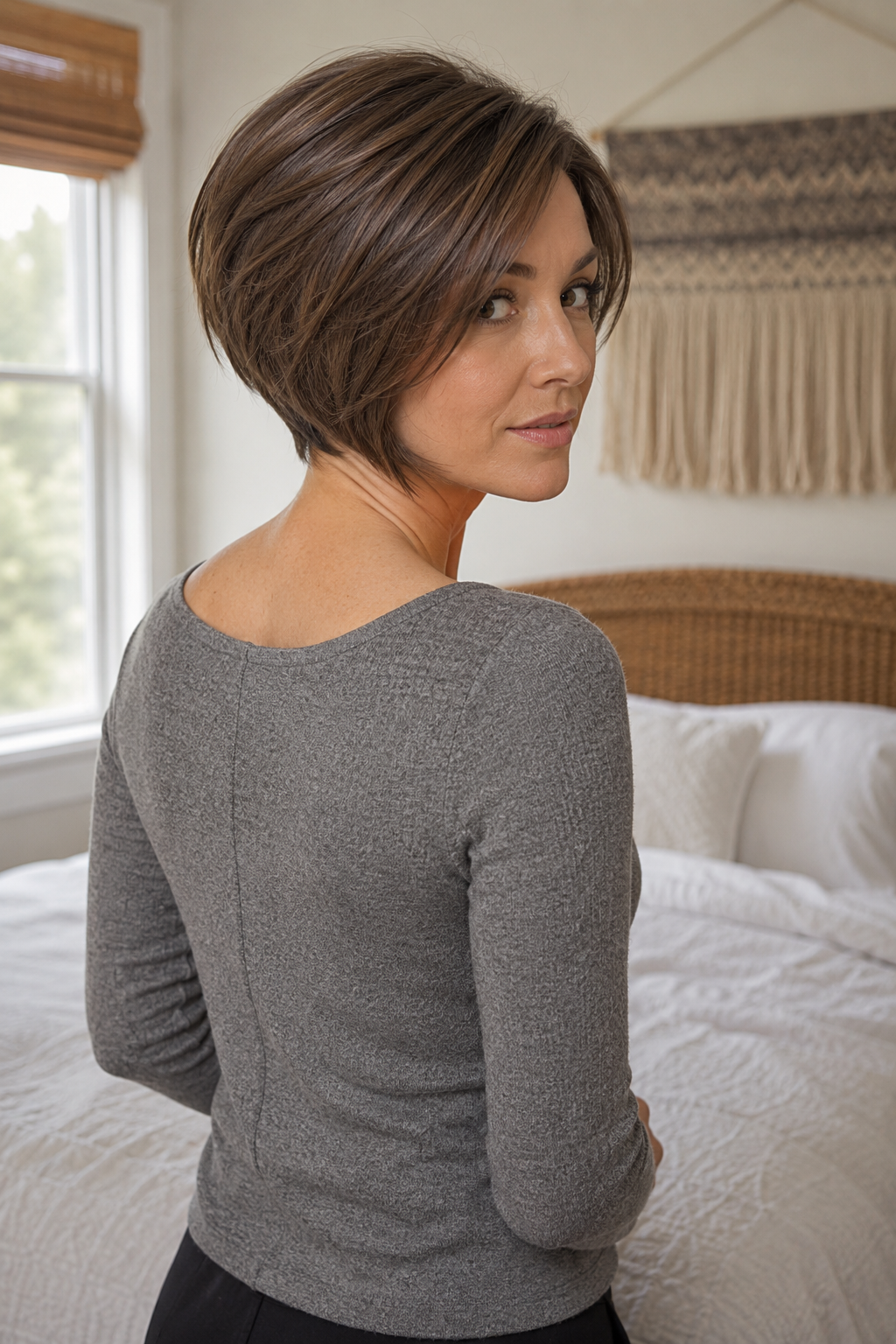
The cut every fine-haired reader should ask for by name. Point cutting at the back preserves density and creates the illusion of thickness through the graduated layers.
Razor cutting does the opposite, thinning already delicate ends until they look wispy, so the tool genuinely matters here.
Say clearly that you want the back point cut, not razored. It is the single technical choice that separates a stacked bob that flatters fine hair from one that thins it.
Blonde Balayage Stacked Bob
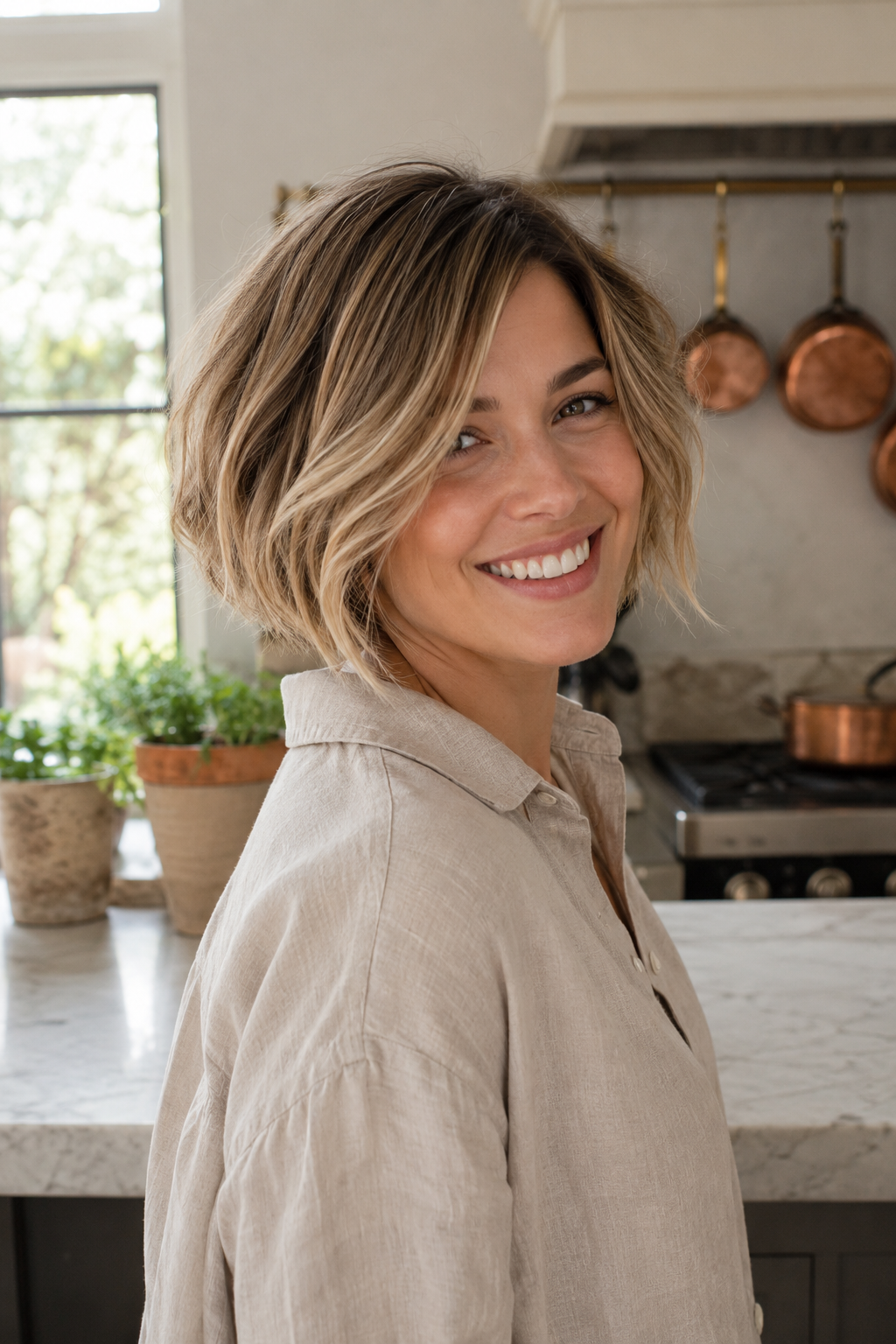
Hand-painted blonde woven through a stacked bob adds dimension, and dimension is what makes fine hair look fuller than a flat single shade ever does.
The lighter pieces create shadow and depth, so the eye reads texture where there is really just color.
It also grows out softly with no hard regrowth line. Our hair color ideas section covers choosing a tone that suits your skin.
Babylights at the Hairline
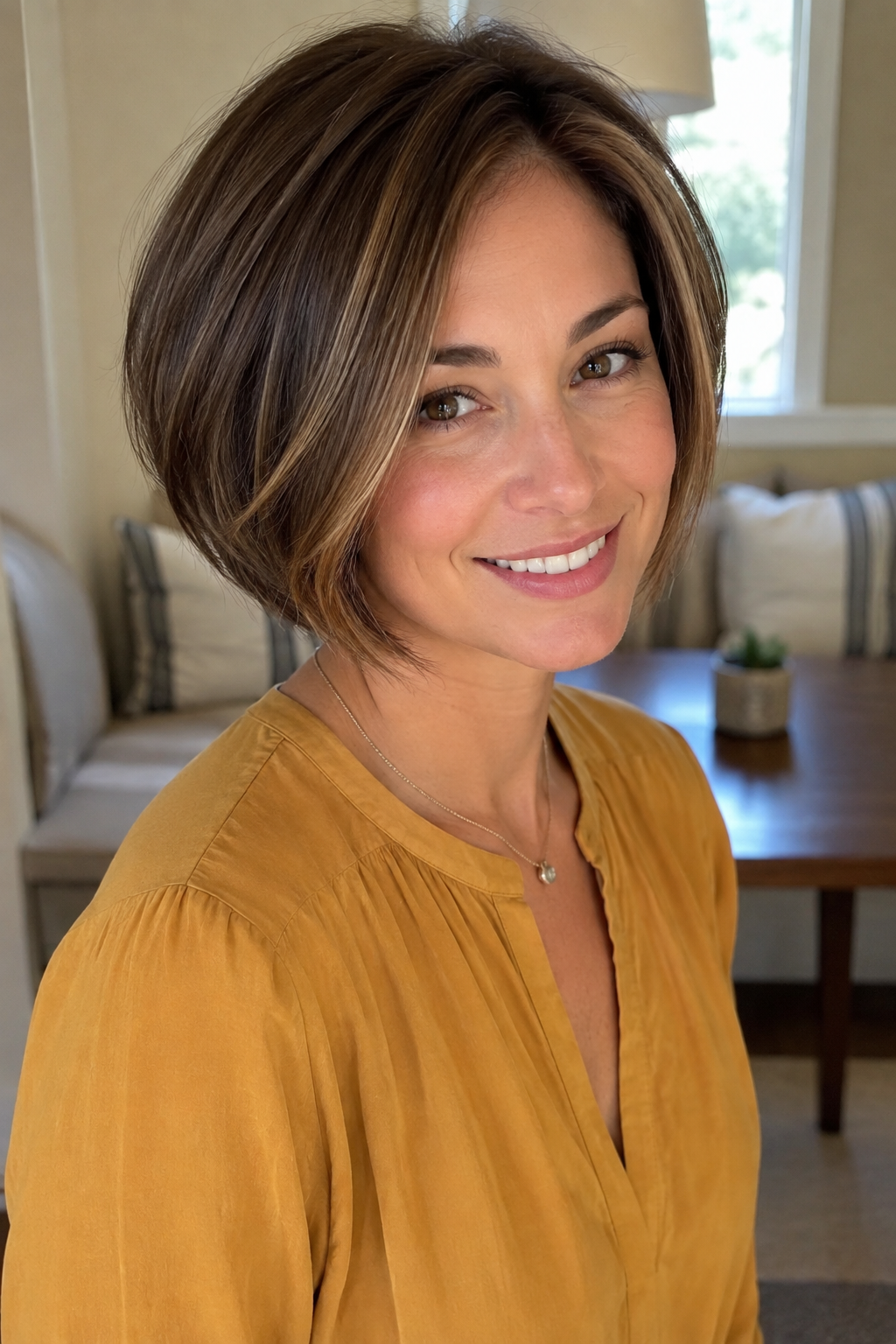
Tiny fine highlights concentrated along the hairline give an overall honey glow and, crucially, make the front of a stacked bob look denser.
Because the pieces are so fine, they blend seamlessly and grow out without a visible line, which keeps upkeep low.
Warm brown or honey tones over a natural brunette base brighten the whole cut. Pair them with the stacked shape and the fine hair looks fuller from every angle.
Dimensional Highlights on a Stacked Bob
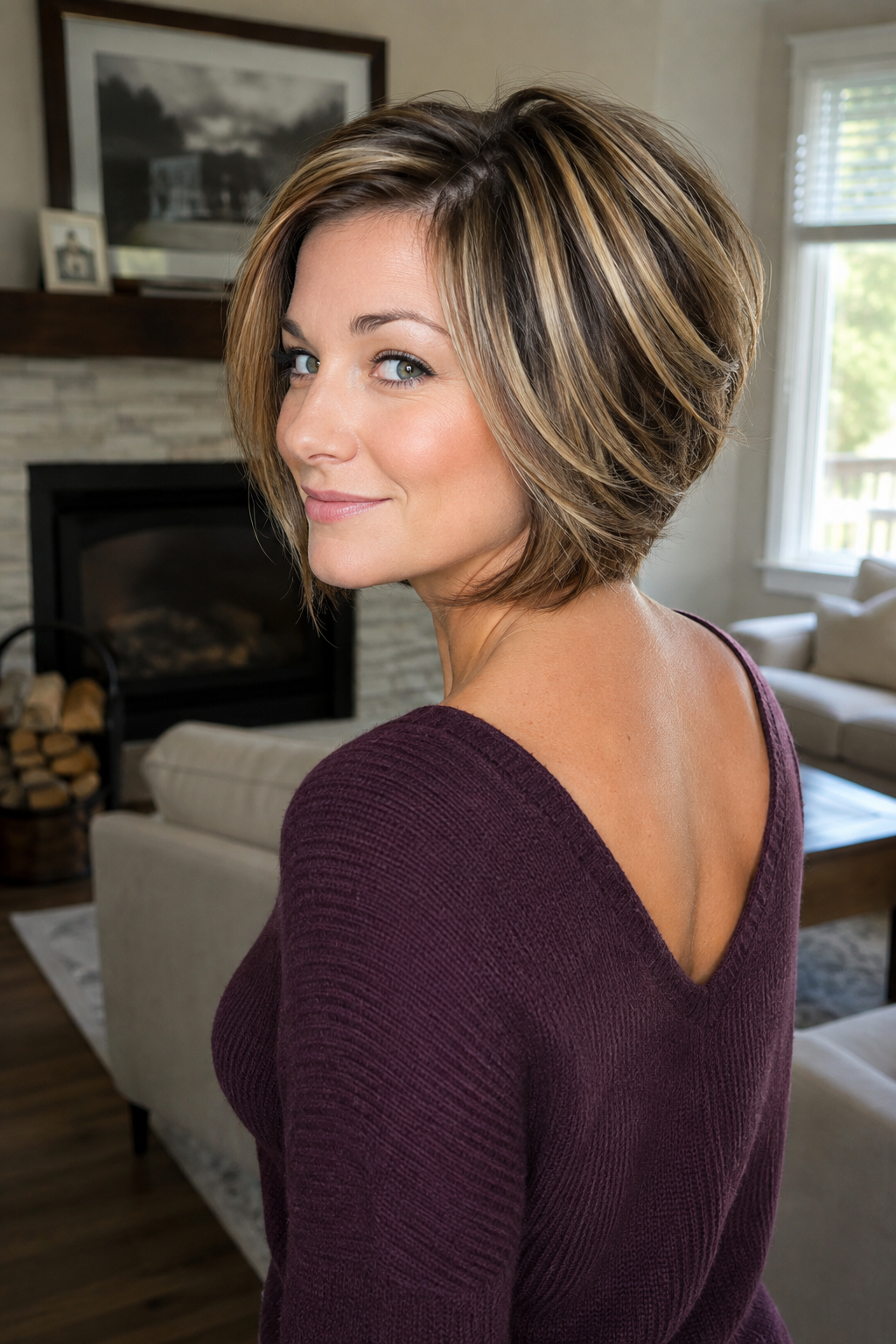
Chunky golden and ash pieces woven through the layers create definition, spotlighting the stacking and boosting texture and movement.
A stacked bob in one flat color hides its own graduation, so the highlights are what let people see the shape you paid for.
Keep the placement concentrated where the layers stack at the back. Our lob hairstyles for fine hair post covers more color tricks that fake density.
Warm Brown Stacked Bob With Soft Highlights
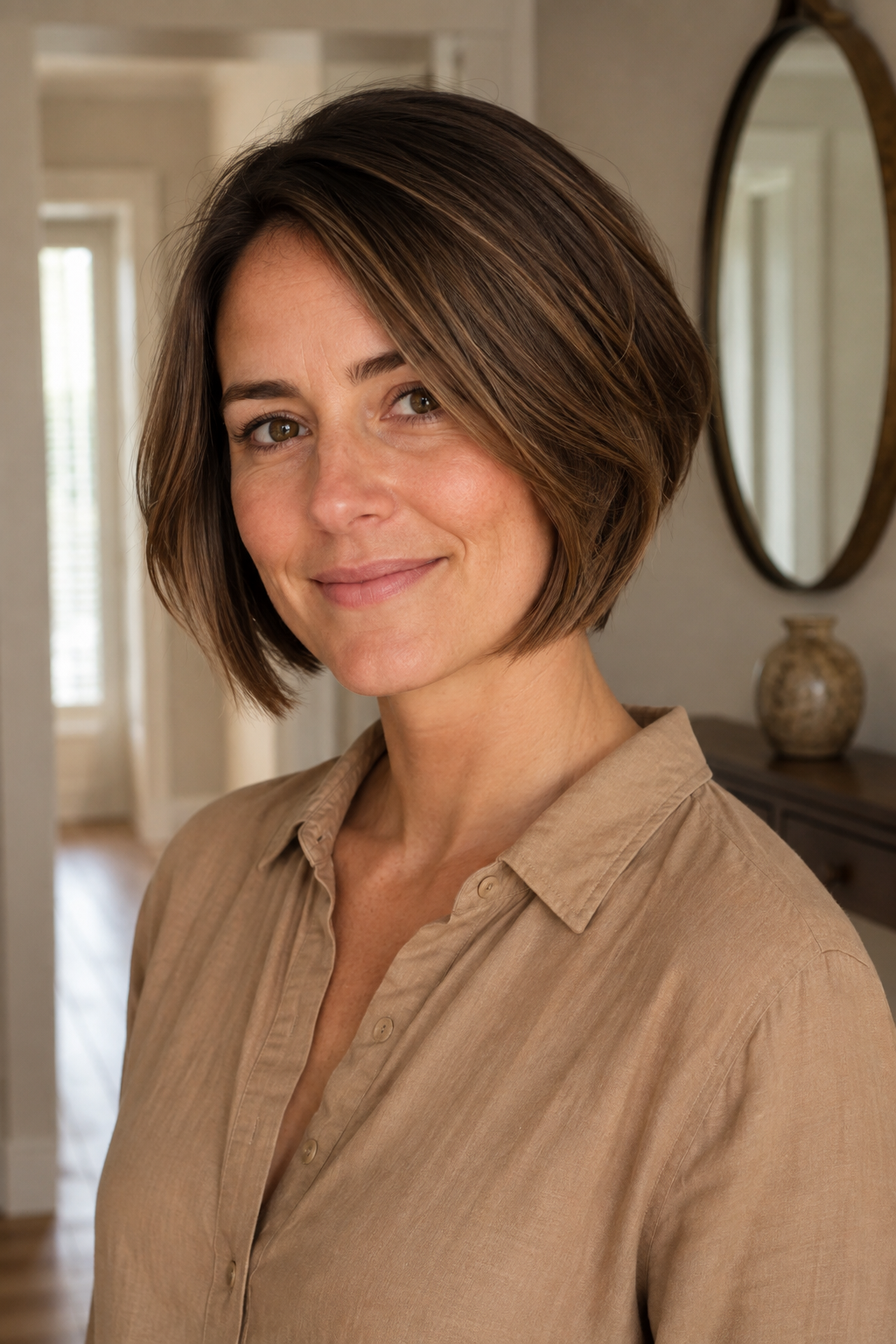
A warm brown base with a few soft highlights improves the look of natural brunette hair while the stacked shape handles the volume.
Warm tones add richness that makes fine strands look healthier, and the light pieces bring dimension without a dramatic change.
It is an easy, low-commitment refresh that pairs a flattering color with a volumizing cut. Straight fine hair especially benefits from the added warmth.
Stacked Bob for Fine Hair Over 50

A softly stacked bob suits changing texture well, building fullness at the crown where age and fineness both take a toll, while a soft fringe frames the face.
Stylists point to internal stacking that adds fullness without obvious layers, keeping the silhouette light and fluid.
Our medium hairstyles for women over 50 post covers the longer versions. Blow-dry with a round brush lifting at the crown for the fullest result.
Sleek Straight Stacked Bob
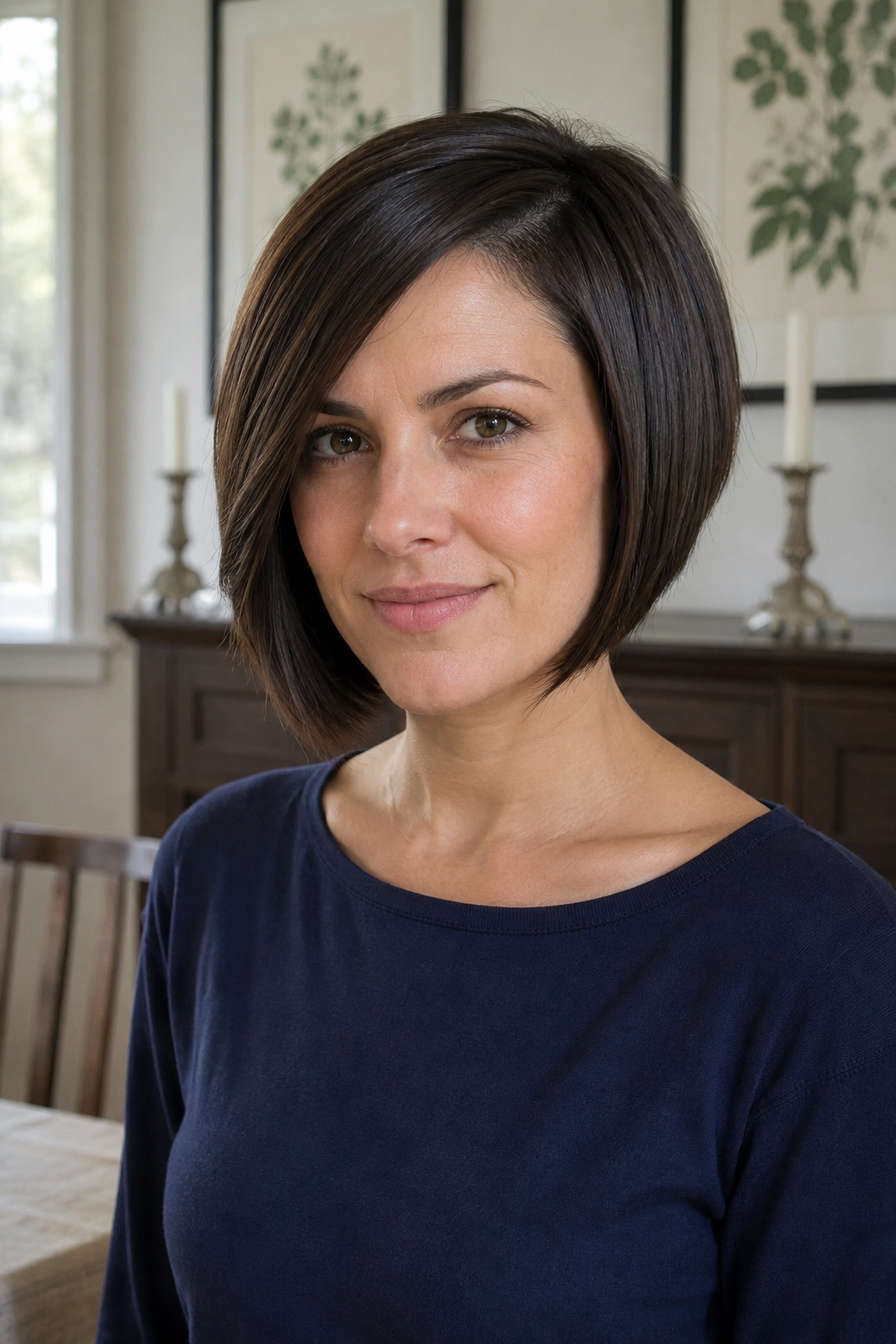
Smooth, sleek strands work beautifully on fine hair that struggles to hold a curl, and the stacked back means the shape carries the volume so you do not have to.
The clean lines of a straight finish make the graduation crisp and the whole cut look intentional.
A deep side part adds body at the roots, and a flat iron on the last inch keeps the ends controlled. The stacking gives the lift a curl otherwise would.
Comments
No Comments