
20 Medium Hairstyles for Thin Hair That Look Fuller Fast
Most advice about thin hair gets the layering backwards. The instinct is to add layers for volume, and on fine hair that usually removes the little density you have at the ends, leaving them see-through. What actually works is keeping a solid line at the bottom and building lift at the top instead. Shoulder length helps here too, since longer hair drags fine strands flat under their own weight while shorter cuts lose the length you need for shape. The cuts and finishes below are built around that principle.
Jump to:
- Blunt Lob
- Blunt Perimeter With Crown Layers
- Textured Lob
- Modern Shag
- Angled Shoulder-Length Bob
- Stacked Back With Longer Front
- U-Shaped Cut
- Wispy Blended Layers
- Face-Framing Layers From the Chin
- Center-Parted Straight Lob
- Deep Side Part
- Blunt Bangs
- Wispy Bangs
- Hot Roller Set
- Root-Lift Blowout
- Bent Ends With a Flat Iron
- Mousse at the Roots
- Balayage Over a Blunt Cut
- Darker Roots With Lighter Ends
- Fine Highlights for Dimension
Blunt Lob
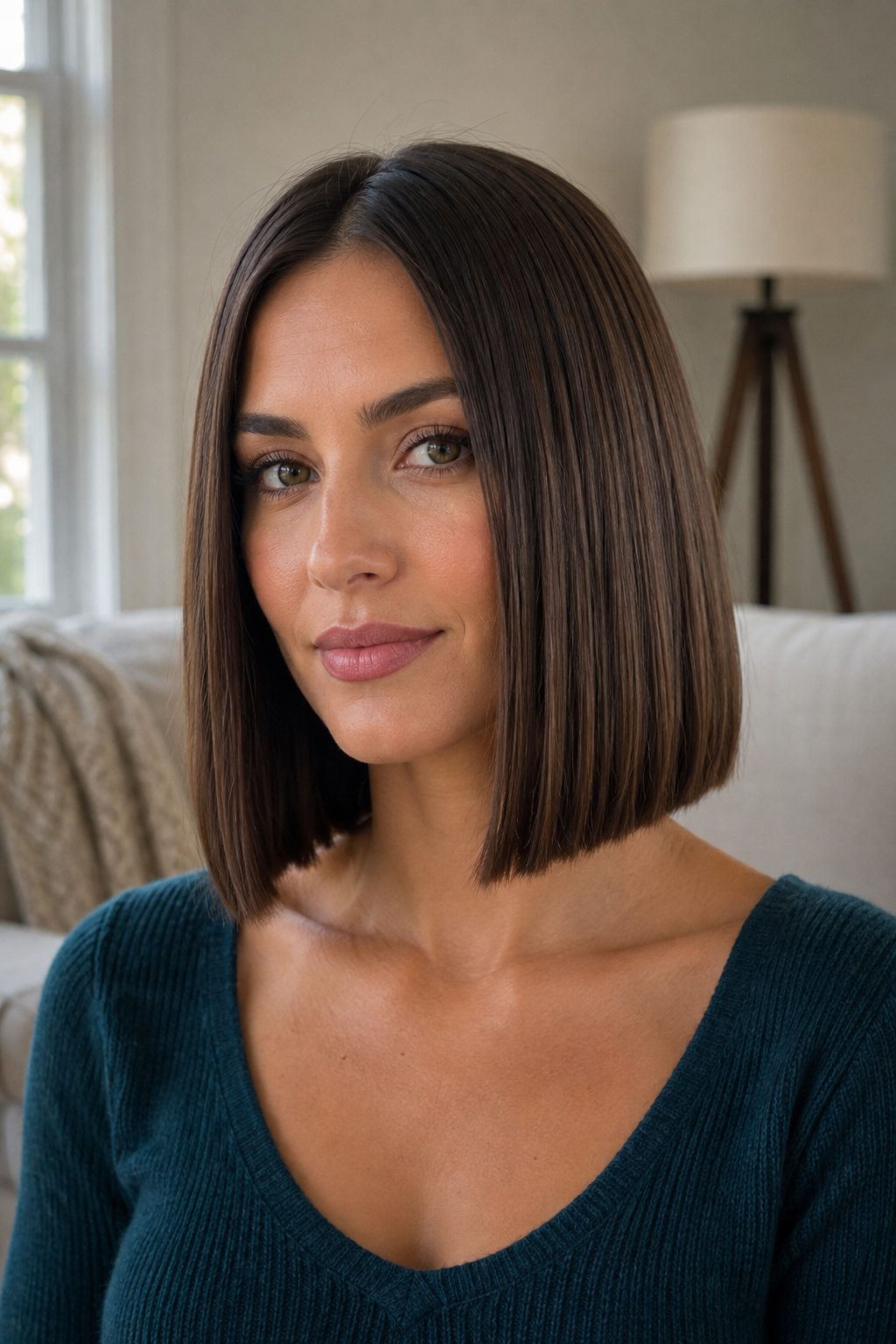
Every strand at the bottom cut to the same length, forming one clean line at the collarbone. No taper, no thinning at the ends.
That solid edge is the single most effective way to make fine hair look denser, because thickness is read at the perimeter.
Great for straight and slightly wavy hair. Our lob hairstyles for fine hair post covers more variations built on the same idea.
Blunt Perimeter With Crown Layers
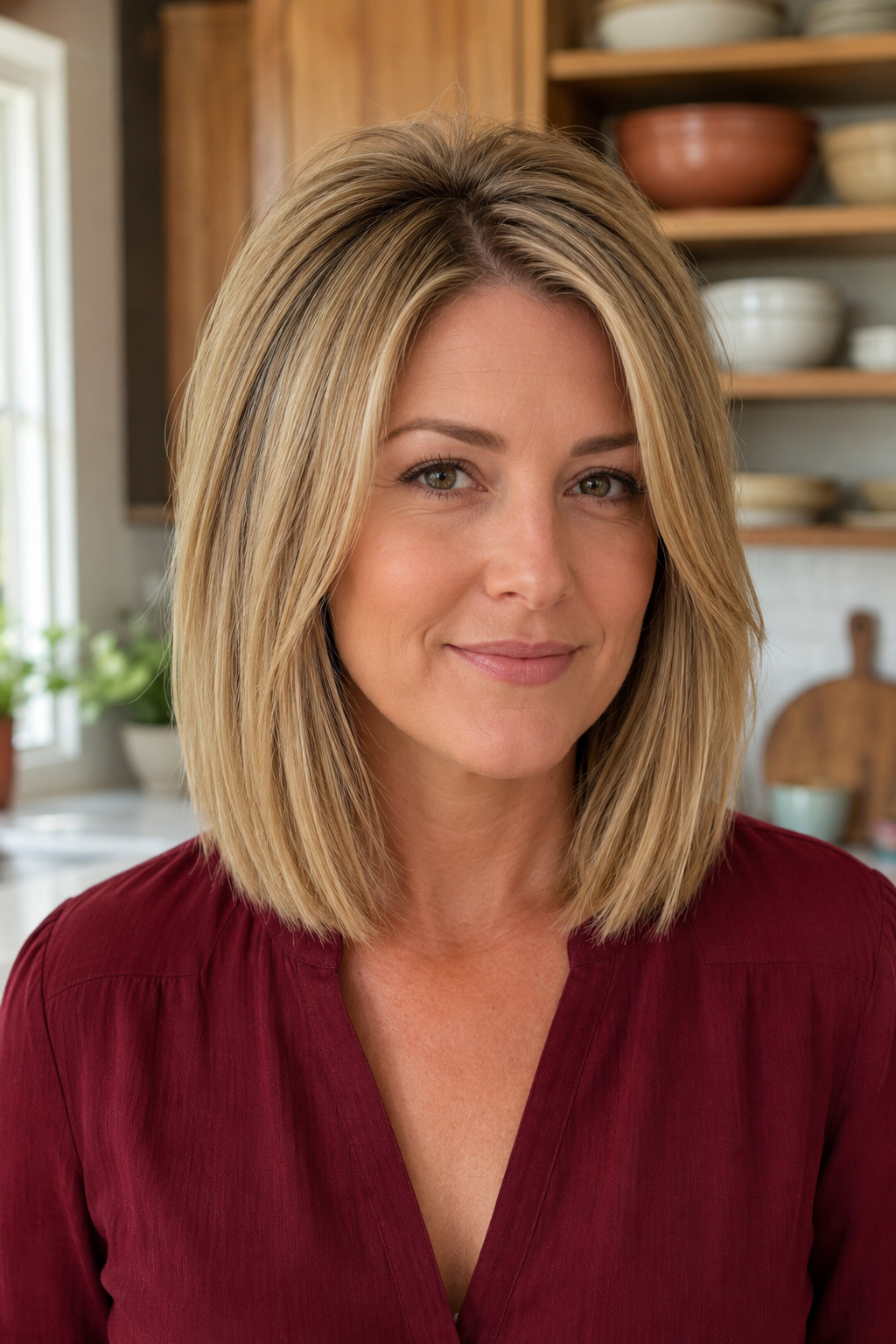
The bottom line stays blunt while short layers are cut separately at the crown, not blended into the length.
You get fullness at the ends and lift on top, which are the two things fine hair usually lacks at once.
Perfect for anyone whose hair falls flat from the parting down. Ask your stylist for a solid perimeter with disconnected crown layers, since that phrasing gets you the right result.
Textured Lob
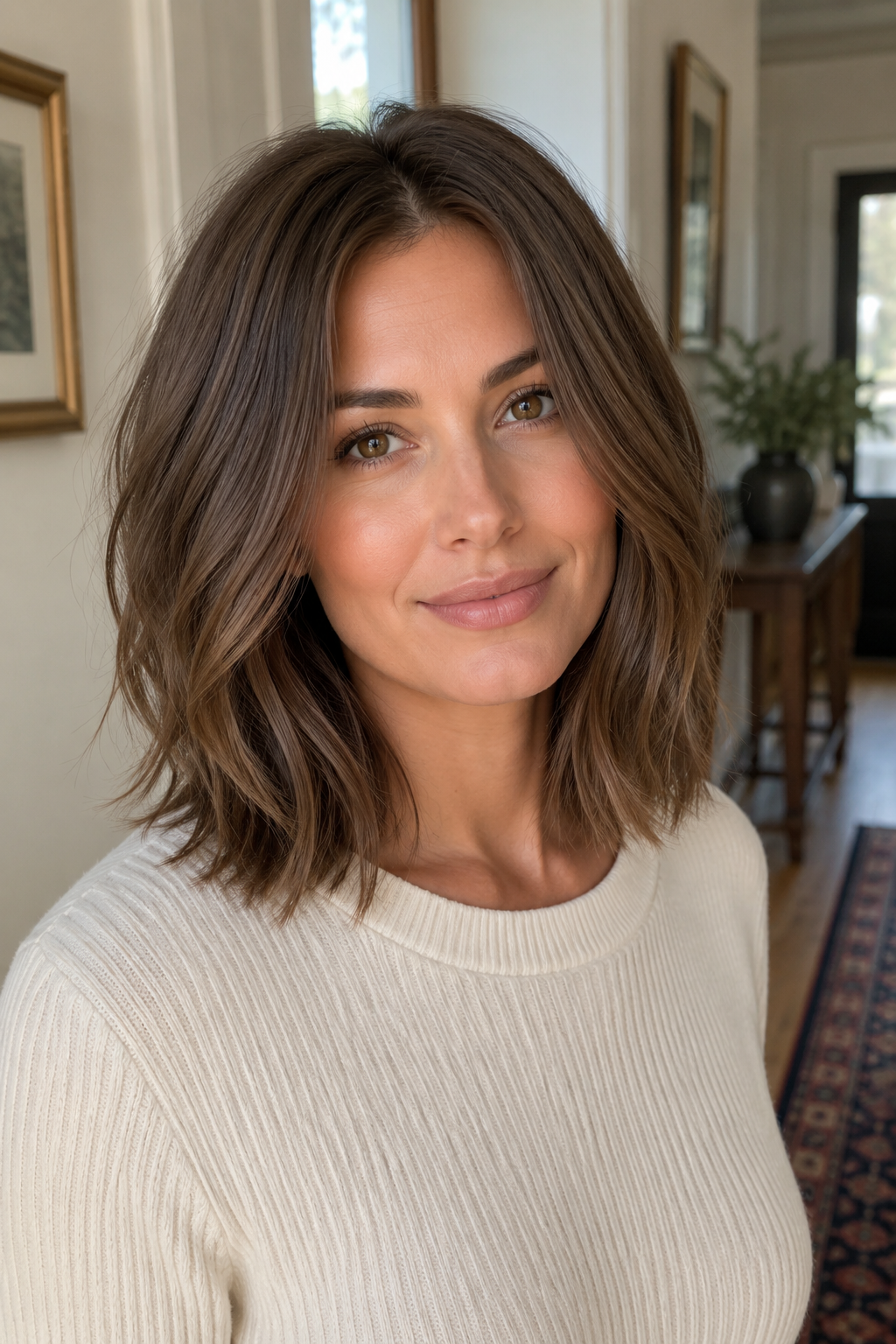
A collarbone cut with light texture worked only into the last inch or two, leaving the bulk of the length untouched.
Softening just the ends stops the line looking severe without taking out real density.
Suits anyone who wants the fullness of a blunt cut with a slightly softer finish. The texture is subtle enough that it works across most hair types and needs very little styling to sit properly.
Modern Shag
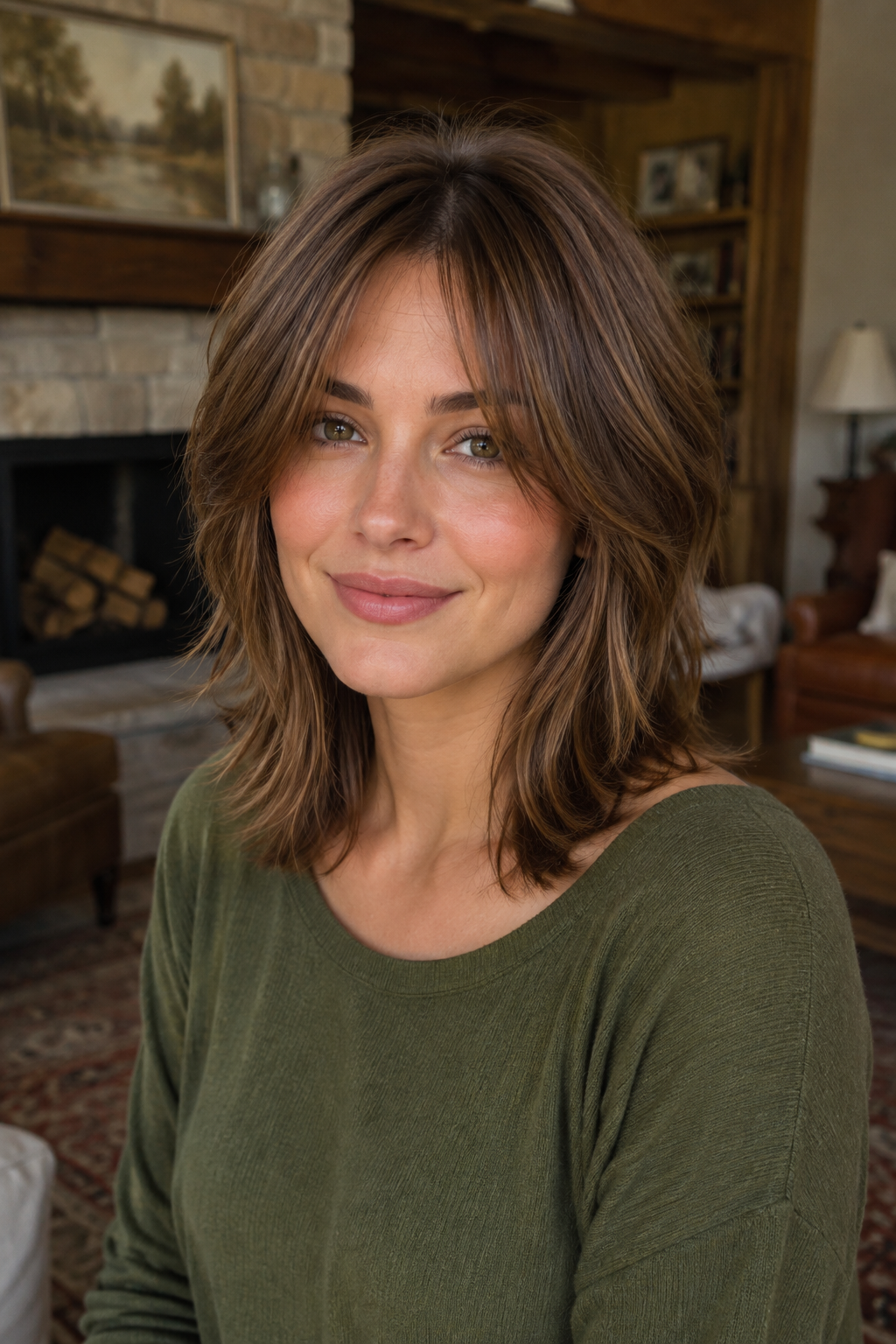
The current version uses softer layers than the seventies original, with choppy pieces starting at the crown and face-framing work through the front.
Crown layers create genuine lift, and the textured ends stop fine hair looking limp at the bottom.
Works especially well on straight fine hair. See our shaggy lob collection for how the shape reads at collarbone length.
Angled Shoulder-Length Bob
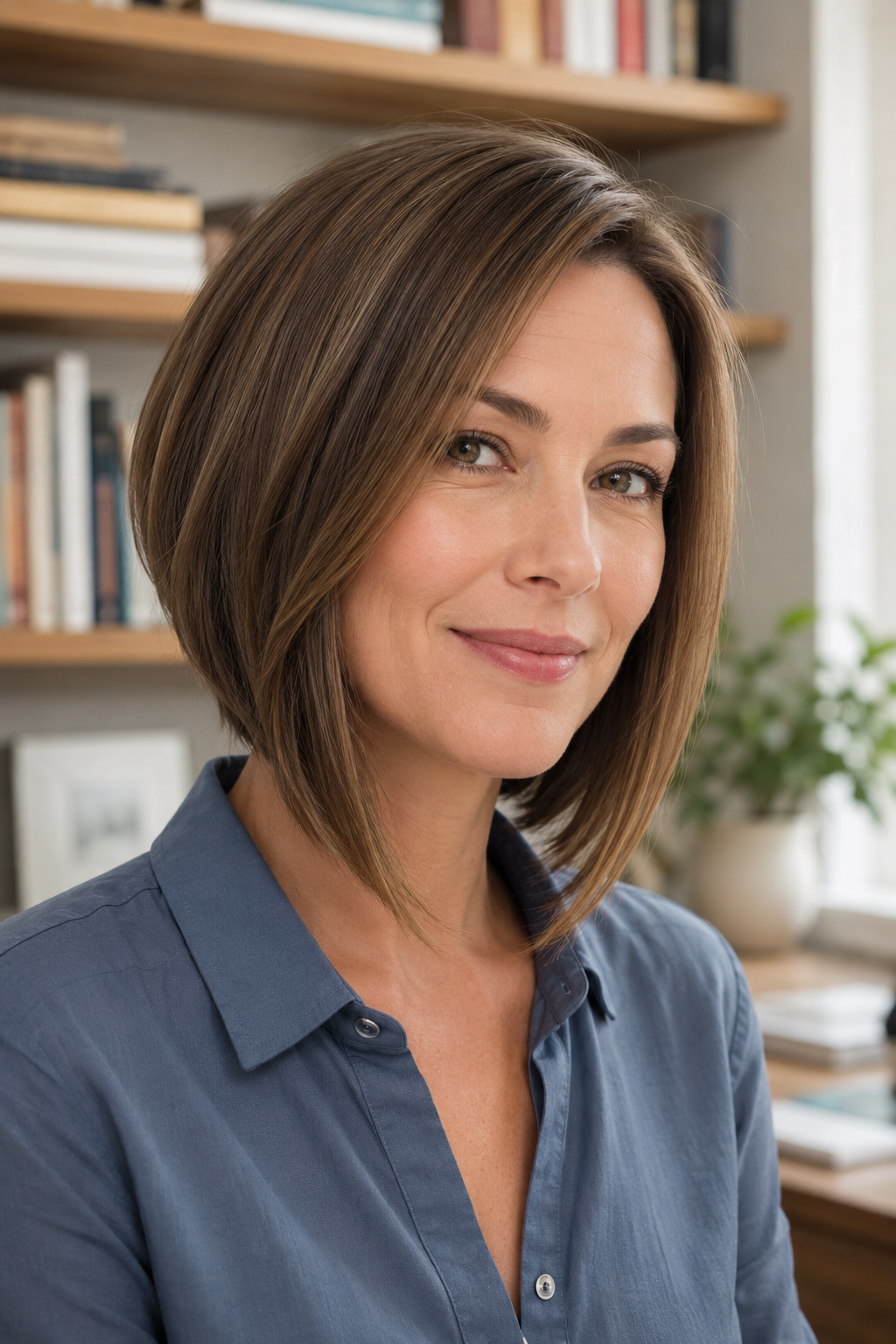
Shorter through the back with the front pieces cut longer, sloping gradually forward.
The angle creates the impression of more hair at the front, where people look, and the shorter back holds volume better.
Great for anyone who wants shape without layers. Keep the angle gentle. A steep slope removes too much from the back and undoes the fullness you are trying to build.
Stacked Back With Longer Front
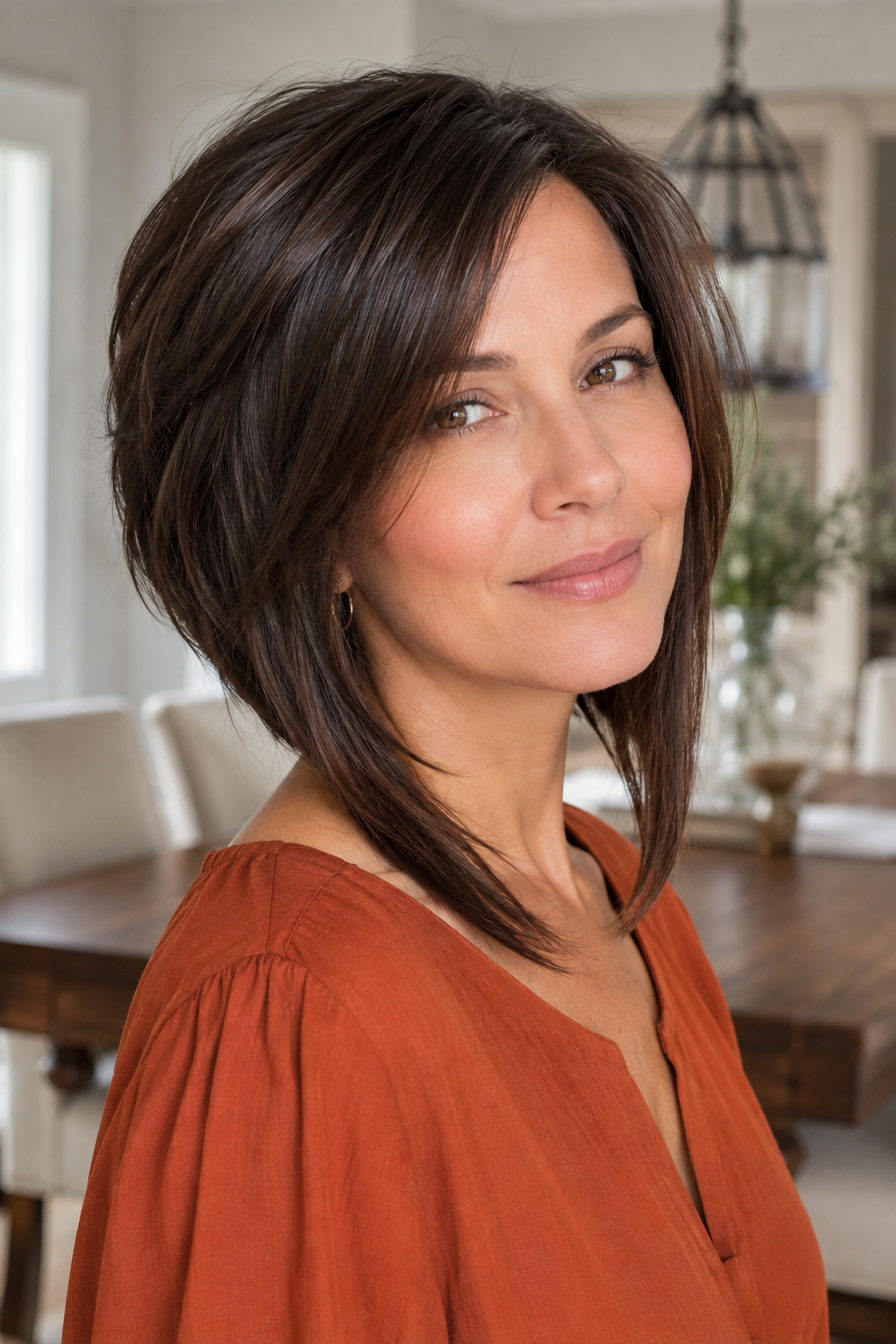
Short overlapping layers stacked at the back of the head, with the front left long.
Stacking builds height and roundness at the back, which is exactly where fine hair tends to collapse against the head.
Suits anyone who has struggled to get volume to hold past the morning. The structure does the work, so you are not relying on product to keep the shape through the day.
U-Shaped Cut
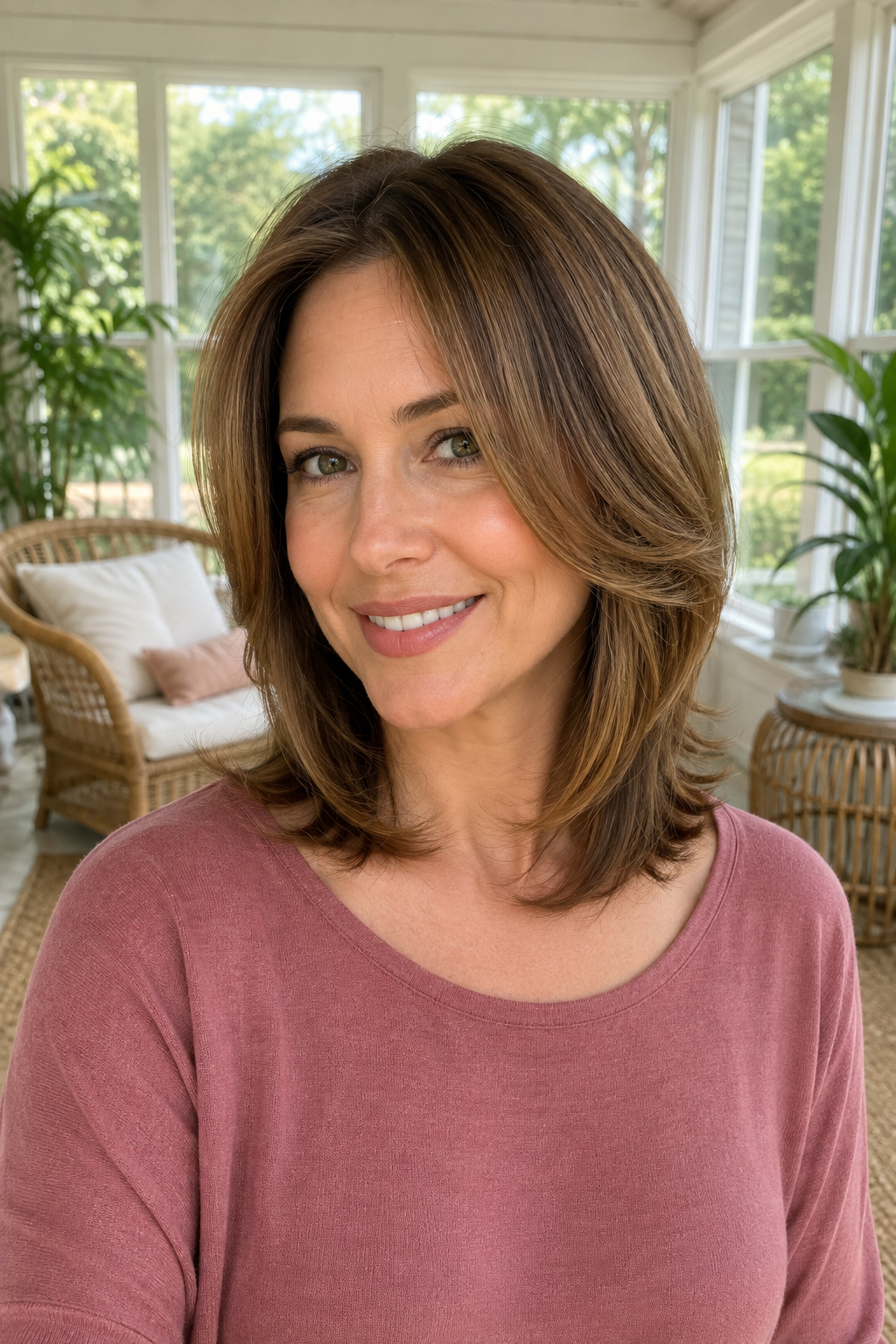
Length cut in a soft U, shortest at the front and curving to a longer point at the back.
The curve gives the ends somewhere to bounce, so they turn rather than hanging flat.
Perfect for pairing with waves or a roller set. Our layered medium hairstyles post covers how the shape sits across different densities.
Wispy Blended Layers
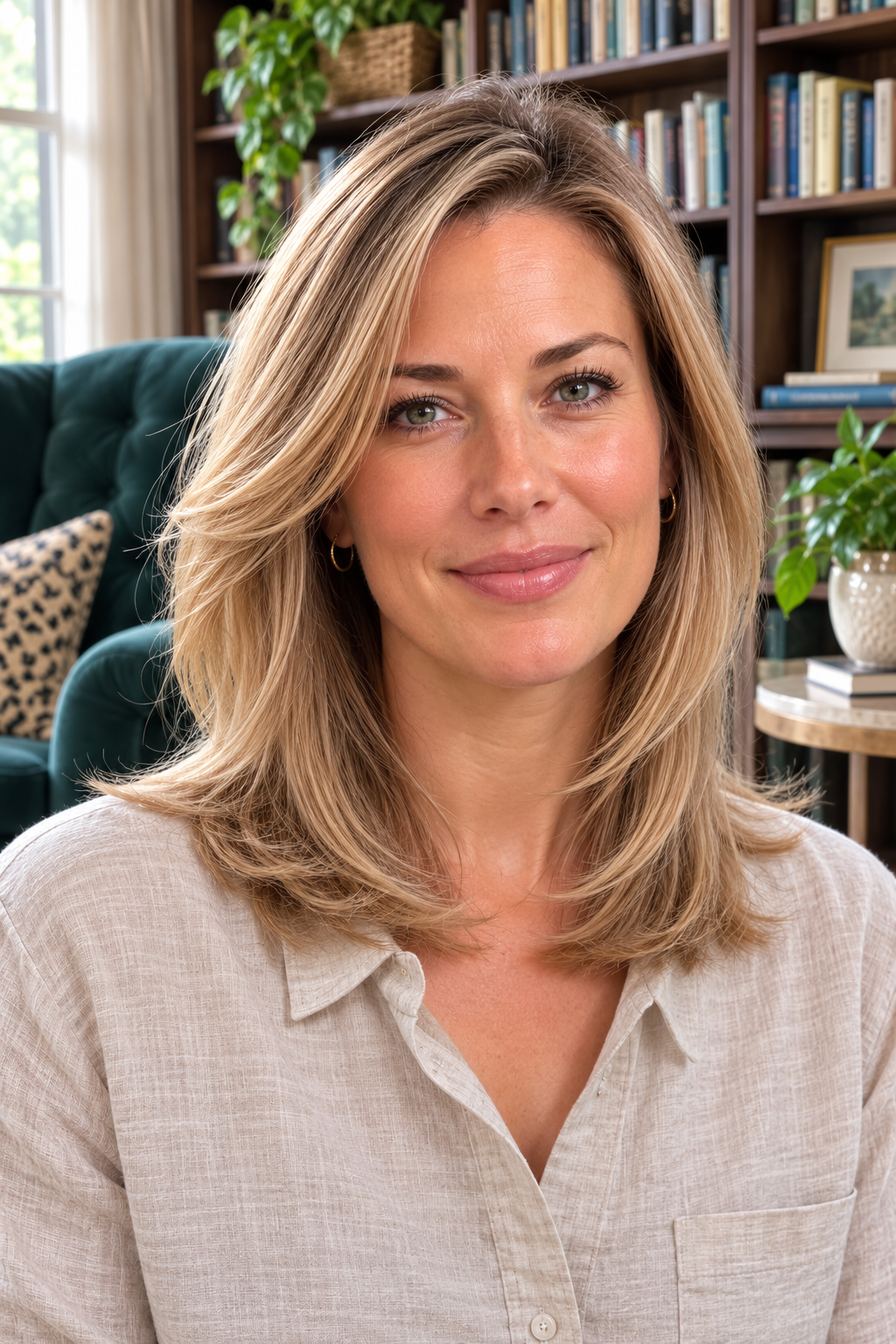
Very light layers cut so the ends diffuse into the length rather than sitting as visible steps.
Done properly nobody can see where the layers begin, which is what separates this from the over-layering that makes fine hair look thin.
Great if you want movement but have been burned by layers before. Say specifically that you want them blended and light, not stepped.
Face-Framing Layers From the Chin
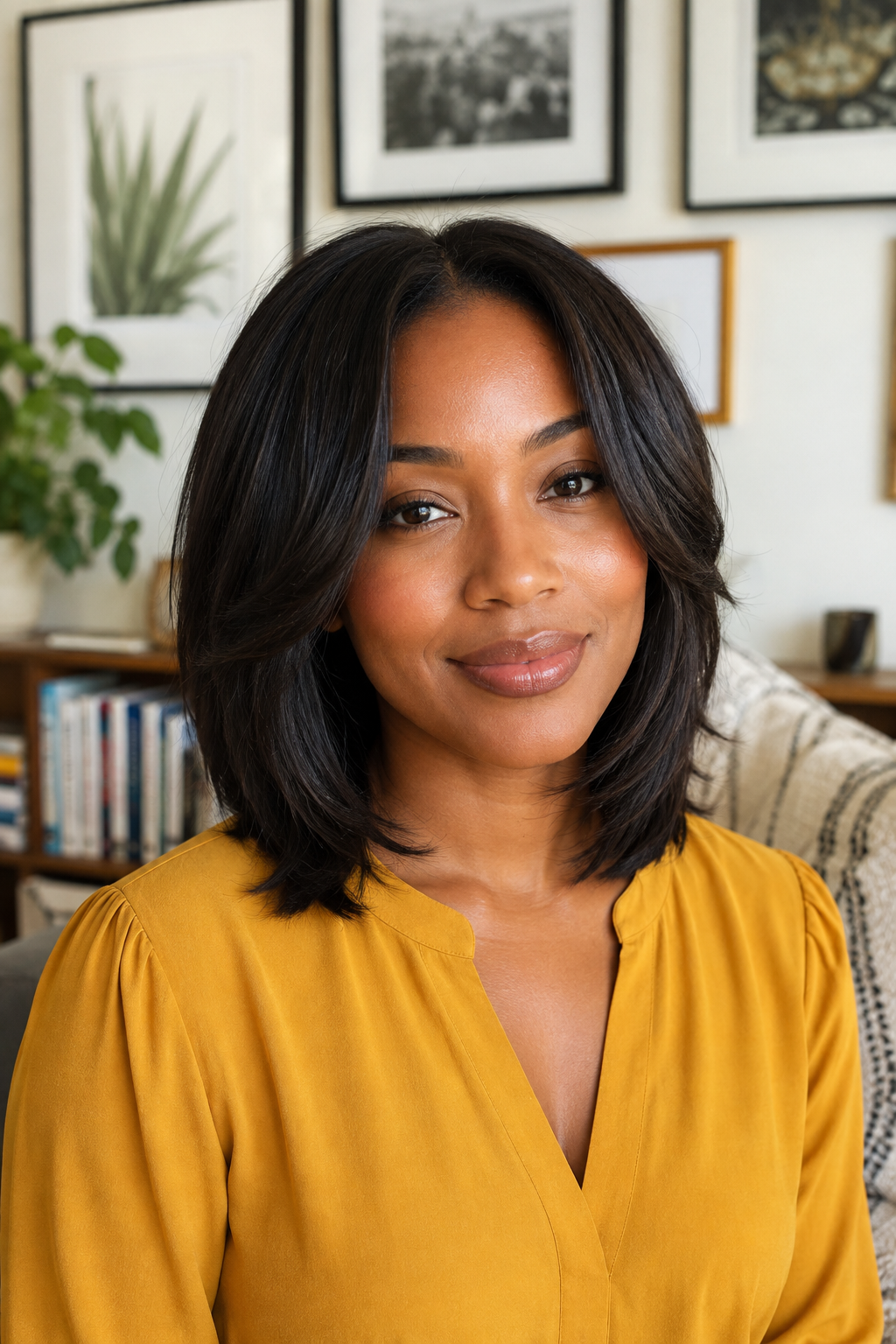
Shorter pieces cut only around the face, starting around chin height and angling down into the length.
Starting at the chin gives you shape near your face without removing anything from the body of the hair.
Suits anyone nervous about committing. If it does not work, the pieces blend back into the length within about two months and nothing else has been touched.
Center-Parted Straight Lob
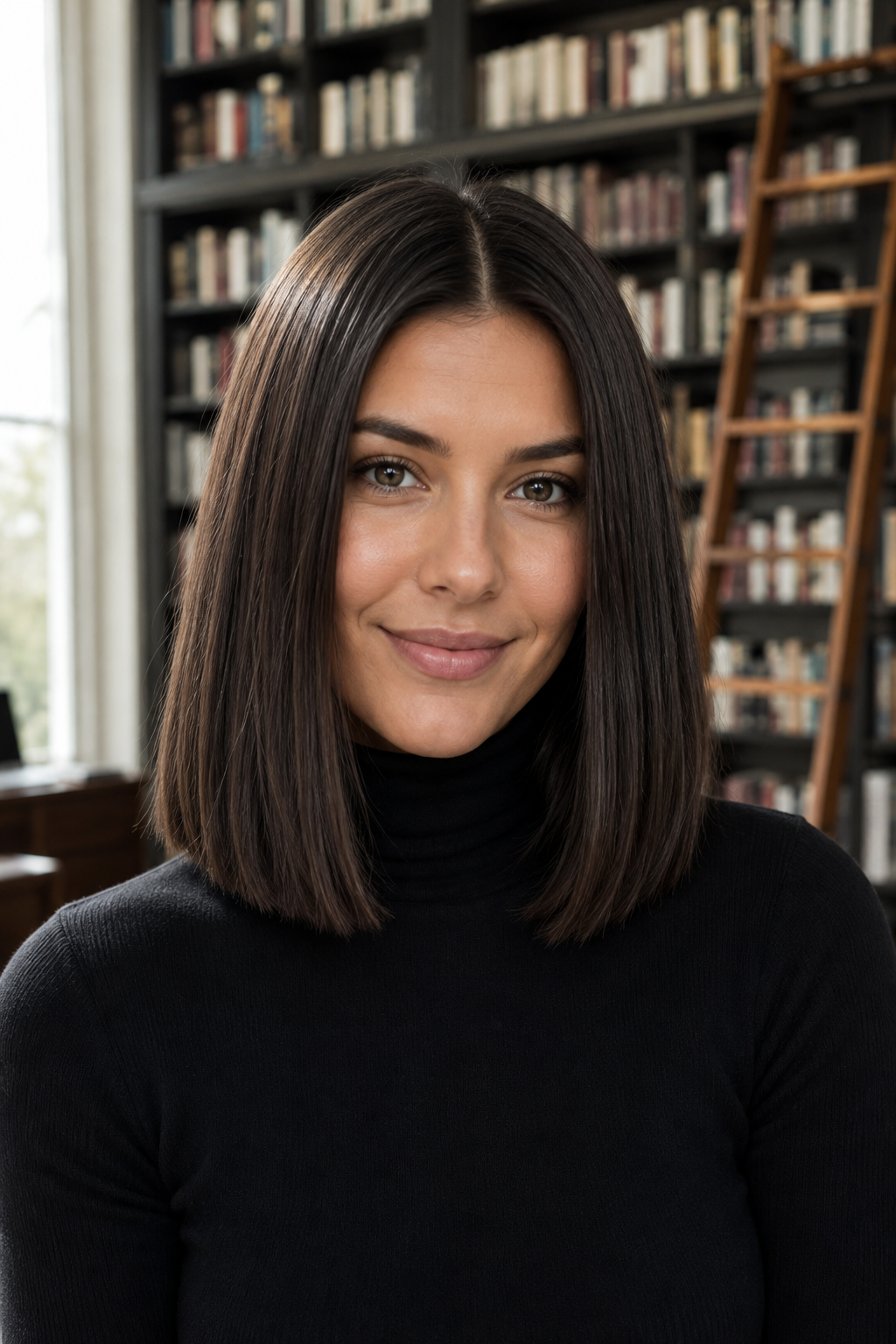
An extra long bob worn straight with a middle part, cut blunt and left completely smooth.
Straight hair reflects light along its length, and that shine reads as health and density even when the hair is fine.
Works especially well on hair with no natural bend. Our shoulder-length hairstyles for fine hair post has more on getting a smooth finish without weighing hair down.
Deep Side Part
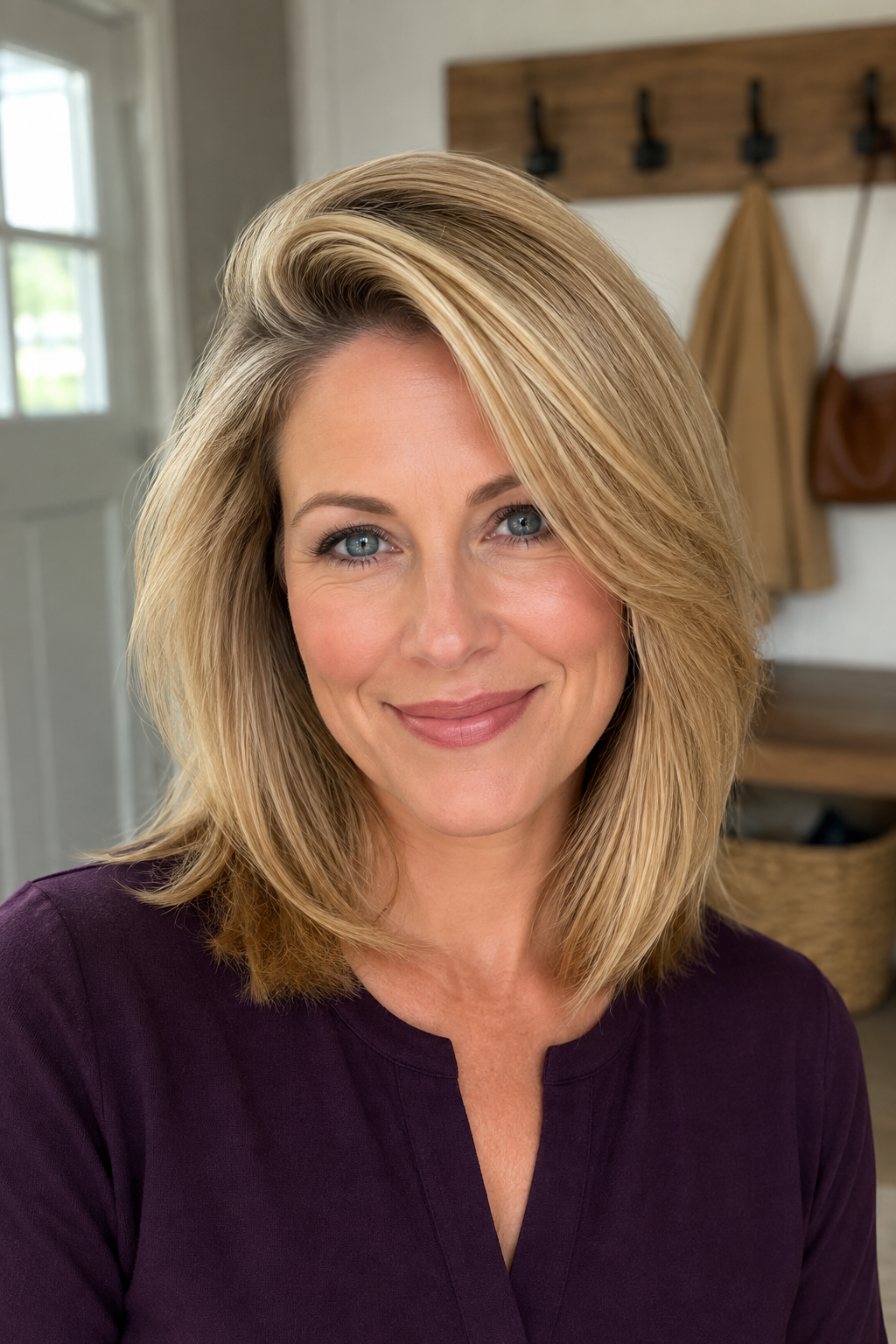
Moving your part well over to one side piles more hair onto the heavier side, lifting it at the root.
The effect is immediate and costs nothing. Fine hair sitting on a centre part tends to lie flat against the scalp.
Perfect for anyone who wants more volume today. Set the part while your hair is damp and dry the roots in that direction, otherwise it drifts back toward the centre as it dries.
Blunt Bangs
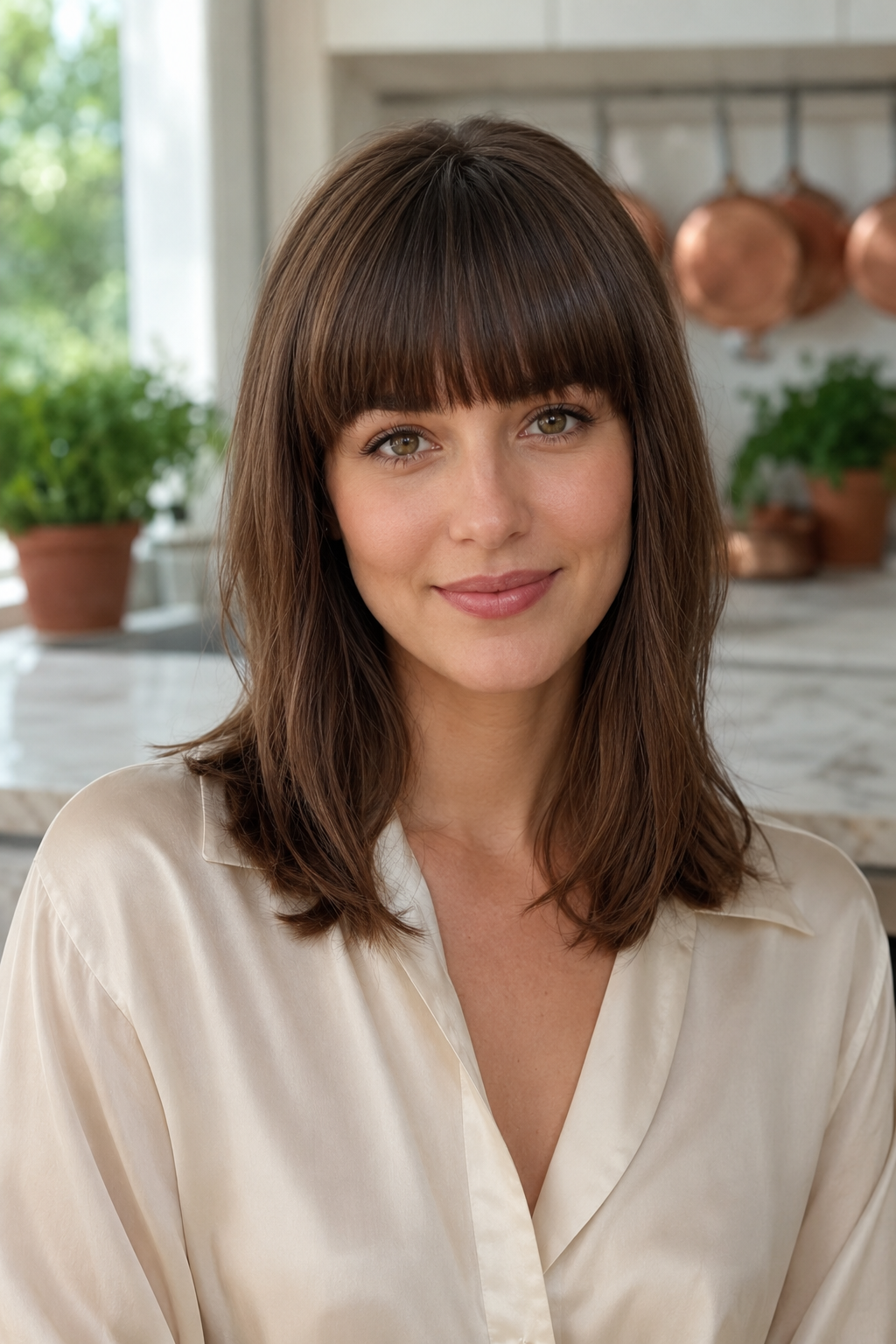
A full fringe cut straight across the forehead, all one length and no thinning.
Bangs concentrate hair at the front where it is most visible, and a blunt line there works the same way a blunt perimeter does.
Great if you have enough density at the front to support them. Fine hair usually can, since bangs take a smaller section than most people expect.
Wispy Bangs
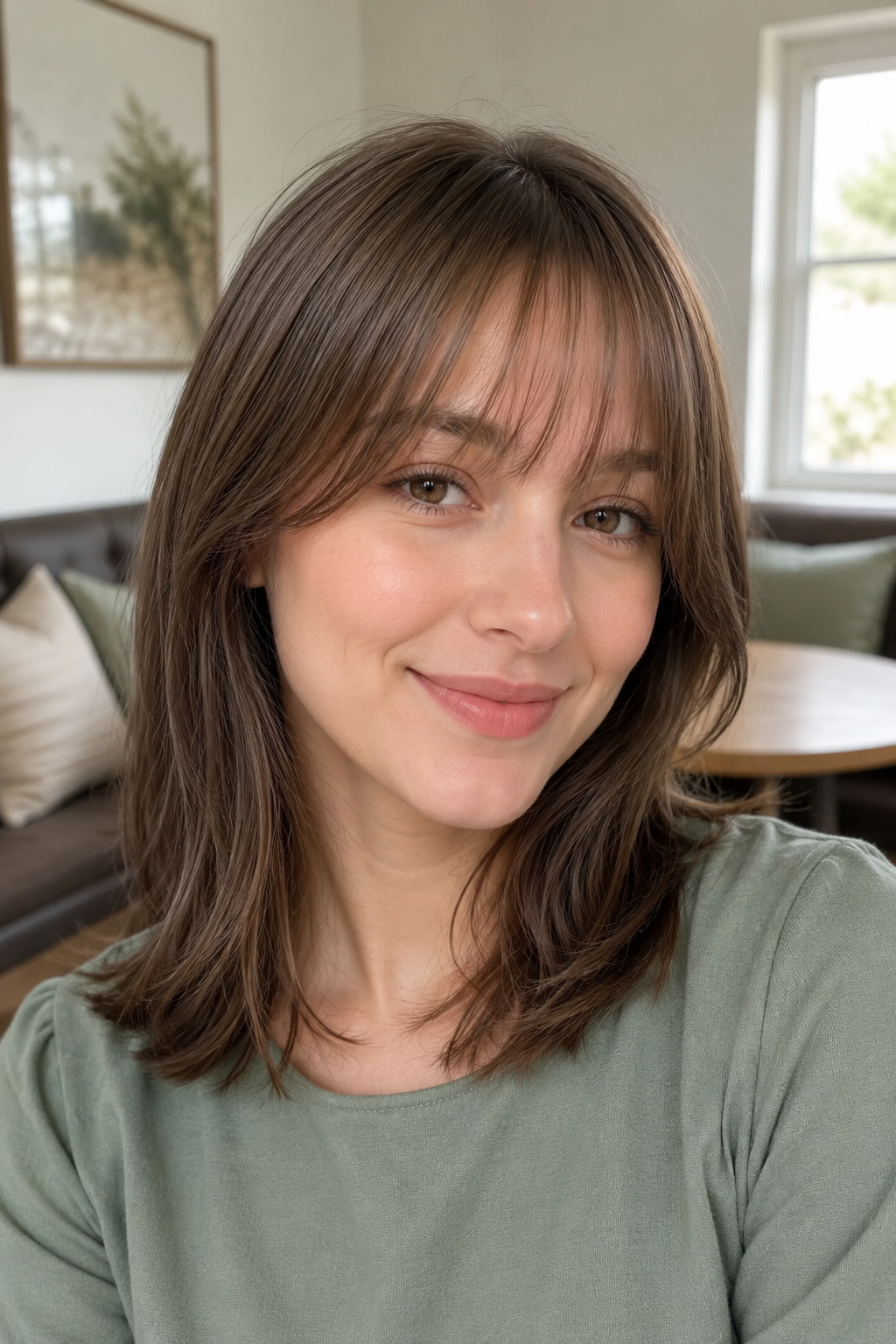
Light, see-through bangs cut thin enough to show the forehead behind them.
They add interest at the front without taking a heavy section out of hair that cannot spare it.
Suits anyone whose density is uneven or who wants a low-commitment fringe. They grow into face-framing pieces naturally, so there is no stage where you are stuck waiting for them to catch up.
Hot Roller Set
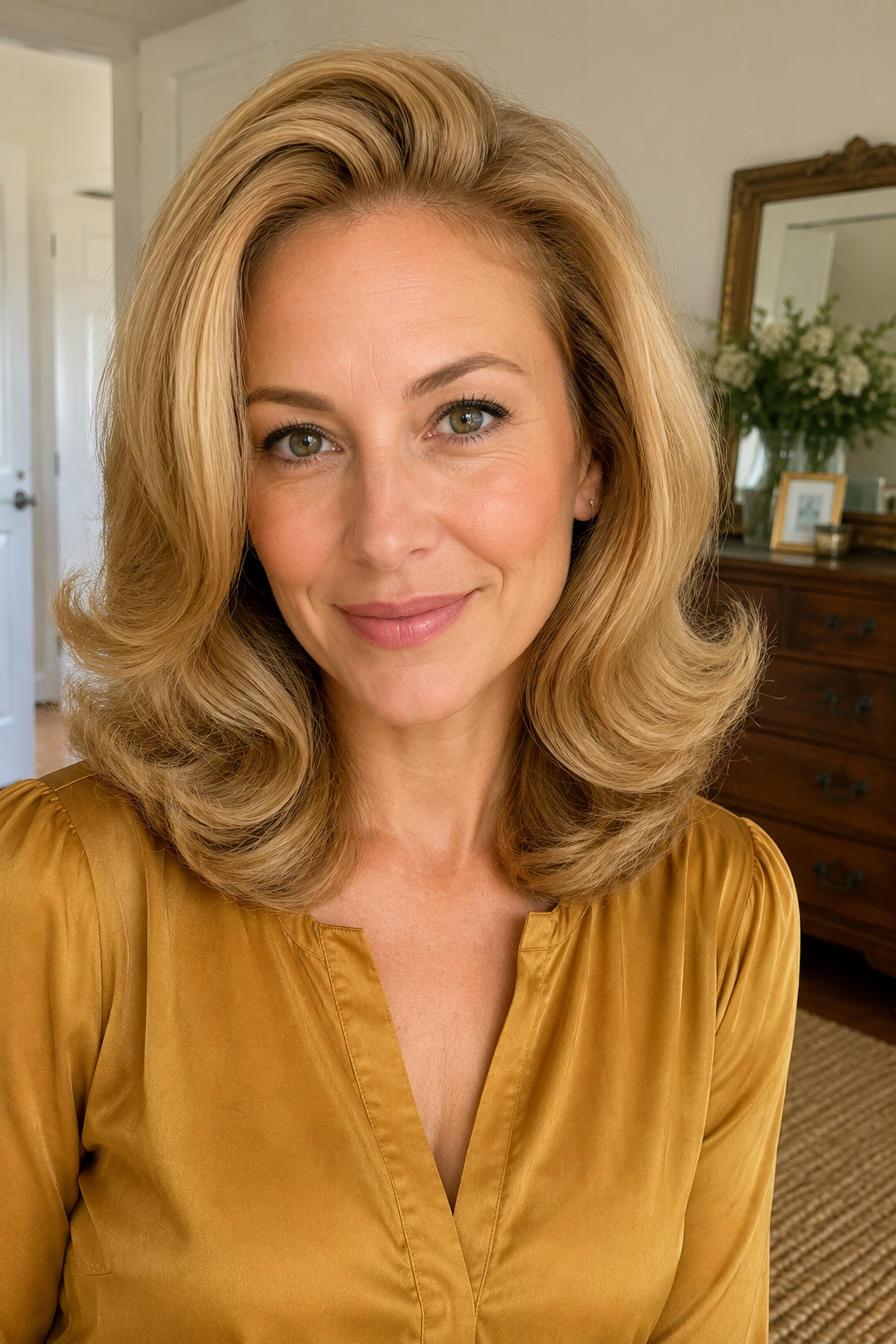
Rollers put in on dry hair and left until completely cool, then brushed out gently.
The cooling is what sets the shape. Taking them out warm undoes most of the volume you just built.
Works especially well before an event, since a roller set holds far longer on fine hair than heat styling from a wand. Twenty minutes gets you body that lasts the whole evening.
Root-Lift Blowout
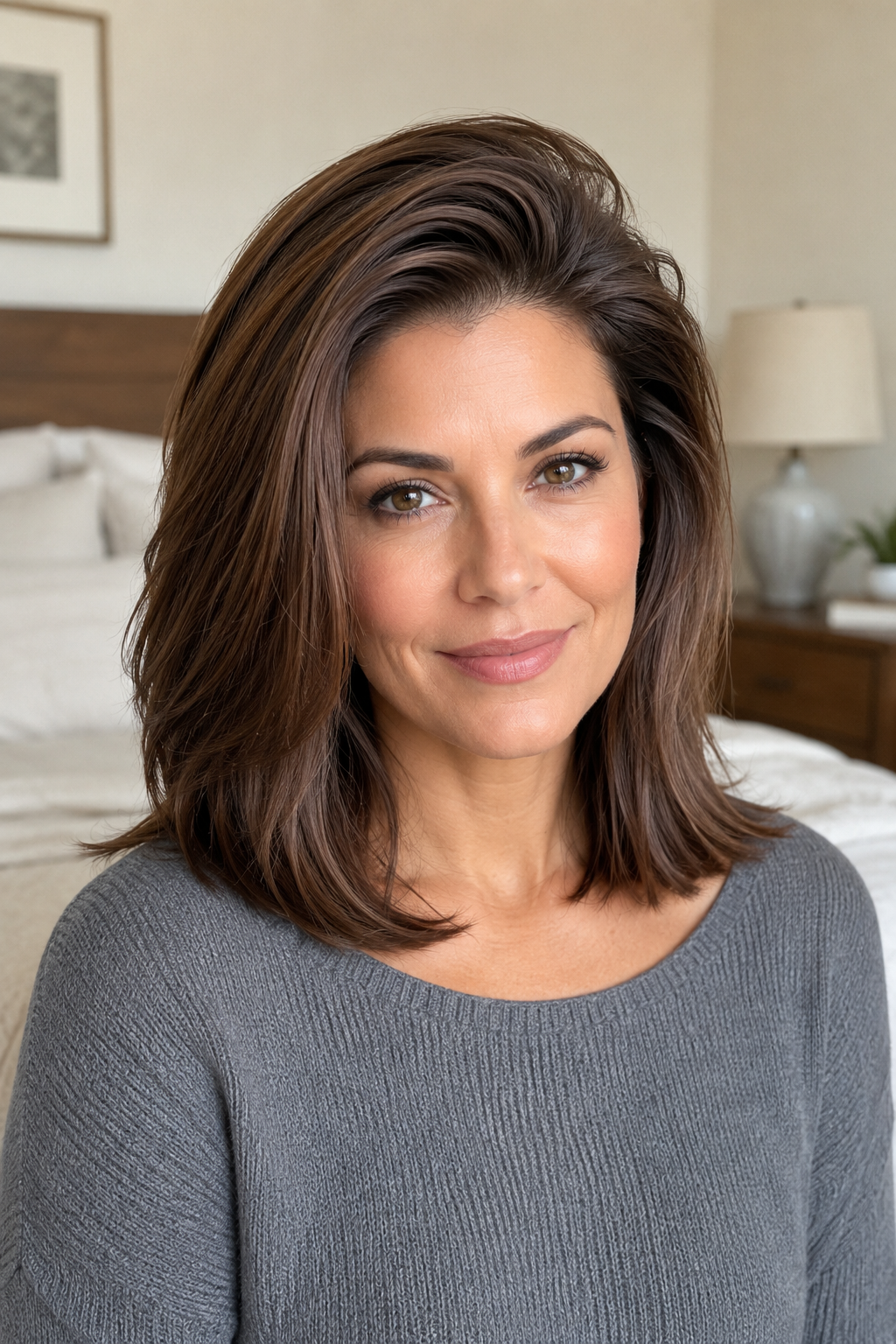
Drying the roots first with your head tipped forward, then finishing the lengths with a round brush.
Almost all the volume in a blowout comes from how the roots dry, not from what happens to the ends.
Perfect for anyone whose hair looks fine leaving the salon and flat at home. Get the roots about eighty percent dry upside down before you pick up a brush at all.
Bent Ends With a Flat Iron
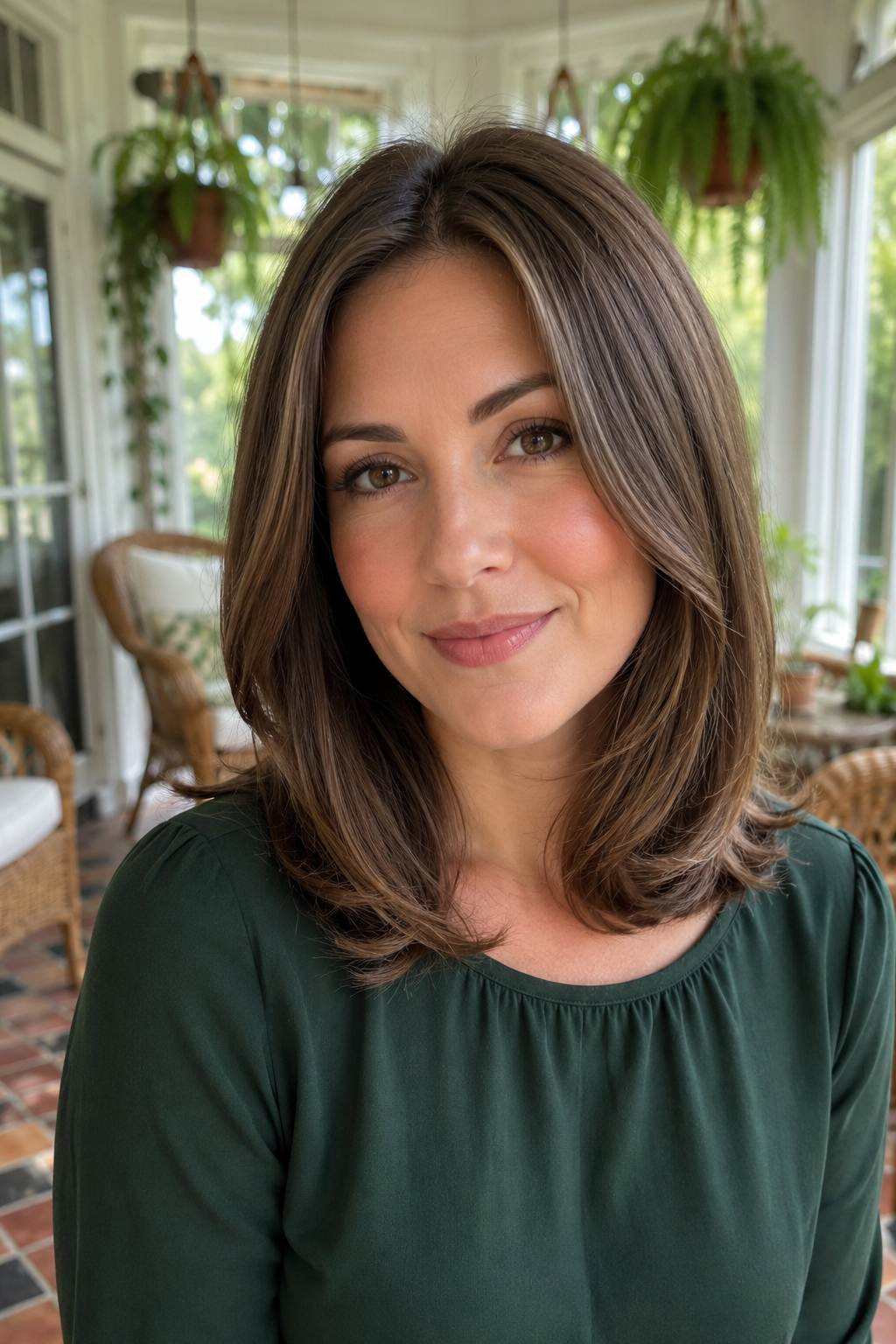
A flat iron used only on the last few inches, twisted slightly as it passes through to create a soft bend.
Ends that turn rather than hang straight give the bottom of the cut some visual weight.
Great for a quick finish on days you have not washed. Keep the iron off the mid-lengths entirely, since flattening those is what makes fine hair look limp.
Mousse at the Roots
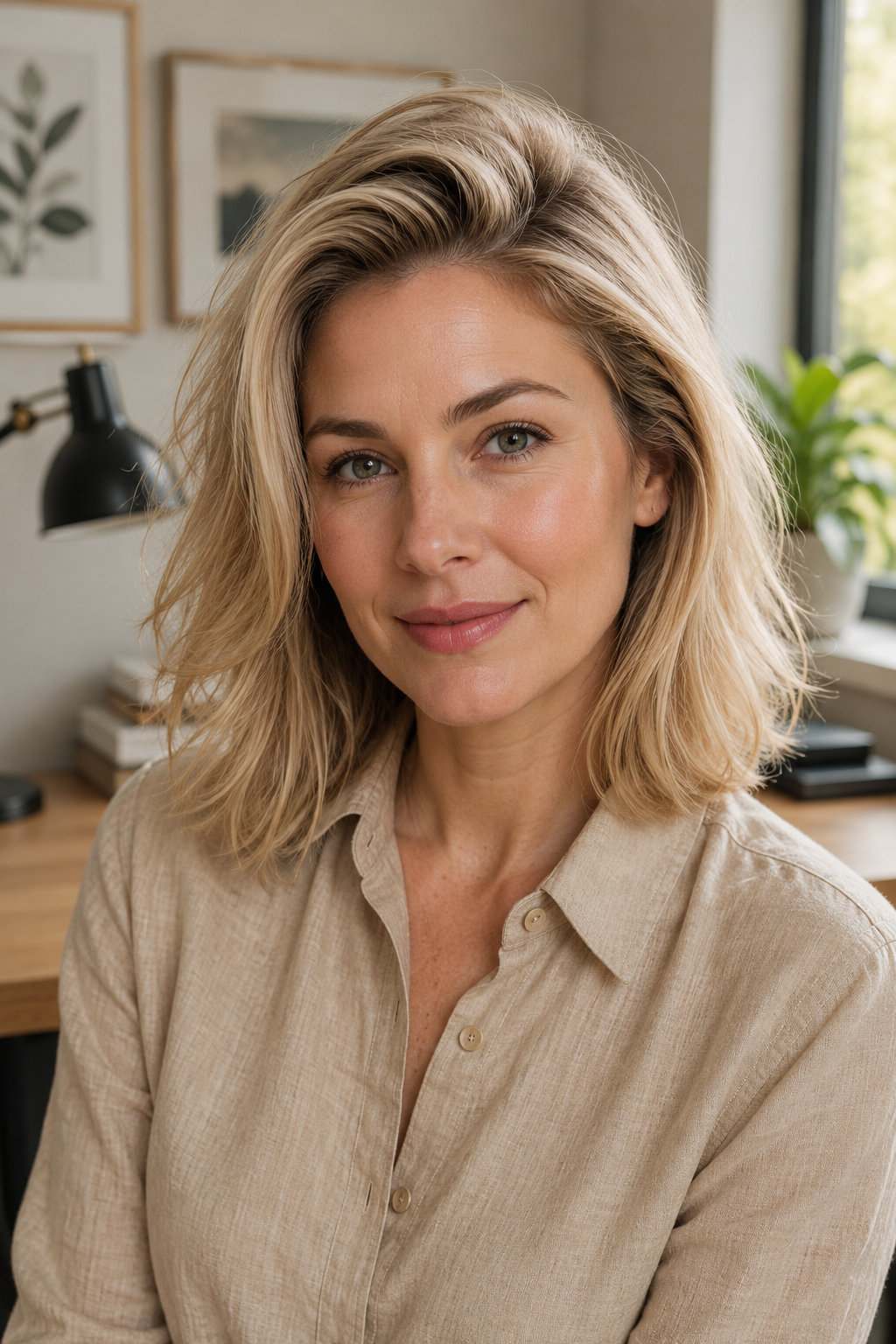
A light mousse worked into damp roots only, with the lengths left alone.
Mousse adds hold without the weight of a cream, and applying it only at the scalp is what keeps the ends from going flat.
Suits anyone who has tried volume products and found them heavy. A golf-ball-sized amount is plenty, and more product almost always makes fine hair look worse rather than fuller.
Balayage Over a Blunt Cut
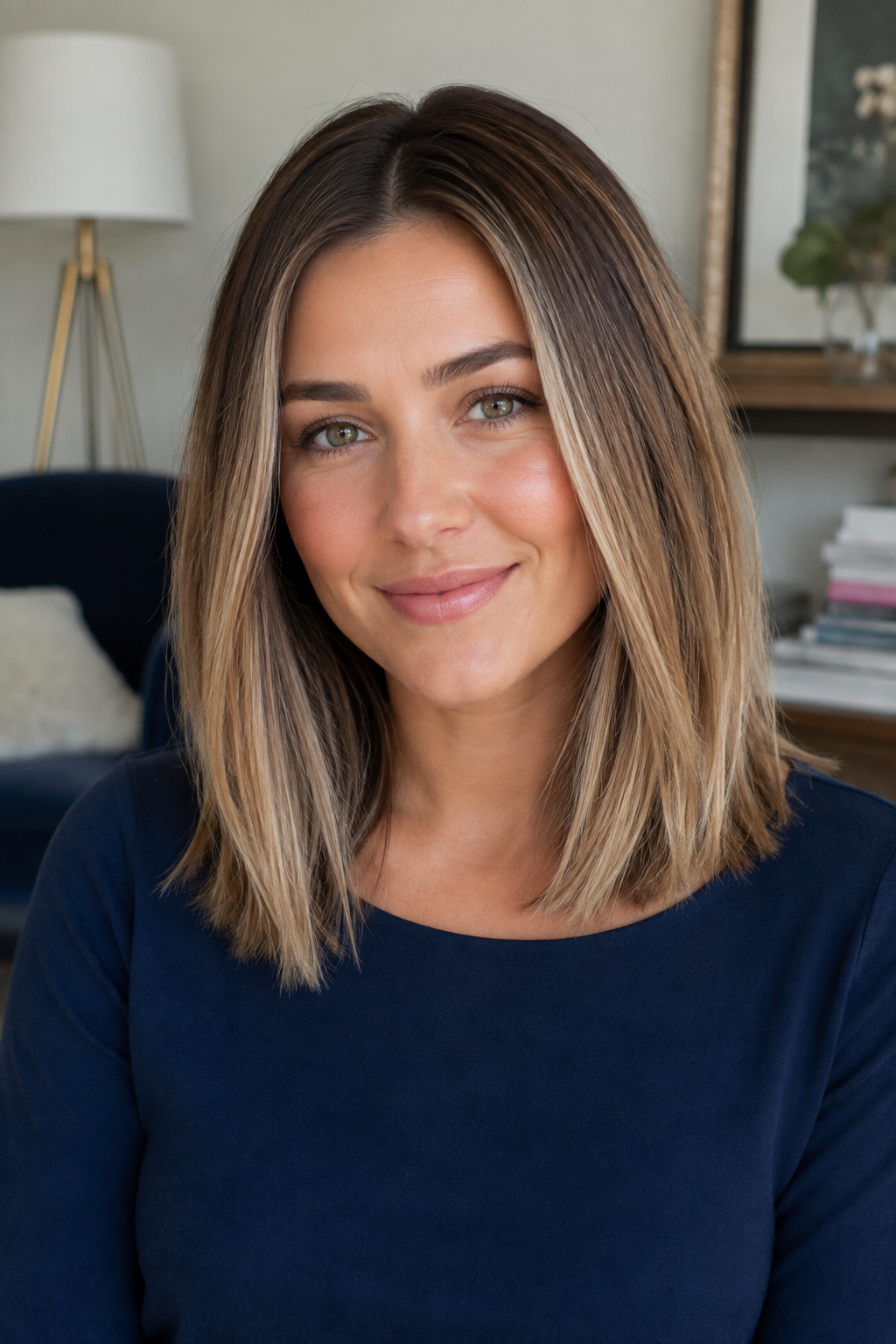
Hand-painted lightening through the length, sitting over a blunt perimeter.
Dimension breaks up what could otherwise be a very solid line, and the variation in tone makes the hair look like it has more going on than it does.
Works especially well if you like the blunt shape but find it heavy. The color grows out softly, so upkeep stays reasonable.
Darker Roots With Lighter Ends
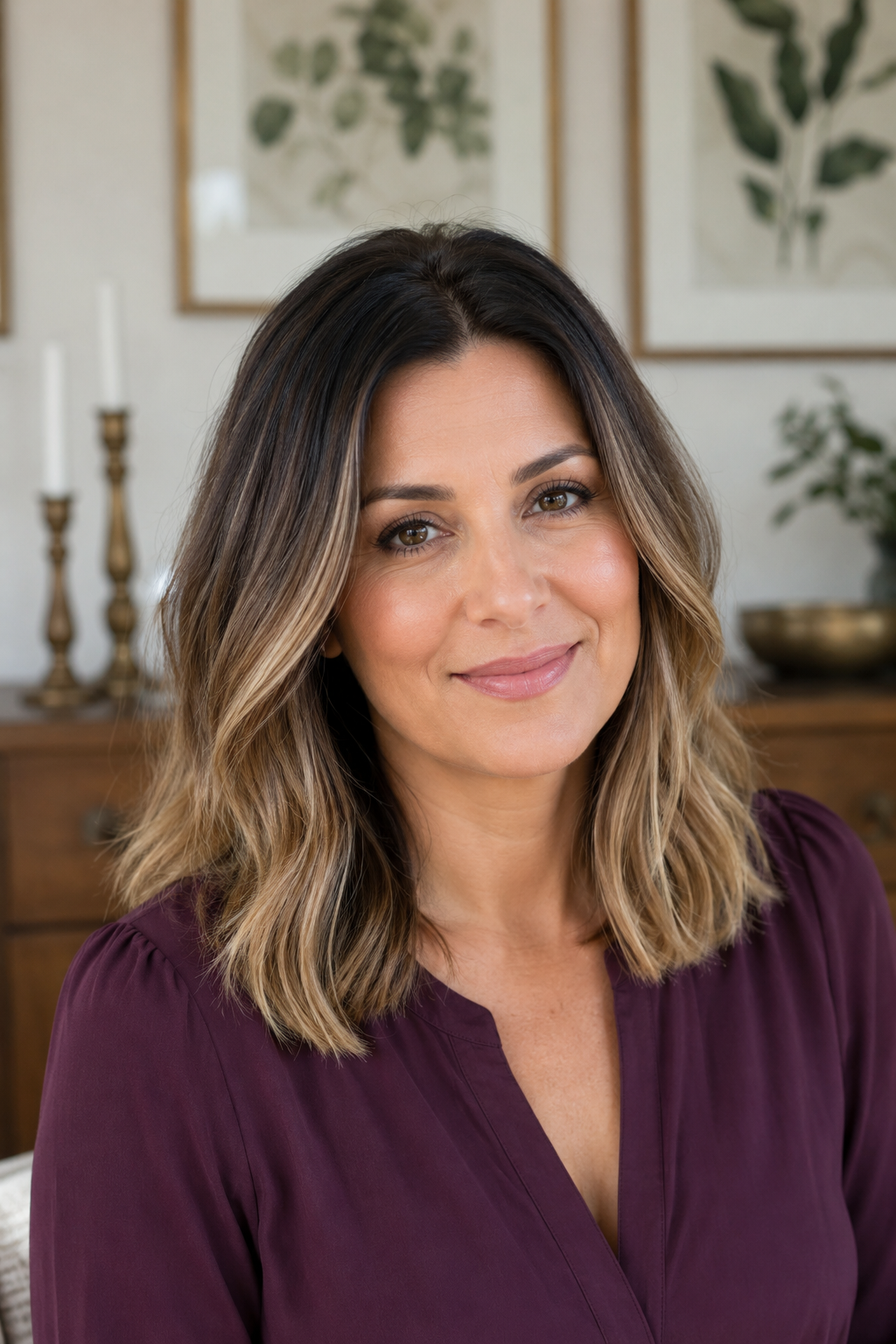
Depth kept at the scalp with brightness through the bottom half, blended so there is no visible line.
Darker roots make the hair look denser where it grows from, which is the area that gives fine hair away.
Perfect for anyone who wants to go lighter without losing the appearance of density. Our hair color ideas section covers picking tones that suit your base.
Fine Highlights for Dimension
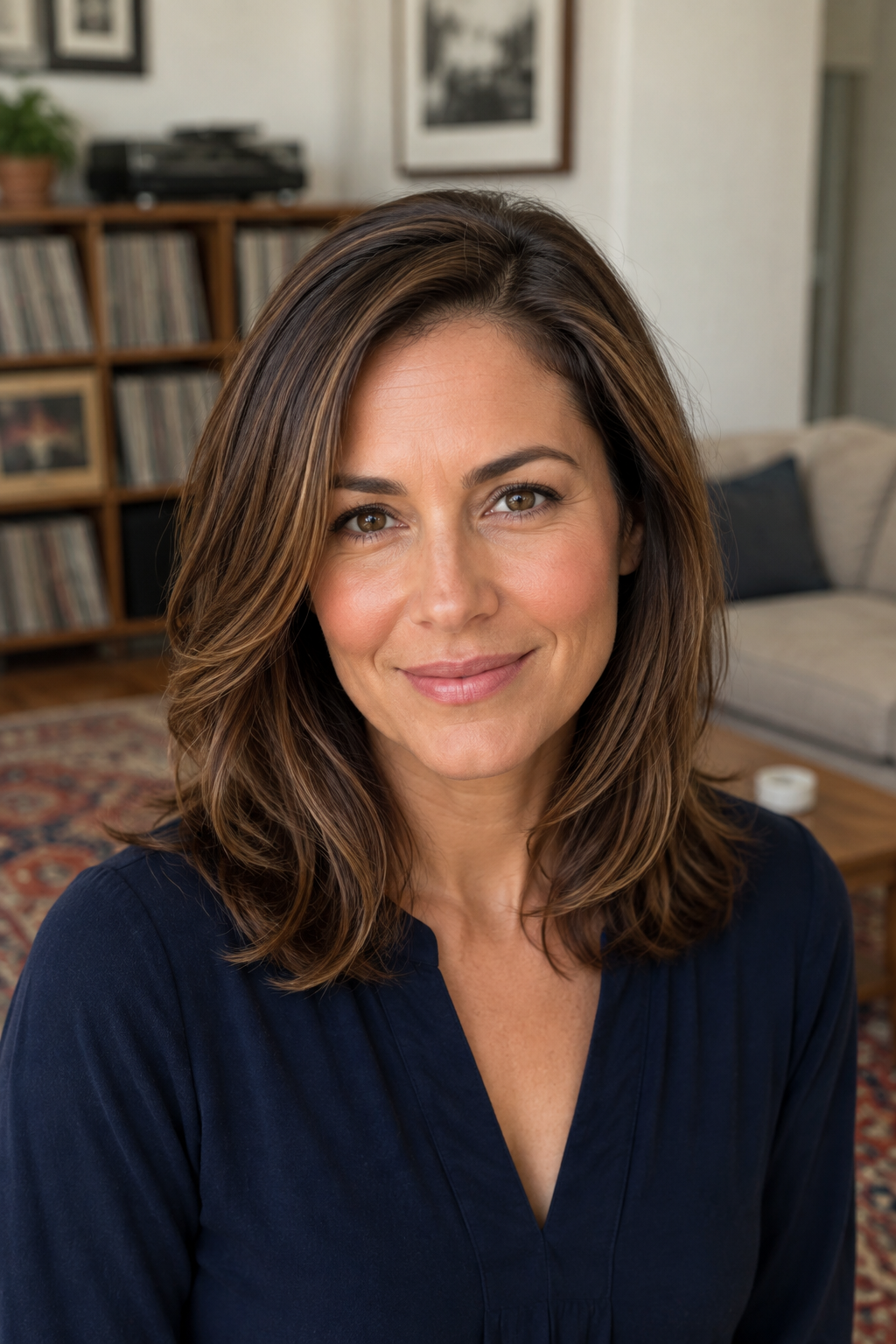
Very thin lightened strands scattered through, subtle enough that no single piece stands out.
Fine hair reflects light in one flat sheet when it is a single color. Adding small variations creates shadows, and shadows read as texture.
Great for anyone who wants dimension without an obvious regrowth line. Because so little hair is processed, the condition stays intact, which matters more on fine strands than on thick ones.
Comments
No Comments