
22 Fulani Braids Hairstyles Rooted in West African Tradition
Fulani braids take their name from the Fulani people, a nomadic group spread across West Africa and the Sahel, where braiding has long been a way to express identity, heritage, and status. What sets the style apart from other braids is its pattern: a cornrow down the center of the head, cornrows on each side braided back toward the face with loose braids hanging at the temples, and beads or cowrie shells threaded throughout. That signature has stayed largely the same for generations, even as stylists add curls, colour, and new parting. Here are the styles below, each keeping what makes Fulani braids Fulani.
Jump to:
- Classic Fulani Braids
- Fulani Braids With Beads
- Fulani Braids With Cowrie Shells
- Small Fulani Braids
- Jumbo Fulani Braids
- Long Fulani Braids
- Short Fulani Braids
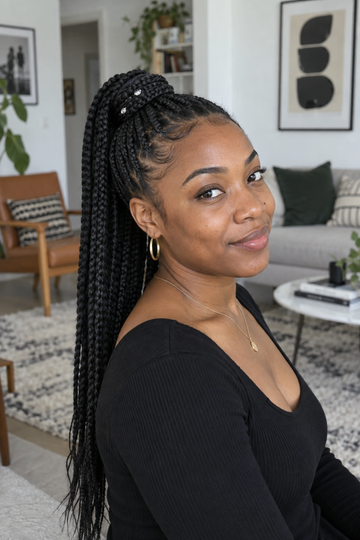
- Fulani Braids Into a Ponytail
- Fulani Braids Into a Bun
- Half-Up Fulani Braids
- Fulani Braids With Curly Ends
- Boho Fulani Braids
- Fulani Braids With a Curved Pattern
- Fulani Braids With a Zigzag Part
- Fulani Braids With Highlights
- Coloured Fulani Braids
- Fulani Braids With a Middle Part
- Fulani Braids With Loops
- Fulani Braids With Cuffs
- Fulani Braids With a Half Bun
- Fulani Braids for Short Natural Hair
- Fulani Braids With a Perimeter Braid
Classic Fulani Braids
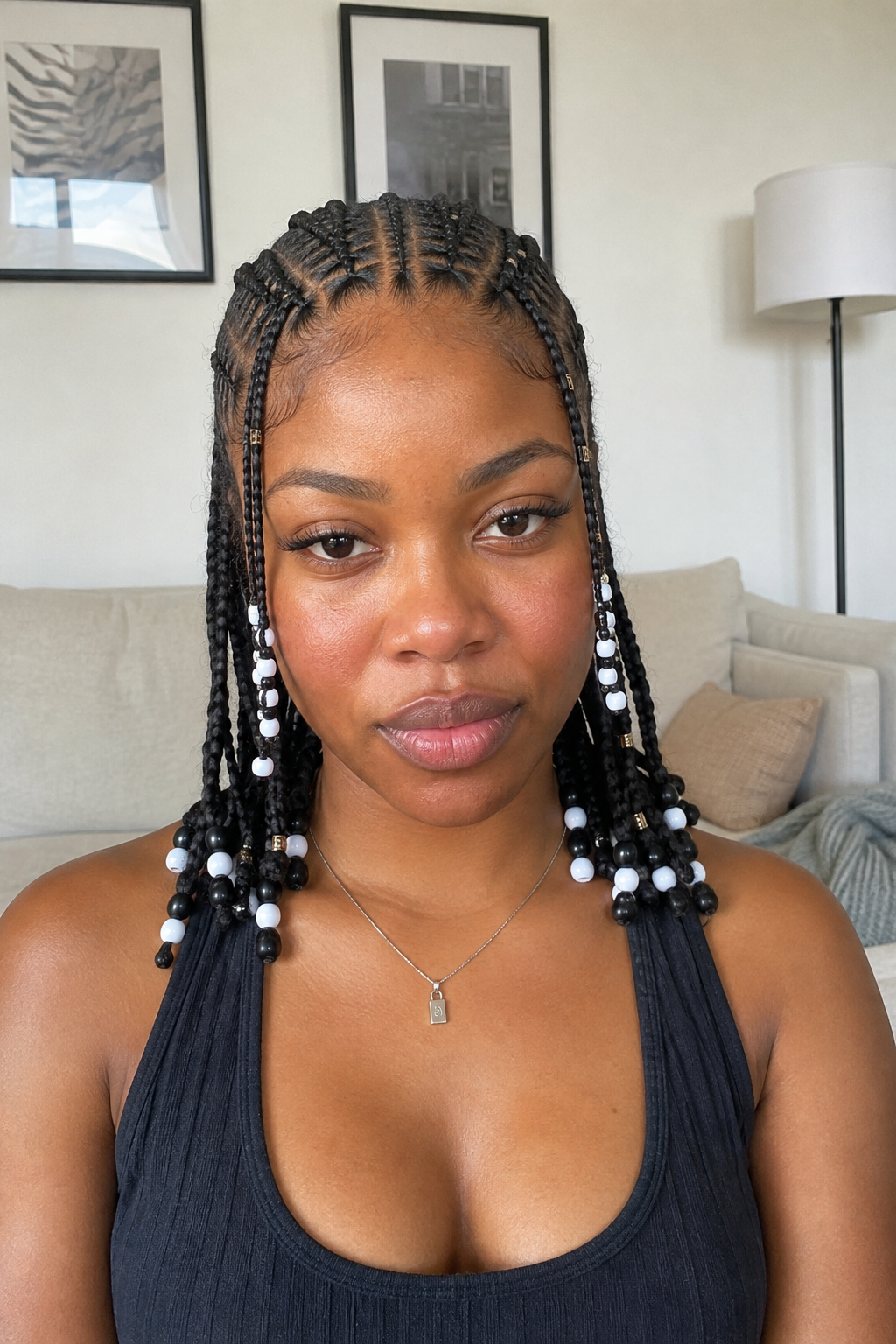
The original, and the one everyone pictures. A clean center cornrow runs down the middle, the others go straight back, and face-framing braids fall at the temples, finished with beads or cowrie shells.
The center cornrow and the hanging side braids are the true Fulani markers, so this version wears its heritage plainly.
Keep the parts crisp and space the beads evenly down the braids. It suits any face shape and works well as your first Fulani install.
Fulani Braids With Beads
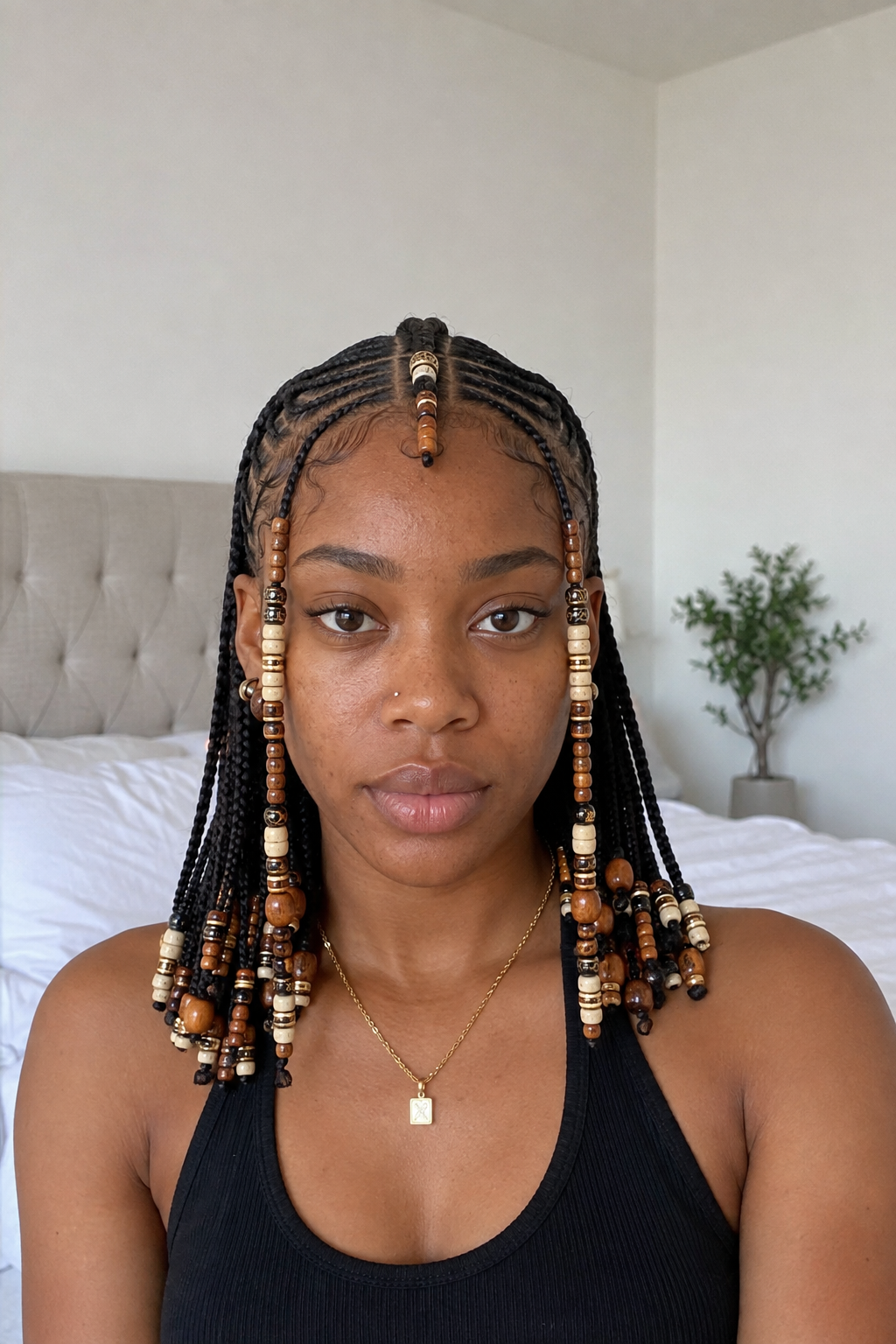
A Fulani base finished heavily with beads threaded down the braids and the face-framing tails. In Fulani culture the beads signal beauty, status, and cultural pride, not just decoration.
Concentrating the beads on the front and the face-framing side braids is what makes the whole pattern come alive and catch the light as you move.
Wooden beads are heavier and pull more on the scalp, so use them sparingly near the ends. Glass or plastic beads sit lighter and suit everyday wear better.
Fulani Braids With Cowrie Shells
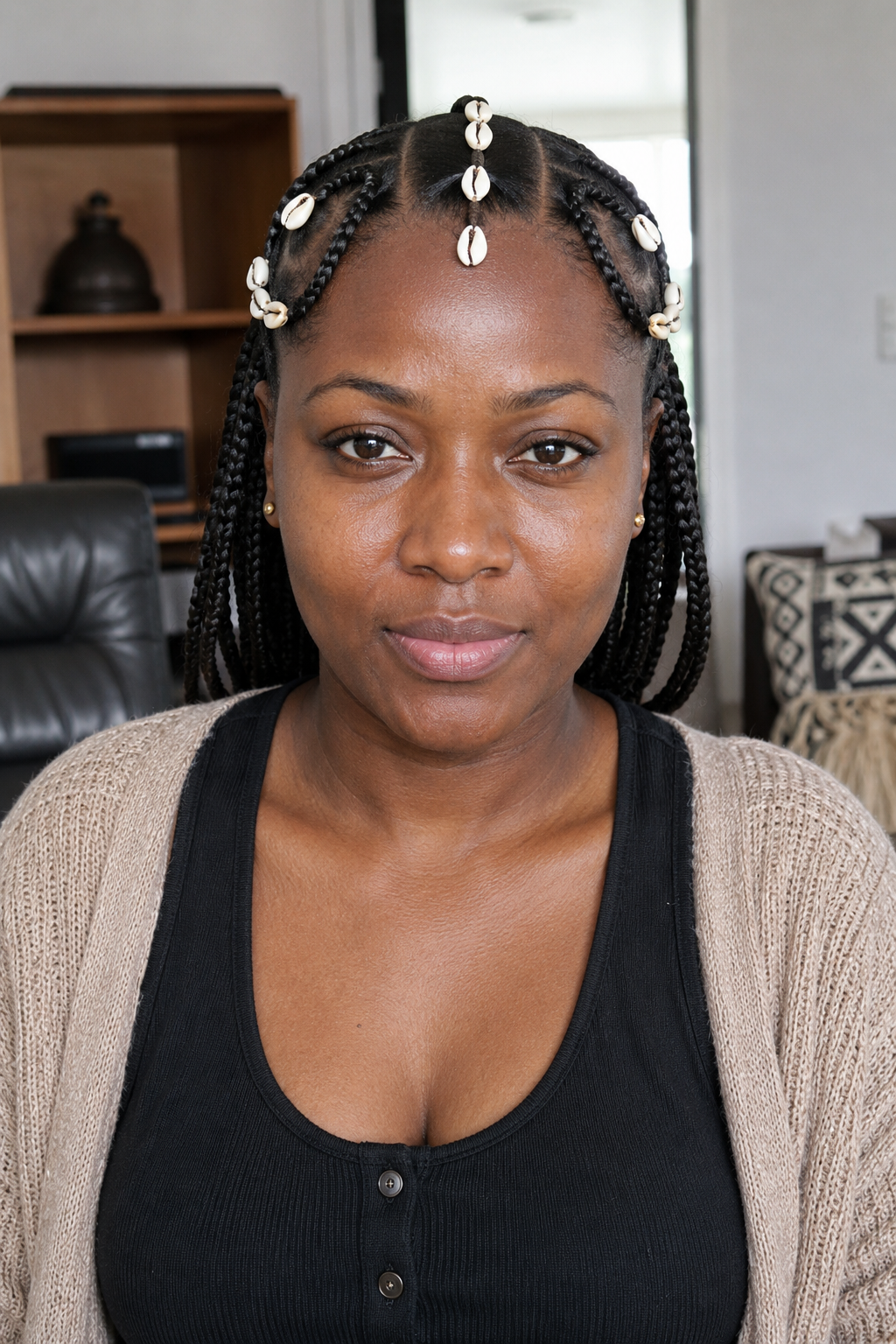
A Fulani style adorned with cowrie shells along the center cornrow and the side braids. The shells carry deep meaning, tied to beauty and wealth in the tradition.
Threading shells through the center cornrow and side braids is what gives this its regal, earthy, and unmistakably Fulani finish that photographs so well.
Space the shells out so they do not clump together or weigh the braids down. A few on the face-framing tails frame the face beautifully and softly.
Small Fulani Braids
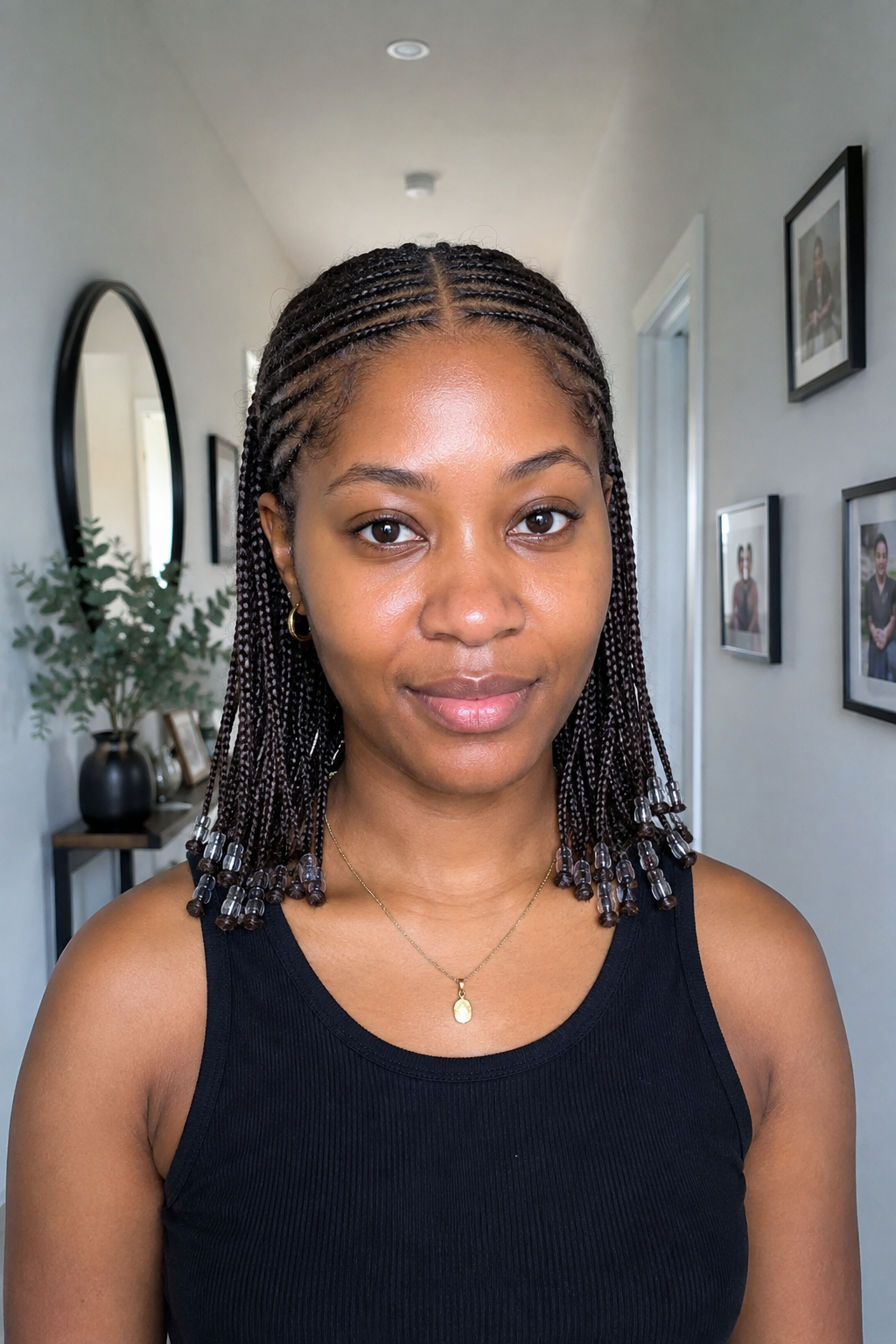
A Fulani pattern done in thin, small cornrows and braids for a delicate, intricate finish. The fine braids give more room for detailed parting and designs.
Working the center cornrow and side braids small is what lets the whole pattern look sharp and precise across the head, with room for detailed parting.
They take longer to install than thicker braids but last well over the weeks. Add a few beads to the face-framing braids for the traditional touch.
Jumbo Fulani Braids
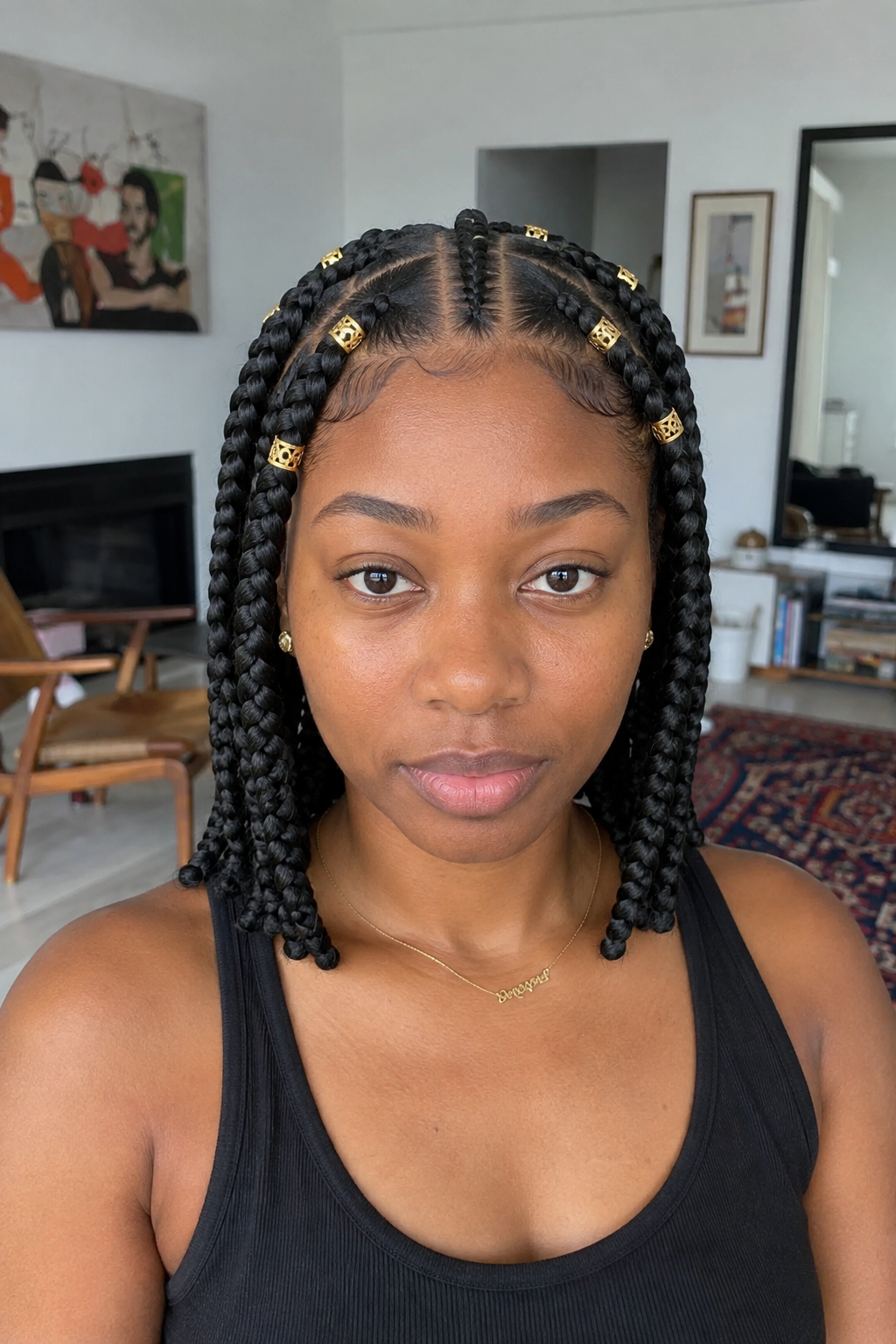
The Fulani pattern sized up into thick, chunky braids for a bold statement and a much faster install. Fewer, larger braids keep the look striking and simple.
Keeping the center cornrow and the side braids jumbo is what makes this the quick install option while still looking clearly and recognisably Fulani.
Feed in hair for length so the thick braids do not look stumpy or short. A few gold cuffs finish it off without adding much weight to the ends.
Long Fulani Braids
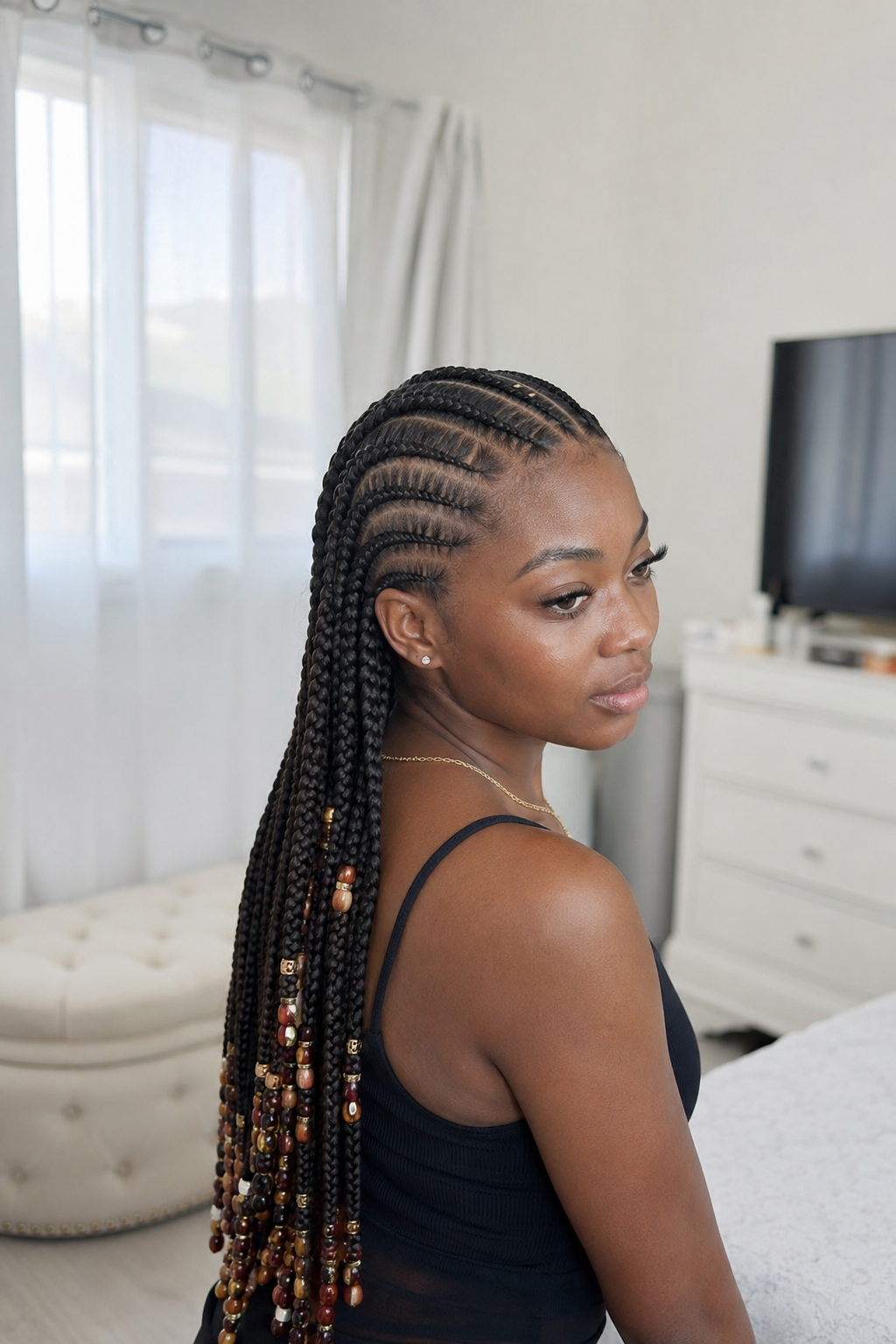
The Fulani pattern taken long, with the box braids in the back reaching past the shoulders. Kanekalon hair is fed in to build the dramatic length.
The signature center cornrow and the face-framing tails stay up top while all the length flows behind you, giving the whole style real drama and movement.
The extra length adds weight, so keep the beads light near the ends. Sweep the braids over one shoulder to show off both the pattern and the length at once.
Short Fulani Braids
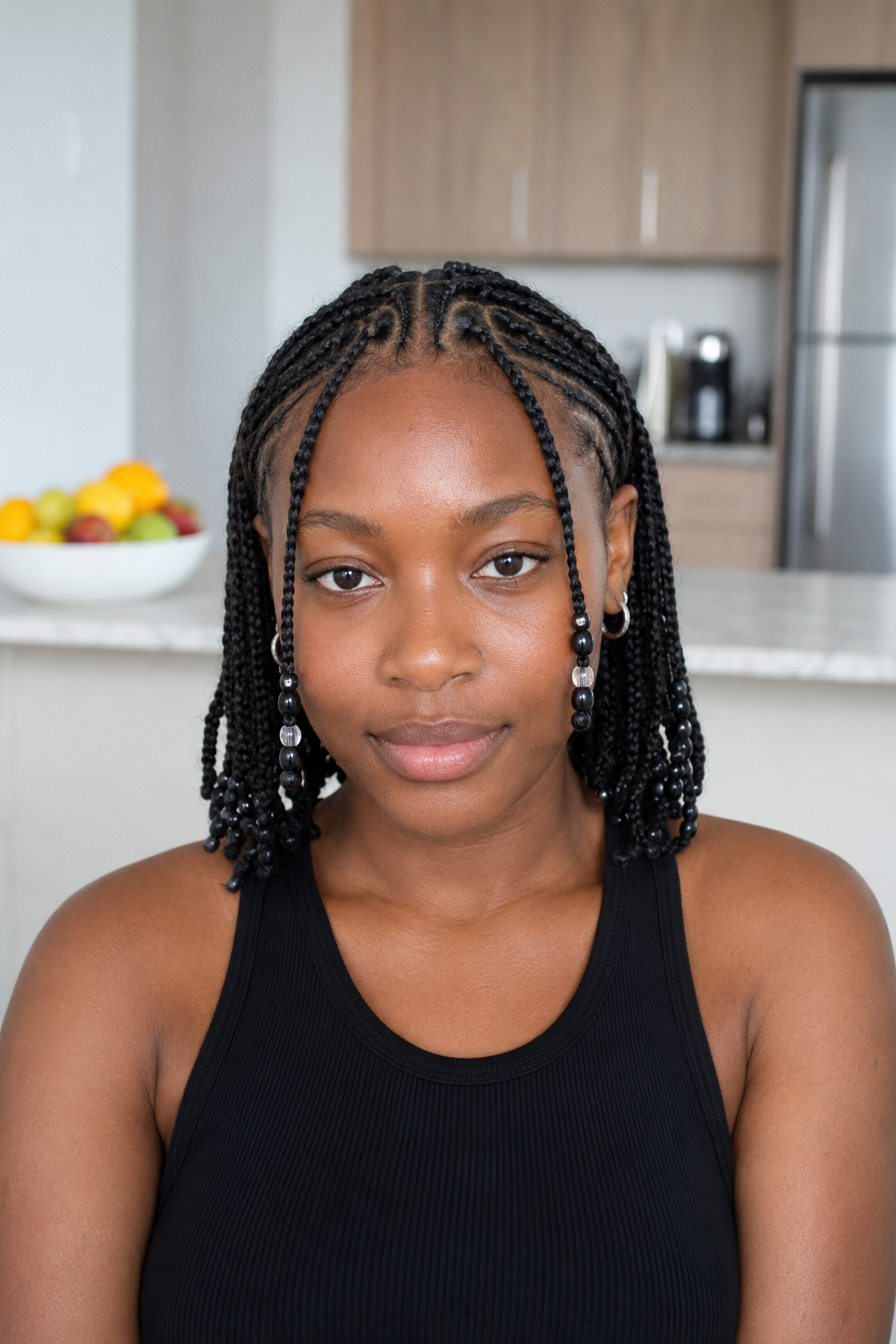
The Fulani pattern kept short, with the braids sitting around the shoulders or above. It is lighter, cooler, and easier to manage than a long install.
Even kept short, the center cornrow and the hanging side braids keep the look unmistakably Fulani, so nothing is really lost by going for less length.
It suits warm weather and anyone wanting far less weight on the head through the day. Beads on the shorter face-framing braids still frame the face nicely and softly.
Fulani Braids Into a Ponytail
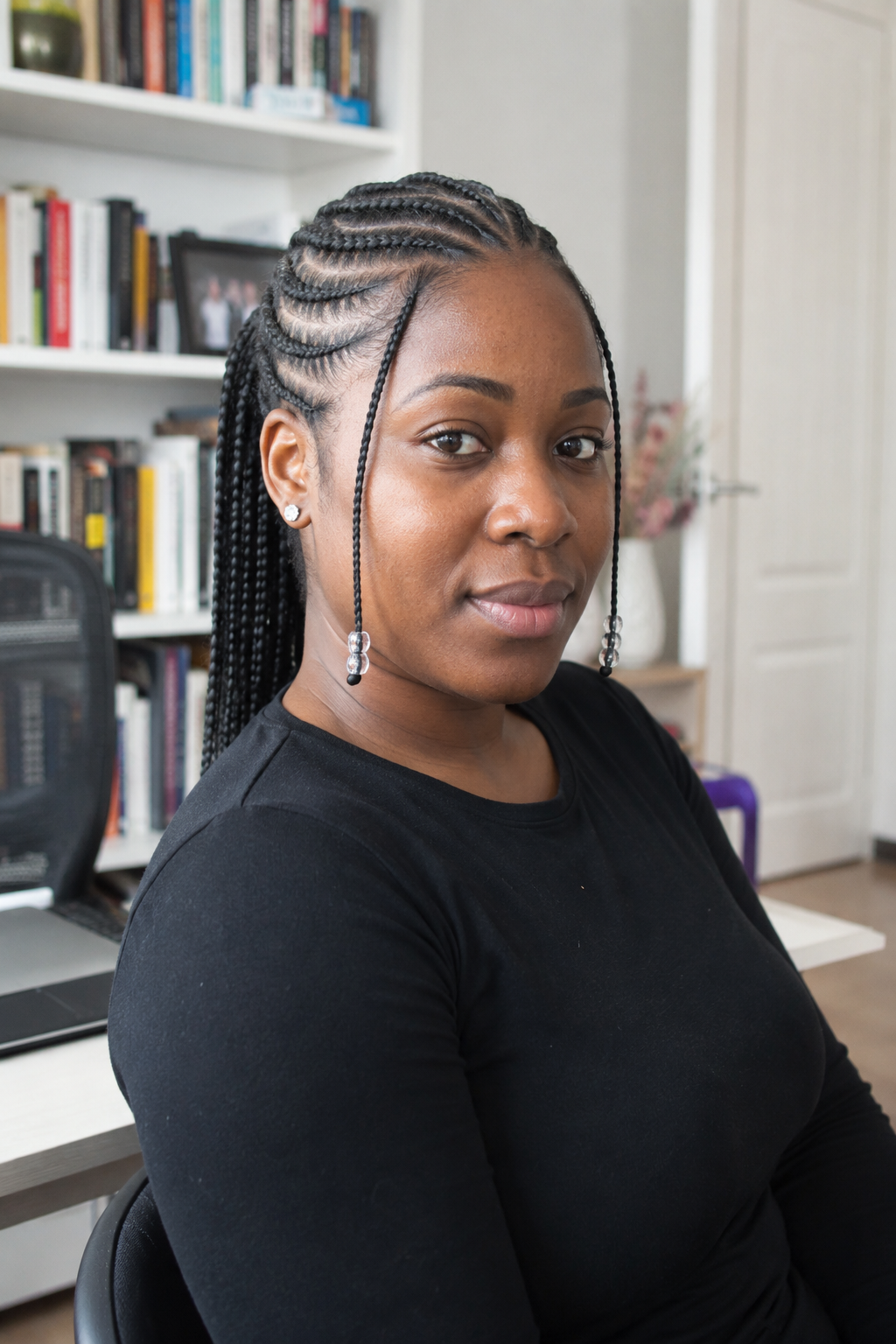
All the drama of the Fulani pattern gathered up into a sleek ponytail. The center cornrow and side braids feed back into a single gathered tail.
Pulling the braids up and back is what keeps the signature front pattern on show while lifting all the length up and off your neck.
It suits work and dressed-up events alike. Wrap a braid around the base to finish it, and leave a couple of beaded tails loose at the front.
Fulani Braids Into a Bun
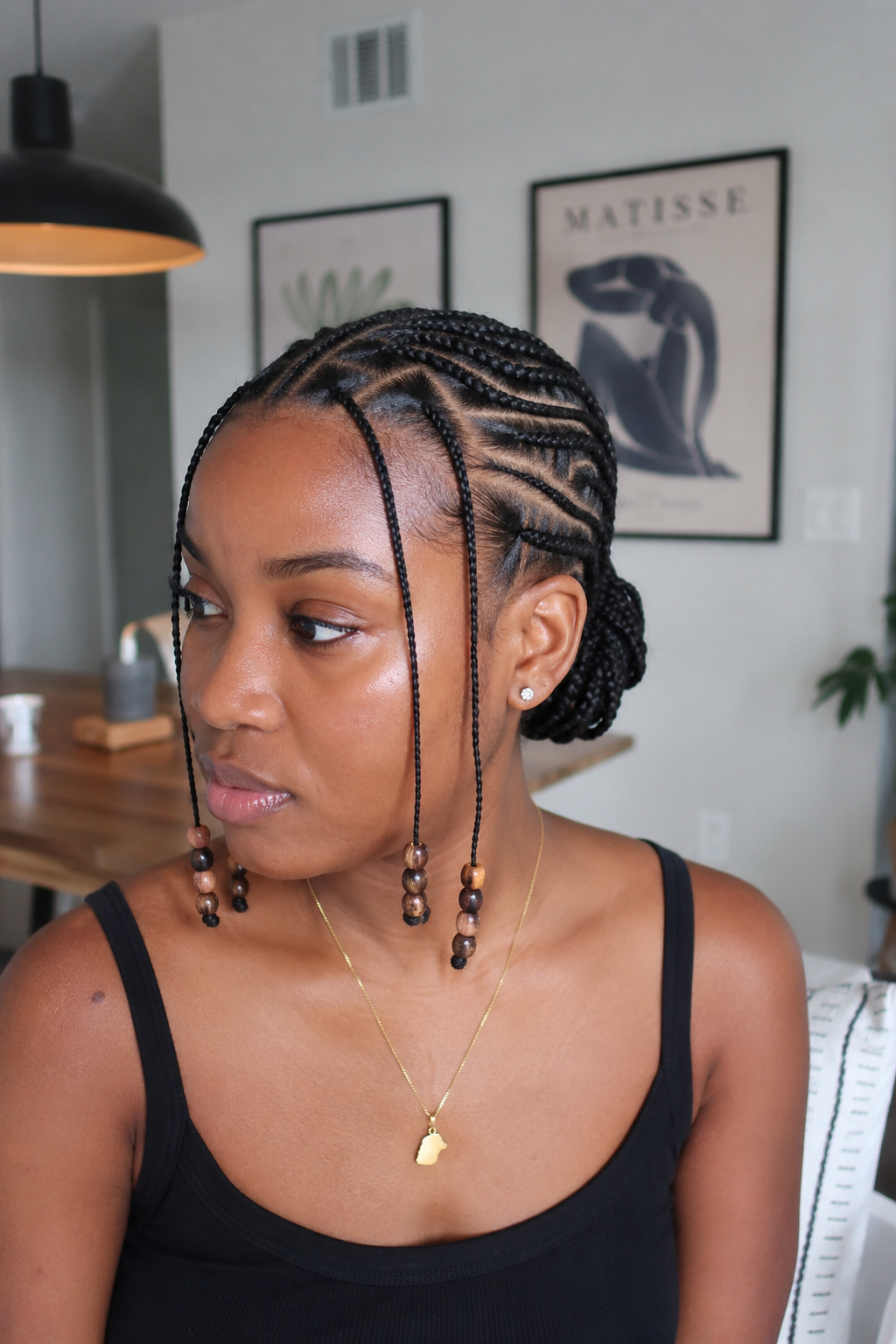
The Fulani pattern gathered and coiled into a bun, high or low. The front cornrows and face-framing braids stay visible while the length is tucked away.
Gathering the braids into a bun is what keeps this neat and off the neck while still showing off the front pattern that matters most to the look.
Leave a few beaded braids loose around the face to soften it. It moves easily from an everyday look to a formal occasion with little effort.
Half-Up Fulani Braids
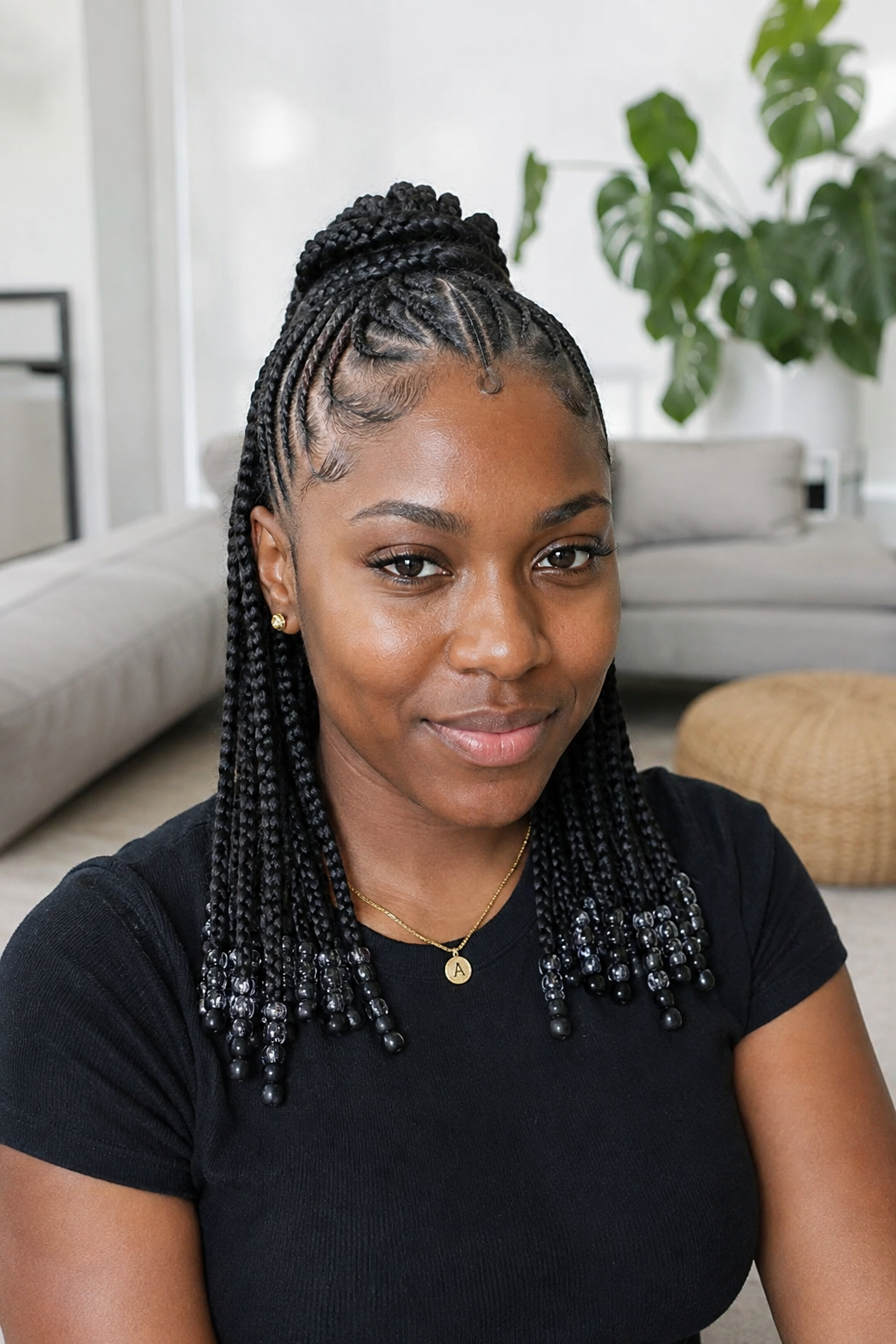
The Fulani pattern with the top and back braids gathered up while the rest hang loose. It shows the length and the pattern at once.
Pulling half up keeps the center cornrow and the side braids on full display while letting the beaded lengths fall free below around the shoulders.
It is a versatile, comfortable everyday option that works anywhere. A few beads on the loose braids and a couple pinned up top balance the whole look nicely.
Fulani Braids With Curly Ends
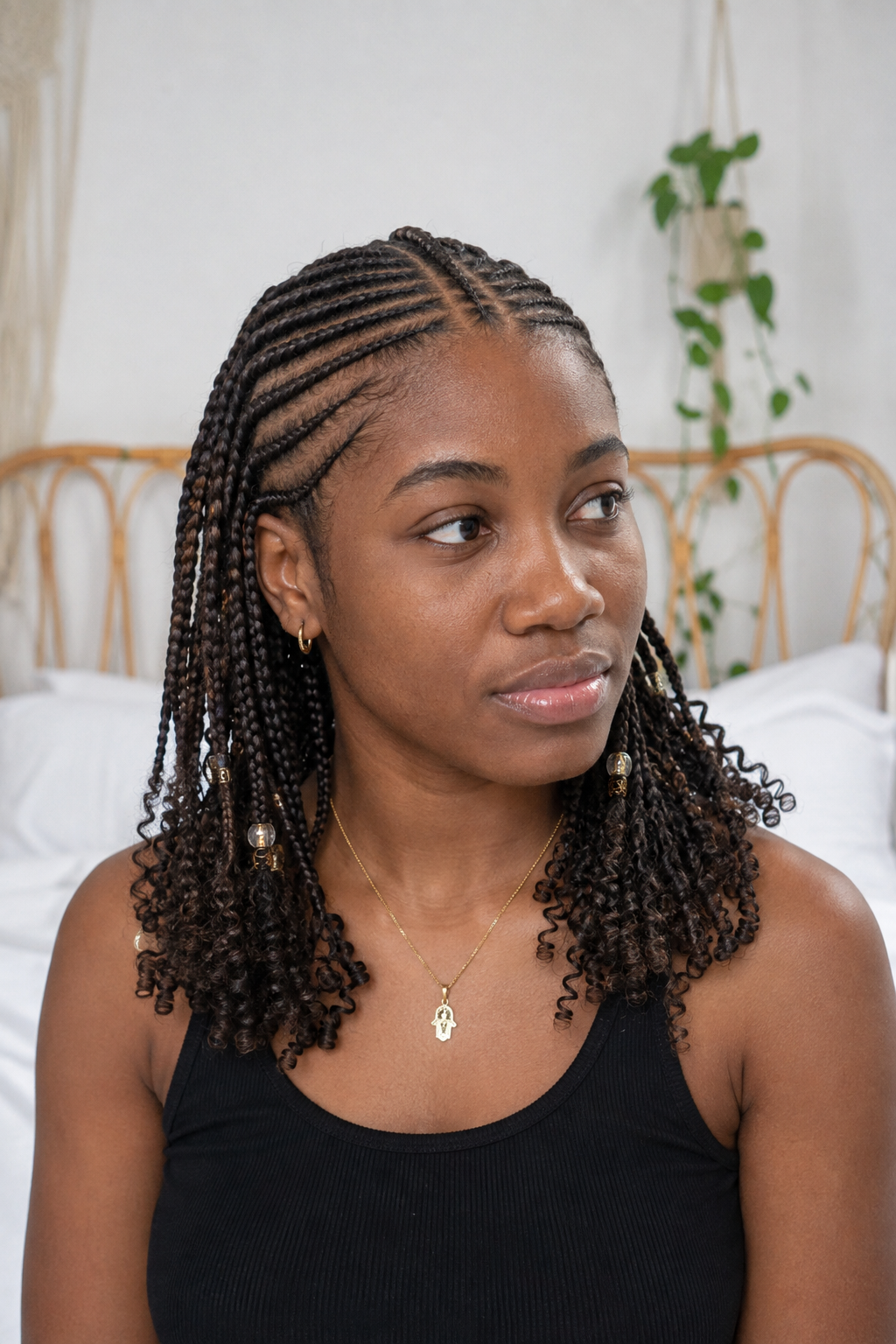
A modern take where the box braids in the back are left with loose, curly ends for a soft, boho finish. The front keeps the traditional Fulani pattern.
Pairing the crisp center cornrow and side braids with soft curly ends is what gives this its trendy, sun-kissed contrast between sharp and soft.
Human-hair curls hold the boho texture best over the weeks of wear. Seal the curly ends with a little oil to keep them soft, springy, and defined between days.
Boho Fulani Braids
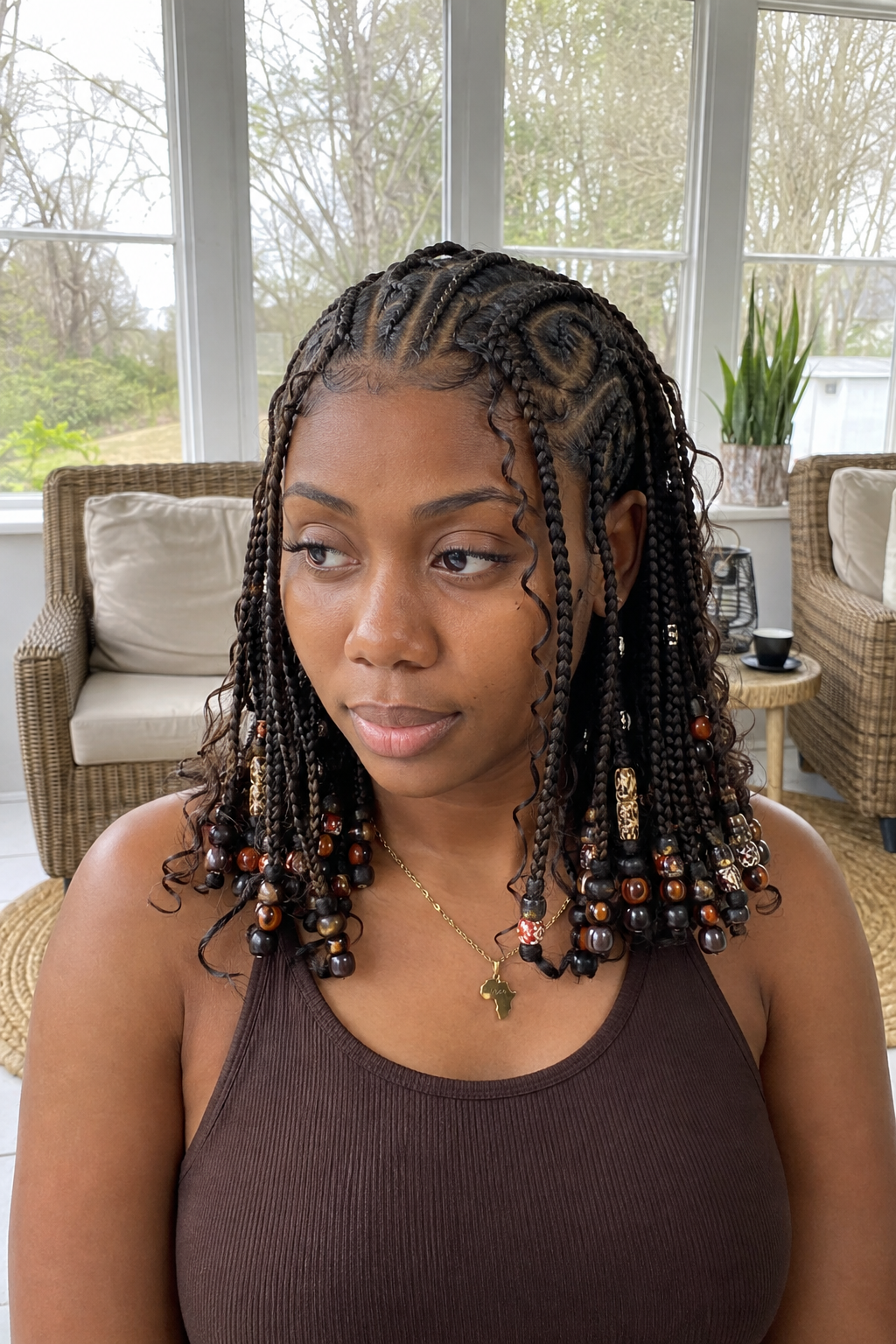
A relaxed, bohemian version with the Fulani pattern up top and loose curly strands woven throughout for a soft, undone feel. It softens the sharp braided look.
Keeping the signature center cornrow and the face-framing braids while adding loose curls throughout is what makes this the relaxed, boho reading of the tradition.
It suits a casual, earthy, relaxed vibe for any day. Water-wave hair gives the most natural-looking loose curl woven through and around the braids for that soft finish.
Fulani Braids With a Curved Pattern
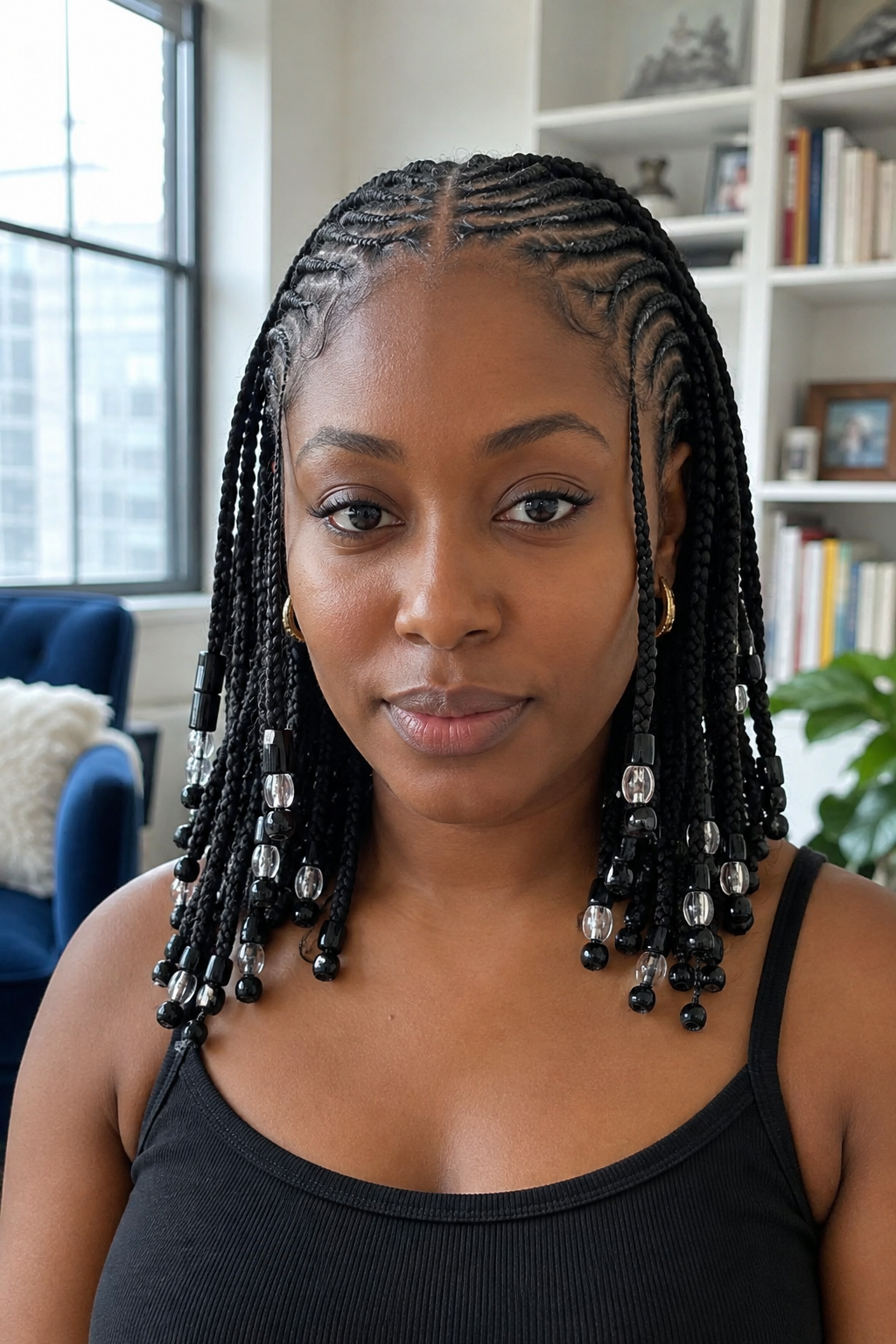
Rather than straight-back cornrows, the braids swoop and curve across the head in a soft, flowing design. The center cornrow and side braids remain.
Curving the parts is what modernises the Fulani look while keeping the markers that define it, so the whole thing looks fresh but still respectful of the tradition.
Have a skilled braider map the curves out carefully first, since uneven parts show badly. Beads on the face-framing braids finish the look off in the traditional way.
Fulani Braids With a Zigzag Part
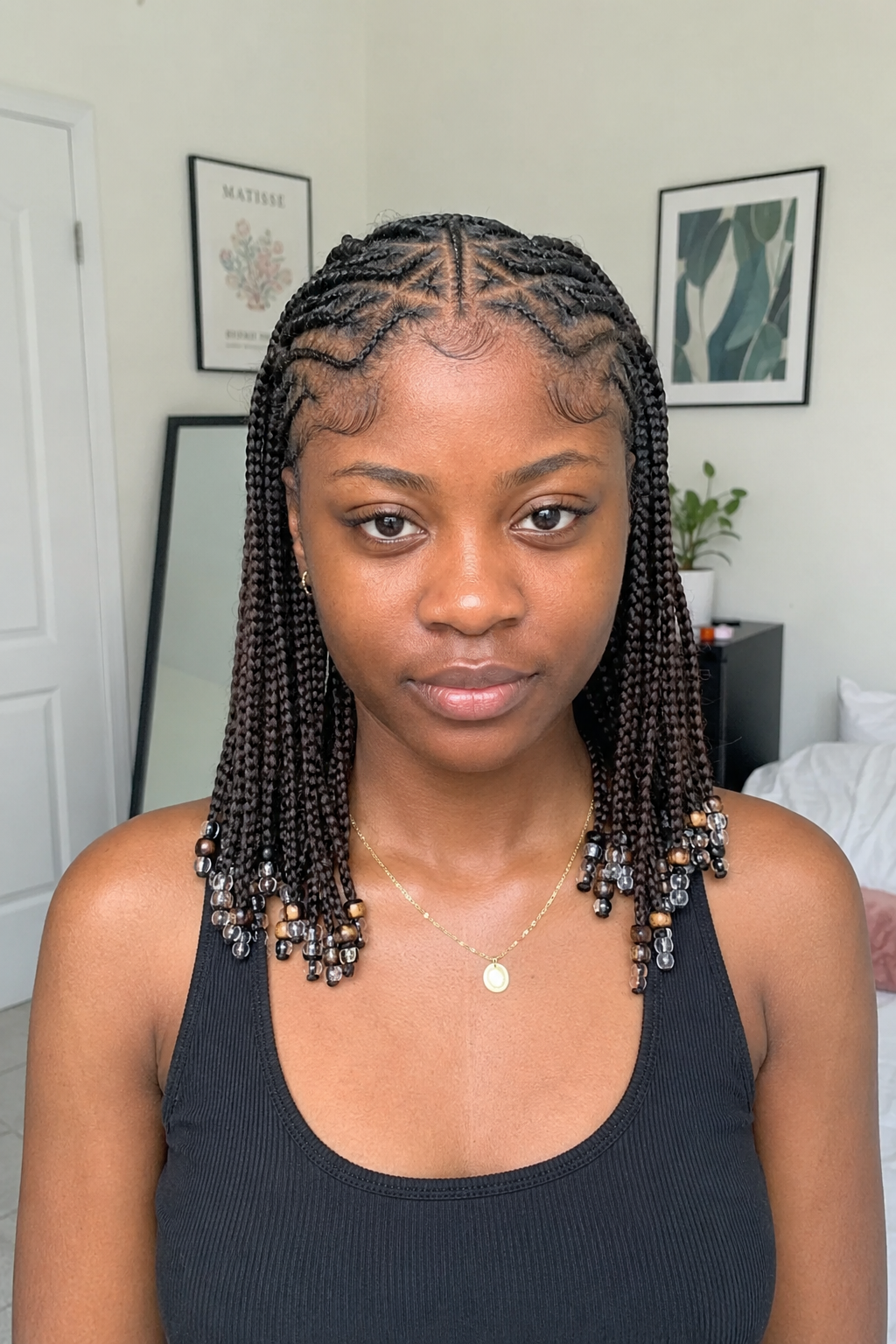
A creative version where the parts form sharp zigzag or geometric lines across the scalp, with the center cornrow and side braids kept intact. The angular parting adds a graphic edge.
Playing with the parting is what lets you personalise the whole style while keeping it clearly and recognisably Fulani at the front of the head.
The zigzag parts need precise, careful sectioning, so book a good braider. Keep the beads simple so the graphic parting stays the main focus.
Fulani Braids With Highlights
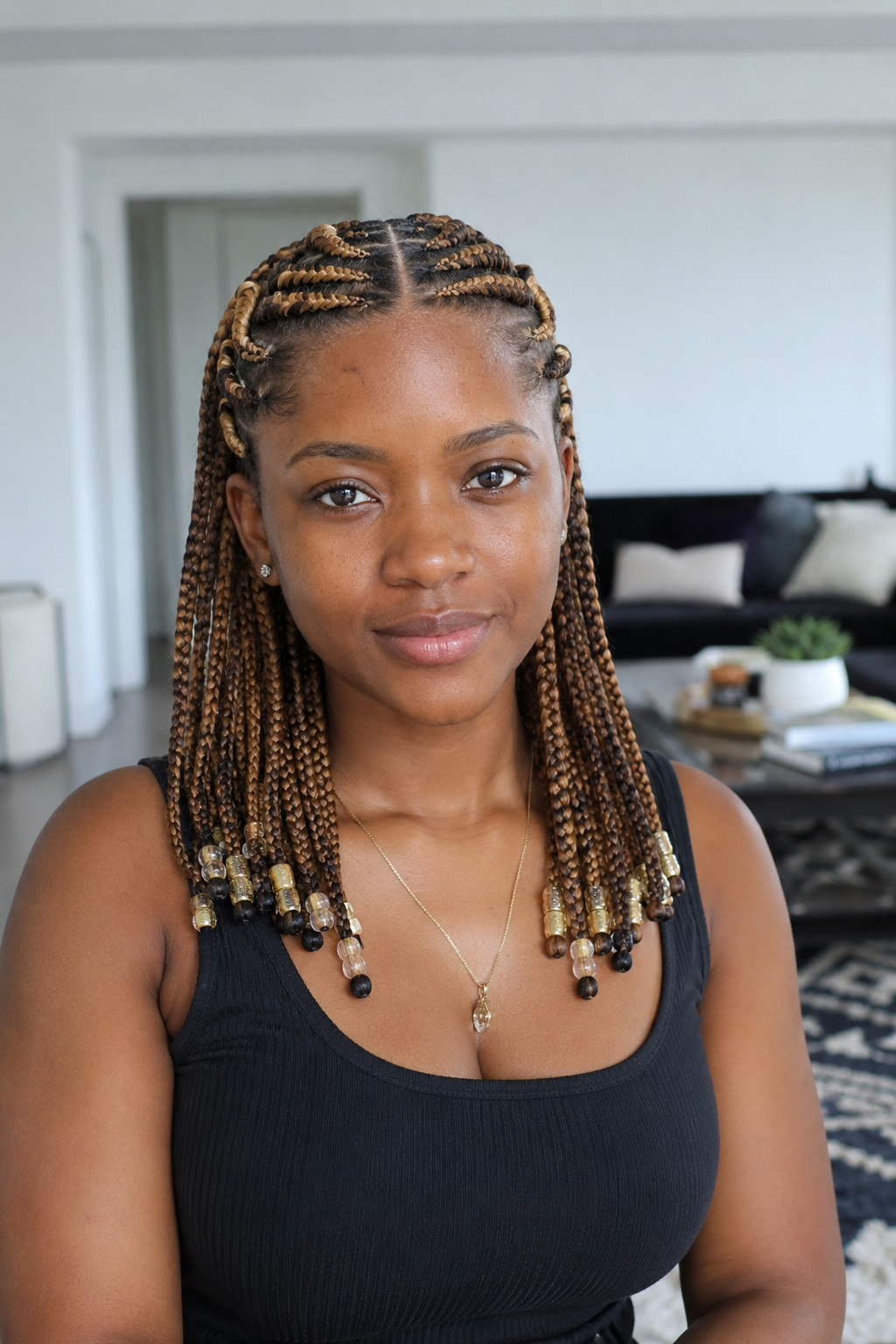
The Fulani pattern done with honey gold or caramel highlights fed into the braids. The lighter tone catches the light through the center cornrow and side braids.
Adding colour is what gives this real warmth and dimension while the traditional center cornrow and side braids stay front and center.
Choose a highlight shade that suits your own skin tone and undertone best. Deep condition the added hair to keep the colour looking rich and glossy over the weeks.
Coloured Fulani Braids
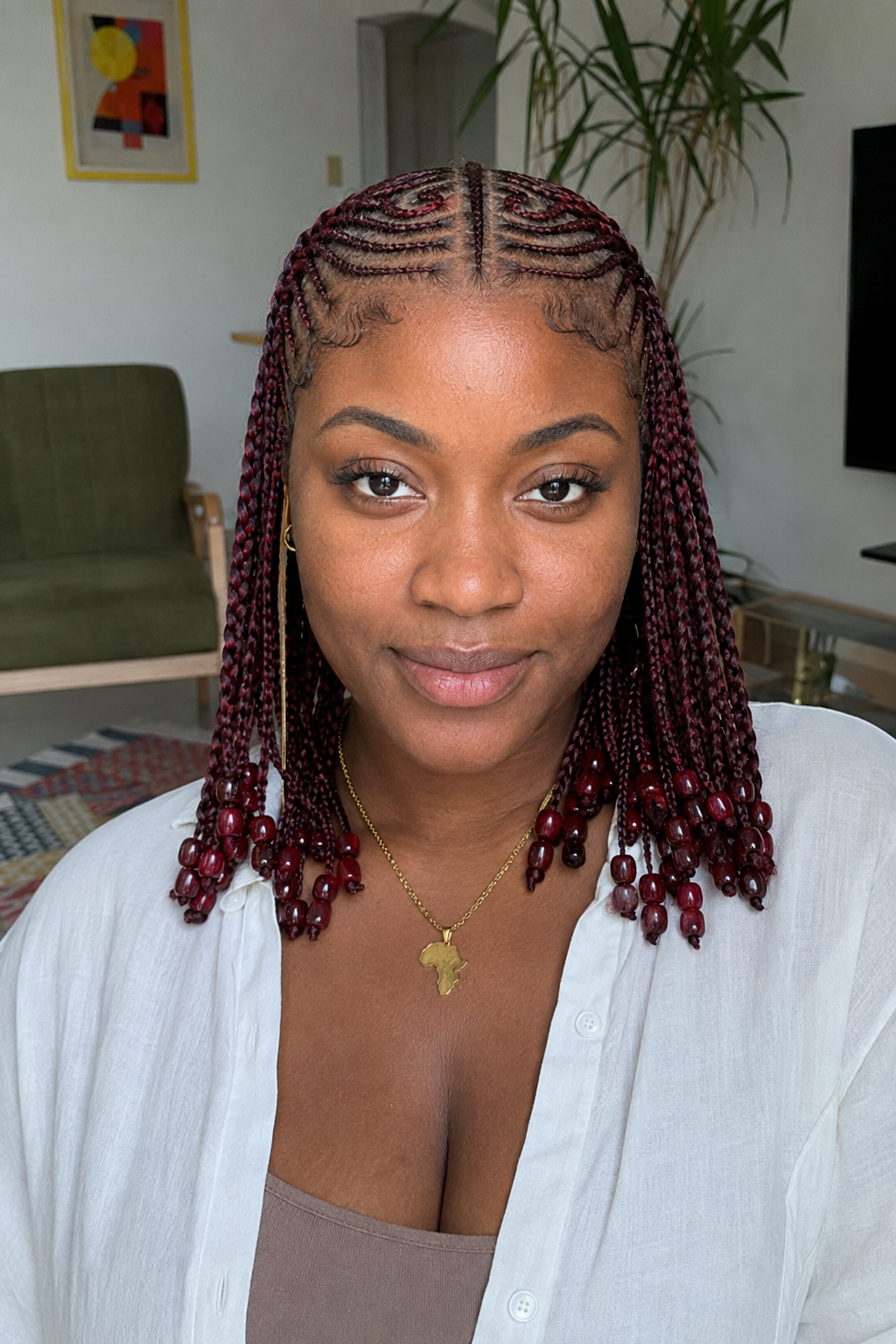
The Fulani pattern done in a bold colour like burgundy, copper, or auburn. The colour turns the signature center cornrow and braids into a real statement.
Keeping the center cornrow and the face-framing braids in a vivid shade is what makes the whole tradition feel modern, bold, and eye-catching.
Burgundy suits most skin tones, and reds fade fastest of all, so use colour-safe products to hold it. Beads in a matching metal finish tie the whole look together neatly.
Fulani Braids With a Middle Part
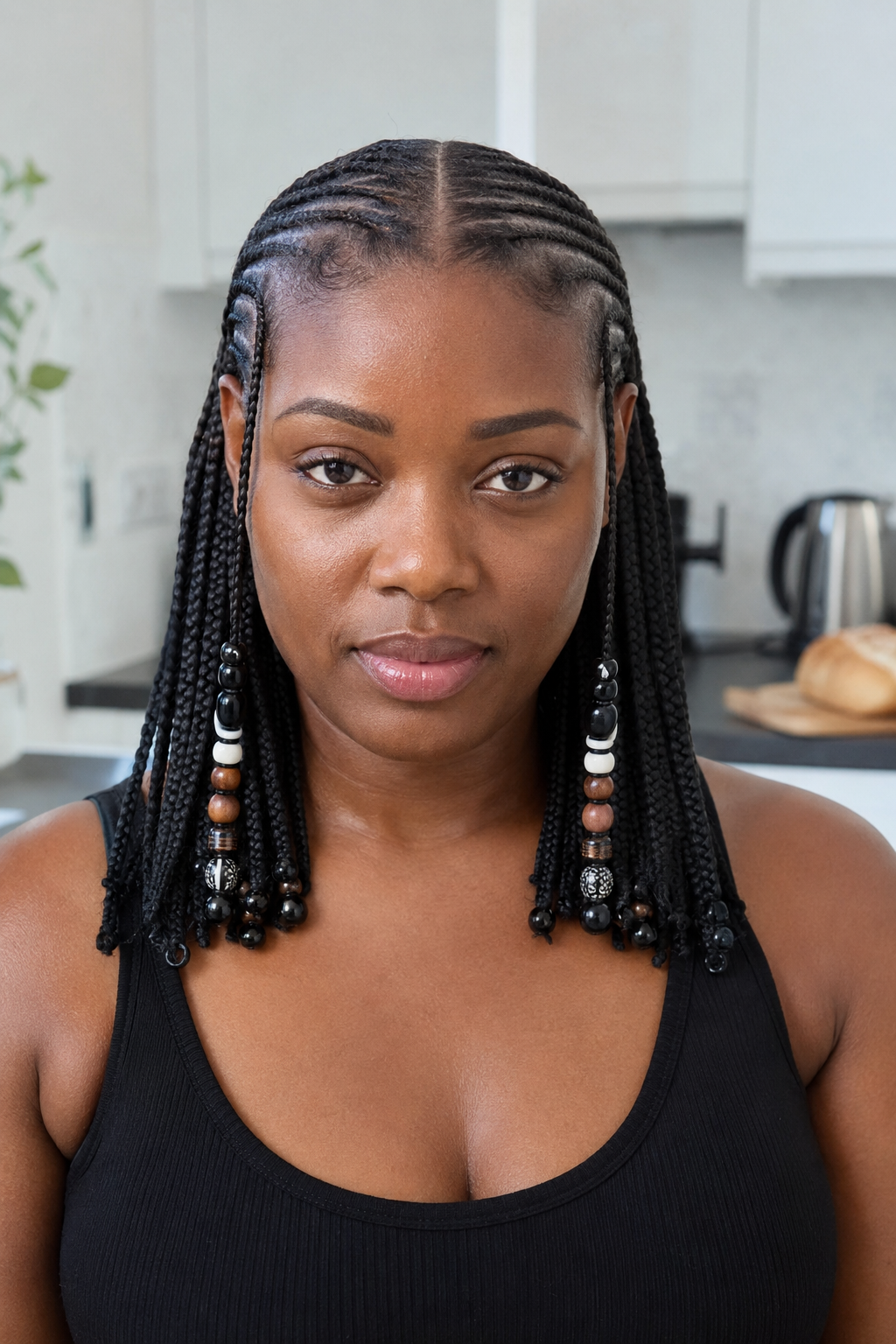
A variation with a clean center part but no center cornrow, keeping the face-framing braids and hanging tails. It is a softer take for anyone who wants the Fulani feel without the middle braid.
Trading the center cornrow for a bare middle part is what makes this the gentler, softer everyday version of the classic Fulani look.
The side braids and the beads still carry the Fulani signature clearly. The cornrows can go straight back or curve gently toward the face.
Fulani Braids With Loops
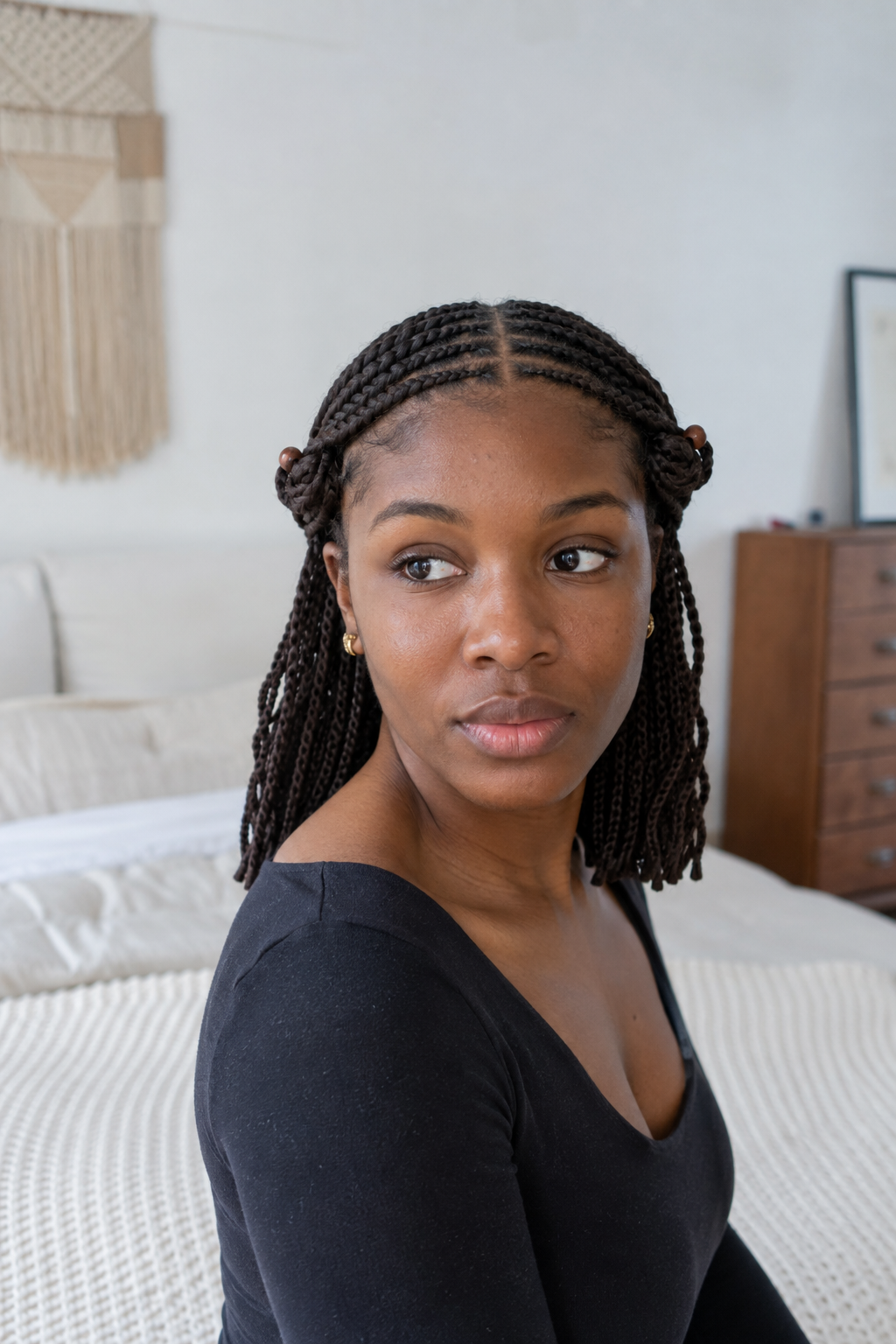
A playful version with the face-framing side braids looped up and pinned near the ears rather than left hanging. The center cornrow stays down the middle.
Looping the side braids up near the ears is what gives this its distinct, decorative twist on the classic hanging Fulani tails.
Pin the loops securely in place so they hold their shape all day long. Add a bead or a cuff where each loop meets the scalp for a bit of extra detail.
Fulani Braids With Cuffs
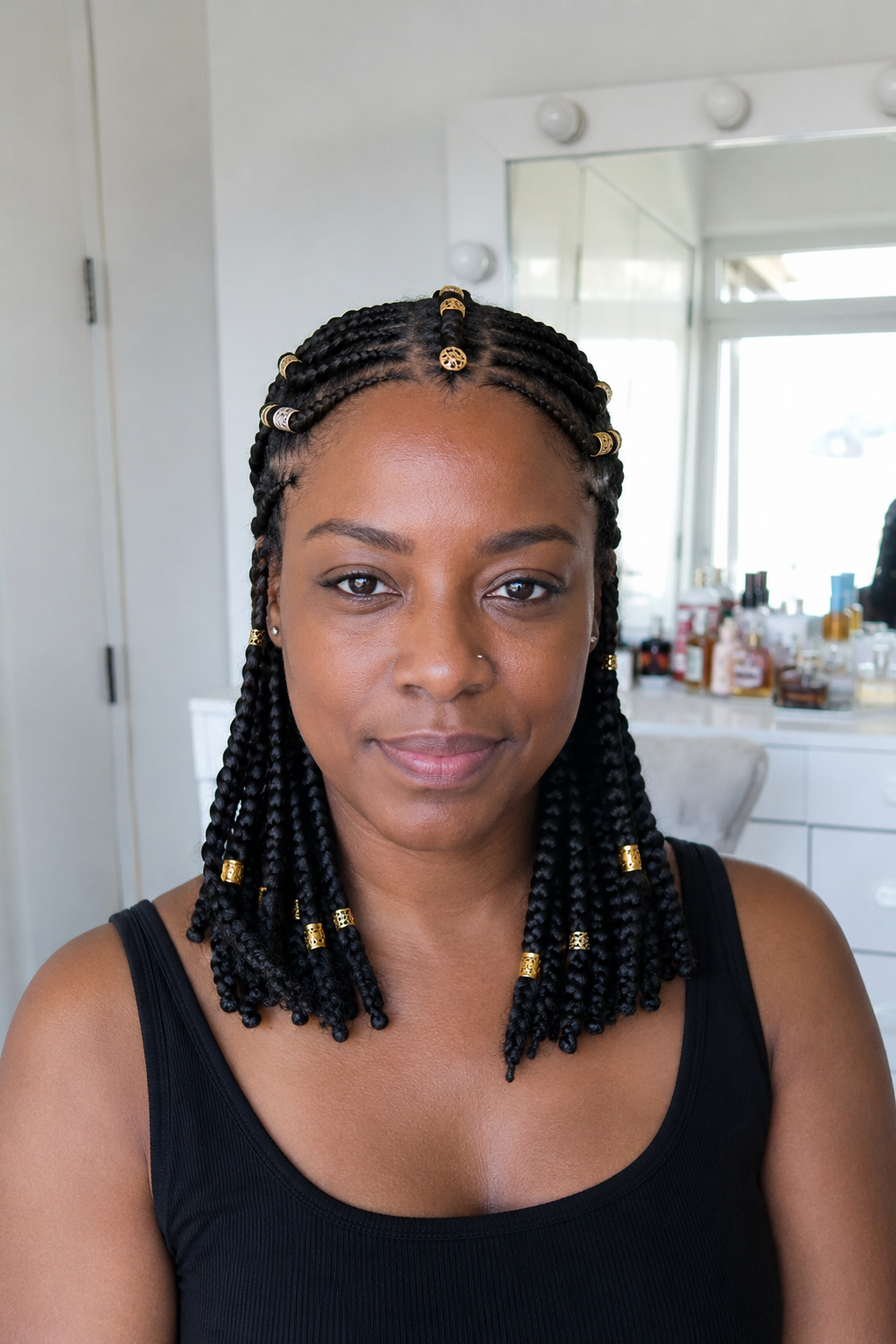
The Fulani pattern finished with gold or silver metal cuffs slid onto the braids instead of beads. The cuffs give a sleek, modern, metallic finish.
Sliding metal cuffs onto the center cornrow and the side braids is what updates the traditional beadwork into something sleeker and more polished.
Keep the cuffs light and well spaced out so they do not drag on the braids. A few placed on the face-framing braids catch the light nicely as you move.
Fulani Braids With a Half Bun
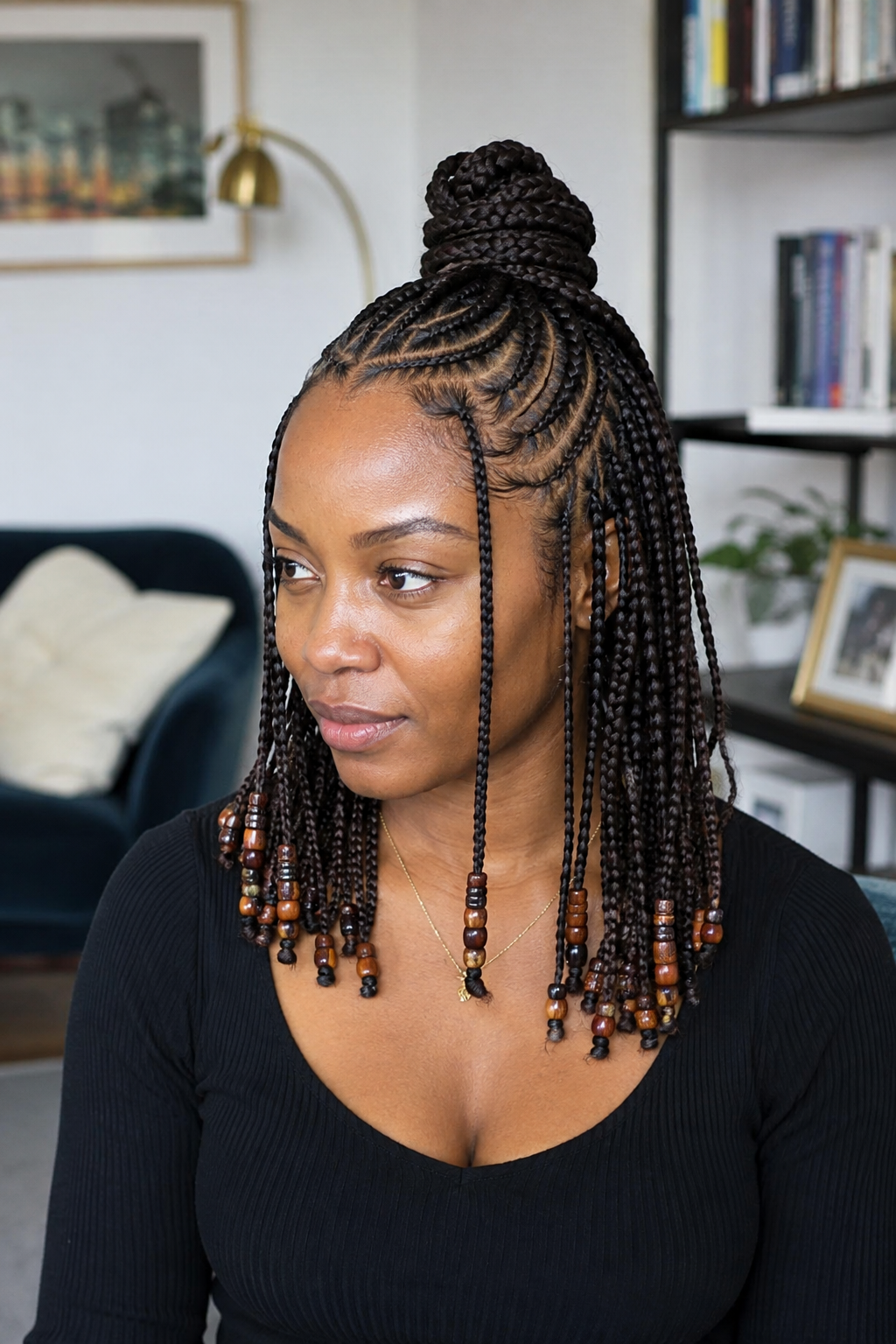
The top and front braids gathered into a single high half bun while the rest of the beaded braids hang loose. The center cornrow feeds up into the bun.
Gathering just the top into a single half bun is what shows off the front pattern while keeping the length and the beads on display below.
It is a fun, youthful, easy option for any day. Leave a couple of face-framing braids loose at the front to keep the Fulani framing intact.
Fulani Braids for Short Natural Hair
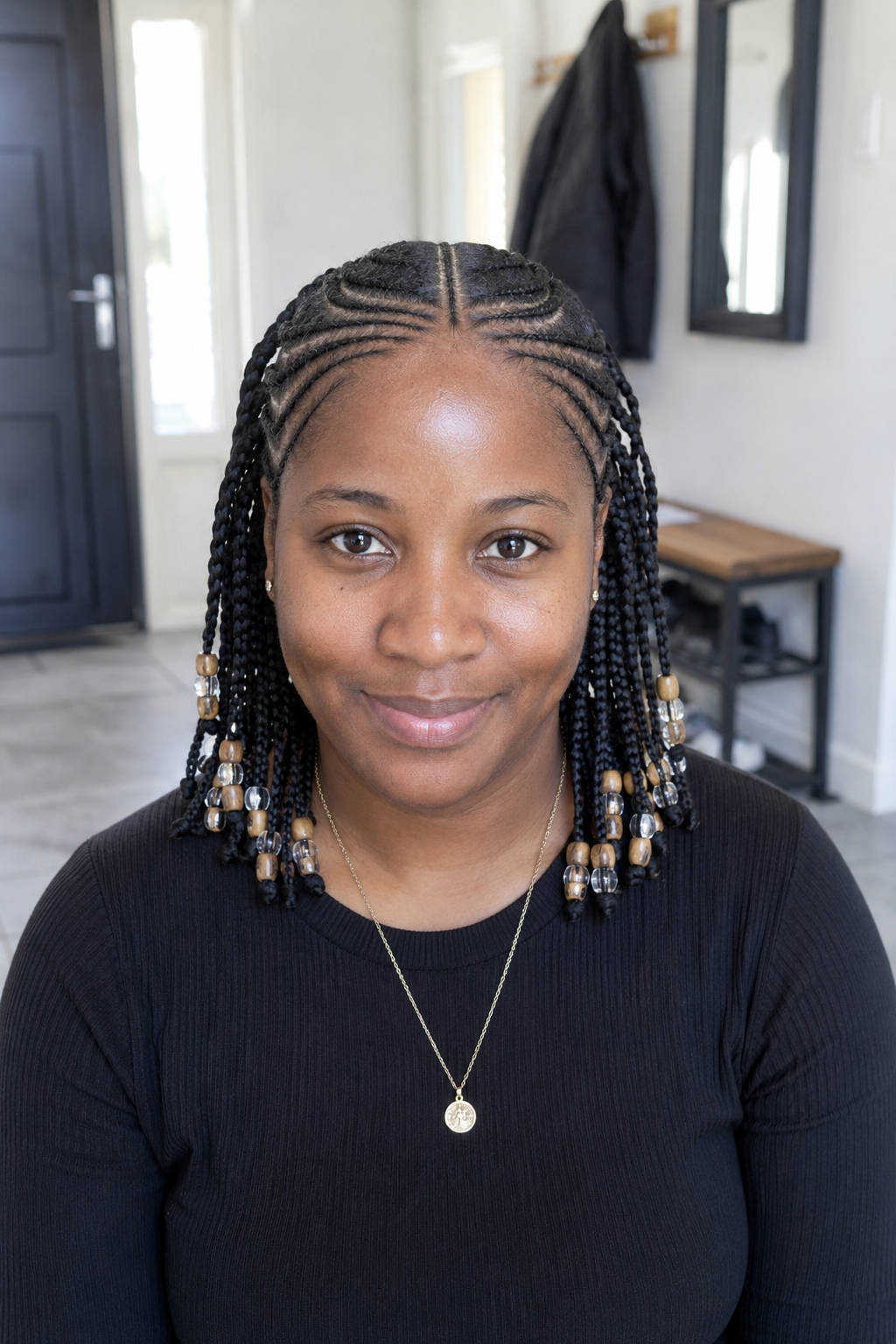
The Fulani pattern braided on shorter natural hair, using fed-in extension hair to build the braids and the length. The center cornrow and side braids work even on a smaller natural base.
Feeding in extension hair is what lets shorter naturals wear the full Fulani pattern without needing much length of their own to start with.
Keep the tension gentle on the hairline to protect your edges underneath. Beads on the face-framing braids finish off the traditional Fulani look nicely.
Fulani Braids With a Perimeter Braid
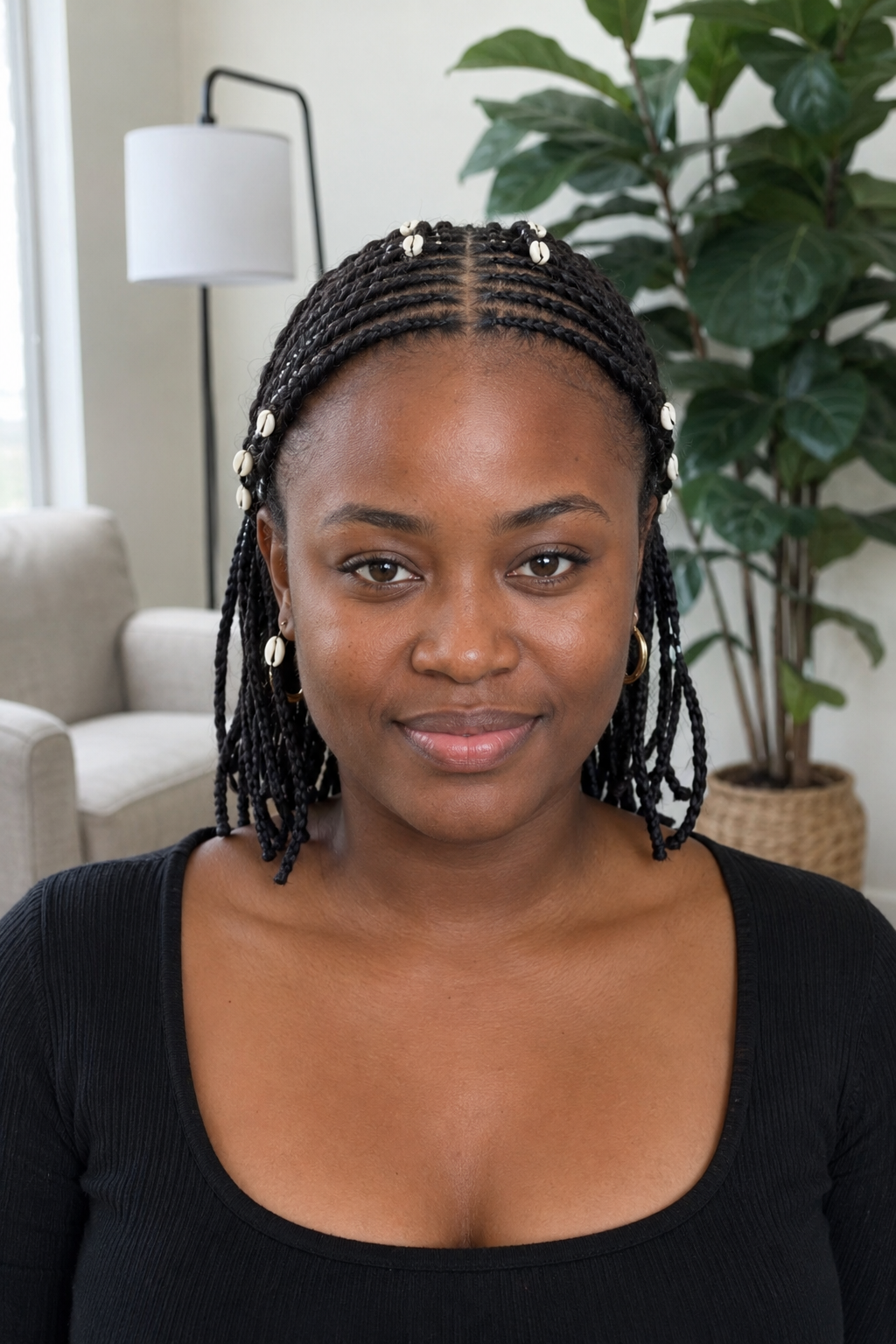
The most traditional version, with a braid wrapped around the hairline from ear to ear, plus the center cornrow and side braids. The American take often drops this, so it is the fullest, most authentic pattern.
Adding the perimeter braid around the hairline is what completes the original Fulani pattern that the oldest heritage versions always included.
Have your braider frame the hairline neatly with the wrapped braid. Cowrie shells threaded on the braids honour the traditional Fulani finish.
Comments
No Comments