
20 Short Shaggy Haircuts That Bring Texture and Movement
The shag has stopped being one haircut. What used to mean choppy layers and a fringe has split into a whole family of shapes, and the difference between a bixie and a wolf bob is not something most salons will explain unless you ask. All of them share the same principle, which is heavy layering that removes weight and lets the hair move on its own. What varies is where the length sits and how rough the ends are cut. Most of these need product and about two minutes, and almost none need a brush.
Jump to:
- Classic Short Shag
- Mini Shag
- Shaggy Pixie
- Bixie Shag
- Shaggy Bob
- Wolf Bob
- Short Mullet Shag
- Nineties Choppy Shag
- Asymmetrical Short Shag
- Tapered Nape Shag
- Crown-Heavy Shag
- Piecey Textured Shag
- Short Curly Shag
- Shag for Fine Hair
- Shag for Thick Hair
- Short Shag With a Curtain Fringe
- Silver Short Shag
- Bleach Blonde Shag With Dark Roots
- Dimensional Highlights on a Shag
- Rough-Dried Finish
Classic Short Shag

Layers built through a chin-length cut, shortest at the crown and getting longer toward the ends.
The progression is what creates lift on top and movement at the bottom, which is the whole point of a shag.
Great for anyone whose hair sits flat. Expect a trim every six weeks or so, since the shape depends on the layer lengths staying in proportion to each other.
Mini Shag

A very short version with light layers and a tapered fringe, drawn from the seventies original.
The layers are lighter than a classic shag, so the effect is soft rather than choppy.
Works especially well on fine hair, where it adds noticeable volume without removing much density. Our short hairstyles for thin fine hair post covers more that work the same way.
Shaggy Pixie

Pixie length with choppy layers cut into the top and wispy ends throughout.
Length on top is what separates this from a standard pixie. There is enough to tousle and move rather than sitting flat to the head.
Perfect for anyone who wants short hair with some attitude. Styling takes about a minute with a bit of cream worked through with your fingers.
Bixie Shag

Sitting between the ears and the chin, combining the face-framing softness of a bob with the light choppy layers of a pixie.
The ends are heavily textured, which keeps the bottom light and swingy while the crown holds volume.
Great for anyone caught between growing out a pixie and committing to a bob. See our bixie haircut ideas post for the full range.
Shaggy Bob

A bob at or just above the chin with shaggy layers cut through it, so the outline stays bob-shaped but the interior moves.
You keep the recognisable bob shape while losing the heaviness that a blunt version carries.
Suits anyone who likes a bob but finds the solid version too severe. Our shaggy lob post covers the longer version if you want to compare.
Wolf Bob

Wolf cut principles applied at jaw length, with heavy stacked layers at the crown against a much longer bottom.
The split between the two sections is more obvious than in a shag, where the layers blend gradually.
Works especially well on thick hair. Our short wolf cut post has more on how the shape sits at different lengths.
Short Mullet Shag

Shorter through the top and sides with deliberate length kept at the nape.
The extra length at the back is what makes it a mullet rather than a shag, and current versions keep it subtle enough to be wearable.
Perfect for anyone who wants something with real personality. Growing it out is easy, since the nape simply catches up with the rest over a few months.
Nineties Choppy Shag

Choppy textured layers cut to the chin with wispy bangs, drawn straight from the mid-nineties.
Modern versions add more piecey layers than the original, which stops it looking like a costume.
Great for anyone drawn to that era. It relies on texture spray rather than a dryer, so the styling time stays under two minutes.
Asymmetrical Short Shag

One side cut noticeably shorter than the other, with shaggy layers throughout.
The imbalance gives the cut a direction it would not otherwise have, and short hair shows the difference clearly.
Suits anyone bored of symmetrical shapes. Wear the part toward the shorter side, which exaggerates the effect rather than hiding it.
Tapered Nape Shag
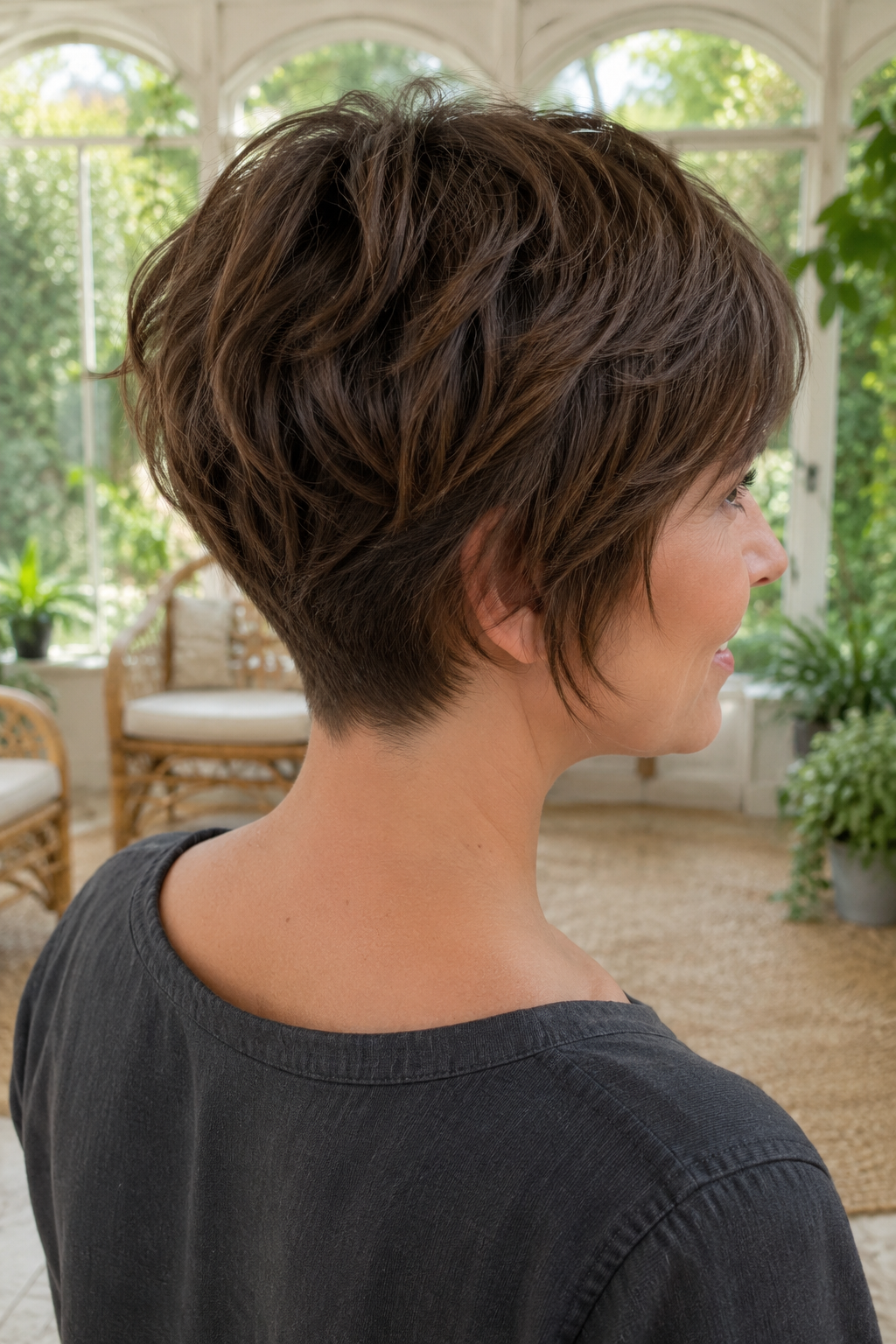
A shag with the nape cut close and tapered, so the back sits tight against the neck while the top stays full.
The contrast between a tight back and a textured top is what gives the shape definition.
Perfect for thick hair that bulks up at the neck. It also keeps its shape longer between appointments than a rounded nape does.
Crown-Heavy Shag

Volume concentrated at the crown with longer pieces left to frame the face.
Height on top with length at the front creates a shape that lifts rather than widens, which most faces benefit from.
Works especially well if your hair collapses on top by afternoon. Lift the roots at the crown while drying and the cut holds the shape on its own.
Piecey Textured Shag

Ends cut so they separate into distinct pieces rather than sitting as one edge.
The separation is what catches light and makes the texture visible. A smooth edge on a shag defeats the purpose.
Great for straight hair with no natural movement. A small amount of pomade worked between your fingers and pressed into the ends keeps the pieces defined.
Short Curly Shag
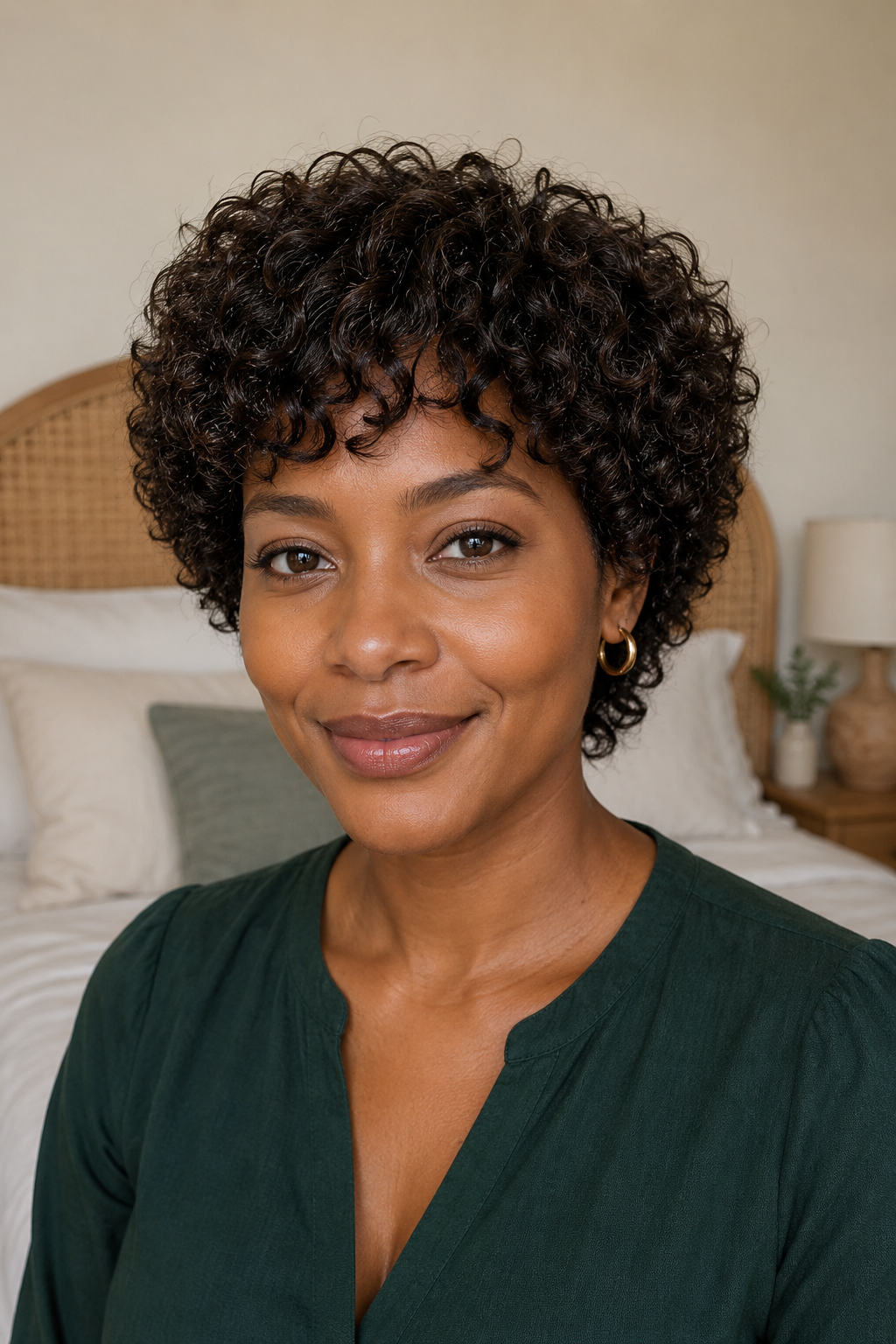
Layers cut into curly hair at short length, shaped so the curls form properly instead of stacking into a triangle.
Curls need the weight removed from the middle, and a shag does exactly that.
Suits 3A texture and looser. Have it cut dry so the stylist can see where each curl sits. Our curly short hairstyles post covers the shaping in more detail.
Shag for Fine Hair

Light layering only, cut to build volume without removing the density you have.
Over-layering fine hair is the standard mistake, and on a short cut it shows immediately.
Perfect for anyone whose last short cut looked wispy. Ask for a shag with soft layers rather than choppy ones. That distinction changes the whole result.
Shag for Thick Hair

Heavier layering aimed at removing bulk, particularly through the sides and the back.
Thick hair at short length tends to sit wide rather than falling, and a shag is the standard fix.
Great if your hair puffs out at the sides. Ask specifically for weight removal, since asking for layers alone can add volume you did not want.
Short Shag With a Curtain Fringe
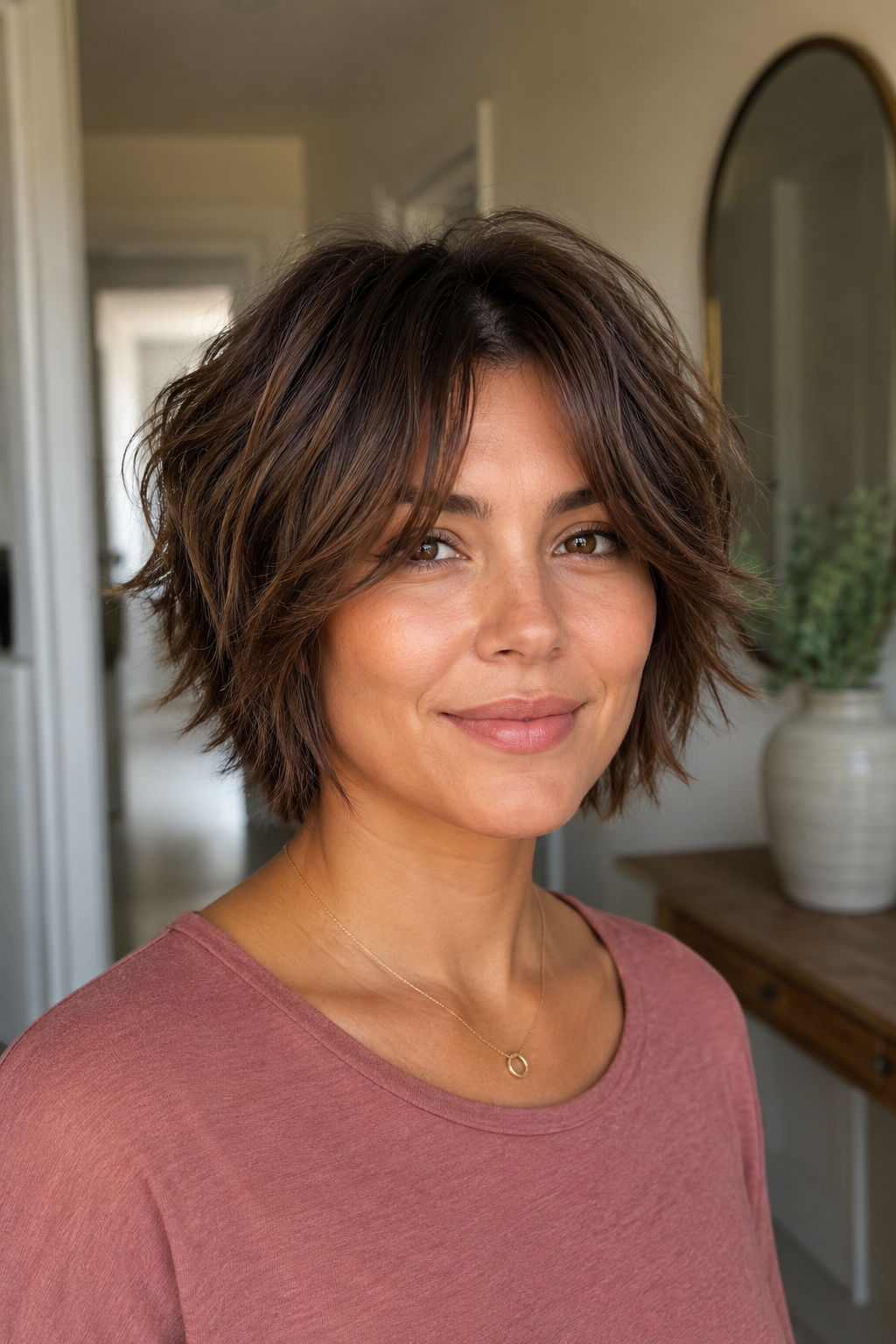
A soft fringe parting at the centre and sweeping toward the temples, blended into the shaggy layers.
The fringe frames a round face and softens the choppiness of the cut behind it.
Suits most face shapes. Our dedicated short shag with bangs post covers the other fringe options in full if you want to compare.
Silver Short Shag

Natural silver worn with a shaggy cut, where the texture keeps the colour from looking flat.
Grey hair reflects light differently to pigmented hair, and heavy texture gives it depth it would otherwise lack.
Works especially well from the fifties onward. Our short hairstyles for women over 50 post covers more shapes suited to silver.
Bleach Blonde Shag With Dark Roots

Bright blonde through the length with the natural root left deliberately dark.
The contrast makes the layering visible in a way a single shade never does, and the grow-out is part of the look.
Perfect for anyone who wants colour without constant root touch-ups. The bleaching is demanding on the hair, so a bond treatment at every appointment matters here.
Dimensional Highlights on a Shag

Lighter pieces placed through a shag to make the layers stand out.
A shag in one flat colour hides its own structure. Adding variation is what lets people see the texture you paid for.
Great on darker bases especially. Our hair color ideas section covers tones that suit different starting points.
Rough-Dried Finish

Mousse through damp hair, then dried with fingers only and no brush at all.
Skipping the brush is what keeps the layers separated. A brush smooths them into each other and flattens the shape.
Perfect for anyone who wants short hair that stays quick. Our easy short hairstyles post covers more low-effort routines. Scrunch as you dry, then leave it alone.

Comments
No Comments