
22 Short Gym Hairstyles That Stay Put Through Any Workout
Anyone with short hair who works out knows the specific frustration. You tie it back, you get four minutes into your warm-up, and half of it has already slipped out and stuck to your neck. Short layers do not hold an elastic the way long hair does. The fix is usually a combination of grip and placement rather than one perfect style. Product at the roots, sections small enough to actually stay, and pins or clips holding the pieces too short to gather. The styles below are built around that, sorted roughly from the ones needing the most length to the ones that work on a pixie.
Jump to:
- Micro High Ponytail
- Low Slicked Mini Bun
- Half-Up Top Knot
- Mini Space Buns
- Low Twisted Buns Behind the Ears
- Low Pigtail Ponytails
- French Braid on Short Hair
- Dutch Braid Pigtails
- Linked Mini Ponytails
- Front Cornrows
- Flat Twists
- Short Halo Braid
- High Puff With a Headband
- Slicked-Back Gel Look
- Wide Sweatband Over a Pixie
- Elastic Headband With Tucked Ends
- Bobby-Pinned Sides
- Claw Clip Half-Up
- Bandana Tie-Back
- Snap Clips Along the Hairline
- Top Knot Over an Undercut
- Twisted Front Sections Pinned Back
Micro High Ponytail
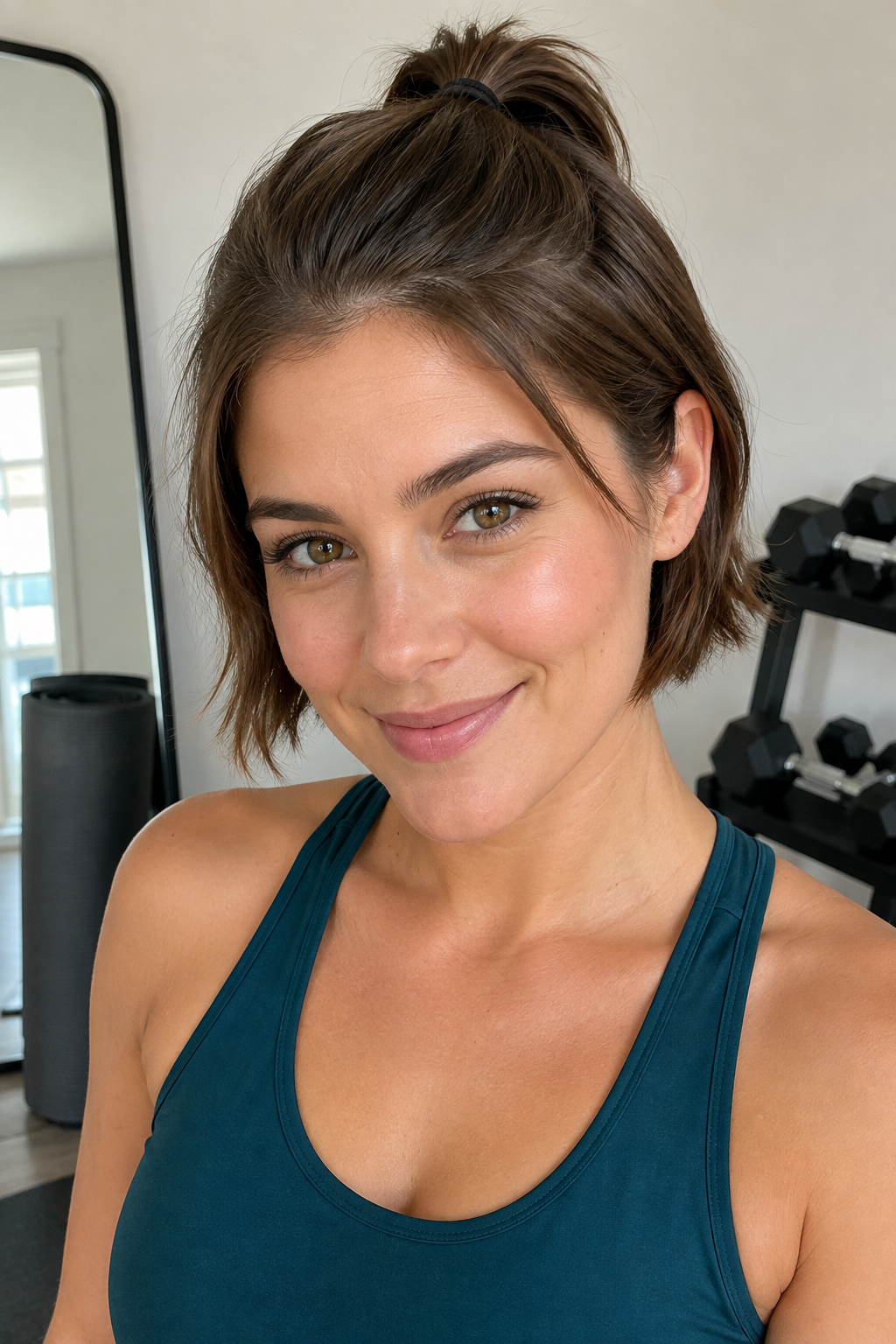
Gathering everything into one small ponytail high on the crown keeps hair off your neck completely. On short hair the result is tiny, and that is fine.
Use a thin elastic rather than a thick scrunchie, since there is not much bulk to wrap around.
Great for running and anything where you spend a lot of time upright. Spritz the roots with texture spray before you tie so the shorter pieces have something to grip instead of sliding straight out.
Low Slicked Mini Bun
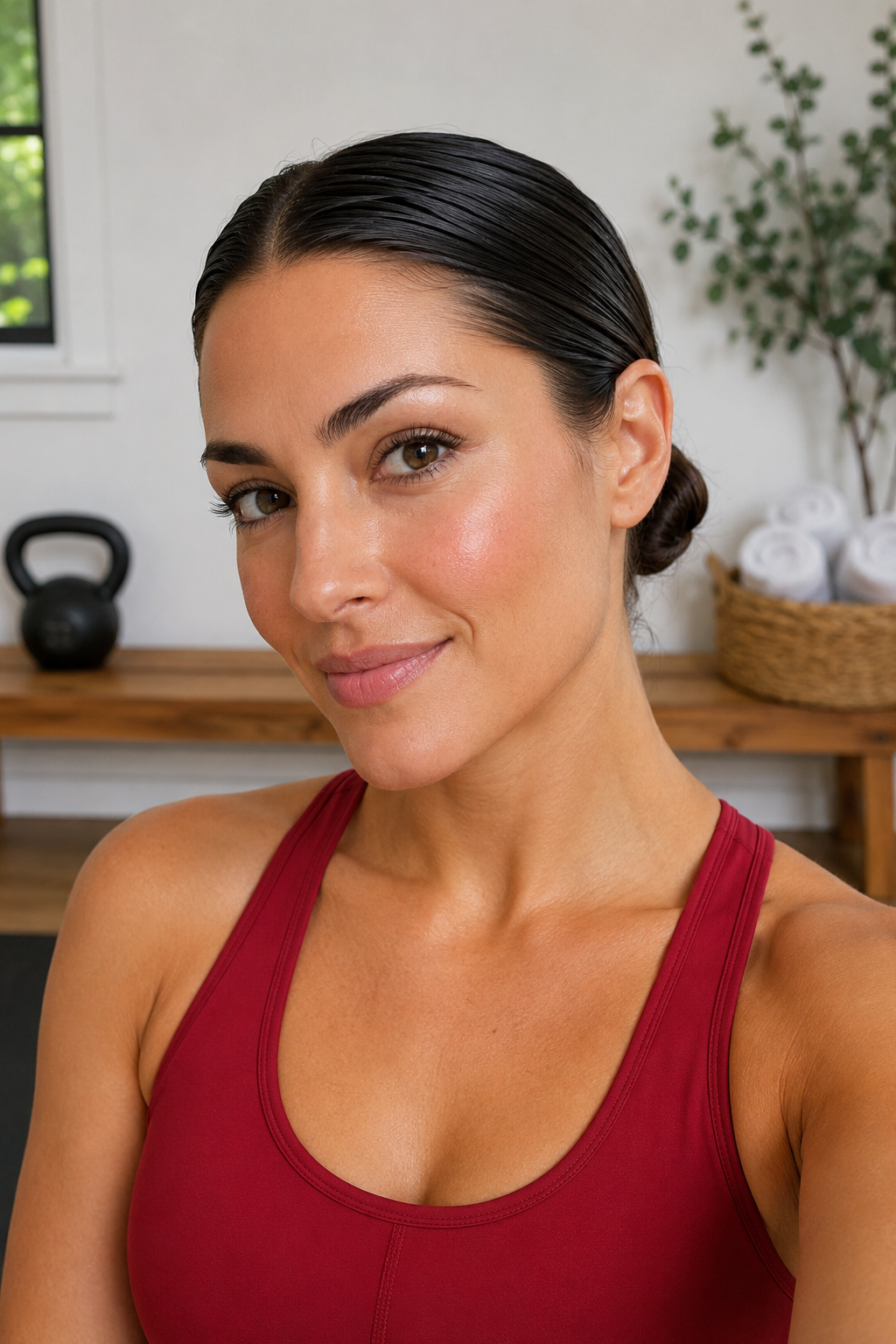
Gel through damp hair, everything pulled to the nape, twisted into a small bun and pinned. The wet look is doing structural work here.
A strong hold gel means the front pieces stay flat instead of lifting as you sweat.
Perfect for anyone whose hair is just barely long enough to gather. Two crossed bobby pins hold better than four scattered ones, and the low placement keeps the bun from pressing against a bench or a mat.
Half-Up Top Knot
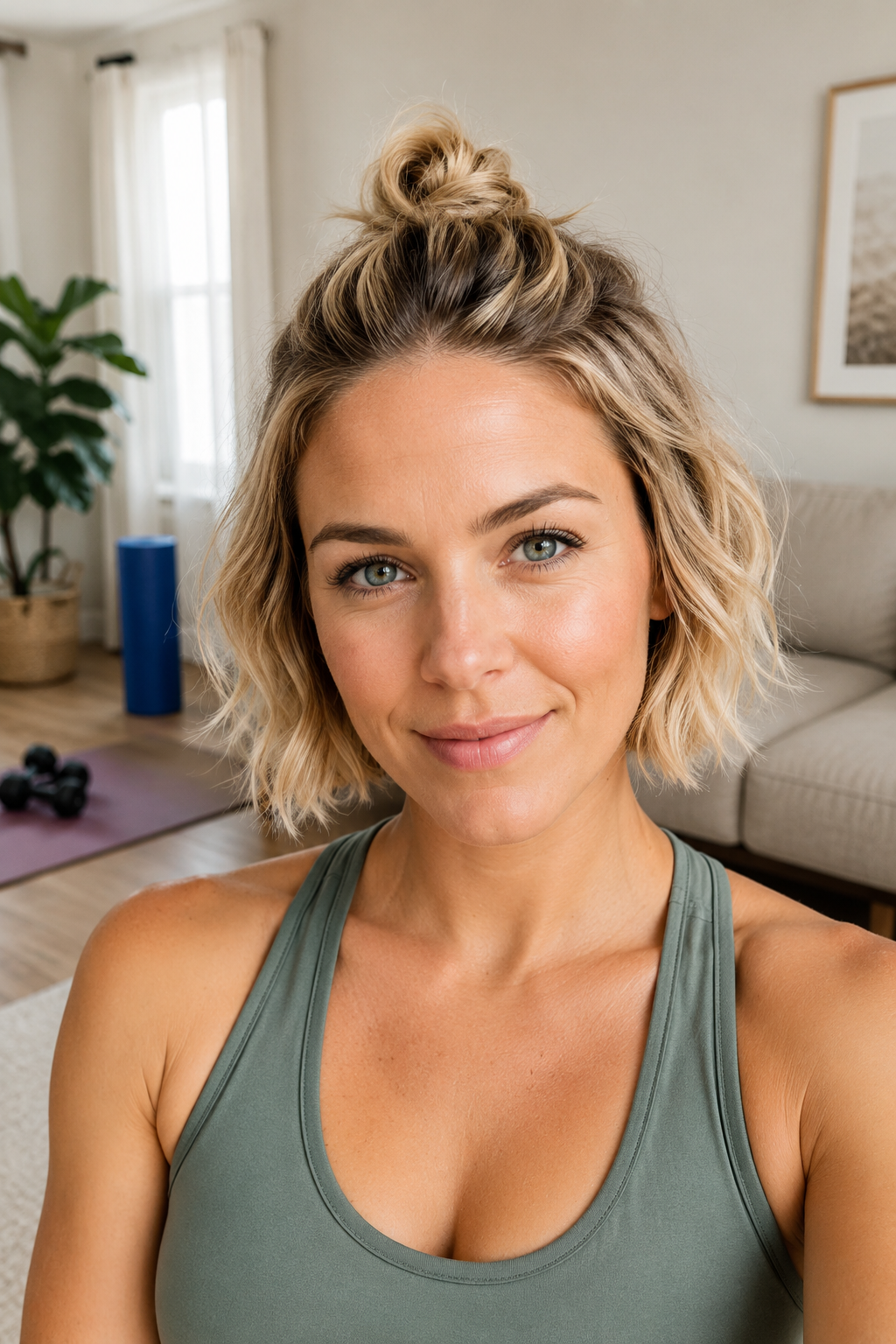
Only the top section goes up, twisted into a small knot at the crown. The bottom half stays down.
This one solves the actual problem, which is usually the front and top falling forward, without needing enough length to pull everything back.
Suits weight training and anything you do lying down, since there is no bun at the back of your head getting in the way. Works on bobs and grown-out pixies alike.
Mini Space Buns
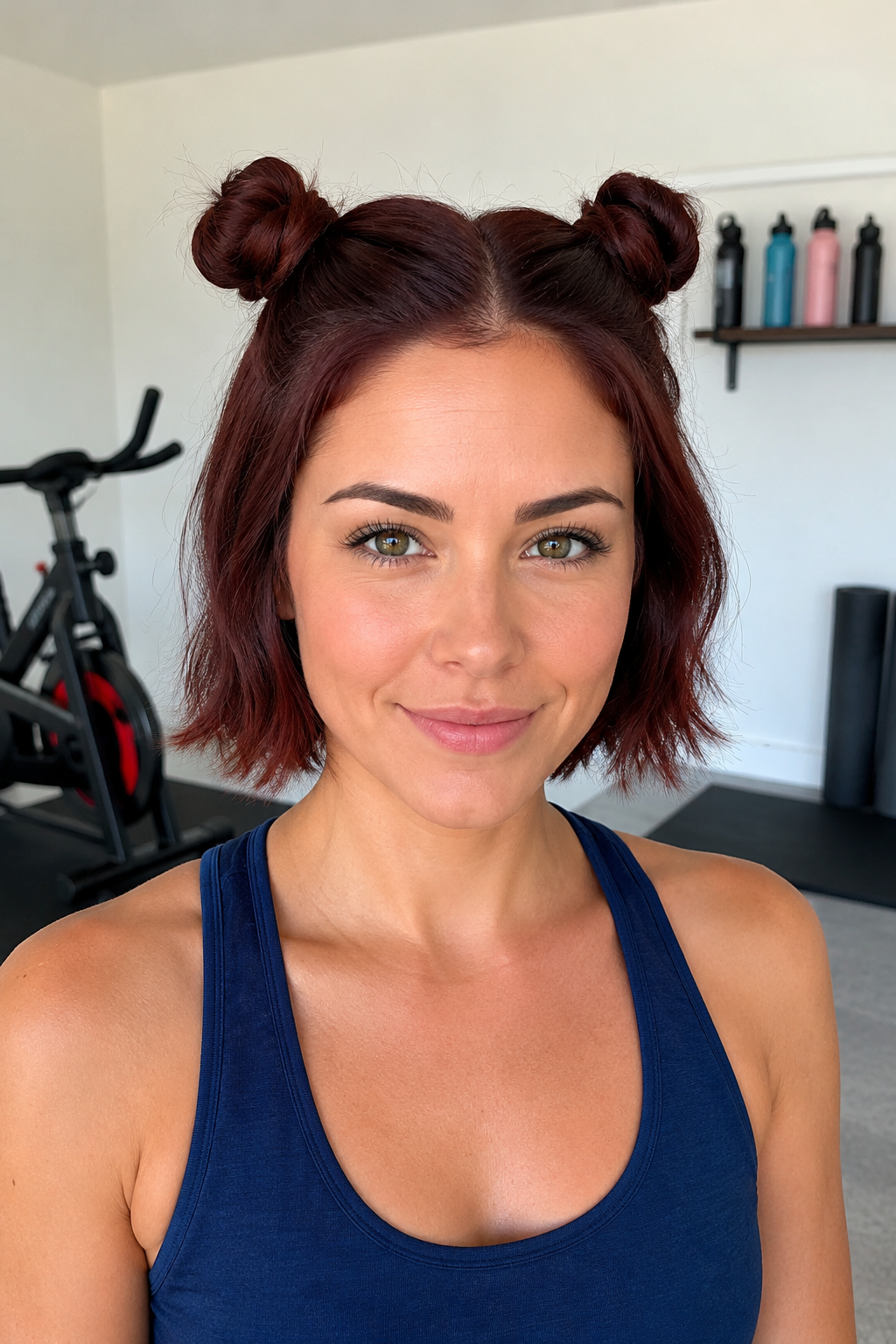
Two small buns, one on each side of the crown. On short hair they end up tiny and neat rather than dramatic.
Part down the middle, split evenly, twist each side up and secure with a small elastic and one pin.
The even weight distribution is the practical benefit here. Nothing pulls to one side when you turn your head, which matters more during dance classes and circuit work than most people expect.
Low Twisted Buns Behind the Ears
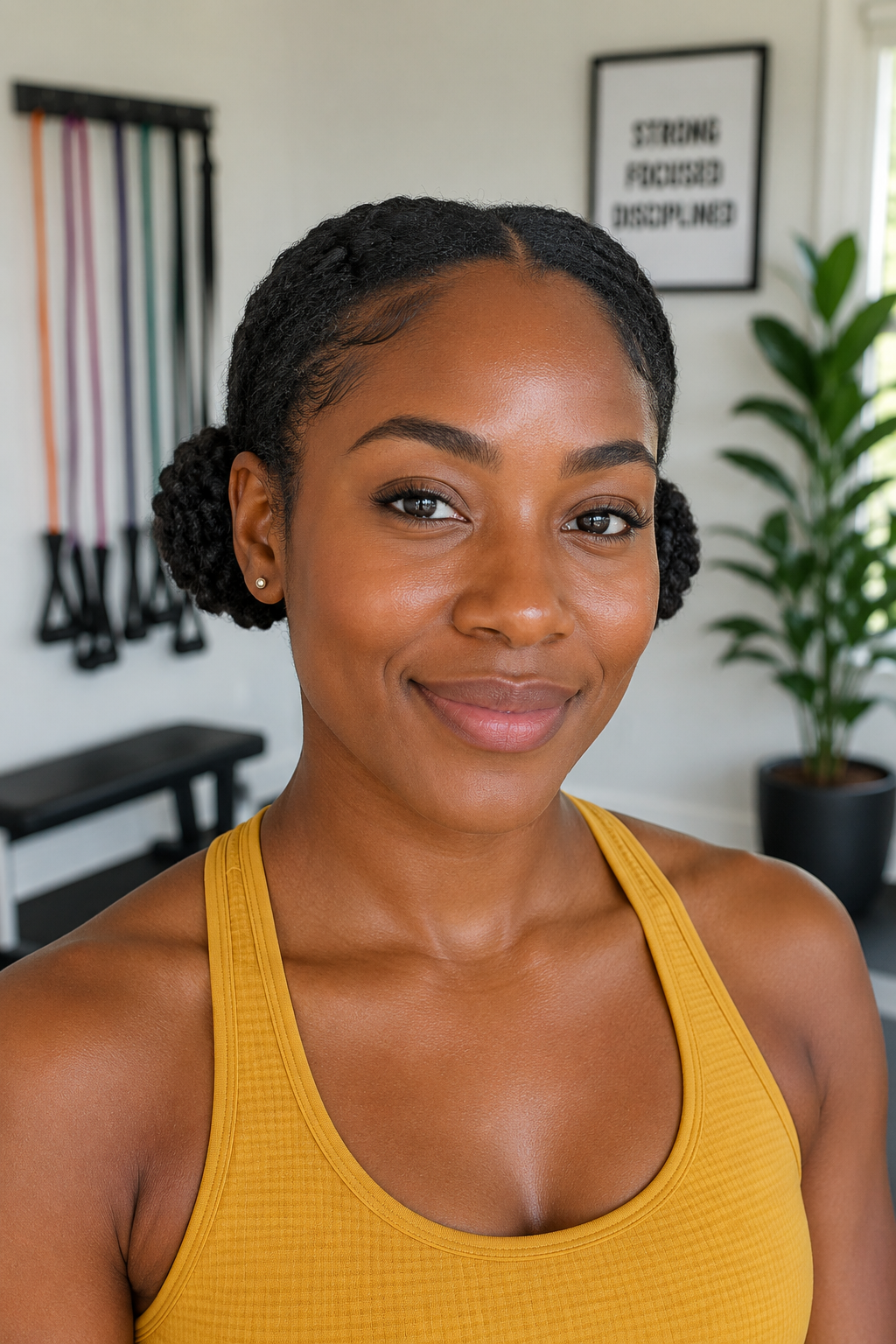
Two low sections twisted into tight buns sitting just behind each ear. Compact and completely out of the way.
Nothing touches your neck, which makes a real difference on humid days and in hot studios.
Works especially well under a helmet or a cap, since the buns sit low enough to avoid the crown. Secure each with an elastic first, then twist and pin, rather than trying to do both at once.
Low Pigtail Ponytails
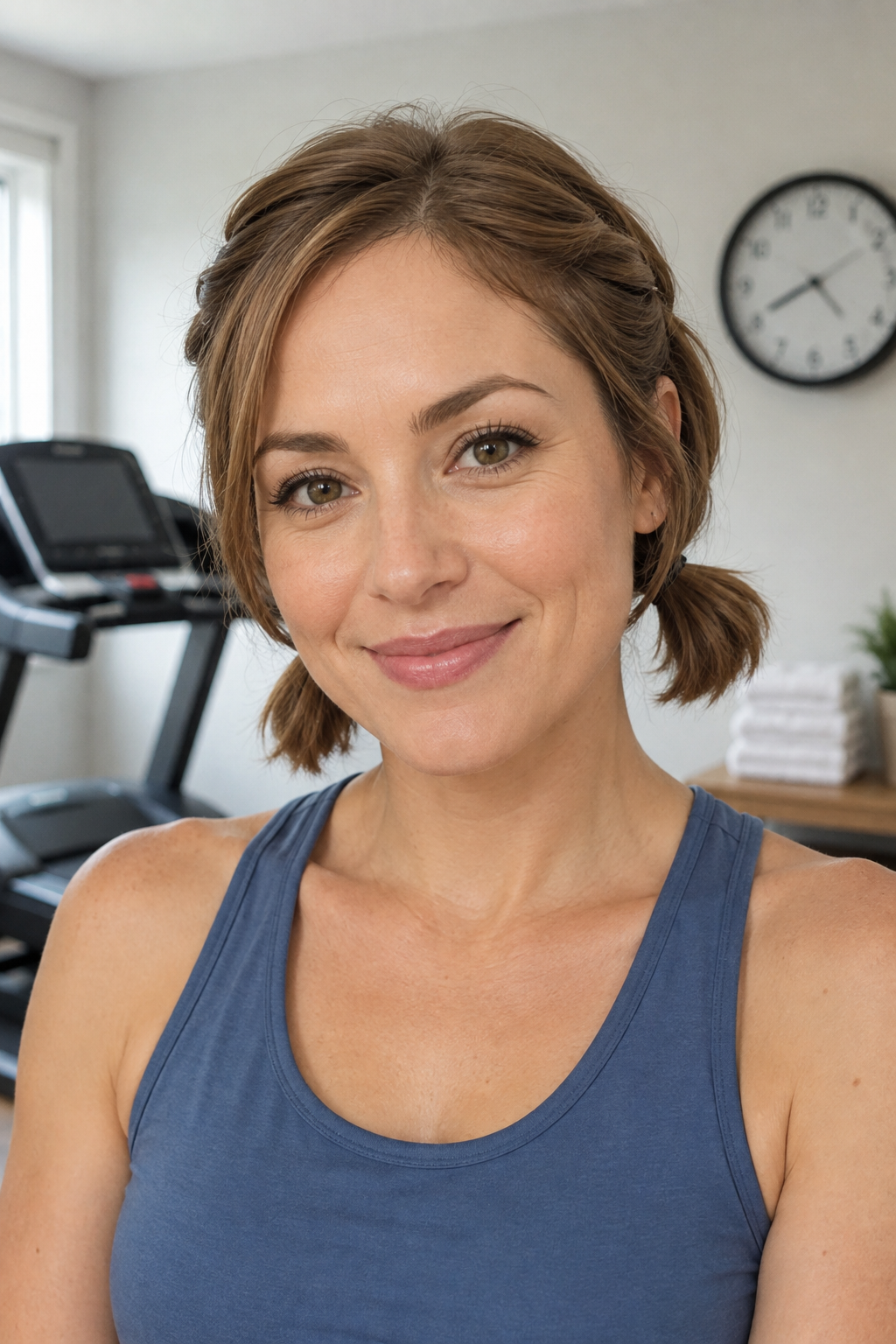
Two small ponytails at the nape, one on each side. Faster than buns and about as secure.
Chin-length hair is enough. Anything shorter and you will need a few pins to catch the pieces that fall out.
Great for a quick session where you are not fussing over how it looks. The low position also means it sits comfortably against a backrest, which buns never quite manage.
French Braid on Short Hair
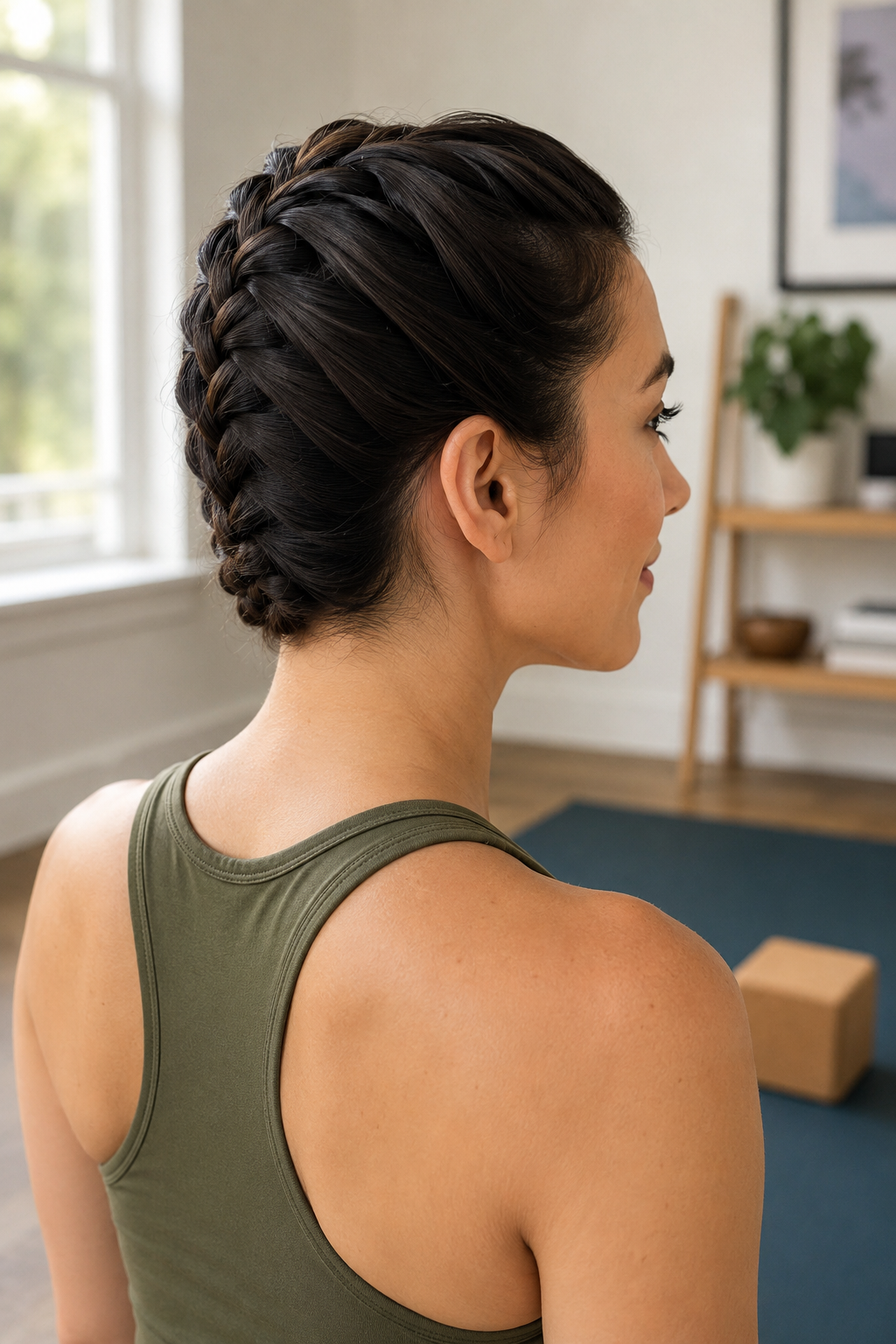
A French braid picks up hair as it travels down the head, so short layers get woven in instead of falling out. That is exactly why it works on shorter lengths.
You need about chin length to get a braid going properly.
Braid it snug against the scalp rather than loose. Finish with a small elastic and tuck the short tail under with a pin. This holds through almost anything, including swimming.
Dutch Braid Pigtails
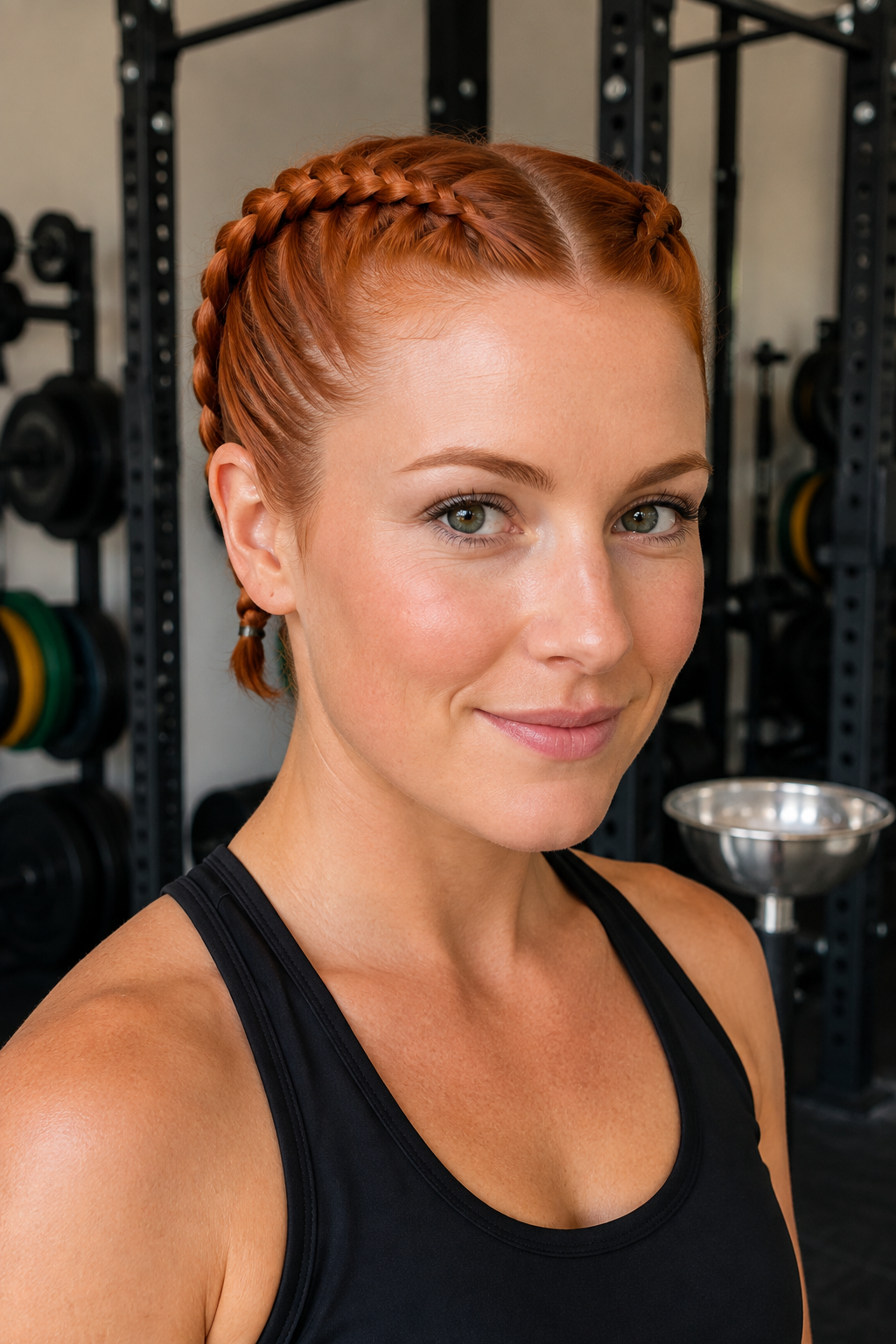
Two Dutch braids running from the hairline to the nape. The braids sit on top of the hair rather than sinking into it.
Every strand gets caught along the way, which is what keeps the front from escaping.
Perfect for high-intensity classes and contact sports where a single braid would swing. Give yourself a few extra minutes the first time. Once the technique clicks it takes about six.
Linked Mini Ponytails
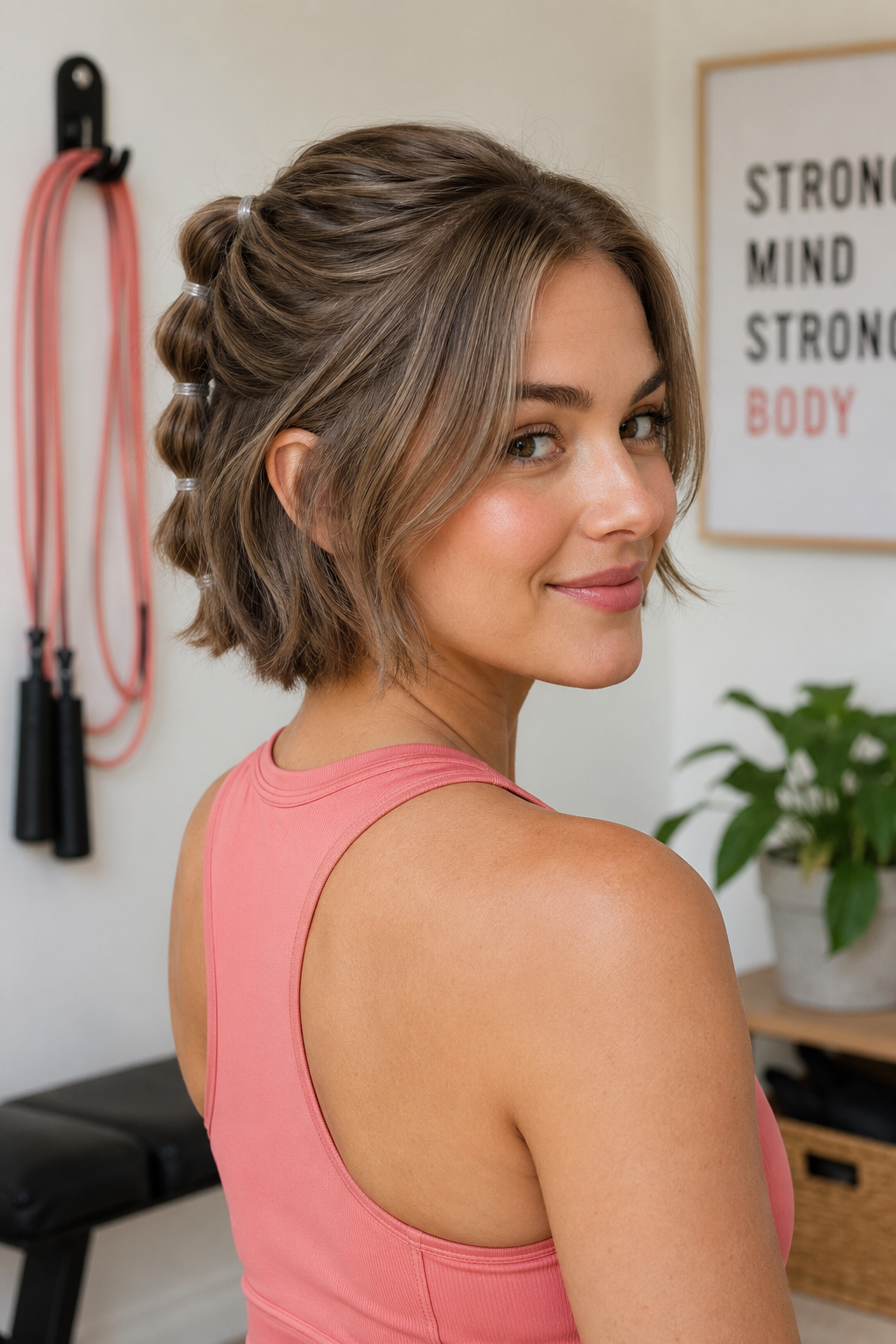
A row of small ponytails down the back of the head, each one joining into the next. It gives you the look of a braid without any braiding skill.
Gather a section, tie it, then add the next section into the tail of the first and repeat.
Great for hair too short or too layered to braid cleanly. Small clear elastics disappear into the style, and the whole thing takes under five minutes with practice.
Front Cornrows
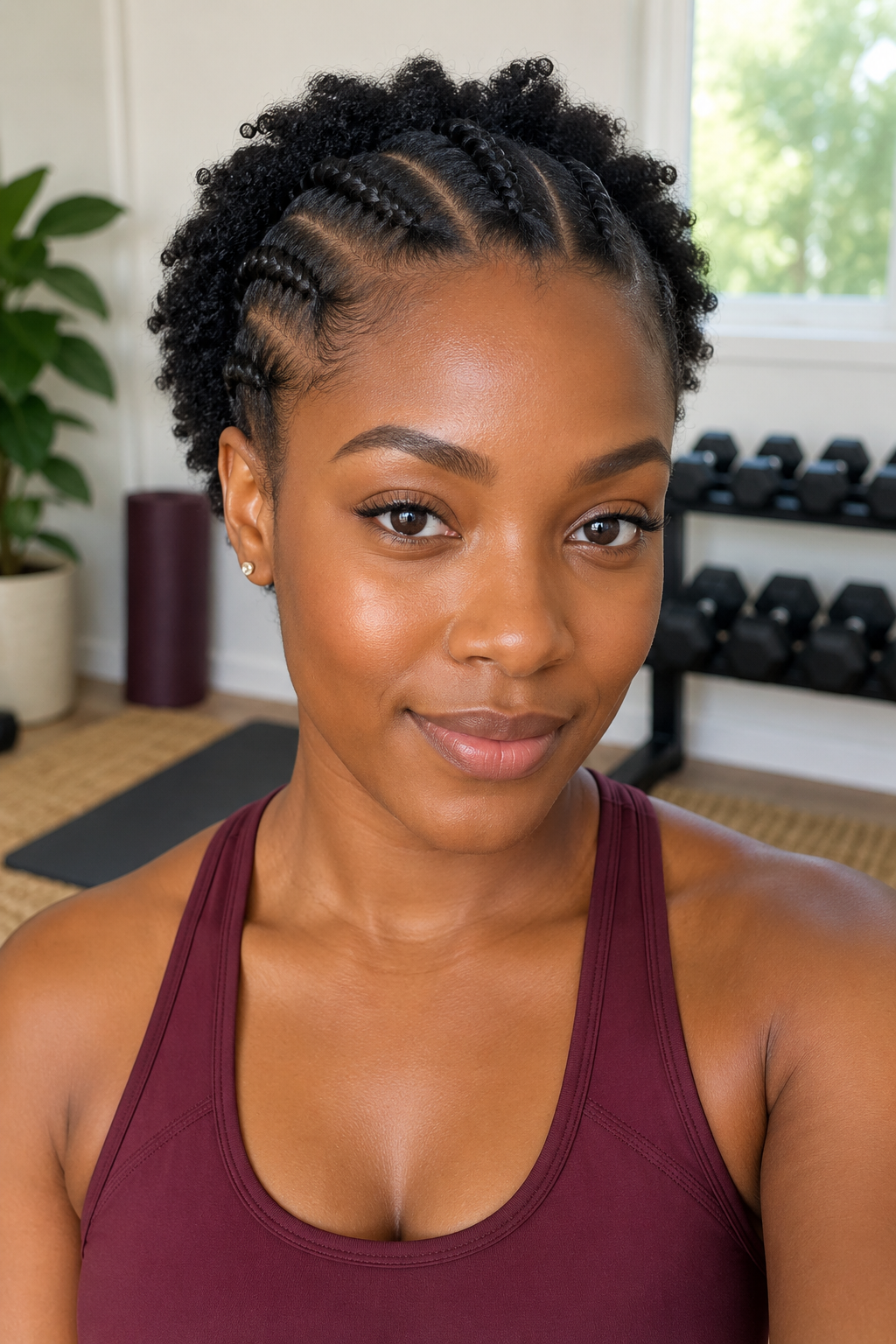
Two or three cornrows running straight back from the hairline, with the rest of the hair left loose or gathered behind them.
Braiding only the front handles the section that actually causes problems, and short back lengths stay untouched.
Suits coily and curly textures especially well. Cornrows last several days, so one session of braiding covers a whole week of training. Our roundup of short hairstyles built around natural texture covers more of these.
Flat Twists
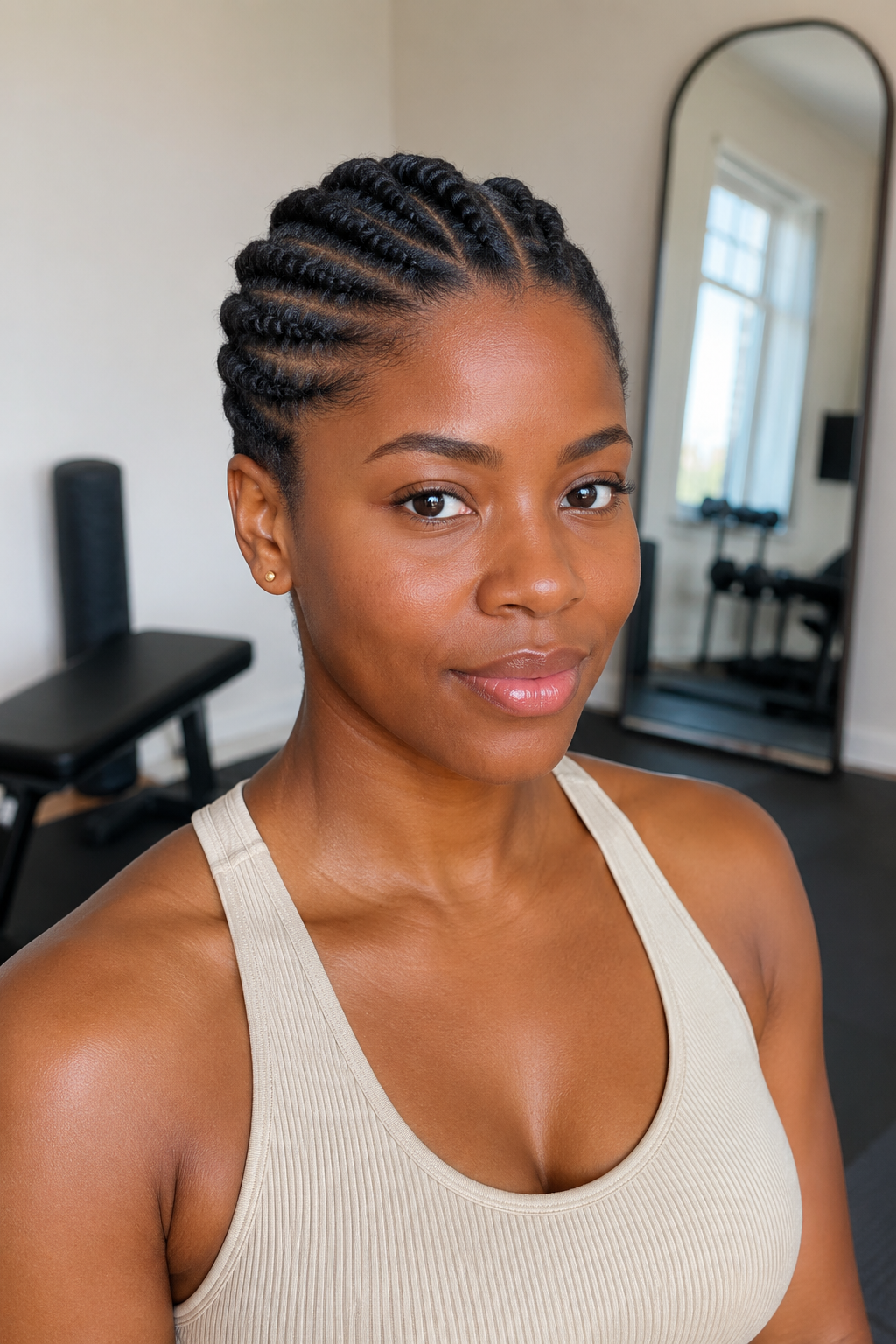
Two-strand twists lying flat against the scalp, worked in rows from the hairline back. They hold on hair too short for cornrows.
Sweat has almost no effect on them, and frizz stays down because nothing is loose.
Works especially well on coily hair between two and four inches. Apply a light gel before you twist. When you take them down after a few days you get a wave pattern that carries into your regular week.
Short Halo Braid
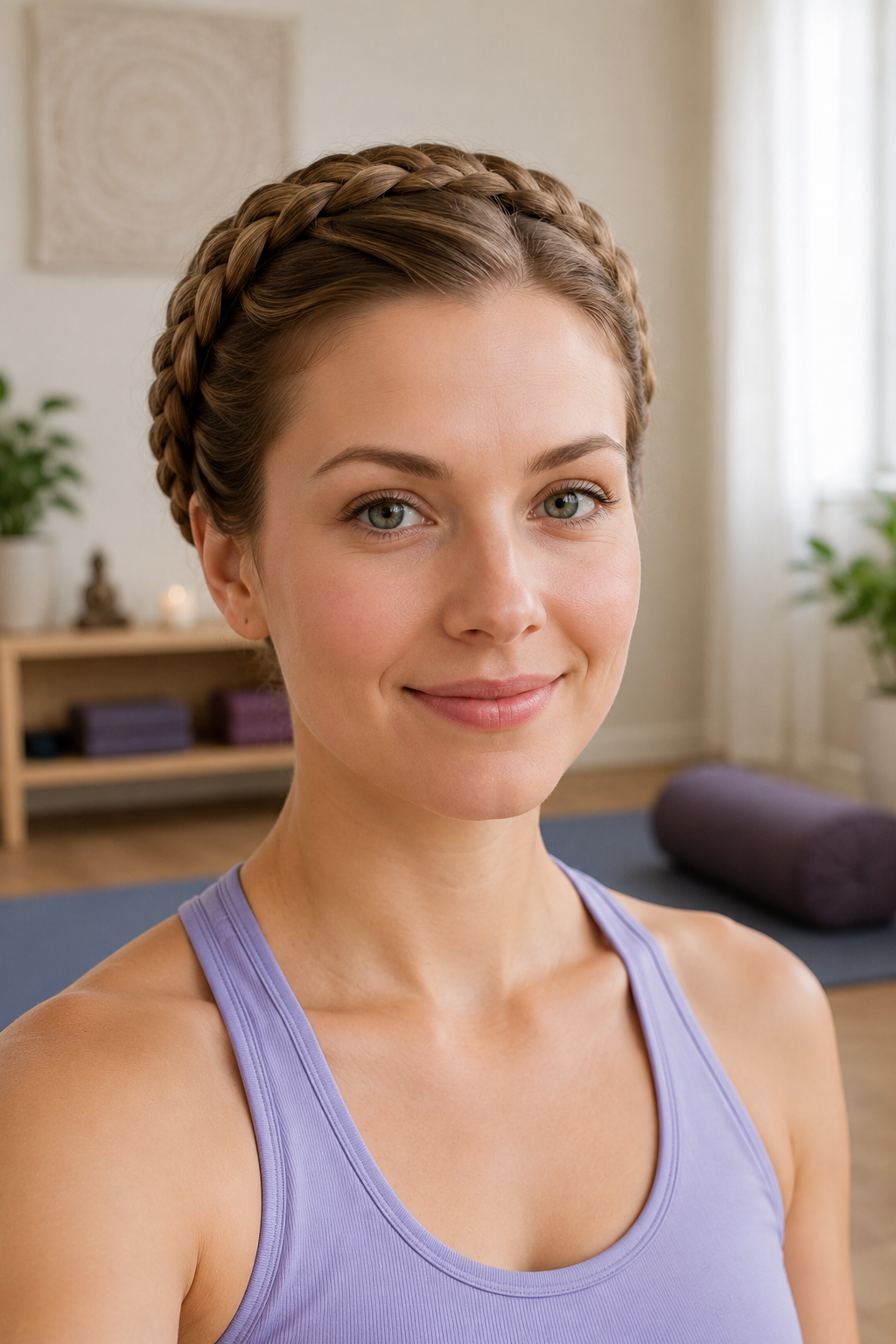
Hair braided or twisted around the head in a ring and pinned into place. Everything sits flat with nothing hanging.
Short hair usually needs two braids meeting at the back rather than one continuous one.
Great for yoga and pilates, where lying on your back rules out most buns and ponytails. Pin generously along the underside where the pins stay hidden, and mist with hairspray before you start.
High Puff With a Headband
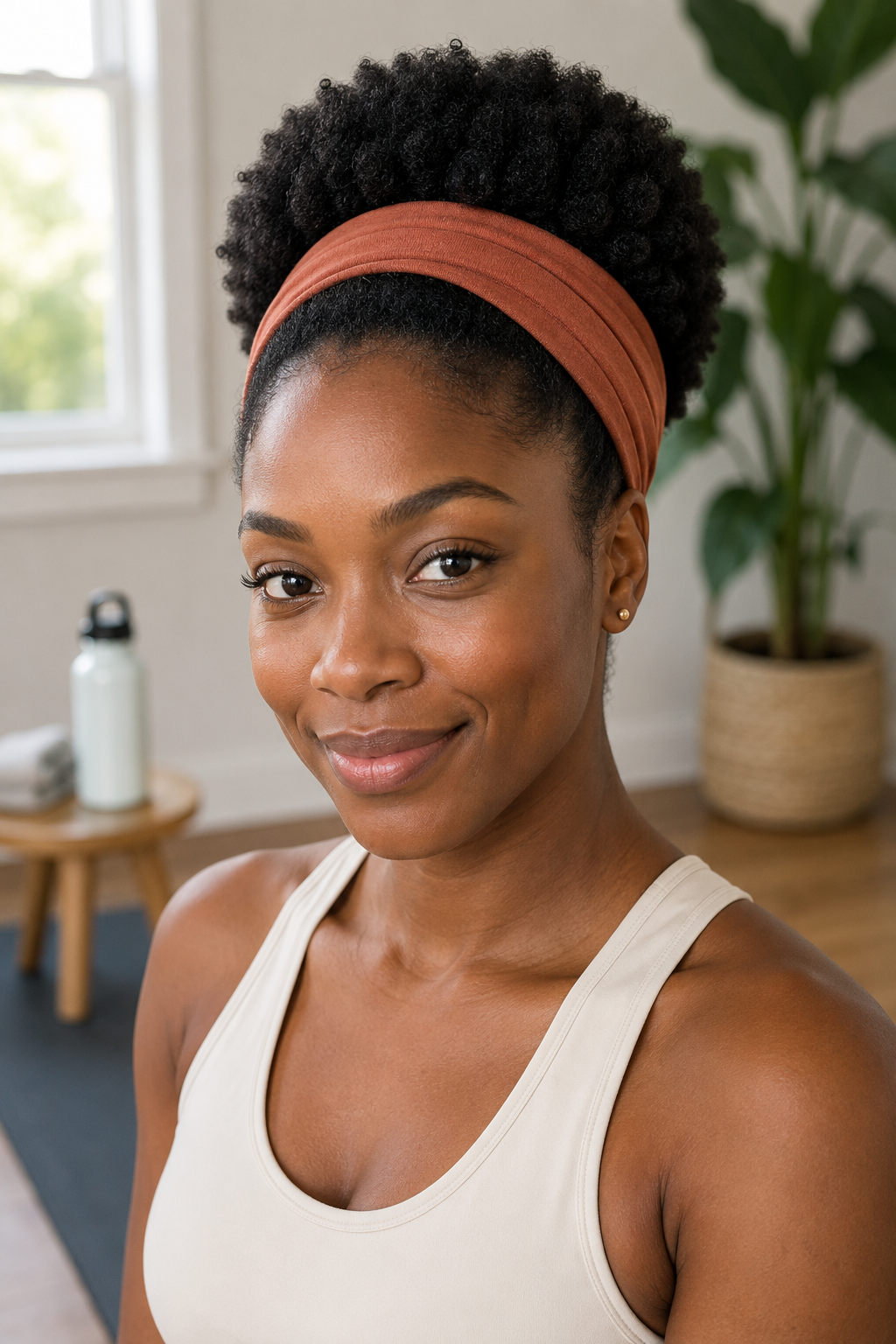
Coily hair gathered up at the crown and held with a wide fabric headband instead of an elastic.
The headband spreads the tension across a broader area, so your edges take much less strain than they would with a hair tie.
Perfect for 4B and 4C textures at three inches or more. Push it back only partway so the front keeps some height. More of these appear in our guide to short cuts that show off natural volume.
Slicked-Back Gel Look
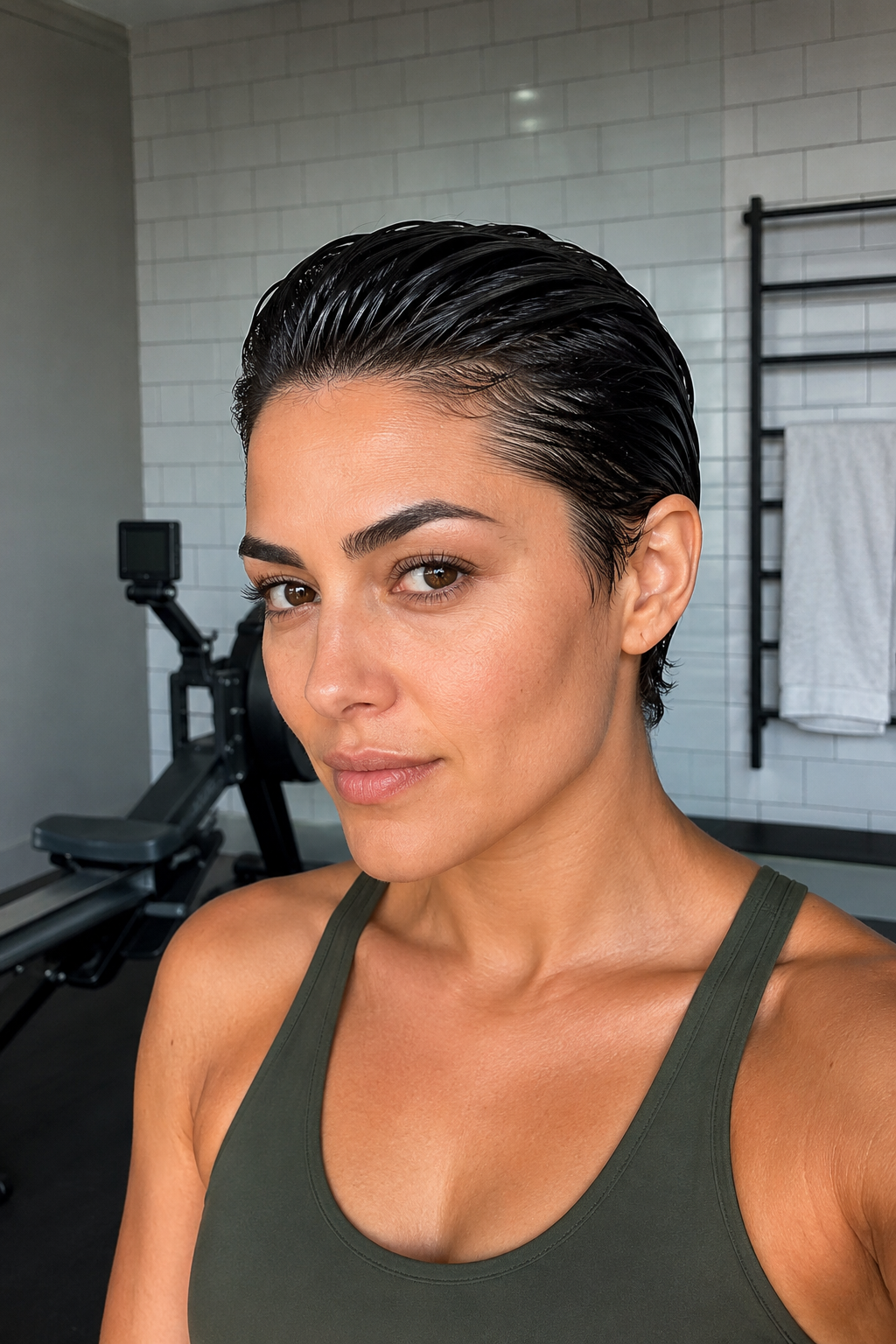
No ponytail, no bun, just everything combed straight back and held flat with a strong gel.
Pixies and very short bobs benefit most, since there is nothing to gather anyway.
Suits swimming, spin, and any session where you want zero maintenance. The gel washes out in the shower afterward. Use a comb rather than your fingers to get the lines clean, and let it set for a minute before you move.
Wide Sweatband Over a Pixie
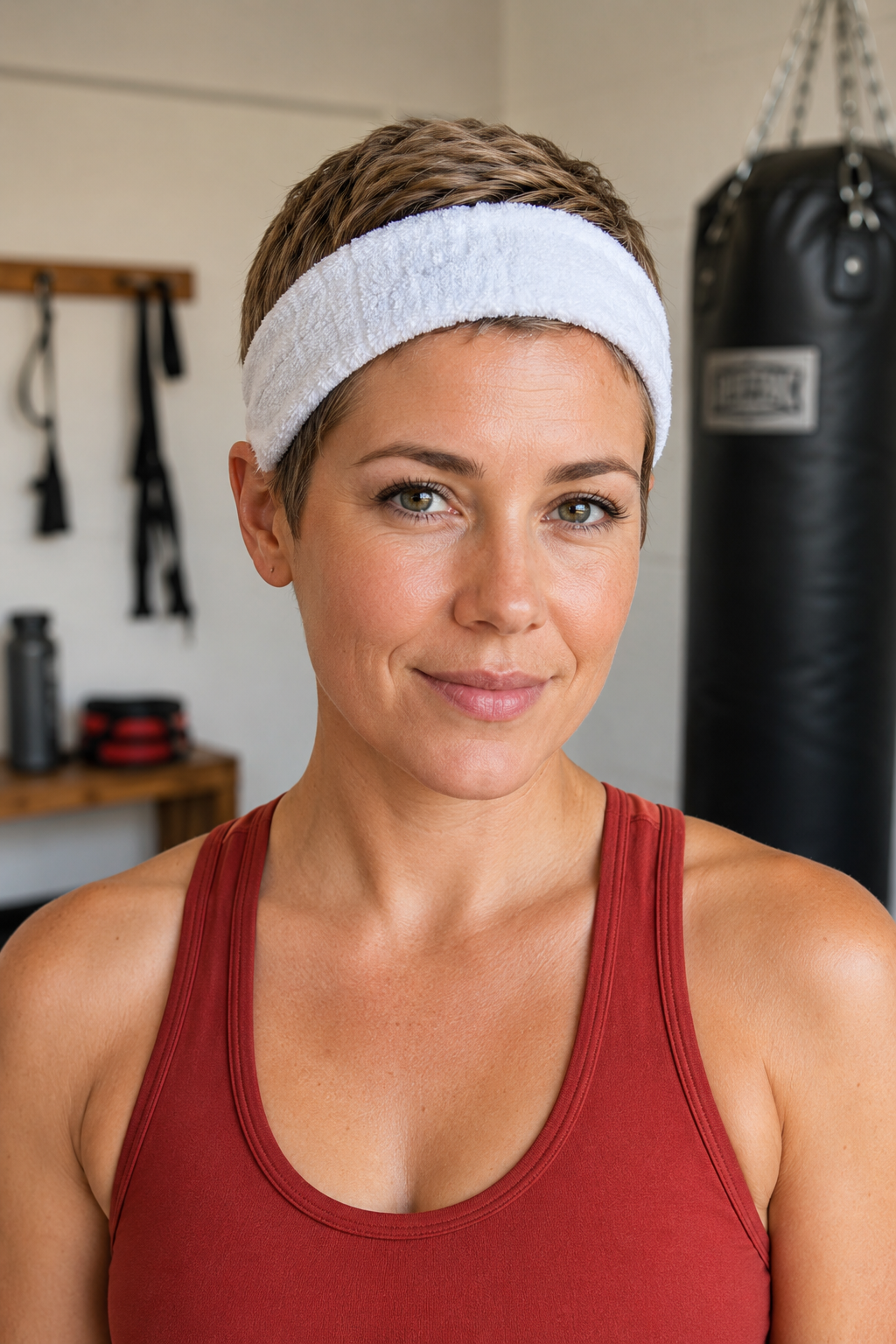
A thick terry or jersey sweatband pulled across the hairline, sitting where your hair starts.
It handles two jobs at once, holding the front pieces down and catching sweat before it reaches your eyes.
Great for anyone with a cut too short for anything else. Choose a band with silicone grip on the inside. Plain elastic ones slide upward as you move and need constant adjusting, which defeats the point.
Elastic Headband With Tucked Ends
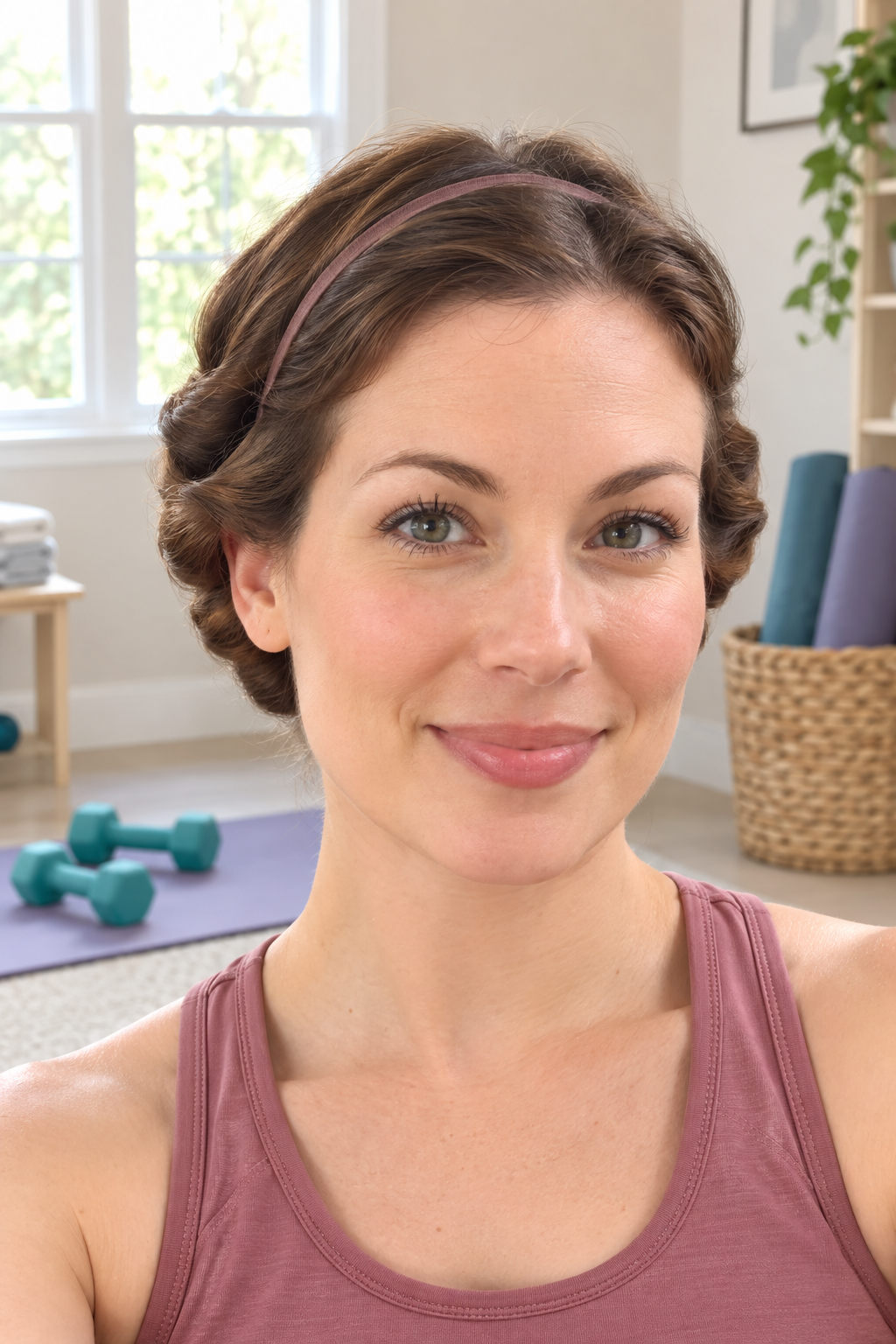
A thin elastic headband worn across the head, with the loose ends rolled up and tucked underneath it as you go.
The tucking is the whole technique. Section by section, roll the hair up and push it under the band until nothing hangs loose.
Works especially well on bobs and grown-out layers. Bobby pins at the roll points add security for harder sessions, and the finished shape holds neatly enough to keep afterward.
Bobby-Pinned Sides
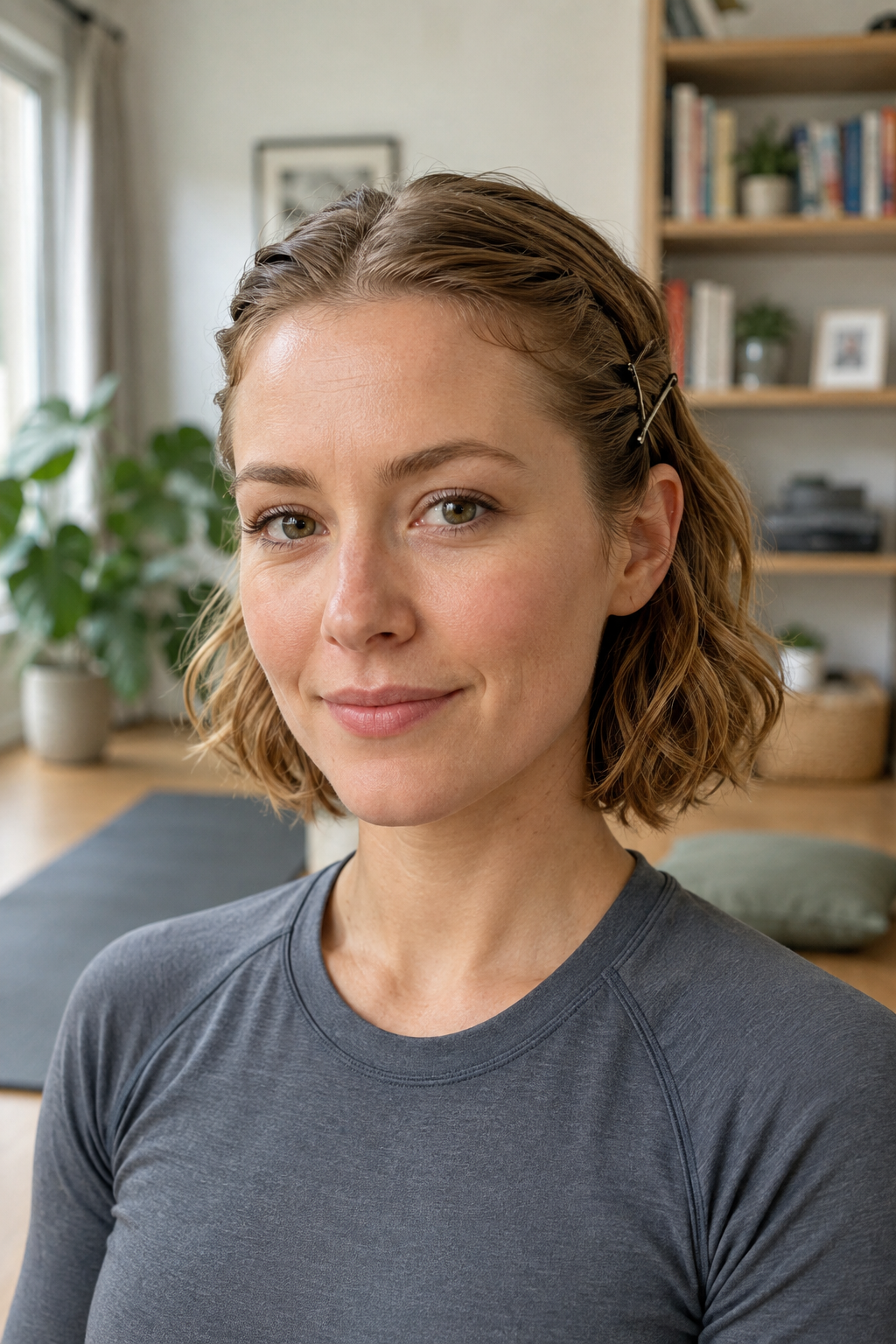
The simplest option on the list. Sweep both sides back and pin them behind the ears, leaving the rest alone.
Cross two pins in an X at each side rather than sliding them in parallel. That grip holds far longer.
Suits low-impact sessions, walking, stretching, and light weights. It takes twenty seconds and handles the front pieces, which is usually all a short cut actually needs.
Claw Clip Half-Up
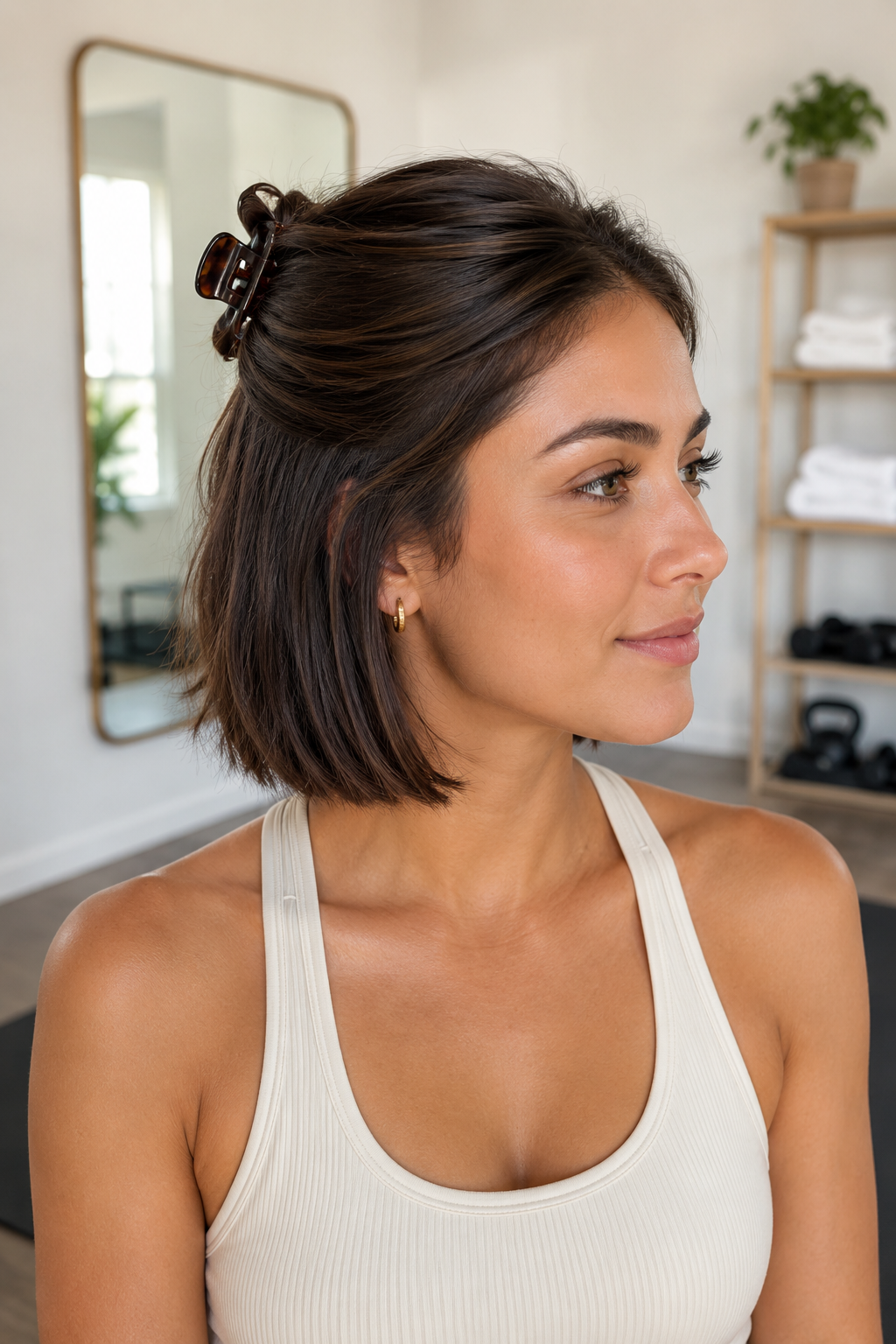
A small claw clip gathering the top section at the back of the head. The bottom stays loose.
Short hair needs a small clip with strong teeth. Large clips have nothing to bite into and pop open mid-set.
Perfect for anyone who wants their hair up without an elastic leaving a dent. Our collection of short hair updos has more clip-based options for after the gym.
Bandana Tie-Back
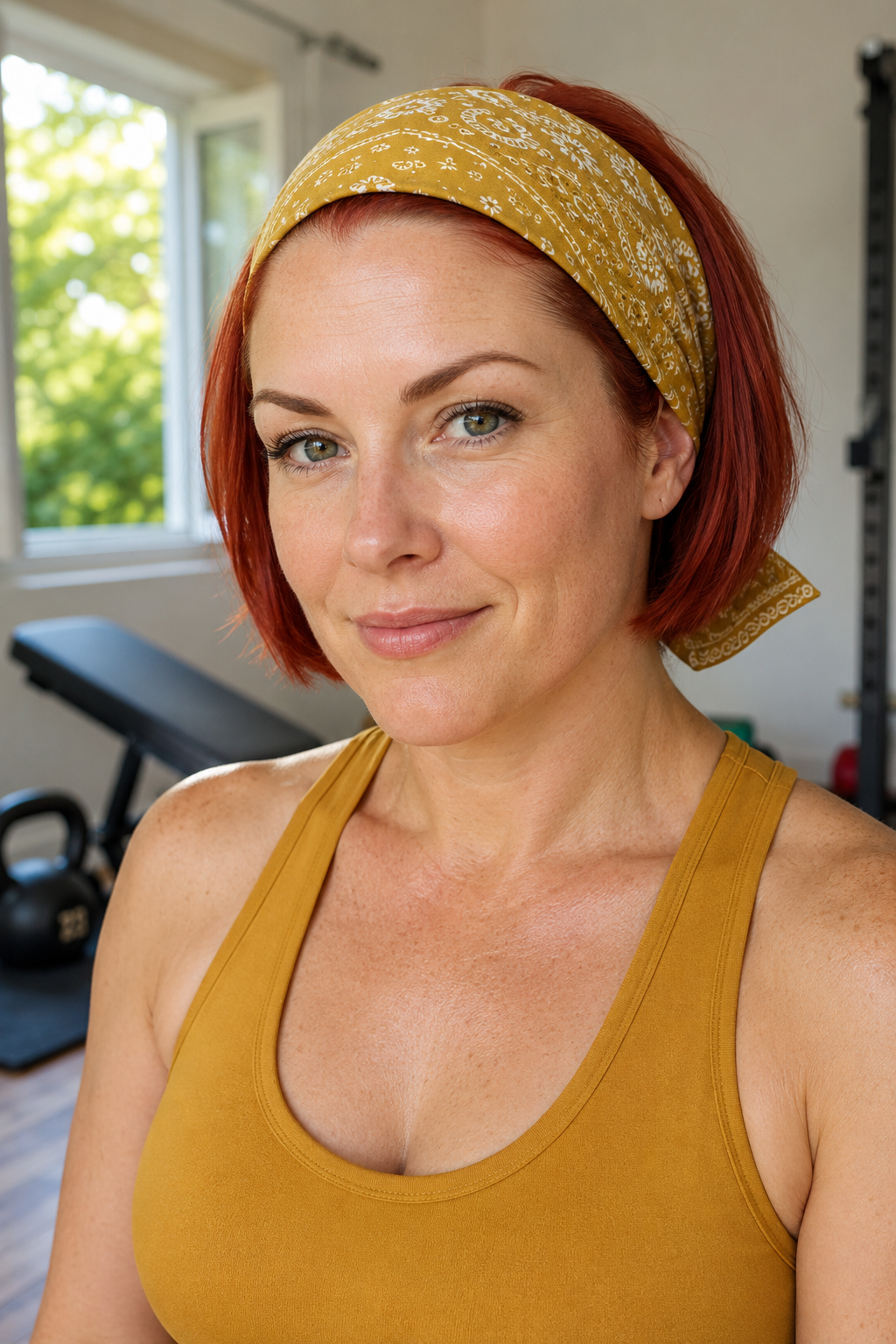
A folded bandana or scarf tied across the hairline with the knot at the back or underneath.
Cotton absorbs sweat where synthetic bands push it around, and the tighter tie means it will not creep upward.
Great for outdoor sessions and hot studios. Fold it into a strip about two inches wide, position it right at the hairline, and knot it low so the tails sit flat against your neck.
Snap Clips Along the Hairline
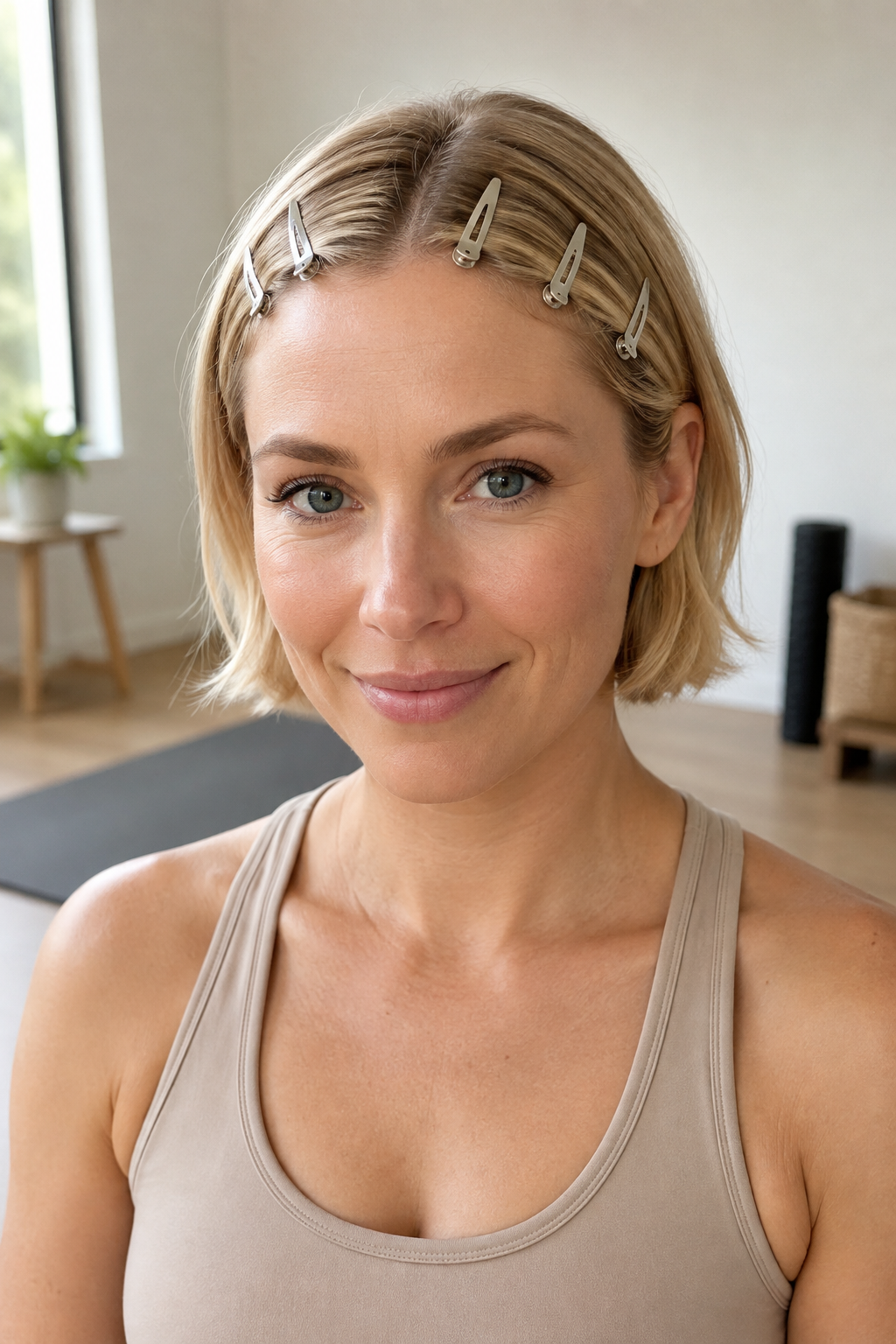
Three or four small metal snap clips holding the front pieces flat against the head, spaced evenly from the part backward.
Layers too short to reach a ponytail get handled individually this way.
Works especially well on fine hair that slides out of everything else. Our post on short hairstyles for thin fine hair covers the grip products that help here. Close each clip against the direction of hair growth.
Top Knot Over an Undercut
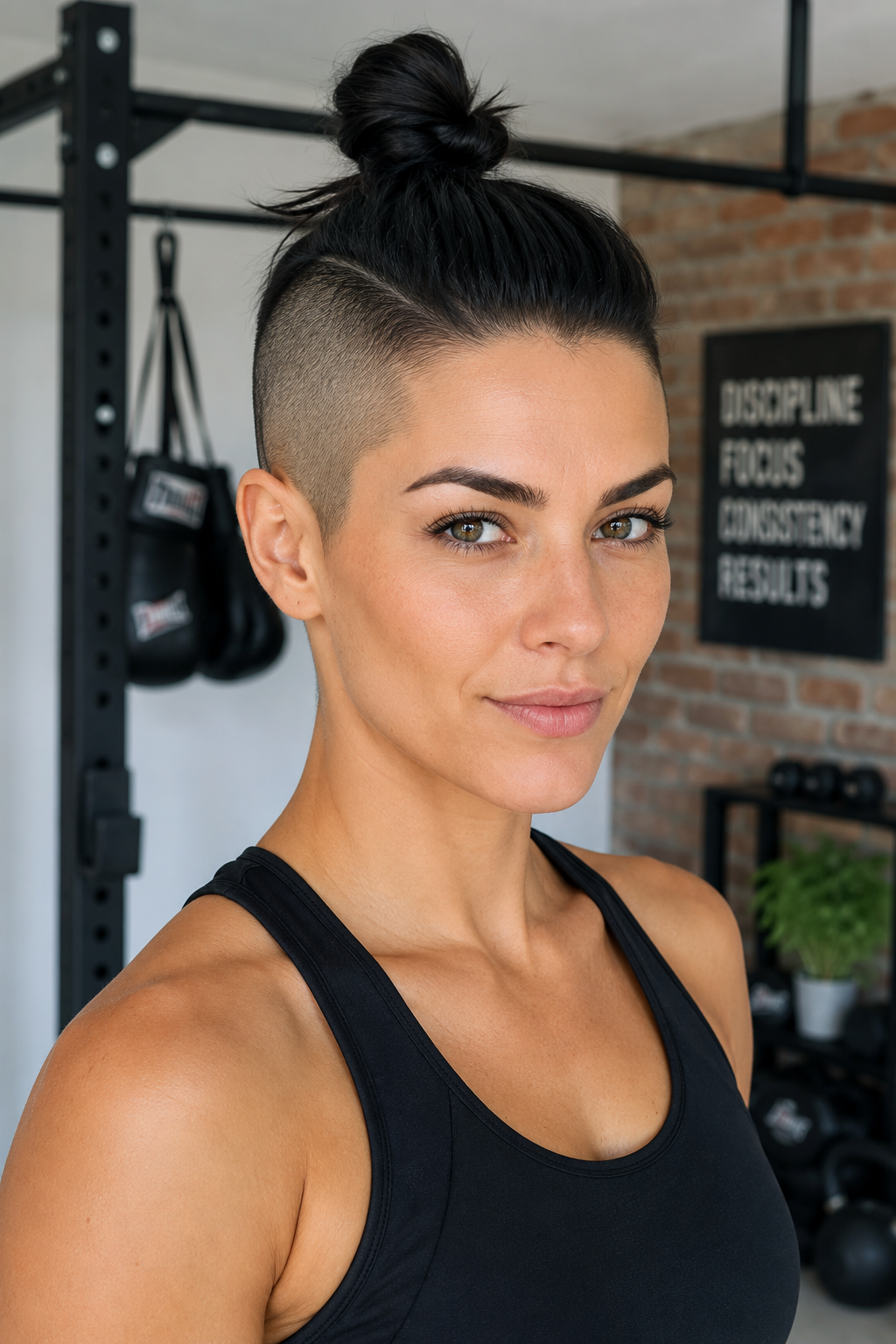
If you have an undercut, the long top section pulls into a small knot while the shaved sides stay exposed.
The knot sits high and compact, and there is no bulk anywhere near your neck.
Suits boxing, climbing, and anything where a helmet or headgear goes on. The shaved sides also mean far less sweat trapped against the scalp, which is a real advantage in long sessions.
Twisted Front Sections Pinned Back
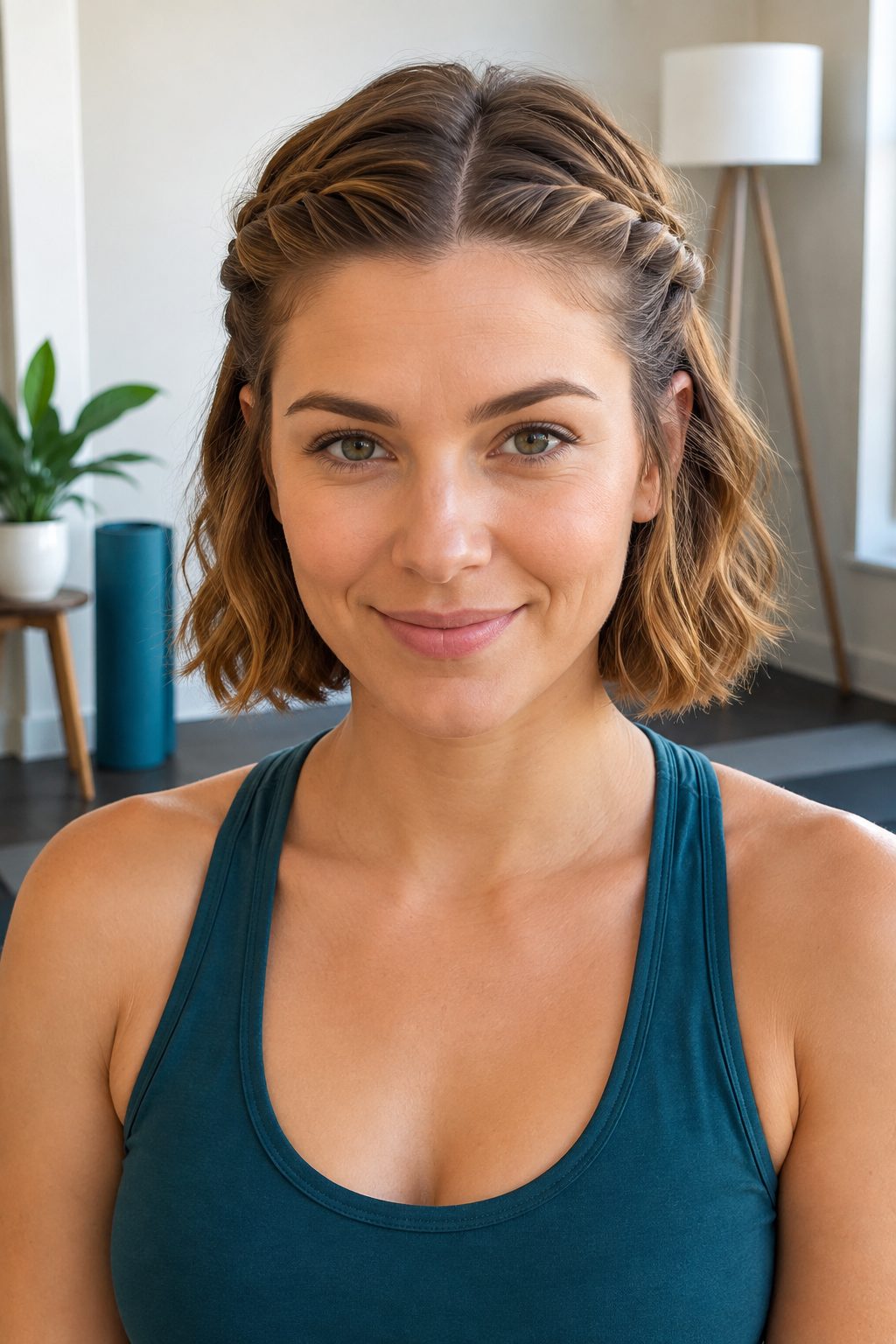
Take a section from each side, twist it back along the head, and pin it behind the ear. The twist adds tension the hair holds onto.
Twisting grips better than simply sweeping the hair back, so it survives more movement.
Great for anyone who wants something that looks deliberate rather than thrown together. It carries straight from the gym to errands without needing to be redone, and it works on almost any short cut.


Comments
No Comments