22 Simple Protective Braid Hairstyles and How Long Each Takes
The simplest protective braid is the one you can take down on a Sunday night without dreading it.
Fewer, chunkier braids go in faster and come out faster, and they still keep the ends tucked away and the hands off the hair all week, which is the whole point of protection.
Most of the styles below take under two hours, and half of them can be done at home with a comb and some gel. Two feed-in cornrows are the quickest of all, which is why they come first.
Jump to:
- Two Feed-In Cornrows
- Jumbo Knotless Braids
- Straight-Back Cornrows
- Single French Braid
- Low Bun From Box Braids
- High Ponytail Braided Down
- Halo Braid in Your Own Hair
- Mini Braids in Your Own Hair
- Four Goddess Braids
- Side Braid Over the Shoulder
- Braided Headband With Hair Down
- Chin-Length Jumbo Braids
- Crochet Braids
- Cornrows Into a Top Knot
- One Center Cornrow With Afro Out
- Rope Braid Ponytail
- Fishtail Braid
- Pull-Through Braid
- Two Low Braids With a Middle Part
- Braided Space Buns
- Scarf-Wrapped Braids
- Half-Up Braids Tied Back
Two Feed-In Cornrows
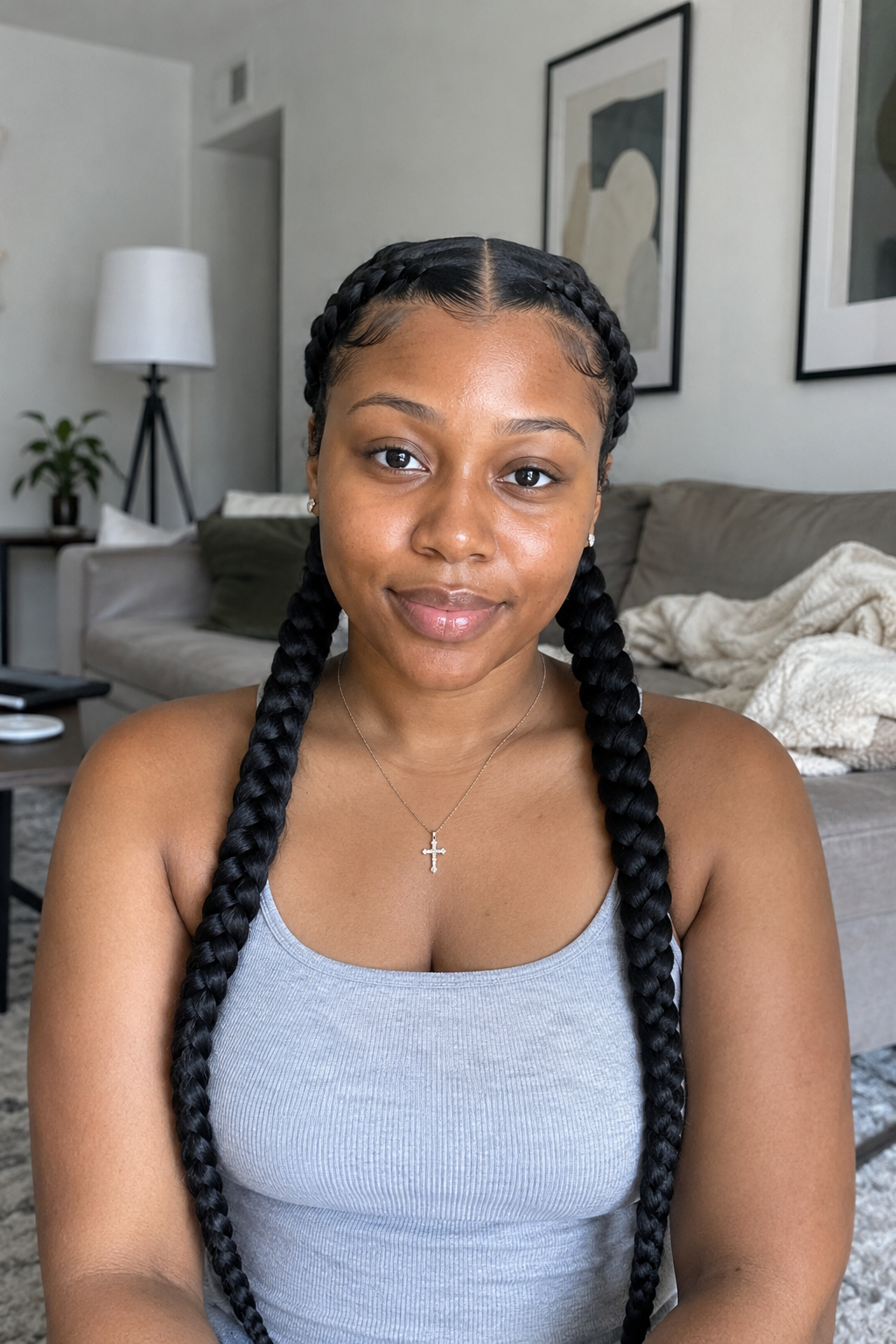
Two thick cornrows parted down the middle and braided from the hairline to the ends, hanging past the shoulders.
It is the hour-long install that puts the hair away for a week.
The feed-in start keeps the front flat and takes the tension off the hairline, and the two braids need nothing but a scarf at night.
Ask for braiding hair fed in if you want them longer, and the part gelled clean.
Spray the scalp with leave-in every other day.
Jumbo Knotless Braids
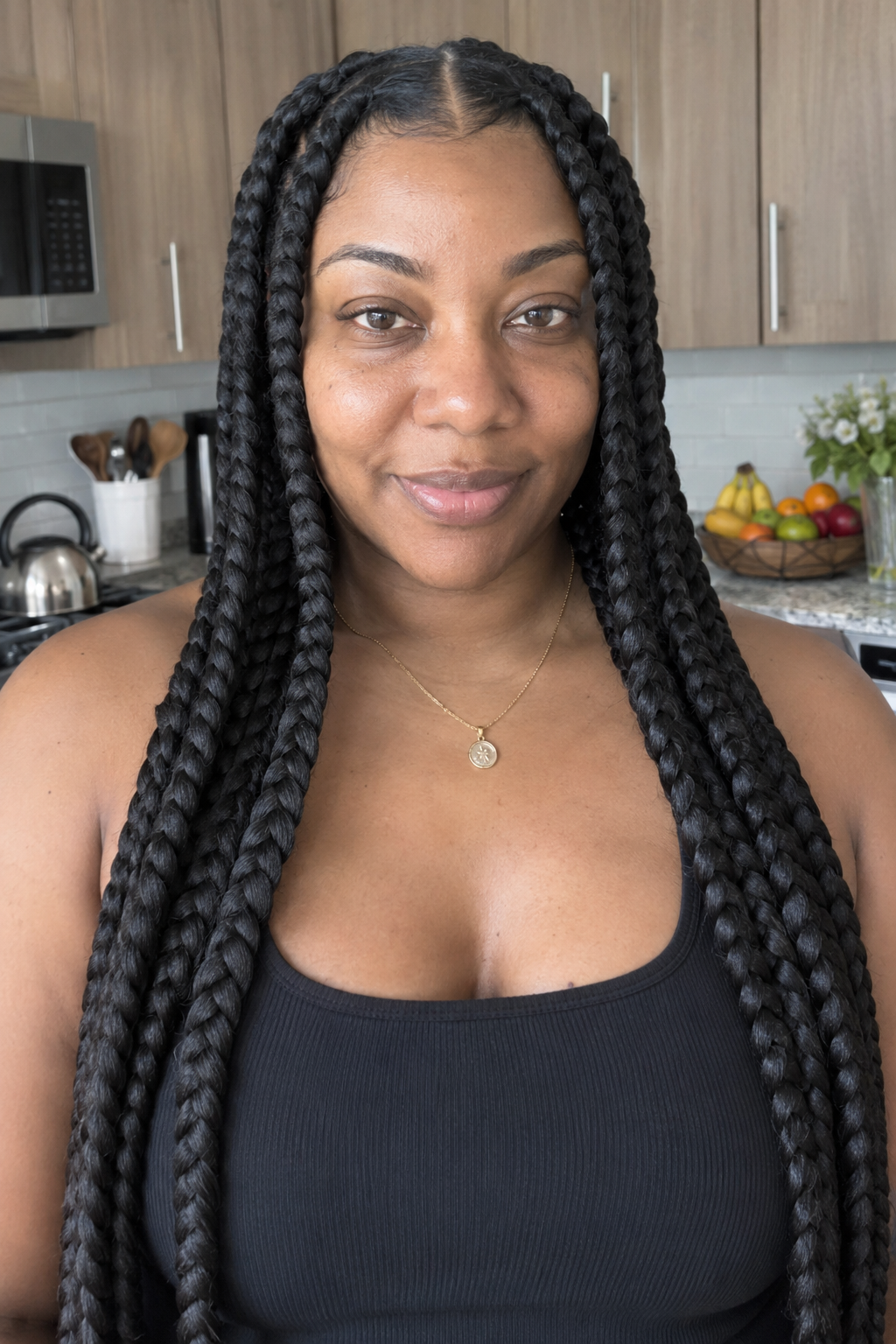
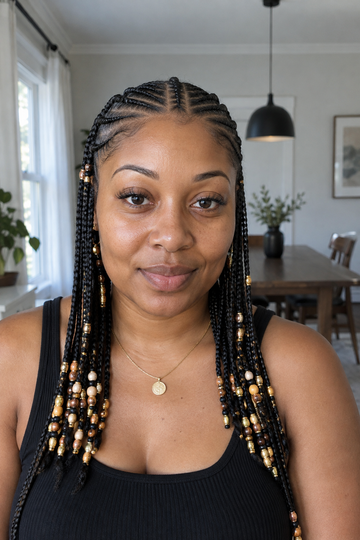
A dozen thick knotless braids falling to the waist, each one starting flat in your own hair with no knot at the root.
Jumbo is the fast size, done in about two hours, and the knotless start keeps the weight off the follicles so the big braids still feel light. They last four to six weeks.
Ask for the braids kept to mid-back if your edges are fine. Oil the parts twice a week and sleep in a bonnet.
Straight-Back Cornrows
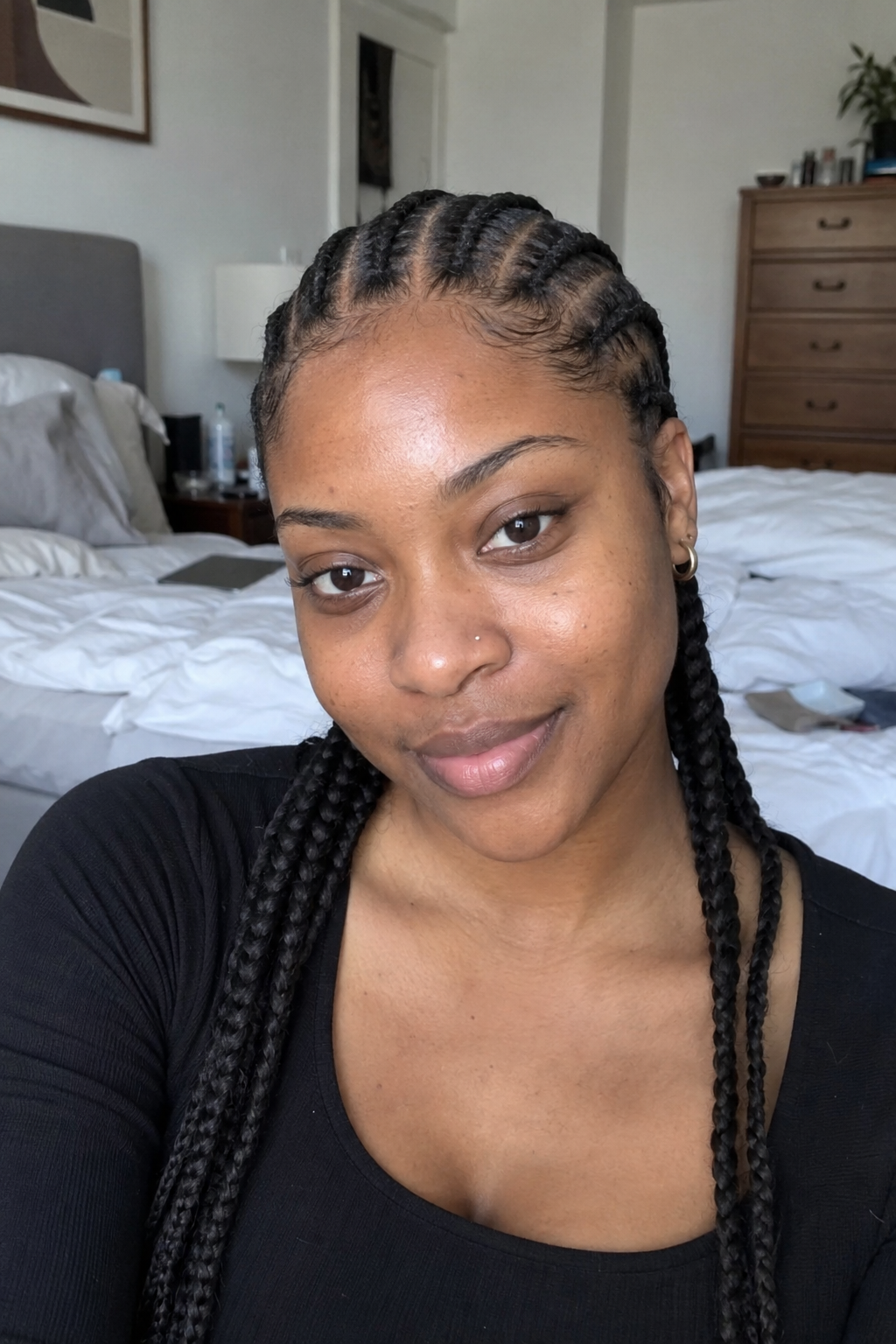
Six to eight cornrows running from the hairline straight back to the nape, with the ends hanging or tucked under.
It is the style every other protective style sits on top of.
Straight-back cornrows take an hour and put the whole head away for two weeks, with the edges spared when the first rows start thin.
They go under wigs and out on their own. Ask for medium rows and a light hand at the front, then spray the scalp with leave-in between washes.
Single French Braid
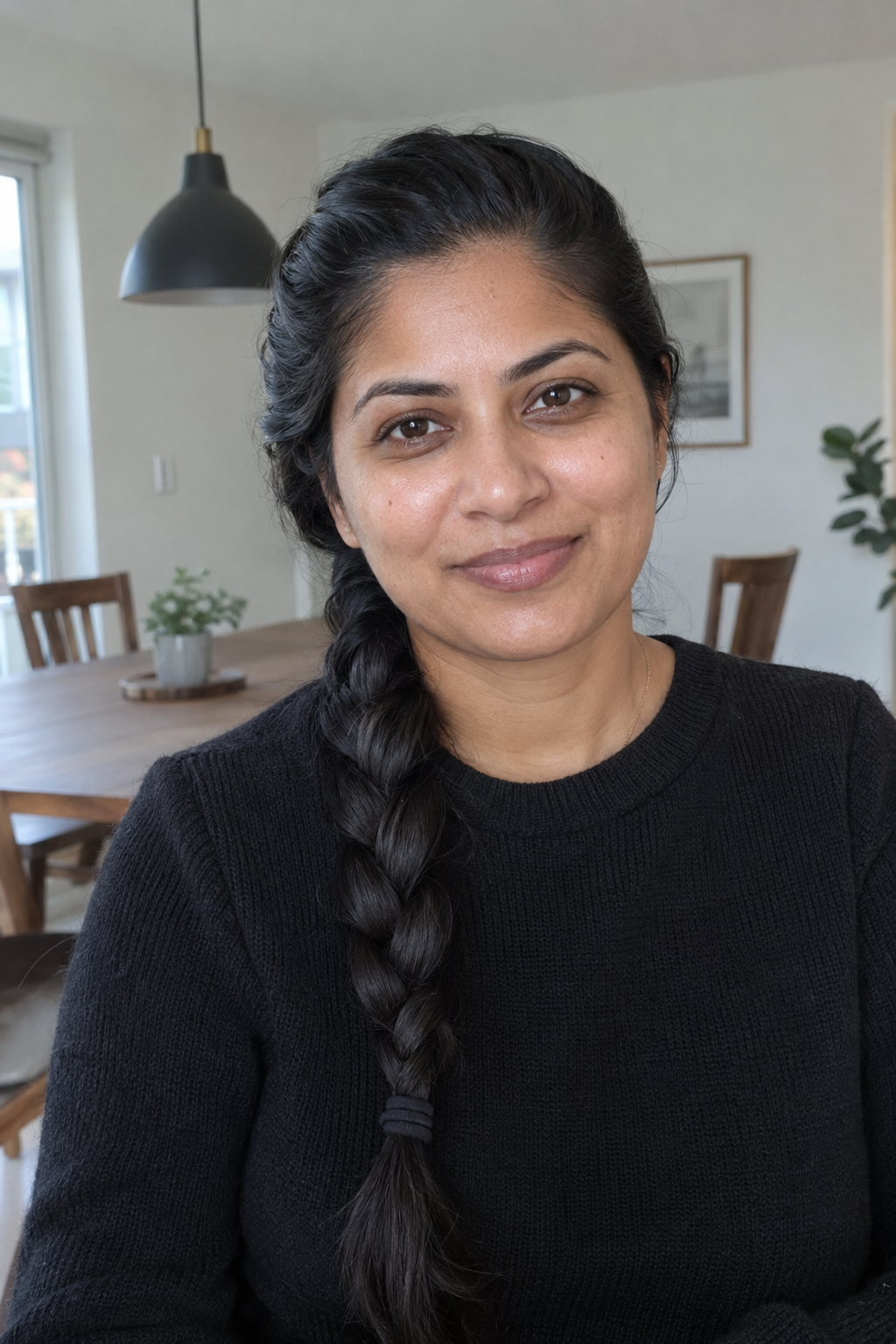
One braid running from the crown down the back, with hair added from each side as it goes, the ends tied at the nape or left to hang.
The French braid keeps the length contained and the ends off the shoulders, and it works on any texture that has been stretched or smoothed first. It takes five minutes once your hands know the pattern.
Braid on dry, detangled hair with a little cream. Tie a scarf over it at night.
Low Bun From Box Braids
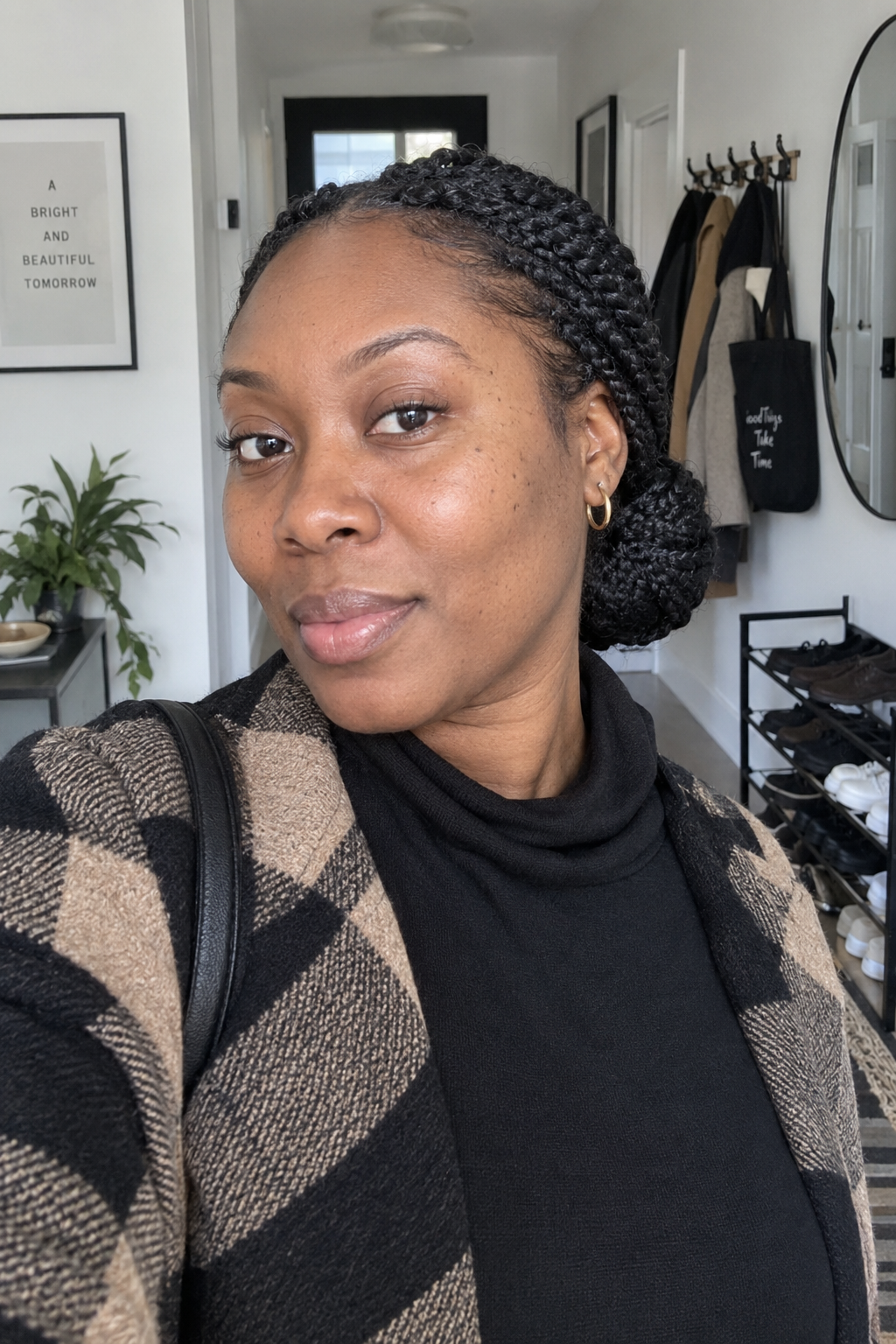
Long box braids gathered at the nape and wrapped into one thick bun, with the ends tucked inside.
The bun is a restyle of braids already installed, and it is the most protective shape there is, since every end is hidden and nothing swings against the shoulders.
It takes two minutes and suits a work week. Gather the braids with a large band and twist them around the base, then pin the ends under.
Loosen it at night so the nape does not pull.
High Ponytail Braided Down
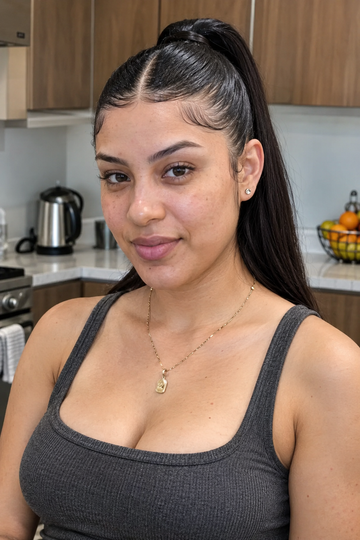
Hair pulled into a high ponytail and braided in one thick plait from the elastic to the ends, tied off at the bottom.
The braid stops the ponytail from tangling or rubbing against clothes, so the ends stay protected through the day, and the high placement keeps it off the neck.
Brush the hair up with gel and tie it, then braid the tail in three strands and secure the end. Wrap a strand around the top elastic to hide it.
Halo Braid in Your Own Hair
One thick braid wrapped around the head like a crown, with the ends tucked underneath and pinned.
The halo keeps all the hair up and away from the shoulders without an elastic, and it works on stretched natural hair or any length past the shoulders.
It takes fifteen minutes and lasts a few days with a scarf at night. Braid the hair in one or two sections and wrap them around the head, pinning as you go.
Loosen the braid a little for softness.
Mini Braids in Your Own Hair
Small three-strand braids throughout the hair with no added extensions, worn down or tied back, the ends curling on their own.
Mini braids put the hair away for weeks without the weight of extensions, and they wash and dry in place, which suits women who want a break from daily styling.
The install takes an afternoon and they last up to a month. Braid on stretched hair with a little cream, and leave the ends to coil rather than sealing them.
Four Goddess Braids
Four thick feed-in cornrows running straight back, each one the width of two fingers, with the ends hanging past the shoulders.
Goddess braids are the big version of cornrows, and four of them cover the whole head in about an hour while leaving wide parts that are easy to oil.
Ask for the braids fed in so the front starts thin, and gather the ends in a low ponytail if they get in the way. Tie them down with a scarf at night.
Side Braid Over the Shoulder
One loose three-strand braid pulled over one shoulder, tied at the end and tugged a little wider.
The side braid takes a minute and keeps the length in one piece instead of catching on bags and collars, which is as simple as protection gets.
Braid on stretched or smoothed hair with a little cream, and leave a few pieces loose at the face. Redo it each morning, and tie the end with a soft elastic so the tips do not fray.
Braided Headband With Hair Down
One cornrow or Dutch braid running along the hairline from ear to ear, with the rest of the hair worn down behind it.
The braid keeps the front off the face and protects the edges, which take the most wear, while the rest stays free.
It takes ten minutes on curls or a stretched afro. Braid from behind one ear across to the other, adding hair from the front, and pin the end under.
Smooth the hairline with a little gel.
Chin-Length Jumbo Braids
Thick box braids cut at the chin in a blunt braided bob, the ends sealed and swinging.
The short jumbo braid is the quickest braided bob to install, under two hours, and the short length pulls less and dries faster than a long set.
Ask for the braids knotless and the ends dipped in hot water to seal them, and keep the parts large so the install stays quick. Wrap them at night so the bob keeps its shape.
Crochet Braids
Pre-braided hair looped through flat cornrows with a crochet hook, so the finished braids sit over a protected base.
Crochet cuts a six-hour install down to two, and the cornrows underneath take the tension while the braids on top take the attention.
It comes out in an hour and lasts four to six weeks. Ask for the cornrows kept flat and the pieces attached close to the base so no loops show.
Spray the scalp with leave-in through the braids.
Cornrows Into a Top Knot
Cornrows braided up from the hairline and the nape toward the crown, meeting in a knot made from the braided ends.
The top knot puts every end away at the top of the head, so nothing touches the neck or the shoulders, and the cornrows hold it for two weeks.
Ask for the rows fed in and the knot wrapped from the ends rather than added hair. Oil the scalp between the rows and tie a scarf over the knot at night.
One Center Cornrow With Afro Out
A single cornrow braided down the center from the forehead to the crown, with the rest of the hair picked out in an afro around it.
The center braid keeps the part clean and the front controlled while the afro stays free, and it takes ten minutes on stretched hair.
Braid the center section flat against the scalp and pin the end into the afro, then pick the rest out from the roots. Oil the afro and tie a scarf over the braid at night.
Rope Braid Ponytail
A ponytail split into two sections, each twisted in one direction and then wrapped around each other the opposite way, so the tail looks like a rope.
The rope braid needs no braiding skill and holds tighter than a three-strand plait, which keeps the ends protected through a long day.
Twist each section clockwise and wrap them around each other counterclockwise, then tie the end so it cannot unwind. Smooth the top with gel and wrap a strand around the elastic.
Fishtail Braid
A braid woven in thin strands crossed from one side to the other, so the pattern looks like a herringbone running down the back or over one shoulder.
The fishtail looks like it took an hour and takes ten minutes once the pattern is familiar, and it holds the length in one piece.
Split the hair into two sections and cross a thin strand from the outside of one over to the other, repeating to the ends.
Tug it wider once it is tied.
Pull-Through Braid
A braid made from a column of small ponytails, each one split and pulled through the next with elastics, so it looks like a thick plait with no braiding at all.
The pull-through braid is the one for hands that cannot braid, and it comes out fuller than a three-strand plait, which hides thin ends.
Tie a row of small ponytails down the back, then split each one and pull the next through it. Tug the sections out for volume.
Two Low Braids With a Middle Part
Hair parted down the middle and braided into two loose three-strand braids starting at the nape, hanging forward over the shoulders.
The low braids are the easiest two-braid style, since nothing is braided on the scalp, and they keep the length contained for a day or a week depending on the texture.
They work on stretched natural hair or straight hair, and they take five minutes.
Braid on detangled hair with a little cream and tie the ends.
Braided Space Buns
Box braids or your own braids split down the middle and twisted into two round buns high on the head, one on each side.
It is a restyle of braids already in, and it takes the weight of long braids off the back of the neck while keeping every end tucked away.
Part the braids down the middle and gather each side high, then twist them around their base and pin the ends under. Smooth the edges with gel.
Scarf-Wrapped Braids
Long braids left down with a silk scarf tied around the hairline and over the first few inches, the length hanging free.
The scarf protects the edges from sun and friction, and it hides fuzzy roots when an install is on its last week. It takes a minute to tie. Fold the scarf into a wide band and tie it at the nape with the ends tucked, or knot it at the front.
Choose silk or satin so it does not snag the braids.
Half-Up Braids Tied Back
Two small braids started at the temples and pulled back to meet at the back of the head, tied together, with the rest of the hair left down.
The two braids keep the front off the face and the hairline protected while the rest stays loose, and they take five minutes on any texture that can hold a braid.
Braid a thin section from each temple back and tie the two together with a small elastic. Pull the braids a little loose for softness.