
22 Curtain Bangs Hairstyles and Which One Suits Your Face Shape
Curtain bangs are the fringe to ask for if you have talked yourself out of bangs before. They part down the middle and get longer toward the temples, so they frame your face instead of hiding it. They also forgive a missed trim, since the pieces blend into the rest of your hair as they grow. What changes the look is the length you cut them to and what the hair around them is doing. Wispy or heavy, short or grown out, each version sits differently on the face. The classic way to wear them is with long layers.
Jump to:
- Long Layers With Curtain Bangs
- Wispy Curtain Bangs
- Bob With Curtain Bangs
- Wavy Hair With Curtain Bangs
- Lob With Curtain Bangs
- Curly Hair With Curtain Bangs
- Butterfly Cut With Curtain Bangs
- Shag Haircut With Curtain Bangs
- Bottleneck Curtain Bangs
- Short Curtain Bangs
- High Ponytail With Curtain Bangs
- Claw Clip Updo With Curtain Bangs
- Jaw-Length Curtain Bangs
- Half-Up Half-Down With Curtain Bangs
- Heavy Curtain Bangs
- Money Piece With Curtain Bangs
- Copper Hair With Curtain Bangs
- Side Swept Curtain Bangs
- Bixie Cut With Curtain Bangs
- Silk Press With Curtain Bangs
- Sleek Low Bun With Curtain Bangs
- Gray Hair With Curtain Bangs
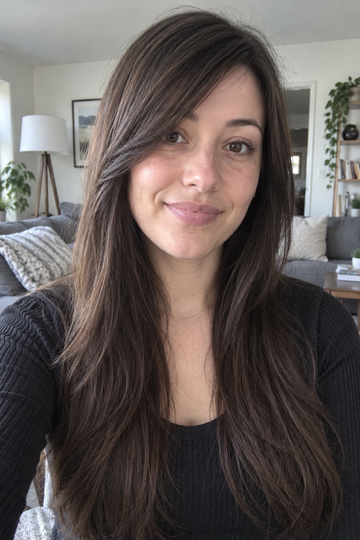
Long Layers With Curtain Bangs
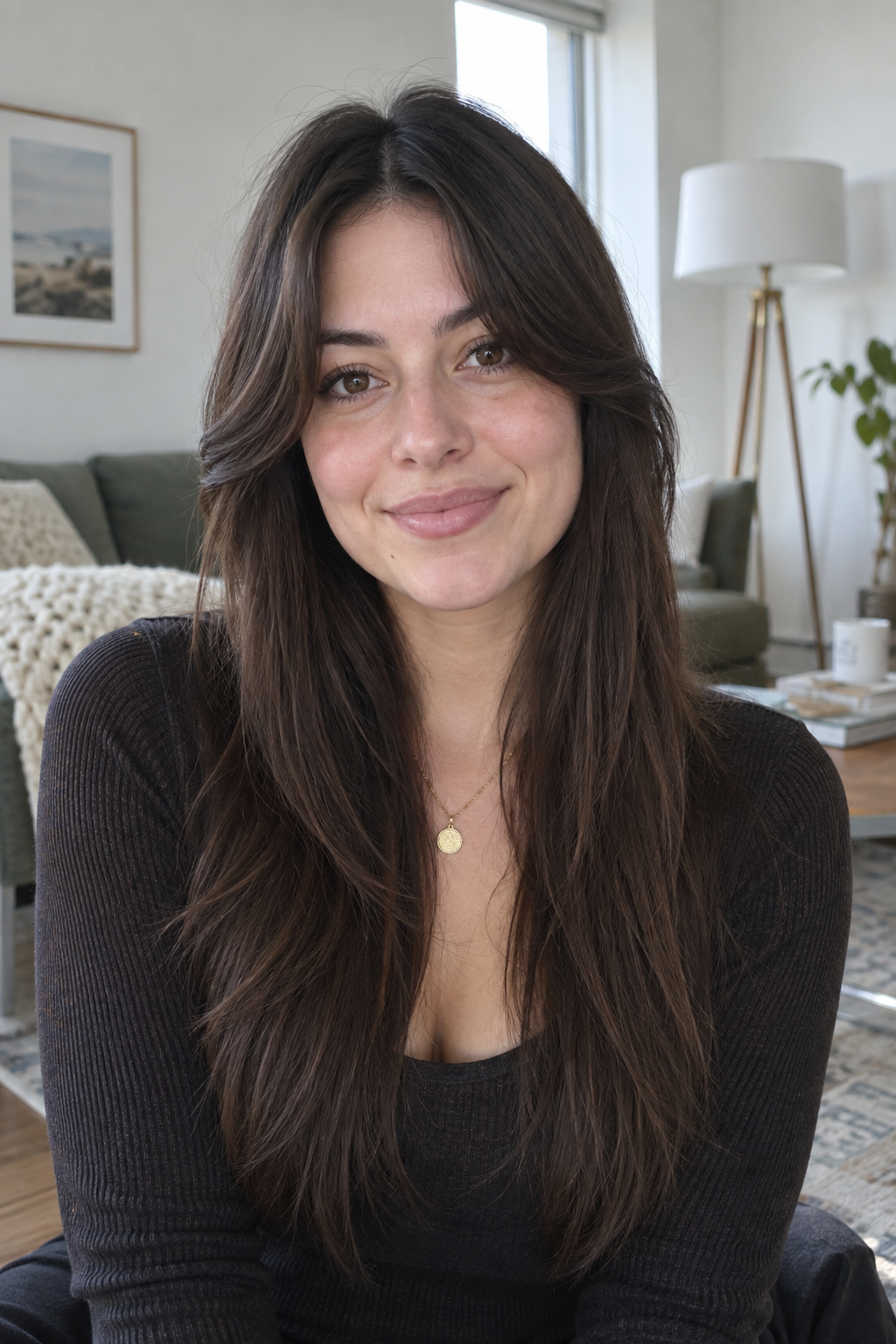
This is the version stylists get asked for most. The bangs part in the center and sit around the cheekbones at their shortest point, then get longer toward the temples, where they melt into long layers.
The layers matter as much as the bangs. Without them, the fringe ends abruptly and looks pasted on.
Blow-dry the bangs with a round brush, rolling each side away from the face, so the curve holds. A quick pass with a flat iron sets it.
Wispy Curtain Bangs
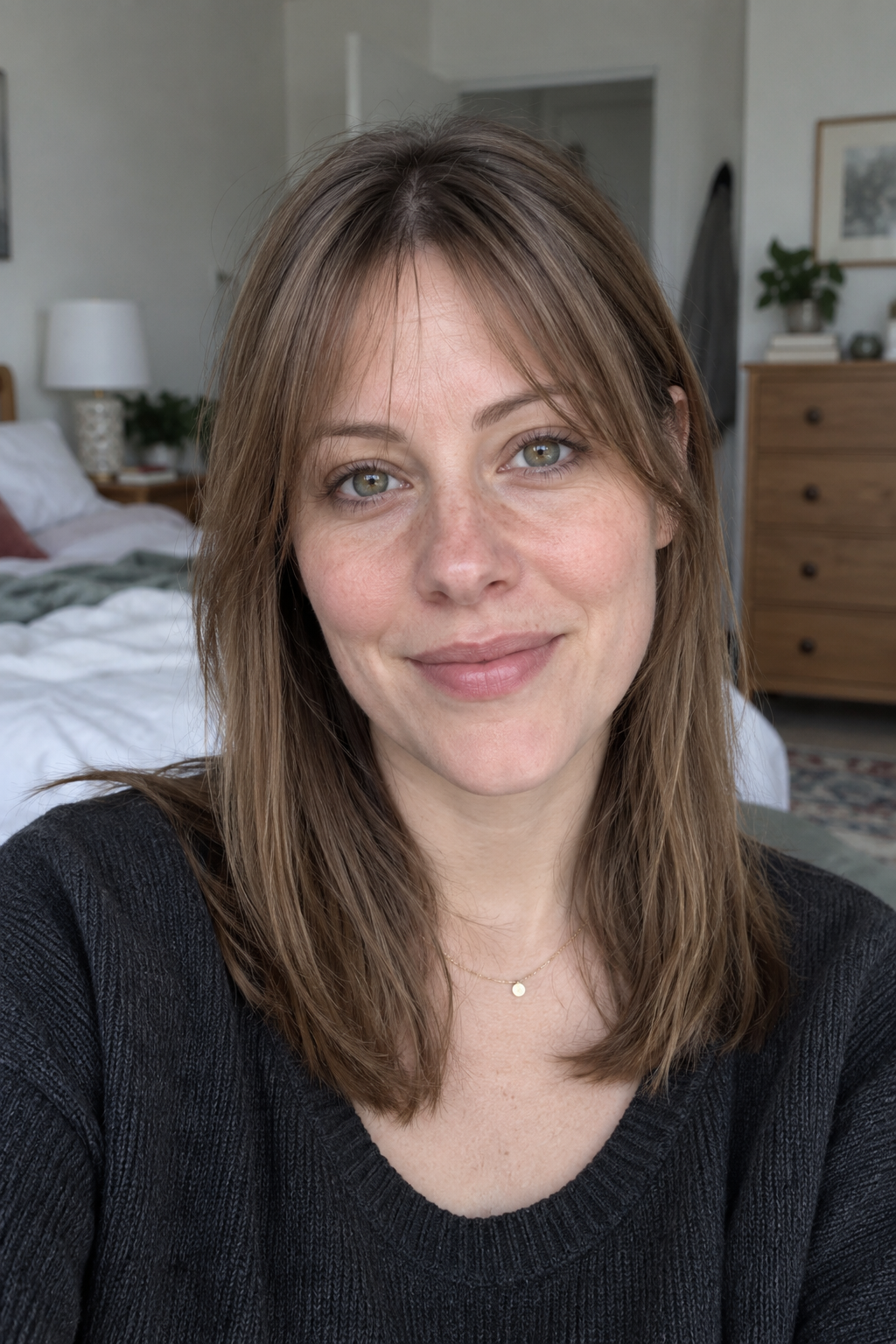
Wispy curtain bangs are cut thin enough that the forehead shows through them. The pieces are soft and feathered, so the parting looks like it happened on its own rather than being cut in. This is the easiest curtain bang to grow out, since a few months of growth turns it into face-framing layers.
Fine hair suits it best because the section stays light without thinning. On thick hair, ask the stylist to take the bangs from a shallow section only.
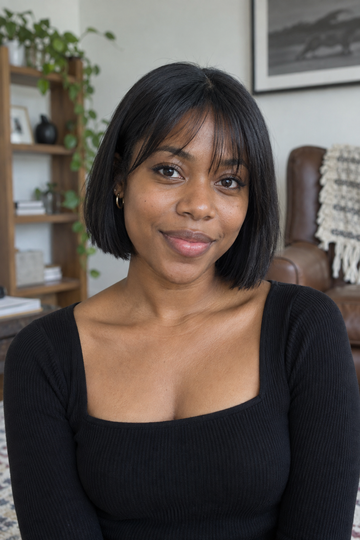
Bob With Curtain Bangs
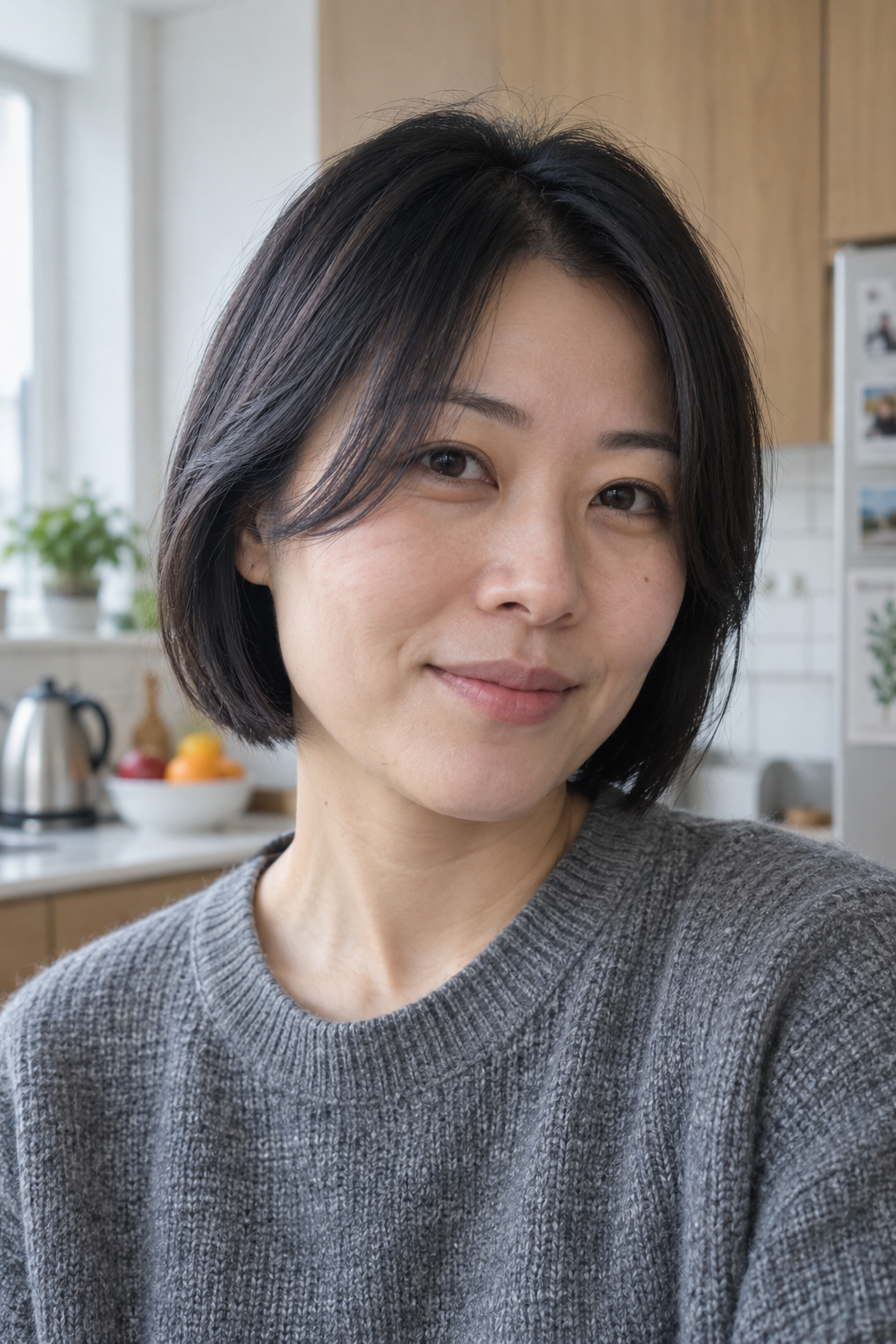
A chin-length bob gives curtain bangs a shorter frame to work with. The bangs sit at the cheekbones and the bob ends at the jaw, so the two lines sit close together and shape the face from both sides.
This pairing suits round faces well. The center part and the vertical lines of the bangs draw the eye down.
Keep the bob slightly longer in front so the bangs have something to blend into at the ends. A slight bend at the tips helps.
Wavy Hair With Curtain Bangs
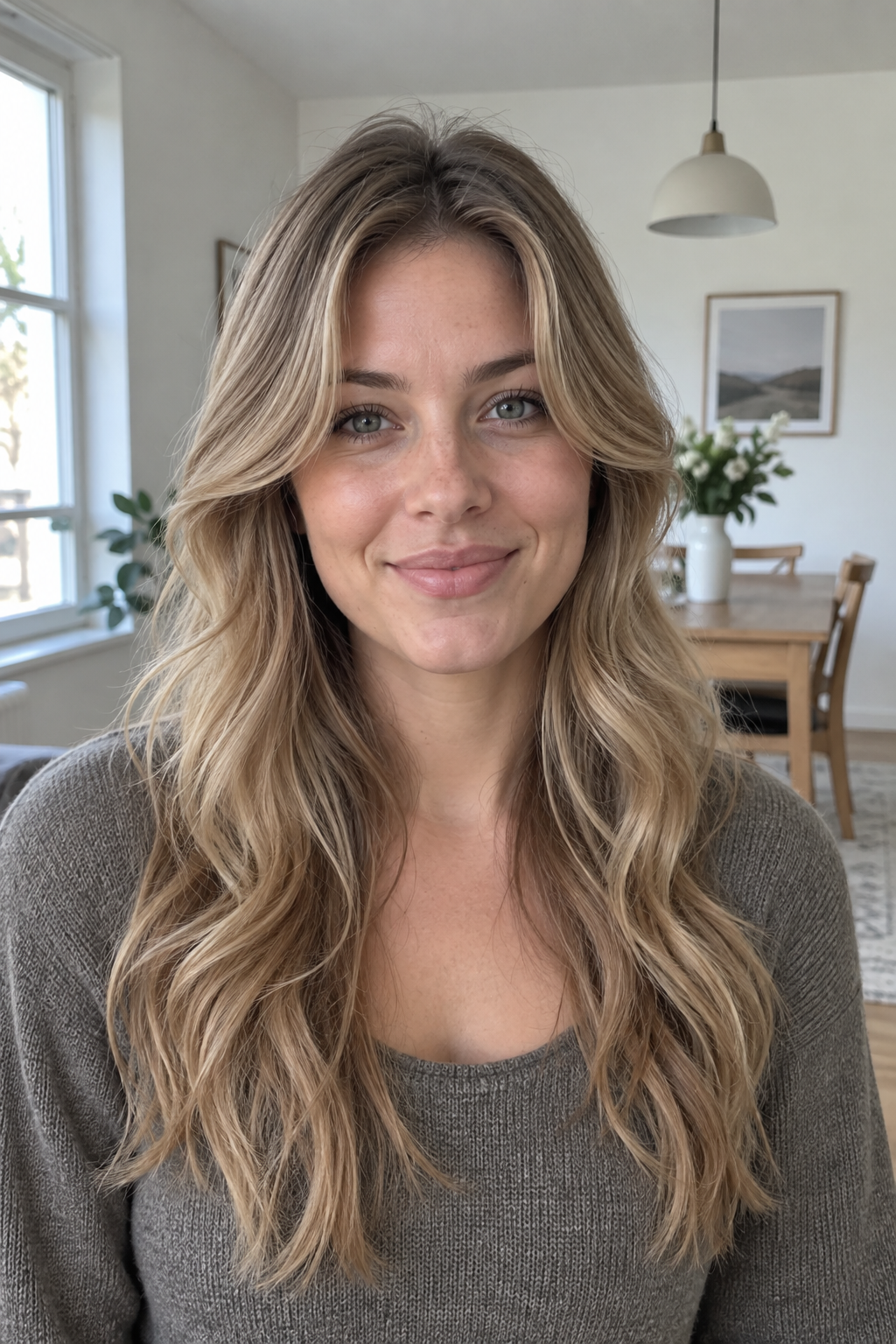
Loose waves and curtain bangs suit each other because the bangs already have a bend built in. When the rest of the hair bends too, the whole head moves the same way.
Wave the lengths with a wand and leave the bangs alone. Blow-dry them with a round brush instead, curving each side outward so they stay smoother than the waves.
A little sea salt spray through the lengths keeps the texture without making the bangs stiff or crunchy.
Lob With Curtain Bangs
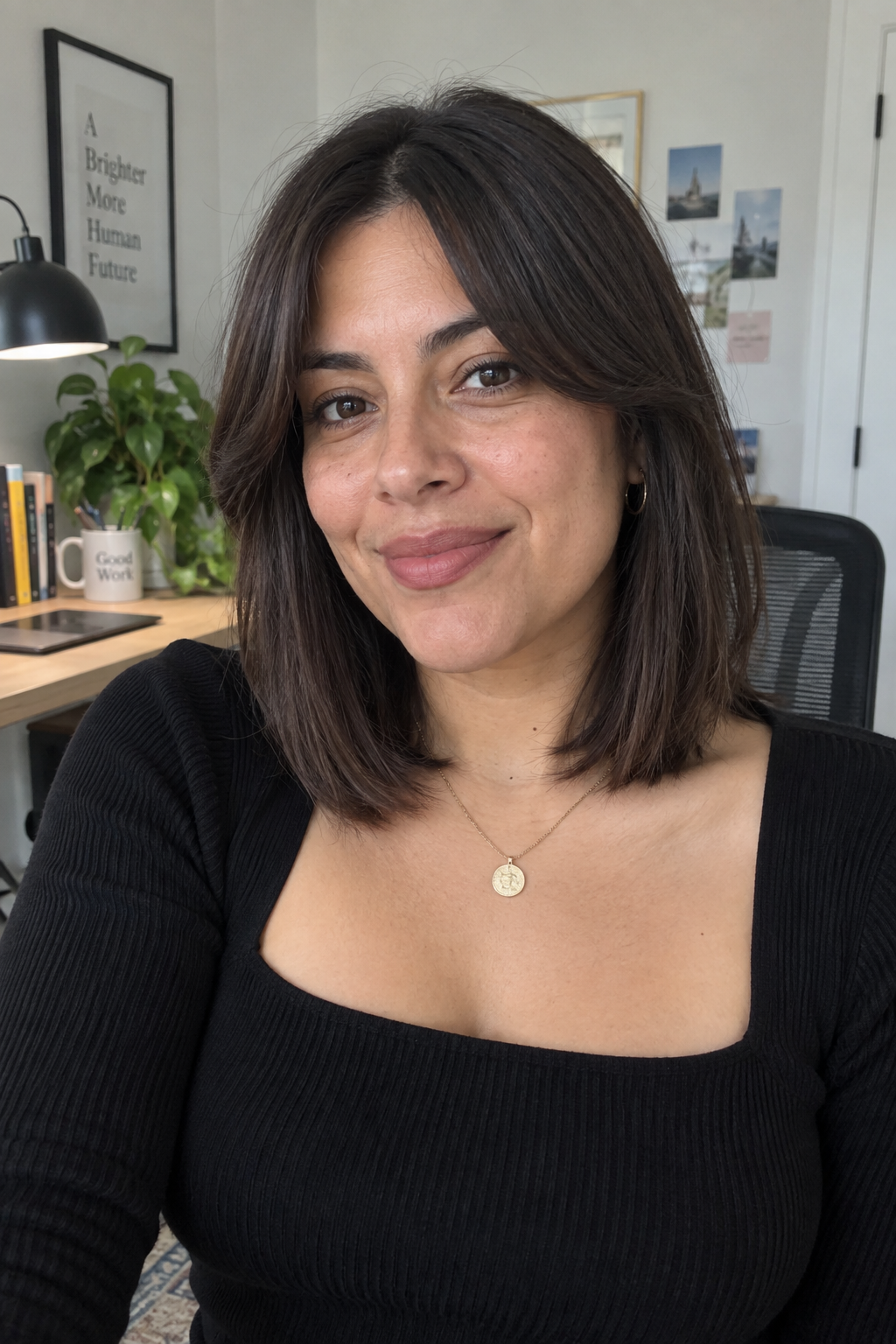
The lob ends at the collarbone, which is long enough to tie back and short enough to feel like a change. Curtain bangs give it a front. Without them, a lob can look like hair that is simply growing out.
Ask for a few long layers so the bangs connect into the length instead of stopping at the cheekbone. If you wear the lob straight, a slight bend at the ends of the bangs keeps the look from feeling flat.
Curly Hair With Curtain Bangs
Curly curtain bangs need to be cut on dry hair, one curl at a time. Wet curls stretch, and a bang that looked right in the chair springs up an inch shorter once it dries.
Ask for the bangs to sit longer than you want, then let them shrink into place. Cutting long gives you room to adjust.
Style with a curl cream scrunched into the fringe. Push each side outward with your fingers to open the part, and skip the brush completely.
Butterfly Cut With Curtain Bangs
The butterfly cut layers the hair in two levels.
The top layers stop around the chin and the bottom layers stay long, so the shape looks like a short haircut sitting on top of a long one.
Curtain bangs finish it off. They connect the short top layers to the face so the two levels look intentional.
This cut is built for a round brush blow-dry. Curl the short layers away from the face and let the bangs follow the same direction.
Shag Haircut With Curtain Bangs
The shag and the curtain bang come from the same decade, and they still belong together. The shag stacks short choppy layers over longer ones, and the bangs are the shortest layer of all, split down the middle.
Texture is the whole point here. Let the hair air-dry with mousse and then rough it up with your hands.
Ask for the bangs to be cut with the same choppy ends as the layers so nothing looks too neat.
Bottleneck Curtain Bangs
Bottleneck bangs are named for their shape. They sit narrow and short at the center of the forehead, then widen and lengthen toward the sides, like the neck of a bottle opening into the body.
The result is a curtain bang with more coverage in the middle. It suits women with a longer forehead who want more of it covered.
Blow-dry the center pieces straight down and the side pieces outward, then blend the two with your fingers.
Short Curtain Bangs
Most curtain bangs start at the cheekbone. A short version starts near the eyebrows and parts in the middle from there, so the sweep happens above the eyes instead of beside them.
This one shows more of the face and looks a little more playful. It works well on oval faces and on women who want their brows to show.
The trade-off is upkeep. Short bangs need a trim every three to four weeks to keep the shape.
High Ponytail With Curtain Bangs
A high ponytail pulls everything away from the face, and curtain bangs put some of it back. Leave the bangs out before you tie the hair up, then part them in the center so each side curves toward a cheekbone.
Smooth the ponytail with a brush and a little gel so it stays sleek at the sides. Blow-dry the bangs with a small round brush afterward. Rolling them outward gives the front some lift so the ponytail does not look severe.
Claw Clip Updo With Curtain Bangs
The claw clip twist is the quickest way to get hair off the neck.
Gather the hair at the back and twist it upward, then clamp the clip over the twist so the ends fan out at the top.
Curtain bangs make it look finished. Pull them out after the clip is in and part them down the middle.
A few strands loosened around the ears soften the whole thing. This works on any length past the shoulders.
Jaw-Length Curtain Bangs
These are curtain bangs that reach the jaw. Some women grow into them from a shorter cut, and some ask for them from the start because they want the framing without any hair near the eyes.
They sit closer to face-framing layers than to a traditional fringe, but the center part and the outward curve keep them in the curtain family.
Tuck one side behind an ear on days when you want them out of the way. They also stay put in a ponytail.
Half-Up Half-Down With Curtain Bangs
The half-up style pulls the top section back and leaves the rest down. Curtain bangs stay out of the tie, so the face is framed even though the hair is pulled away from it.
This is a good option for women who want the hair off their face for work but still want to look like they made an effort.
A small elastic or a mini claw clip holds the top. Part the bangs after the clip is in so the split sits centered.
Heavy Curtain Bangs
Heavy curtain bangs are cut from a deep section, so there is a lot of hair in the fringe. They still part in the center and curve outward, but the pieces are thick and the coverage is full. The forehead does not show through.
This version suits thick, straight hair, where a wispy bang would look sparse. It also hides a high forehead better than a lighter cut. Plan on a trim every four weeks, since heavy bangs show their growth quickly.
Money Piece With Curtain Bangs
A money piece is a bright highlight painted on the two front sections of hair. On curtain bangs, that means the bangs themselves are lighter than the rest, which brightens the face without a full head of color.
The contrast works best when the base is at least two shades darker than the money piece. On dark brown hair, a caramel piece looks natural. On medium blonde, go for a pale cream.
A smooth blow-dry shows the color best.
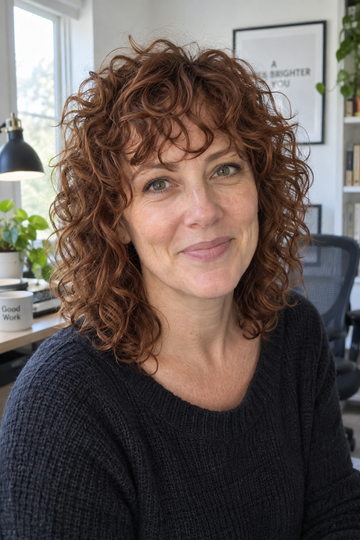
Copper Hair With Curtain Bangs
Copper hair and curtain bangs have become a pair. The warm color draws attention to the face, and the bangs frame it, so the two do the same job from different directions.
Ask for a copper that suits your skin. Cooler skin tones do well with a slightly deeper auburn copper, while warmer skin can handle a brighter orange copper.
Copper fades fast. A color-depositing conditioner once a week keeps the bangs, which get washed most, from going dull.
Side Swept Curtain Bangs
Curtain bangs usually part in the center. This version keeps the feathered shape but pushes the whole fringe to one side, so you get a soft side bang with the layered ends of a curtain cut.
It is a useful change for anyone bored of the middle part. No new cut is needed. Just blow-dry the bangs to one side with a round brush.
Switch back to the center part on days when you want the original look.
Bixie Cut With Curtain Bangs
The bixie sits between a pixie and a bob. The back and sides are cropped short, and the top is left longer, with enough length at the front for curtain bangs to part and curve around the cheekbones.
The bangs keep the cut from looking too short. They give the eye a soft line to follow at the front.
Style with a little paste on the layers and a round brush on the bangs. Trims every six weeks keep the shape.
Silk Press With Curtain Bangs
A silk press straightens natural hair with a blow-dryer and a flat iron, no chemicals involved. Curtain bangs on a silk press give the sleek length a front, since the straight hair alone can look plain.
Black women who wear a silk press should ask for the bangs to be cut while the hair is pressed so the stylist sees the true length.
At night, pin the bangs flat in the direction they part and wrap the rest.
Sleek Low Bun With Curtain Bangs
A sleek low bun on its own can look severe. Curtain bangs soften it. They break up the tight line across the forehead and add a little movement at the front while the rest stays smooth.
Brush the hair back with a bit of gel and twist it into a bun at the nape. Leave the bangs out from the start.
This is the version many women choose for weddings and events because it looks neat from the front and holds all day.
Gray Hair With Curtain Bangs
Curtain bangs suit gray hair well.
The soft center part and the outward curve take attention away from forehead lines and put it on the eyes instead, which many women over fifty appreciate.
Keep the bangs on the lighter side. A heavy gray fringe can flatten the face, while a lighter one lets the silver move.
A purple shampoo once a week keeps the gray from turning yellow. The bangs matter most here, since they sit closest to the face.
Comments
No Comments