
22 Short Natural Hairstyles for Women With Coils and Curls
Cutting your hair short and keeping it natural changes your whole morning. There is no detangling marathon, no hour under a dryer, no wrestling a pick through wet strands at eleven at night. What surprises most women is how much range short natural hair actually has once they stop treating length as the goal. Coils hold shape. Twists set fast. A tapered back reshapes your whole face without touching the top. The styles below cover both the cuts worth asking your barber for and the techniques that work on hair sitting between one and four inches.
Jump to:
- Classic TWA
- Tapered TWA
- Low Taper Fade With Defined Coils
- High Top Fade
- Wash and Go
- Finger Coils
- Finger Coil Out
- Twist Out
- Braid Out
- Mini Two Strand Twists
- Flat Twists
- Bantu Knots
- Bantu Knot Out
- Sponge Curls
- Comb Coils
- Finger Waves
- Frohawk
- Curly Undercut
- Short Natural Pixie
- Deep Side Part Afro
- Short Afro Puff
- Copper Colored Short Natural Cut
Classic TWA
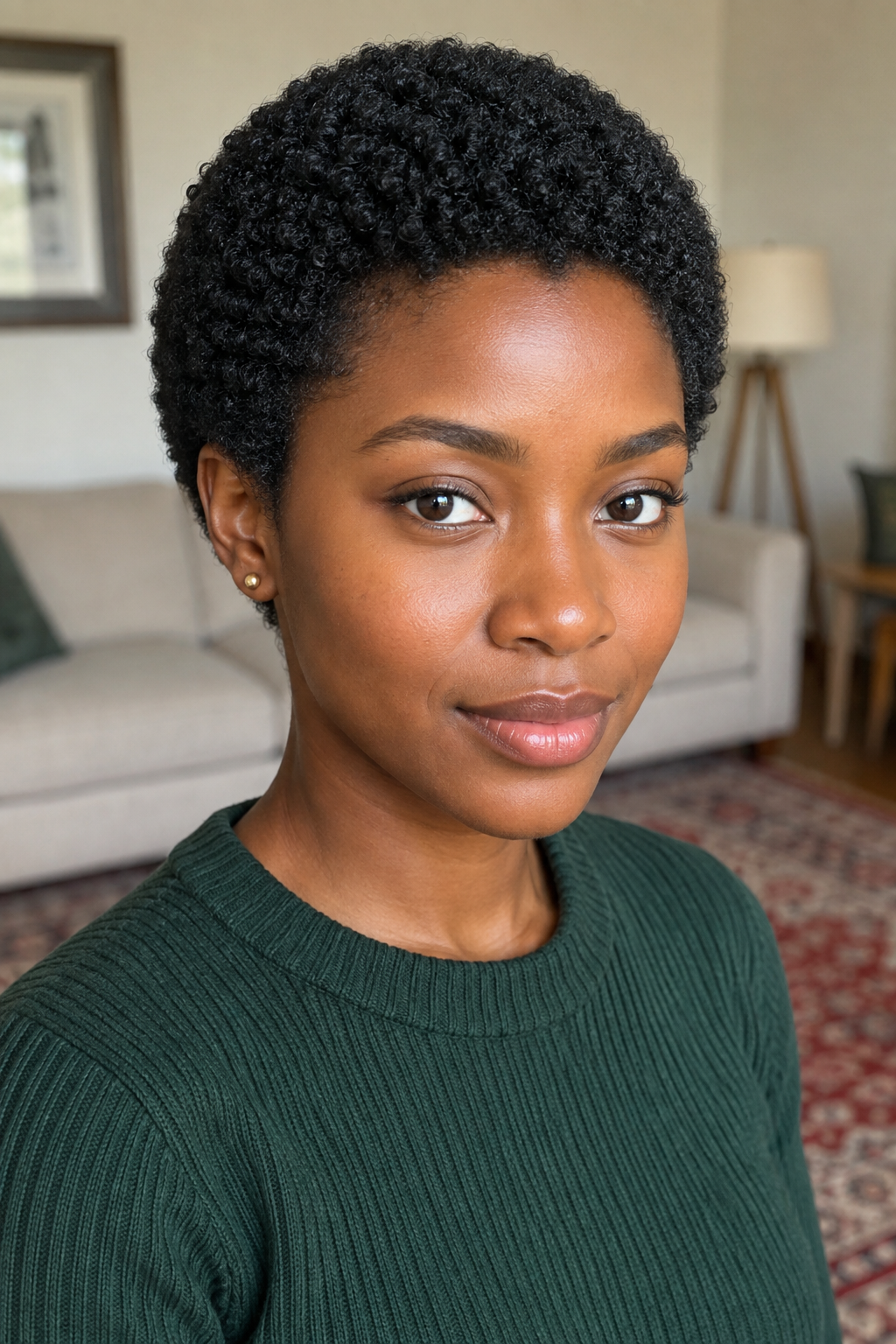
The teeny weeny afro sits close to the scalp and lets every coil stay visible. Most women land here right after a big chop.
Morning styling runs about five minutes with a leave-in and a light curl cream. Pat it into a rounded shape, then leave it alone.
Great for anyone worn out by long wash days and heavy product routines. Density carries this look far more than length does, so focus on keeping the shape even all the way around.
Tapered TWA
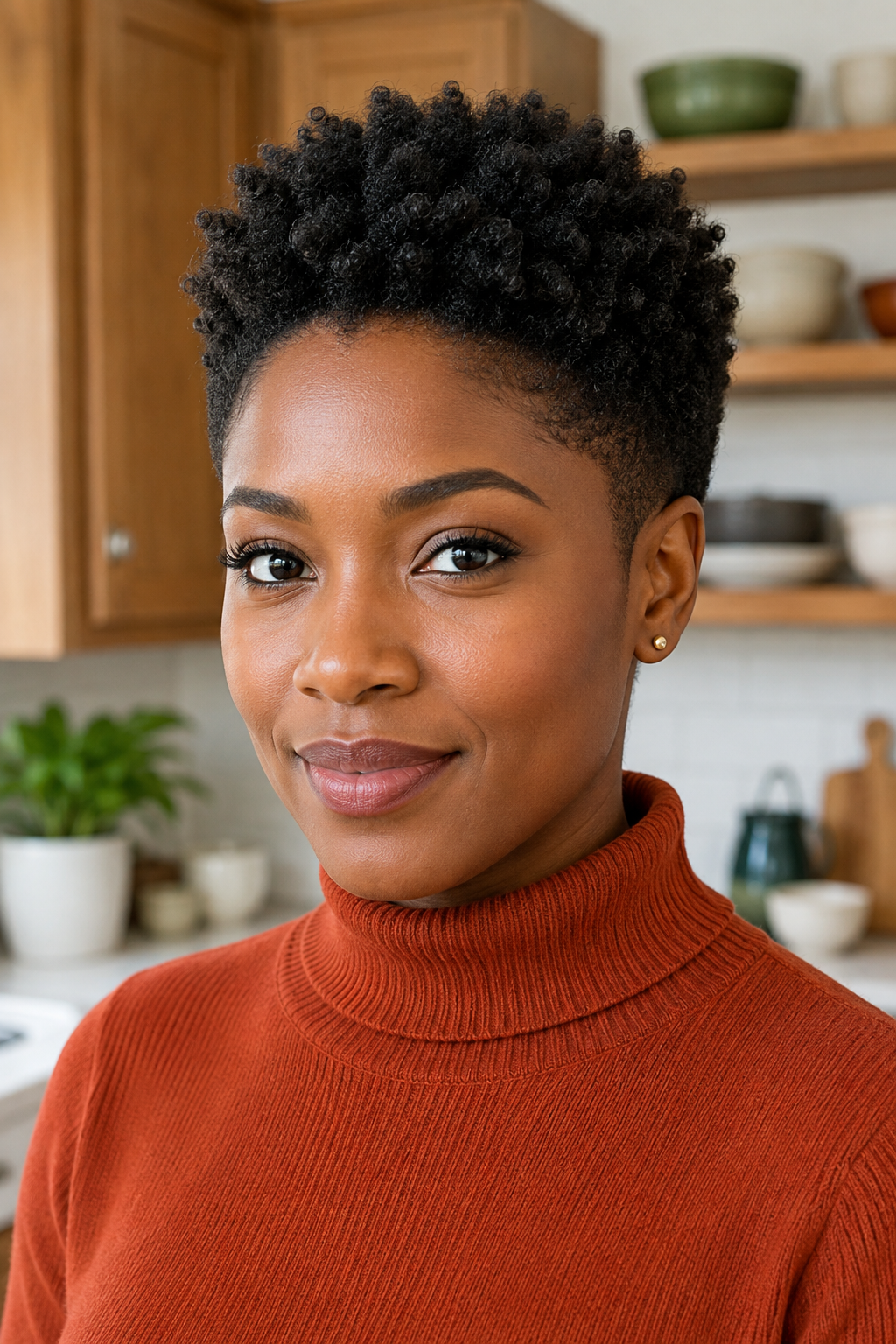
A tapered TWA keeps fullness on top while the sides and nape get gradually shorter. That contrast gives the whole head structure.
The shape does something specific for round and square faces, drawing attention upward instead of outward. If that's your face shape, these short cuts that flatter round faces are worth a look too.
Growing it out stays simple. Book a shape-up every three or four weeks and the taper holds its line. Anything longer between visits and the sides start catching up with the top, which softens the effect you paid for.
Low Taper Fade With Defined Coils
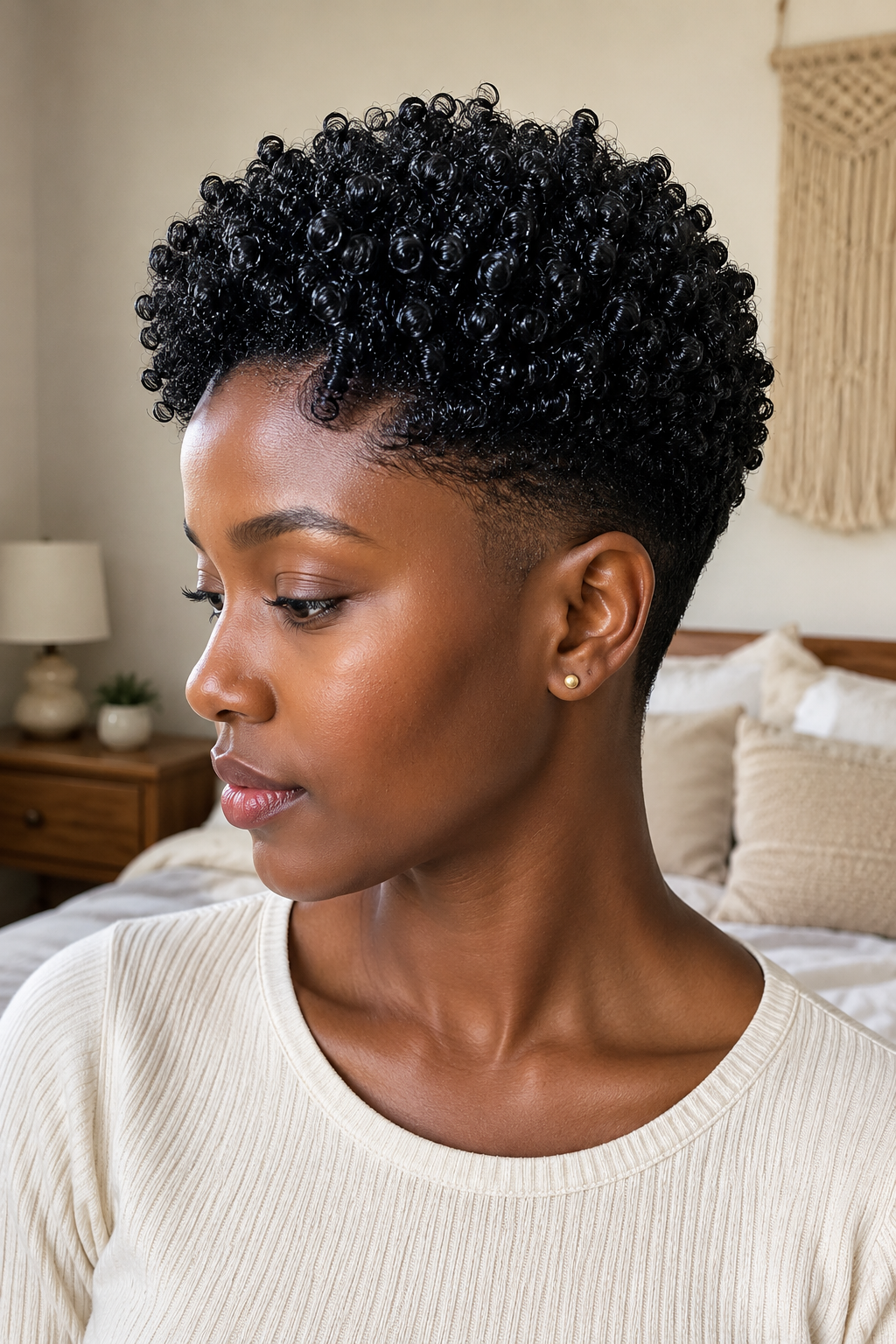
The low taper fade drops the shortest point right at the nape and behind the ears. Above that, your coils stay full and defined.
Definition matters more here than with a plain taper. A curl custard or jelly applied on soaking wet hair gives you clean, separated coils that show off the contrast.
Works especially well for women who want a clean edge without the commitment of a high fade. The line sits low enough that it stays quiet in professional settings.
High Top Fade
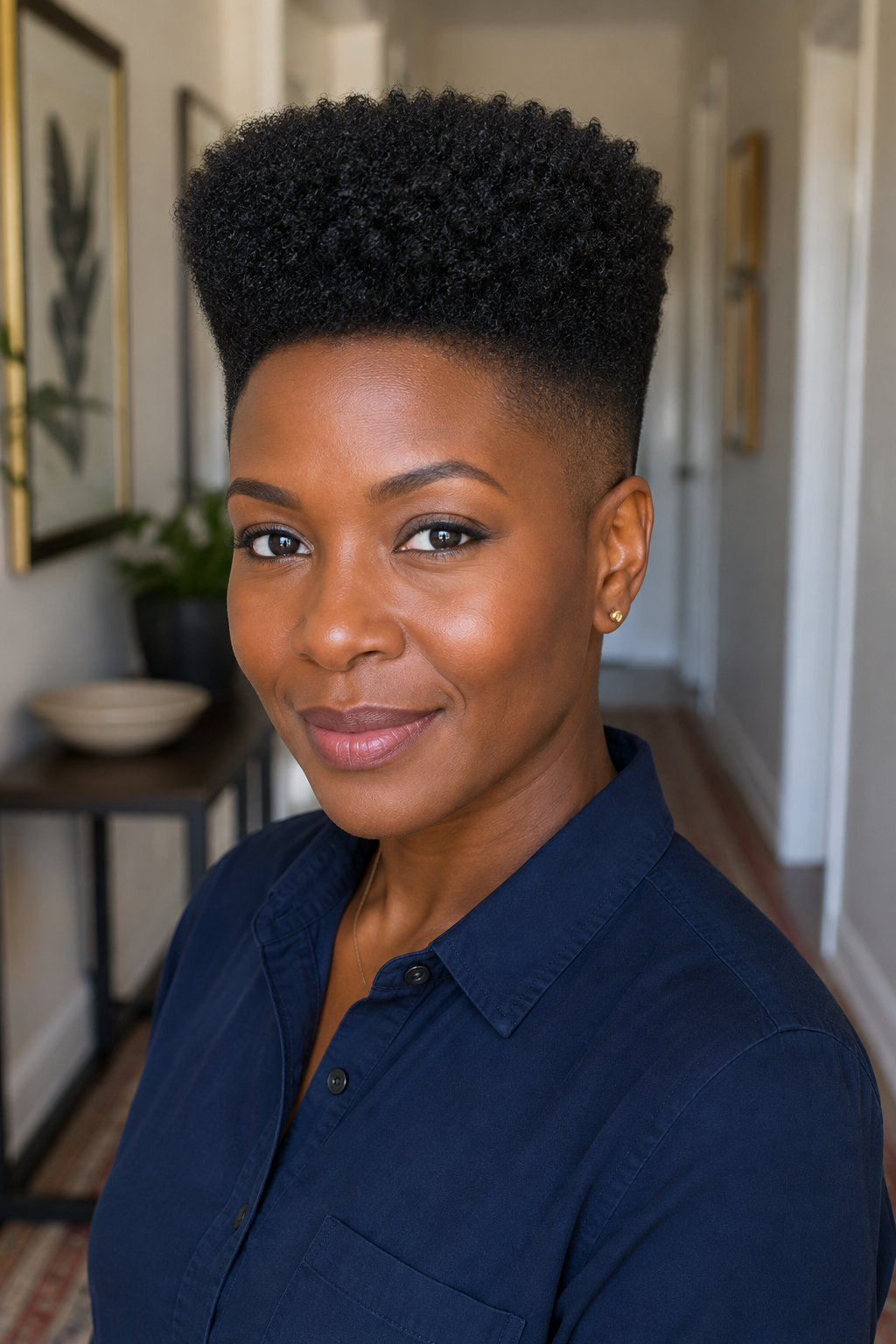
Height on top, skin-close sides, and a squared-off crown. The high top has been around since the eighties and never fully left.
You need four inches or more up top before the shape starts to look right. Pick out the crown daily to keep the volume standing.
Suits anyone who wants their hair to be the loudest thing about their outfit. Sweat and humidity barely affect it, which makes it a strong pick for hot months and workout-heavy weeks. More options along those lines live in our roundup of gym hairstyles for short hair.
Wash and Go
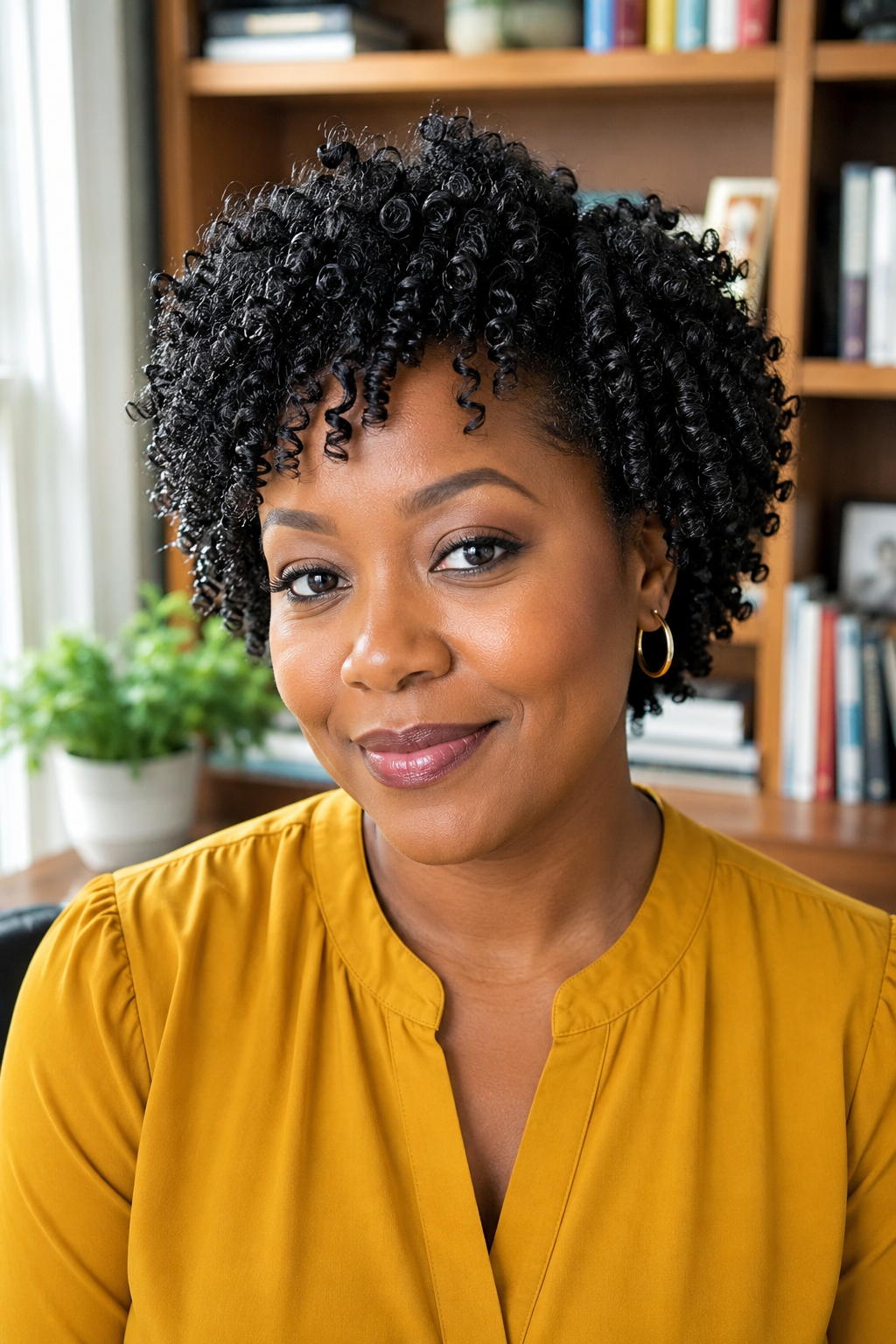
No twisting, no setting, no overnight prep. You wash, apply product to dripping wet hair, and let your curl pattern do what it does.
Short length makes this far more reliable than it is on longer hair, since there is not enough weight to pull the coils loose. The same logic runs through these short cuts that show off natural volume.
Layer a leave-in first, then a gel or custard, and rake it through in small sections. Air dry or diffuse. Most women get three or four days out of one before they need a refresh.
Finger Coils
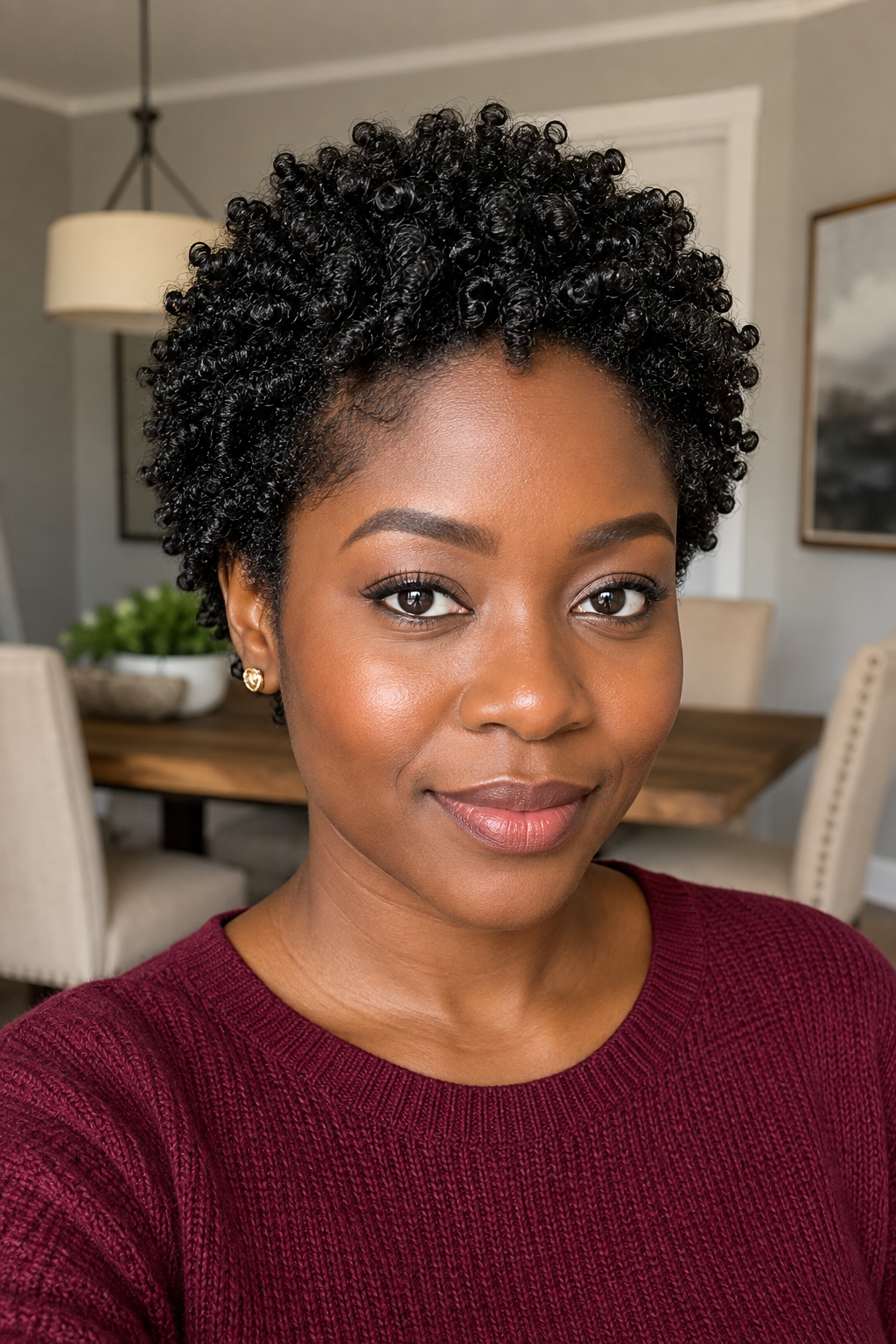
Wind small sections of damp hair around your finger, hold for a few seconds, then release. The coil sets as it dries.
On a TWA the whole head takes maybe forty minutes. Longer than a wash and go, shorter than almost anything else.
Perfect for anyone who wants uniform definition their natural pattern does not give them on its own. Coils last a week if you wrap at night, and the second and third days often look better than the first.
Finger Coil Out
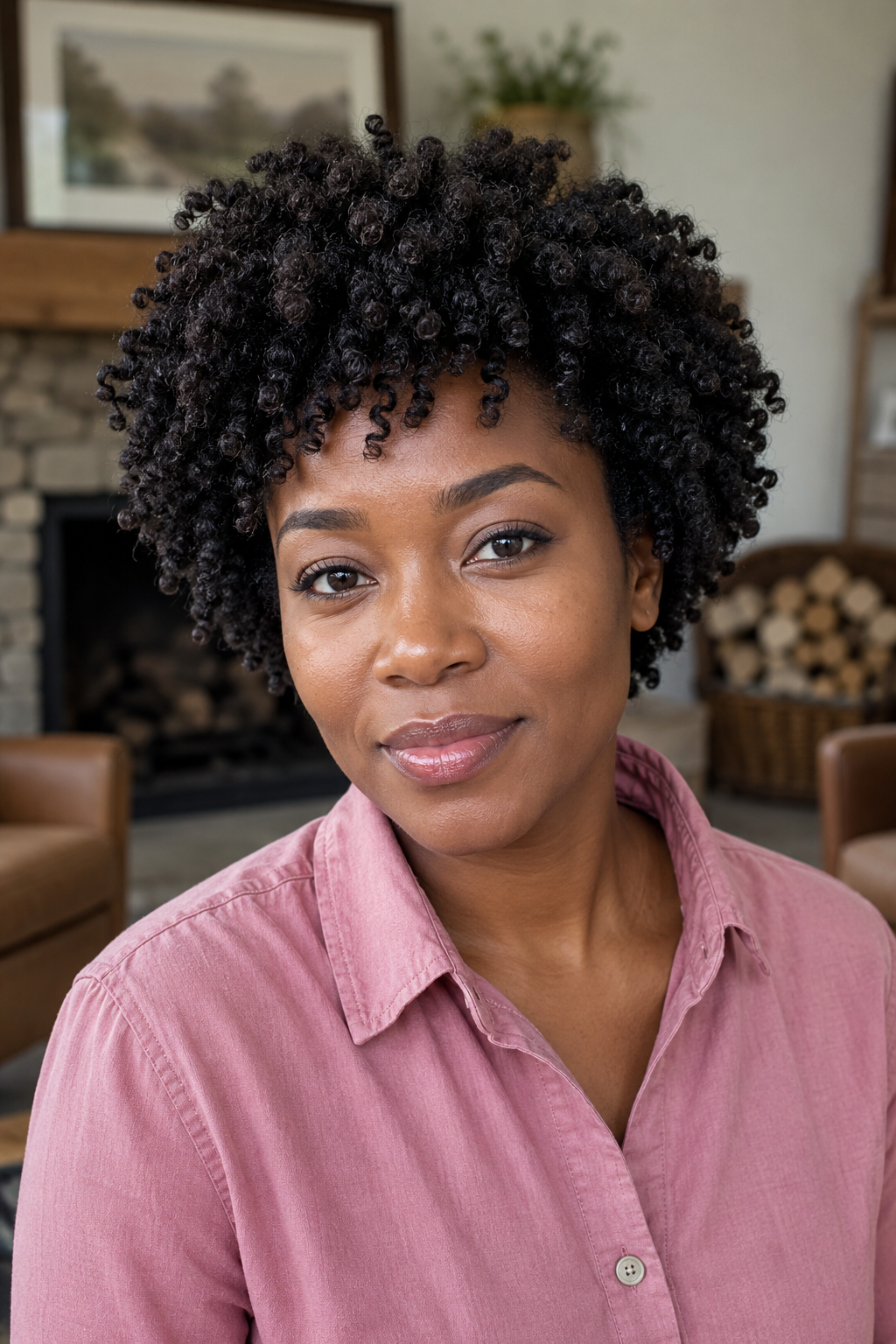
Once your finger coils have run their course, pull them apart instead of washing them out. The separated coils expand into soft volume with definition still holding underneath.
Use a little oil on your fingertips to keep frizz down while you separate.
This gets you two completely different looks from one styling session. Women stretching time between wash days lean on it hard, and it works on any length from a fresh TWA up through a grown-out taper.
Twist Out
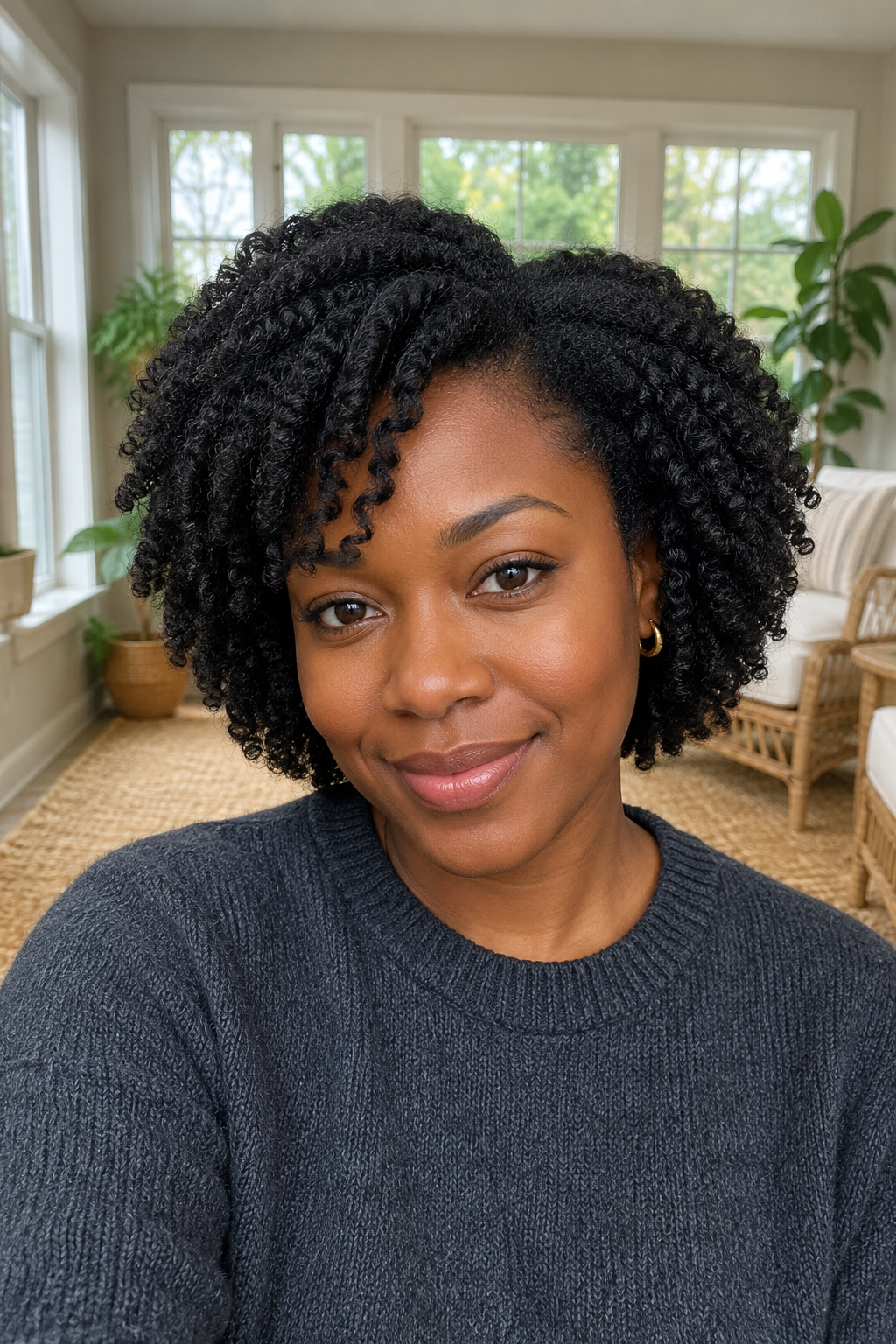
Two-strand twists set on damp hair overnight, unraveled in the morning. The result stretches your pattern into softer, longer-looking waves.
On short natural hair the twists need to be small. Big sections leave you with loose, undefined ends that fall flat.
Great for adding visual length without heat. Apply a cream and a light gel before twisting, sleep in a bonnet, then unravel with oiled fingers and fluff the roots gently with a pick.
Braid Out

Braid outs give you a crimped, zigzag texture rather than the round curls a twist out produces. Some women prefer the pattern.
The technique holds up better on hair with looser curls, where twists sometimes slip out before they set properly.
Three or four inches is enough length to braid on short natural hair. Damp, not wet, gives the cleanest result. Let it dry fully before you take anything down or the whole thing puffs up within an hour.
Mini Two Strand Twists
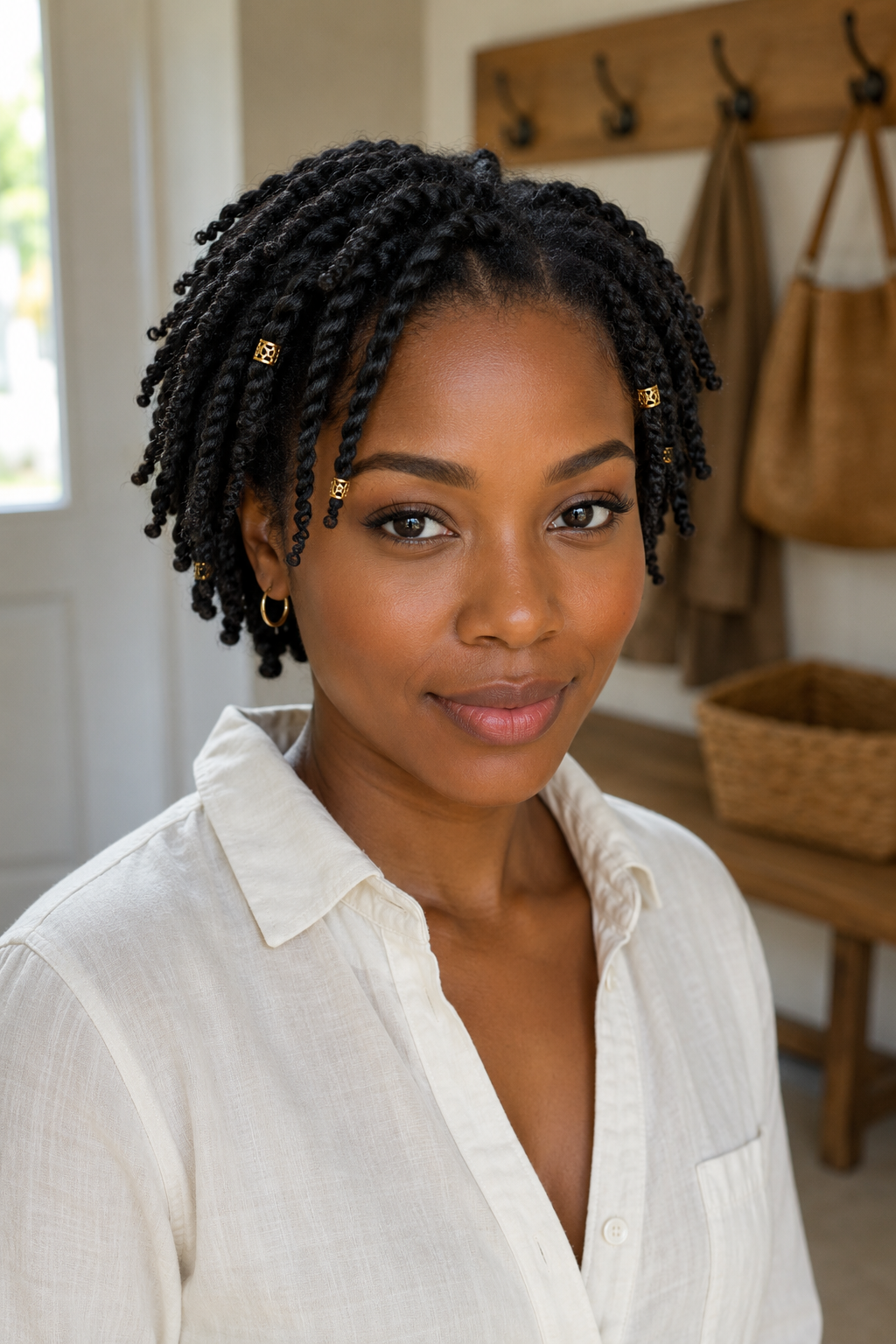
Worn as the finished style rather than a set, small two-strand twists give you a low-manipulation option that lasts two or three weeks.
Short length keeps them light, so there is no tension pulling at your edges the way longer twists sometimes do.
Add cuffs or small beads at the ends if you want detail. Wash them gently in a satin scarf, moisturize your scalp every few days, and take them down before they start to lock at the roots.
Flat Twists
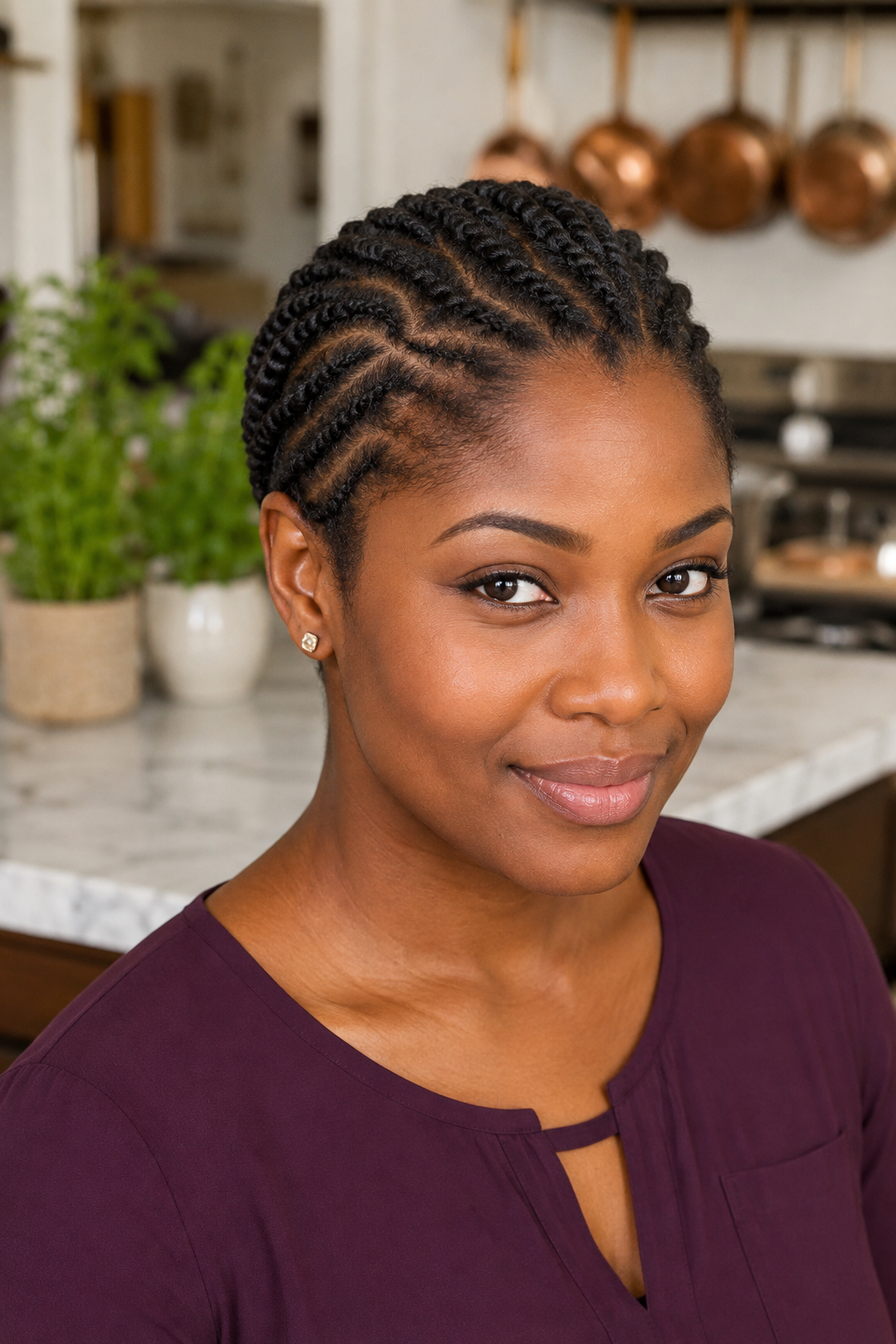
Flat twisting lies against the scalp, similar to cornrowing but using two strands instead of three. It works on hair too short to braid comfortably.
Straight-back rows keep things simple. Curved or geometric patterns turn the style into something more deliberate.
Suits any week where you need your hair handled and want to stop thinking about it. Leave them in for several days, then unravel for a wave pattern that carries you into the weekend. They also hold up through training sessions, which is why they show up in our sports hairstyles for short hair.
Bantu Knots
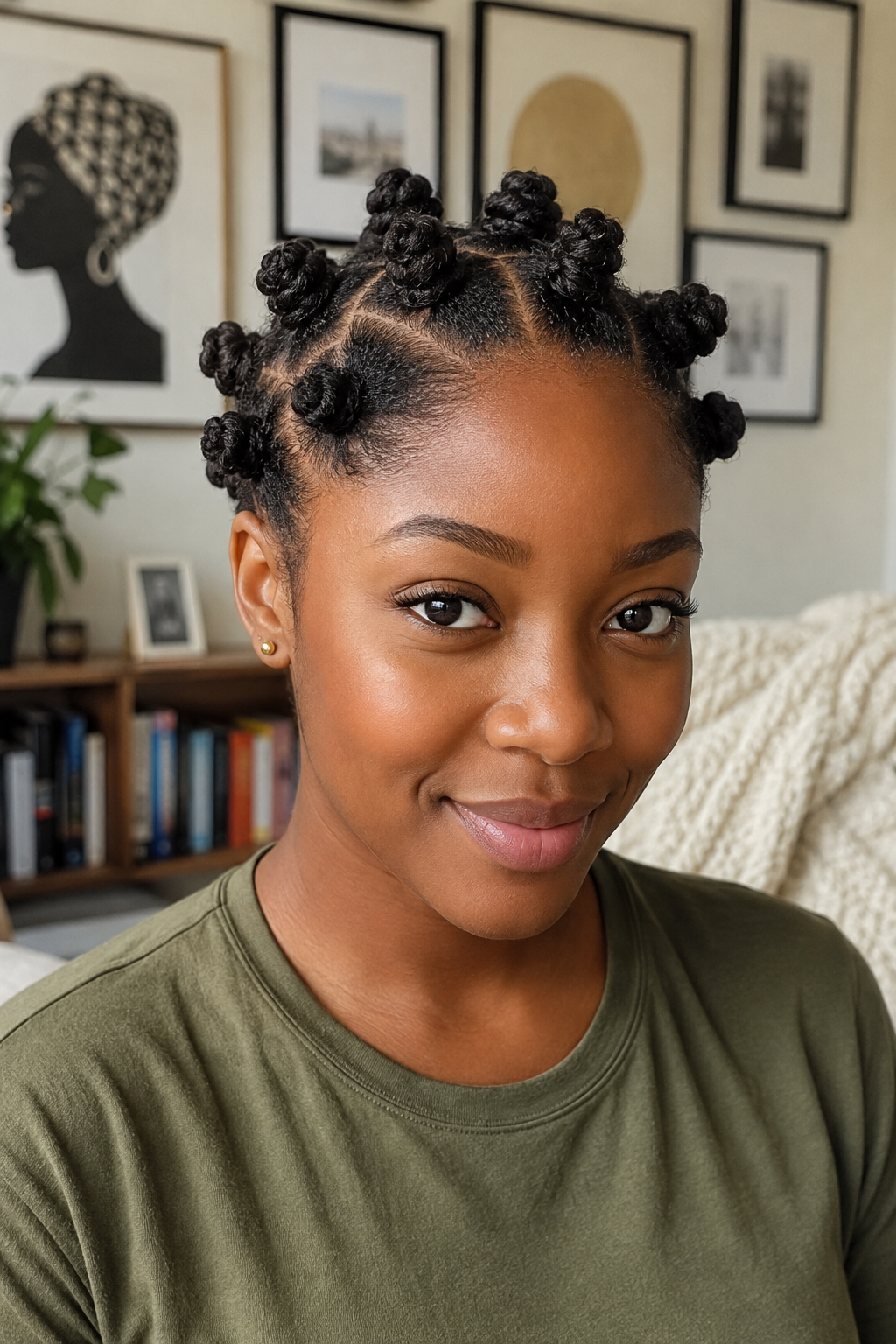
Sectioned hair twisted and coiled into small standing knots across the head. Two inches of length is enough to form them.
The knots are a style in their own right, not just a setting method. Small ones across a TWA look sharp and deliberate.
Section carefully with a rat tail comb, because uneven parts show immediately on short hair. Shorter length also means less weight pulling on your edges, which is where longer Bantu knots tend to cause problems.
Bantu Knot Out
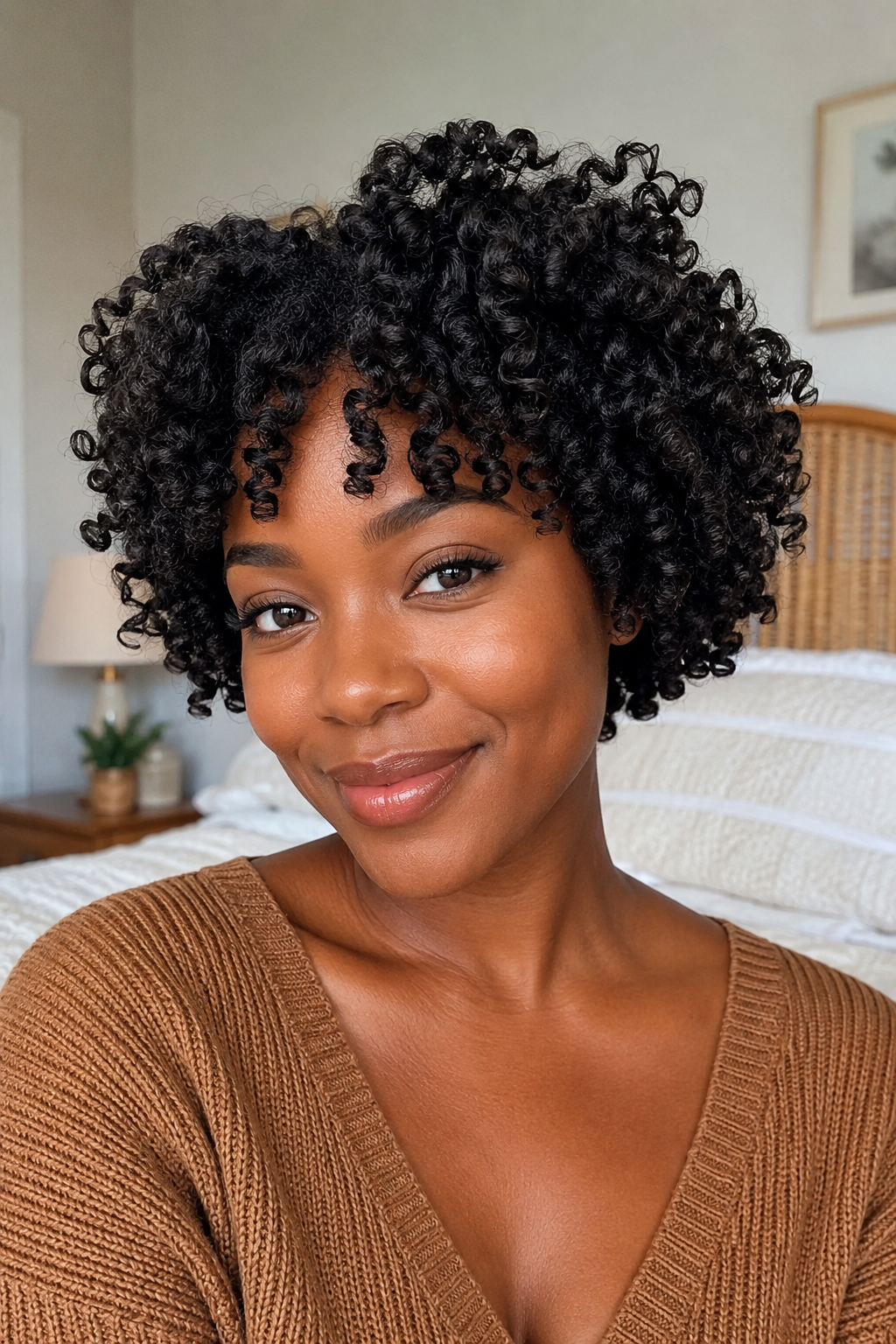
Take the knots down after they dry fully and you get spiral curls with real bounce and a pattern nothing else quite reproduces.
Bigger knots give looser curls. Smaller knots give tight spirals. You control the outcome by how you section.
Works especially well on coarse, dense hair that resists holding a twist out. Separate each unraveled knot into two or three pieces, oil your fingers first, and leave the roots alone until the very end.
Sponge Curls
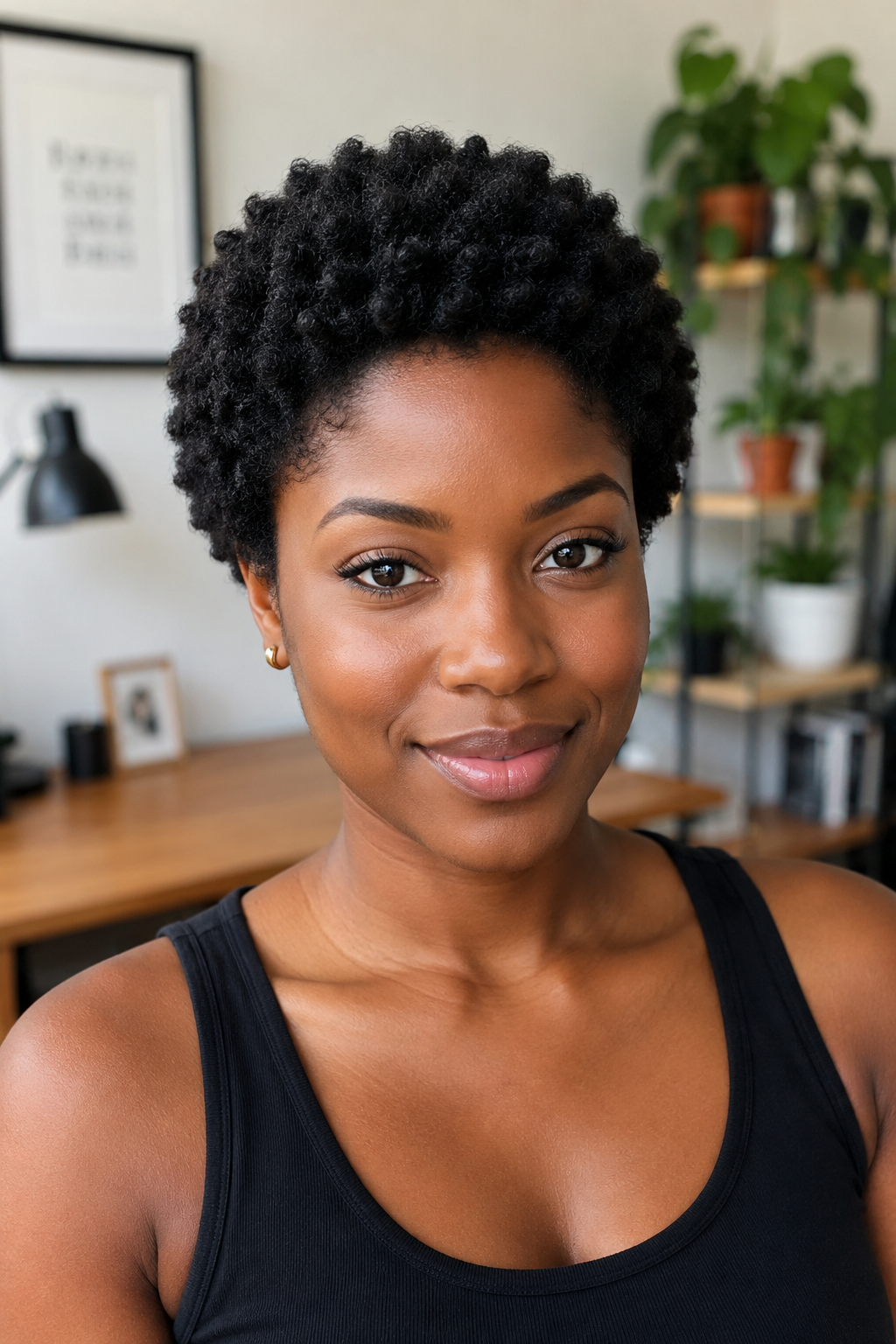
A textured styling sponge rubbed in small circles across damp hair pulls your coils into uniform, defined curls in about ten minutes.
Half an inch of hair is enough. The technique gets the best results on 4B and 4C textures.
Product needs are minimal, just a light cream or oil beforehand. The speed is the real draw here, since most women can do a full head faster than they can finish a cup of coffee. If mornings are the problem, we have more short hairstyles for anyone short on styling time.
Comb Coils
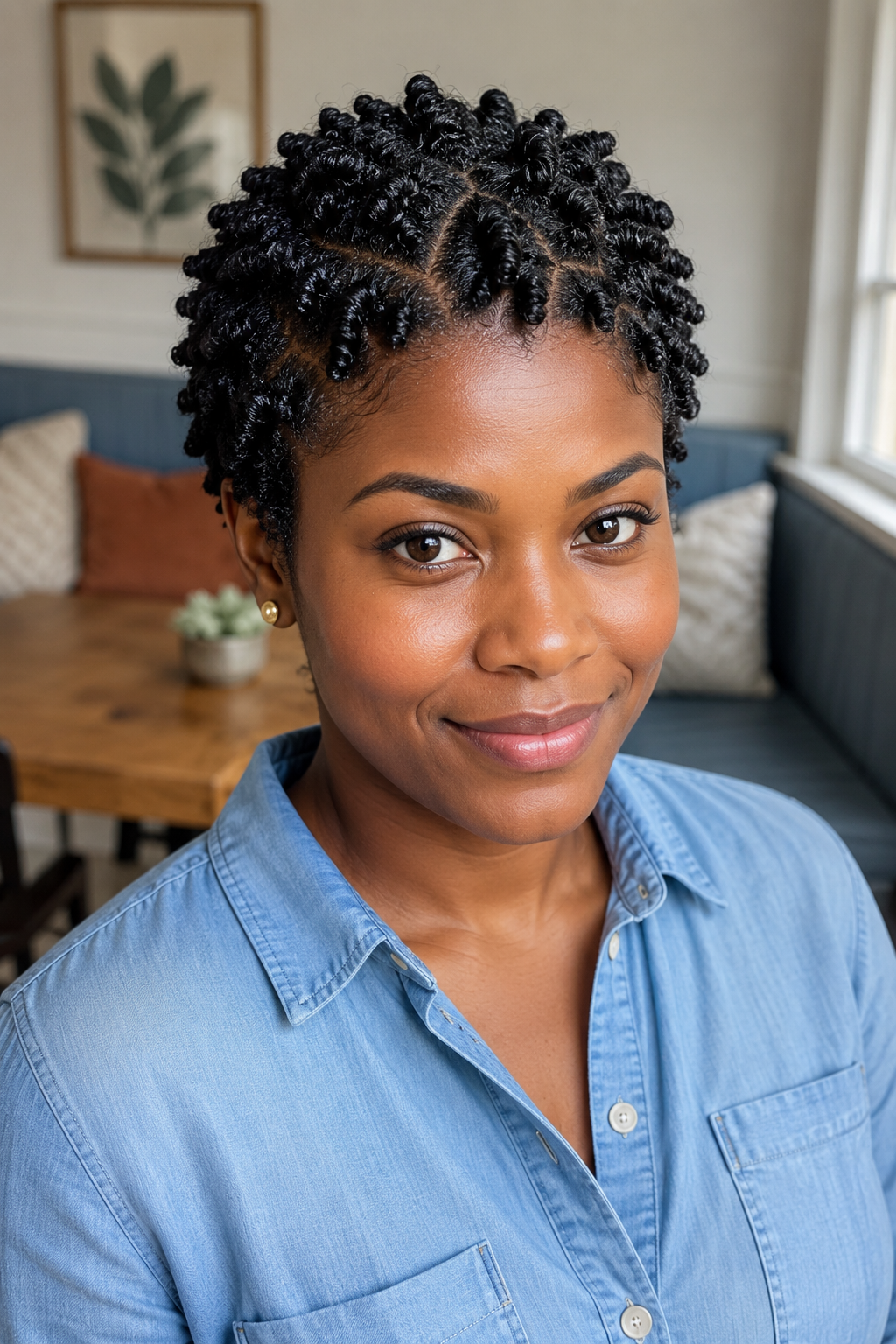
Sectioned hair coiled with the tail of a comb produces tight, separated spirals that sit close to the head with a lot of definition.
They look different from finger coils, tighter and more uniform, with visible parts between sections.
A gel or custard gives you the hold this needs. Comb coils also serve as a starter style for anyone considering short locs later, though plenty of women wear them for years with no intention of locking anything.
Finger Waves
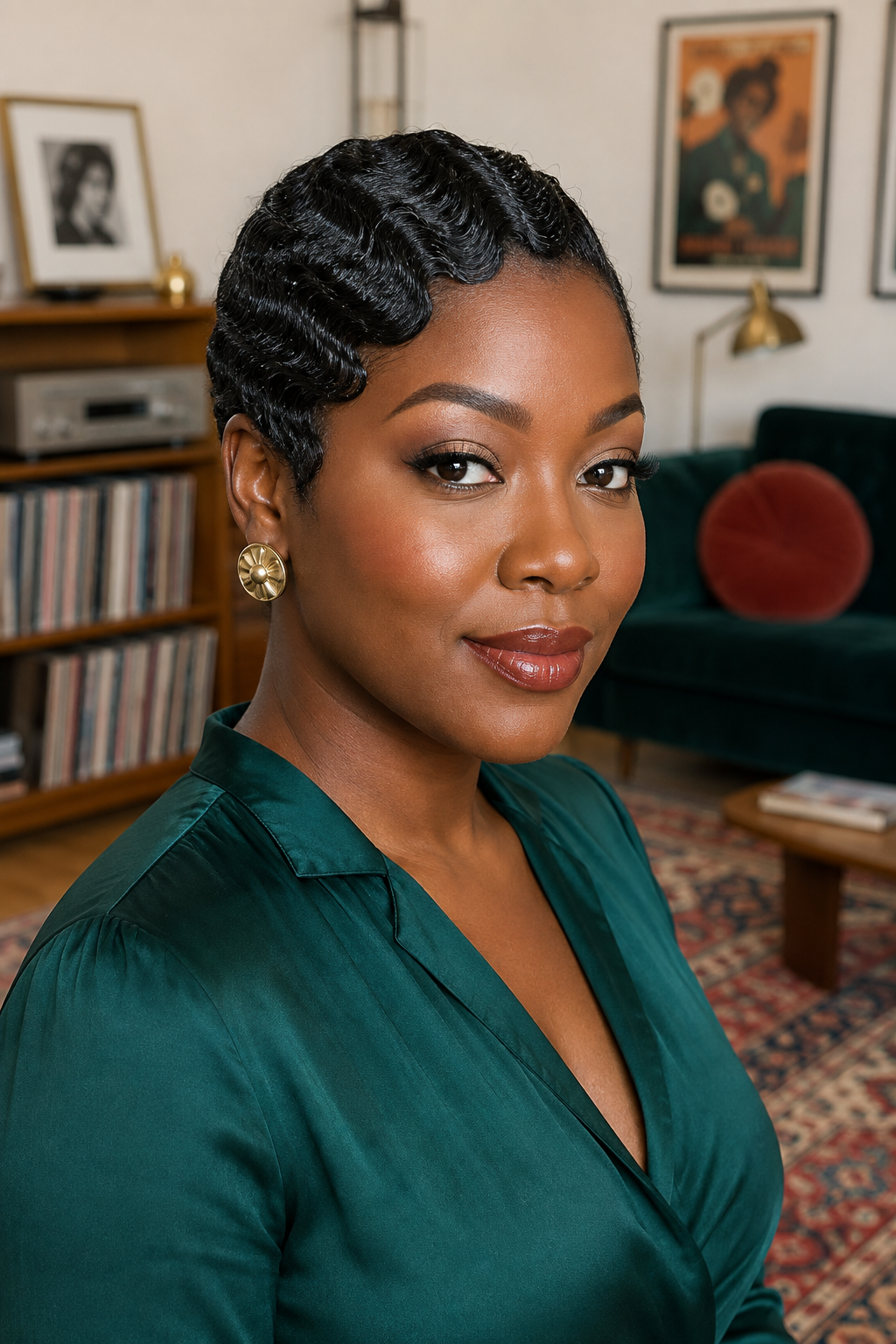
S-shaped waves molded flat against the head with gel and a comb. The style came out of the twenties and keeps resurfacing.
Short natural hair is the ideal canvas, since there is no extra length fighting the mold.
Great for weddings, holiday parties, and any night where you want something with actual glamour to it. They sit comfortably alongside the rest of our wedding guest ideas for short hair. Set it with a strong gel, sit under a hooded dryer until fully dry, and it holds for days.
Frohawk
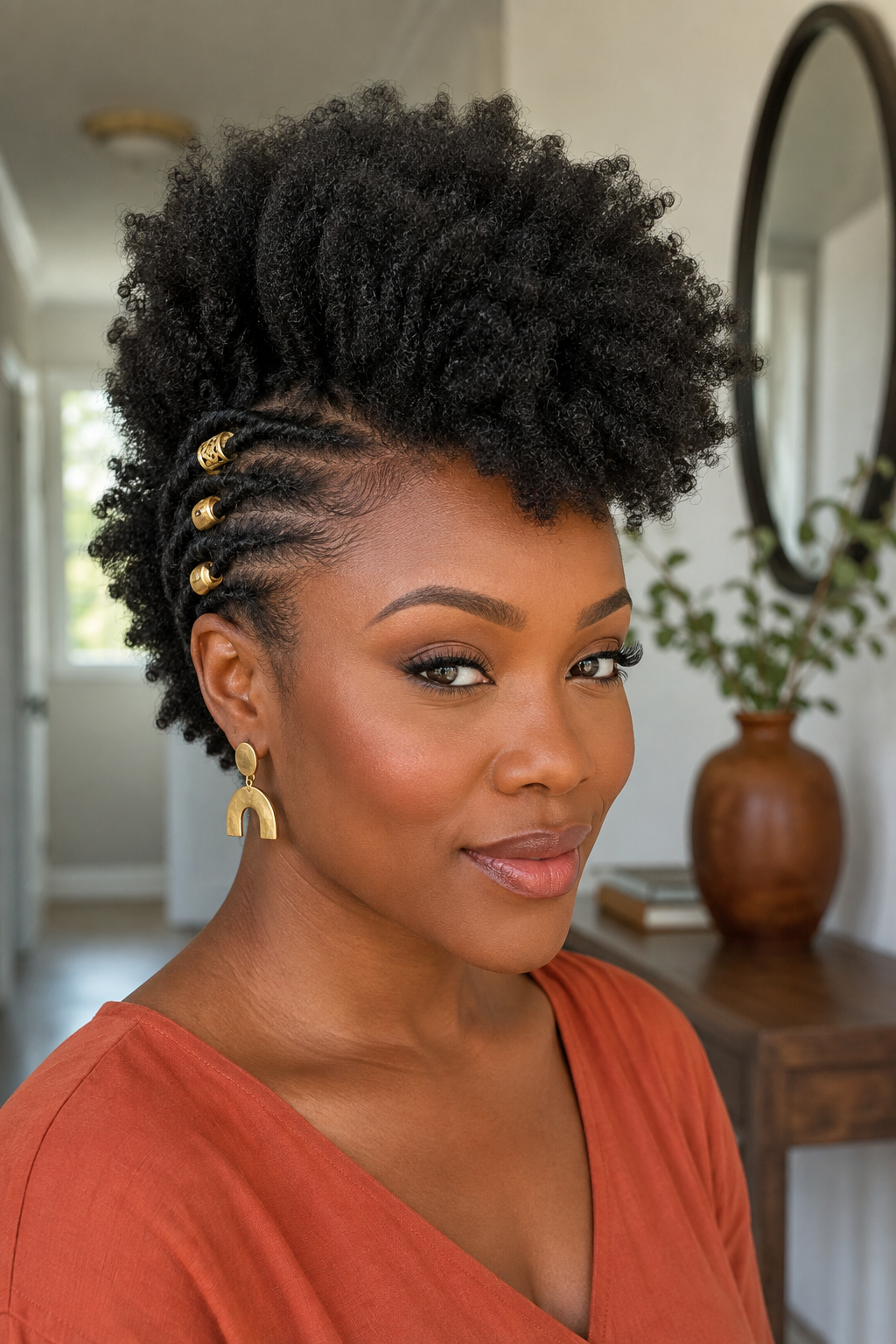
Hair pulled or pinned toward the center with the sides flattened or shaved down. All the volume runs in one strip front to back.
Awkward growing-out lengths become an asset here rather than a frustration.
Bobby pins do the work if you would rather not shave anything. Flat twist the sides, pin them under, and pick out the center for height. Decorative pins or clips along the sides turn the whole thing into a statement.
Curly Undercut
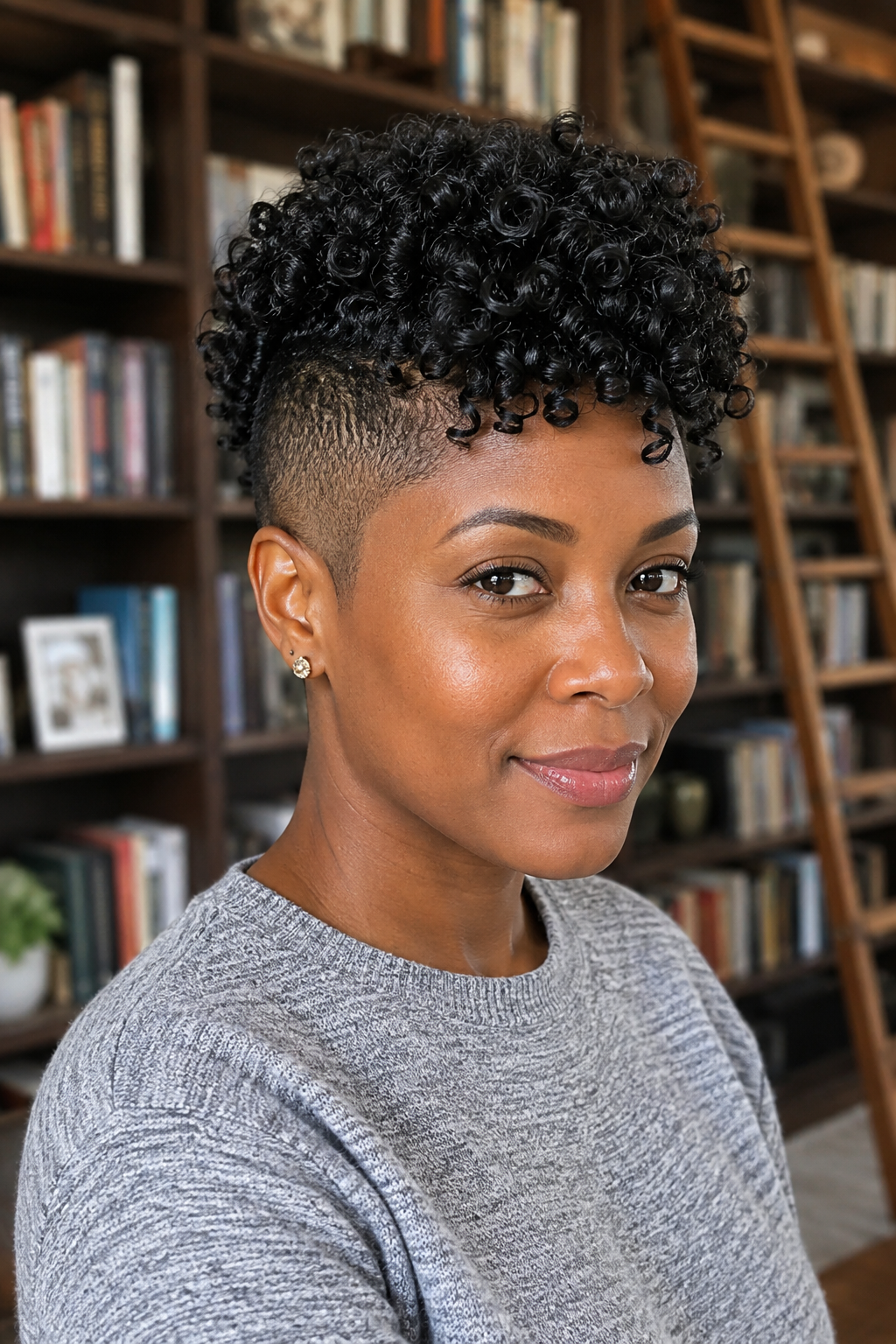
Sides shaved or clipped very short while the top stays long enough to show your full curl pattern. The contrast is dramatic.
Give the top a bit of length before you clip the sides, because that gap is what makes the look work.
Perfect for anyone who wants edge without cutting the whole head down. The undercut also hides easily when the top is worn down, which gives you options at work or family events.
Short Natural Pixie
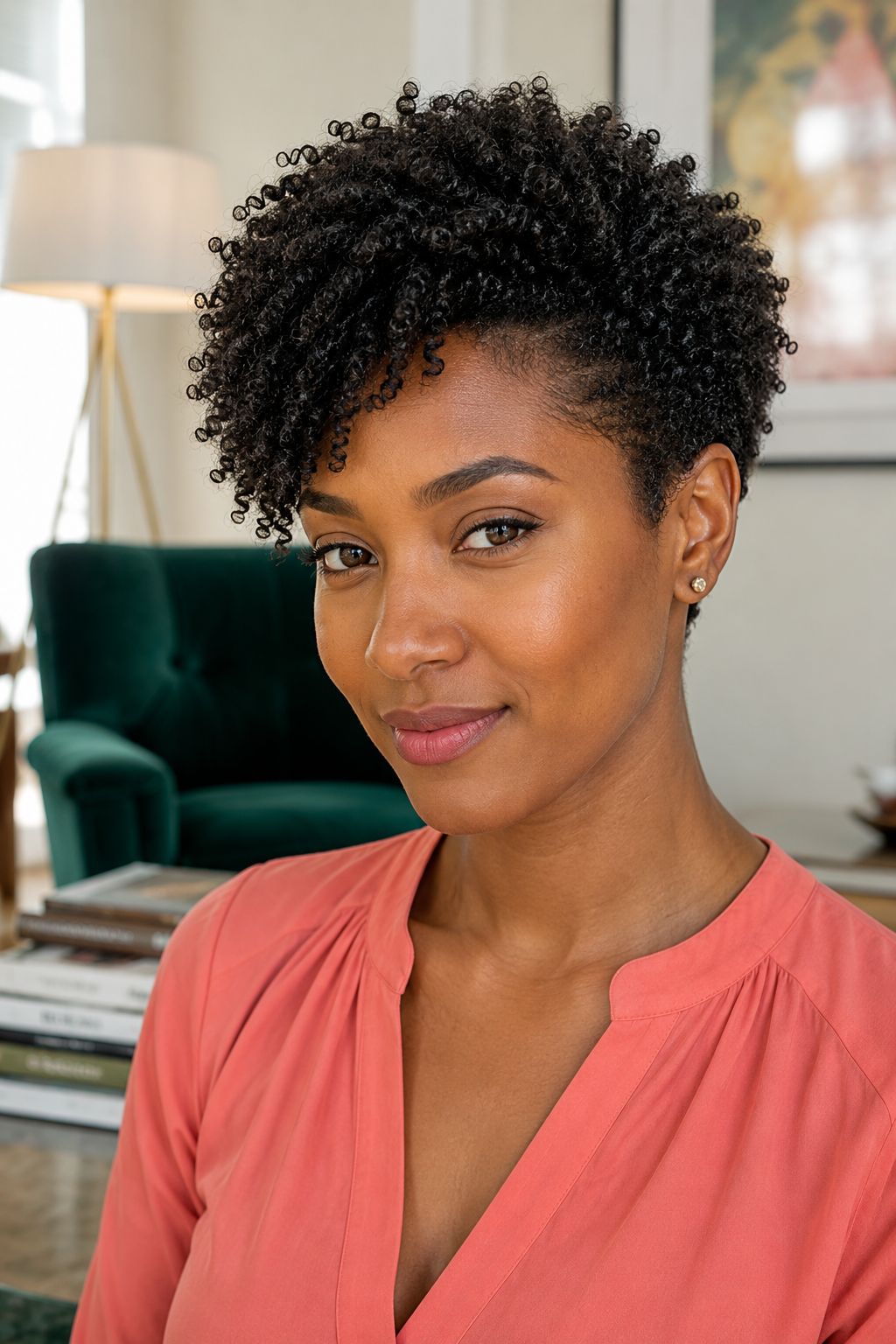
A layered pixie on natural texture keeps things cropped through the back and sides while leaving softness and movement up front.
Layers cut into coily hair remove bulk and let the shape sit properly instead of expanding into a triangle. Our full guide to curly pixie cuts covers how the shaping changes across curl patterns.
The front piece gives you something to play with, swept to one side or picked forward. Cut it slightly longer than feels right, since shrinkage will pull it up higher than you expect once it dries.
Deep Side Part Afro
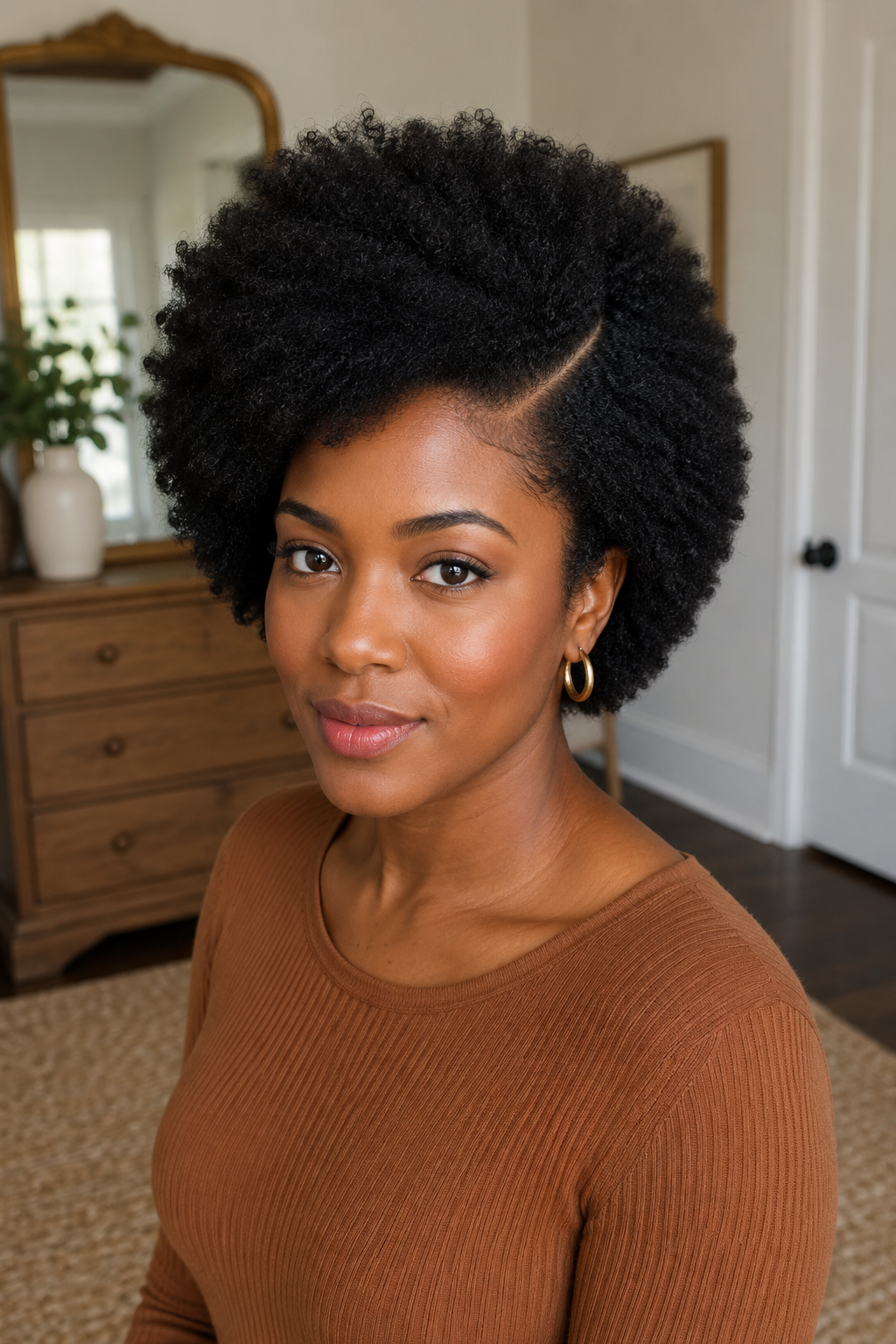
One sharp part on the side, everything else picked out full. Almost nothing to it, and the change is immediate.
The asymmetry breaks up the roundness of an afro and gives your face a different frame.
Use the tail of a comb and edge control to make the part crisp. Then pick the crown out for height. This is the fastest style on the list and the one most women reach for on mornings when nothing else got done.
Short Afro Puff
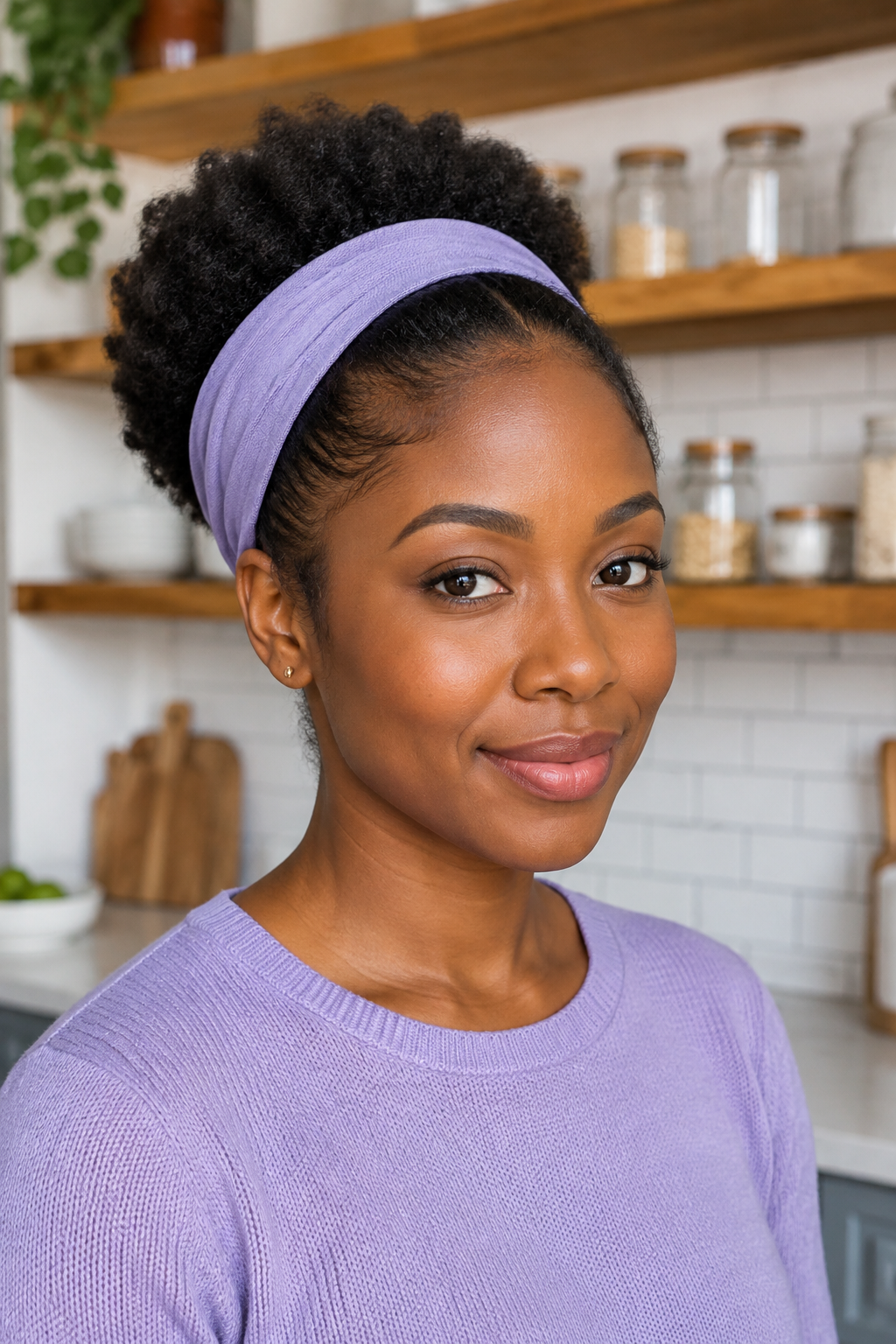
Even on short hair, gathering everything back into a small puff at the crown gives you a clean, pulled-back option.
Use a wide elastic headband rather than a hair tie. It holds without cutting into your edges, and short hair does not need much tension to stay.
Push it back only partway so the front keeps some volume. Smooth your edges with a light gel and the whole thing takes under five minutes from start to finish. For dressier versions, browse our short hair updos.
Copper Colored Short Natural Cut
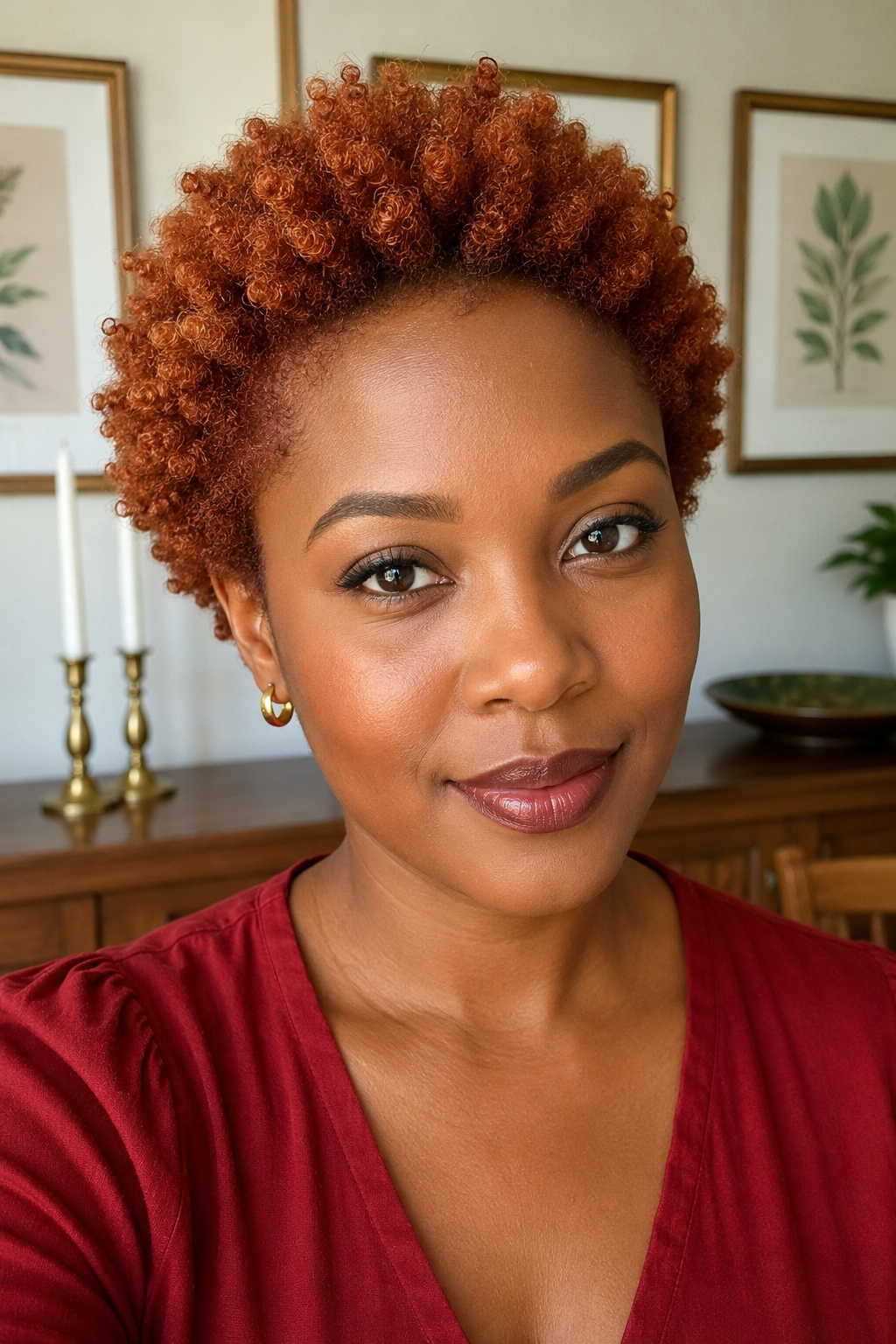
Copper and ginger tones look warm against deeper skin and make every coil more visible. Short length also means less hair to damage.
Semi-permanent color and glosses have taken over here, since keeping the curl pattern intact matters more to most women than achieving a precise shade. Our hair color ideas section has more on picking a tone that suits your skin.
Deep condition weekly once you color, and use a protein treatment monthly. The tips-only version, where just the ends catch the color, gives you the effect with far less commitment.



Comments
No Comments