
19 Volumizing Pixie Cuts That Add Body to Thin Hair Over 50
Thin hair after 50 often needs a rethink. What worked in your 30s or 40s stops working the way it used to. Layers fall flat by lunchtime, and no amount of teasing or spraying seems to hold up.
A pixie changes the whole equation. Cutting weight off the ends means thin strands can finally lift at the roots and hold shape through the day. The right pixie can make hair look fuller than it has in years.
The 19 pixie cuts below focus specifically on volume. Each one uses cut structure or styling to build density where thin hair over 50 needs it most. Pick the one that suits your face shape and daily routine.
Jump to:
- Layered Pixie
- Textured Pixie
- Choppy Pixie
- Feathered Pixie
- Tapered Pixie
- Pixie With Longer Top
- Razor-Cut Pixie
- Stacked-Layer Pixie
- Asymmetrical Pixie
- Pixie With Undercut
- Spiky Pixie
- Tousled Pixie
- Swept-Back Pixie
- Pixie With Side-Swept Bangs
- Pixie With Wispy Bangs
- Pixie With Textured Fringe
- Silver Balayage Pixie
- Pixie With Face-Framing Highlights
- Curly Pixie
Layered Pixie
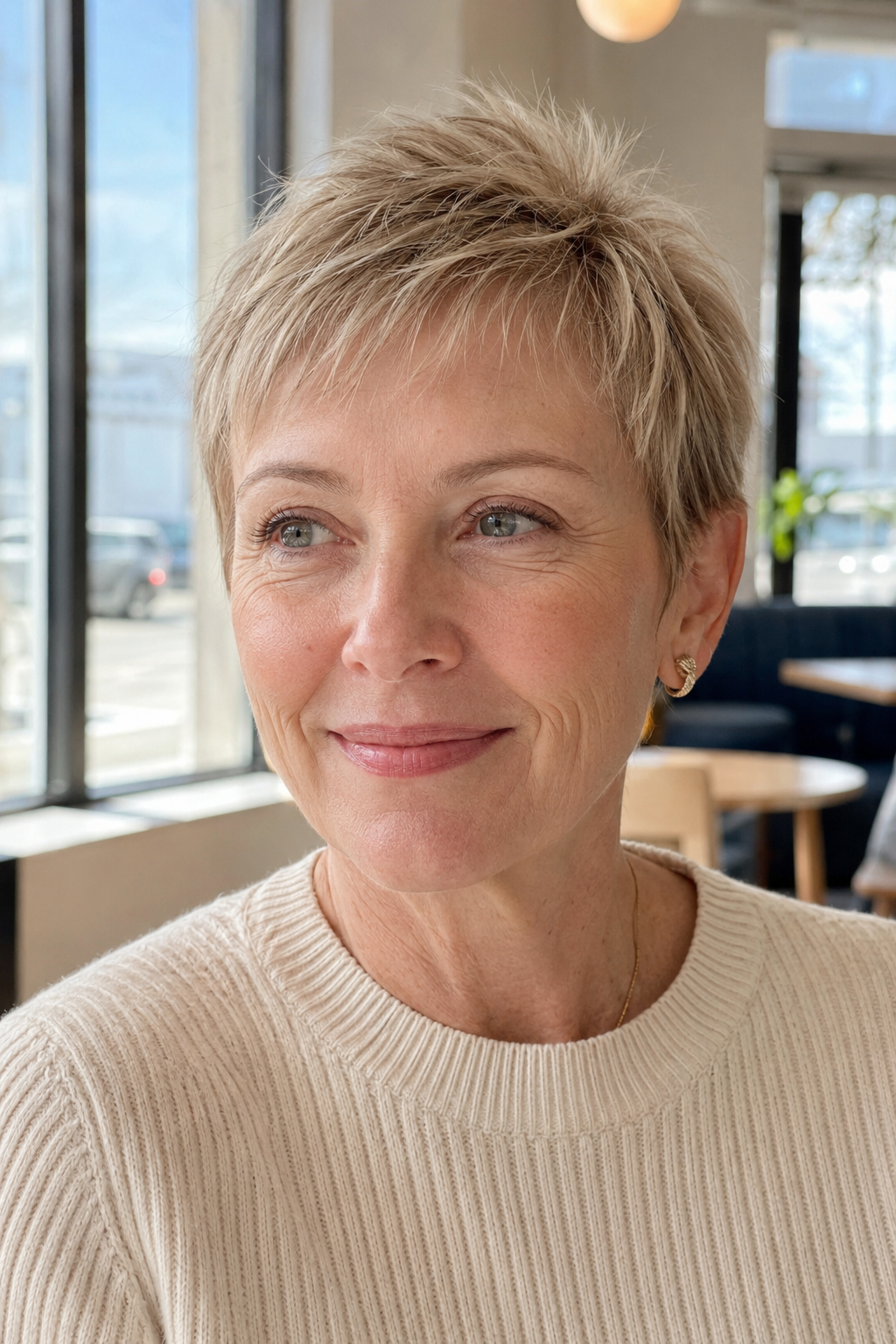
A layered pixie has internal layers cut at different lengths throughout the top of the cut. The layers sit shorter at the crown and get slightly longer toward the ends.
For thin hair over 50, layers create the visual density that thin strands can't produce on their own. The crown looks fuller because the layers lift away from the scalp instead of lying flat.
Blow-dry with a small round brush at the roots for maximum lift. A drop of texture cream defines the ends.
Textured Pixie
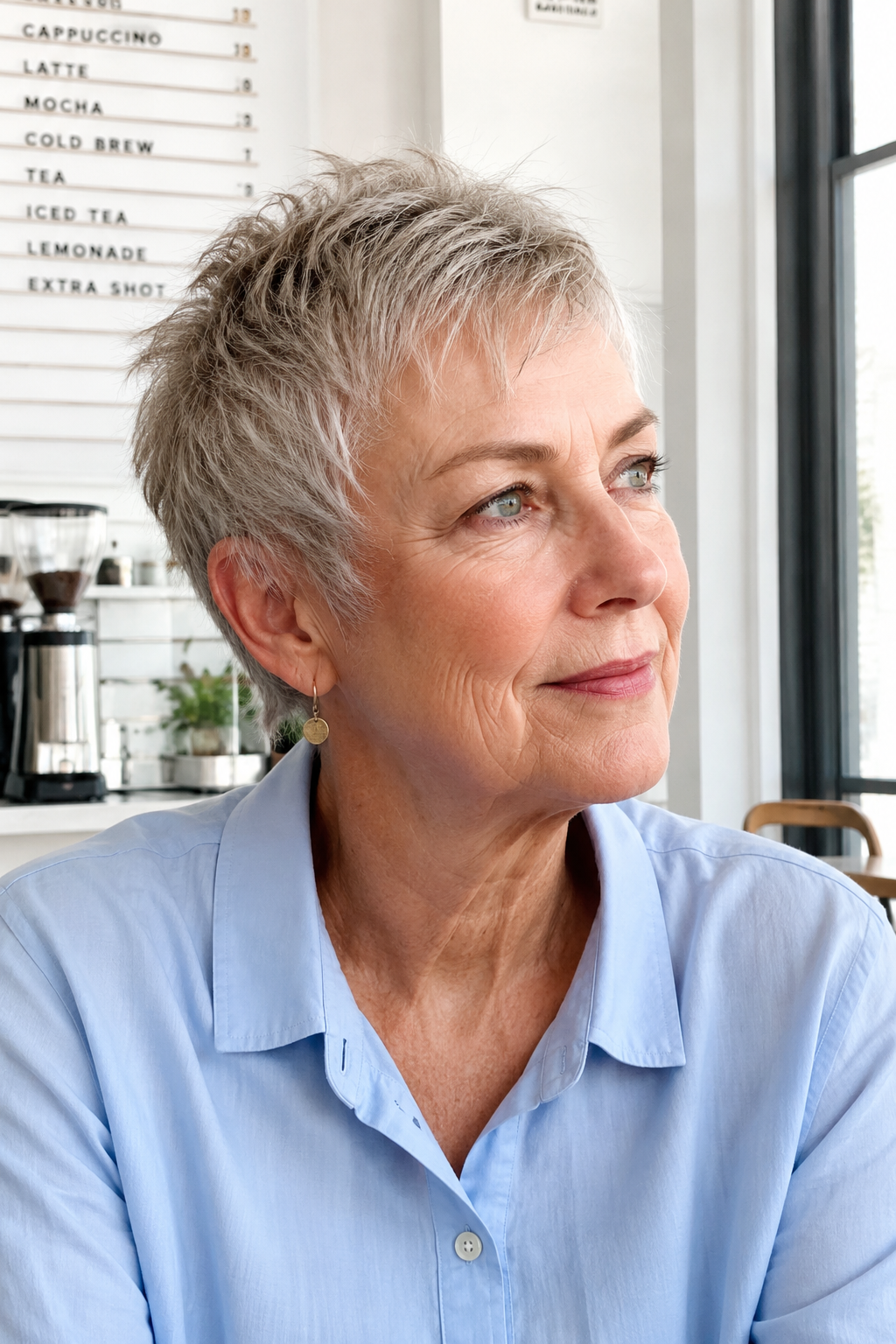
A textured pixie has piecey, uneven ends worked throughout the top and sides. Nothing sits blunt or heavy anywhere in the cut.
For thin hair over 50, texture translates directly to fullness. The broken-up ends catch light and create movement, so the cut looks livelier and more dimensional than a smooth pixie ever could.
Apply a small amount of texture paste to dry hair. Work it through with fingers, twisting small sections to define individual pieces.
Choppy Pixie
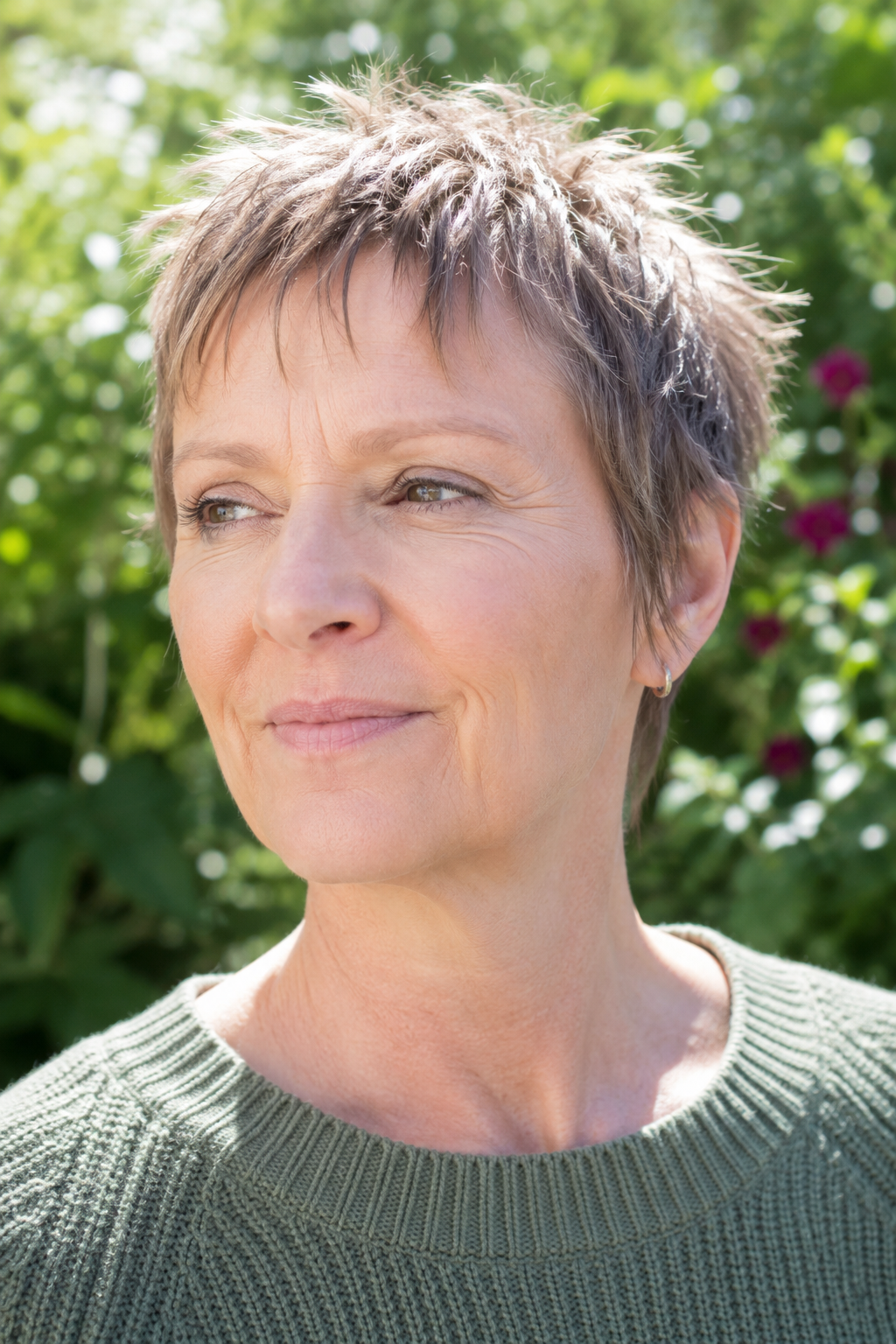
A choppy pixie has sharp, irregular chopped ends throughout the cut. The layers stay short and rough rather than smooth or blended.
For thin hair over 50, choppy ends add strong visual movement that flat strands can't produce. The whole cut looks more textured and youthful because of the roughness.
Work a bit of paste through dry hair with fingers, letting the pieces separate naturally. Skip the brush and let the shape stay rough.
Feathered Pixie
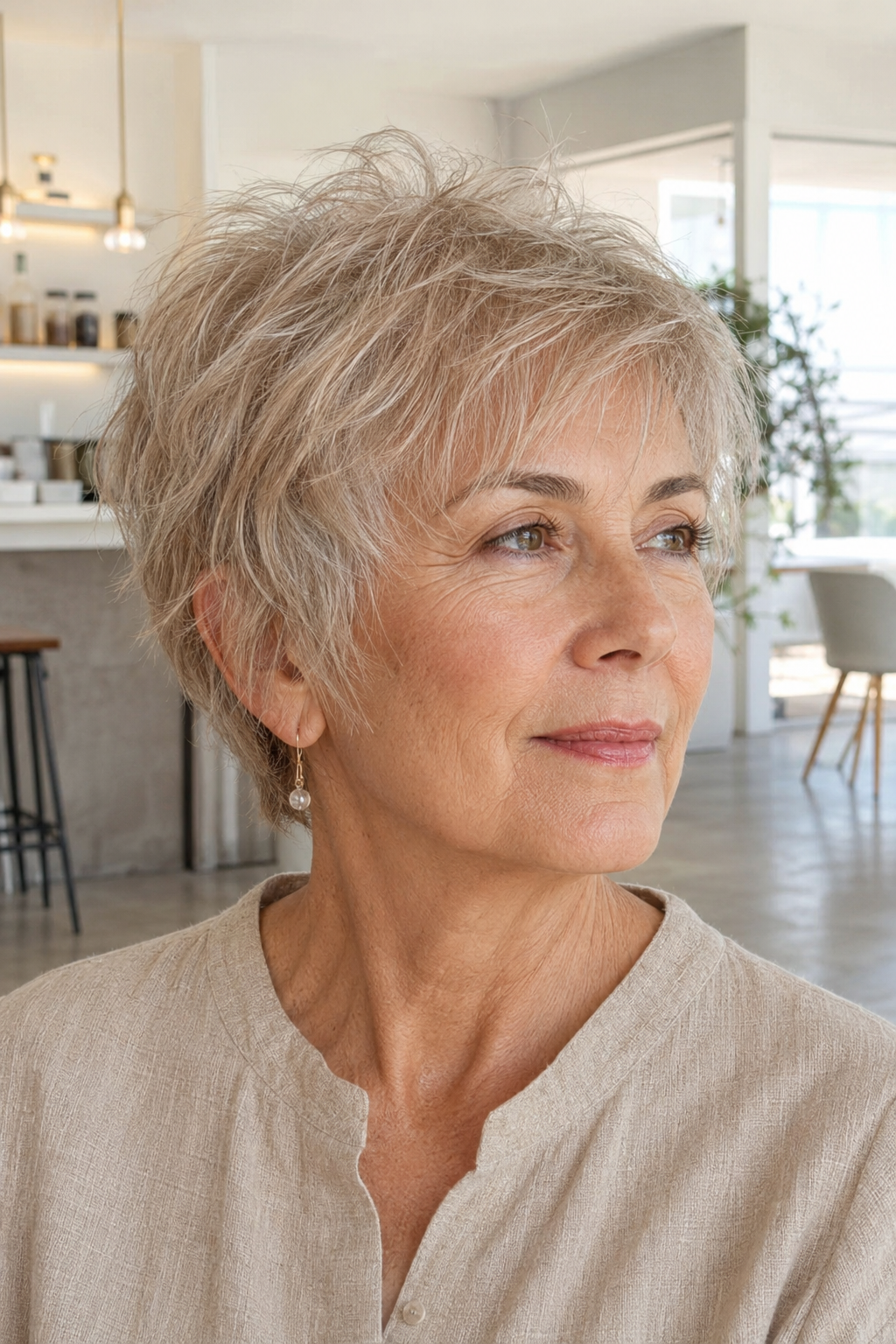
A feathered pixie has soft, wispy ends that fan outward slightly instead of sitting flat. The feathering runs through the crown and sides.
For thin hair over 50, feathered ends catch light and give the appearance of thicker density. The soft finish also complements aging features without feeling harsh or overly styled.
Blow-dry with a round brush directed outward at the ends for the feathered effect. A drop of shine serum keeps the ends smooth.
Tapered Pixie
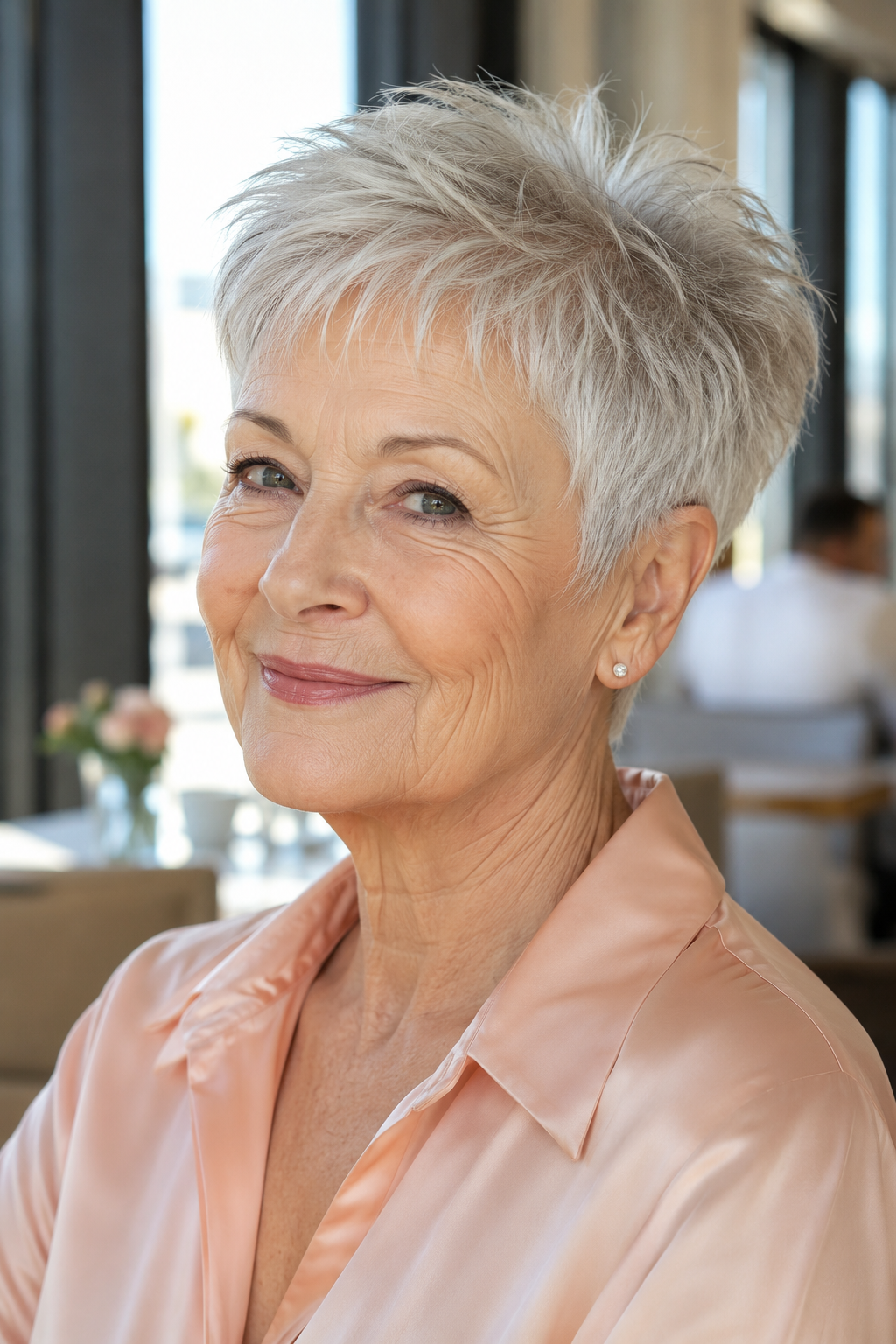
A tapered pixie has the sides and back cut shorter and shorter as they reach the neckline. The top stays longer for shape and volume.
For thin hair over 50, tapering the sides makes the crown look fuller by contrast. The shorter sides also draw the eye upward, which adds visual height.
Blow-dry the top with a small round brush for lift. A touch of pomade or clay finishes the shape neatly.
Pixie With Longer Top
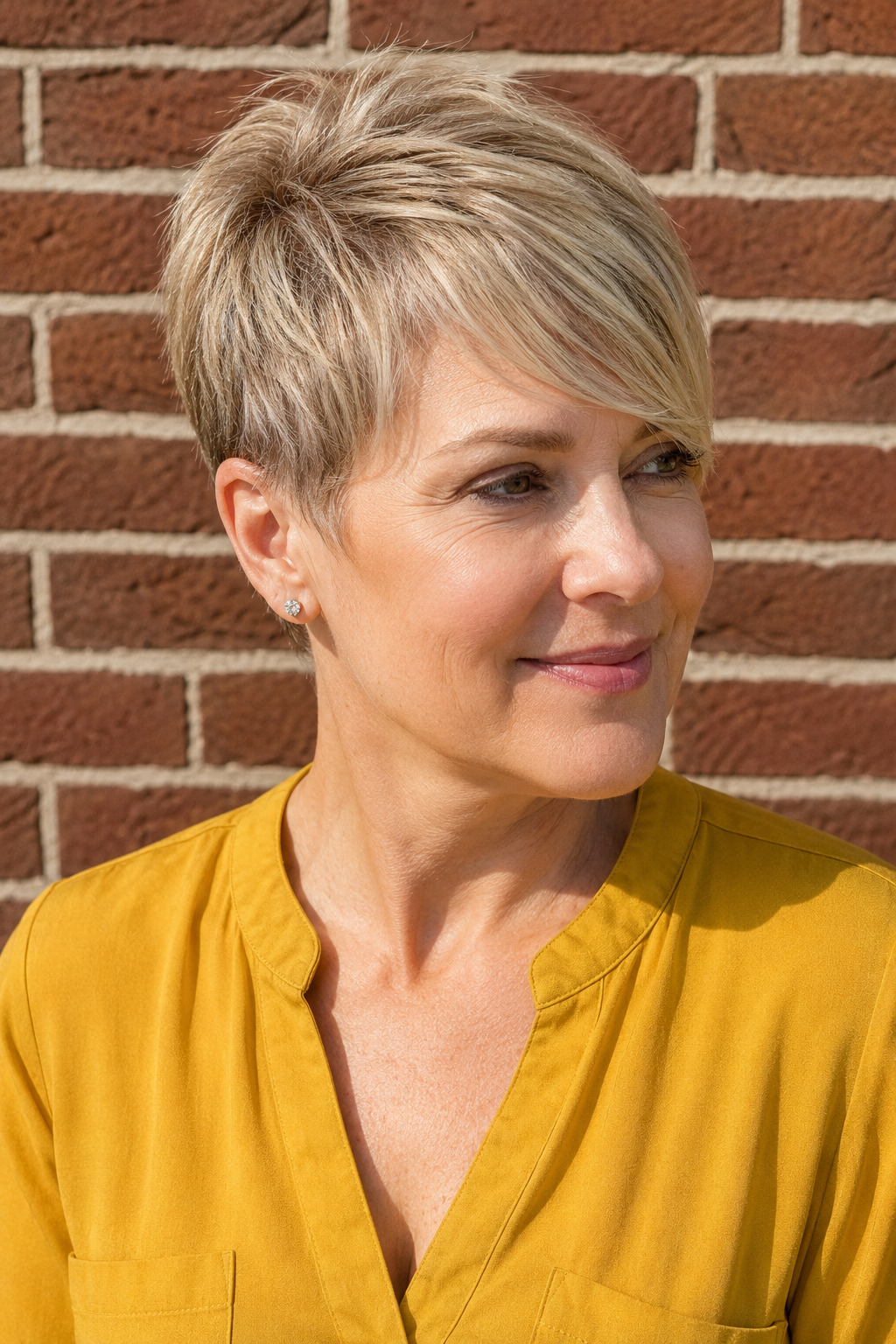
This pixie keeps the sides and back short but leaves the top longer, sometimes long enough to sweep across the forehead. The longer top section gives more styling flexibility.
For thin hair over 50, the extra length on top provides real room to build volume. Blow-dry lifts the roots and creates the fullness that flat, thin hair often lacks.
Style with a round brush at the crown for lift. Finger-style the top with a small dab of pomade or paste.
Razor-Cut Pixie
A razor-cut pixie uses a razor instead of scissors to cut the layers, which creates softer, more textured ends. The technique removes bulk without leaving hard lines.
For thin hair over 50, the razor adds movement without cutting bulk that the hair doesn't have. The finished ends sit soft and airy rather than heavy.
Ask your stylist for a razor cut. A drop of light cream and finger styling finishes the look.
Stacked-Layer Pixie
A stacked-layer pixie has short internal layers stacked strategically at the crown to build height. The layers get shorter as they move up the head.
For thin hair over 50, stacking at the crown targets the exact spot where thin hair loses volume first. The layers physically hold the crown up rather than letting it collapse.
Blow-dry the crown upside down, then flip up for maximum lift. Texture spray at the roots holds the shape.
Asymmetrical Pixie
An asymmetrical pixie has one side of the top cut longer than the other. The difference creates instant visual interest without going bold or edgy.
For thin hair over 50, uneven sides trick the eye into seeing more volume than is actually there. The asymmetry also adds a youthful, modern feel to the whole cut.
Style the longer side smooth with a flat iron, and let the shorter side sit textured. A tuck behind one ear balances the look.
Pixie With Undercut
A pixie with an undercut has the sides and back clipped very short, sometimes shaved, while the top stays longer. The line between the two lengths sits sharp.
For thin hair over 50, the undercut removes bulk on the sides so the top pieces get all the visual attention. That gives thin strands the best chance to look full up top.
Style the top with a small dab of pomade. Blow-dry for extra lift at the roots.
Spiky Pixie
A spiky pixie has the top pieces styled to stand up and outward in short spikes. The sides and back stay tight and short.
For thin hair over 50, spiky styling gives the crown height and shape that thin strands can't hold on their own. The cut also feels playful and full of personality.
Work a small amount of firm-hold gel or wax through dry hair, then pull pieces up with fingers.
Tousled Pixie
A tousled pixie is styled with the top pieces going in different directions for a purposefully messy finish. The whole shape sits rough and lived-in.
For thin hair over 50, the rough, tousled finish adds real volume to thin strands without asking for much product or heat. The messier the better.
Rough-dry with fingers, then work in a small amount of texture paste. Skip the comb entirely and let the shape fall naturally.
Swept-Back Pixie
A swept-back pixie has the top pieces styled to sweep upward and backward, away from the forehead. The style creates instant height at the front.
For thin hair over 50, the swept-back styling exposes the forehead and builds visible volume at the top of the head. That's especially flattering for anyone with thinning at the crown or hairline.
Use a strong-hold pomade or gel worked through damp hair, then blow-dry backward. A finishing spray locks the shape.
Pixie With Side-Swept Bangs
A pixie paired with side-swept bangs sweeps a longer fringe across the forehead diagonally. The bangs reach the cheekbone or just past.
For thin hair over 50, the swept bangs add visual width across the top of the head. The extra fabric of hair across the forehead gives a look of fullness where thin hair often shows first.
Blow-dry the bangs with a round brush, directing them across. A drop of cream sets the sweep in place.
Pixie With Wispy Bangs
A pixie with wispy bangs adds a soft, feathery fringe just above the brows. The bangs sit light and airy rather than blunt.
For thin hair over 50, wispy bangs frame the face softly without adding weight the strands can't support. The airy finish also softens facial features gently.
Trim the bangs often to keep them soft. A drop of cream on the top pieces defines the finish.
Pixie With Textured Fringe
A pixie with a textured fringe adds a choppy, uneven bang across the forehead. The bangs sit piecey and irregular rather than smooth.
For thin hair over 50, a textured fringe creates instant movement across the forehead. That translates to visual fullness right at the top of the face.
Style with a small amount of paste on dry bangs. Break up the pieces with fingers for the choppy look.
Silver Balayage Pixie
A silver balayage pixie has hand-painted silver color running through the top of the cut, blending any natural grey with intention. The lighter tones sit softly against the base color.
For thin hair over 50, the color adds visible depth and dimension. Silver also camouflages the mix of natural grey strands that often appear at this age.
Ask for hand-painted color for the softest blend. A cool-toned gloss keeps the silver clean.
Pixie With Face-Framing Highlights
A pixie with face-framing highlights places lighter strands at the front of the cut, on either side of the face. The color draws attention forward and adds dimension.
For thin hair over 50, the highlights create visual weight around the face that flat, thin strands often lack. The color also brightens the complexion.
Ask for highlights placed from the temples down through the front sections. A gloss keeps the color clean and cool.
Curly Pixie
A curly pixie keeps length on top so natural curls or waves can spring freely. The sides and back stay cropped tight against the head.
For thin curly or wavy hair over 50, this shape lets the natural curl do the volume work. Curls on top build height naturally, without needing heat or heavy product.
Use a leave-in conditioner and scrunch by hand. Air-dry or diffuse on low for the fullest shape.
Comments
No Comments