
21 Short Locs Styles for Starter Locs and the Early Stages
The early loc stage is the one nobody prepares you for. Everything you find online assumes length you do not have yet, and half the styles you save need locs that reach your shoulders. Short locs can do plenty, it just runs on different rules. Most of what follows works from about two or three inches, with a few needing four or more. Something worth knowing early on: starter locs are often easier to style than locs that have started budding, so the first few months give you more freedom than the ones that follow.
Jump to:
- Comb Coil Starter Locs
- Two-Strand Twist Starter Locs
- Microlocs
- Sisterlocks
- Standard Size Locs
- Loc Bob
- Tapered Locs
- Loc Fringe
- Perm Rod Curled Ends
- Barrel Twists
- Twisted Locs
- Loc Knots
- Half-Up Pineapple
- Half-Up Bun
- Two Mini Buns
- Low Bun at the Nape
- Pinned Updo
- Braided Front With Locs Out
- Side Part With Pins
- Loc Cuffs and Beads
- Coloured Loc Ends
Comb Coil Starter Locs
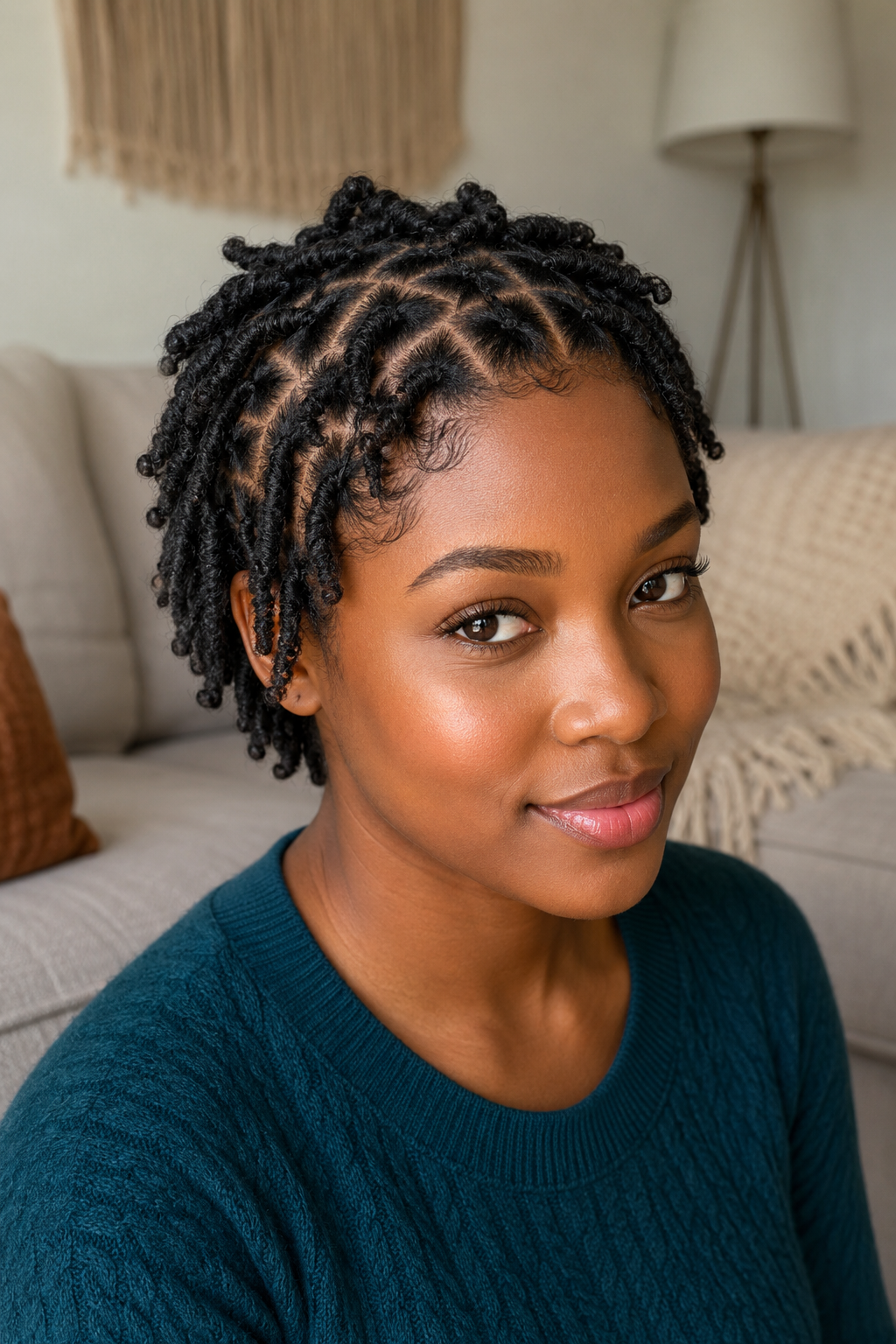
Sections coiled with the tail of a comb into tight spirals, then left to lock over the coming months.
This is the most common starting method and gives you neat, uniform sections from day one.
Great on hair from about two inches. Coils need a few weeks of careful washing before they hold on their own, so a light gel and a satin bonnet at night matter early.
Two-Strand Twist Starter Locs
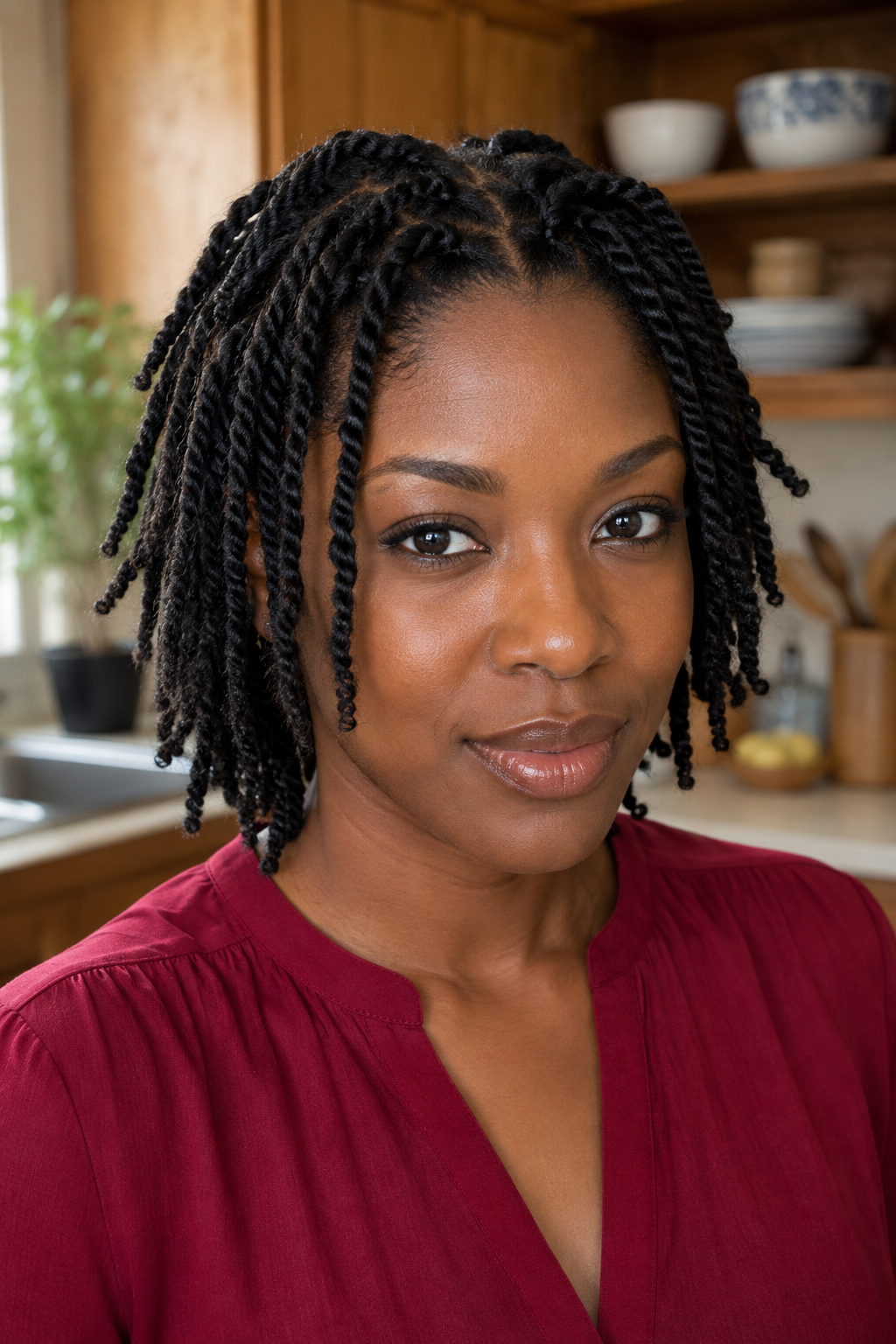
Sections twisted with two strands rather than coiled, then left to lock together.
Twists hold better than coils on looser textures and on hair that is a little longer at the start.
Perfect if your hair is closer to four inches. The twist pattern stays visible for months, which some people love and others wait out.
Microlocs
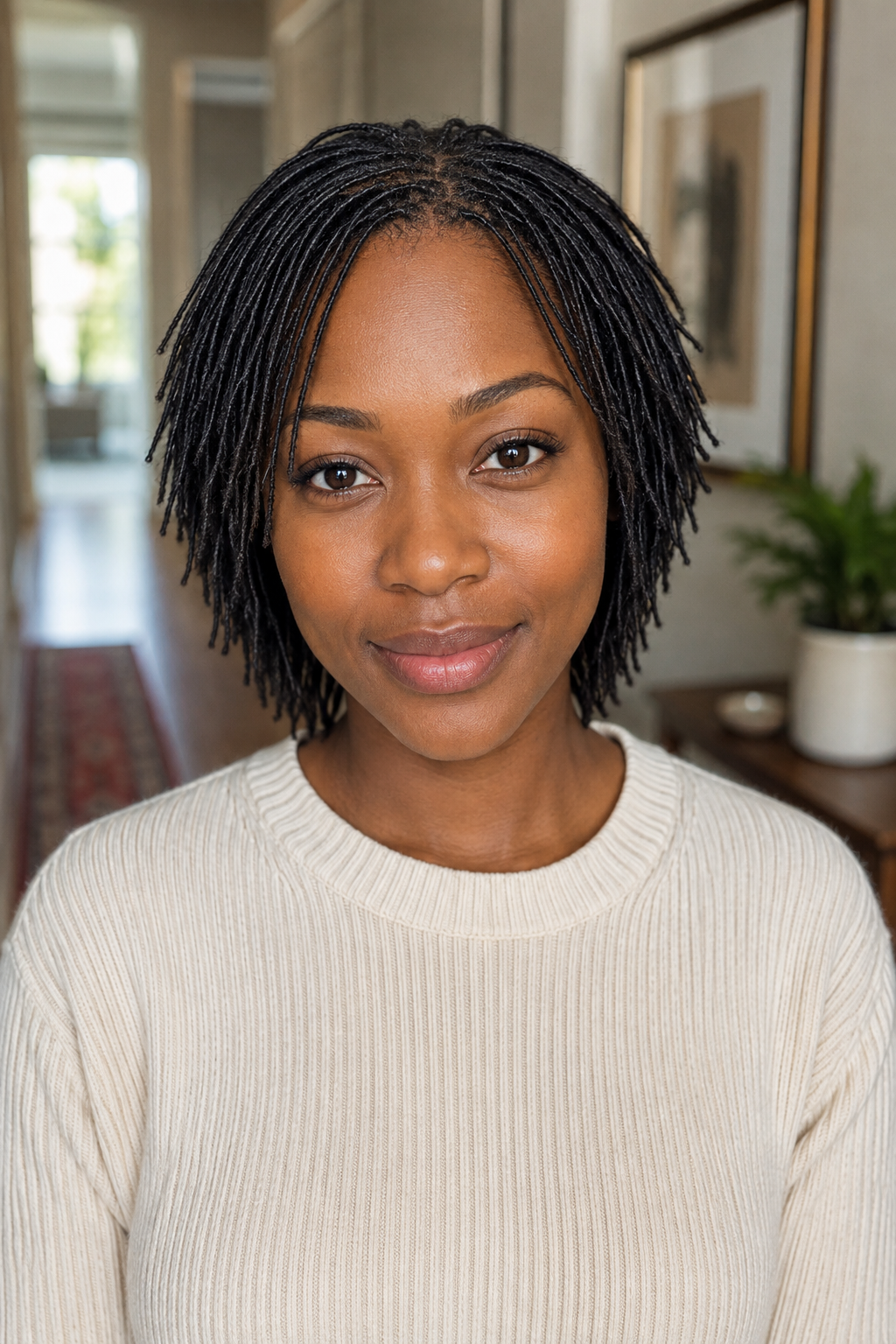
Very small locs, far thinner than standard, giving you many more individual locs across the head.
The smaller size means more styling flexibility even at short lengths, since thin locs bend and gather more easily.
Suits anyone who wants versatility early. They take longer to install and longer to maintain, so factor in the appointment time before committing.
Sisterlocks
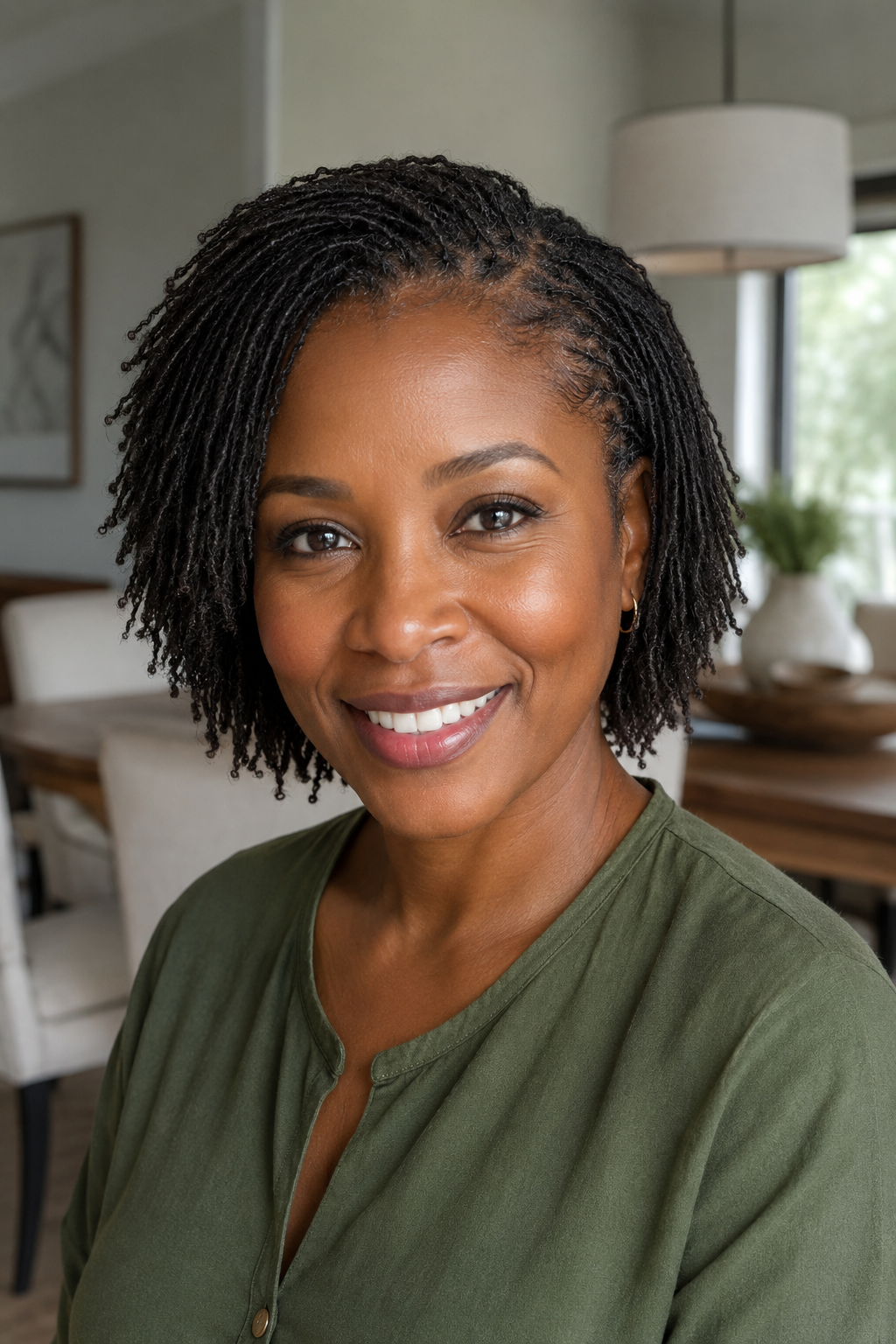
A specific patented technique creating very fine locs installed with a tool rather than by coiling or twisting.
The method requires a certified consultant, which is what separates it from microlocs done freehand.
Great for fine hair and looser textures, where standard locking methods sometimes struggle. Expect a long first appointment and a higher cost than other starting methods.
Standard Size Locs
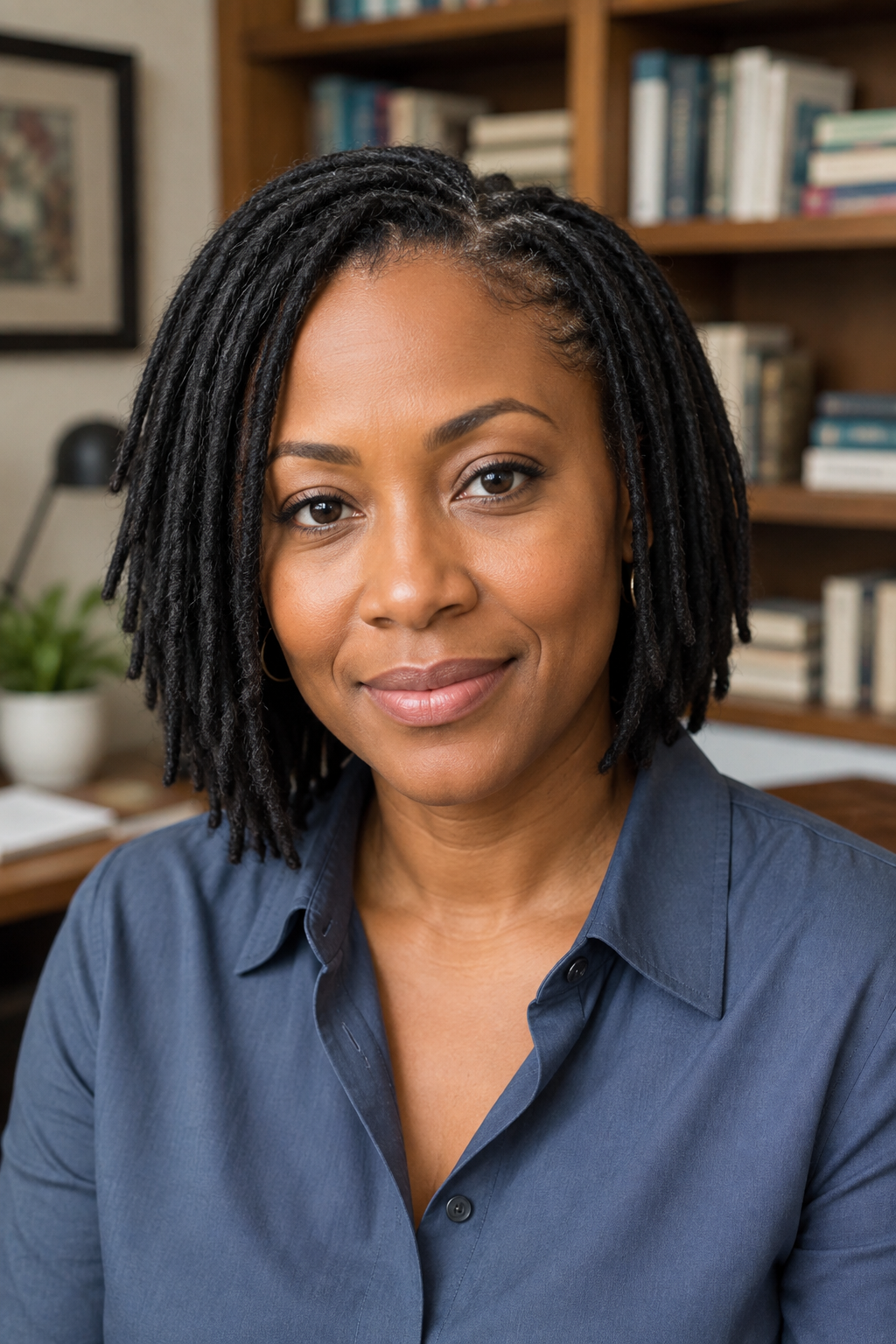
Medium-thickness locs, the size most people picture when they think of locs.
They lock faster than smaller sizes and need less frequent maintenance, which makes them the lower-effort choice.
Works especially well if you want a straightforward routine. Retwisting every four to six weeks is usually enough once they have settled.
Loc Bob
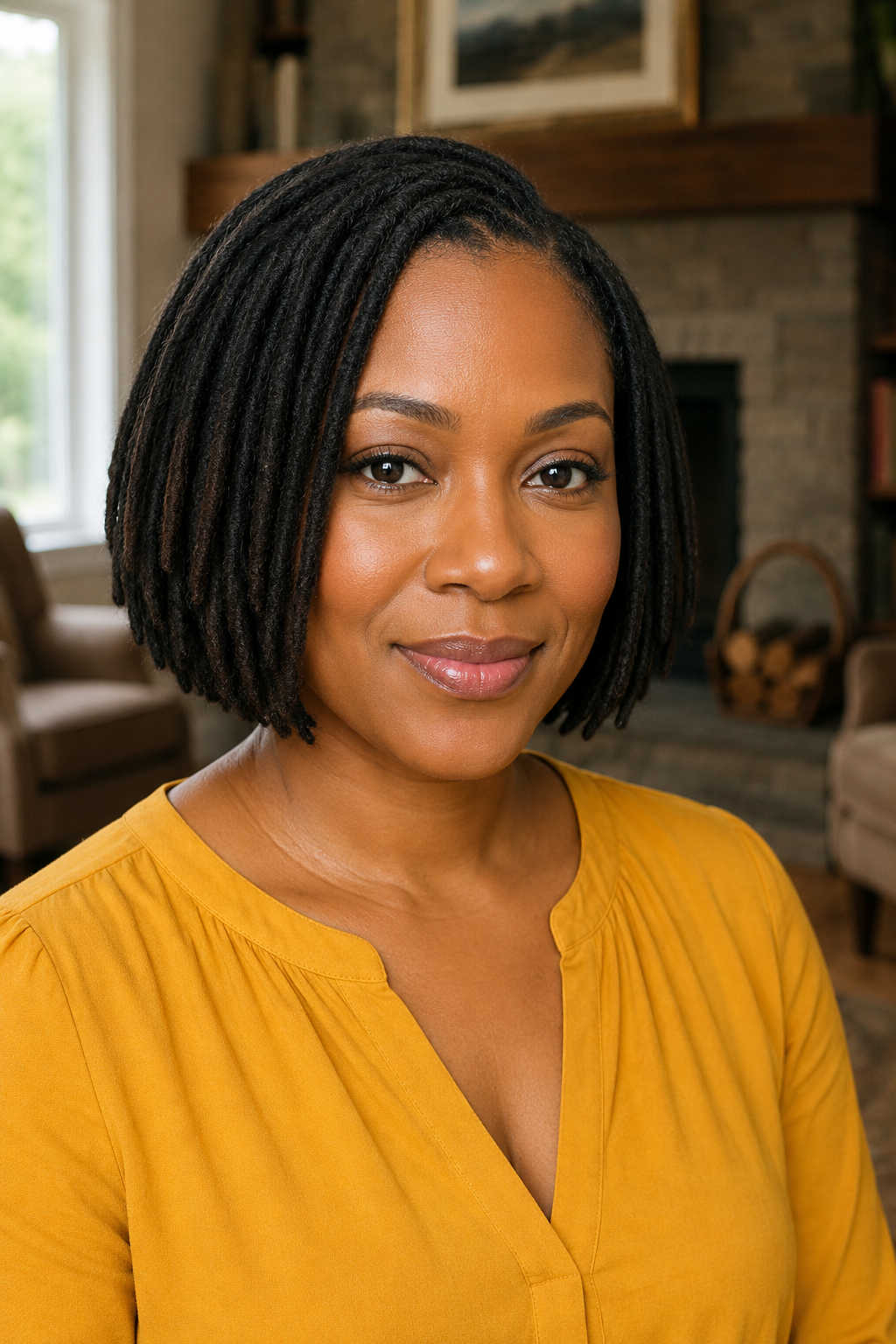
Locs cut to a bob shape, sitting somewhere around the chin or jaw.
Cutting locs into a defined shape is something plenty of people do not realise is an option, and it gives short locs real structure.
Perfect from about four to six inches. Have it cut by a loctician rather than a general stylist, since the ends need sealing properly afterward.
Tapered Locs
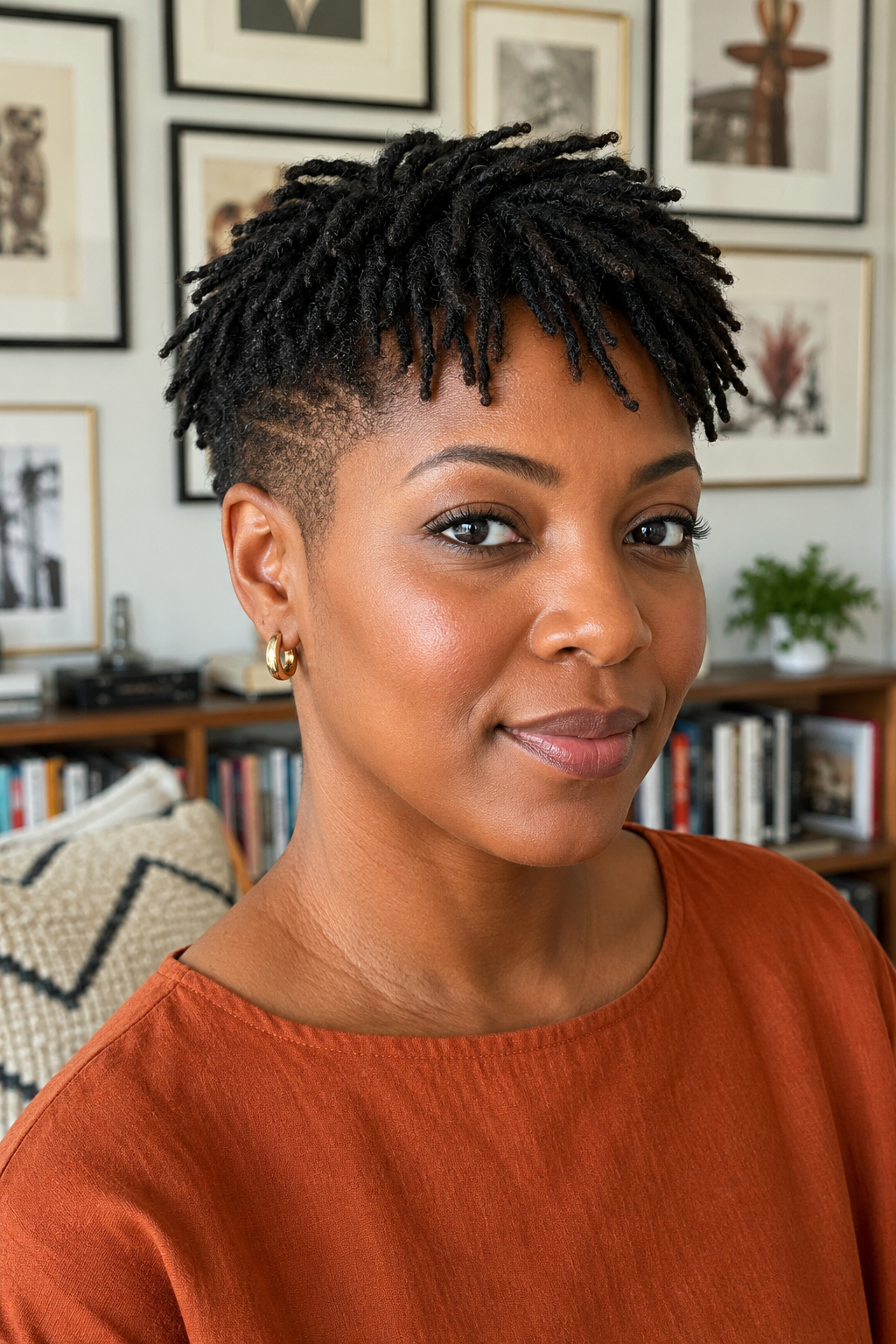
Fuller through the top with the sides and nape cut gradually shorter.
The taper gives short locs a clear shape and stops them sitting as one uniform mass.
Great from around three inches. It also flatters round and square faces by drawing attention upward. Our short hairstyles for round faces post covers why that works.
Loc Fringe
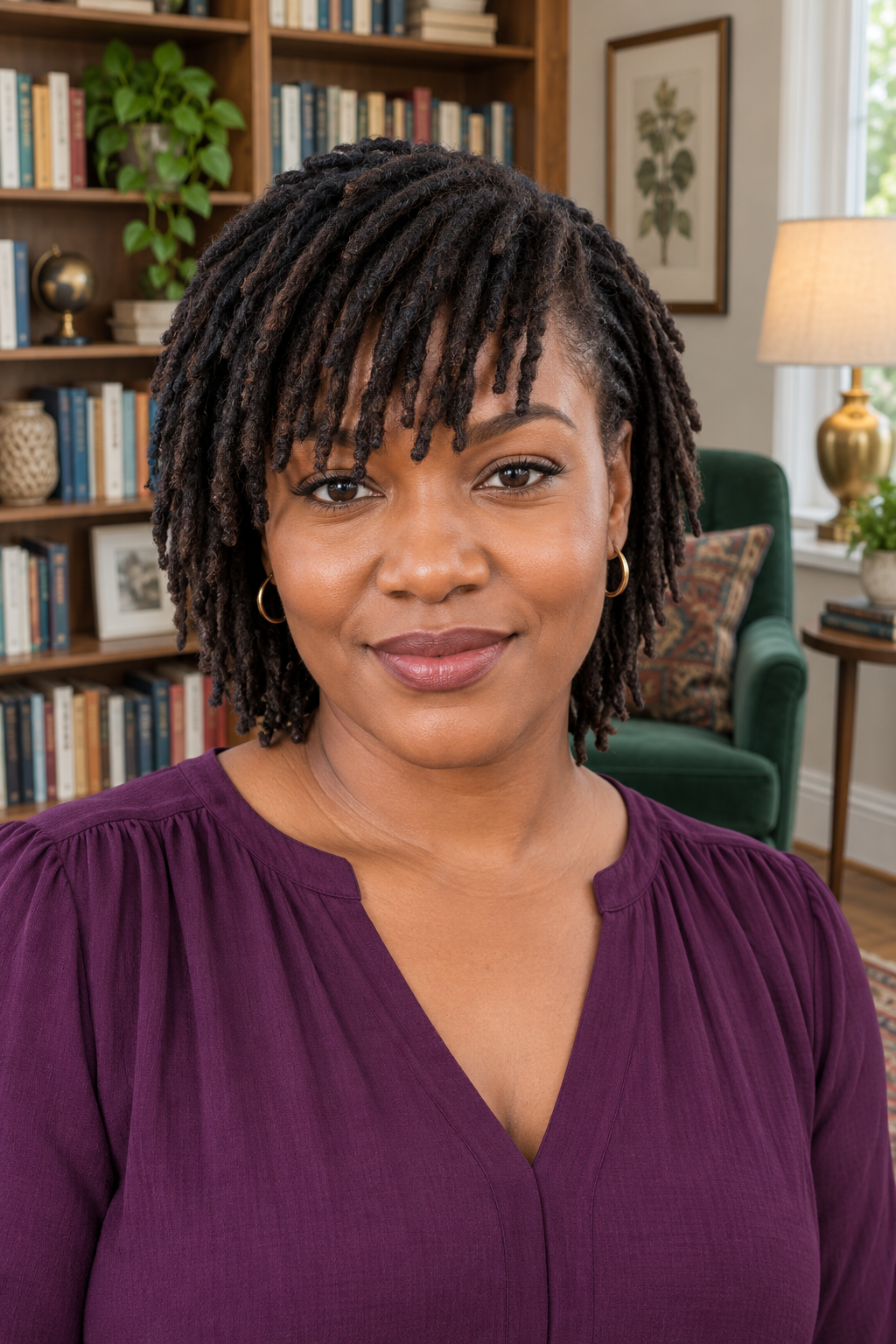
A section at the front cut shorter to sit across the forehead as a fringe.
It changes the whole shape of the style without touching anything else, and it frames the face at a stage when short locs otherwise sit flat against the head.
Suits lengths from about four inches. Cut it longer than you think, since locs do not fall the way loose hair does.
Perm Rod Curled Ends
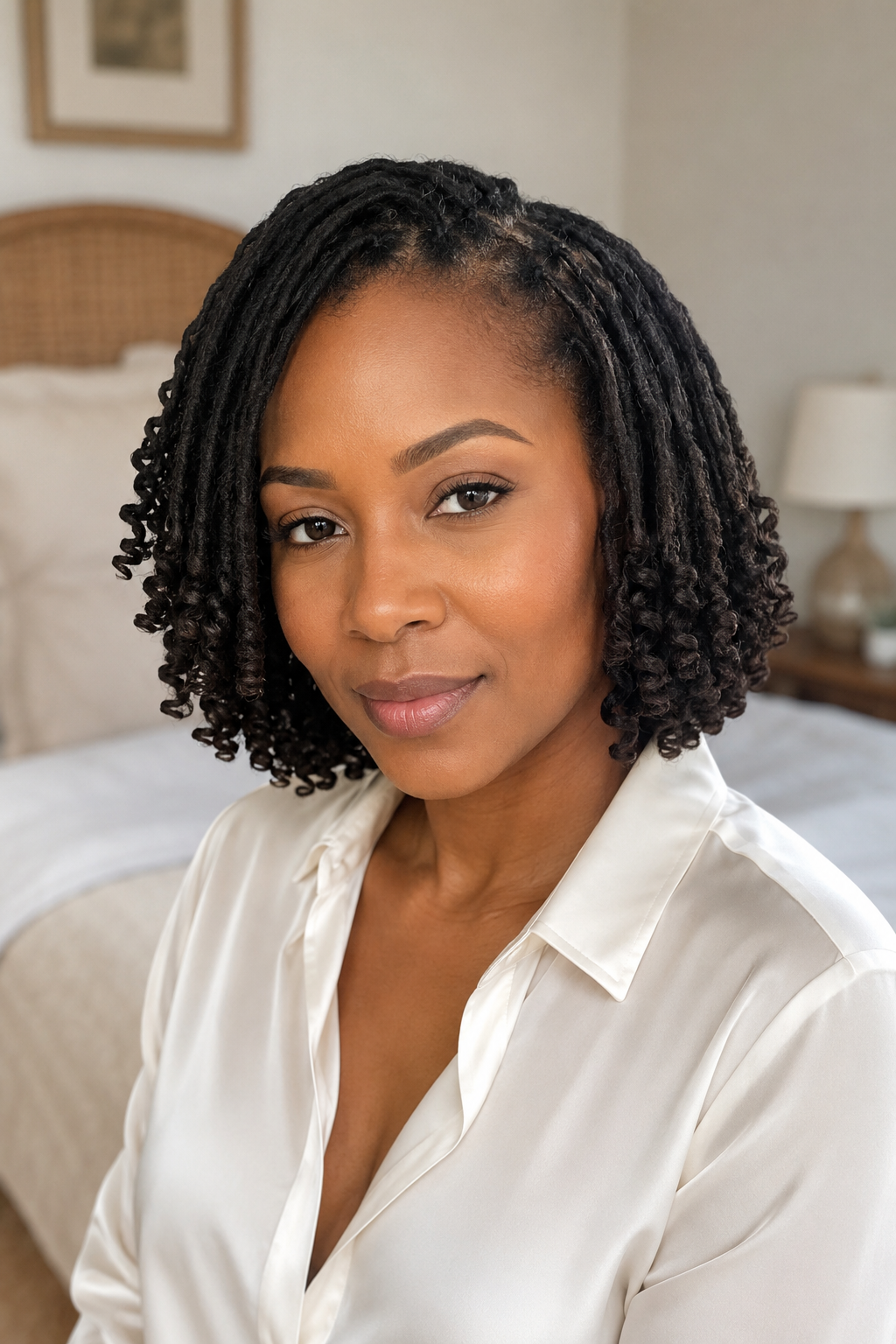
Locs set on perm rods so the ends dry into defined curls.
Curled ends soften the whole look and add movement that straight short locs do not have on their own.
Perfect for events or any day you want something different. Set them damp, sit under a dryer, and unravel once completely dry. The curl holds for several days.
Barrel Twists
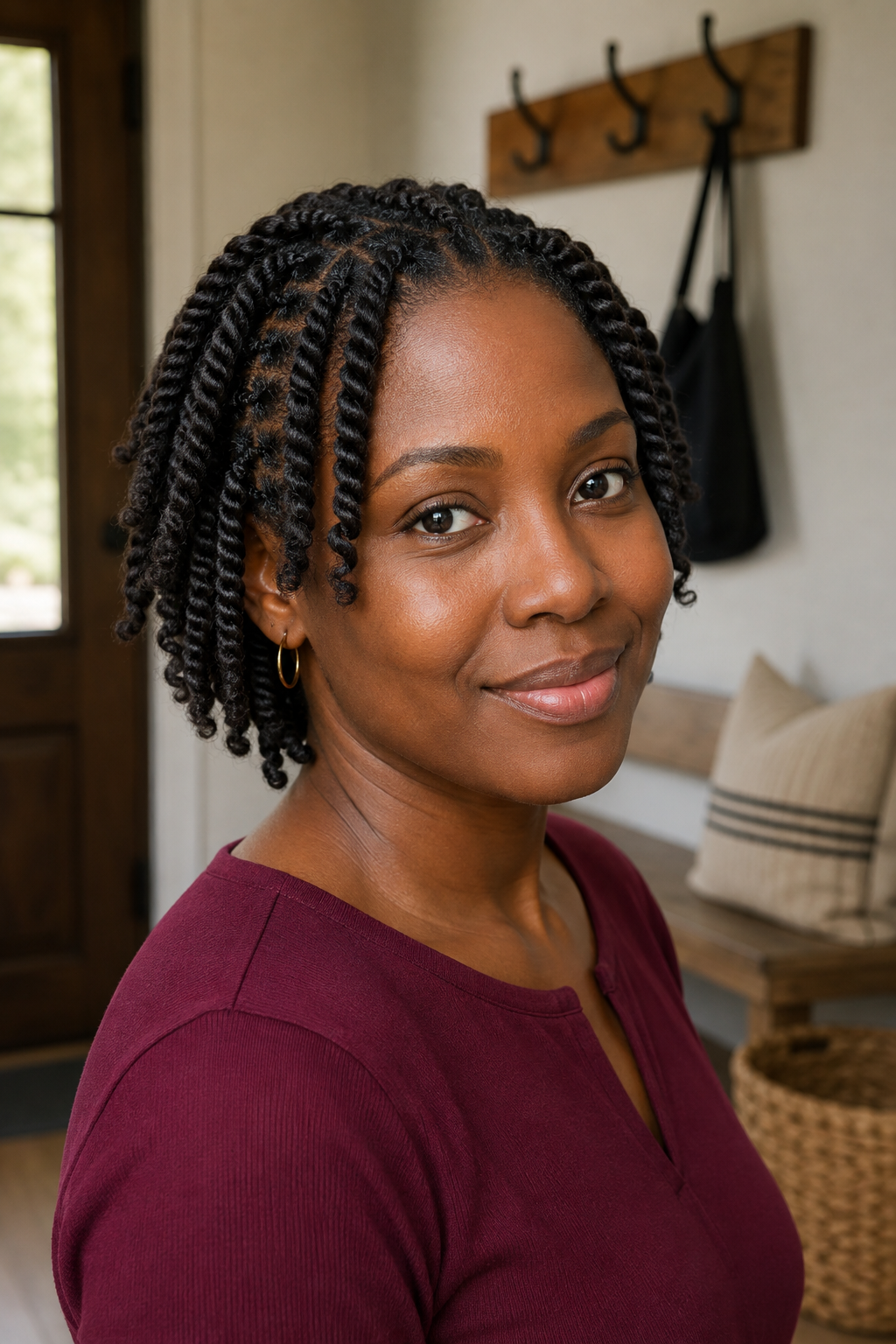
Two locs twisted around each other in a rope pattern, worked in rows across the head.
They look far more involved than they are, and they work at surprisingly short lengths.
Great for a style that lasts a week. A light setting spray and a satin bonnet at night keep them neat. Unravel gently and spritz with a leave-in when you take them down.
Twisted Locs
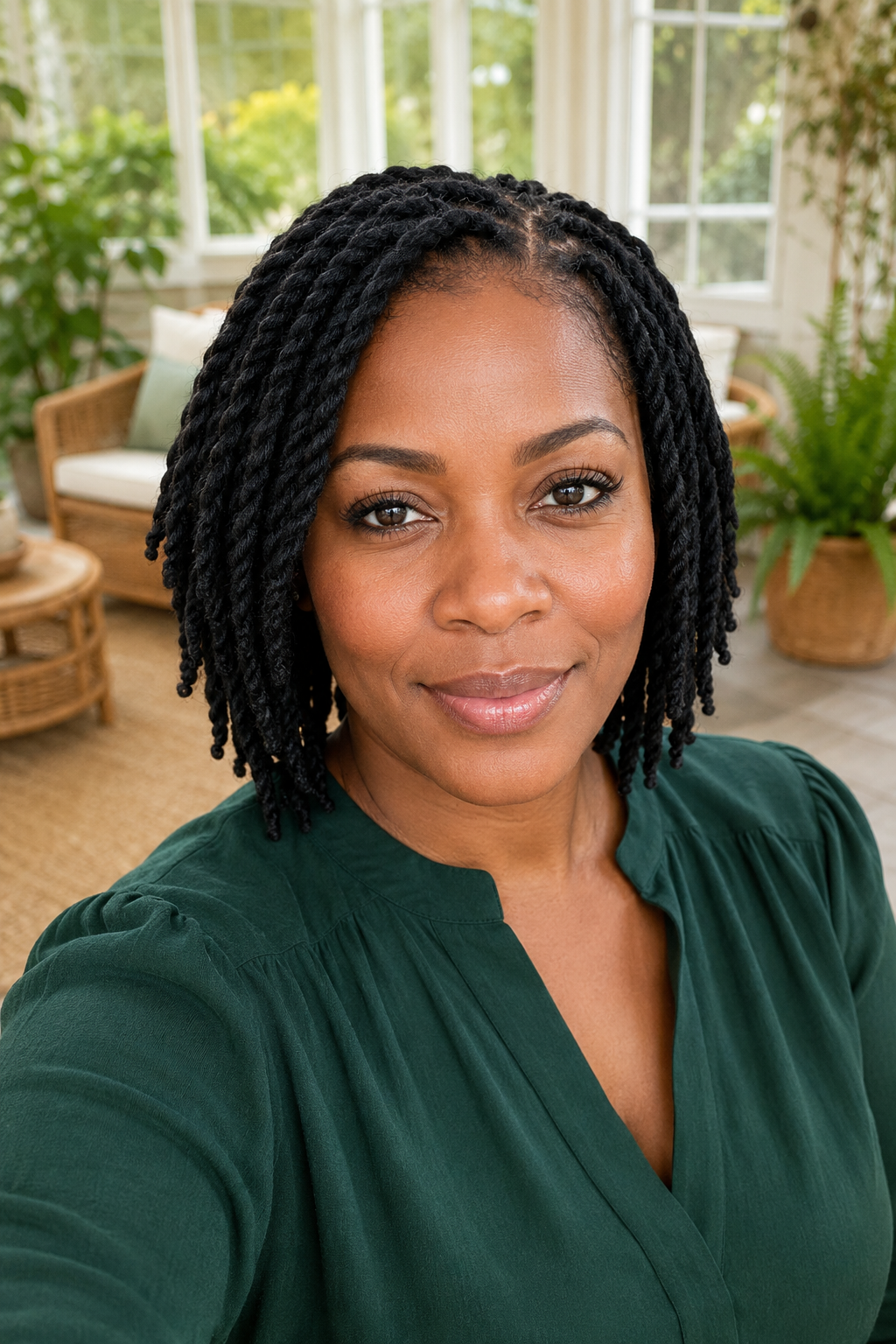
The whole head worked into pairs of twisted locs, giving a uniform rope texture throughout.
Twisting adds visual thickness, which helps when your locs are still thin in the early stages.
Suits anyone wanting a low-effort style that reads as done. It also gives you a soft wave pattern when you unravel it, which carries into the following week.
Loc Knots
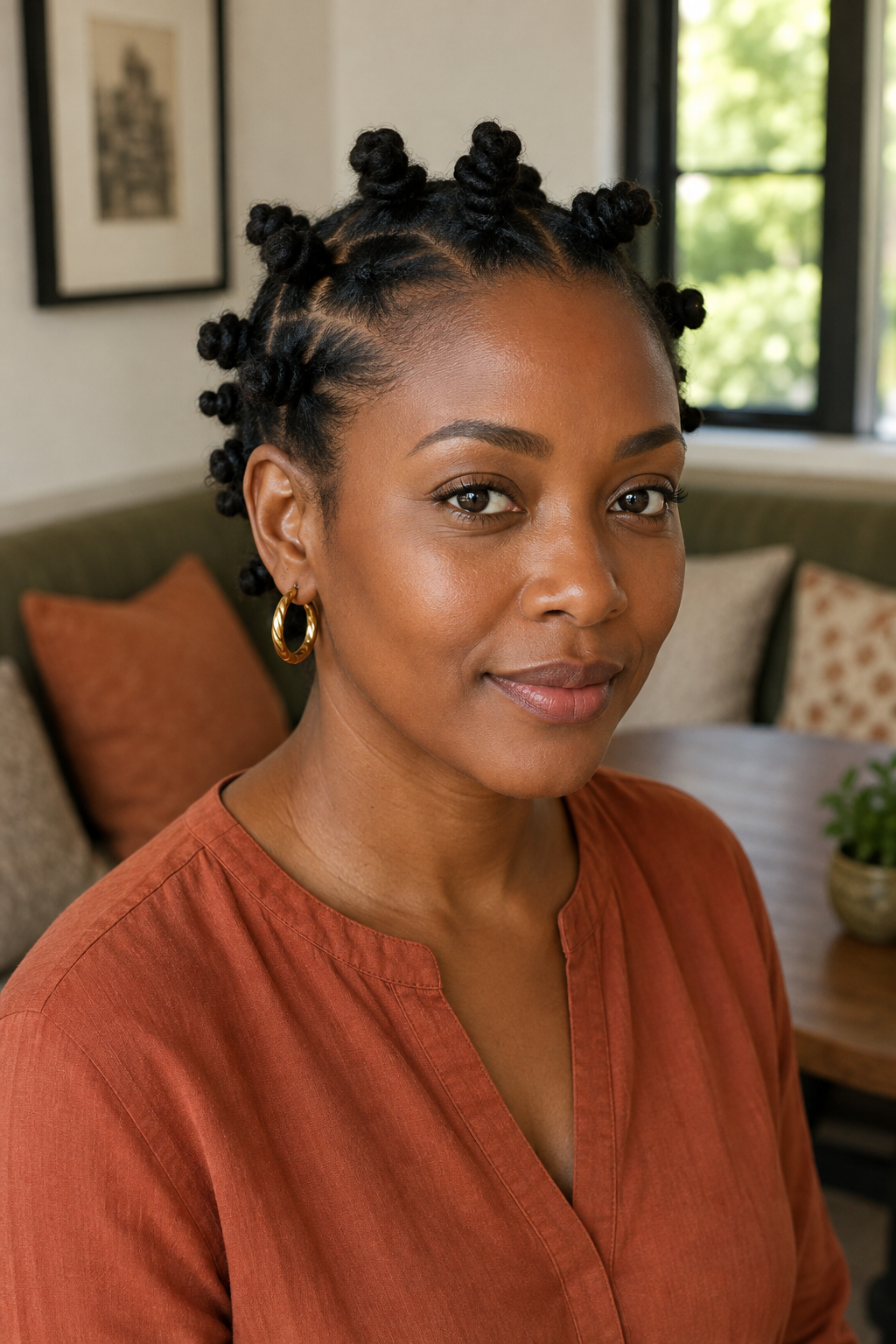
Small sections tied into knots across the head, sitting as raised points rather than lying flat.
They add texture and interest at lengths where most other styles are not yet possible.
Works especially well from three to five inches. Keep them loose rather than tight, since pulling at short locs strains the roots where they are still settling.
Half-Up Pineapple
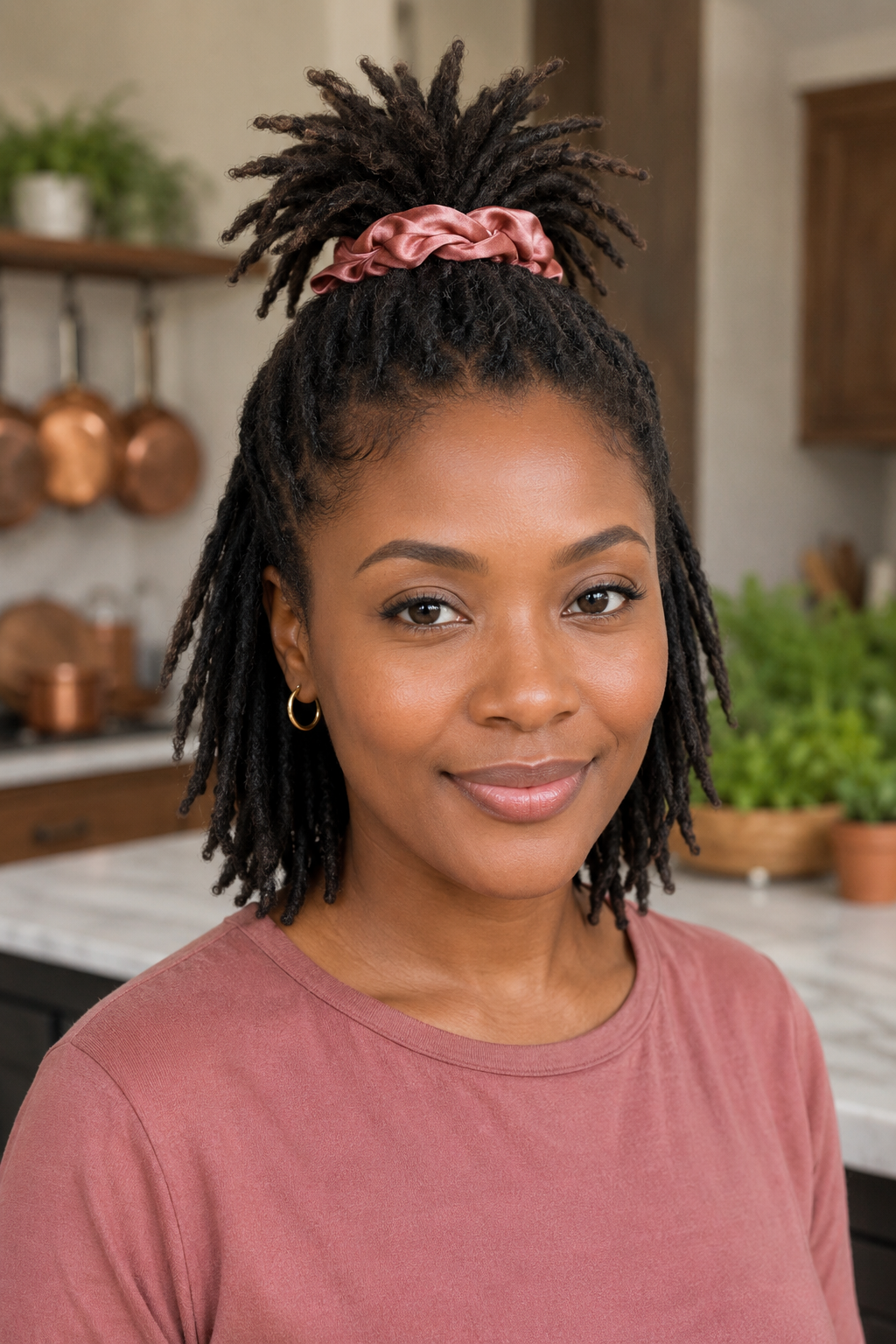
The top section gathered at the crown with the rest left down.
This handles the front, which is the part that actually gets in your way, and it works at lengths too short for a full updo.
Perfect for everyday. Use a satin scrunchie rather than an elastic, which grips without pulling at the roots.
Half-Up Bun
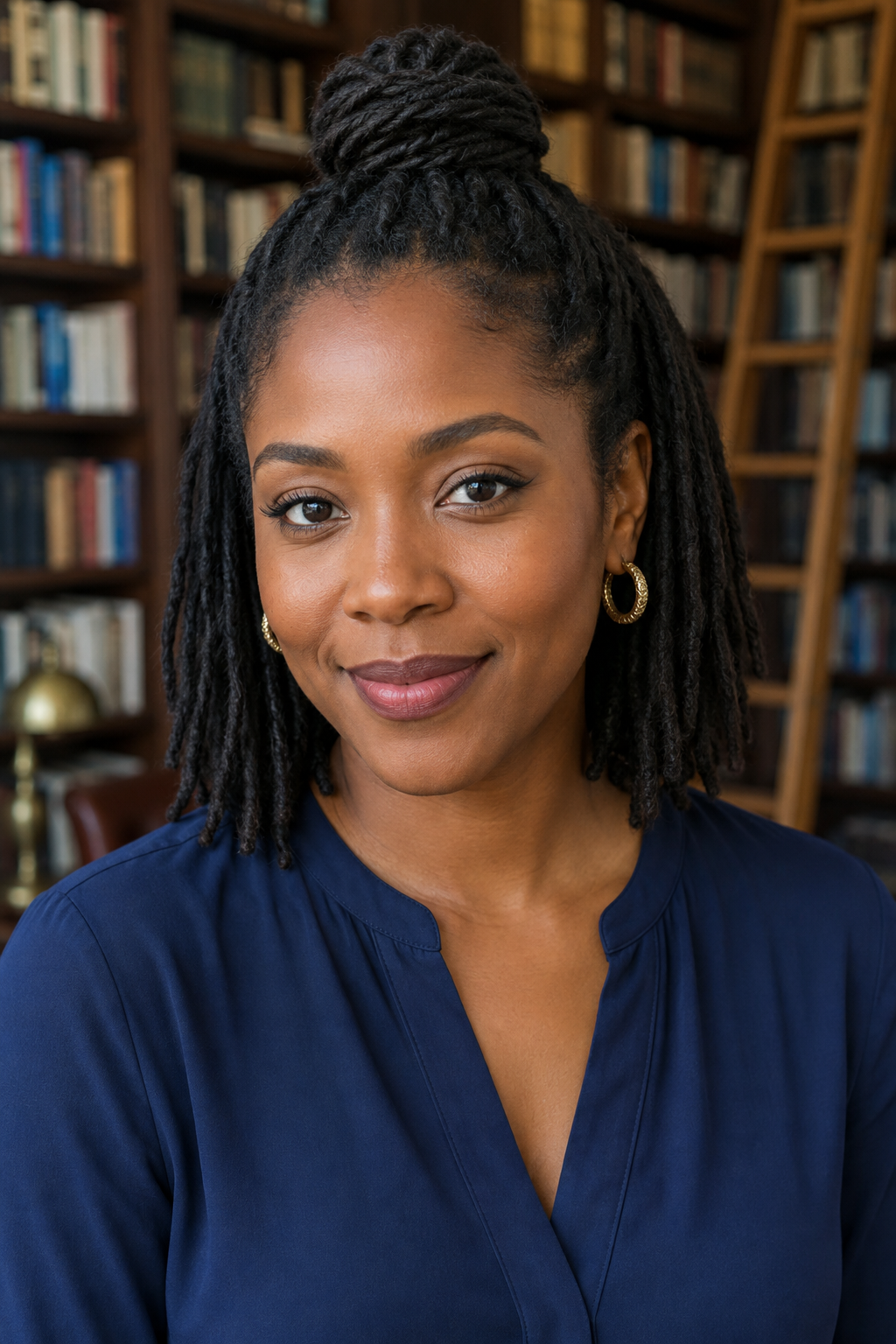
The same top section twisted into a small bun or knot instead of left loose.
It gives you something a little more finished than a pineapple, and it holds surprisingly well even on starter locs.
Great for work or anywhere you want to look put together. One or two pins secure it, and it stays through the day.
Two Mini Buns
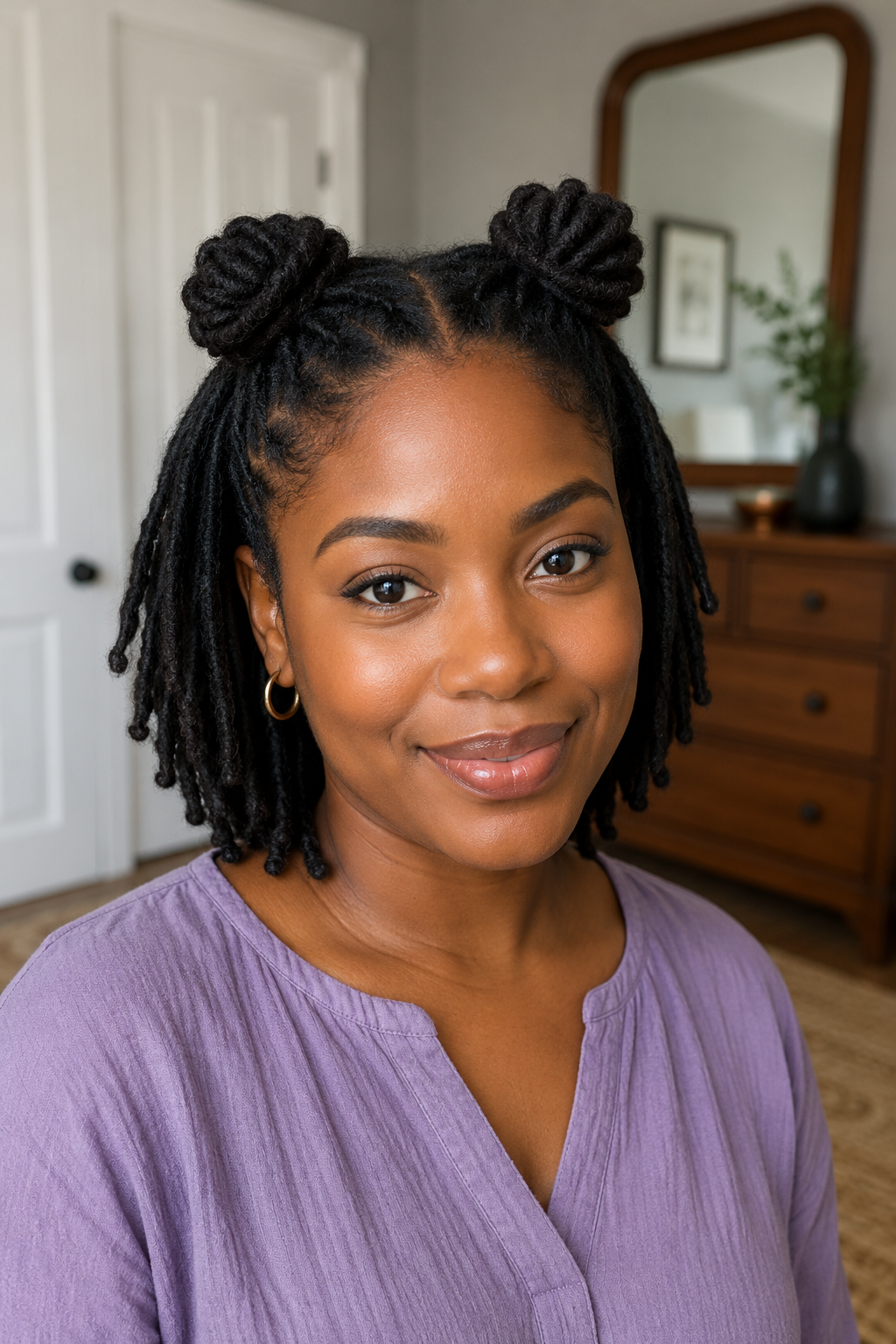
The top section parted down the middle with two small buns or knots on either side.
The even weight means nothing pulls to one side, which is more comfortable through a long day than a single bun.
Suits anyone wanting something playful. It works from about three inches, and small pins hold each side without much tension.
Low Bun at the Nape
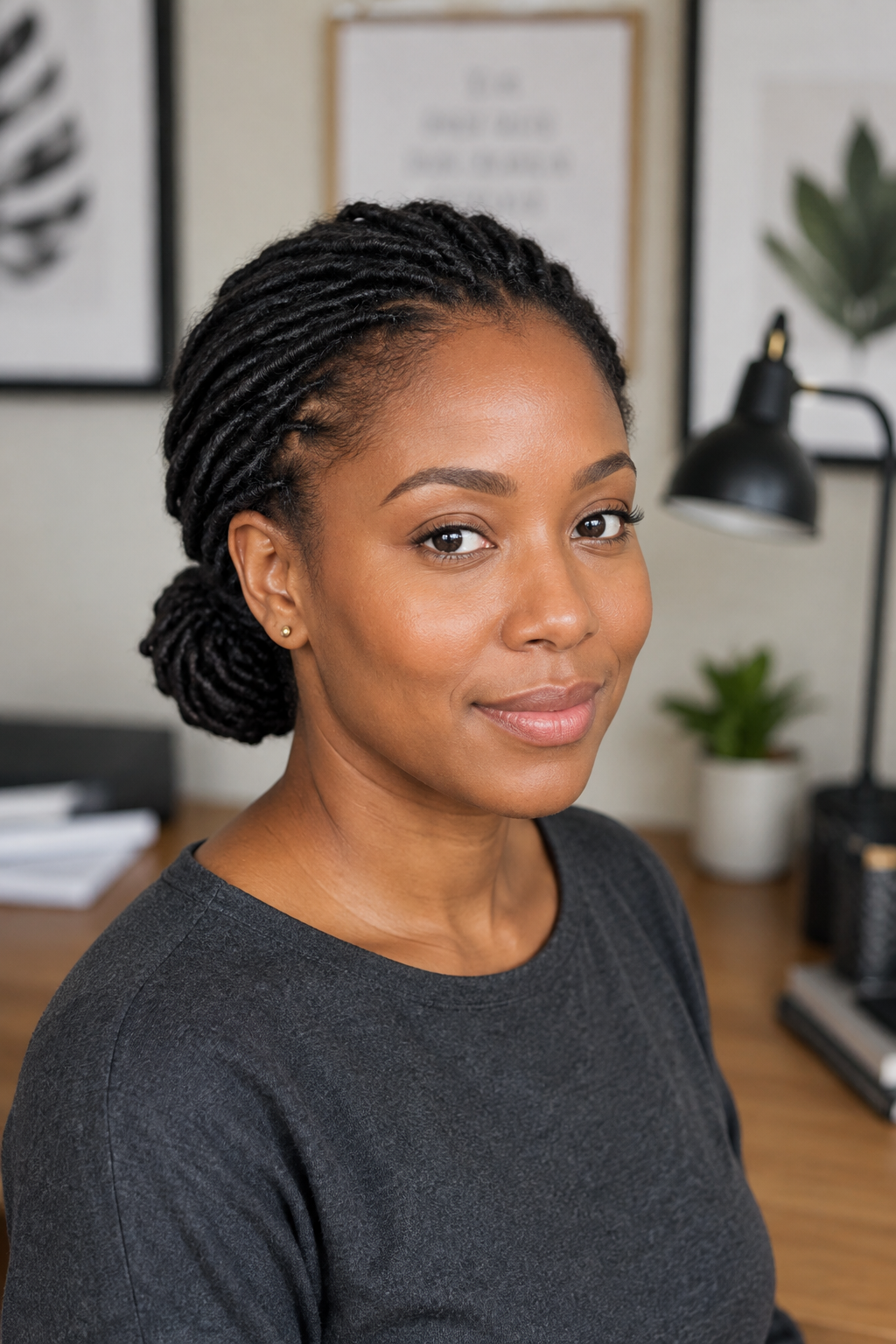
Everything gathered at the back of the neck into a small bun or short ponytail.
Short locs will not all reach, and that is fine. Pin the ones that fall out rather than pulling harder to include them.
Works especially well once you pass four inches. Our short hair updos post covers more gathered options at similar lengths.
Pinned Updo
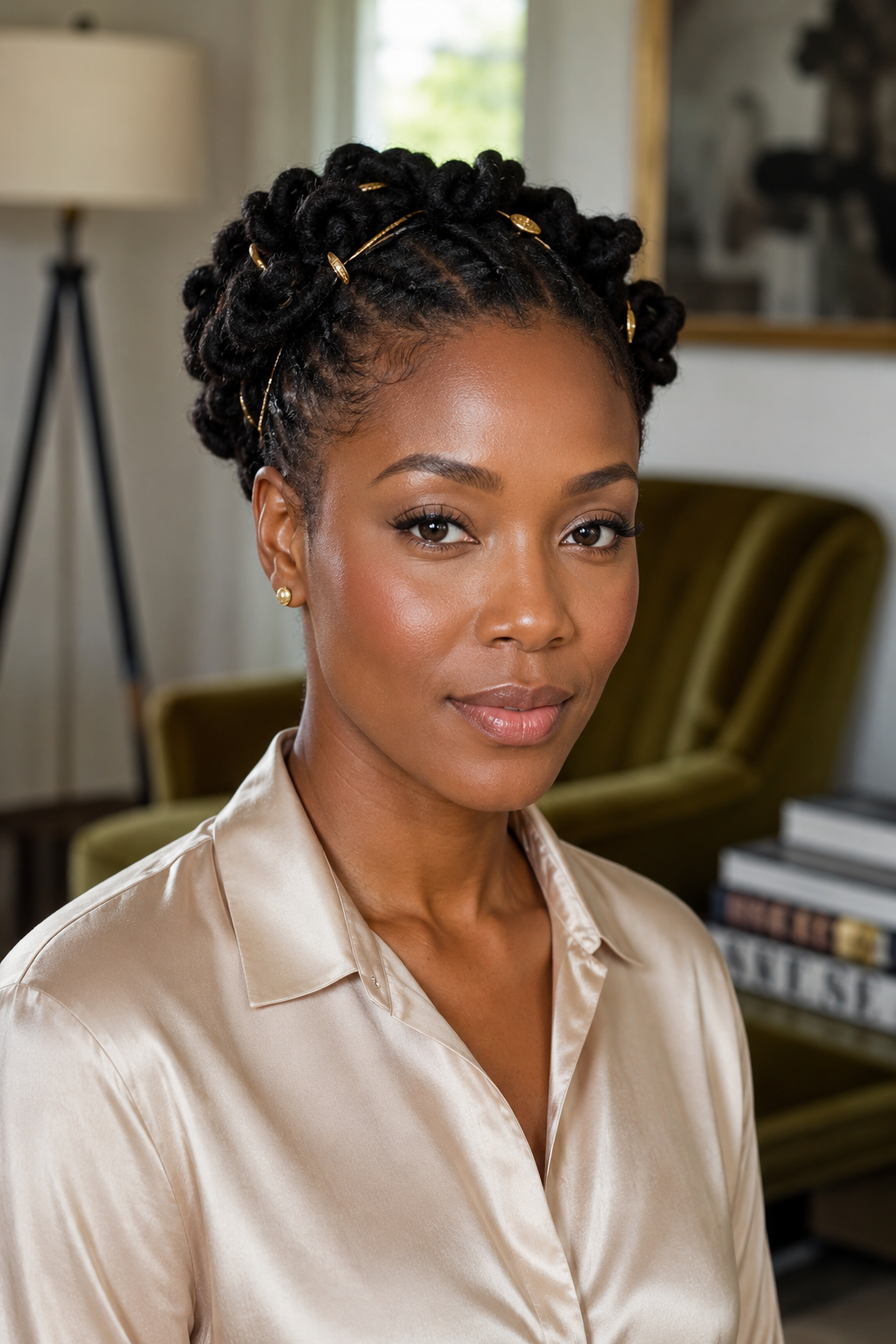
Locs pinned up in sections across the head with no single gathering point, creating shape from the arrangement itself.
At short lengths this is often more achievable than a bun, since each section only needs to reach the nearest pin.
Perfect for weddings and formal evenings. Our wedding guest hairstyles for short hair post has more along these lines.
Braided Front With Locs Out
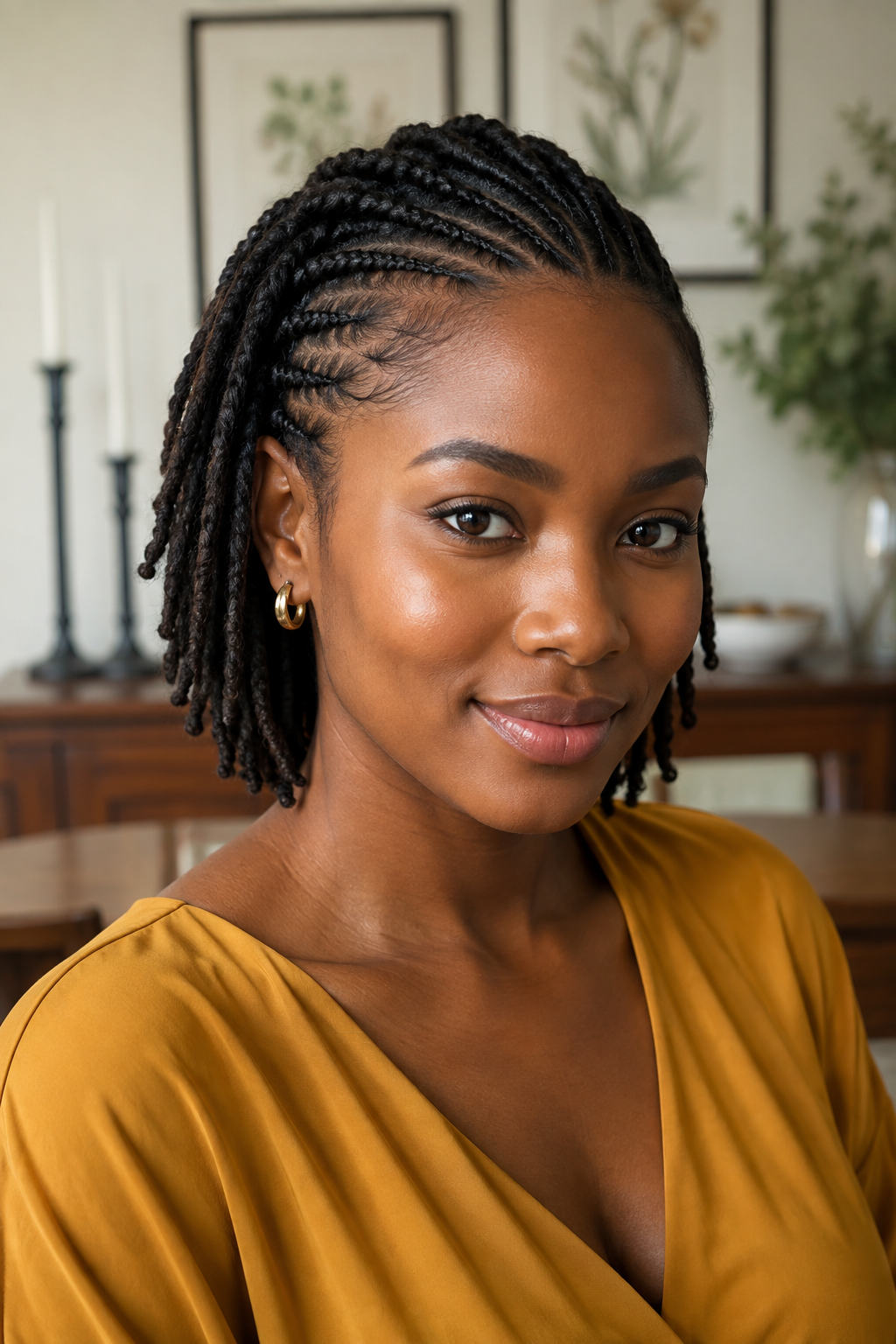
Cornrows or flat twists across the front section with the rest of the locs left loose behind.
Braiding only the front keeps the shorter pieces controlled while the back stays as it is.
Great for anyone in the awkward stage where the front is too short to gather. It also keeps the hairline neat between maintenance appointments.
Side Part With Pins
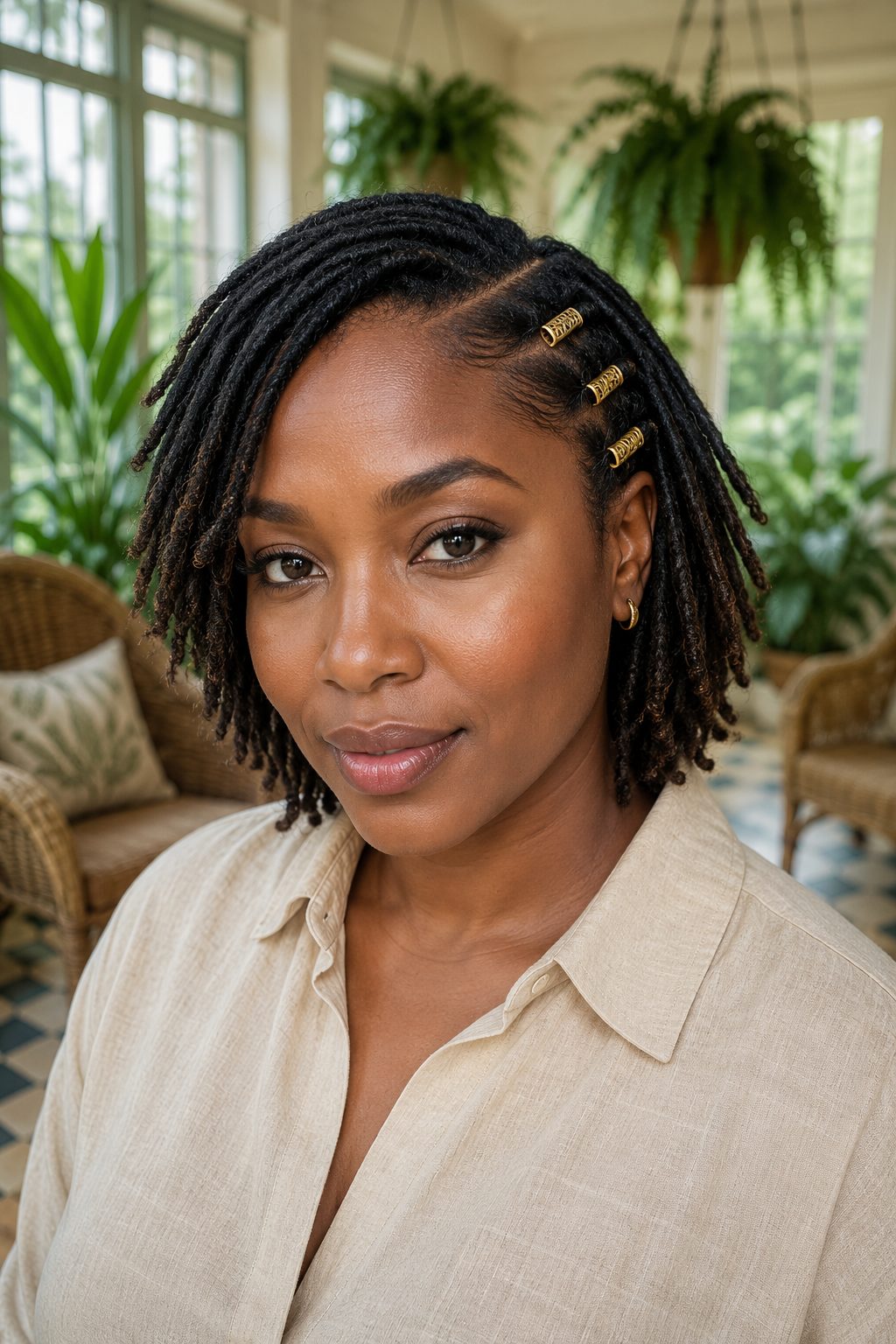
A clean side part with a few decorative pins holding one side back.
The simplest option here, and often all short locs need to look deliberate rather than unstyled.
Perfect for mornings with no time. Our easy short hairstyles post covers more quick options. Two pins and thirty seconds is the whole method.
Loc Cuffs and Beads
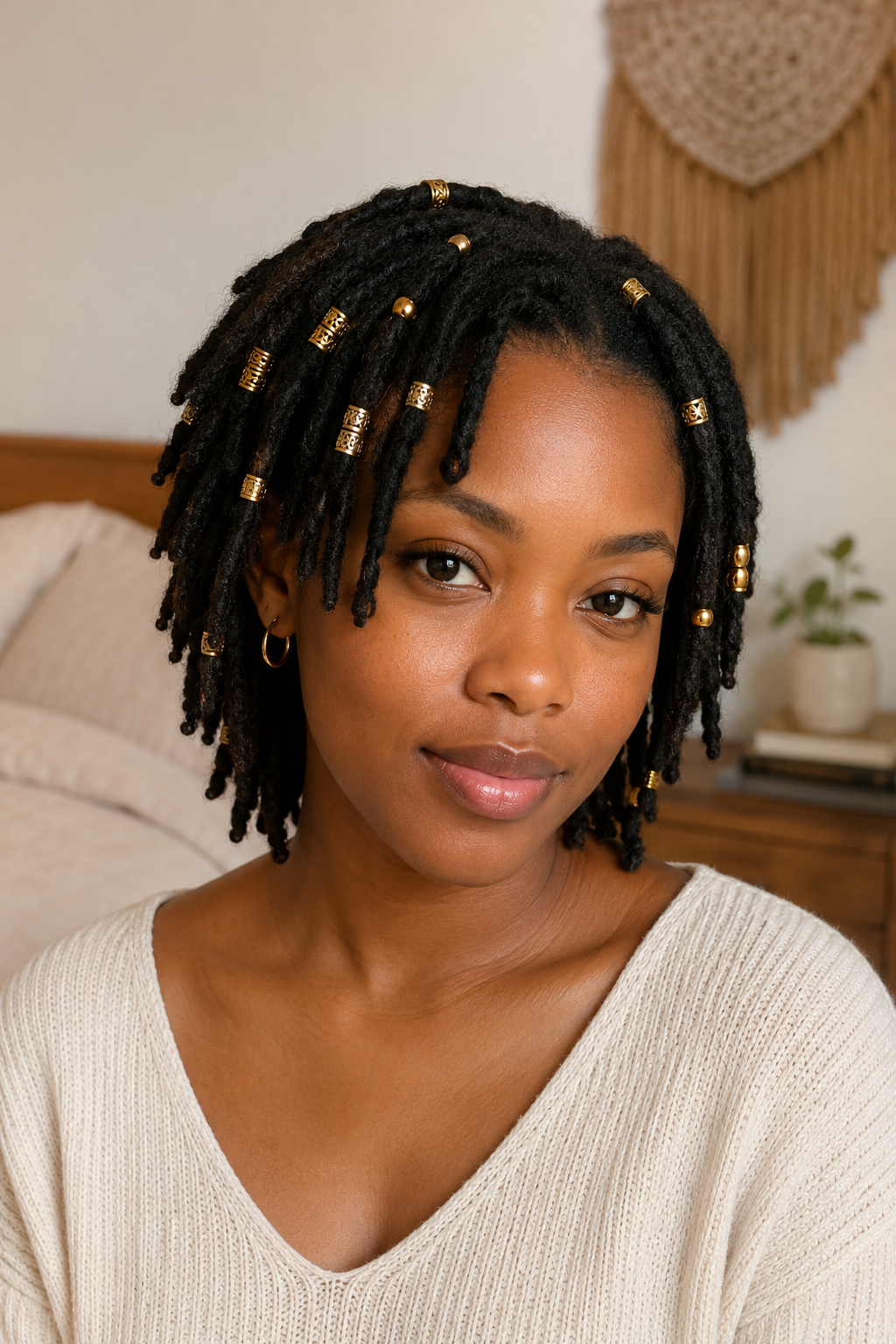
Metal cuffs or beads threaded onto individual locs and spaced through the head.
Accessories carry a lot of weight when the locs themselves are still short and there is less to work with.
Great for adding interest without changing anything structural. Keep them light and do not load too many onto one loc, since the weight pulls at the root.
Coloured Loc Ends
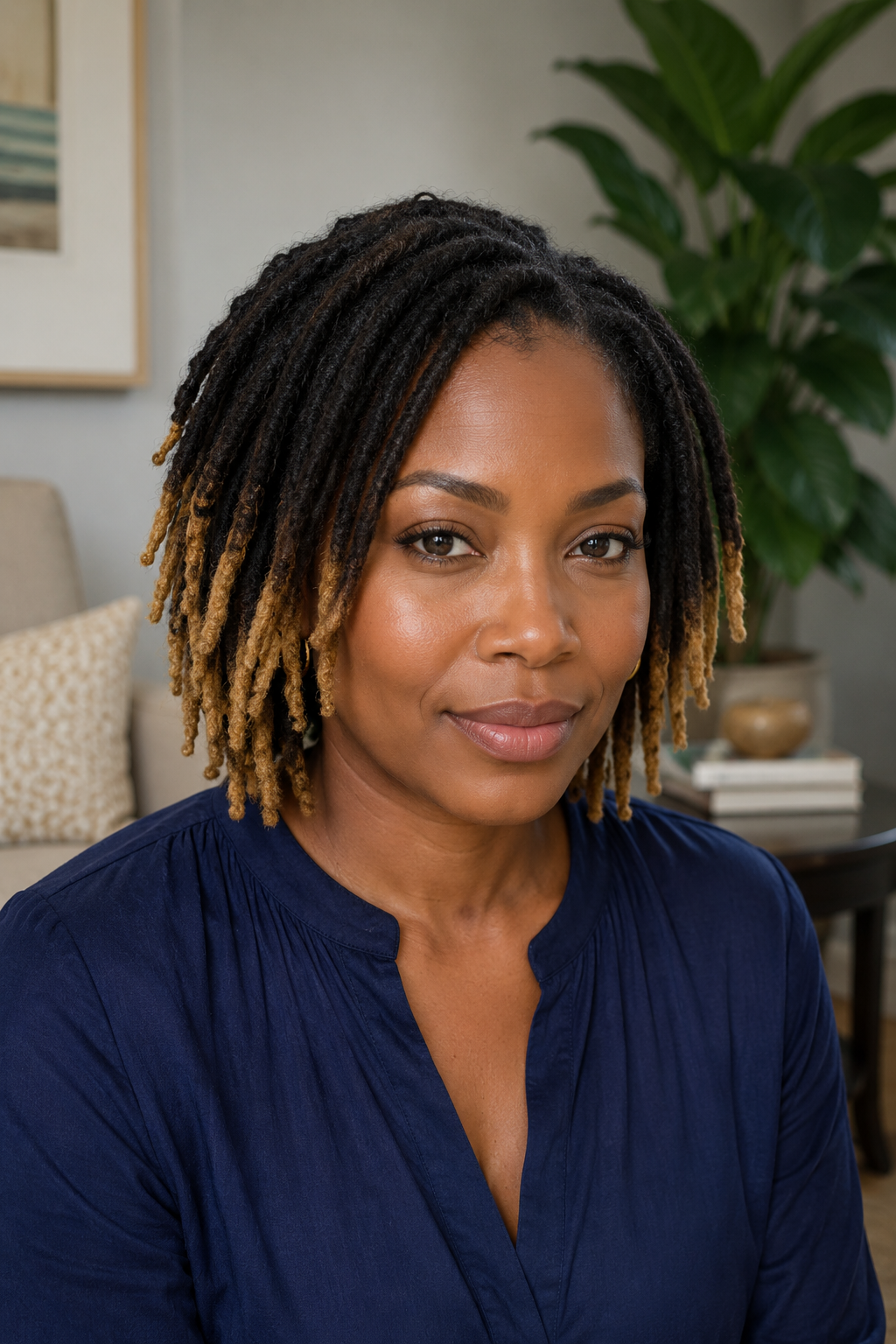
Colour applied to the ends only, leaving the roots and mid-lengths natural.
On short locs the ends are a large proportion of what people see, so tip colour has an outsized effect.
Suits anyone wanting change without processing much hair. Locs hold colour differently to loose hair and can be harder to lift, so see a loctician who colours. Our hair color ideas section covers tone choices.
Comments
No Comments