
20 Short Wolf Cut Hairstyles That Build Volume at the Crown
Plenty of women assume the wolf cut needs length to work. It does not. The cropped version follows exactly the same rule as the long one, which is short heavy layers stacked at the crown against longer hair at the back that tapers toward the ends. That contrast is the entire cut. Everything else, including where the length sits and how rough the ends are, is adjustment. Short versions actually show the structure more clearly, since there is less length to soften the difference between the two sections. Here is how it varies.
Jump to:
- Jaw-Grazing Micro Wolf Bob
- Chin-Length Wolf Cut
- Ear-Length Wolf Cut
- Wolf Cut With a Longer Back
- Broken-Up Ends
- Asymmetrical Wolf Cut
- Wolf Cut With a Deep Side Part
- Wolf Cut With an Undercut
- Short Wolf Cut for Round Faces
- Short Wolf Cut for Square Faces
- Short Wolf Cut for Heart Faces
- Short Wolf Cut for Long Faces
- Short Wolf Cut on Straight Hair
- Short Wolf Cut on Wavy Hair
- Short Wolf Cut on Curly Hair
- Short Wolf Cut on Fine Hair
- Short Wolf Cut on Thick Coarse Hair
- Rough-Dry With Texture Paste
- Root Lift Spray at the Crown
- Grown-Out Short Wolf Cut
Jaw-Grazing Micro Wolf Bob
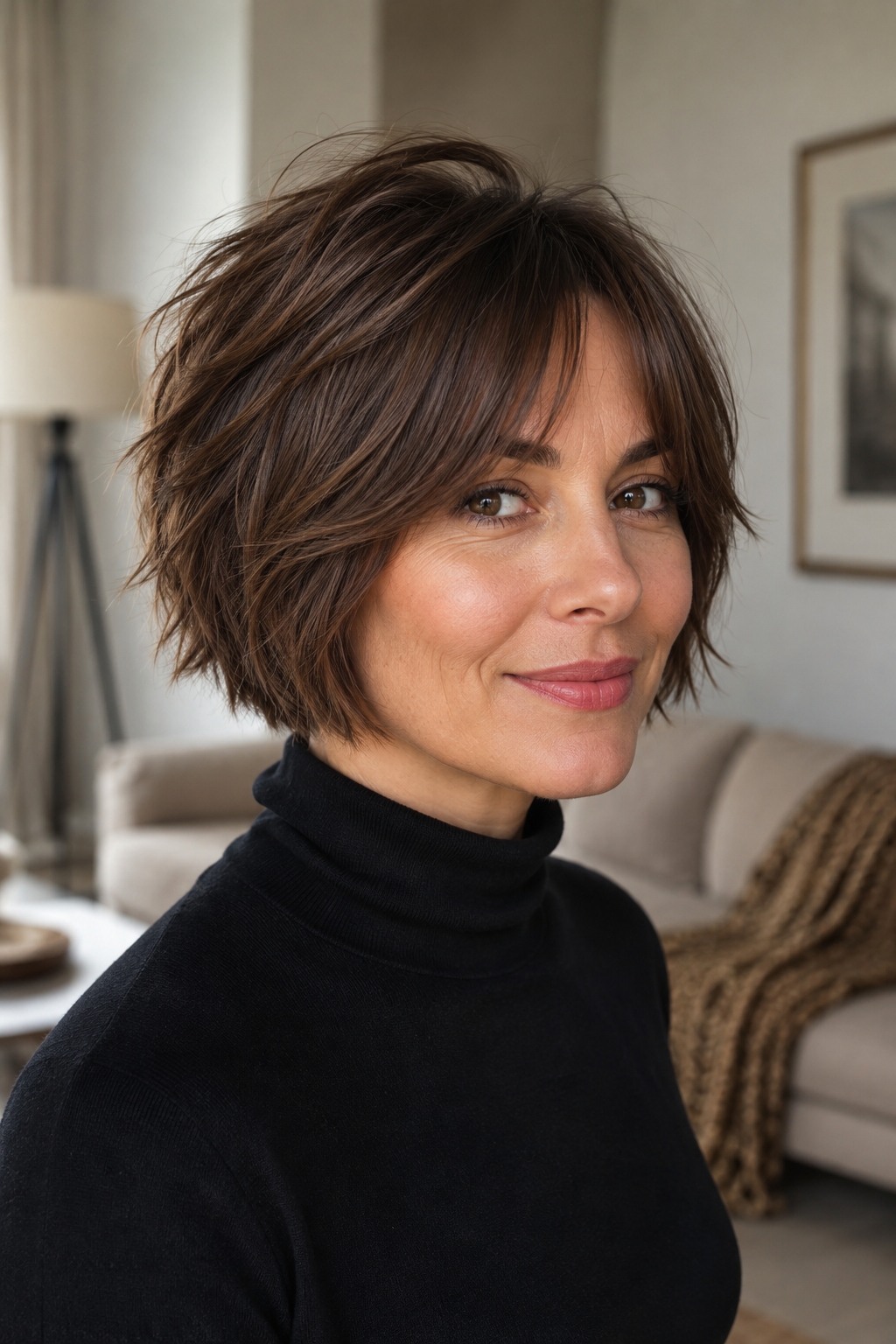
The shortest properly wearable version, with the length landing right at the jaw and an airy layered crown above it.
Because the gap between the crown and the ends is compressed, the contrast reads sharply.
Great for anyone who wants the cut at its most striking. Trims every six weeks or so, since at this length a small amount of growth changes the proportions noticeably.
Chin-Length Wolf Cut
Length at the chin with choppy layers building through the top half.
This is the most wearable short version, short enough to be a real statement without the commitment of a jaw-length crop.
Perfect for a first attempt. If you like it you can go shorter next time, and if you do not, it grows into a shaggy bob within a couple of months.
Ear-Length Wolf Cut
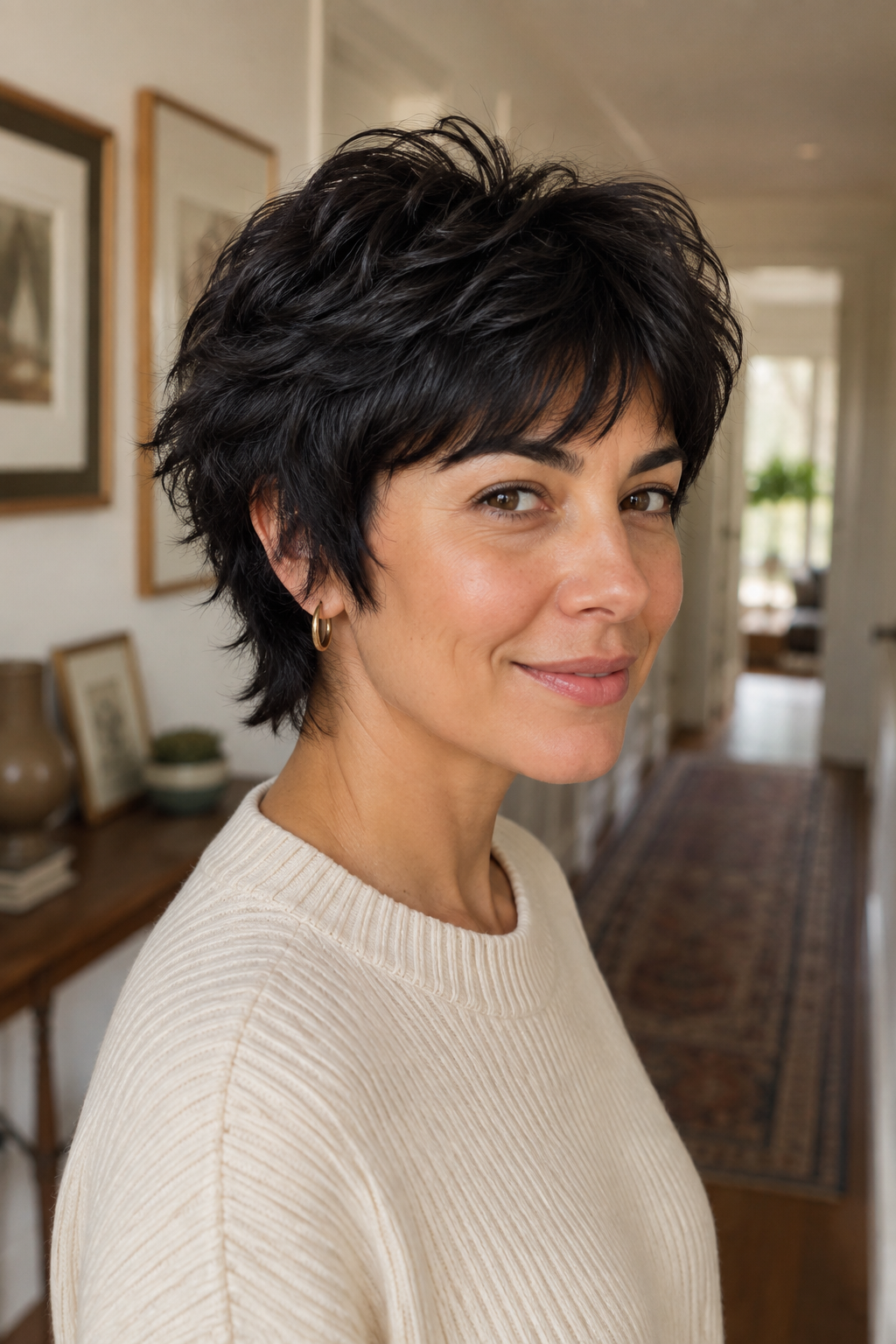
Very short, sitting around the ears, with the layered crown becoming the dominant feature.
At this length there is barely any back section left, so the cut lives almost entirely on the volume up top.
Suits thick hair especially. Keeping the length at the ears lets dense hair fan out naturally, creating the rounded shape the cut is known for.
Wolf Cut With a Longer Back
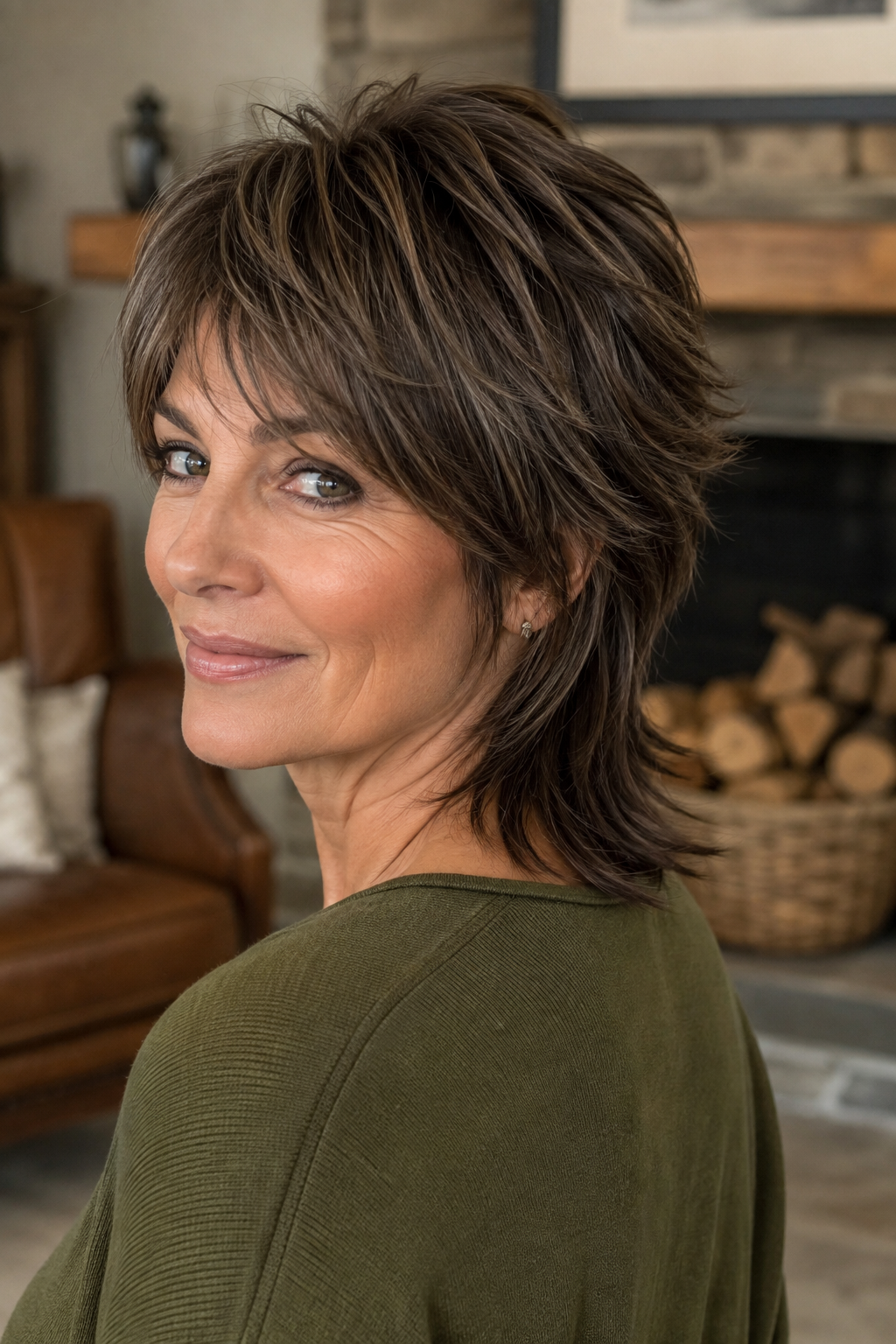
Extra length deliberately kept at the nape while everything above stays short and layered.
That longer back is what gives the wolf cut its mullet ancestry, and keeping it makes the shape more obvious.
Works especially well if you want the cut to read clearly rather than passing for a shag. Our short shaggy haircuts post covers the difference between the two.
Broken-Up Ends

Ends cut unevenly so they finish in visible separated pieces rather than a clean line.
A smooth bottom edge fights the whole design. The roughness is what makes the layers above look deliberate.
Great for straight hair, which shows a blunt edge more than any other texture. A little matte paste pinched through the ends keeps them separated through the day.
Asymmetrical Wolf Cut

One side cut noticeably shorter than the other, with layers uneven across the head.
The imbalance adds another layer of contrast on top of the crown-to-back structure the cut already has.
Perfect for anyone who wants something bolder. It draws attention across the face diagonally, which sharpens a soft jawline.
Wolf Cut With a Deep Side Part
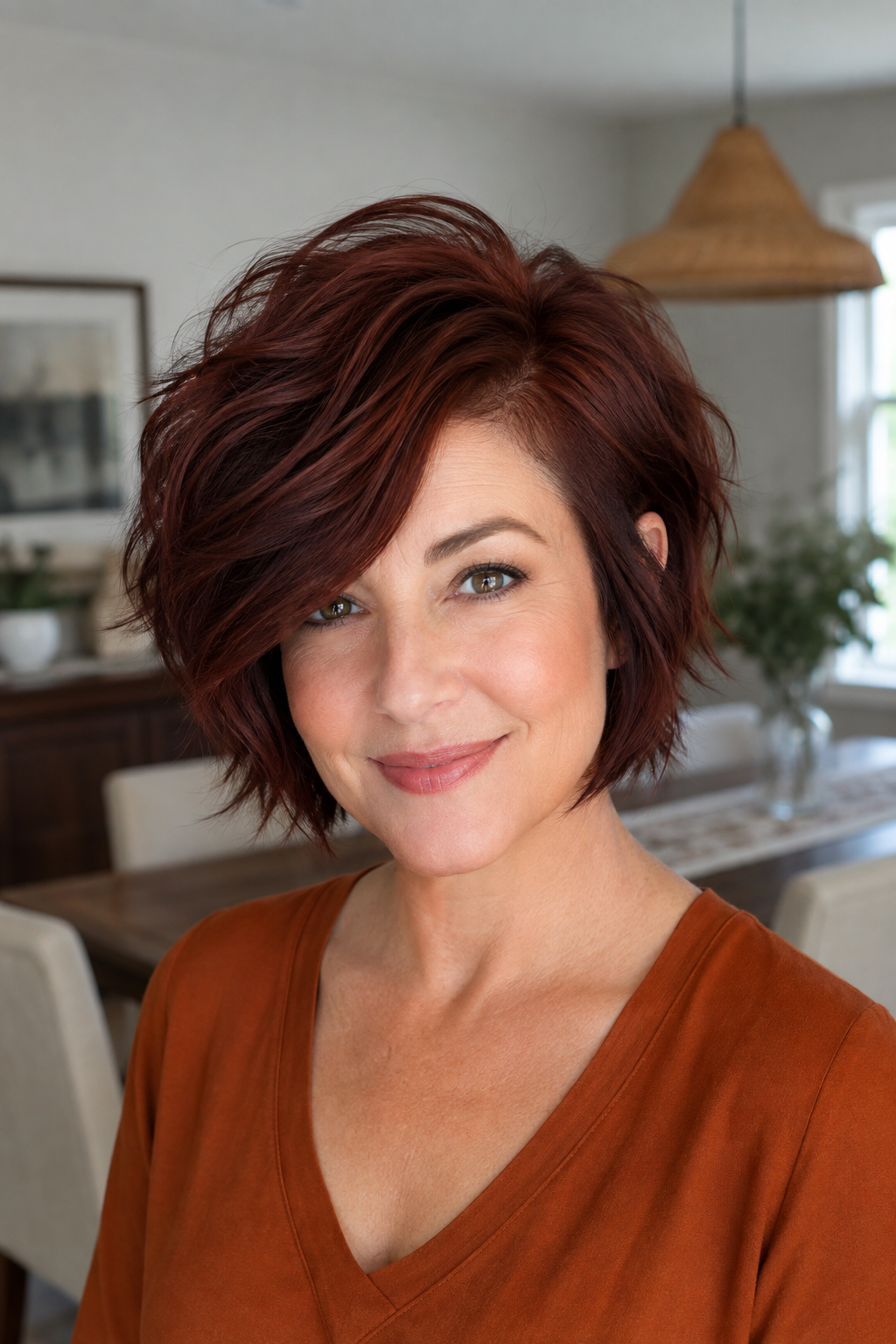
The part moved well off centre so most of the volume sits on one side.
A centre part tends to flatten the crown, which is the one thing this cut cannot afford. Moving it sideways solves that.
Suits square jawlines particularly, since directing volume to one side breaks up the horizontal line across the face.
Wolf Cut With an Undercut
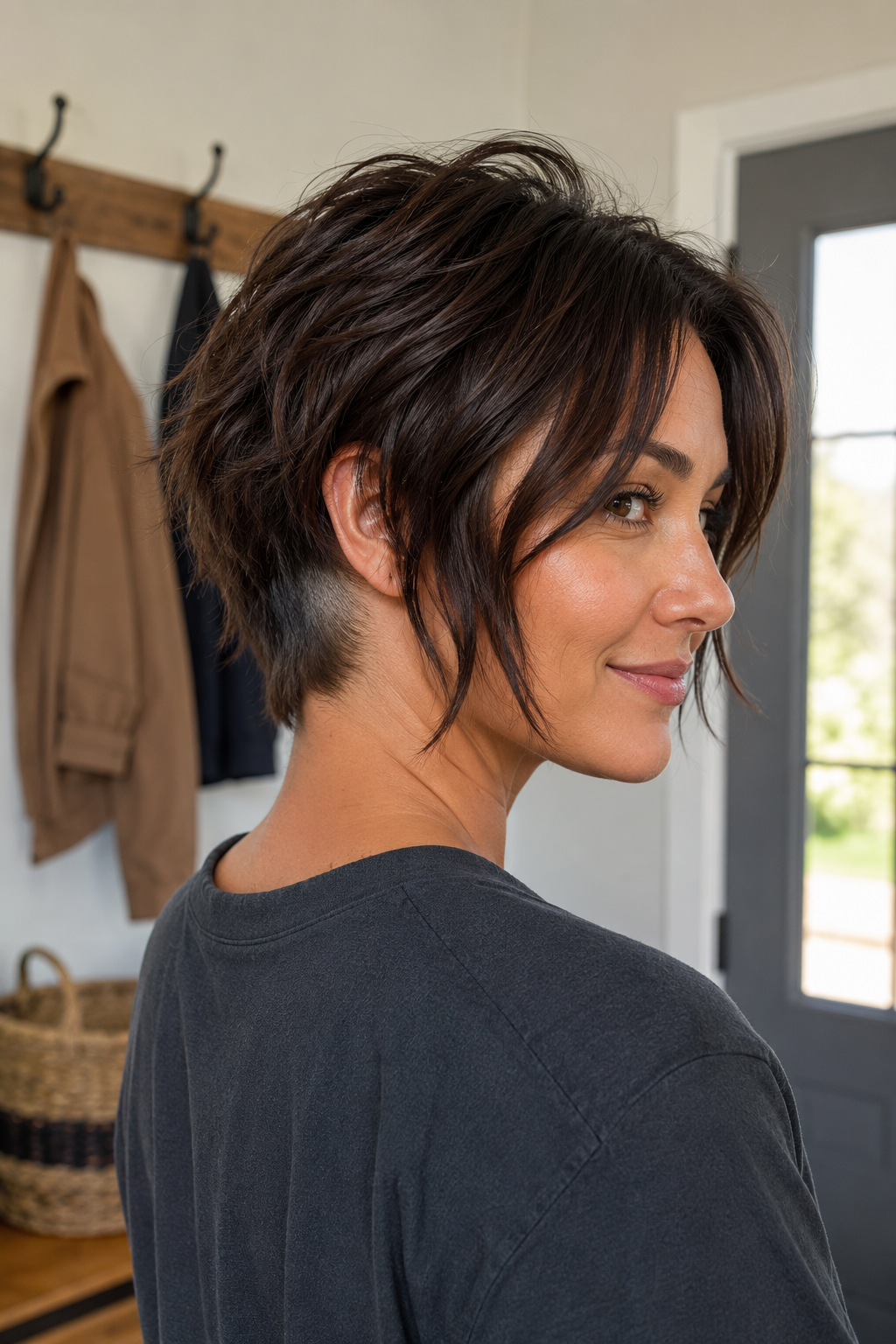
A section clipped short underneath, usually at the nape or one side, with the layered length falling over it.
The undercut removes bulk from the heaviest part of the cut and adds contrast when the hair moves.
Works especially well on thick hair. It also stays hidden when you want it to, so it is less of a commitment than it looks.
Short Wolf Cut for Round Faces
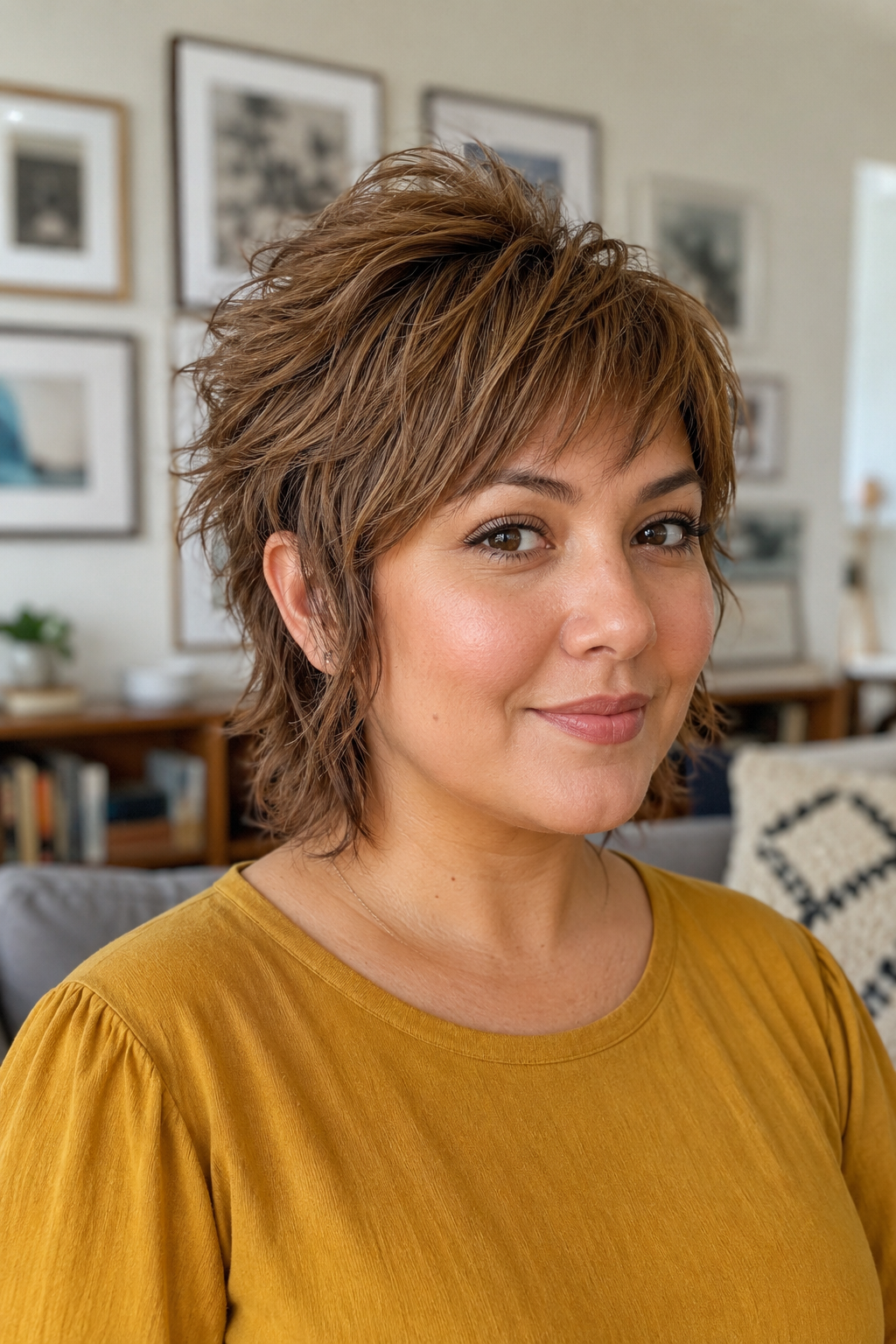
Extra height at the crown with the side layers kept tighter to the head.
Volume going upward rather than outward makes a rounder face look longer. Wide heavy sides do the opposite.
Great if you have been told short layers would widen your face. Our short hairstyles for round faces post covers more shapes built on the same principle.
Short Wolf Cut for Square Faces

Feathered layers starting above the ear rather than at chin level, with softened ends around the jaw.
Blunt weight sitting at jaw height echoes a strong jawline. Starting the layers higher avoids that entirely.
Perfect for anyone wanting to soften angular features without losing the edge of the cut.
Short Wolf Cut for Heart Faces
Crown volume dialled back slightly, with more weight left around the jaw.
Heart-shaped faces are widest at the temples and narrowest at the chin, so adding weight low balances the two.
Suits anyone whose forehead reads wide. Keep the face-framing pieces above the chin and let the back stay a little longer.
Short Wolf Cut for Long Faces
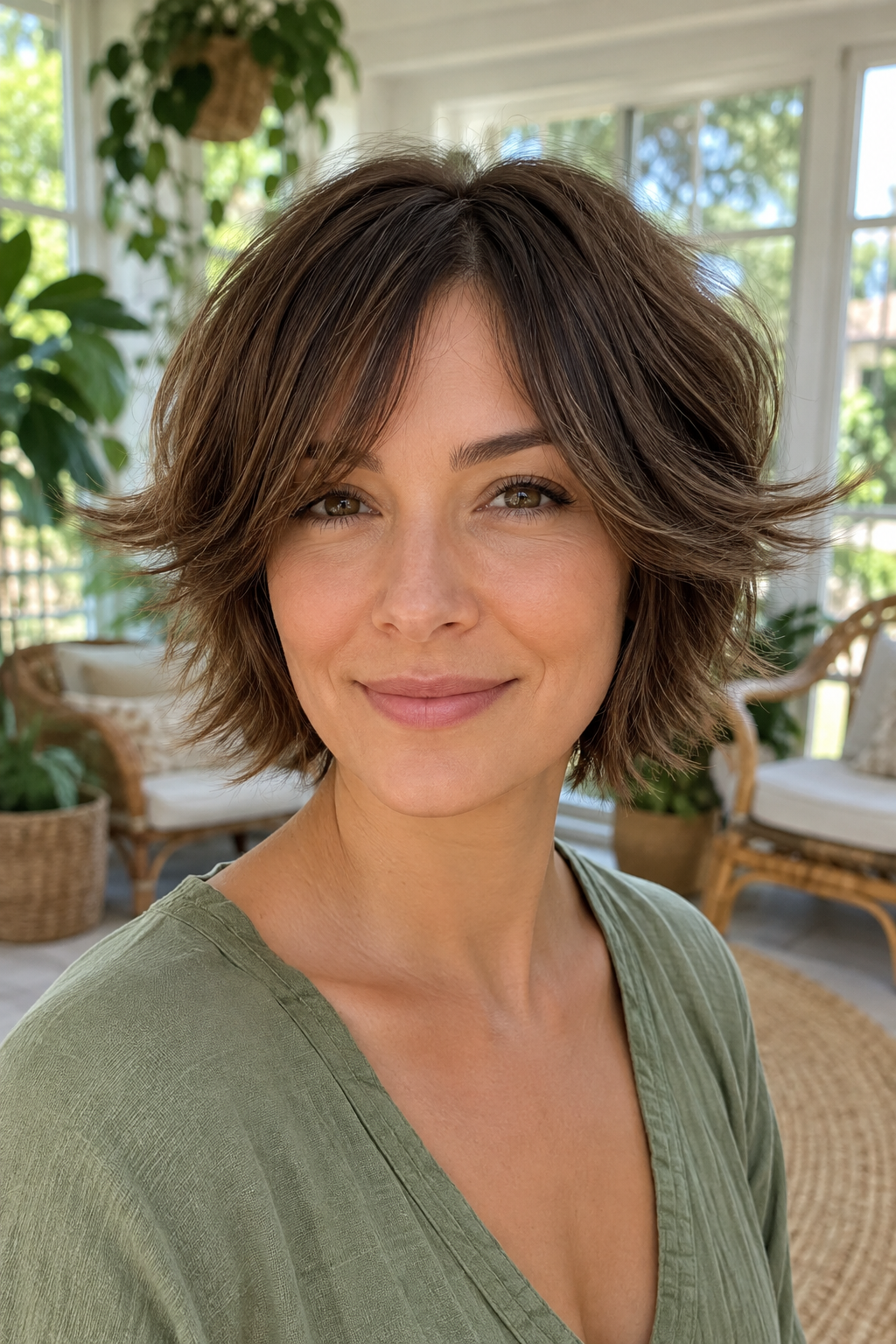
Fuller layers at the sides with the crown height deliberately controlled.
Height on top makes a long face longer. Pushing the volume sideways instead breaks up that vertical line.
Great if crown volume has never suited you. Ask for the side layers to kick out horizontally rather than falling straight down.
Short Wolf Cut on Straight Hair
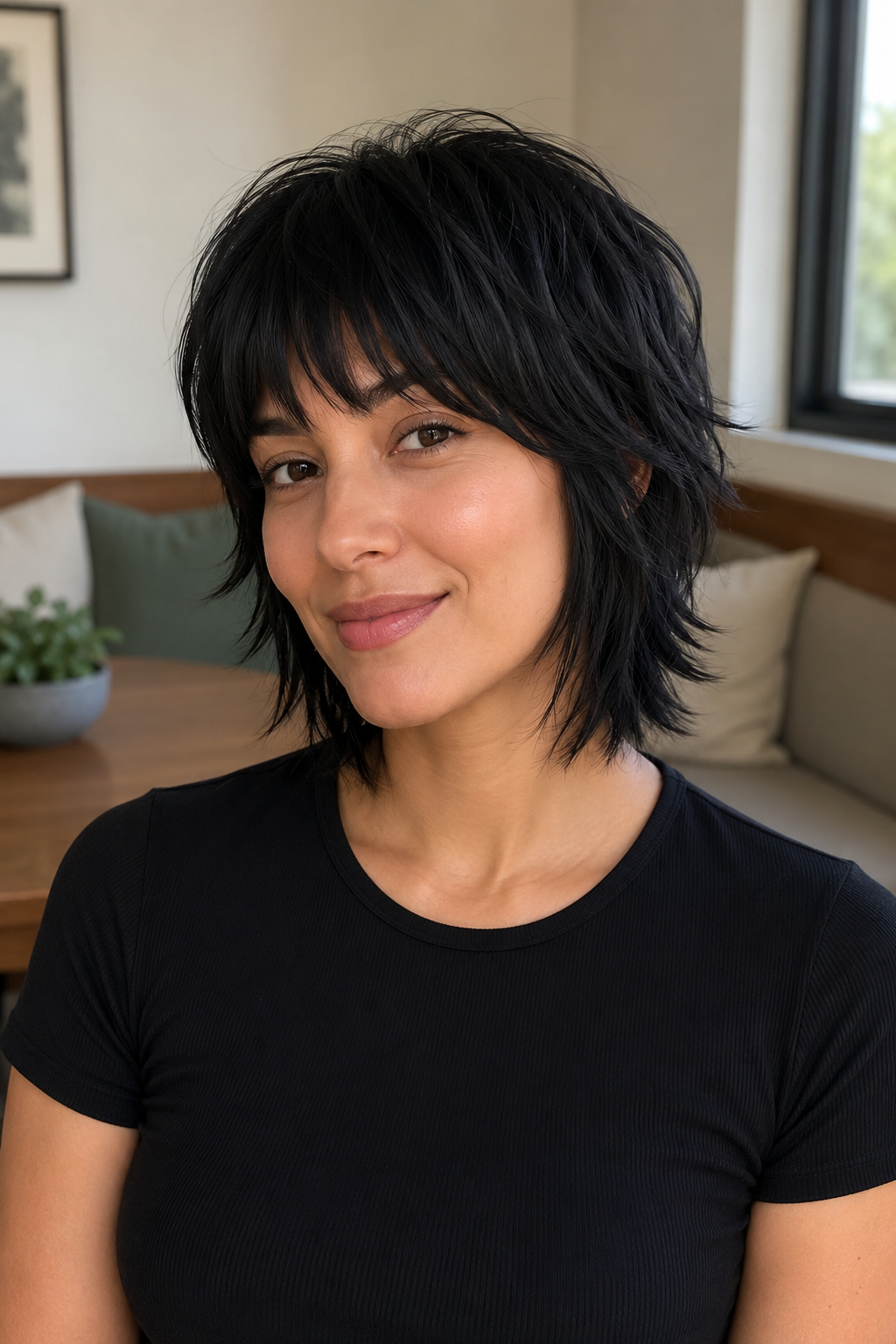
Layers cut more pronounced than usual, since straight hair shows less movement on its own.
Subtle layering disappears entirely on straight hair. The cut needs to be more obvious to read at all.
Works especially well on thick straight hair, which holds the shape without product. Finer straight hair benefits from sea salt spray and scrunching.
Short Wolf Cut on Wavy Hair
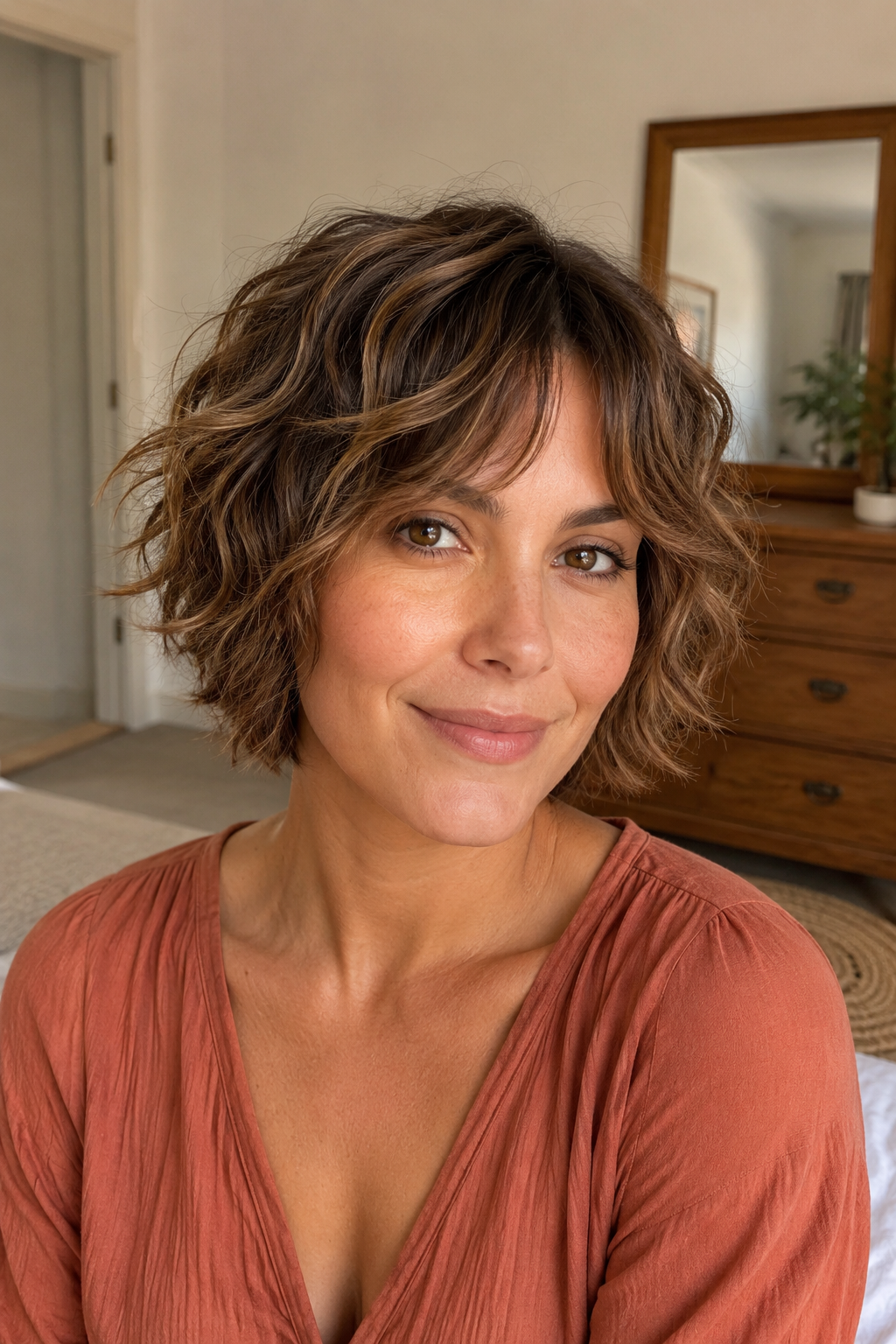
The texture this cut was designed around, needing almost no adjustment.
Natural bend fills out the layers and creates the separation the cut depends on, with no styling required.
Perfect for 2B and 2C hair. Air drying gives the best result. See our wavy wolf cut post for the longer versions.
Short Wolf Cut on Curly Hair

Layers cut on dry hair so the stylist can see where each curl sits before removing anything.
Cutting curls wet leaves the layers far shorter than intended once they spring up, and on a short cut there is no recovering from that.
Great for 3A and looser. Our curly short hairstyles post has more on dry cutting.
Short Wolf Cut on Fine Hair

A slightly shorter crown with choppy ends, cut to build structure rather than remove weight.
Fine hair is often ruled out for this cut and should not be. The layering just needs to build shape rather than thin anything.
Suits anyone whose hair sits flat. Volumising mousse at the textured crown is doing most of the work. Our short hairstyles for thin fine hair post covers the products worth using.
Short Wolf Cut on Thick Coarse Hair
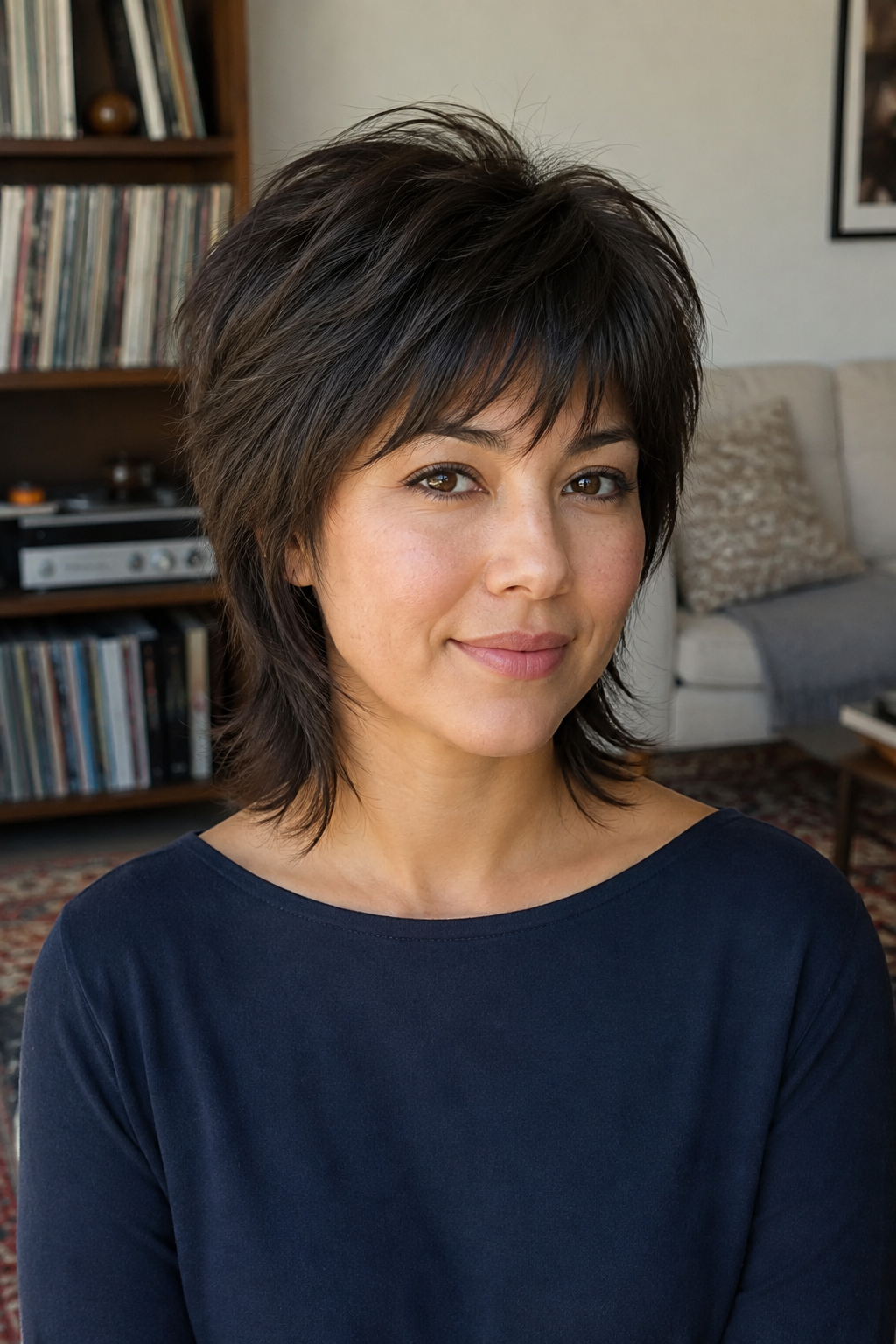
Heavy layering aimed at removing bulk from inside the cut, so the shape holds instead of expanding.
Thick hair carries this cut well because it holds the crown volume naturally. The risk is width rather than flatness.
Works especially well on coarse straight textures, where the natural weight keeps the longer sections sitting smooth while the crown fans out.
Rough-Dry With Texture Paste

Dried upside down with fingers only, then a small amount of matte paste pinched through the ends.
Flipping your head while drying builds the crown lift the cut is designed around. A brush undoes it.
Perfect for keeping the routine under five minutes. Our easy short hairstyles post covers more quick finishing methods.
Root Lift Spray at the Crown
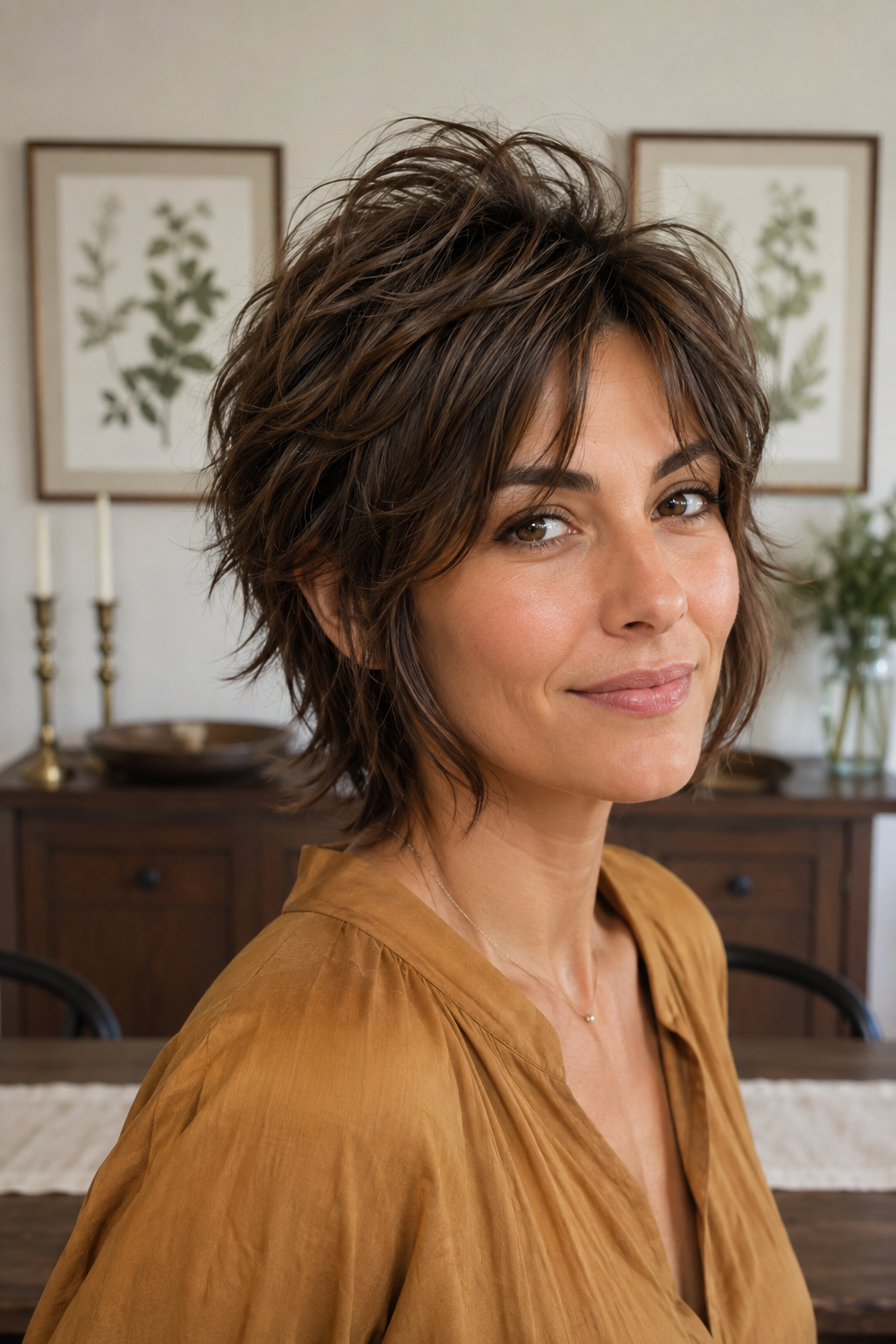
A root-lifting spray applied at the scalp before drying, concentrated only on the crown.
The whole cut depends on height at the top, and product placed anywhere else weighs it down without helping.
Great for anyone whose crown collapses by afternoon. A light mist at the roots only, then dry with your fingers lifting upward as you go.
Grown-Out Short Wolf Cut

The cut a few months on, where the crown layers have lengthened and the contrast has softened.
It grows out into a shaggy bob rather than losing its shape entirely, which makes it far less risky than it looks.
Suits anyone unsure about committing. If you decide against it, you can simply stop trimming and it turns into something else wearable on its own.

Comments
No Comments